Tag Archives: Ohio

COVID & Redistricting

By Jim Ellis

April 29, 2020 — The deadline for the Census Bureau to release the new population data is March 31, 2021, but with the entire process being delayed due to COVID-19 precautions, the ability to meet the requirement is becoming more difficult by the day. Already, the Bureau has been delayed in dispatching their door-to-door teams necessary in obtaining the responses from people who did not return their mail tabulation form.

The Trump Administration is reportedly suggesting that the March 31 deadline be postponed to sometime in the summer of 2021. If this happens, we will see a series of redistricting problems ignited in the states. First, the political leaders in New Jersey and Virginia, places that have 2021 elections and need their new state legislative lines in place well before that date, would find themselves in a difficult position.

Initially, the two states would certainly have to postpone their primary elections because both nominate their general election candidates in June. Beyond that, it is possible they would have to even postpone their general elections into 2020 or run in the obsolete boundaries that were drawn back in 2011. In either case, we could expect lawsuits being launched from whichever party loses a particular electoral contest.

Other states would be affected, too. Many have legal deadlines in place mandating that the new redistricting maps for state legislature and the US House delegation be adopted before the legislative sessions ends. Most states recess before mid-summer, which would mean special sessions being called if the legislature is to act.

The problem intensifies in the states that are either gaining or losing congressional districts in reapportionment. Currently, it appears that seven states will add seats to their delegations (the best projections suggest that Texas will gain three, Florida two, and Arizona, Colorado, Montana, North Carolina, and Oregon one apiece), while 10 will lose single districts (Alabama, California [for the first time in history], Illinois, Michigan, Minnesota, New York, Ohio, Pennsylvania, Rhode Island, and West Virginia).

The aforementioned apportionment is based upon calculations released publicly and not, of course, using the actual numbers. Therefore, we could see some differences between these projections and what the formulas actually produce when the Census Bureau finally can produce the updated real figures.

Continue reading

Sanders Out;
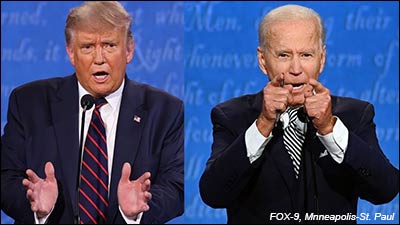
Focus Now on Trump-Biden

By Jim Ellis

Sen. Bernie Sanders

April 9, 2020 — Sen. Bernie Sanders (I-VT) suspended his presidential campaign yesterday, therefore making former vice president Joe Biden the Democratic Party’s unofficial nominee. Biden, still 766-bound delegate votes away from clinching a first-ballot victory is now unencumbered in his bid to become the party standard bearer. It is likely that he will secure the 1,991 bound first-ballot delegate votes once the June 2 primary — now featuring 10 states — is held.

Sen. Sanders conceded that he could not overcome Biden’s strong lead but stopped short of endorsing him, though it is clear that he eventually will, and called for the Democratic Party to pull together in order to defeat President Trump.

How will a Trump-Biden general election campaign unfold? Very likely, the race will come down to what happens in about 10 states. In 2016, President Trump defeated Hillary Clinton with an Electoral College margin of 306-232, giving him a 36-vote cushion against Biden. This is a relatively substantial margin, but when remembering that three critical states containing 46 electoral votes came down to an aggregate vote spread of just over 77,000 votes, such a gap could quickly dissipate.

To win again, President Trump must keep intact five states that he carried as part of his 2016 coalition, three of which are giving signs of moving closer to the political center since the last election, and two that are always in the swing category. Arizona, Texas, and Georgia are must-wins for the Trump campaign, but these states are no longer locks for the Republican nominee. Though they should still remain part of the 2020 Trump coalition, they cannot be taken for granted.

Florida and North Carolina are always swing states, and any Republican presidential nominee must carry them in order to win the national election. The Democrats, because they win most of the other big states, can claim a national victory without Florida and North Carolina but a Republican cannot.

Continue reading

Is Biden’s Victory Secure?

By Jim Ellis

Former VP Joe Biden

March 30, 2020 — Articles have appeared in publications on successive days that somewhat surprisingly contemplate whether former vice president Joe Biden will actually reach majority delegate support for a first ballot win at the Democratic National Convention still scheduled to begin in mid-July.

Should the former VP somehow fail to obtain 1,991 votes on the first roll call a contested convention would begin, and some are introducing the idea that a deadlock could lead toward New York Gov. Andrew Cuomo emerging as an alternative to Biden.

Gov. Cuomo is receiving favorable media coverage for his handling of the COVID-19 virus situation in his state, which is one of the hardest hit areas in the country. Originally thought of as a possible presidential candidate at the very beginning of the process, Cuomo was first of the potential contenders to definitively pull his name from consideration.

Arriving at a contested convention at this stage of the process when calculating the delegate numbers is not a reasonable conclusion, however. While true that approximately half the states and territories still have not voted in their respective presidential primary, only 42 percent of the delegate universe (1,688) remains unclaimed. With Biden 777 votes away from the victory number according to the Green Papers election stats firm, it would take quite a negative swing for him to lose at this point.

Using simple arithmetic calculations, Biden needs only to secure 46 percent of the remaining bound first ballot delegates to win the party nomination. While he still must participate in the various primaries and attain that total, the chances of him winning are far greater than not. Post-Super Tuesday, his cumulative percentage among the nine states voting is 53.9 meaning that the future results would have to completely reverse for him to somehow lose the nomination.

Continue reading

Biden Wins Easily; Lipinski Loses

By Jim Ellis

Former vice president and 2020 presidential candidate, Joe Biden (D)

March 18, 2020 — In a night that was originally scheduled to have two full state primaries and two stand-alone presidential contests that would determine if a Democratic candidate could reach majority support on the first ballot, last night’s results proved somewhat anticlimactic.

Voters in Arizona, Florida, and Illinois cast their ballots, with only the latter state conducting its full primary. Ohio, which also had its statewide primary scheduled for yesterday, postponed their vote likely to June 2 because of COVID-19 virus precaution.

As expected, former vice president Joe Biden wrapped up three easy victories, beginning with capturing the Florida primary with a whopping 62-23 percent margin over Sen. Bernie Sanders (I-VT) from a Democratic electorate that topped 1.72 million voters. The total includes the early votes, even though the outcome of this stand-alone primary election became a foregone conclusion just after Super Tuesday.

The vote totals were somewhat closer in Illinois, but still a landslide victory for Biden. The former vice president captured 59 percent of the Land of Lincoln Democratic vote as compared to 36 percent for Sen. Sanders. The turnout here was just slightly over 1.5 million, but the entire statewide and district office campaigns were also on this ballot, which helps accounts for what appears to be a fairly large turnout.

In Arizona, the race was much closer, as Biden’s victory margin rather surprisingly dropped to 44-31 percent with approximately 12 percent of the ballots outstanding. The turnout is not expected to reach 600,000 when all the ballots are counted. A quarter of the Arizona electorate voted for one of the also-ran candidates, which compares to 15 percent doing so in Florida and just five percent in Illinois.

Delegate wise, Biden looks to have captured about 159 Florida delegate votes with Sen. Sanders only clinching 60 bound first ballot delegates. The Illinois total projects a 95-60 Biden advantage, while in Arizona the total split looks to be approximately 39-28 if the present pattern continues. Without the Ohio primary taking place, the total delegate universe yesterday was 441, with Biden unofficially clinching 293 of them, or 66 percent of the March 17 bound first-ballot votes.

Continue reading

Primary Day; Ohio on Hold

By Jim Ellis

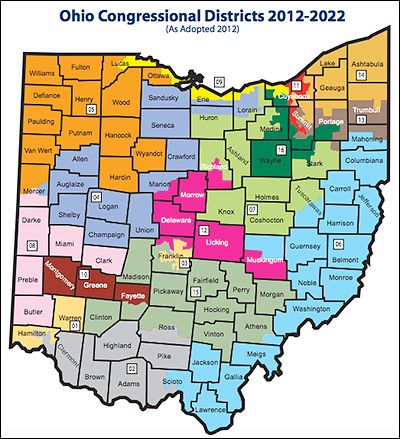
Ohio’s Congressional Districts

March 17, 2020 — Today is a defining day for the Democratic presidential primary but it looks like former vice president Joe Biden will easily march toward the party nomination without participation from Ohio.

Originally, the Buckeye State primary was planned for March 10, but then re-scheduled for today, March 17. Yesterday, Gov. Mike DeWine (R) requested a judge stay the primary election in response to the COVID-19 virus but was turned down. Then, in a statement late last night, the state health director stepped in to halt the primary voting process under a statewide emergency order. The governor and secretary of state are working on ways to increase mail and absentee voting, but how and when people are supposed to vote remains uncertain.

This means only Arizona, Florida, and Illinois voters are casting their ballots today. State officials in each of those places are moving forward with voting as planned. Of this group, only Illinois, like Ohio, is scheduled to hold its state primary.

Regardless of Ohio not being in the mix, at the end of voting this day, Biden will effectively become the Democratic presidential nominee, but not yet officially. Perhaps more importantly, at least as it pertains to Ohio, is what happens to the candidates running for the down-ballot offices.

There is no US Senate race in Ohio this year, but all 16 congressional seats are on the ballot as well as 115 electoral contests for the state legislature (16 state Senate seats; all 99 state House seats), and a large number of local offices.

The confusion surrounding the primary could well become the foundation for eventual lawsuits from some of the candidates who may eventually lose close votes. Therefore, the decision to postpone could result in a very long primary, and post-primary cycle.

Continue reading

Deadlines Ahead in Ohio,
North Carolina 2020 Campaigns

By Jim Ellis

Dec. 17, 2019 — Interesting decisions await as candidate filing deadlines are approaching this week in Ohio (Dec. 18) and North Carolina (Dec. 20) for their respective March 17 and March 3 primaries.

The Ohio political situation, originally thought to be relatively mundane without a Senate campaign and little competition within the congressional delegation, may be changing.

In the 1st District, veteran Rep. Steve Chabot (R-Cincinnati), who lost this district in 2008 after first going to Congress in 1995 and then re-claiming the seat in 2010, again faces what will likely be a competitive re-election battle. In 2018, Chabot defeated Hamilton County Clerk of Courts Aftab Pureval by a 51-47 percent count, despite the Democratic nominee spending over $4 million for his campaign. Expected to file for the Democrats this year are healthcare executive Kate Schroder and US Air Force Reserve officer Nikki Foster.

The new potential contest coming onto the political scene emanates from the Youngstown area as Rep. Tim Ryan (D-Warren), who was an early presidential candidate but failed to generate any major attention, appears to be attracting strong opposition for the first time since he won his original congressional election in 2002.

Now reportedly moving toward challenging Rep. Ryan are former Lt. Gov. Mary Taylor, who fared poorly in the 2018 Republican gubernatorial primary, and ex-state Rep. Christina Hagan who scored over 40 percent of the vote against freshman Rep. Anthony Gonzalez (R-Rocky River/Medina) in the last nomination campaign from the neighboring 16th District.

Though both women have the ability to attract people and resources to their political efforts, the 13th CD is reliably Democratic and Congressman Ryan would be tough to dislodge. President Trump fared better than most Republicans here in 2016, but still lost 44-51 percent. President Obama, in both 2008 and 2012, topped 62 percent and Rep. Ryan has averaged 67.8 percent of the vote over his nine-term congressional career.

Still, House members who run for president often have a difficult time in their next re-election effort, so it remains to be seen if a credible challenge against the veteran congressman could develop legs.

Continue reading

House 2020 Overview

By Jim Ellis

Dec. 3, 2019 — Now that two states have already completed their congressional candidate filing (Alabama and Arkansas) and five more are scheduled for December including Illinois, which closed yesterday, it is time to begin to ascertain where US House politics might reasonably stand right now.

California (Dec. 6), Texas (Dec. 9), Ohio (Dec. 11), and North Carolina (Dec. 20 – on hold due to court order), are the other states with candidate deadlines this month. At the end of December, the seven filed states including North Carolina, would account for 129 congressional district candidate slates.

Currently, the party division yields four vacant House seats — two from each party. Of the 431 seats with representation, Democrats hold 233 and Republicans have 197, along with one Independent — Michigan Congressman Justin Amash (I-Cascade Township/ Grand Rapids), who left the Republican Party earlier this year.

Comparing the current ratings for each district against where the seats stood a year before the 2018 election finds that 82 political situations have changed ratings with most moving away from the Republican column and toward the Democrats, but not in all cases.

Currently, 75 districts fall into either the Toss-up, Lean Democrat, or Lean Republican categories. This assumes that the four vacancies — CA-25 (Katie Hill-D), MD-7 (Elijah Cummings-D), NY-27 (Chris Collins-R), WI-7 (Sean Duffy-R) — all remain with their current party in upcoming special elections.

Adding another assumption concerning the House outlook involves the newly adopted court-ordered North Carolina congressional map, the third of this decade. On its surface, these latest district boundaries would net the Democrats at least two seats, those that Reps. George Holding (R-Raleigh) and Mark Walker (R-Greensboro) currently represent.

Both parties are lodging new legal challenges to the map, and the state’s Dec. 20 candidate filing deadline is on hold for the US House candidates until the legal situation is resolved. For the purposes of this analysis, the new North Carolina map is inserted into the national overlay, thus increasing the Democratic conference by two seats.

Of the 75 lean and toss-up seats, 36 are currently in the Democratic column and 38 lie in Republican hands. The remaining seat belongs to Independent Rep. Amash. Looking at how the seats might break right now, it appears that 33 are rated as Lean Democratic with 30 categorized as Lean Republican. The remaining dozen, including the Amash seat, are considered toss-ups.

Continue reading

Filings & Primaries

By Jim Ellis

Nov. 22, 2019 — As we approach the end of this year, two states have already held their 2020 candidate filings and six more will do so in December. This sets the stage for eight statewide primaries in March, four from large states. Mississippi, with a March 10 primary, set its filing deadline for Jan. 10.

In total, and in addition to the presidential campaign, filings during this period in these states have occurred or will occur for six Senate races and 151 US House districts. All five Super Tuesday primary states will host US Senate contests and hold an aggregate of 113 congressional districts.

Alabama and Arkansas have already filed, and the major stories coming from these places as already covered were former US Attorney General and senator, Jeff Sessions, again declaring for his former position and the lone Democrat challenging Arkansas Sen. Tom Cotton (R) dropping out of the race just two hours after he had filed. In the pair of states, two House incumbents, Alabama Rep. Terri Sewell (D-Birmingham) and Arkansas Rep. Rick Crawford (R-Jonesboro), are totally unopposed in their 2020 campaigns.

The other states heading for December candidate filing deadlines are Illinois on Dec. 2; California, Dec. 6; Texas, Dec. 9; and Ohio, Dec. 11. North Carolina is currently scheduled for Dec. 20, but it is conceivable that the pending redistricting lawsuits could potentially postpone the state primary and thus the qualifying candidate deadline.

The five Super Tuesday (March 3) primary states are: Alabama, Arkansas, California, North Carolina, and Texas.

Alabama has the first Senate primary and that will likely determine which two of the six major Republican candidates move into an April 14 run-off election. Currently, polling suggests that former Sen. Sessions and Auburn University retired head football coach Tommy Tuberville would advance to a run-off. Secretary of State John Merrill, US Rep. Bradley Byrne (R-Mobile), and former state Supreme Court Chief Judge and 2017 US Senate special election nominee Roy Moore round out the group of main competitors. The eventual nominee will face Sen. Doug Jones (D) in the November campaign.

Two open seat congressional races, both in South Alabama, will almost assuredly go to run-offs, though the eventual Republican nominee in the respective districts will be heavily favored to replace Reps. Byrne and Martha Roby (R-Montgomery), who is retiring.

The March 3 primary is relatively inconsequential in Arkansas since it appears the general election is relatively set. Since the Democrats have no candidate in the Senate race, the party structure will meet to nominate a consensus candidate for a ballot slot in the general election.

Continue reading

Democratic National Convention Shaping Up to be Historic

By Jim Ellis

Oct. 8, 2019 — At this point, Democratic presidential primary patterns are beginning to reveal themselves.

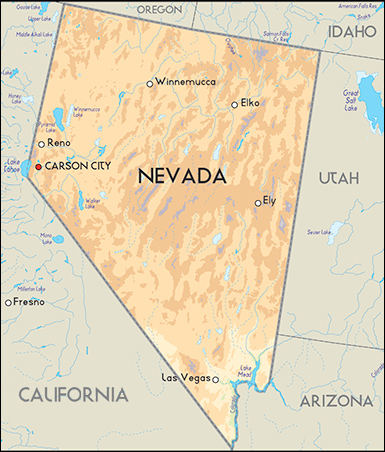
The February First Four states are becoming a hodgepodge of political strength with both Sens. Elizabeth Warren (D-MA) and/or Bernie Sanders (I-VT) potentially stealing Iowa and New Hampshire away from national front-runner Joe Biden. That means the former vice president may have his back up against the proverbial wall when the campaign streams into Nevada, the third voting state whose caucus participants will convene on Feb. 22. He may well need a victory there, before getting to South Carolina and his southern states political oasis.

As the new Fox News South Carolina Democratic primary poll shows (Sept. 29-Oct. 2; 803 likely South Carolina Democratic primary voters), Biden’s lead is very strong in the Palmetto State at 41-12-10 percent over Sens. Warren and Sanders, respectively. These numbers are commensurate with his standing in other recently polled southern domains.

But new data coming from delegate-rich states that are not frequently polled give us a further perspective about just how the nomination drama might unfold.

Four new state surveys were released at the end of last week with clear separation only detected in Arizona. Data coming from California and Ohio show dead heats among the three major candidates. Additionally, the latest Wisconsin poll gives Biden only a small lead.

The first three states in this group will vote in March, on Super Tuesday (March 3, California), March 10 (Ohio), and March 17 (Arizona). The fourth state’s electorate, Wisconsin, will cast their ballots on April 7.

Change Research (Oct. 27-28; 396 likely Arizona Democratic primary voters) finds that Arizona is polling as one of the ex-vice president’s weakest states and the only one that shows a relatively competitive four-way race. The Change results finds Sen. Warren claiming a significant lead with 35 percent support, ahead of Sen. Sanders’ 19 percent, Biden’s 15 percent, with South Bend Mayor Pete Buttigieg making a viable appearance with 13 percent preference.

Continue reading

Intra-Party Primary Challenges On Both Sides Emerge This Week

By Jim Ellis

July 3, 2019 — If you thought the 2020 cycle might feature a smaller number of primary challenge campaigns than we’ve seen in recent election years, then Monday might have changed your opinion. No less than six combined intra-party incumbent opposition campaigns were announced, or at least publicly contemplated.

After seeing the results of some key primaries in the past couple of election cycles, such as the now famous Alexandria Ocasio-Cortez 2018 victory over veteran Rep. Joe Crowley in New York, it’s hard to discount any early intra-party candidate at face value. But, it appears, at least today, that all of the potentially challenged incumbents begin their re-nomination campaigns as clear favorites.

In South Dakota, state Rep. Scyller Borglum (R-Rapid City), an engineer and theologian who was just elected to the legislature in November, announced that she will oppose first-term senator and former governor Mike Rounds in next year’s Republican primary. This challenge is particularly curious since no Democrat has yet even come forward to battle Sen. Rounds. The odds of Borglum finding a way to deny her opponent re-nomination look particularly long, but the contest should be watched for indicative early happenings.

Rep. Danny Davis (D) has represented the downtown Chicago and Oak Park areas in Congress since the beginning of 1997. Before that, he served on the Chicago City Council or Cook County Commission for another 18 years. But his long service has not made him immune from enduring a primary challenge. Attorney Kristine Schanbacher announced her opposition to Davis in the March Democratic primary. The congressman is a prohibitive favorite to again win re-nomination. Two other minor Democratic candidates had declared earlier.

Indiana’s 3rd District will feature a “family affair.” Rep. Jim Banks (R-Columbia City/Ft. Wayne) largely won the safe Republican seat in the 2016 GOP primary against former Wisconsin state senator Pam Galloway and four others when he captured over one-third of the vote in a plurality victory scenario.

Continue reading