Tag Archives: Mississippi

Georgia, Mississippi Primary Results

By Jim Ellis — Wednesday, March 11, 2026

GA-14 Special Election

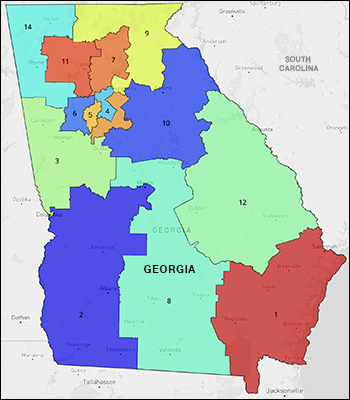
GA-14 lies in the northwest corner of Georgia. To see an interactive version of this map, go to: Dave’s Redistricting App.

The special election to replace resigned Rep. Margorie Taylor Greene (R) ended as expected with the top two finishers advancing to an April 7 runoff election from the field of 17 candidates. All contenders were placed on the same ballot irrespective of political party affiliation. Since no one received majority support, advancing to a runoff election is required under Georgia election procedure.

Democratic retired Army Gen. Shawn Harris, who spent over $4 million in his campaign on top of spending more than $3.5 million against Rep. Greene in the 2024 election cycle, finished first but with only 37.3 percent of the vote. Local district attorney Clay Fuller, who had President Trump’s endorsement, finished a close second with 34.9 percent, or 2,853 votes behind Gen. Harris.

Though last night’s Democratic share is better than 14th District historical trends suggest (Dave’s Redistricting App partisan lean: 69.2R – 28.9D; Trump ’24: 68.1 – 31.3 percent; Greene ’24: 64.3 – 35.6 percent), the Shawn Harris first-place finish should not be considered so unusual.

Of the 17 candidates on the ballot, only three were Democrats. Considering the Harris campaign’s huge spending figure and not splitting the Democratic vote base among a large field, it was clear that the leading Democrat would at least qualify for the runoff if not finish first. A dozen Republicans were competing for the largest share of the Republican base. Adding the aggregate Republican versus Democrat votes, the GOP combined candidates received 60 percent of the turnout.

Total voter participation exceeded 115,000, which is very strong for a special congressional primary election. In terms of county vote share, a Republican candidate won six of the district’s ten counties while Gen. Harris claimed four. The latter man’s largest total (a 49 percent vote share) occurred in Cobb County, the district’s second largest population center. The strongest Republican vote share was in Murray County where Fuller recorded 48 percent.

Mississippi

No particular surprises from last night’s Mississippi primary results, as both the Republican and Democratic primaries finished as expected.

In the Senate race, incumbent Cindy Hyde-Smith (R), as predicted, easily captured renomination with 81 percent of the GOP vote. Also as forecast, she will now face Lowndes County District Attorney Scott Colom who was an easy winner on the Democratic side. Colom scored a 73-18-8 percent victory over two minor opponents to claim the party nomination.

Sen. Hyde-Smith will now be a heavy favorite in the general election. In terms of voter turnout, approximately 9,000 more Republicans than Democrats voted in the statewide intra-party elections.

Turning to the House, Reps. Trent Kelly (R-Saltillo/Tupelo) and Michael Guest (R-Brandon/Jackson) were unopposed for renomination.

In the 1st District, Rep. Kelly will now face the new Democratic nominee, attorney Cliff Johnson who defeated state Rep. Kelvin Buck (D-Holly Springs) with 64 percent of the vote. In a district with a Dave’s Redistricting App partisan lean of 63.9R – 35.0D (Trump: ’24: 67.9 – 30.8 percent; Kelly ’24: 69.8 – 30.2 percent), the Congressman becomes a prohibitive favorite in his quest to secure a seventh term.

Agribusinessman and investor Michael Chiaradio was also unopposed in the Democratic primary. Like Rep. Kelly, Congressman Guest must be rated as the clear favorite to secure the general election. The DRA partisan lean for District 3 is 60.7R – 38.3D (Trump ’24: 64.1 – 34.9 percent; Guest ’24: 100 percent).

The 2nd District Democratic primary had drawn some national attention as former congressional staffer Evan Turnage returned to Mississippi and was challenging veteran Rep. Bennie Thompson (D-Bolton). Also as predicted, Rep. Thompson was an easy winner, recording an 86-13 percent landslide victory.

The 2nd District is the state’s lone Democratic CD and has a strong partisan voter history. The DRA partisan lean here is 63.8D – 35.5R (Harris ’24: 59.7 – 39.3 percent; Thompson ’24: 62.0 – 38.0 percent). Like Mississippi’s three other congressional incumbents, Rep. Thompson is a lock to win again in November.

Fourth District incumbent Mike Ezell (R-Pascagoula) was also a big winner in his Republican primary. The Congressman topped former congressional aide Sawyer Walters in a landslide 84-16 percent vote count. He will have little trouble overcoming the new Democratic nominee, state Rep. Jeffrey Hulum (D-Gulfport) who recorded a 57 percent win over two intra-party contenders.

The 4th District DRA partisan lean is 67.0R – 31.7D (Trump ’24: 70.7 – 28.2 percent; Ezell ’24: 74.0 – 26.0 percent). Obviously, this seat is the strongest Republican congressional district in one of the party’s most loyal states.

Mississippi Primary &
Georgia Special Election Today

By Jim Ellis — Tuesday, March 10, 2026

Primary season continues today in Mississippi as candidates are vying for party nominations in the US Senate campaign and all four US House districts. The special jungle primary to replace resigned Georgia Rep. Marjorie Taylor Greene (R) is also scheduled for today.

Mississippi

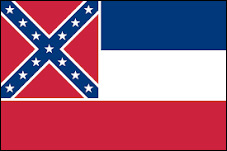
Mississippi state flag

Sen. Cindy Hyde-Smith (R) is on the ballot for a second full term, and she is expected to easily win renomination tonight over physician Sarah Adlakha. Mississippi is a runoff state, but the Senator will certainly eclipse the 50 percent-plus-one vote threshold to secure renomination.

Hyde-Smith was initially appointed to the Senate in 2018 after then-Sen. Thad Cochran (R) resigned due to health issues. She defeated former US Agriculture Secretary and ex-Congressman Mike Espy in the 2018 special election, and then again in the 2020 regular election for a full term.

Tonight, Lowndes County District Attorney and former municipal judge Scott Colom is expected to win the Democratic primary, and he too should avoid being forced into a runoff election. He faces two minor Democratic opponents. Sen. Hyde-Smith will be a clear favorite in the general election.

In the 1st Congressional District, Rep. Trent Kelly (R-Saltillo/ Tupelo) is unopposed for renomination. Two Democrats, ex-state Rep. Kelvin Buck and attorney Cliff Johnson are competing for their party nomination. Since only two contenders are on the ballot, one of them will win tonight. MS-1 is a heavily Republican district, so Rep. Kelly is a prohibitive favorite in November.

The 2nd District Democratic primary is likely to attract the most electoral attention tonight. Here, veteran Rep. Bennie Thompson (D-Bolton) seeks renomination to an 18th term from the Mississippi Delta CD. His opponent is former congressional aide Evan Turnage, who returns to his home district in one of about a dozen attempts around the country for a younger Democrat attempting to unseat a veteran House member in the party primary. Turnage is a credible candidate, but Rep. Thompson should easily win renomination tonight and sail through another general election.

The 3rd District race is set. Neither Rep. Michael Guest (R-Brandon/Jackson), on the ballot seeking a fifth term, nor Democrat Michael Chiaradio have primary opposition tonight. MS-3 is also a safe Republican seat, so Rep. Guest will cruise to re-election in November.

Turning to the gulf coast 4th District, we see competition in both party primaries. Rep. Mike Ezell (R-Pascagoula) is running for a third term and faces only former congressional aide Sawyer Walters in the GOP primary.

Three Democrats are vying for the opportunity of challenging Rep. Ezell in the general election: state Rep. Jeffrey Hulum (D-Gulfport), business consultant Ryan Grover, and military veteran Paul Blackman comprise the party’s candidate field. Rep. Hulum will be favored to win outright tonight, but Rep. Ezell should have little trouble holding the seat in the November general election.

GA-14

To see an interactive map of the Georgia Congressional Districts and GA-14, go to: Dave’s Redistricting App.

The initial election to replace Rep. Taylor Greene is being held today. A total of 15 Republicans are on the ballot along with three Democrats, a Libertarian Party member and an Independent. If one of the candidates receives an absolute majority, the individual is elected outright. If no one reaches the 50 percent plateau, the top two finishers irrespective of political party affiliation will advance to an April 7 runoff election.

The eventual special election winner will then serve the balance of the current term. Candidate filing has already closed for the regular term, so it is possible we could see a competitive regular election primary on the Republican side in May regardless of how the special concludes.

For the Democrats, the question to be answered tonight is whether their strongest candidate, retired Army General Shawn Harris, qualifies for the runoff or if two Republicans will advance. The GOP dominates this district, the safest Republican seat in Georgia, but with the vote split among so many party candidates, it will be possible for Gen. Harris to coalesce most of the Democratic vote and secure a runoff position. Doing so might allow him to even finish first.

Gen. Harris has raised and spent $4 million in this race. Running against Rep. Greene in 2024 (he spent $3.5 million but received only 36 percent of the vote), Gen. Harris has become a vacuum for Democratic and left of center campaign dollars. Those contributions have continued for the special election, so we will see what effect the large expenditures will have upon the final vote.

Regardless of what happens tonight, Gen. Harris will return for the regular election. He is unopposed for the party nomination later this year.

For the Republicans, the leading candidates appear to be Lookout Mountain Judicial Circuit District Attorney Clay Fuller who has President Trump’s endorsement. Other contenders sure to attract significant votes are former Paulding County Commissioner Brian Stover, state Sen. Colton Moore (R-Trenton), and Dalton City Councilman Nicky Lama.

Mississippi Rep. Bennie Thompson Faces Attack by Younger Challenger

(Challenger Evan Turnage ad)

By Jim Ellis — Friday, February 20, 2026

House

As we draw closer to the March primary elections, one Democratic challenger unveiled a new media ad this week aimed at denying renomination to one of his party’s congressional stalwarts.

Evan Turnage, a former congressional staff member to both Sens. Chuck Schumer (D-NY) and Elizabeth Warren (D-MA), returned to his native Mississippi to challenge veteran Congressman Bennie Thompson (D-Bolton).

Turnage is one of a growing number of younger Democratic candidates opposing elderly veteran US House members and making their length of service a campaign issue. Rep. Thompson, who was initially elected in 1992, is 78 years old.

Turnage turned up the heat against the 17-term incumbent and former chairman of the House Homeland Security Committee with his new television ad (see above). The strategy behind the media tactic is to create a negative image of Rep. Thompson for failing to deliver for the home constituency.

In the ad, which Turnage narrates, Rep. Thompson’s challenger says that he is from “the poorest district in the poorest state in the country.” He then indicates that Mississippi’s 2nd District held that same distinction when Congressman Thompson was first elected, at a time when Turnage was one year old, and that it still remains true today.

The ad continues with film of dilapidated housing and suggesting that the constituency is downtrodden. Turnage emphasizes that Rep. Thompson’s long tenure in Congress has not improved living conditions, and the challenger promises to do better.

In his media release unveiling the ad, Mr. Turnage says that his campaign is making a “six figure buy.” This is interesting because his year-end Federal Election Commission report shows only $53,877 cash-on-hand from just over $65,000 raised for the campaign. It’s possible that he had a strong fundraising month of January, otherwise the media buy will be on the lower end of his promised spectrum.

The Mississippi primary is scheduled for March 10th. Logistics professor Pertis Williams is also a Democratic congressional candidate, so theoretically a runoff election is possible in this race. If no one secures majority support, the top two finishers would advance to an April 7 runoff election.

It is highly unlikely that the votes will break almost evenly with Williams taking enough to deny the leader 50 percent, but this result is mathematically possible. Chances are very strong, however, that the nomination contest will be decided on March 10 and in Thompson’s favor.

The 2nd District lies in Mississippi’s western delta region and is the state’s lone Democratic congressional district. The CD houses 28 counties and parts of two others. The population centers include part of the city of Jackson, Mississippi’s state capital, Greenville along the delta, Yazoo City, and the definitive Civil War battle site of Vicksburg. Geographically, the seat stretches almost from the Tennessee border to just short of Louisiana, and along the western Mississippi border shared with Arkansas and Louisiana.

The population is majority Black, 62.2 percent, and 34.3 percent White. To substantiate Turnage’s claim about the district, the median household income is $43,811 according to the Data USA figures. The district’s poverty rate is 25.9 percent. The household income figure is less than half the national median level of $97,261. The Mississippi median income number is $70,821 and the state continues to rank last in national household income. Therefore, Turnage’s claim that MS-2 is the poorest district in the poorest state is verified.

Including Turnage’s challenge to Rep. Thompson, 13 Democratic incumbents over 70 years of age are seeking re-election and face credible much younger primary challengers. The additional dozen are: Reps. Mike Thompson (D-CA), Doris Matsui (D-CA), Mark DeSaulnier (D-CA), Maxine Waters (D-CA), John Larson (D-CT), David Scott (D-GA), Ed Case (D-HI), Kweisi Mfume (D-MD), Steve Cohen (D-TN), Al Green (D-TX), Sylvia Garcia (D-TX), and Don Beyer (D-VA).

At this point, each of these Democratic incumbents is favored for renomination, but the combined quality of their opponents suggests that the races should be monitored throughout the primary election cycle for potential upset possibilities.

Looking Forward to March

By Jim Ellis — Monday, Jan. 5, 2026

Midterms
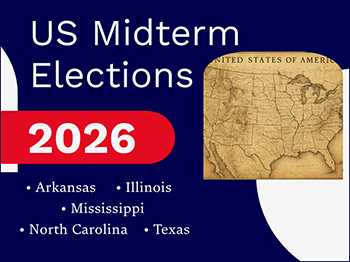
As we begin Midterm Election ‘26, we look to the nation’s first set of primaries, five of which will take place in the month of March.

Casting the first regular midterm cycle ballots will be voters in Arkansas, North Carolina, and Texas on March 3; Mississippi on March 10; and Illinois a week later, on St. Patrick’s Day, March 17.

Candidate filing has closed in all five states, and four of the five employ a runoff system. Only Illinois will select nominees through a plurality vote. Arkansas, Texas, and Mississippi feature 50 percent plus-1 vote nomination thresholds, while North Carolina candidates clinch their party’s nomination when exceeding 30 percent.


March 3:

Arkansas — The Natural State voters are looking at a quiet midterm election, just as the Republicans desire. Gov. Sarah Huckabee Sanders (R) is on the ballot for a second term. She faces no renomination competition. For the Democrats, state Sen. Fred Love (D-Mabelvale) and magazine publisher Bupha Xayprasith-Mays battle for the party nomination, and realistically for the right to lose to Gov. Sanders in the general election.

Sen. Tom Cotton (R) faces little in the way of primary opposition. He will easily defeat his two minor Republican opponents in the March 3 primary. He will probably face Lewisville Mayor Ethan Dunbar (D) in the general election. Sen. Cotton will be rated as a prohibitive favorite to win a third term in November.

Three of the four congressional incumbents, all Republicans, face no GOP opposition. Only Rep. French Hill (R-Little Rock) has a minor Republican opponent. All four Arkansas US Representatives are heavy favorites for re-election.

North Carolina — The open US Senate race is the only Tar Heel statewide campaign in 2026, and the nominees are virtually set long before voters cast ballots in the March 3 election.

Both former Gov. Roy Cooper and ex-Republican National Committee chairman Michael Whatley — though each face a large number of intra-party opponents — will glide to their respective Democratic and Republican nominations. The general election, however, will feature one of the most competitive Senate races in the nation.

With a new congressional map yielding little in the way of general election competition, a great deal of political attention will be centered upon the new 1st District. There, Republicans hope to unseat two-term Democratic incumbent Don Davis (D-Snow Hill).

The 1st was the focal point of the 2025 redistricting plan, and now the district moves clearly into the lean Republican column from its previous Democratic tilt. With Rep. Davis winning re-election by less than two percentage points in 2024, the re-draw will give the edge to the new Republican nominee.

Laurie Buckhout, the ’24 GOP nominee who almost defeated Rep. Davis, returns for a re-match and is favored to win the Republican primary against state Sen. Bobby Hanig (R-Currituck County), Carteret County Sheriff Asa Buck, Lenoir County Commissioner Eric Rouse, and attorney Ashley-Nicole Russell.

The other major primary campaign comes on the Democratic side in the state’s 4th CD. There, freshman Rep. Valerie Foushee (D-Hillsborough/Chapel Hill) fights for renomination against Durham County Commissioner Nida Allam. Expect the Congresswoman to prevail on March 3, but this race will likely host an ideologically driven campaign.

Texas — The Lone Star State will feature a major March 3 primary. The Senate race for both parties will headline the primary vote. Republican Sen. John Cornyn looks to be facing a runoff election, assuming he qualifies, with either Attorney General Ken Paxton or Rep. Wesley Hunt (R-Houston). The only certainty here appears that no candidate will receive majority support.

For the Democrats, the party primary will likely decide whether Rep. Jasmine Crockett (D-Dallas) or state Rep. James Talarico (D-Austin) will win the nomination. It is probable that the first-place finisher will exceed the 50 percent majority threshold. The eventual Republican nominee will be rated as at least a slight favorite in the general election, but the contest will be competitive.

Gov. Greg Abbott will win a fourth nomination as Governor against minor opponents. The Democrats will likely head to a gubernatorial runoff election and probably between two of the following three contenders: state Rep. Gina Hinojosa (D-Austin), former Congressman and 2006 gubernatorial nominee Chris Bell, and businessman Andrew White, son of the late former Governor Mark White. Gov. Abbott will be favored in the general election.

The US House races in Texas feature 11 open seats among the state’s 38 districts. Six of the 11 are Republican-held with three new seats created through the 2025 redistricting map.

The Democrats will feature a District 18 paired battle including both Jan. 31 special election candidates, Harris County Attorney Christian Menefee and ex-Houston City Councilwoman Amanda Edwards, against Rep. Al Green (D-Houston).

The other open Democratic seat lies in Dallas and Tarrant counties since Rep. Crockett is running for Senate. The six open Republican seats and three new districts all feature crowded primaries. Advancing to runoffs in each situation appears as a virtual certainty.


March 10:

Mississippi — Sen. Cindy Hyde-Smith (R) is on the ballot for a second full term and will be favored for re-election. She faces only one minor GOP opponent. The likely Democratic nominee, also expected to win the party nomination outright, is Lowndes County District Attorney Scott Colom. We can expect the Democrats to mount an effort in the general election, but it will be difficult to unseat Sen. Hyde-Smith in this reliably Republican state.

The only serious primary contest occurs in the state’s Delta region. Second District veteran Congressman Bennie Thompson (D-Bolton) has drawn a primary opponent in the person of attorney and former congressional aide Evan Turnage. This contest is expected to be a generational battle as opposed to being ideologically based. Turnage will attempt to create a contrast between himself, as a challenger in his 40s, and an incumbent in his late 70s. Expect Rep. Thompson to again prevail, but this could become a contest that draws significant political attention.


March 17:

Illinois — The major Illinois contest is the open US Senate Democratic primary. Here, Rep. Raja Krishnamoorthi (D-Schaumburg) appears to have the inside track toward winning the plurality election. He is favored to defeat Lt. Gov. Juliana Stratton and Rep. Robin Kelly (D-Matteson/Chicago). The Democratic nominee then becomes a prohibitive favorite to win the general election and succeed retiring Sen. Dick Durbin (D).

Gov. J.B. Pritzker is on the ballot for a third term and is unopposed for the Democratic nomination. Six Republicans, including 2022 party nominee Darren Bailey, are competing. Regardless of who comes through the GOP battle, Gov. Pritzker will be a prohibitive favorite to win the general election.

As in Texas, Illinois features a large number of open US House seats. In the Land of Lincoln, five of the state’s 17 congressional seats are open, all currently Democratic held districts. We will see nomination clinching elections in every Illinois CD on March 17. Each of the five open seats will remain Democratic in the general election.

Among the notable campaigns is a comeback attempt from former Rep. Jesse Jackson, Jr. (D), who has a reasonable chance of winning the crowded 2nd District Democratic primary. The winner will replace Rep. Kelly. Should Jackson return to the House, he will join his brother, Rep. Jonathan Jackson (D-Chicago), in the congressional delegation.

Another former member, Melissa Bean, is attempting to regain the 8th District seat she lost in 2010; she has a good chance of being successful.

The open 4th District campaign is controversial in that retiring Rep. Jesus “Chuy” Garcia (D-Chicago) didn’t announce his retirement decision, thus allowing his congressional chief of staff, Patty Garcia, to declare at the end of the filing period; therefore, she is running unopposed for the Democratic nomination. Garcia, no relation to the Congressman, will likely face major competition in the general election, however.

Two prominent Democrats, including Chicago Alderman Byron Sigcho-Lopez, are attempting to qualify for the ballot as Independent candidates. The Illinois ballot requirements for non-major party candidates are substantial, but the potential candidates have until May 26 to qualify.

Mississippi’s Sen. Hyde-Smith Favored for Re-Election; DSSC & Primaries; Fine Likely to Replace Waltz in Fla.; A GA-9 Challenge; Conn., NM Governor News

By Jim Ellis — Monday, Feb. 3, 2025

Senate

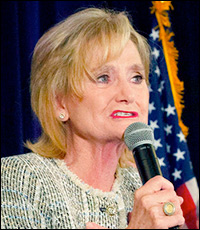
Mississippi Sen. Cindy Hyde-Smith (R)

Mississippi — Ty Pinkins, the 2024 Senate nominee against Sen. Roger Wicker (R) who received 37.2 percent of the vote, says he will challenge Sen. Cindy Hyde-Smith (R) in 2026. Sen. Hyde-Smith was appointed to the chamber when Sen. Thad Cochran (R) resigned due to health issues. She then defeated former US Agriculture Secretary and ex-Congressman Mike Espy (D) in the 2018 special election, and won a full term, again against Espy, in 2020 with a 54-44 percent vote spread. The Senator has announced for a second full term next year and will be the favorite to win re-election.

DSCC — At a fundraising event late this week, new Democratic Senatorial Campaign Committee chair Kirsten Gillibrand (D-NY) broadly hinted that the organization would not back away from getting involved in primaries. She made specific references to targeted contests in Maine, Michigan, and North Carolina. Democrats expect to mount strong challenges against Sens. Susan Collins (R-ME) and Thom Tillis (R-NC), in addition to campaigning to hold their newly open Michigan seat.

House

Florida State Sen. Randy Fine (R-Melbourne)

FL-6 — Though not residing in Florida’s vacant 6th District, state Sen. Randy Fine (R-Melbourne) topped two GOP opponents with 83 percent support to win the special Republican primary to replace resigned Rep. Mike Waltz (R-St. Augustine Beach). Waltz left the House to become President Trump’s National Security Advisor.

Sen. Fine, like Jimmy Patronis in the open 1st District, had the support of President Trump and Sen. Rick Scott. The FiveThirtyEight data organization rates the 6th District as R+28, so Sen. Fine becomes a definitive favorite to claim the seat in the April 1 special general election.

CO-8 — Freshman Rep. Gabe Evans (R-Ft. Lupton/Westminster) has already drawn a Democratic opponent in what will be another very competitive congressional race in northern Colorado’s 8th District. The Colorado Independent Redistricting Commission members drew this CD to be contested in every election, and so far it has performed as designed. Democrat Yadira Caraveo represented the seat in its initial term, only to fall to Evans in the 2024 election.

State Rep. Manny Rutinel (D-Commerce City) announced this week that he will enter the 2026 congressional race thus attempting to limit Rep. Evans to a one-term career. This contest will be a top target 2026 campaign.

GA-9 — Three-term US Rep. Andrew Clyde (R-Athens) has drawn a significant primary challenger. Gainesville Mayor Sam Couvillion announced that he will challenge Rep. Clyde in the 2026 Republican primary.

Clyde, a Freedom Caucus member and one of the more conservative Representatives, has fared well in nomination contests. In his first run back in 2020, Clyde won a GOP runoff with 56 percent of the vote. He defeated four Republicans in 2022 with just over 74 percent and was unopposed for renomination in 2024. The Congressman will remain a heavy favorite for renomination in 2026.

Governor

Connecticut — New Britain Mayor Erin Stewart (R) has filed a 2026 gubernatorial campaign committee. She promises to make a formal announcement by the end of this month, but it is a virtual certainty that she will run. Gov. Ned Lamont (D), who is eligible to run for a third term, says he will make a decision about 2026 after the legislative session ends in June.

New Mexico — Sen. Martin Heinrich (D), just re-elected in November, says he will not run for Governor in 2026. The Heinrich decision makes former Interior Secretary and ex-Rep. Deb Haaland the undisputed front-runner for the Democratic gubernatorial nomination. Haaland is making moves toward entering the race but has not yet officially announced her candidacy.

Virginia: The co/efficient data group released their latest Virginia poll (Jan. 18-20; 867 likely 2025 Virginia general election voters; live interview & text) and again finds a toss-up open 2025 gubernatorial race between Democratic former Congresswoman Abigail Spanberger and Republican Lt. Gov. Winsome Earle-Sears. Both appear to be presumptive nominees of their party at this early point in the election cycle. According to the co/efficient data, Spanberger and Earle-Sears would each command 40 percent support.

Last Night’s Primary Results

By Jim Ellis — Wednesday, April 3, 2024

Primaries

We saw four more states vote yesterday and even though the presidential nominations are clinched in both parties, valuable information can still be extracted from last night’s reported results.

So far, presidential voting has occurred in 36 states, and 32 where both parties have comparable systems. In four states, Delaware, Florida, Idaho, and Mississippi, no votes were recorded in one of the party primaries because a major candidate ran without opposition.

Last night, voters in Connecticut, New York, Rhode Island, and Wisconsin had the opportunity of casting their presidential nomination ballots. To no one’s surprise, President Joe Biden and former President Donald Trump easily swept their respective elections and added to their delegate totals. Each man recorded enough bound delegate votes on March 12 to become the respective Democratic and Republican Party’s presumptive presidential nominees so the later primaries are simply providing “icing on the cake.”

The bigger story throughout the 32 comparable states may be the turnout pattern and what that might mean for the general election. If the turnout trends we have seen in the states where ballots have been cast are a precursor to what happens in November, then Trump is well positioned to unseat President Biden.

Though the Democrats had a good night yesterday as more of their party members voted in Connecticut, New York, and Rhode Island, overall, the Republican turnout has been far superior, and in some very surprising states.

At this point, counting the unofficial numbers from last night, we have seen just over 30 million people vote in the 32 comparable states. Of those, 57.1 percent have voted in Republican primaries. One may argue that the more competitive race was on the Republican side, and that could account for the imbalance between the two parties. While there is validity to this line of reasoning, Democratic turnout is running below the party’s historical participation average even in some of their strongest states, thus highlighting the unusual trend.

Out of these 32 states, more Republicans have voted than Democrats in 24 of the domains while the opposite trend occurred in only eight. Of the Democrats’ eight majority turnout states, only one, Utah, is a surprise. The Democratic primary preference share of only 53 percent in both Massachusetts and Washington, however, does raise eyebrows. The same for Republicans recording that same percentage split in Louisiana.

Republicans posted unexpected turnout advantages in Colorado, Hawaii, Maine, Minnesota, New Hampshire, Vermont, and Virginia. While none of these states are likely to be in serious play for Trump during the general election the turnout trends here are noteworthy, nonetheless.

What may be more troubling for the Biden campaign team is how the swing states performed in the primary participation race.

Here, again, Trump outperformed the president’s Democratic Party in Arizona (58.9 percent of the total turnout chose to vote in the Republican primary), Georgia (67.0 percent), Michigan (59.2 percent), Nevada (55.9 percent), North Carolina (60.7 percent), Ohio (68.2 percent), and last night in Wisconsin (51.7 percent). The substantial margins of individuals choosing to vote in the Republican primary is a clue that former President Trump has a chance to build a new coalition of voters in these most critical of states.

The Nevada Republican total is at least slightly skewed. The combined numbers from the non-binding primary and their delegate apportioning caucuses are tainted because voters could participate in both the primary and a respective caucus, which were held on different days. There is no available data suggesting what percentage of voters participated in both, but it appears from the totals associated with each event that a substantial number cast their vote in each election.

Last Night’s Primary Results; Rep. Buck to Resign; California Projections; Close Polls in North Carolina

By Jim Ellis — Wednesday, March 13, 2024

President

Primary/Caucus Results — Primaries were held in three states last night, and even without results from the Hawaii caucuses, both President Joe Biden and former President Donald Trump exceeded the bound delegate vote requirement to score first ballot nominations. Therefore, both men become their party’s “presumptive nominee,” meaning they will become the official standard bearer at the respective party conventions in July (Republicans) and August (Democrats).

The Georgia, Mississippi, and Washington primaries went as expected with both Biden and Trump winning with landslide totals against opponents who appear on the ballot but who have withdrawn from the race.

Mississippi was the state that held its full ballot primary last night. Sen. Roger Wicker (R) won renomination against two opponents with just over 60 percent of the vote. Wicker won all but 10 counties in the state from a total universe of 82. All four Magnolia State US House incumbents were either unopposed for renomination or easily won. Freshman Rep. Mike Ezell (R-Pascagoula) had two GOP opponents, and still surpassed 73 percent of the vote. All four: Reps. Trent Kelly (R-Saltillo/Tupelo), Bennie Thompson (D-Bolton), Michael Guest (R-Brandon/Jackson), and Mr. Ezell, now become prohibitive favorites to win again in November.

House

Rep. Ken Buck / Photo by Gage Skidmore

CO-4: Rep. Buck to Resign — Colorado US Rep. Ken Buck (R-Windsor), who had previously made public his intentions not to seek a sixth term later this year, announced yesterday that he will resign much sooner — on March 22. The move initiates the calling of a special congressional election — the fourth in the country prior to the regular general election. Gov. Jared Polis (D) responded that he will schedule the special vote concurrently with the state’s June 25 primary election.

In Colorado, special election nominations are handled through vacancy committees that the local political parties construct. This means the voters will go to the polls only once to fill the balance of the current term.

This system likely plays to Rep. Lauren Boebert’s (R-Silt) detriment. It is highly unlikely that the District 4 vacancy committee members will choose her as the party nominee considering she is still the District 3 incumbent. This also means the dozen announced candidates already vying to replace Rep. Buck will see one of their colleagues likely chosen for the special.

California: More Finalists Projected — As the California ballot counting process moves laboriously along, the Associated Press is projecting that three more candidates will qualify for the general election from the top-two jungle primary. In the Los Angeles-anchored 34th District, both incumbent Rep. Jimmy Gomez (D) and movie executive David Kim (D) will again advance into the general election. This will be the third consecutive election in which the two have faced each other in a double-Democratic contest. In 2022, Rep. Gomez registered only a 51-49 percent general election win over Kim, so another close race is expected later this year.

In the open South San Francisco Bay seat from which veteran Rep. Anna Eshoo (D- Atherton) is retiring, former San Jose Mayor Sam Liccardo (D) is assured of advancing to the November election, but his eventual opponent has still not been decided. In second place is San Mateo Supervisor and former state Sen. Joe Simitian (D), who is only 749 votes ahead of Assemblyman Evan Low (D-Campbell) with approximately 26,000 ballots remaining to be counted.

Whoever wins the special will have a major advantage in the subsequent November regular election if the primary electorate chooses someone in the regular primary other than whom the vacancy committee decided upon. Another option the committee may have is to select someone who agrees not to seek a full term. Therefore, we will see more political drama occurring in Colorado as the campaign to replace Rep. Buck continues to unfold.

Governor

North Carolina: Two More Close Polls — Now that Lt. Gov. Mark Robinson (R) and Attorney General Josh Stein (D) are the official gubernatorial nominees of their respective political parties after last Tuesday’s primary vote, Survey USA and the Cygnal firm went into the field to test the general election between the two new official nominees.

The S-USA poll, conducted for WRAL-TV in Raleigh (March 6-9; 850 NC adults; 736 registered North Carolina voters; 598 likely North Carolina general election voters; online), sees AG Stein leading Lt. Gov. Robinson by a tight 44-42 percent margin, which is in the consistent realm of previously released surveys. When asked about presidential preference, the sampling universe would favor former President Trump over President Biden by a 50-45 percent margin in this most critical of swing states.

The Cygnal survey was conducted during the March 6-7 period (600 likely North Carolina voters; live interview & text) and produced a slightly different outcome. While projecting a similarly close result as Survey USA, Cygnal sees Lt. Gov. Robinson leading the gubernatorial race with a 44-39 percent spread. The latter firm also finds former President Trump holding a five point lead over President Biden but with a slightly different 45-40 percent count.