Tag Archives: Texas

Texas: Cornyn Defeated Soundly;
Other Runoff Results

By Jim Ellis — Wednesday, May 27, 2026

Senate

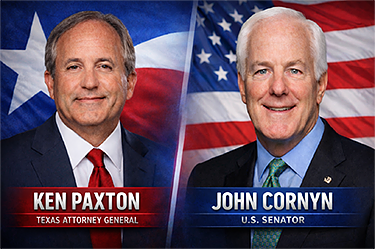
Texas Sen. John Cornyn (R) suffered a crushing defeat yesterday in the Texas Republican runoff election.

Early vote totals initially suggested a favorable runoff turnout model for the Senator, but that expectation ultimately proved unfounded as Attorney General Ken Paxton convincingly secured the party’s nomination. Paxton, who held a lead beyond the polling margin of error in the campaign’s final weeks, appears poised to finish the runoff with a support figure exceeding 60 percent.

Clearly, Sen. Cornyn’s failure to win renomination stemmed from losing touch with the Republican base and allowing himself to be cast as a centrist incumbent – even though, according to his own messaging, he voted with President Trump 95 percent of the time.

Now Paxton advances to the general election, where he will face state Rep. James Talarico (D-Austin) in a contest that will feature sharp contrasts. The Texas race is expected to be both hard‑fought and expensive, with Democrats focusing their attacks on Paxton’s character and Republicans targeting Talarico’s more extreme – and at times unusual – issue positions, particularly those relating to Christianity.

Cornyn is now the second Senate incumbent to lose a renomination bid in the early 2026 cycle, joining Louisiana Sen. Bill Cassidy (R), who was defeated in his May 16th primary while seeking a third term. In total, there are now 13 open US Senate seats among the 35 contests up for election this cycle.

House

Sen. Cornyn was not the only veteran incumbent to fall last night. In the Houston-anchored 18th Congressional District, 11‑term Rep. Al Green (D-Houston), who gained national attention after shaking his walking cane at President Trump during a televised address and being escorted from the House chamber, also lost in a landslide.

Rep. Green was paired in the 18th District under the new redistricting plan with congressional newcomer Christian Menefee (D-Houston). Rep. Menefee had previously won a differently configured version of the 18th District in a November special election to succeed the late Rep. Sylvester Turner (D).

What makes Rep. Menefee’s victory so striking is that he previously represented only 26 percent of the newly drawn 18th District. Despite that limited geographic base, he defeated Rep. Green with a projected 68 percent of the vote. Rep. Menefee now heads into the general election as a heavy favorite and will win comfortably.

A freshman House incumbent also won’t be returning to Congress next year. In Dallas, Rep. Julie Johnson (D-Farmers Branch) lost her renomination bid to former Congressman and 2024 US Senate nominee Colin Allred. After initially announcing plans for another Senate run, Allred unexpectedly reversed course as the filing deadline approached and declared his intention to instead pursue a House comeback.

Allred’s decision to enter the 33rd District Democratic primary – after incumbent Marc Veasey (D) chose not to seek re‑election when his Fort Worth power base was removed from the redrawn district – proved to be a well‑timed move. Yesterday, he defeated Rep. Johnson by a 55-45 percent margin and now will have an easy run in the general election.

Rep. Johnson was elected to the previous 32nd District in 2024. The new redistricting plan shifted the seat into Republican territory, making District 33 her most viable option for re‑election. Rep. Allred, however, had previously represented a much larger share of the newly drawn 33rd than Rep. Johnson, and the absence of a more favorable district left her with no realistic path to continue in Congress, limiting her tenure to a single term.

The 33rd District now becomes an open seat for the general election, marking the 66th open US House seat nationwide and the 13th in Texas.

Another US House incumbent lost his primary, though Rep. Chip Roy (R-Austin) was not seeking re‑election to Congress. Instead, he pursued the open state Attorney General’s office but fell to state Sen. Mayes Middleton (R-Galveston) yesterday, 55-45 percent.

No surprises emerged in the remaining runoffs. Consistent with primary results across the country so far, President Trump’s endorsed candidates again routinely prevailed.

In the newly created Harris County-based 9th Congressional District, investment banker and Army veteran Alexandra “Alex” Mealer, another Trump endorsed candidate, easily won the Republican runoff over state Rep. Briscoe Cain (R–Deer Park), who Gov. Greg Abbott supported. Though votes remain to be counted, Mealer is currently just under 69 percent of the vote.

Moving to the Lubbock anchored 19th CD, as expected, agribusinessman Tom Sell defeated conservative activist Abraham Enriquez, who Gov. Abbott endorsed, by a lopsided 64-36 percent margin. Sell took more than 40 percent of the vote in the primary, so his runoff victory came as no surprise.

In the newly drawn 35th District, which stretches from San Antonio halfway to Corpus Christi, another Trump‑versus‑Abbott proxy contest broke in the President’s favor. Businessman Carlos De La Cruz, the brother of Rep. Monica De La Cruz (R-McAllen), defeated state Rep. John Lujan (R-San Antonio) by nearly a 60-40 percent margin.

For the Democrats, as expected, Bexar County Deputy Sheriff Johnny Garcia won the party’s runoff with more than 62 percent of the vote, defeating therapist Maureen Galindo, who had previously made controversial and bigoted public statements. The general election is likely to be competitive, though the newly drawn district leans at least somewhat in the Republicans’ favor.

Returning to Harris County, in the 38th District that Rep. Wesley Hunt (R-Houston) risked to run for the Senate, the expected outcome materialized. Trump‑endorsed financial advisor Jon Bonck easily won the Republican runoff over businesswoman and pilot Shelly deZevallos, taking 65 percent of the vote.

Bonck had secured roughly 47 percent in the primary, leaving little doubt about the runoff result. The 38th District is safely Republican, positioning Bonck to join the incoming freshman class in Washington early next year.

Texas Runoffs; 17 Decided Today

By Jim Ellis — Tuesday, May 26, 2026

While the highly publicized Texas Republican primary campaign between Sen. John Cornyn and Attorney General Ken Paxton will be settled today, 16 US House runoffs will also be decided, including six major contests.

President Trump may have helped tilt the race in Paxton’s favor, but the early vote turnout model seems to favor Sen. Cornyn.

For US Reps. Nathaniel Moran (R-Whitehouse/Tyler), Lance Gooden (R-Terrell), Lizzie Fletcher (D-Houston), Randy Weber (R-Friendswood/Galveston), Veronica Escobar (D-El Paso), Pete Sessions (R-Waco), Beth Van Duyne (R-Irving), and Greg Casar (D-Austin), along with open seat contenders Frederick Haynes (D-Dallas) and Jace Yarborough (R-Rockwall), today’s results will determine their general election opponents.

All eight incumbents, as well as Pastor Haynes and Yarborough, enter the fall campaign as prohibitive favorites.

Six competitive House runoff results tonight will likely determine the districts’ next US Representative. The half‑dozen include open CD-9, created under the new 2026 redistricting plan; CD‑18, featuring the incumbent pairing between Reps. Al Green and Christian Menefee; and Lubbock‑based District 19, where agribusinessman Tom Sell faces conservative activist Abraham Enriquez.

Turning to the Dallas Metroplex, the CD‑33 runoff features freshman Rep. Julie Johnson (D‑Farmers Branch) facing former Congressman and 2024 US Senate nominee Colin Allred. Farther south along I‑35, the new redistricting‑created 35th District-anchored in San Antonio will also be decided tonight; as will the Houston open seat that Rep. Wesley Hunt (R‑Houston) risked to pursue a Senate bid.

TX-9

The newly created east Harris County-anchored 9th District is designed to elect a Republican, which is why today’s runoff will likely determine the general election winner. The two Republican candidates are investment banker and Army veteran Alexandra “Alex” Mealer, who President Trump endorses, and state Rep. Briscoe Caine (R-Deer Park), who Gov. Greg Abbott supports.

Mealer finished first in the primary with 35.8 percent, ahead of Rep. Cain’s 31.2 percent. The runoff is again expected to be close, particularly given that runoff turnout is typically lower than in the primary. The winner will face Democratic nominee Letty Gutierrez, a lobbyist and former Houston City Council staff member. According to the Dave’s Redistricting App analysis, the new 9th District carries a 51.6R–46.6D partisan lean.

TX-18

The new Houston-anchored, safely Democratic 18th District pairs veteran Rep. Al Green with special election winner Christian Menefee in a Democratic runoff that will determine which of the two members will continue his congressional career. In the primary, Menefee, despite representing only 26 percent of the newly drawn district, edged Rep. Green 46.0 to 44.2 percent. As with all runoffs, the candidate who most effectively turns out his voter base is likely to prevail.

TX-19

Agribusinessman Tom Sell came very close to winning the Republican nomination outright on March 3. He is widely expected to seal the nomination tonight. In the primary, he finished first with 40.4 percent of the vote. Because the margin between second and third place was only 193 votes, it took several weeks to determine that Abraham Enriquez had qualified for the runoff.

The closeness of the primary is of little consequence because Sell is expected to easily win tonight. With a 72.4R – 25.4D partisan lean, he will also enter the general election as the prohibitive favorite.

TX-33

The 33rd District contest is another Democratic runoff featuring candidates with prior electoral success. Freshman Rep. Julie Johnson previously represented the 32nd District, which was converted to a Republican seat during redistricting. She now faces former Rep. Colin Allred, who entered the race after withdrawing from the Senate campaign.

In the primary, Allred finished first with a substantial 44.0 to 33.2 percent margin. He also reported an approximate $400,000 cash-on-hand advantage through the May 6 financial disclosure deadline. Tonight’s winner secures the seat in November. The DRA partisan lean for the newly configured 33rd CD, now fully contained within Dallas County, is 70.9D – 26.7R.

TX-35

Texas’s new 35th CD is another product of the 2026 redistricting plan. The seat covers a large portion of the southeastern San Antonio suburbs and extends roughly halfway toward Corpus Christi. The district’s DRA partisan lean is 50.9R to 46.7D, indicating a Republican advantage but before an electorate that has the potential of becoming competitive in November.

Both parties are locked in runoffs tonight. The Republicans feature state Rep. John Lujan (R-San Antonio) battling businessman Carlos De La Cruz, the brother of Rep. Monica De La Cruz (R-McAllen). This is another race that pits a President Trump-endorsed candidate (De La Cruz) against one who Gov. Abbott supports (Lujan).

On the Democratic side, Bexar County Sheriff’s Deputy Johnny Garcia has support from party leadership as he faces former San Antonio City Council candidate Maureen Galindo, who has reportedly expressed anti‑Semitic views. Outside organizations have been “attacking” Galindo with messages aimed at appealing to and energizing far‑left voters. Democratic officials argue these ads are being funded by Republican‑aligned groups attempting to boost Galindo over Garcia in the primary.

Whoever emerges from both party runoffs tonight will set up an especially interesting general election.

TX-38

As in TX‑19, the outcome of this runoff appears largely pre-determined. Competing in the Republican contest to succeed departing Rep. Wesley Hunt in this safely Republican district (DRA partisan lean: 60.5R to 37.4D) are mortgage broker Jon Bonck and businesswoman Shelly deZevallos. Bonck led the initial primary with a 46.8 to 18.9 percent margin – just about three points short of securing the nomination outright.

Unlike the TX‑32 primary, where the challenger conceded before the runoff, deZevallos pushed this contest into a second round. While the race is still competitive, most indicators point toward a Bonck victory, though deZevallos has had sufficient resources to remain viable. Regardless of tonight’s outcome, the eventual Republican nominee is expected to hold this safely GOP seat in November.

Texas Senate Race: Not So Fast

By Jim Ellis — Thursday, May 21, 2026

Senate

The Texas Senate Republican runoff is Tuesday, and President Trump’s endorsement this week of Attorney General Ken Paxton over Sen. John Cornyn has certainly drawn even more attention to this race. But is it the clinching blow? Several points suggest otherwise.

To recap, Sen. Cornyn placed first in the March 3 primary with a 41-40 percent edge over AG Paxton. The incumbent performed well in the state’s major population centers while Paxton handily carried most of the Texas rural regions with the notable exceptions of the Panhandle and South Texas.

As we have seen recently with the defeats of Louisiana Sen. Bill Cassidy and Kentucky Rep. Thomas Massie, the President has been on a strong political run in helping his endorsed candidates secure victories.

There are several reasons why the Texas situation differs from the previously mentioned campaigns. In both the Cassidy and Massie races, President Trump’s involvement centered on Republican officeholders who had openly opposed him. Trump sought to defeat Sen. Cassidy because of his vote to convict during the 2021 impeachment proceedings.

Rep. Massie, meanwhile, had long been a member who frequently broke with the President’s proposals and was widely viewed as the least loyal House Republican in terms of supporting Trump’s policy agenda.

The Texas situation is different. First, the President is not attacking Cornyn as an enemy; in fact, for a time he appeared inclined to endorse the Senator. This, even though Paxton has been a loyal Trump supporter since the very beginning of the President’s political rise in 2016.

Secondly, both four‑term Sen. Cornyn, previously elected as state Attorney General and to the Texas Supreme Court, and AG Paxton, who has won three statewide general elections and two competitive primaries, are already very well known to Texas Republican primary voters. As a result, the extent to which a last‑minute presidential endorsement can sway or energize voters on Paxton’s behalf is open to question.

Third, it’s possible the President is influenced with the latest polls because the most recent May research studies have produced results suggesting the closing trends were moving away from the incumbent.

Peak Insights (May 2-5; 800 likely Texas Republican runoff voters) found Cornyn and Paxton virtually tied with a 47-46 percent split in the Senator’s favor. The Remington Research Group and the Global Strategy Group, the latter a Democratic pollster, detected a much different result slightly later in the month. The RRG data (May 3-5; 1,810 likely Texas Republican runoff voters) reported Paxton leading 47-36 percent, while GSG (May 6-11; 600 likely Texas Republican runoff voters) saw an even wider 52-40 percent Paxton advantage.

If polls factored into the President’s endorsement, the decision may have been hasty. In the primary, the six surveys conducted closest to Election Day showed Paxton leading by an average of seven percentage points. Yet Cornyn ultimately prevailed by a single point, indicating an eight‑point average polling miss.

Additionally, polling for a runoff is even more challenging than polling for a primary. Turnout in a Texas secondary election is typically one‑third to one‑half lower than in the primary, making accurate measurement even more difficult and the results less certain.

Furthermore, turnout tends to be higher in metro areas than in rural communities, a dynamic that could help Cornyn since he did well in the cities on March 3.

While the state does not have a mass vote‑by‑mail program, it does allow in‑person early voting for roughly a month before Election Day in regular elections and over a five‑day period for runoffs. According to the Target Early Target Smart organization, which tracks early voting, three‑quarters of the 2024 Texas general‑election vote was cast before Election Day.

With early voting ending on Friday, the Trump endorsement may have less impact because a substantial share of ballots are already cast.

The Texas Senate race remains one of the more compelling contests of the 2026 election cycle and will continue to draw significant attention through the general election, regardless of Tuesday’s Republican runoff result.

While the Trump endorsement has proven golden for many Republicans seeking a party nomination, the factors outlined above suggest the outcome on May 26 could be different. Once again, significant political attention will soon be focused on the Lone Star State.

Redistricting Review, Post Virginia

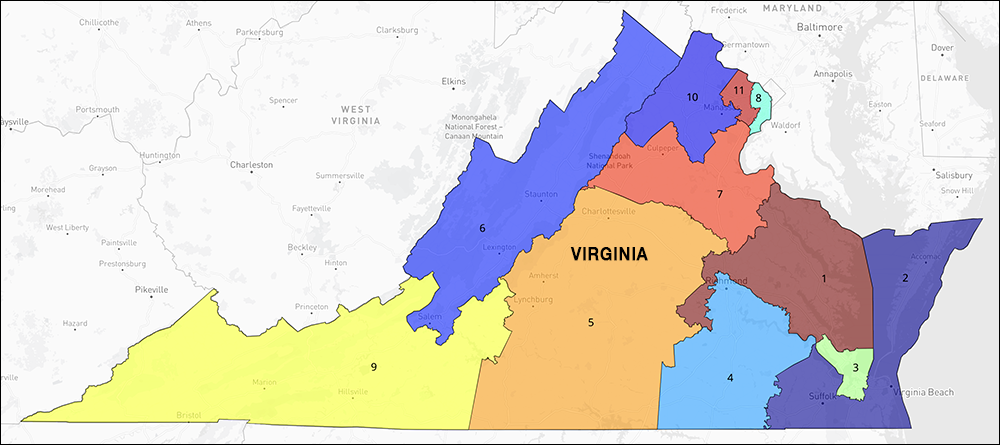
Virginia Congressional Districts / Dave’s Redistricting App (6D-5R map)

By Jim Ellis — Monday, May 11, 2026

The Virginia state Supreme Court decision to uphold the lower court ruling, finding that the legislature violated its own rules by rushing a referendum onto the ballot and, in the process, violated the Old Dominion Constitution, has significantly altered the outlook for the House midterm elections.

Instead of the cumulative effect of the new congressional maps being largely a wash, with neither party gaining a significant number of seats, Republicans are now positioned to net between 8 and 12 seats. Added to their current 220 seats, the new maps could expand their current prospective majority to more than 230 seats.

The following is an update on where the affected states stand in terms of 2026 electoral outlook under the new congressional maps, Starting with Virginia first:

Virginia

On Friday last week, the state Supreme Court invalidated the statewide redistricting referendum vote, upholding the lower court ruling that said the legislature violated its own rules and the state constitution in rushing the referendum to the ballot. While congressional redistricting is now effectively closed for this year here, meaning the 6D-5R map will remain in place for the 2026 elections, the process could be revisited in time to produce a new Virginia map for the 2028 cycle.

Certainly, the state Supreme Court ruling is a big win for Republicans, but the victory is likely to be short lived. For 2026, however, expect all Virginia incumbents to be favored for re-election.

California; Texas

The nation’s two most populous states became the focal points of the early redistricting battles, with party leaders in both parties predicting that their new maps would yield a net gain of five seats for their respective parties.

A closer examination of the partisan data and voting histories in the affected areas, however, suggests that gaining five seats under these new maps may be ambitious. What does appear likely, however, whether the eventual gain is three, four, or five seats, is that the two states will largely cancel each other out in terms of national seat gains.

Alabama

After the US Supreme Court’s ruling in the Callais v. Louisiana established clearer criteria for the construction of minority districts, the Alabama legislature reinstated a congressional map it had originally passed in 2023, only to have it later struck down by a court as a partisan gerrymander. Under the Supreme Court’s new directive, however, the plan could no longer be characterized as a racial gerrymander.

There is one remaining legal hurdle for the map to overcome, so it is possible that Gov. Kay Ivey (R) could suspend the congressional primaries until the map issue is resolved. Campaigns competing in the regularly scheduled May 19 primary for other offices would likely still be allowed to proceed.

The 2023 map would eliminate the majority minority 2nd District that a previous court had ordered drawn. Assuming no further legal complications arise, Alabama’s congressional delegation would likely revert to a 6R-1D partisan split. Rep. Shomari Figures’ (D-Montgomery) 2nd District would be dismantled and shifted back into southeastern Alabama, like its configuration during the previous decade.

Florida

The new Florida map has cleared the legislative process and now must face a legal challenge before the state Supreme Court. The plaintiffs are expected to file suit pertaining to the state ballot initiative voters approved to establish criteria for drawing legislative and congressional districts.

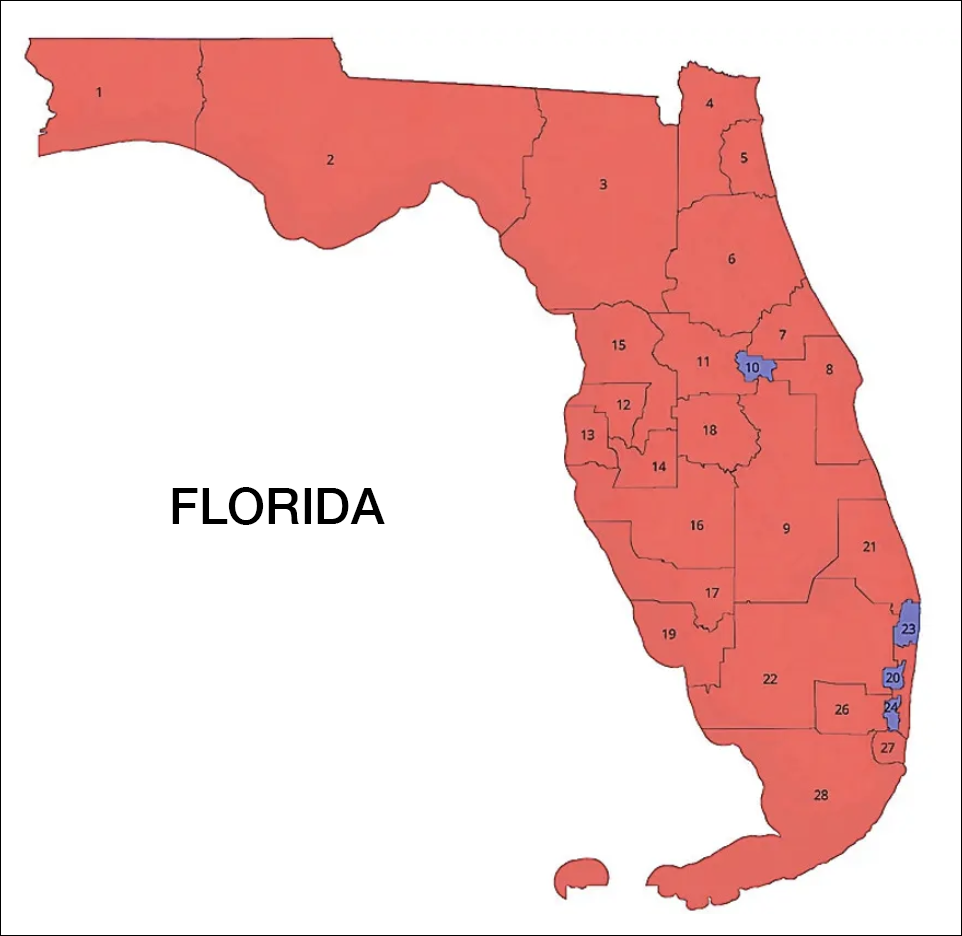
It is probable the court will rule that the map, which is predicted to net the Republicans three to four seats, is a partisan gerrymander with a projected 24R-4D partisan split; but other provisions of the voter-passed initiative may violate the SCOTUS’ Louisiana ruling. But the new map will likely stand for now, and net the GOP three to four seats.

Louisiana

The Bayou State is at the center of the determinative racial gerrymandering ruling, and Louisiana is now moving toward adopting a new congressional map that would produce a 5R-1D partisan split; thus, returning to the configuration that existed before the series of court rulings that ultimately reached the US Supreme Court.

The new map is reportedly being designed to preserve a Baton Rouge-anchored seat for Rep. Cleo Fields (D) while eliminating the New Orleans-based district that Rep. Troy Carter (D) currently holds.

Mississippi

Gov. Tate Reeves (R) has called a special redistricting legislative session, but only for the purpose of redrawing the state’s Supreme Court districts.

With the primary election already held on March 10, ordering a new round of congressional redistricting would effectively invalidate the 2026 primary, requiring all candidates to re-file and compete under a revised map. As a result, it appears unlikely that Mississippi congressional redistricting will take place in 2026.

Missouri

The Missouri map was enacted months ago, but opponents gathered enough signatures to qualify a repeal initiative for the ballot. The Missouri Supreme Court is now considering whether to stay the new map pending the vote or allow it to remain in effect for the 2026 election cycle. In the meantime, candidates have already filed under the current district lines.

If the map is allowed to stand, Republicans are expected to gain one seat in the delegation at the expense of veteran Rep. Emanuel Cleaver (D-Kansas City), though the Congressman has already filed for re-election. According to the Dave’s Redistricting App statisticians, the new 5th District has a partisan lean of 56.6R – 41.1D.

North Carolina

The Tar Heel State was among the first to complete the redistricting process, and the new congressional map will stand. The revised plan effectively shifts one district from Democratic to Republican control. Rep. Don Davis (D-Snow Hill) now sees his eastern North Carolina district move from a lean Democratic seat to one that is likely to favor a Republican in the general election.

In 2024, Rep. Davis won re-election by a margin of less than 1.5 percentage points. Retired Army officer Laurie Buckhout (R) is returning for a rematch, and this time the political landscape is more favorable to her chances of unseating the Congressman. With North Carolina’s primary having been held on March 3, the general election field is now set, and campaigning is underway.

South Carolina

While Gov. Henry McMaster (R) has said he would not call the legislature into a special redistricting session, lawmakers — still meeting in regular session — are moving forward with efforts to redraw the state’s congressional map.

Because the session is nearing adjournment, new legislation, including any proposal to adopt a revised congressional redistricting plan, would require a two-thirds vote of members to be added to the legislative calendar.

Republicans believe they have the votes to advance a 7R-0D plan from the House of Representatives, though they may be slightly short of the necessary support in the state Senate. If the new redistricting map is to pass, it will need to do so this week.

Tennessee

The Tennessee legislature and Governor passed a new 9R-0D congressional map soon after the Supreme Court ruled on the Louisiana racial gerrymandering case. With the Tennessee primary not scheduled until Aug. 6, the new map will stand. As a result, Rep. Steve Cohen (D-Memphis), the state’s only remaining Democratic member of the House, faces long odds of returning to the next Congress.

Utah

Months ago, the Utah court system invalidated the state’s 4R–0D congressional map, ruling that the legislature had disregarded voter-approved criteria for drawing district boundaries. As a result, the courts imposed a new map that creates a Salt Lake City–based district that Democrats are expected to win. Overall, Utah’s redistricting is projected to result in a net gain of one Democratic seat.

Texas Redistricting Ruling; Fla. Gov. DeSantis Releases Redistricting Map

By Jim Ellis — Tuesday, April 28, 2026

Texas Redistricting

In a move that could signal how it may approach the Louisiana racial gerrymandering dispute, the US Supreme Court yesterday took a very unusual step regarding the Texas redistricting appeal.

A majority of the justices voted to issue a reverse summary judgment in the challenge to Texas’s new congressional map. The move effectively overturned the lower court’s ruling without requiring additional briefing or oral argument.

Yesterday’s court action is exceedingly rare, and its use adds weight to predictions that the forthcoming Louisiana decision could become a defining ruling on racial gerrymandering. The Court is scheduled to release additional opinions tomorrow, and it remains unclear whether Callais v. Louisiana will finally be among the cases issued this week.

For more detailed information, visit the Florida Senate redistricting map.

Florida Redistricting

Gov. Ron DeSantis (R) yesterday released a new congressional map that he is urging the legislature to approve during the special session scheduled to begin today.

The Governor issued a statement saying that redistricting is necessary because “Florida got shortchanged in the 2020 Census, and we’ve been fighting for fair representation ever since. Our population has since grown dramatically, and we have moved from a Democrat majority to a 1.5 million [person] Republican advantage. Drawing maps based on race, which is reflected in our current congressional districts, is unconstitutional and should be prohibited.”

Widely viewed as a response to the 10D–1R Virginia map approved by voters last week, the Governor unveiled a Florida proposal that would likely shift the delegation from a 20-8 Republican advantage to a 24-4 advantage.

The current Florida map features 20 Republicans and 8 Democrats. It appears that at least three current Democratic House members — Reps. Kathy Castor (D-Tampa), Darren Soto (D-Kissimmee), and Debbie Wasserman Schultz (D-Weston) — would likely face significantly more difficult paths for re-election and enter the general election as underdogs.

In a new 23rd District lying in the Ft. Lauderdale area, it is probable that Reps. Jared Moskowitz (D-Parkland) and Lois Frankel (D-West Palm Beach) would be paired in a Democratic primary, with the winner favored to hold the seat in the general election.

The sitting Democrats who would have a district on the new map are: Reps. Maxwell Frost (D-Orlando), Frederica Wilson (D-Miami Gardens) and the open 20th District.

In the latter seat, former Congresswoman Sheila Cherfilus-McCormick (D-Miramar), who resigned from the House while facing federal indictments in addition to violating 25 House ethics provisions, would see an open Democratic seat in her area. Although she has stepped down from Congress, Cherfilus‑ McCormick has not closed her campaign account and indicated that she intends to run for the new seat.

The new 20th District is one she would likely have been able to hold were it not for her legal troubles. Six other Democrats had already entered the race, and the new configuration suggests that all of them will remain in the contest. Although she is running again, Cherfilus‑McCormick’s prospects for returning to Congress appear slim at best.

The South Florida portion of the map appears to create two new open Republican seats: one coastal district (FL‑25) between Fort Lauderdale and Miami, and another to the west (FL‑22) that stretches across the peninsula to the Gulf Coast.

Political data for the proposed districts has not yet been released or analyzed, so decisions about where certain members ultimately run could shift as more information becomes available. For example, because many of the South Florida districts are expected to lean only slightly Republican, Reps. Wasserman Schultz and Moskowitz may have multiple potential districts to consider if they choose to remain in Congress, though none would offer a particularly favorable political landscape.

There are still many unanswered questions surrounding the proposed Florida map, but the DeSantis plan is currently the most fully developed option on the Republican side. It remains to be seen if the Governor can capture majority support in each legislative chamber. If he does, the plan would significantly strengthen Republican prospects for retaining their narrow US House majority in the 2026 election.

Cornyn vs. Paxton: Dead Heat

By Jim Ellis — Friday, April 17, 2026

Senate

Two new polls were released in the red-hot Texas US Senate Republican runoff between Sen. John Cornyn and Attorney General Ken Paxton and the results are identical.

Peek Insights conducted its survey for Texans for a Conservative Majority, a Super PAC that supports Sen. Cornyn (April 6-9; 800 likely Texas voters), and the co/efficient polling firm, in an independent release (April 11-14; 1,143 likely Texas Republican runoff voters; text and live interview), each find Sen. Cornyn leading AG Paxton by a narrow 44-43 percent.

The surveys provide underlying good news for Sen. Cornyn, however. In the primary, polling consistently found Paxton leading the race. In fact, from the final six publicly released pre-primary polls, the Attorney General led the Senator by an average of seven percentage points. In the actual election, Cornyn topped Paxton by one percentage point, meaning the pollsters underestimated the Senator’s Republican primary position by eight full points.

Therefore, if a similar under-counting of Cornyn’s support is again present in the latest data, it is possible that the Senator’s lead is greater than the one percentage point that both pollsters currently detect.

Included in co/efficient’s data release are their crosstabs, which reveal some interesting points.

While the two candidates are virtually even in support among the likely May 26 runoff voters, the co/efficient segmentation allows us to see where each candidate can target and improve.

Possibly the most surprising finding is that Paxton enjoys a 14-point advantage among self-identified Christians. Considering Paxton’s well-publicized extra-marital affairs that led to his wife filing for divorce, one might expect his personal behavior to be a negative factor within this group.

Therefore, expect the Cornyn campaign to improve the Senator’s standing in this sector as the campaign moves toward culmination in late May.

While most segments show the candidates at parity as does the actual ballot test, the two candidates do enjoy advantages within certain groups pertaining to turnout propensity.

Among the respondents who have voted in four of the last four and three of the last four elections, obviously those with the highest vote propensity, Paxton claims a four-point advantage. Sen. Cornyn posts a three-point edge among those with moderate voting propensity — the two of four categories — while Paxton has the advantage among those most likely not to vote.

The other traditionally high-vote propensity group, those over 65 years of age, favor Cornyn by four points. The Senator also has the edge with those aged 18 through 54, but Paxton posts a double-digit advantage within the 55-64 age sector.

The fact that most of the age segments favor Cornyn by an average of four points, yet Paxton dominates the 55-64 group by 19 points fails to make sense. Therefore, it is probable that his very large margin is an anomaly.

The runoff will prove to be a battle between the urban and rural areas. In the primary election, Cornyn won in the state’s largest metro areas, meaning Harris County (Houston), the Dallas-Ft. Worth Metroplex, San Antonio-Austin I-35 corridor, and the populous region along the Mexican border then north to the Corpus Christi area. Paxton was strong throughout the state’s rural areas both in East and West Texas.

While a great deal of money and campaign time will be spent between now and the May 26 election, with heavy emphasis on the early voting process scheduled during the May 18-22 period, the winner will be the candidate whose campaign best energizes its primary election supporters to come back and vote again in the runoff election. Typically, Texas runoff elections turn out about two-thirds of the number who voted in the primary.

May will be an interesting month for vulnerable Republican Senators. Just before the Texas runoff, Louisiana Republican voters will largely determine Sen. Bill Cassidy’s fate in the May 16 partisan primary vote. Some polls show Cassidy trailing both of his Republican challengers — Rep. Julia Letlow (R-Start) and state Treasurer John Fleming. Therefore, the Louisiana and Texas intra-party elections means late May will host a very intriguing political period.

Two Resignations; NJ-11

By Jim Ellis — Wednesday, April 15, 2026

Resignations

California US Rep. Eric Swalwell (D-Livermore/East San Francisco Bay Area) / Facebook photo

Monday, amid sexual assault and harassment allegations, California US Rep. Eric Swalwell (D-Livermore/East San Francisco Bay Area) announced that he will be resigning his congressional seat. After withdrawing from the Governor’s race the day before and not eligible to seek re-election because the California candidate filing deadline has long since passed, Swalwell’s political career is likely over.

Hours later on Monday, US Rep. Tony Gonzales (R-TX), who was involved in an extramarital affair with a staff member who then committed suicide, also said he will resign his Texas congressional seat. Two other members, both from Florida, Reps. Sheila Cherfilus-McCormick (D) and Cory Mills (R), are also under ethical clouds.

Rep. Cherfilus-McCormick is already under federal indictment for stealing and misusing COVID and government administrative funds, and the House Ethics Committee found her guilty of 25 related ethical violations. Rep. Mills has been accused of similar sexual misconduct as Swalwell though to a lesser degree.

Very likely, the bipartisan move forming in the House to expel the four, two Democrats and two Republicans, was gaining fast support, which undoubtedly led to the quick Swalwell and Gonzales decisions to leave voluntarily rather than experience the humiliation of expulsion.

With the two resignations, it is unclear at this point whether the move to expel the others will continue. What we do know is we will see two more vacant seats in the House.

The New Jersey vacancy was filled Tuesday night, while the California 1st District seat of the late Doug LaMalfa (R) will go to the ballot on June 2. If no candidate receives majority support, a runoff election will occur on August 4th.

Gov. Gavin Newsom (D) will set the special election calendar for District 14 to replace Swalwell for the balance of the term. Under California special election law and depending upon the exact date when the seat comes open, Gov. Newsom could schedule the 14th District special concurrently with the 1st District election calendar.

In Texas, Gov. Greg Abbott (R) has wide latitude in terms of scheduling special elections. With the Republicans being down another seat, Abbott will be under national GOP pressure to schedule the Gonzales replacement special quickly. Again, depending upon the exact day that Gonzales resigns, Gov. Abbott may be able to schedule the 23rd District special election vote concurrently with the May 26 runoff election date.

Under Texas special election procedure, if a candidate receives majority support in the first election, the individual is elected outright. If no one reaches the majority plateau, the Governor will then schedule the runoff election when it becomes official that such an election is necessary.

Republicans already have a 23rd District general election nominee in the person of businessman Brandon Herrera, so it is likely the party leaders will line up to support him in the special election and attempt to dissuade any major contender from running. Doing so would give Herrera the clearest opportunity to win outright.

It remains to be seen if the other two members face an expulsion vote. Since both are from Florida, Gov. Ron DeSantis (R) would determine the special election calendar if one or both seats become vacant. The regular Florida primary is Aug. 18, so this would be the most likely day for a special election vote. It is also possible that he could schedule any necessary runoff concurrently with the general election.

In conclusion, the resignations and possible resignations or expulsions will once again change the size of the House chamber. Because the partisan breakdown is even between the two parties, the latest vacancies are less cumbersome because combined they bring neither party an overt advantage.

NJ-11

Northern New Jersey voters went to the polls yesterday to fill the state’s 11th Congressional District seat; Democratic Socialist and former Sen. Bernie Sanders’ staff member Analilia Mejia won the seat. Her GOP opponent was Joe Hathaway, the Mayor of Randolph Township.

The 11th District that stretches from the northern Newark suburbs and through Morristown is reliably Democratic, and Republicans are not making a concerted effort to compete here. Therefore, last night’s election result was virtually a foregone conclusion.

After the election, the House open seat count drops to 61. With the Swalwell and Gonzales resignations, the open number will not change because neither were running for re-election and were included in the aggregate figure.

Flawed Texas Polling

By Jim Ellis — Thursday, March 26, 2026

Senate

We are about to see a new wave of Texas Senate polling, but will the accuracy rate be better than what was produced for the March 3 primary election?

A new Change Research survey conducted for the Agave Social Welfare Fund (March 17-19; 807 registered Texas voters; online) finds Attorney General Ken Paxton leading Sen. John Cornyn 42-39 percent in the upcoming May 26 Republican runoff election, but if polling accuracy from the primary is an indicator, this result means little.

As you may remember, Sen. Cornyn placed first in the GOP Senate primary with a 42-41-13 percent spread over Paxton and Rep. Wesley Hunt (R-Houston). According to the last six polls conducted during the final 11 days before the primary, the period covering Feb. 19 through March 2, Paxton was leading the race by seven points according to the mean average figure from the concluding six polls.

The six research firms conducting the surveys were: Peek Insights (Feb. 19-23; 800 likely Texas Republican primary voters), Blueprint Polling (Feb. 23-24; 529 likely Texas Republican primary voters), Victory Phones (Feb. 24-25; 600 likely Texas Republican primary voters), Quantus Insights (Feb. 26-27; 939 likely Texas Republican primary voters), Emerson College (Feb. 26-27; 547 likely Texas Republican primary voters), and YouGov (Feb. 26-March 2; 1,659 likely Texas Republican primary voters).

The one closest from this group conducted their study furthest from the election, Peek Insights, over the Feb. 19-23 period. Peek found a 36-36-14 percent result, which is very close to the actual 42-41-13 percent.

Blueprint Polling (Feb. 23-24) was furthest away. The firm found Paxton holding a twelve point, 42-30 percent, advantage. In actuality, the Blueprint result was close regarding Paxton’s preference figure, but well away from Cornyn’s support level and margin.

Looking at the aggregate result from the six aforementioned pollsters, the Paxton average lead of seven points means the group cumulatively missed the final tally by eight points when adding Sen. Cornyn’s actual one-point edge.

Therefore, the new Change Research 42-39 percent ballot test conclusion should be viewed with a wary eye since the cumulative primary data, by and large, badly missed the mark.

On the Democratic side in a Senate nomination race where state Rep. James Talarico (D-Austin) defeated US Rep. Jasmine Crockett (D-Dallas) outright by a 52-46 percent margin, four pollsters conducted surveys prior to the March 3 primary. The results were mixed.

The four research firms conducting surveys during the Feb. 23 – March 2 period were Blueprint Polling (Feb. 23-24; 472 likely Texas Democratic primary voters), Public Policy Polling (Feb. 25; 599 likely Texas Democratic primary voters), Emerson College (Feb. 26-27; 850 likely Texas Democratic primary voters), and YouGov (Feb.26-March 2; 2,408 likely Texas Democratic primary voters).

Emerson College’s 52-47 percent ballot test result with Talarico leading was virtually right on target. Public Policy Polling was also close with their 48-42 percent split, a six-point spread that proved correct.

The two missed surveys were from Blueprint Polling (52-40 percent; correctly projecting the Talarico percentage but badly underestimating Crockett’s support), and YouGov (53-40 percent, basically the same ballot test result as Blueprint). YouGov, as well, correctly determined the Talarico support level but severely undercounted the Crockett support base.

Because Talarico won the Democratic primary without a runoff means we won’t see any significant general election polling until the electorate breaks closer to the November vote. Some polls will be released, of course, but they are likely to show what early cycle Texas studies commonly project: a tight race. Until October, expect close polling but allow for a wide accuracy curve.

Results: Gonzales Out in Texas; Rep. Owens to Retire in Utah; Allam Concedes to Foushee in North Carolina

By Jim Ellis — Friday, March 6, 2026

Texas

Texas Rep. Tony Gonzales (R-San Antonio)

• Now admitting to having an affair with his late staff member who committed suicide, thus recanting his previous claims that he had not engaged in adultery, three-term v (R-San Antonio) last night conceded the 23rd District Republican runoff election to gun manufacturer Brandon Herrera. The Congressman also committed to serving the balance of the present term.

He is now the second House incumbent denied renomination in the 2026 election cycle. The other is Texas Congressman Dan Crenshaw (R-Humble), who lost outright on Tuesday night.

Many Republicans were calling upon Gonzales to concede the runoff but muted their personal criticism. With such a small majority, the Republican leadership could not afford for the Congressman to resign.

Therefore, last night’s decision and announcement is seemingly the GOP leadership’s best-case scenario. Now they can openly support Herrera in order to hold the seat in the general election, while keeping Gonzales in the House to serve the balance of the term.

The entire Gonzales scenario presented a difficult political tightrope for Speaker Mike Johnson and his leadership team to walk, but it appears they have made the best of a difficult and complex circumstance.

• While the 18th CD Democratic primary has yet to yield final results, it is clear that paired Reps. Al Green (D-Houston) and Christian Menefee (D-Houston) will advance to a runoff election. Though former Houston City Councilwoman Amanda Edwards had withdrawn from the race, her name still appeared on Tuesday’s ballot and attracted about eight percent of the vote. Her total is enough to deny a majority to Rep. Menefee who has a slight lead. This means the race will be decided in a new election on May 26.

• The candidates vying to replace retiring Rep. Jodey Arrington (R-Lubbock) in Texas’ 19th CD will advance into a runoff election but only one of the participants is currently known. Agribusinessman Tom Sell has secured the first position.

Separated by just 193 votes in second and third place are Gov. Abbott supported Abraham Enriquez and businessman Matt Smith, with only provisional and overseas ballots remaining to count. One of the latter two will advance into the runoff once the final vote tabulations are published.

• In the new open 32nd District, businessman Jace Yarbrough, who enjoys support from both President Trump and Governor Greg Abbott, is knocking on the door of 50%, but may fall just short. Therefore, second place finisher Ryan Binkley, the 2024 long shot presidential candidate who trails Yarbrough by approximately 30 percentage points, can either force the runoff or concede.

• Because of voting issues in Dallas County, some ballots remain uncounted in the region’s 33rd Congressional District Democratic primary, but it is clear that former Congressman Colin Allred, who leads the primary by 11 percentage points, and freshman Rep. Julie Johnson (D-Farmers Branch) will advance to a runoff election.

• In the Houston-anchored open 38th District, businessman Jon Bonck is another contender close to, but not at, the majority support level required to secure nomination. Like in District 32, it will be up to a trailing second-place finisher, likely businesswoman Shelly deZevallos, to decide if she will force a runoff or concedes.

In all Texas races, the runoffs are scheduled for May 26.

Utah

Due to an unfavorable redistricting court decision, one Utah Republican congressional seat has been collapsed in favor of drawing a Democratic seat in Salt Lake City.

With all the courts now backing the initial judicial decision, three-term Rep. Burgess Owens (R-Salt Lake City), who will turn 75 years old before the election, announced yesterday that he will not seek re-election. His decision saves Reps. Celeste Maloy (R-Cedar City) and Mike Kennedy (R-Alpine) from being paired in a single district.

North Carolina

Durham County Commissioner Nida Allam has conceded to Rep. Valerie Foushee (D-Hillsborough/Chapel Hill) in the state’s close 4th Congressional District Democratic primary. It appeared that Rep. Foushee’s small 1,202-vote lead over Allam would hold because only provisional and overseas ballots remain. Clearly, Commissioner Allam and her campaign strategists agreed with such an analysis.

Now that the primary is over, Rep. Foushee becomes a prohibitive favorite in the general election.

First Primaries

By Jim Ellis — Wednesday, March 4, 2026

Voting occurred in the first three primary states yesterday, Texas, North Carolina, and Arkansas. A number of races were decided last night and several are heading to runoffs. Some primary winners are already preparing for tough general election campaigns, while others are celebrating victories tantamount to winning a November electoral contest.

Texas

A huge primary night was held in the Lone Star State, and much more will be written about these races in the days and weeks to come.

In the all-important US Senate race, as expected, Sen. John Cornyn and Attorney General Ken Paxton advanced to a May 26 Republican runoff election. Though votes remain outstanding, a runoff has clearly been projected. Somewhat surprising to many political observers, Sen. Cornyn ran in first place all evening, and carries a one-point margin over AG Paxton from last night’s tabulations. Both will now advance into the late May runoff election by virtue of both scoring in the low 40s percentile range.

For the Democrats, late last night state Rep. James Talarico (D-Austin) was declared the victor over Rep. Jasmine Crockett (D-Dallas) by just about 160,000 votes with ballots still to count. The Republican runoff winner will now face Talarico in the November election in what promises to be perhaps the most competitive Texas Senate race we will have seen this century.

A total of 20 US House races in Texas saw significant primary action. Below is a quick recap:

Incumbents Losing or Trailing

Rep. Dan Crenshaw (R-Humble) went down to a crushing defeat at the hands of state Rep. Steve Toth (R-The Woodlands) even though the Congressman held a huge financial advantage. The vote tally isn’t yet final, but the margin at this writing is a whopping 57-40 percent in the challenger’s favor. Toth will be a heavy favorite to hold the seat in the general election.

Two other House members trail and could lose their seats. Rep. Julie Johnson (D-Farmers Branch) is 11 percentage points behind former Congressman and 2024 US Senate nominee Colin Allred (D), but many ballots remain outstanding because of alleged voting irregularities in Dallas County and a delay in closing the polling places. It is possible that Allred could still win the nomination or be forced into a runoff with Rep. Johnson.

Veteran Rep. Al Green (D-Houston), who many election analysts predicted to lose, may not. He is locked in a tight battle that still could go either way. Rep. Christian Menefee (D-Houston) leads by just 654 votes, but with almost one-third of the ballots still uncounted. Additionally, both men are in the high 40s percentile, meaning neither has reached the majority threshold. Therefore, both could still advance to a May 26 runoff election.

Scandal-tainted Rep. Tony Gonzales (R-San Antonio) trails 2024 candidate Brandon Herrera, but both are only in the low 40s percentile range. Therefore, we can expect the two men being forced into another runoff. Two years ago, Rep. Gonzales was renominated over Herrera by only a 354-vote margin in the runoff election.

Outright Winners

The following candidates were declared outright winners last night in contested races and will advance to the general election as their party’s nominee:

In District 8, former America First Policy Institute attorney Jessica Steinmann romped to an easy 68 percent victory in the open Republican primary, which has likely punched her ticket into Congress. The 8th CD is solidly Republican.

In the 10th CD, Republican Chris Gober, who ran the Super PAC operation for Elon Musk, appears to have won the party nomination outright, though all ballots have not yet been tabulated. Assuming he has won the nomination, he will replace retiring Rep. Michael McCaul (R-Austin) after winning the general election.

Turning to the San Antonio-anchored 21st District, retired Major League Baseball player Mark Teixeira recorded a 61 percent victory against 11 opponents. He is now a lock to succeed Rep. Chip Roy (R-Austin), who has advanced into an Attorney General’s race runoff against state Sen. Mayes Middleton (R-Galveston).

Looking at South Texas District 28, Rep. Henry Cuellar (D-Laredo) landed a 58 percent victory and will now defend his seat in November against Webb County Judge (Executive) Tano Tijerina who easily won the Republican nomination with almost 75 percent of the party vote.

Also, on the Democratic side, Rep. Sylvia Garcia (D-Houston) turned back a primary challenge from former state Rep. and ex-Houston City Councilman Jarvis Johnson with a 58 percent total.

In the seat that Rep. Crockett risked to run for the Senate, prominent Dallas mega church pastor Frederick Haynes easily won the Democratic nomination with 74 percent of the vote. This primary win punches his ticket to Washington in the fall.

Facing nine Republican primary opponents, veteran Rep. John Carter (R-Round Rock) won renomination for a 13th term with just under 60 percent of the vote.

In the Brownsville-anchored 34th District, attorney Eric Flores defeated former Rep. Mayra Flores and six other Republican opponents to claim the party nomination with about a 57 percent vote total. Rep. Vicente Gonzalez (D-McAllen) was also renominated last night but with a disappointing 62.7 percent total. Expect a tough general election to occur in a district that became more Republican under the new redistricting map.

Two more Republicans, Jace Yarbrough in open District 32 and Jon Bonck in open District 38 are knocking on the door of securing majority support. Both will be prohibitive favorites in the general election if they can secure majority support from last night’s primary.

Run-offs

Texas races where no candidate received majority support, thus necessitating a May 26 runoff election, will occur in new open District 9 (Alexandra Mealer vs. state Rep. Briscoe Cain), open District 19 (agribusinessman Tom Sell and an opponent to be decided in a close battle for second place), and open CD 35 (State Rep. John Lujan-R) and businessman Chris De La Cruz, brother of Rep. Monica De La Cruz (R-McAllen).

Much will be written about these races to recap the primary and cover the runoff elections, but the most extraordinary occurrence last night was the Texas Democrats likely exceeding Republican turnout for the first time in decades.

North Carolina

As expected, former Gov. Roy Cooper (D) and ex-Republican National Committee chairman Michael Whatley each easily clinched their respective party nominations and will advance to what promises to be one of the premier national US Senate races. Sen. Thom Tillis (R) chose not to seek a third term.

Perhaps as a harbinger of things to come in the general election, Democratic primary turnout was significantly higher than Republicans. In fact, Cooper received over 140,000 more votes than the aggregate GOP total.

In a contest that was predicted to finish close, Rep. Valerie Foushee (D-Hillsborough/ Chapel Hill) is in a race that is still undecided, though she has a 1,202-vote lead with a small number of outstanding votes. Her Democratic primary challenge was Durham County Commissioner Nida Allam who received outside support estimated in the seven-figure range.

In the competitive 1st District, 2024 congressional nominee and ex-Pentagon official Laurie Buckhout won a close Republican primary, outlasting Carteret County Sheriff Asa Buck by a five percent margin. Buckhout now advances to the general election against Rep. Don Davis (D-Snow Hill) in a much more favorable Republican district than where the two battled two years ago. In the 2024 election, Davis was re-elected with less than a two-point re-election margin. NC-1 now becomes a top national Republican conversion opportunity.

Arkansas

Few incumbents were opposed in the Natural State primary. Rep. French Hill (R-Little Rock) was the only federal official who even had minor opposition. Rep. Hill was easily renominated with 77 percent of the vote. He will face Chris Jones, the 2022 Democratic gubernatorial nominee, in this year’s general election.

All in all, a very exciting 2026 first primary night.