Tag Archives: Alabama

Virginians Vote; Opposite Polls

By Jim Ellis — Tuesday, April 21, 2026

Virginia

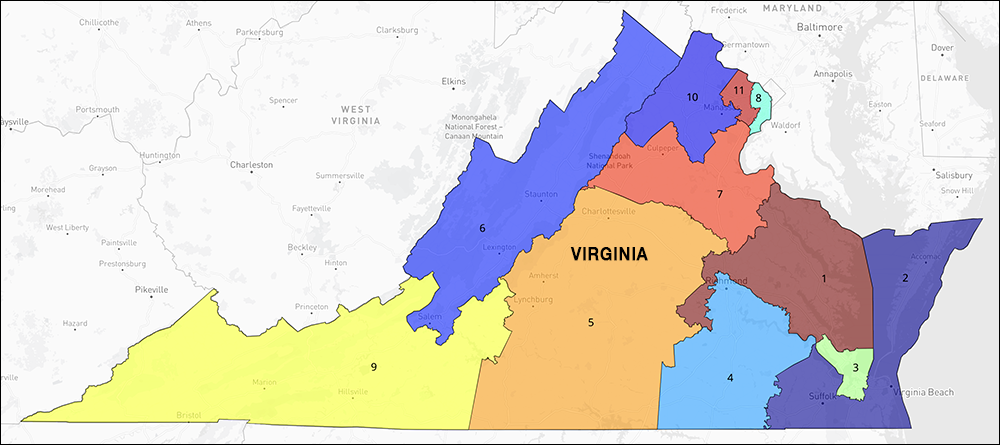
Today marks the final voting day for the Virginia redistricting referendum. The voters are deciding whether to change the current Old Dominion congressional map from a 6 Democrat/5 Republican split into a gerrymandered plan designed to elect 10 Democrats and one Republican. The measure will likely pass.

The Republicans surprisingly haven’t put up much of a fight considering a four-seat loss in Virginia would substantially decrease the chances of holding their slim five-seat House majority. Democrats, on the other hand, have dominated the airwaves with their ads supporting a “yes” vote on the referendum (see video at top).

The polling suggests the outcome will be a bit closer than the advertising medium suggests (State Navigate; Aril 10-13; 707 likely Virginia voters; 51-45 percent Yes; Washington Post/George Mason University; March 26-31; 1,101 likely Virginia voters; 52-47 percent Yes). Spending on this referendum is completely lopsided with an approximate expenditure ratio of 11:1 in the Democrats’ favor.

Republicans are hopeful that the state Supreme Court, which is hearing an appeal regarding a lower court judge’s earlier ruling that the entire referendum process is invalid because the legislature violated their own rules in qualifying the special election vote, will uphold the previous decision and declare the referendum invalid. The justices have yet to render a final decision but allowed the referendum vote to continue.

It is difficult to see a panel of judges overturning a vote of the people assuming the “yes” position is victorious. Therefore, Democrats will likely be successful in getting the designed 10 Virginia seats. Doing so will go a long way toward achieving the party goal of flipping the Republicans’ slim House majority.

Opposite Polls

The polling industry has absorbed some attacks regarding its cumulative accuracy rate over the past few years and recent polls from Alabama and Michigan underscore that polling is not an exact science.

Part of the problem is how survey research is used. Polling should be thought of as a guide monitoring candidate momentum swings rather than an instrument that tallies exact ballot test numbers.

Sometimes we see situations where polls conducted of the same race during relatively the same time period can produce very different ballot test results.

A good example of this is found in recent surveys from the Alabama Senate and Michigan Governor’s campaigns, both in Republican primaries.

In the Michigan Governor’s contest, we see two recent polls yielding virtually opposite ballot test results. During the April 11-13 period, Emerson College released their poll projecting businessman Perry Johnson to be at parity with Congressman John James (R-Farmington Hills), in fact leading by a slim 21 to 20 percent margin. This is the first such poll that finds Rep. Jones, also a two-time statewide Republican nominee, trailing in the 2026 gubernatorial primary.

Conversely, the OnMessage polling firm, surveying for the James campaign, sees their candidate in the top position with a big lead. According to OnMessage, James has a wide 41 to 18 percent lead over Johnson. While the Emerson College poll was conducted during the April 11-13 period, the OnMessage survey was in the field during the stretch between April 15-18.

It is hard to fathom, however, that the race could have changed to such a great degree in this short time period. Therefore, one of these polls, and probably the Emerson College survey, has badly missed the mark.

In the Alabama Senate Republican primary, we see a similar situation. During the April 11-13 period, Peak Insights released a survey showing Congressman Barry Moore (R-Enterprise) holding a 34-16-12 percent lead over Alabama attorney general Steve Marshall and anti-human trafficking activist Jared Hudson.

Yet, during almost the identical time frame, April 11-14 in this case, the Tarrance Group also surveyed the Republican electorate and found a much closer result with Moore recording only a slight 28-27-24 percent margin over Marshall and Hudson, respectively.

So again, we see two polls commissioned almost simultaneously and sampling within the same macro campaign universe but arriving at very different ballot test results. These results underscore that polling is not exact and that anomalies do frequently happen.

The Alabama and Michigan examples, though relatively extreme, show us that polling again should be looked at simply as a way to judge candidates’ momentum as opposed to precisely pinpointing where they stand in relation to a projected election outcome.

Senate: Open Race Recap

By Jim Ellis — Friday, March 27

Senate

Below is a status update of the 11 open US Senate races that will go a long way toward determining which party controls the chamber in the next Congress:

Alabama: Rep. Barry Moore (R-Enterprise), after receiving the Trump endorsement and now Majority Leader John Thune’s backing, has pulled ahead of state Attorney General Steve Marshall (R) in polling and fundraising. Marshall is Rep. Moore’s principal Republican opponent. Still, Moore winning the party nomination outright in a field of six candidates is a tall order.

The Alabama primary is May 19. If no candidate receives majority support, the top two finishers advance to a June 16 runoff election. The eventual Republican nominee wins the seat in November.

Illinois: With her victory in the March 17 open Democratic primary, Lt. Gov. Juliana Stratton has punched her ticket to the Senate. She will succeed retiring Sen. Dick Durbin (D) in the next Congress with an easy general election victory.

Iowa: Rep. Ashley Hinson (R-Marion/Cedar Rapids) is the consensus Republican nominee and will open the general election as the favorite to carry the state in November. The Democrats feature a tightly contested primary between state Sen. Zach Wahls (D-Des Moines) and state Rep. Josh Turek (D-Council Bluffs). The VoteVets group just announced they will spend $825,000 in an independent expenditure for Turek. The Iowa primary is June 2.

Kentucky: Rep. Andy Barr (R-Lexington) and former Attorney General and 2023 Republican gubernatorial nominee Daniel Cameron are locked in a very tight race with businessman Nate Morris a distant third. Rep. Barr, however, had a 10:1 cash-on-hand advantage over Cameron at the end of 2025. Democrats have a crowded primary with former state Representative and ex-US Senate candidate Charles Booker taking an early lead.

The Kentucky plurality primary is May 19. The eventual Republican nominee will be heavily favored in the general election.

Michigan: An intense Democratic primary is underway among Rep. Haley Stevens (D-Birmingham), state Sen. Mallory McMorrow (D-Royal Oak), and former Wayne County Health Director Abdul El-Sayed. Polling and fundraising are relatively even, though Rep. Stevens has the resource edge.

This primary won’t be decided until Aug. 4, which is a boon to GOP candidate Mike Rogers, the former Congressman who came within three-tenths of a percentage point of winning the 2024 Senate race. This contest will be in toss-up mode all the way to election day.

Minnesota: While Democrats feature a primary battle between Lt. Gov. Peggy Flanagan and Rep. Angie Craig (D-Prior Lake), Republicans have a consensus candidate in former national sports broadcaster Michele Tafoya. This race has the underpinnings of evolving into a surprisingly competitive general election even though Minnesota is a reliable Democratic state.

A tough and late Democratic primary (Aug. 11), unrest within the state, and Republicans united behind a strong candidate makes this contest more interesting than one would have expected after Sen. Tina Smith (D) announced her retirement.

Montana: The surprise withdrawal of Sen. Steve Daines (R) just before the candidate filing deadline expired and basically handing the party nomination to his chosen successor, former US Attorney Kurt Alme, will likely work even though the move does not sit well with most Montanans. At this point, Alme must be rated as the favorite to win the seat. Democrats have a five-way primary and former state Rep. Reilly Neill is considered the favorite to win the party nomination.

The most formidable non-Republican contender is likely former University of Montana President Seth Bodnar who is running as an Independent. The Montana primary is June 2, so it remains to be seen how a three-way general election race will evolve once both major parties have nominees in place.

New Hampshire: Democrats have a consensus candidate to replace retiring Sen. Jeanne Shaheen (D) in the person of Rep. Chris Pappas (D-Manchester). A new St. Anselm’s College Poll finds the Congressman leading former Sen. John E. Sununu (R) by only a 46-43 percent margin in the Senate general election ballot test.

Sununu, who served in the Senate from 2003-2009, is the clear favorite in the Republican primary opposite former Massachusetts Sen. Scott Brown, who challenged Sen. Shaheen in 2014.

North Carolina: Nominees are already set in the Tar Heel Senate race, as both former Gov. Roy Cooper (D) and ex-Republican National Committee chairman Michael Whatley each won their respective primaries outright in the March 3 primary election.

Cooper, who has won six statewide North Carolina races (two as Governor and four for Attorney General), may be in the best position of any Democratic Senate candidate to flip a Republican seat. Expect this race to end in a close finish as do most North Carolina political campaigns.

Oklahoma: With no serious opposition mounting in the Republican primary against Rep. Kevin Hern (R-Tulsa), who is quickly becoming a consensus GOP candidate in one of the strongest Republican states, the party does not have to worry about keeping Oklahoma in the red column.

Former Sen. Markwayne Mullin (R) was just confirmed as US Homeland Security Secretary. Gov. Kevin Stitt (R) appointed energy executive Alan Armstrong (R) to replace Sen. Mullin until the regular election cycle is complete. Because the Mullin seat is in-cycle, a special and regular election for the full six-year term will be held concurrently.

Wyoming: Sen. Cynthia Lummis (R) deciding not to seek a second six-year term has opened the door for at-large Rep. Harriet Hageman (R-Cheyenne) to become her successor. Expect Rep. Hageman to easily win both the Republican primary and the general election with the state’s other major political figures either running for the open Governor’s position or Hageman’s open congressional seat.

Competitive Senate Finance – Part I

By Jim Ellis — Tuesday, Oct. 21, 2025

Senate

The Federal Election Commission has released new Senate campaign finance numbers and today we begin to preview the resource standing of the key 2026 statewide contests. This Update covers the most competitive campaigns from Alabama through Maine. Tomorrow, we’ll look at Michigan through Texas.

Alabama

Sen. Tommy Tuberville (R) running for Governor has opened the in-cycle Senate contest, and the Republican primary will be the determinative election. Attorney General Steve Marshall, Rep. Barry Moore (R-Enterprise), and retired Navy SEAL Jared Hudson are the major contenders.

Hudson has $357,000 cash-on-hand, while Marshall and Moore each have just over $555,000 in their campaign accounts. It is probable the May 19 primary will end with no candidate having majority support. If such is the case, the top two finishers will advance to a June 16 runoff election.

Florida

Appointed Sen. Ashley Moody (R) must run in 2026 to fill the final two years of the current term. At the end of third quarter 2025, she held $3.6 million cash-on-hand.

The most credible Democrat appears to be technology company executive Hector Mujica. He just announced his candidacy last week; therefore, he is not yet required to file a campaign financial disclosure report. Former Congressman Alan Grayson (D), who has tried and failed several times to win statewide office, holds only $127,000 in his campaign account.

Sen. Moody has won two statewide elections as state Attorney General. In a state turning safely Republican, she is favored to hold her seat.

Georgia

First-term Sen. Jon Ossoff (D) is the 2026 election cycle’s leading fundraiser, having raised more than $54 million. From the gross receipts total, he holds $21.3 million in his account.

The Republicans are headed for a competitive primary, which will likely culminate in a June runoff. Reps. Buddy Carter (R-Pooler/Savannah) and Mike Collins (R-Jackson) along with former University of Tennessee football coach Derek Dooley, son of former University of Georgia legendary coach Vince Dooley, are the top contenders.

Rep. Carter has done best on the fundraising circuit and holds just under $4 million in his campaign account. Rep. Collins has $2.3 million, and Dooley, $1.7 million.

The Republicans’ collective problem is their candidates will have to spend heavily just to win the nomination while Sen. Ossoff can continue to build in unopposed fashion for the general election. Irrespective of who becomes the Republican nominee, the general election promises to evolve into a tight finish.

Illinois

Retiring Sen. Dick Durbin (D) leaves a contested March Democratic primary in his wake, one that will effectively elect the state’s next Senator.

At this point, Rep. Raja Krishnamoorthi (D-Schaumburg) has a commanding lead in fundraising and polling. According to the third quarter FEC report, he has raised just under $25 million and holds a touch over $18 million in the bank.

His two major opponents, Rep. Robin Kelly (D-Matteson/Chicago) and Lt. Gov. Julianna Stratton, are well behind in cash-on-hand. Rep. Kelly reports $2 million in available funds and Stratton just under $1 million. This means that Rep. Krishnamoorthi enjoys a respective 9:1 and 18:1 cash advantage over his two main opponents.

Kentucky

Without Gov. Andy Beshear (D) in the open Senate race, the May Republican primary for all intents and purposes will determine retiring Sen. Mitch McConnell’s successor.

Three candidates are vying for the nomination: Rep. Andy Barr (R-Lexington), former Attorney General and 2023 gubernatorial nominee Daniel Cameron, and businessman Nate Morris. Norris has already been spending heavily and running attack ads, particularly against Rep. Barr.

While Cameron enjoys significant polling leads, it is Rep. Barr who is in the best financial position. He holds $6.7 million in his federal campaign account, while Cameron has just under $630,000. Morris, who is self-financing, reported $1 million at the Sept. 30 disclosure deadline.

Louisiana

Sen. Bill Cassidy (R) may have dodged his toughest general election opponent (former Gov. John Bel Edwards (D) last week announced he would not run for the Senate), but the same can’t be said for the new partisan Republican primary. Louisiana changed its election law, so instead of a jungle primary in November, we will see an April 18 primary followed by a May 30 runoff election if no one reaches the majority support level in the first vote.

At the end of last week, state Rep. Julie Emerson (R-Carencro), who chairs the House Ways and Means Committee, announced her Senate candidacy. This very likely means that Rep. Julia Letlow (R-Start) will not run, as the two were unlikely to oppose each other. Already in the race are State Treasurer, former Deputy White House chief of staff and ex-Congressman John Fleming; state Sen. Blake Miguez (R-New Iberia); and Public Service Commissioner Eric Skrmetta.

Sen. Cassidy is well ahead in fundraising, but President Trump clearly wants to settle a political score with him since the Louisianan was one of seven Republican Senators to vote for impeachment regarding the January 6 US Capitol controversy. Only two of those seven, Sens. Cassidy and Susan Collins, will be on the ballot in 2026. Four are no longer members — Sens. Ben Sasse (NE), Richard Burr (NC), Pat Toomey (PA), and Mitt Romney (UT). Sen. Lisa Murkowski (R-AK) is not in-cycle but is at least a potential gubernatorial candidate.

In terms of fundraising, Sen. Cassidy posts $9.5 million in cash-on-hand. This compares to Sen. Miguez’s $2.5 million and Fleming’s $2.1 million. Rep. Emerson and Skrmetta are not yet required to file disclosure reports.

Maine

Sen. Susan Collins (R) overcame $60 million of spending against her in 2020 and can expect another difficult campaign next year. She is well prepared, with $6.7 million in the bank.

Her principal opponent will be Gov. Janet Mills (D), who just announced her candidacy last week. Like several others in this report, the Governor is not yet required to file a financial disclosure report.

Expect this race to be hot all the way through November and will carry at toss-up rating.

Senate Turnover

By Jim Ellis — Monday, Sept. 22, 2025

Senate

Without any incumbent losing in the 2026 election, it is possible we will see as many as a dozen new Senators come to Washington when the 120th Congress convenes. Obviously, the number will grow even higher should any incumbent fall to a challenger, and further retirements as state candidate filing deadlines begin to approach are of course possible.

At this point, eight Senators have announced they will not seek re-election, but the cycle’s wild card is potentially seeing five Senators running for Governor in their respective states. This unusually high number includes four Senators who are not in-cycle, meaning they would not have to risk their current position to enter the state race.

Currently, Sens. Tommy Tuberville (R-AL), Michael Bennet (D-CO), and Marsha Blackburn (R-TN) are announced gubernatorial candidates. Two more, Sens. Alex Padilla (D-CA) and Lisa Murkowski (R-AK), have made public statements admitting they are considering entering open Governor’s races in their states. From this entire group, only Sen. Tuberville is eschewing re-election to run for Governor.

Sen. Padilla said he will wait to determine if he will launch a gubernatorial bid until the special redistricting vote scheduled for Nov. 4. Just this week, Sen. Murkowski again said she “isn’t ruling out” running for Governor of Alaska and made the point of having the “luxury” of waiting until deeper in the election cycle to make a final decision.

All of the Senators running or potentially running for Governor have or would have a strong chance of winning. This means that all but one would have the opportunity of appointing their own successor to the Senate upon election. Already speculation is running high in places like Colorado and Tennessee as to who will be the chosen replacement. Alabama voters will choose their next Senator in the 2026 regular election.

Of the 35 Senate races in the ’26 election cycle, including the two special elections in Florida and Ohio, Republicans must defend 22 of the in-cycle seats as compared to just 13 for the Democrats. Today, it appears that only three are in the toss-up category, Georgia, Michigan, and North Carolina, with the remaining 32 being safe for the incumbent party or at least leaning in its direction.

A Georgia poll released just this week (Quantus Insights; Sept. 9-12; 624 likely Georgia general election voters; online and text) projects Sen. Jon Ossoff (D) and Rep. Mike Collins (R-Jackson) locked in a 38-38 percent tie.

In the open Michigan race, Republican Mike Rogers, who lost the 2024 Senate contest by just 19,006 votes (three-tenths of a percentage point), has an unencumbered path to the Republican nomination, while the Democrats are embroiled in a three-way primary battle that won’t be decided until Aug. 4.

Recent North Carolina polling data (Change Research; Sept. 2-8; 855 likely North Carolina voters; online) finds former Gov. Roy Cooper (D) leading ex-Republican National Committee chairman Michael Whatley 48-41 percent in a race to replace retiring Sen. Thom Tillis (R) that is expected to be close through the entire campaign.

In the races involving Senators running for Governor, Sen. Tuberville to date faces no major Alabama Republican primary opposition in his open race. Incumbent Gov. Kay Ivey (R) is ineligible to seek a third term. A Democratic nominee will have a difficult time overcoming Sen. Tuberville in the general election. The party hopes to recruit former Sen. Doug Jones into the race, but he lost to Tuberville 60-40 percent in the 2020 Senate campaign. Therefore, Sen. Tuberville appears as a lock to win the Governorship next year.

Colorado Sen. Bennet would have little trouble in his state’s open Governor’s election as incumbent Jared Polis (D) is also term-limited in 2026. In the Democratic primary, Attorney General Phil Weiser remains in the race, and he is Sen. Bennet’s strongest potential opponent. The only published poll of this campaign came from the Global Strategy Group in June (June 9-11; 600 likely Colorado Democratic primary voters; live interview) and posted Sen. Bennet to a strong 53-22 percent advantage over Weiser.

Tennessee Sen. Blackburn faces GOP primary opposition in the person of Rep. John Rose (R-Cookeville). The latest poll comes from Quantus Insights (Aug. 5-7; 600 registered Tennessee voters; online & text) and posts Sen. Blackburn to a large 35-6 percent lead for the party nomination.

California Sen. Padilla would be a very formidable candidate, and likely the favorite, in the open Governor’s race to replace incumbent Gavin Newsom (D). A large jungle primary field awaits with no candidate so far even reaching 20 percent in any poll. The ostensible leader by a small percentage is former Rep. Katie Porter (D), but a Padilla entry would almost certainly allow him to advance into the general election. There, he would be a big favorite even in a two-way Democratic November campaign.

Sen. Murkowski, on the other hand, should she run for Governor, could face major general election opposition. Waiting in the wings is Democratic former at-large Rep. Mary Peltola. Even though she lost a close 2024 general election, Peltola remains a popular figure and would clearly be the Democrats’ best option to convert the Governor’s position away from the Republicans. As in other discussed situations, incumbent Mike Dunleavy (R) is ineligible to seek re-election.

The addition of multiple Senators running as candidates for Governor across the nation changes the 2026 Senate election cycle. Therefore, it is probable we will see several more freshman Senators in 2027 than the regular election will produce.

Senate: Early Open Seat Observations

By Jim Ellis — Tuesday, May 27, 2025

Senate

Senator and former Auburn football coach Tommy Tuberville

It appears that Alabama Sen. Tommy Tuberville (R) will announce his campaign for Governor at some point this week.

Tuberville’s doing so will make the Alabama seat the sixth open Senate race for the 2026 election cycle, joining Illinois, Kentucky, Michigan, Minnesota, and New Hampshire.

Sen. Tuberville’s move toward the Governor’s contest looks ever more secure since Lt. Gov. Will Ainsworth (R) announced late last week that he will not run. Earlier this month, his statements led observers to believe that he would be the only Republican willing to challenge the Senator in the Republican gubernatorial primary.

Previously, Ainsworth reiterated that he would not run for the Senate, making it clear that his eyes were on the Governorship. Therefore, his announcement of not running for Governor is quite surprising but likely a testament to Tuberville’s strength within the Republican base.

In the open Senate race, we can expect to see a crowded Republican field, but possibly only one major candidate on the Democratic side. While a Republican House member may or may not jump into the Senate skirmish, several state officials are likely to do so.

For the Democrats, former US Senator Doug Jones, who Sen. Tuberville unseated in 2020 with a 60-40 percent victory margin, is indicating that he is considering either entering the Senate or Governor’s race next year. With Tuberville headed to the Governor’s campaign, it is probable that Jones, if he decides to again run for office, will attempt to regain his Senate seat since that race will be open.

Three of the open Senate seats are already stabilizing. At the outset, the races in Illinois and Minnesota appear similar. Here, we see Sens. Dick Durbin (D-IL) and Tina Smith (D-MN) retiring, leaving hotly contested Democratic primaries in their wake. Republicans, on the other hand, don’t see a major candidate surfacing right now in either campaign.

The Illinois Democratic primary will be decided on March 17. The contest features two US House members, Reps. Raja Krishnamoorthi (D-Schaumburg) and Robin Kelly (D-Matteson/Chicago), along with Lt. Gov. Juliana Stratton.

The Lieutenant Governor won endorsements from Gov. J.B. Pritzker (D) and the state’s junior Senator, Tammy Duckworth (D). Yet, Stratton and Rep. Kelly largely share the same major constituency, the Black community, and even hail from similar locations in the Chicago area. Therefore, the two have a high probability of splitting the same vote pool. Rep. Krishnamoorthi had almost $20 million in his campaign account at the end of the first quarter and may have better potential to attract downstate votes. In any event, this will be an interesting early race.

In Minnesota, with former state Senate Minority Leader Melisa Lopez Franzen already dropping out of the Democratic race, the contest, likely to be decided in an August primary, is already evolving into a close two-way affair between Lt. Gov. Peggy Flanagan and Rep. Angie Craig (D-Prior Lake).

Kentucky Sen. Mitch McConnell (R) retiring after seven terms will leave this seat with a new occupant for the first time since 1985. Republicans are headed to a May primary battle between former Attorney General and 2023 GOP gubernatorial nominee Daniel Cameron and Rep. Andy Barr (R-Lexington).

The big unanswered question, however, is whether Gov. Andy Beshear (D-KY) will enter the race. He has won two statewide campaigns, including defeating Cameron in the 2023 general election. If the Governor runs for Senate, the open race becomes very much in play. Should he only focus on running for President in 2028, the eventual GOP nominee should have an easy walk in the general election.

The New Hampshire Senate race is already evolving into a general election contest even before state legislators decide if they will move the September primary to an earlier date.

Rep. Chris Pappas (D-Manchester) is quickly uniting the Democratic Party behind his candidacy and looks to become a consensus candidate. He will have the advantage in November likely over former Massachusetts Sen. Scott Brown (R), who is moving toward again locking down the GOP nomination. In 2014, he held Sen. Jeanne Shaheen (D) to a 51-48 percent re-election victory.

Finally, the Michigan race looks to be the one toss-up open Senate race. Republican former Representative and 2024 US Senate nominee Mike Rogers returns for another shot but may have to win a Republican primary against Rep. Bill Huizenga (R-Holland).

The Wolverine States Democrats are for sure headed to a contested primary. Rep. Haley Stevens (D-Birmingham) and state Sen. Mallory McMorrow (D-Royal Oak) are already in the race, while term-limited Attorney General Dana Nessel may soon join the field. The 2024 general election was decided by just 19,006 votes, and it would not be surprising to see a similar result occur in 2026.

Georgia Gov. Kemp Out; Which
Other Governors Could Be In?

By Jim Ellis — Thursday, May 8, 2025

Senate

Georgia Gov. Brian Kemp (R)

Georgia Gov. Brian Kemp’s announcement earlier in the week that he would not challenge Sen. Jon Ossoff (D) next year was surprising to many but not all political observers.

In fact, it’s possible that we will see all of the Governors or ex-Governors who could run for the Senate in the various states take a pass on challenging a Senatorial incumbent or competing in an open seat situation.

The Kemp announcement now unfreezes the Republicans waiting in the wings who want to run statewide. Individuals who have expressed interest or at least confirm they are considering challenging Sen. Ossoff, include four members of the US House delegation. They are: Reps. Buddy Carter (R-Pooler/Savannah), Rich McCormick (R-Suwanee), Mike Collins (R-Jackson), and Marjorie Taylor Greene (R-Rome). Also counted among the possible candidates are state Agriculture Commissioner Tyler Harper and state Insurance Commissioner John King.

The Atlanta Journal-Constitution newspaper conducted a statewide Georgia poll (April 15-24; 1,000 registered Georgia voters) and found Gov. Kemp, if he were to challenge Sen. Ossoff, leading the prospective race 49-46 percent.

Now, without Kemp in the candidate field, the advantage turns to Ossoff. The AJC poll found him leading King 51-38 percent, and topping Rep. Greene, 54-37 percent. Also tested was Secretary of State Brad Raffensperger who has said he’s considering a Senate bid but is more likely to enter the open Governor’s race. Raffensperger, however, polls best within this group against Sen. Ossoff, trailing 48-39 percent in the AJC poll. Reps. Carter, McCormick, and Collins were not tested.

The outlook suggests that the Georgia Republicans will now see a crowded Senate primary field, meaning it will become difficult for one candidate to win the nomination outright. The 2026 Peach State election calendar has not yet been set, but the likely statewide primary date will be May 19, 2026, with a runoff for the top two finishers, should no one reach the 50 percent threshold, probably scheduled for June 16. Therefore, the most plausible projection is that the Georgia GOP won’t have an official Senate nominee until late June of next year.

With Sen. Ossoff already possessing over $11 million in his campaign account, a number that will grow exponentially before the Republicans nominate their Senate candidate, he is in a favorable pre-election position.

Elsewhere, there are a dozen situations where a Governor or ex-Governor could conceivably run for an open Senate seat or challenge an incumbent of the opposite party.

Of the 12, we see one reverse situation. Tennessee Sen. Marsha Blackburn (R) appears intent on running for an open gubernatorial position.

Alabama Gov. Kay Ivey (R) could look at an open Senate seat campaign if Sen. Tommy Tuberville (R) decides to run for Governor as expected, and Maine’s Janet Mills (D) could challenge Sen. Susan Collins (R) with the encouragement of many Democratic leaders. Neither, however, is likely to run for Senate because both are over or nearing 80 years old.

Aside from Gov. Kemp, four other Governors have already turned down opportunities to run for the Senate.

Illinois Gov. J.B. Pritzker (D) has already endorsed Lt. Gov. Juliana Stratton (D) to replace retiring Sen. Dick Durbin (D), while the Governor himself appears to be preparing a third run for his current position.

Term-limited Michigan Gov. Gretchen Whitmer (D) is very likely to run for President in 2028 and will therefore bypass a run for her state’s open Senate seat.

Like Gov. Pritzker in Illinois, Minnesota Gov. Tim Walz, the 2024 Democratic Vice Presidential nominee, has endorsed Lt. Gov. Peggy Flanagan to replace retiring US Sen. Tina Smith (D). As with Pritzker, Gov. Walz is preparing to run for a third term.

New Hampshire ex-Gov. Chris Sununu (R), who like Gov. Kemp in Georgia would give the Republicans their best chance of converting a Democratic Senate seat, has also said he will not run in 2026. His future plans are only speculated upon, but a future presidential bid would not be out of the question.

Term-limited Kansas Gov. Laura Kelly (D) is not mentioned as a possible presidential candidate, but party leaders are encouraging her to challenge first-term Sen. Roger Marshall (R). It remains to be seen what the Governor will decide for 2026.

Two term-limited Governors and one ex-state chief executive are at the forefront of presidential prognostication, yet each sees a viable Senate situation developing in their respective state.

Gov. Glenn Youngkin (R) could challenge Sen. Mark Warner (D) next year, since his one term will expire in early 2026. Though clearly looking at a presidential run, Gov. Youngkin, and any Republican, would face an uphill battle against Vice President J.D. Vance for the party nomination. A race against Sen. Warner would also be uphill, so Gov. Youngkin may see his electoral window closing.

On the Democratic side, Gov. Andy Beshear (D-KY) and former Gov. Roy Cooper (D-NC) could enter what promises to be a very crowded 2028 Democratic presidential campaign. Should only one of these two run, that individual, either Beshear or Cooper coming from the southern region, would be a viable prospective nominee because of their opportunity to accumulate a large quantity of delegate support from the vote-rich South.

Signs are pointing to a situation where the aforementioned Governors or ex-Governors follow the Sununu and Kemp example and decline their party leaders overtures to launch a 2026 Senate campaign.

A Senate Review – Part I

By Jim Ellis — Tuesday, May 6, 2025

Senate

Already we’ve seen a great deal of jockeying for political position in 2026 Senate races. Today and tomorrow, we will review the 18 Senate races where significant action is occurring.

This edition looks at the situations in Alabama through Maine. Tomorrow, Michigan through Virginia. If a state is not mentioned, it means the incumbent is seeking re-election and, at this early point in the election cycle, has no serious competition.

Alabama — Sen. Tommy Tuberville (R) will reportedly soon announce that he will eschew a second term in the Senate to enter the open Alabama Governor’s race. Once Tuberville makes his plans official, others will finalize their own plans. Expect a crowded open Republican Senate primary with the winner having the inside track to carrying the seat in the general election.

Florida — Sen. Ashley Moody (R), the former Florida Attorney General who was appointed to replace Sen. Marco Rubio when he resigned to become US Secretary of State, must run to fill the balance of the term in 2026. So far, several people have announced their candidacies, but all should be considered minor candidates in both parties. The biggest name in the field is former Congressman Alan Grayson (D), but his attempts to return to public office after spending three non-consecutive terms in the House have not gone well.

Unless the quality of candidates improves, Sen. Moody should have little trouble retaining her seat. It is probable, however, that credible competition will emerge. At this time, appointed Sen. Moody must be considered a clear favorite to win next year.

Georgia — The Peach State is one of several places where a term-limited or recently retired Governor could run for the Senate. Most of the Governors in this category, however, have their eyes on the Presidency in 2028. Georgia Gov. Brian Kemp (R) is a state chief executive with rumored presidential aspirations but leads the Senate Democratic incumbent in early polling.

However, yesterday’s announcement that Gov. Kemp will not run for the Senate certainly changes the political picture, and we will devote a column to that evolving campaign after our Senate Review, Part II is published. With Kemp now not running for Senate, at least four US House members are expressing interest. They are: Reps. Buddy Carter (R-Pooler/Savannah), Rich McCormick (R-Suwanee), Mike Collins (R-Jackson), and Margorie Taylor Greene (R-Rome). Without Kemp in the race, Sen. Ossoff establishes a polling lead against all other potential Republican nominees.

Idaho — Just turning 82 years of age, rumors swirled that three-term Sen. Jim Risch (R) would retire. Recently, however, Risch announced that he will seek a fourth term and appears to be a lock to win both the Republican primary and general election.

Illinois — Sen. Dick Durbin (D) is retiring, and the meaningful action will occur in the March 2026 Democratic primary. Lt. Gov. Juliana Stratton (D), armed with public support from Gov. J.B. Pritzker (D) and Sen. Tammy Duckworth (D-IL), is an announced candidate. She could, however, face as many as three members of the Illinois congressional delegation in the Democratic primary: Reps. Robin Kelly (D-Matteson/Chicago), Raja Krishnamoorthi (D-Schaumberg), and Lauren Underwood (D-Naperville).

The Illinois primary is scheduled early in the election cycle on March 17, so this race will begin immediately. The eventual Democratic nominee will be a lock to win the general election.

Iowa — The big early winner from Gov. Kim Reynolds’ (R) decision not to seek a third term could well be Sen. Joni Ernst (R). An open, competitive race for Governor is now likely to capture the attention of those who originally considered challenging the Senator.

Iowa’s only elected Democratic statewide official, State Auditor Rob Sand, appears headed into the Governor’s race and is no longer contemplating challenging Sen. Ernst. Former state legislator Jim Carlin is an announced Republican candidate against Ernst, along with two minor candidates. Nathan Sage, a local Chamber of Commerce executive and former sports announcer is a declared Senate candidate on the Democratic side.

With the Hawkeye State Democrats having a short political bench, expect the credible potential Ernst challengers to head for the Governor’s race.

Kentucky — This is another state where a Governor with presidential aspirations could be a major contender for an open Senate seat. Incumbent Mitch McConnell (R) is not running for an eighth term, but two-term Governor Andy Beshear would give the Democrats a major candidate and is clearly the best choice of any party member to convert the seat. Republican former Attorney General and 2023 gubernatorial nominee Daniel Cameron and US Rep. Andy Barr (R-Lexington) are the announced GOP candidates.

If Gov. Beshear runs for the Senate, this becomes a top national Senate battle. If he does not, the eventual Republican nominee will punch his ticket to the Senate.

Louisiana — The Bayou State is one place where a Republican Senator has a bigger challenge winning renomination than re-election. Louisiana has returned to a partisan primary structure, eschewing their jungle nominating system for federal campaigns and some other offices. Therefore, Sen. Bill Cassidy (R), who voted in favor of impeaching President Trump as he was leaving office at the end of 2020, will certainly face competition from his political right.

State Treasurer and former Congressman John Fleming (R), announced his candidacy months ago and will be a major contender. Others, potentially Rep. Julia Letlow (R-Start) or former Congressman Garret Graves, could also join the Senate campaign. Rep. Clay Higgins (R-Lafayette) stated earlier that he will remain in the House.

Regardless of the eventual mix of Republican candidates, Sen. Cassidy faces a real prospect of being forced into a runoff, which could lead to a renomination defeat. Democrats are attempting to convince former Gov. John Bel Edwards to run for the Senate, but so far their overtures have not been successful.

Maine — In 2020, Sen. Susan Collins (R) was one of the Democrats’ chief national targets, and their candidate, then state House Speaker Sara Gideon (D), and allied Super PACs spent records sums of money in a small state.

Polling suggested the Senator would lose, but in the end Collins repelled the massive charge and won by almost nine percentage points.

Sen. Collins announced early in the ’26 cycle that she would run for a sixth term, thus extinguishing retirement rumors. The veteran incumbent will no doubt be a Democratic conversion target again next year, but the fervor to defeat her appears to be less in this cycle.

Democrats hope to recruit term-limited 78-year-old Gov. Janet Mills into the Senate race, but so far she has not accepted the challenge. The party will field a credible candidate irrespective of Gov. Mills’ ultimate decision but, in the election cycle’s early phase, Sen. Collins must be rated as at the very least a slight favorite to win re-election and once again overcome Maine’s reliably Democratic voting patterns.