Category Archives: Presidential campaign

Is Michigan Rep. Justin Amash
Seeking a Political Exit Strategy Should He Run for President?

By Jim Ellis

Michigan Rep. Justin Amash (R-Cascade Township/Grand Rapids)

June 13, 2019 — The Michigan Information & Research Service (MIRS) released an independent poll just a couple days ago from the Practical Political Consultants organization (June 5-9; 335 likely MI-3 Republican primary voters) that finds western Michigan Rep. Justin Amash (R-Cascade Township/Grand Rapids) trailing his announced 3rd Congressional District Republican primary opponent, state Rep. James Lower (R-Greenville), by a lopsided 49-33 percent count.

After Rep. Amash became the only Republican to side with the Democrats’ informal impeachment caucus over whether to bring proceedings against President Trump, speculation became more rampant that the five-term Michigan congressman would seek the Libertarian nomination for president. The new poll and his action earlier in the week of resigning from the Freedom Caucus and its leadership fuels more speculation that he will jump into the presidential contest.

Many are arguing that Amash would have an effect upon the national election to the point of potentially costing President Trump victory, or at the very least, the state of Michigan, but such an outcome is far from determined.

The Libertarian presidential nomination has some value in that the party can qualify for the ballot in all 50 states and the District of Columbia. It is the only political entity aside from the Republican and Democratic parties that has such an ability. Jill Stein, the 2016 and 2012 Green Party presidential nominee, appeared on the ballot in 45 and 38 states, respectively.

However, just how much of a factor are the individuals who represent the minor parties on the presidential ballot? Former New Mexico governor Gary Johnson was the Libertarian nominee in both 2016 and 2012. He has already said he will not be a candidate in 2020. In 2012, his national vote total was 1.27 million. Four years later, his aggregate vote number soared to just under 4.5 million. But, was that due to Johnson himself, or is the Libertarian ballot position, regardless of the candidate’s name associated with it, simply the best place for disaffected voters to cast a ballot?

Continue reading

Biden Beginning to Show Cracks

By Jim Ellis

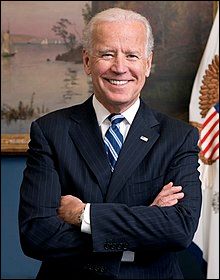
Former vice president and ex-Delaware senator Joe Biden is the Democratic front-runner in the 2020 presidential bid.

June 11, 2019 — Two polls were just released in critical Democratic primary states that find former Vice President Joe Biden’s standing to be weaker than his latest national polling results.

In Texas, the Change Research poll (May 20-June 3; 1,218 likely Texas Democratic primary voters) projects that former Rep. Beto O’Rourke (D-TX) has risen to the top of his home state electorate, leading Biden, 27-24 percent with Sen. Bernie Sanders (I-VT) posting 13 percent support. Sen. Elizabeth Warren (D-MA) is right behind with 12 percent, while California Sen. Kamala Harris records only eight percent backing.

Turning to Iowa, Selzer & Company released another of their Iowa Polls (June 2-5; 600 likely Iowa Caucus attenders; 433 saying they would personally attend their precinct caucus meeting while another 167 said they were interested in participating in the new virtual caucus that will be an Iowa Caucus feature for the first time) and while Biden leads the group of Democratic candidates, the combined numbers from the second, third, and fourth place finishers outpaces the leader by almost a 2:1 ratio.

In the Iowa Poll, conducted for CNN, the Des Moines Register newspaper, and Mediacom, Biden posts only 24 percent support. He is followed by Sen. Sanders at 16 percent, Sen. Warren notching 15 percent, and South Bend Mayor Pete Buttigieg trailing closely with 14 percent. But, Sens. Sanders and Warren together top Biden by seven percentage points and when Buttigieg is added, the trio comes close to denying Biden even the possibility of reaching majority status.

Continue reading

Democrat Debate Friction


By Jim Ellis

June 10, 2019 — The Politico publication ran a story late last week detailing building friction between the Democratic National Committee and Montana Gov. Steve Bullock, a late-entering Democratic presidential candidate, over the committee leaders apparently axing the western governor from the first debate forum coming later this month.

The source of controversy is the party leadership contending that Gov. Bullock, who looked to have qualified for the debate under the outlined criteria, now has not. Instead, New York City Mayor Bill de Blasio is in position to capture the 20th and final debate podium for the upcoming June 26-27 candidate forums from Miami.

As we have previously reported, the qualifications the party leaders have placed upon the candidates require them to either build a fundraising organization of 65,000 donors, with a minimum of 200 coming from 20 states, or score one percent support in at least three surveys from eight designated pollsters.

Gov. Bullock appeared to have met the polling requirement. He exceeded the one percent threshold in the ABC/Washington Post survey in January. But, the DNC is now disallowing this particular poll, and the action probably eliminates him from the debate.

Their reasoning is that the ABC/Post poll asked an open-ended presidential ballot test question — that is, where the names of the candidates are not read, but the respondents must voluntarily state a name. This type of question is usually employed to test hard name identification and candidate strength.

Continue reading

Polling vs. Delegates:
“The Game Within the Game”

By Jim Ellis

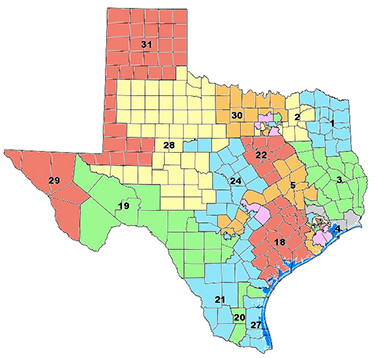
Texas state senate districts

June 7, 2018 — Quinnipiac University released their latest Texas poll (May 29-June 4; 1,159 registered Texas voters) and it finds former Vice President Joe Biden doing well in opponents’ Beto O’Rourke and Joaquin Castro’s home state.

According to the results, Biden heads the Lone Star State Democratic presidential field and is the only candidate to top President Trump when the president is isolated against each competitive Democrat (Biden over Trump: 48-44 percent).

Arguably, Texas, with its 38 Electoral Votes and the largest cache that a Republican candidate can generally claim, is Trump’s most important state. Losing here would likely mean forfeiting the presidency. There is no mathematical way to compensate for Trump failing to win Texas’ electoral votes and still allow him a path to reach the 270 Electoral Votes to claim a national victory.

In the Democratic primary, scheduled for Super Tuesday, March 3, Biden leads the pack of candidates with 30 percent of the vote, topping ex-Rep. O’Rourke (16 percent), Sen. Bernie Sanders (15 percent), Sen. Elizabeth Warren (11 percent), and the nine others who recorded between one and four percent statewide support.

Sens. Amy Klobuchar (D-MN), Kirsten Gillibrand (D-NY), Michael Bennet (D-CO), Govs. Jay Inslee (D-WA) and Steve Bullock (D-MT), Reps. Tulsi Gabbard (D-HI), Eric Swalwell (D-CA), Seth Moulton (D-MA), and Mayors Bill de Blasio (New York, NY), Wayne Messam (Miramar, FL), failed to reach the one percent plateau.

But, how would such a vote split translate into delegates for the participating candidates? Under Democratic Party rules, each state has both at-large and district delegates. Another group, called PLEO’s, are comprised of state and local Democratic Party leaders along with elected officials.

Continue reading

Electoral Vote Compact Takes a Hit

By Jim Ellis

June 3, 2019 — Recently, Sen. Elizabeth Warren (D-MA) spoke one of her strongest applause lines on the presidential campaign trail, when she talked about eliminating the Electoral College. And the National Popular Vote Interstate Compact organization had been gaining significant energy when Colorado, Delaware, and New Mexico officially joined its ranks earlier this year. But, that momentum hit a major roadblock yesterday.

The National Popular Vote Interstate Compact, or NPVIC, began soon after the 2000 presidential election when Democratic nominee Al Gore won the popular vote count but fell to George W. Bush in the Electoral College. The result marked the first time since the 1888 election when the popular vote winner failed to win the presidency.

By 2007, Maryland became the first state to officially join the NPVIC. Today, 14 states are Compact members, representing 189 Electoral Votes. The organization’s stated goal is to recruit enough states to equal a majority of 270 EVs that will agree the respective members will deliver its Electors to the national popular vote winner regardless of how their own electorate votes.

However, the Maine House of Representatives, on a 76-66 vote, defeated legislation late last week to add their state to the growing NPVIC organization. And, Nevada Gov. Steve Sisolak (D), in a surprise move to some, vetoed the compact legislation that had reached his desk. Earlier in the Oregon legislative session, the state Senate passed its bill to join the compact and action is awaited in the House before the legislative session’s scheduled end on June 21.

Continue reading

Democrats Up the Debate Ante

By Jim Ellis

May 31, 2019 — The Democratic National Committee just announced the imposition of new requirements for presidential candidates to participate in the series of subsequent debates to begin in mid-September. The first two sessions are scheduled for June 26-27 and July 30-31 in Miami and Detroit, respectively.
The field is close to being set for the initial forums with 20 candidates qualifying according to the Intelligencer publication, the personnel from which have been tracking the debate process since the schedule was first announced.

To earn a podium in the first two debates, the candidates are required to either score one percent support in three of eight designated polls or reach 65,000 donors, of which at least 200 must come from 20 specific states.

The participants will include some of the more obscure candidates including author Marianne Williamson, New York City businessman Andrew Yang, and the two western governors, Jay Inslee of Washington, and Steve Bullock from Montana.

This means that Sen. Michael Bennet (D-CO), Rep. Seth Moulton (D-MA), former Sen. Mike Gravel (D-AK), and Miramar, Fla., Mayor Wayne Messam likely will not be part of the first forum, though time remains for them to still qualify.

Continue reading

Trump’s Ballot Politics

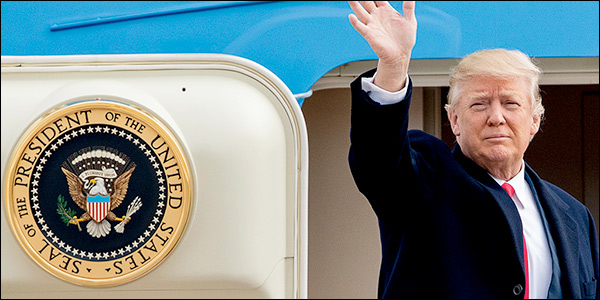
President Donald Trump | whitehouse.gov


By Jim Ellis

May 28, 2019 — Earlier this month, the California state Senate approved a bill that would require presidential candidates to release their tax returns in order to qualify for the Golden State ballot. A similar measure was vetoed by then-Gov. Jerry Brown (D) in 2017, but current Gov. Gavin Newsom (D) is expected to sign the measure.

A total of 17 other states also have similar pending legislation, with the strongest chances for enactment coming most probably in New York and Washington.

The move, of course, is targeted at President Trump who will not release his tax returns. But, would denying him ballot placement in states that he won’t carry actually hurt him?

A contrary argument exists to suggest that Trump and the down-ballot Republican candidates in those states might actually receive some tangential benefits from the president not being on the official ballot in places like California and New York, in particular.

First, if Trump didn’t appear on the California, New York, and Washington ballots, it would not change the Electoral College outcome because he won’t carry any of those states. He will likely concede them at the outset and spend no campaign money in any of those locations. Therefore, his ballot placement in these places could arguably be irrelevant.

Continue reading

The 2020 Democratic Nomination
Will Look Much Different From 2016

By Jim Ellis

May 24, 2019 — As the Democratic presidential field swells to 24 candidates — with the first Democratic presidential forum on tap for late June in Miami, and the first votes being cast in Iowa now just over eight full months away — it’s a good time to review how different this presidential nomination contest will be from the 2016 version.

To review, Hillary Clinton won 34 primaries and caucuses in 2016 as compared to 23 for Sen. Bernie Sanders (I-VT). There are 57 sanctioned delegate voting entities in the Democratic nomination universe. The 57 are comprised of the 50 states, the District of Columbia and the five territories, and a Democrats Abroad category that combines all US citizens living in foreign countries who will still have voting privileges in US elections.

Clinton won 55.2 percent of the 2016 national Democratic popular vote versus Sen. Sanders’ 43.1 percent when combining the totals from all the primaries and caucuses. Though the Sanders Campaign called foul over the Super Delegate voting inflating Clinton’s delegate total, and actually turning six states’ first-ballot roll call from Sanders to Clinton and sending one more state into a tie, Clinton still carried the pledged, or elected delegate, count 2,205 to 1,846, translating to a 54.4 percent margin. When adding the Super Delegate and uncommitted delegate votes, she captured 58.3 percent of the convention total.

Continue reading

The Scorecard – Part I

By Jim Ellis

Former vice president and ex-Delaware senator Joe Biden is the Democratic front-runner in the 2020 presidential campaign.

May 20, 2019 — It is often said, “you can’t tell the players without a scorecard,” and that is certainly becoming the case with the presidential campaign. A 24th candidate entered the national political fray just late last week — New York City Mayor Bill de Blasio.

Greeted with the reminder that the last Quinnipiac University poll of New York City residents found that 76 percent of those polled didn’t want the mayor to run for president, de Blasio launched his late-starting campaign with a video of him talking about “putting working people first,” interspersed with video footage of being chauffeured around the city in a limousine. Saddled with poor approval ratings within his home base and a late start, de Blasio is the longest of shots to become a viable candidate.

It is likely that the de Blasio declaration is the last significant announcement, meaning all of the major players are finally in the race. Seeing two dozen candidates – and while many media networks report different numbers, the total clearly exceeds 20 – it is a good time to review the field (alphabetically) and summarize how the plethora of candidates is doing. We’ll go through the first 12, and tomorrow finish up the field:

• Former Vice President Joe Biden: The clear early race leader. Biden received the announcement bump that he desired and is proving to be the man to beat. Still, much will happen before he can legitimately clinch the party nomination. In the first 24 hours after his announcement, the former VP raised $6.3 million.

• Sen. Michael Bennet (D-CO): A prostate cancer diagnosis and surgery delayed Sen. Bennet’s entry into the race, so his campaign is just getting underway. He is a second-tier candidate who is unlikely to seriously challenge for the nomination.

• Sen. Cory Booker (D-NJ): Has not gotten much early attention, but reports suggest his campaign is among the best organized in terms of ground operation. Sen. Booker could surprise in the national candidate forums and, despite current low polling performance, might become a factor as the campaign develops.

Continue reading

Weekly Political Synopsis,
Period Ending May 17, 2019

By Jim Ellis

PRESIDENT
• Gov. Steve Bullock: As has been expected for some time, Montana Gov. Steve Bullock (D) officially announced his presidential effort this week, becoming the 23rd Democratic candidate. Bullock made the argument that he will be an effective national candidate because he’s won two elections in a conservative state and has been able to earn legislative achievements, like Medicaid expansion, in negotiating with Republican leaders.

• Mayor Bill de Blasio: Following Gov. Bullock, New York City Mayor Bill de Blasio released an announcement video at the end of the week making him the 24th Democratic presidential candidate for the 2020 election cycle. His declaration centered around being the candidate for “working families,” and cited the $15 minimum wage, a free pre-K school program, a comprehensive healthcare program that especially covers mental health, and paid sick leave.

• Florida: Former Vice President Joe Biden continues to see strong polling numbers, with the latest data coming from Florida. The Tel Opinion Research organization is reporting its latest results (released May 8; 800 likely Florida Democratic primary voters) that show Biden pulling away from his Democratic opponents on an open-ended ballot test poll. An open-ended ballot test is one where the respondent is not given the candidates’ names. That approach tests for committed strength.
According to Tel Opinion, Biden leads Sen. Bernie Sanders (I-VT), 39-16 percent, with Sens. Elizabeth Warren (D-MA) and Kamala Harris (D-CA) each pulling only five percent support. South Bend (IN) Mayor Pete Buttigieg follows at three percent preference. All of the candidates scored well on the favorability index scale. Biden is viewed positively with an 81:13 percent ratio, where Sen. Sanders’ score is 68:23 percent.

SENATE
• Arizona: Phoenix-based pollster OH Predictive Insights released their latest data from their May 1-2 poll (600 likely Arizona voters) where they queried the respondent universe about the impending Senate race between appointed Sen. Martha McSally (R) and retired astronaut Mark Kelly (D). Though we are more than a year before Arizona’s 2020 late August primary, the chances are strong that the aforementioned will be their respective party standard bearers.
According to the OH poll results, the early race again earns toss-up status. The sample breaks 45-44 percent in Sen. McSally’s favor, which is virtually identical with the firm’s late February poll giving the incumbent a 46-44 percent edge.

Continue reading