Best wishes for a Happy 4th of July holiday weekend.
Our daily column will return on Tuesday, July 7.
By Jim Ellis
July 2, 2020 — We saw a polling bonanza released yesterday in the swing battleground state of Arizona and, no matter who you support or what you believe, there is survey data for you.
Arizona Senate candidate, retired astronaut Mark Kelly (D), and Sen. Martha McSally (R)
Three pollsters released results that tested the presidential race and the Arizona Senate contest between retired astronaut Mark Kelly (D) and appointed Sen. Martha McSally (R). The three pollsters, all conducting their surveys within the June 26-29 period, gave us starkly different ballot test conclusions.
Two of the pollsters are from out of state, while one is based in Phoenix and specializes in researching the Arizona electorate. One of the pollsters tested six battleground states as part of their national polling series, including Arizona, but did not disclose the size of the Grand Canyon State respondent cell. This makes analyzing very difficult. The other two firms revealed similar sized Arizona likely voter sampling universes.
The three pollsters were Change Research, Data Orbital, and Gravis Marketing. All have done national work and are published regularly in political blogs and websites as well as being frequently quoted in national news stories.
Despite testing the same electorate during the same time period, we see an 11-point swing in the presidential race, and a 13-point spread among the three survey results for the Senate race.
Change Research was the most bullish for the Democratic candidates, posting former vice president Joe Biden to a 51-44 percent advantage, and an even larger 53-44 percent margin in Kelly’s race.
Conversely, Gravis Marketing produced the most Republican results. They find President Trump holding a 49-45 percent lead and Sen. McSally up by the same point margin, 46-42 percent.
In between is Data Orbital, the local pollster. They find Biden ahead 47-45 percent, and Kelly up by a similar, but not as pronounced, margin as Change Research found, 50-43 percent. Continue reading →
Sen. Cory Gardner Senate campaign attack ads hitting former Colorado Gov. John Hickenlooper hard (see COLORADO writeup below)
By Jim Ellis
June 18, 2020 — Next to discussion of the presidential race, the political contests attracting the most political attention and debate are the 2020 US Senate campaigns.
As we know, Republicans have a 53-47 Senate majority, meaning the Democrats will have to convert a net three GOP seats if Joe Biden wins the presidency, or four if President Trump is re-elected. Many believe that the winning presidential candidate will also sweep in a Senate majority for his party.
Below is an update of the key races:
• ALABAMA: In many ways, this could be the most important race on the board. Republicans must convert this seat back to their column in order to provide a greater cushion toward protecting their chamber majority. Sen. Doug Jones (D), who scored a fluke special election win in 2017, stands for a full six-year term in November.
Republicans are in a runoff election that will be decided on July 14, postponed from the original March 31 date. In the March 3 primary, retired Auburn University head football coach Tommy Tuberville placed first over former attorney general and ex-Alabama senator Jeff Sessions within a field of seven total candidates, 33-32 percent.
Runoff polling, however, gives Tuberville a large lead as the contenders enter the last month of the secondary election campaign. The May 26-27 OnMessage survey gave Tuberville a 49-43 percent edge, down considerably, however, from the 55-32% margin the former coach posted in a Cygnal research group poll conducted over the May 7-10 period.
Tuberville, with President Trump’s endorsement and running an ad saying Sessions’ appointment as AG is the president’s top regret since taking office, clearly has the advantage. In the general election, this race is a must-win for the GOP. If converted, the Republican majority expands to 54, which will be critical for their chances to hold.
• ARIZONA: Things continue to break retired astronaut Mark Kelly’s (D) way in the early going opposite appointed Sen. Martha McSally (R). Being one of the top national fundraisers with $31 million raised and millions more coming into the state in the form in independent expenditures, Kelly is the favorite to convert the seat in November. He has led in the last 11 publicly released polls, the latest coming from the Civiqs organization, polling for the Daily Kos Elections website (June 13-15), which posts Kelly to a 51-42 percent advantage.
• COLORADO: Sen. Cory Gardner (R) seeks a second term, and with the state’s electorate moving decidedly to the left since the incumbent’s original election in 2014, the Colorado race sets up well for Democratic conversion.
There is some weakness developing, however, surrounding Sen. Gardner’s likely Democratic opponent, former governor and presidential candidate John Hickenlooper. Recently, the Colorado Ethics Commission ruled that Hickenlooper, while governor, twice violated the state’s gift ban, which has caused him negative statewide publicity.
Now, the National Republican Senatorial Committee has launched an ad campaign underscoring the commission finding just as the former governor approaches his June 30 primary election against former state house speaker Andrew Romanoff. Sen. Gardner also is on the air in a new ad highlighting Hickenlooper’s statements during the presidential campaign when he was quoted extensively as saying he didn’t want to be a US senator. Taking this into consideration, more people are looking toward the Democratic primary, in which Romanoff is gaining some momentum. This general election is a must-win for the Democrats. Continue reading →
April 1, 2020 — The Senate Majority PAC, one of the chief advocacy entities for Democratic candidates, has reserved media time totaling $69.2 million from August through the election, as reported on the Daily Kos Elections website. The expenditures provide us some clues into how the Democratic establishment and their progressive left allies view their strategic attack points in relation to the national political landscape.
The early media time reservations are invested in five states: Arizona, Colorado, Iowa, Maine, and North Carolina. This is certainly not the limit of the SMP planned expenditures, nor is the organization likely committed to fulfilling the entirety of this time buy without having negotiated an escape clause. All depends upon their agreements with the individual television outlets and does not include any future expenditure the group may make for radio and digital advertising.
Setting the stage, the five states are all clearly top-tier Republican-held targets of which the Democrats would have to convert nearly all in order to wrest Senate control away from the current majority. That number grows if they fail to defend their own vulnerable seats in either Alabama or Michigan, or both.
The largest time reservation is in North Carolina, where Democrats hope newly nominated Cal Cunningham, a former state senator and 2010 US Senate candidate (lost Democratic nomination to then-secretary of state Elaine Marshall who would lose the general election to GOP Sen. Richard Burr), can unseat first-term incumbent Thom Tillis (R) in a state that has defeated more senators than any other in the modern political era. Of the $69.2 million in national reservations the group made, $25.6 million is dedicated to North Carolina media markets.
Arizona gets the second largest share with $15.7 million dedicated toward helping retired astronaut Mark Kelly, already the consensus Democratic candidate, challenge appointed Sen. Martha McSally (R). Iowa, where Democrats will nominate a candidate on June 2 to challenge first-term Sen. Joni Ernst (R), will see $13.1 million of the SMP media buy. Maine gets $9.6 million to oppose Sen. Susan Collins (R), and Colorado $5.2 million largely for negative ads against first-term Sen. Cory Gardner (R).
Kentucky challenger Amy McGrath (D) is the surprise top Senate fundraiser for Q3.
By Jim Ellis
Oct. 22, 2019 — The campaign financial disclosure reports are now published and, as usual, the Daily Kos Elections site has compiled a cumulative activity summary. The list of top fundraisers includes some familiar names, but also features a few newcomers.
The top Senate fundraiser is a surprise, as Kentucky challenger Amy McGrath (D) attracted more than $10.7 million in the quarter, over $7 million of which came in small-dollar unitemized contributions. She is opposing Senate Majority Leader Mitch McConnell (R), which explains why she has attracted such a large amount of national activist money.
As they have for the entire cycle, Arizona candidates Mark Kelly (D) and appointed Sen. Martha McSally (R) again posted impressive combined quarter fundraising figures.
Kelly, a retired astronaut and husband of former Rep. Gabrielle Giffords (D-Tucson), raised over $5 million more for the quarter taking his election cycle total to almost $14 million. Sen. McSally is close behind. She pulled in just over $3 million for the quarter and has accumulated approximately $8.3 million since the campaign began. These numbers are more in line with a big state Senate race, making them extraordinary for an Arizona political contest, a state that has only nine congressional districts.
The Senate candidates breaking the $3 million barrier for the quarter are Sens. Lindsey Graham (R-SC; $3.24 million in the 3rd Quarter, $12.9 million for the election cycle), Maine challenger Sara Gideon (D; $3.18 million; $4.2 million), John Cornyn (R-TX; $3.11 million, $13.5 million), and Michigan challenger John James (R; $3.1 million, $4.7 million).
Those banking over $2 million for the past 12 weeks are, Sens. Gary Peters (D-MI; $2.48 million for the 3rd Quarter, $9.2 million for the election cycle), Cory Gardner (R-CO; $2.42 million, $9.1 million), Mitch McConnell (R-KY; $2.24 million, $13.4 million), Jeanne Shaheen (R-NH; $2.23 million, $7.3 million), South Carolina challenger Jamie Harrison ($2.21 million, $4.0 million), Sen. Susan Collins (R-ME) and Colorado challenger John Hickenlooper (D) both with $2.12 million, and Alabama Sen. Doug Jones (D; $2.01 million, $5.7 million). Sen. Collins has raised $8.6 million for the election cycle and Hickenlooper, $2.1 million for a Senate campaign that began in September.
Appointed Arizona Sen. (and former representative) Martha McSally (R)
Aug. 13, 2019 — Soon after Republican Congress-woman Martha McSally was appointed to the Senate, a group of Arizona voters — two Democrats, a Repub-lican, a Libertarian, and an Independent — challenged the length of time that she could serve without going to election. Now the case awaits a ruling in the 9th Circuit Court of Appeals that could force the state to hold an early special election.
Sen. John McCain (R), who was re-elected in 2018, passed away in late August almost a year ago, on the 25th. Gov. Doug Ducey (R) then appointed former Sen. Jon Kyl (R) to serve until the 2020 election, but Kyl only pledged to stay through 2018. He then resigned before the new Congress took office at the beginning of this year. Gov. Ducey responded by appointing then-Rep. McSally (R-Tucson), who had just lost the 2018 open seat US Senate election to then-Rep. Kyrsten Sinema (D-Phoenix).
Because Sen. McCain died so early into his term, there would be an appointment followed by a special election. The appointment would extend to the next general election in 2020, with the winner serving the balance of the term. Therefore, whoever wins next November’s special election wouldn’t be eligible to run for a full six-year term until 2024.
Under Arizona law, which is similar to succession laws in 35 other states, the governor appoints an interim senator who serves until the next regular election. In 14 states, which have systems similar to what the plaintiffs are demanding, a special election is scheduled at the earliest possible date according to the individual state law.
In Sen. McSally’s case her interim term would stretch to 27 months, which the group of plaintiffs argues is too long a time to not give the voters a say. The federal district court judge rejected the argument, but the plaintiffs appealed to the 9th Circuit. Late last week, the appellate court agreed to hear the case, and will do so in an expedited manner.
The 2020 Arizona special election promises to be one of the most hard-fought campaigns during the cycle. Even at this early date it is already clear that the two major party nominees will be Sen. McSally and retired astronaut Mark Kelly (D), who is the husband of former US Rep. Gabrielle Giffords (D-Tucson).
The contest is already almost at fever pitch. In fact, Kelly raised more money in the 2nd Quarter than any other US Senate candidate, $4.24 million, but he was closely followed by Sen. McSally who raised the second-most of any federal candidate in the country, $3.4 million. Kelly had $5.9 million cash-on-hand at the end of June while Sen. McSally had $4.4 million.
PRESIDENT • Gov. Steve Bullock: As has been expected for some time, Montana Gov. Steve Bullock (D) officially announced his presidential effort this week, becoming the 23rd Democratic candidate. Bullock made the argument that he will be an effective national candidate because he’s won two elections in a conservative state and has been able to earn legislative achievements, like Medicaid expansion, in negotiating with Republican leaders.
• Mayor Bill de Blasio: Following Gov. Bullock, New York City Mayor Bill de Blasio released an announcement video at the end of the week making him the 24th Democratic presidential candidate for the 2020 election cycle. His declaration centered around being the candidate for “working families,” and cited the $15 minimum wage, a free pre-K school program, a comprehensive healthcare program that especially covers mental health, and paid sick leave.
• Florida: Former Vice President Joe Biden continues to see strong polling numbers, with the latest data coming from Florida. The Tel Opinion Research organization is reporting its latest results (released May 8; 800 likely Florida Democratic primary voters) that show Biden pulling away from his Democratic opponents on an open-ended ballot test poll. An open-ended ballot test is one where the respondent is not given the candidates’ names. That approach tests for committed strength.
According to Tel Opinion, Biden leads Sen. Bernie Sanders (I-VT), 39-16 percent, with Sens. Elizabeth Warren (D-MA) and Kamala Harris (D-CA) each pulling only five percent support. South Bend (IN) Mayor Pete Buttigieg follows at three percent preference. All of the candidates scored well on the favorability index scale. Biden is viewed positively with an 81:13 percent ratio, where Sen. Sanders’ score is 68:23 percent.
SENATE • Arizona: Phoenix-based pollster OH Predictive Insights released their latest data from their May 1-2 poll (600 likely Arizona voters) where they queried the respondent universe about the impending Senate race between appointed Sen. Martha McSally (R) and retired astronaut Mark Kelly (D). Though we are more than a year before Arizona’s 2020 late August primary, the chances are strong that the aforementioned will be their respective party standard bearers.
According to the OH poll results, the early race again earns toss-up status. The sample breaks 45-44 percent in Sen. McSally’s favor, which is virtually identical with the firm’s late February poll giving the incumbent a 46-44 percent edge.


 The early media time reservations are invested in five states: Arizona, Colorado, Iowa, Maine, and North Carolina. This is certainly not the limit of the SMP planned expenditures, nor is the organization likely committed to fulfilling the entirety of this time buy without having negotiated an escape clause. All depends upon their agreements with the individual television outlets and does not include any future expenditure the group may make for radio and digital advertising.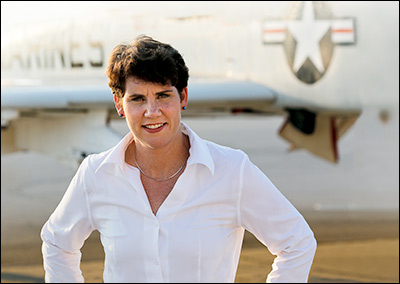

 • Gov. Steve Bullock: As has been expected for some time, Montana Gov. Steve Bullock (D) officially announced his presidential effort this week, becoming the 23rd Democratic candidate. Bullock made the argument that he will be an effective national candidate because he’s won two elections in a conservative state and has been able to earn legislative achievements, like Medicaid expansion, in negotiating with Republican leaders.