
Tag Archives: Gary Johnson

Is Michigan Rep. Justin Amash
Seeking a Political Exit Strategy Should He Run for President?

By Jim Ellis

Michigan Rep. Justin Amash (R-Cascade Township/Grand Rapids)

June 13, 2019 — The Michigan Information & Research Service (MIRS) released an independent poll just a couple days ago from the Practical Political Consultants organization (June 5-9; 335 likely MI-3 Republican primary voters) that finds western Michigan Rep. Justin Amash (R-Cascade Township/Grand Rapids) trailing his announced 3rd Congressional District Republican primary opponent, state Rep. James Lower (R-Greenville), by a lopsided 49-33 percent count.

After Rep. Amash became the only Republican to side with the Democrats’ informal impeachment caucus over whether to bring proceedings against President Trump, speculation became more rampant that the five-term Michigan congressman would seek the Libertarian nomination for president. The new poll and his action earlier in the week of resigning from the Freedom Caucus and its leadership fuels more speculation that he will jump into the presidential contest.

Many are arguing that Amash would have an effect upon the national election to the point of potentially costing President Trump victory, or at the very least, the state of Michigan, but such an outcome is far from determined.

The Libertarian presidential nomination has some value in that the party can qualify for the ballot in all 50 states and the District of Columbia. It is the only political entity aside from the Republican and Democratic parties that has such an ability. Jill Stein, the 2016 and 2012 Green Party presidential nominee, appeared on the ballot in 45 and 38 states, respectively.

However, just how much of a factor are the individuals who represent the minor parties on the presidential ballot? Former New Mexico governor Gary Johnson was the Libertarian nominee in both 2016 and 2012. He has already said he will not be a candidate in 2020. In 2012, his national vote total was 1.27 million. Four years later, his aggregate vote number soared to just under 4.5 million. But, was that due to Johnson himself, or is the Libertarian ballot position, regardless of the candidate’s name associated with it, simply the best place for disaffected voters to cast a ballot?
Continue reading

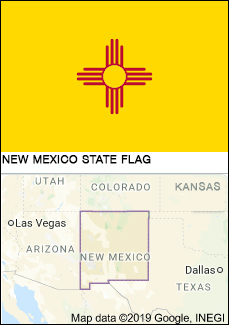
Democratic Primary Simmering in New Mexico: Candidates Waste No Time Lining Up to Succeed Udall

By Jim Ellis

March 29, 2019 — Sen. Tom Udall (D) surprised the political world on Monday when he released a video announcing that the will retire when this session of Congress adjourns instead of running for a third term. Though he appeared to be a lock for re-election, the 70-year-old senator said it was time for him to look for other political avenues from which to contribute.

Potential Democratic successors are wasting no time. Later today, state Attorney General Hector Balderas (D) is releasing a video message that will presumably contain his Senate announcement. He may soon have company from Secretary of State Maggie Toulouse Oliver and US Rep. Ben Ray Lujan (D-Nambe/Santa Fe).

Balderas is no stranger to statewide office in the Land of Enchantment. After winning a seat in the state House of Representatives in 2004, the freshman legislator was elected state Auditor in 2006. He then ran for an open Senate seat in 2008, but decisively lost the Democratic primary to now-incumbent Sen. Martin Heinrich (D). He was re-elected Auditor in 2010, and then ran for, and won, the attorney general’s post in 2014. Balderas was re-elected in November with 62 percent of the vote.

Though he ran for re-election last year, it was originally thought that Balderas would challenge Rep. Michelle Lujan Grisham (D-Albuquerque) for the open gubernatorial nomination. But, Grisham opened with a large lead, took advantage of her strong inside connections, and Banderas, knowing he could not afford to lose another statewide race, decided to stay put. Therefore, instead of running for governor, he made a major public production of supporting Grisham and unifying the party for the gubernatorial push. That move may well pay-off for him in this open Senate election.

Continue reading

Still Not Over

By Jim Ellis

Nov. 7, 2016 — Though the Granite State of New Hampshire possesses only four electoral votes, it can potentially end as the most critical entity in Tuesday’s presidential election, at least according to Donald Trump’s recent comments. After Hillary Clinton had been maintaining a discernible lead here since the national conventions concluded, four new polls are now projecting New Hampshire going back into the toss-up range.

If Trump is to make a final run at national victory, he must first lock down all 23 states that normally vote Republican in a presidential contest. With his standing improving in Utah and Arizona, this initial objective appears within his grasp. After securing the base, he must win Florida, Ohio, North Carolina, Iowa, Nevada, and then one more state. Therefore, his victory path is still difficult to attain.

The new American Research Group (Oct. 31-Nov. 2; 600 likely New Hampshire voters) and WBUR-MassINC study (Oct. 29-Nov. 1; 500 likely New Hampshire voters) studies provide Trump with some surprisingly good Granite State news. New Hampshire-based ARG sees a 48-43-4-1 percent Trump advantage over Clinton, Libertarian Gary Johnson, and Green Party candidate Jill Stein, while MassINC projects the Republican taking a 40-39-10-3 percent lead as Johnson actually touches double digits. The Boston Globe/Suffolk University data (Oct. 31-Nov. 2; 500 NH likely voters) finds the two tied at 42 percent apiece. The UMass Lowell poll (Oct. 28-Nov. 2; 695 likely New Hampshire voters) also sees a 42-42-5-2 percent tie. All of this portends a major swing in Trump’s favor.

Continue reading

Is It Possible?

By Jim Ellis

Nov. 2, 2016 — The latest reverberations from a potentially renewed Hillary Clinton FBI investigation are apparently helping to cause a severe tightening in the presidential race.

The latest polls, and there have been six conducted during the period from Oct. 24-30, now show the national popular vote again closing to perhaps within the margin of error. Clinton still leads in all national polls, but the trend is definitely favoring Donald Trump.

The six polls are from Morning Consult (Oct. 29-30; 1,772 likely US voters), Lucid/The Times Picayune (New Orleans) (Oct. 28-30; 857 likely US voters), Rasmussen Reports (Oct. 26-30; 1,500 likely US voters), Investors Business Daily/TIPP (Oct. 25-30; 993 likely US voters), NBC News/Survey Monkey (Oct. 24-30; 40,816 likely US voters via Internet), and ABC News/Washington Post (Oct. 26-29; 1,695 likely US voters). All but one find the Clinton lead dropping from what appeared to be a consistent six to nine point spread down to one or two.

Continue reading

Too Little, Too Late?

By Jim Ellis

Nov. 1, 2016 — Hillary Clinton appeared to be a lock to win the presidency less than a week ago, but yet another email scandal has potentially altered the outcome. This time, the situation involves disgraced former Rep. Anthony Weiner’s (D-NY-9) computer from which his wife, Clinton Campaign co-chair Huma Abedin, sent and received messages that are prompting further FBI scrutiny.

Does the discovery of more damaging material against the Clinton operation give Donald Trump a serious chance to win on Nov. 8?

Probably not, but a new ABC News/Washington Post three-day tracking survey (Oct. 25-28; 1,160 likely US voters) finds a severe tightening of the presidential contest, and even before the latest email flap became public knowledge. The poll result finds Clinton leading Trump now by only one percentage point, 46-45 percent, with Libertarian nominee Gary Johnson receiving four percent and Green Party candidate Jill Stein attracting two percent support.

While the ABC/Post analysis memorandum cautions the reader that this track represents only a snippet in time and even raises questions about the viability of its own sampling universe, the consistent movement toward Trump is still significant. It was only eight days ago that the ABC/Post track found the former Secretary of State opening up a commanding 50-38 percent advantage over the Republican businessman. Since that time, her daily tracking lead has dwindled to 49-40 percent (Oct. 24 release), 48-42 percent (October 25), 48-44 percent (October 26), 47-45 percent (October 27), and finally 46-45 percent in the data made public during the weekend.

Continue reading

North Carolina & New Hampshire – Tables Turning

By Jim Ellis

Oct. 27, 2016 — It is very possible that the US Senate majority, if not the presidential race, will be decided when the hard fought races in New Hampshire and North Carolina conclude.

In the past two weeks, New Hampshire polling trends have been suggesting that the top of the ticket is becoming a lock for Hillary Clinton, which should be very important for down ballot Democrats. During the past 10 years the Granite State electorate has consistently voted top-to-bottom sweeps for one party or the other, so a big Clinton New Hampshire victory is a positive sign for all other Democratic candidates here. But, a new poll shows a potential breaking of this paradigm.

The latest University of Massachusetts/YouGov poll, conducted during the Oct. 17-21 period and interviewing 848 individuals that narrowed to 772 likely voters, found Sen. Kelly Ayotte (R) assuming a three point, 46-43 percent, re-election advantage over Democratic Gov. Maggie Hassan that grew to 48-44 percent when “leaners” were added to the calculation.

Conversely, in the equally close and important US Senate race to the south, the latest Tar Heel State polls had been pointing to small but consistent leads for Republican incumbent Richard Burr. The release of a North Carolina university poll from the New York Times/Siena College (Oct. 20-23; 792 likely North Carolina voters), however, posts challenger Deborah Ross (D) ahead of Sen. Burr (R) by a scant one-point margin, 47-46 percent.

Continue reading

Key House Races; Key Polls

By Jim Ellis

Sept. 30, 2016 — Now that all political contests are in full campaign mode, we can report new numbers on five of the most hotly contested House race conversion opportunities for both parties.

AZ-1

One of the few truly swing congressional districts in the country, the expansive eastern Arizona 1st District is again the site of what should be a toss-up political contest. With Rep. Ann Kirkpatrick (D-Flagstaff) vacating the seat to run for Senate, the resulting general election matchup between former state Sen. Tom O’Halleran, who served a portion of his time in the legislature as a Republican, and controversial Pinal County Sheriff Paul Babeu (R) will be interesting to watch.

While Mitt Romney carried the 1st by a margin of 50-48 percent, a new Global Strategy Group survey (Sept. 22-25; 400 likely AZ-1 voters) finds Hillary Clinton topping Donald Trump, 46-43 percent. The same sample then yields a 45-38 percent O’Halleran lead.

The seven-point Democratic congressional margin equals what the GSG found in August, but the electorate has shifted. While more Republicans now support Babeu, Independent voters are trending toward O’Halleran.

A Democratic victory here, however, merely holds one of the party’s 188 seats and does not cut into the Republican majority.

Continue reading

The Outliers

By Jim Ellis

Sept. 29, 2016 — Early on debate day, Gravis Marketing made news with the release of their Minnesota poll. But their companion effort in North Carolina is equally noteworthy. Both illustrate trends inconsistent with all other pollsters, meaning the studies may be blazing new territory and they are simply wrong.

The Minnesota survey (Sept. 23; 906 likely Minnesota voters) surprisingly finds Hillary Clinton and Donald Trump tied at 43 percent apiece with Libertarian nominee Gary Johnson pulling four percentage points. Considering that Minnesota last went Republican in a presidential race 44 years ago (1972; Nixon vs. McGovern), and before then when Dwight Eisenhower was president, it would be hard to conceive of Trump taking the state. Not even Ronald Reagan could win here back in 1984, meaning that Minnesota is the only state that opposed Reagan in both of his elections. (The District of Columbia also opposed Reagan twice, but DC is obviously not a state.) Therefore, a place with such a strong Democratic history is unlikely to switch in 2016.

In contrast, Survey USA for KSTP television in St. Paul reported the results from its Sept. 16-20 poll (625 likely Minnesota voters). Their data produced a 46-39-6 percent Clinton advantage, which is more consistent with previous polls and historical voting trends.

Continue reading

A Centennial Swing

By Jim Ellis

Sept. 28, 2016 — Even before the first presidential debate was complete, we began seeing some political movement particularly in one critical battleground state.

In the 21st Century, the states of Florida, Ohio, North Carolina, Virginia, New Hampshire, Iowa, Colorado, and Nevada have been traditionally regarded as the swing battleground pool in the presidential race. In the last two elections, all but North Carolina voted Democratic. Such a pattern was continuing to take hold in Virginia, Colorado, and Nevada, though the 2013-14 elections did show Republican gain. Most of this particular shift, however, was attributable to voter turnout patterns instead of any ideological shift toward the GOP.

Now in the presidential general election, the political tide is beginning to turn in several of these states. Colorado, a place that had clearly been trending Democratic in the previous few elections and appeared poised to easily vote for Hillary Clinton earlier in the cycle is now exhibiting signs that Donald Trump is at least in position to contend for the Centennial State’s nine electoral votes.

Continue reading

New State Data

By Jim Ellis

Sept. 26, 2016 — While the national polls continue to yield a basic tie between Hillary Clinton and Donald Trump, the state totals are the real determining factor and we have significant new data from key targets this week.

To re-cap, if the election were today it appears Clinton would win possibly with as few as 272 Electoral Votes as compared to Trump’s 266. The latter’s coalition would include the states of Florida, Ohio, Iowa, and Nevada along with the 2nd Congressional District of Maine all converting from the 2012 electoral map. Most polls suggest that Trump is currently leading or has a strong chance of winning these entities on Election Day.

Florida, arguably the most important swing state, reported two very different polls this past week. The latest, from Suffolk University (Sept. 19-21; 500 likely Florida voters), finds Trump leading by a single point, 44-43 percent. But, earlier in the week, Florida’s St. Leo University released a survey (Sept. 10-15; 502 Florida adults) that projects Clinton holding a significant 49-44 percent Sunshine State advantage.

Continue reading