Tag Archives: Sen. Amy Klobuchar

Klobuchar Announces for Governor

Wednesday, February 4, 2026

Governor

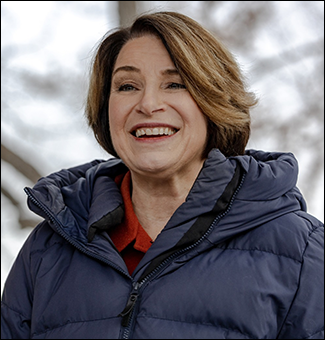
Minnesota Democratic Sen. Amy Klobuchar

As expected, Democratic Sen. Amy Klobuchar has now officially entered the open Minnesota gubernatorial campaign with her announcement late last week.

Previously, she filed a gubernatorial campaign committee as a prelude to her formal declaration. Just re-elected to the Senate in 2024, Klobuchar does not have to risk her Senate seat to run for Governor.

It appears the four-term Senator and former Hennepin County Attorney is a lock for the Democratic nomination and will likely become the official party nominee at the state Democratic endorsing convention to be scheduled well before Minnesota’s Aug. 11 primary election. She will also be favored in the general election, but it remains to be seen what type of effort the Republicans will launch now that the race has drastically changed since incumbent Gov. Tim Walz (D) surprisingly ended his quest for a third term.

In all likelihood, Sen. Klobuchar will win the Governor’s race and then appoint her own successor to the US Senate. If this happens, the appointed Senator will have the opportunity of running to fill the balance of the term in 2028 and would be eligible to seek a full six-year term in 2030.

Klobuchar is the fourth Senator this year running for Governor in their respective state. Sens. Tommy Tuberville (R-AL), Michael Bennet (D-CO), and Marsha Blackburn (R-TN) have also launched gubernatorial campaigns.

Tuberville is the only in-cycle Senator, however, as he risks his seat to run for Governor. His move looks to pay political dividends. Candidate filing has closed in Alabama, and he faces only minor opposition in the Republican primary. Only insurance agent Ken McFeeters and civic center manager Will Santivasci are competing against him for the party nomination in the May 19 primary.

After being nominated, Sen. Tuberville is likely to square off against former US Sen. Doug Jones who is in equally strong position to win the Democratic nomination. The general election will be a rematch of the 2020 Senate race, a campaign that Tuberville won easily, 60.1 – 39.7 percent.

The Senate election to replace Tuberville will likely be decided in the Republican nomination process. The principal contenders are Attorney General Steve Marshall, Rep. Barry Moore (R-Enterprise), retired Navy SEAL and anti-human trafficking activist Jared Hudson, and former Trump White House aide Morgan Murphy. Early polling favors AG Marshall, but President Trump has now endorsed Rep. Moore.

The Colorado race has produced at least one surprise. It appears that Sen. Bennet will have a fight on his hands in the Democratic primary against term-limited Attorney General Phil Weiser. According to the latest state financial disclosure report, AG Weiser has raised more in the way of campaign funds than Sen. Bennet. The numbers find Weiser accumulating $4.6 million in 2025 versus $3.5 million for his major opponent. Weiser also reported a $3.4 to $1.6 million cash-on-hand advantage.

There has only been one published poll of the Democratic race, which was released last June from the Global Strategy Group, a well-known Democratic professional polling firm. The ballot test found Sen. Bennet opening with a healthy 53-22 percent lead.

The winner of the state’s June 30 primary election will become a prohibitive favorite to clinch the general election and succeed term-limited Gov. Jared Polis (D).

The Tennessee gubernatorial campaign is also likely to be decided in the party primary, but this time on the Republican side. Sen. Blackburn’s principal opponent is Rep. John Rose (R-Cookeville), and Blackburn is a heavy favorite to win the party nomination and the general election.

Sen. Blackburn has dominated the early polls. The most recent release came in late October from Targoz Market Research and projected Sen. Blackburn with a 58-9 percent landslide advantage over Rep. Rose. Large margins have also been present in the three other publicly released polls earlier in the year.

Assuming all four Senators win their race, three of them will likely choose their own successor unless the outgoing Governor makes the Senate appointment as he is leaving office.

Rumors suggest that in two of the three cases the outgoing Governor, himself, Polis in Colorado and Walz in Minnesota, could become the appointed Senator. Therefore, the four Senators running for Governor will also produce post-election political drama just as 2027 begins.

Walz Out, Klobuchar In?

By Jim Ellis — Tuesday, January 6, 2026

Governor

Minnesota Governor Tim Walz (D) yesterday announced that he is ending his bid for a third gubernatorial term and, perhaps more surprisingly, veteran US Senator and former presidential candidate Amy Klobuchar (D) is reportedly seriously considering entering what will now be an open Governor’s race.

The unexpected turn of events appears directly connected to the controversy surrounding the alleged fraud claims regarding certain Minnesota public assistance programs. Clearly, the Governor’s internal polling revealed his chances of winning re-election have greatly diminished; hence, his rather abrupt decision to retire.

Should Sen. Klobuchar become a gubernatorial candidate, she will be the fourth senator choosing to run for governor in the 2026 election cycle. The others are Sens. Tommy Tuberville (R-AL), Michael Bennet (D-CO), and Marsha Blackburn (R-TN). From this group, only Sen. Tuberville is risking his Senate seat to enter his state’s Governor’s campaign. The others, including Sen. Klobuchar, would all have a free ride relating to their current position and be in position to choose their own US Senate successor via appointment.

At this point in Minnesota, 11 Republicans have announced their gubernatorial campaigns including 2022 gubernatorial nominee and former state Sen. Scott Jensen, state House Speaker Lisa Demuth (R-Rocori) and state Reps. Peggy Bennett (R-Albert Lea) and Kristin Robbins (R-Maple Grove).

It is unclear how the Walz retirement and potential Klobuchar entry will affect the burgeoning Republican field. In any event, considering Minnesota’s reliably Democratic voting history, the eventual party nominee, and particularly if it is Sen. Klobuchar, will be favored to win the general election. With the candidate filing deadline not until June 2 for the Aug. 11 primary election, much time remains for each party’s field to gel.

As previously mentioned, should Sen. Klobuchar run for and be elected Governor, she would appoint her successor. The appointed individual would then presumably compete in a 2028 special election to serve the balance of the term. In this case, because Sen. Klobuchar was re-elected in 2024, the appointed Senator, after winning the special election, would then have the opportunity of seeking a full six-year term in 2030.

Should the Klobuchar scenario occur, Minnesota would then have two freshmen Senators during the next Congress similar to the situation we currently see in Ohio. Because Minnesota Sen. Tina Smith (D) is retiring, the state’s in-cycle race is also open.

Gov. Walz was first elected to his statewide post in 2018 and re-elected in 2022. He averaged 53.1 percent of the vote in his two statewide campaigns. Prior to running for Governor, Walz represented the state’s southern 1st Congressional District for six terms. He then, of course, became the 2024 Vice Presidential nominee on the national Democratic ticket with Kamala Harris. Prior to his entry into elective politics, Walz was a high school geography teacher and football coach.

Nationally, 36 gubernatorial elections will be held later this year. In those 36 campaigns, 18 incumbents, down from 19 with the Walz decision, will seek re-election and the remaining 18 states will feature open gubernatorial competition. Within the group of 36 in-cycle states, each party currently holds 18 Governor’s chairs.

Klobuchar’s Lead in MN Narrows; Big Margins for Justice, Morrisey in WVa; Alaska’s Final Primary Numbers;
FL-13 is Neck-and-Neck

By Jim Ellis — Friday, Sept. 6, 2024

Senate

Minnesota Sen. Amy Klobuchar (D) / Photo by Gage Skidmore

Minnesota: Surprising New Poll — Sen. Amy Klobuchar (D) has always been regarded as a lock for re-election, and while the newly released Redfield & Wilton survey (Aug. 25-28; 426 likely Minnesota voters) does not suggest any result other than the senator’s victory, the poll results reveal a closer than expected developing campaign. The R&W ballot test numbers find Sen. Klobuchar leading former NBA basketball player Royce White (R) by only a 51-44 percent margin.

This poll is likely an anomaly large due to the small sample size. In contrast, Survey USA was in the field during a similar period (Aug. 27-29; 635 likely Minnesota voters; online) and found a much different ballot test result with the senator leading White, 50-36 percent.

West Virginia: Gov. Justice Takes Command in Senate Race — In a race that has attracted little in the way of political attention because most observers believe the result is a foregone conclusion, Research America, polling for the West Virginia Metro News website (Aug. 21-27; 400 likely West Virginia voters; live interview), casts Gov. Jim Justice (R) in a very favorable light. In the Senate race after reaching the maximum number of years allowed in the governor’s office, Justice posts a major advantage over Wheeling Mayor Glenn Elliott (D). Looking at the ballot test data, Gov. Justice is staked to a huge 62-28 percent margin over Mayor Elliott.

Should Gov. Justice continue this trend and claim the seat on election night, a West Virginia conversion victory would give the Republicans their 50th Senate seat. Defeating just one more Democratic incumbent would secure an outright GOP majority in the next Congress.

Governor

West Virginia: AG Morrisey On Way to Clinching Governor’s Race — The same Research America survey that tested the West Virginia Senate race also asked an open gubernatorial question. In this race, the polling analysis suggests that Attorney General Pat Morrisey (R) holds a double-digit lead of 49-35 percent against Huntington Mayor Steve Williams (D). While closer than the Senate race, this poll gives the full indication that Morrisey will easily hold the governor’s position for the GOP.

House

AK-AL: Primary Numbers Final — The Alaska Aug. 20 primary numbers are now final, and Rep. Mary Peltola (D-Bethel) finished with 50.9 percent of the vote in the state’s unique top-four jungle primary system. Obtaining a majority primary vote makes her the favorite for the general election.

In second place was Republican Nick Begich III with 26.6 percent followed by GOP Lt. Gov. Nancy Dahlstrom who posted 19.9 percent support. The fourth-place finisher, Republican Matthew Salisbury, received only 652 votes for less than one percent. Dahlstrom is forfeiting her general election position, and it is unclear if Salisbury will continue. Therefore, it appears that Begich will get his long-awaited chance to face Rep. Peltola in a budding one-on-one campaign.

While Peltola received majority support, it was with a turnout of only 108,407 voters. In the general election, more than 350,000 ballots are projected to be cast, meaning the November at-large election yields a whole new political ballgame.

FL-13: A Different Perspective — Last week, St. Pete Polls released an online survey (Aug. 27; 843 registered FL-13 voters; automated phone calls and text) that found Democrat Whitney Fox leading freshman Rep. Anna Paulina Luna (R-St. Petersburg) by a 48-44 percent margin. This week, WPA Intelligence released their data (Aug. 28-29; 400 likely FL-13 voters; live interview and text), which shows the exact opposite ballot test result. According to WPAi, Rep. Luna has a mirror image 48-43 percent advantage.

The FiveThirtyEight data organization rates FL-13 as R+12, and The Down Ballot statistical organization (formerly Daily Kos Elections) ranks the Tampa Bay area seat as the 38th most vulnerable seat in the House Republican Conference. Therefore, it is likely that the WPAi numbers are the better gauge since their data is more consistent with the district’s voter history. Still, this will be a competitive election down the home stretch.

Biden Scores, Bloomberg Out;
State Primary Results

Joe Biden captured the lion’s share of the delegates on Super Tuesday.


By Jim Ellis

March 4, 2020
— Former vice president Joe Biden, with a strong close from his South Carolina victory on Saturday, captured the lion’s share of the delegates on Super Tuesday and has re-established himself as the front-runner for the Democratic presidential nomination.

Biden placed first last night in 10 states, and surprisingly topped the field in Massachusetts and Maine, right in the backyard of Sens. Bernie Sanders (I-VT) and Elizabeth Warren (D-MA). He also placed first in Minnesota where home-state Sen. Amy Klobuchar had been leading. Her endorsement of Biden clearly helped propel him to the top position. In 2016 against Hillary Clinton in Minnesota, Sanders notched a 61 percent win. Last night his popular vote percentage was only 29.9 percent.

Though the former vice president carried the day in 10 states, one still must receive a majority of the delegate votes to win the presidential nomination. He exceeded the 50 percent mark in only two of the states, Alabama and Virginia.

Sen. Sanders, disappointingly for him, placed first in only four states, his home base of Vermont, and California, Colorado, and Utah. Former New York City mayor Michael Bloomberg did very poorly after spending reportedly as much as $700 million from his own fortune. He placed first in America Samoa and qualified for delegates in just eight of the 15 Super Tuesday voting entities. This morning, Bloomberg announced his withdrawal from the race and endorsed Biden.

The Green Papers organization ran full delegate extrapolation tables based upon the preliminary results in both the at-large and congressional district votes. Delegates are earned by exceeding 15 percent in both categories from each state. Totaling all 19 entities that have now voted, Biden would lead the national delegate count with an unofficial 667 bound delegate votes as compared to Sen. Sanders’ 581.

Bloomberg earned only an unofficial 141 delegate total and Sen. Warren just 76. The remaining 34 delegates were split among three others including Rep. Tulsi Gabbard (D-HI) who won a vote yesterday in American Samoa. These numbers will adjust as official vote totals are reported. California, where potentially more than 2 million votes remain to be counted, will substantially alter the totals once the state’s laborious counting process ends in the next several weeks.

Clearly, Biden is the big winner on Super Tuesday, and the night proved very disappointing for Sen. Sanders. Where the race goes now remains to be seen, but Biden winning on the first ballot in Milwaukee at the Democratic National Convention now seems to be the most likely unfolding scenario.

Five states held their full primaries last night and nominees were chosen in many places while run-offs will occur in a number of other situations. Here’s a state-by-state breakdown:
Continue reading

Super Tuesday Has Arrived

Super Tuesday 2020 States & Territories

By Jim Ellis

March 3, 2020 — The election landscape has changed since Saturday with former mayor Pete Buttigieg, Sen. Amy Klobuchar (D-MN), and billionaire Tom Steyer all exiting the race. Sen. Klobuchar endorsed former vice president Joe Biden as did Buttigieg in an announcement last night.

How do these developments and an obvious Joe Biden resurgence affect today’s vote? Maybe not as much as meets the eye. With the early voting processes well underway, and even completed in some states, the late-breaking political news and happenings will influence far fewer voters.

In fact, the three largest states with primaries today, California (415 first-ballot delegates), Texas (228), and North Carolina (110), all have extensive early voting options and large percentages of their voters have already cast their ballots meaning Biden’s sudden upswing in momentum after his South Carolina victory on Saturday night won’t sway them.

In California, more than 2 million people have already voted, which may translate into as much as one-third of the total Democratic presidential primary turnout. In 2016, more than 5.1 million people voted in the Hillary Clinton-Bernie Sanders race in June of that year. Returning to today, more than one million have already voted in Texas, and 800,000-plus have cast their ballots in North Carolina.

Thirty-eight states have some form of early voting, even if it is merely an in-person absentee system like those found in Minnesota and Virginia. For Super Tuesday, of the 14 states with primary elections today, only Alabama and Colorado have no early voting. The latter state fully conducts all-mail balloting but has no pre-election process in which to submit votes.

Looking at the current political map, though the establishment is making moves to coalesce behind Biden, the latest polling suggests that Sen. Sanders leads in nine primaries today and it’s possible, even with the candidate departures, that as many as three contenders in almost all of the states could still qualify for delegate apportionment.

Today will also mark the first time that former New York City mayor Michael Bloomberg’s name will be on the ballot and how he fares will be telling. Depending upon how many votes he takes could prevent one of the leading candidates from securing majority support, meaning the race evolving into a contested national convention is still a possibility.

Continue reading

Biden Wins South Carolina
Stage Set for Super Tuesday

By Jim Ellis

March 2, 2020 — Former vice president Joe Biden accomplished his goal of reviving his downward trending presidential campaign on Saturday. He won the South Carolina primary with 48.4 percent of the vote, topping Sen. Bernie Sanders’ (I-VT) 19.9 percent. Billionaire Tom Steyer, who spent millions attempting to make a stand in South Carolina and access the delegate board finished third with 11.3 percent. Failing to win bound delegates, Steyer officially exited the race after the results became known.

Former South Bend mayor Pete Buttigieg, a top-tier candidate, citing no viable path to the nomination, also dropped his campaign bid. This move is a bit of a surprise in that he was in position to win some delegates tomorrow in the Super Tuesday primaries; though leading in no states, he might have been able to affect the outcome of a contested convention should such an eventuality actually occur.

On the delegate count, Biden notched 38 bound first-ballot delegate votes, and Sen. Sanders’ added 16 to his national total. Going into Super Tuesday, Sen. Sanders still has a national lead, but it has dropped to 60-54 over Biden. Buttigieg, who scored 8.3 percent in South Carolina and finished fourth, remains at 26 bound delegate votes. Sen. Elizabeth Warren (D-MA) continues to hold eight votes and Minnesota Sen. Amy Klobuchar has seven. Sen. Warren finished fifth in the Palmetto State primary, with 7.1 percent, and Sen. Klobuchar recorded only 3.1 percent support.

Turnout increased substantially in comparison to the 2016 Democratic primary. More than 528,000 individuals look to have voted in Saturday’s primary, up from 370,904 in 2016. It is noteworthy to remember, however, that there was no Republican primary this year, meaning some self-identified Republican voters may have participated in the open voting system. The turnout was slightly below that of 2008, when 532,151 individuals cast ballots in that year’s Democratic primary even though Republicans and new voters, which should be a substantial since the state has rapidly grown during the past twelve years, are present in the current vote.

Now the stage is set for Super Tuesday, with Sanders and Biden in a virtual tie, and former New York City mayor Michael Bloomberg on a primary ballot for the first time. With Sanders and Biden now so close, it appears unlikely that the Super Tuesday result won’t give either one a commanding advantage.

South Carolina, Tomorrow

By Jim Ellis

Former vice president, Joe Biden

Feb. 28, 2020 — Former vice president Joe Biden appears on the cusp of winning tomorrow’s South Carolina Democratic primary. His polling has greatly improved, and momentum looks to be on his side.

For more than a year, Biden has enjoyed strong leads in South Carolina but his poor performance in Iowa and New Hampshire, with a slight rebound in Nevada, had caused his Palmetto State margins to tighten. One poll, from Change Research on Feb. 12-14, forecast Biden and Sen. Bernie Sanders (I-VT) lapsing into a tie.

Four closing polls were released yesterday, giving Biden leads of between 4 and 28 points, but it is the former poll that seems to be the anomaly. Change Research (Feb. 23-27; 543 likely South Carolina Democratic primary voters) projects Biden leading Sen. Sanders and billionaire Tom Steyer, 28-24-16 percent, with Sen. Elizabeth Warren (D-MA) lagging behind with a 12 percent preference factor. Under this poll, the top three finishers would qualify for delegate apportionment.

On the other hand, Emerson College (Feb. 26-27; 425 likely South Carolina Democratic primary voters) and Monmouth University (Feb. 23-25; 454 likely South Carolina Democratic primary voters) come much closer to Starboard Communications’ (Feb. 26; 1,102 likely South Carolina Democratic primary voters; online) 28-point spread line.

Starboard projects Biden leading 40-12-11 percent over Steyer and Sanders. Emerson finds him holding a 17-point lead, while Monmouth posts the former VP to a 20-point advantage. Both Emerson and Starboard find Biden touching the 40 percent mark. Biden’s large leads fail to prevent the Change Research and Monmouth polls from projecting that three of the candidates would earn a share of South Carolina’s 54 first-ballot delegate allotment, however.

To estimate a reasonable delegate count, the Monmouth poll finds a 36-16-15 percent spread for Biden, Sanders, and Steyer. If this poll proved most accurate, the delegate split would approximately be 29-13-12, consecutively, assuming the seven congressional district totals turned in similar ratios.

Continue reading