Tag Archives: John McCain

The Presidential Debates Loom

By Jim Ellis

Sept. 1, 2020 — The Presidential Debate series looms on the political horizon, and controversy is beginning to swirl even though the first forum is still a month away.

The first in a series of currently three presidential debates is set for Sept. 29.

House Speaker Nancy Pelosi said last week that Democratic nominee Joe Biden shouldn’t debate President Trump. “I wouldn’t legitimize a conversation with him, nor a debate in terms of the presidency of the United States,” she was quoted as saying at a news conference.

At the end of July, former Bill Clinton news secretary Joe Lockhart wrote for CNN.com that Biden shouldn’t debate the president. “Whatever you do, don’t debate Trump. Trump has now made more than 20,000 misleading or false statements according to the Washington Post,” Lockhart penned as public advice to Biden.

Some on the Republican side argue that these Democratic leaders are beginning to lay the groundwork for Biden to avoid the debates because of concerns their candidate would fare poorly opposite President Trump.

For his part, Biden says he will debate the president, and become his own “fact checker on the floor.” He will also begin holding campaign events after Labor Day. In an Aug. 28 interview with the Associated Press, Biden said he’ll “meet people where it matters – not at irresponsible rallies or staged for TV to boost egos, but real people’s communities, in real local businesses, in their lives.” Biden further said he’ll “hold events consistent with the state rules about crowd sizes and other regulations.”

The first debate is scheduled for Tuesday, Sept. 29, the second on Thursday, Oct. 15, and the final forum culminates a week later on Oct. 22. The vice presidential debate between incumbent Vice President Mike Pence and Sen. Kamala Harris (D-CA) is scheduled for Wednesday, Oct. 7.

The debates have proven important in the past and always draw large audiences. According to the Pew Research Center, even the first televised debate, between then-Sen. John F. Kennedy and then-Vice President Richard Nixon, drew over 66 million viewers usually on black and white televisions, at a time when the US population was just under 181 million people, or approximately 55 percent of today’s total populace.

Continue reading

The Maine Event

By Jim Ellis

Maine Congressional Districts

May 20, 2020 — The small state of Maine, with its two congressional districts, is going to attract a great deal of political attention between now and the election. Not only is the Pine Tree State one of the firewalls for Republican Senate majority hopes, the domain, one of two places that splits its electoral votes, will likely play a major role in determining the presidential election outcome, as well.

Maine and Nebraska divide their electoral votes such that the winning statewide candidate earns two electoral votes, while the victor in each congressional district is awarded one EV for as many districts as they carry. Maine, as mentioned, has two districts, and Nebraska three.

These districts came into play both in 2008 and 2016, when Barack Obama carried the 2nd District of Nebraska against John McCain in the former year, and Donald Trump took the 2nd District of Maine opposite Hillary Clinton in 2016. While neither CD became a factor in determining each of those elections, these CDs breaking differently than their state in a tight national election could result in the Electoral College ending in a tie.

The 48 other states and the District of Columbia use the winner-take-all system. Any state could divide their electoral votes like Maine and Nebraska, but those are the only two who choose the split vote method.

In the current presidential election scenarios, whether or not President Trump again carries ME-2 could determine if he is re-elected. Under one scenario, former vice president Joe Biden could win the national race even if he failed to carry Wisconsin so long as he takes the 2nd District of Maine and 2nd District of Nebraska. Doing so, along with winning the other swing states that touch a Great Lake, meaning Michigan and Pennsylvania, he would secure exactly 270 electoral votes, the bare minimum to claim national victory.

Continue reading

Texas Turnout

By Jim Ellis

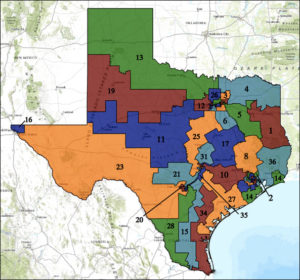
Map of US Congressional districts in Texas

March 16, 2020 — There is some budding political chatter promoting a theory that the 2020 Texas primary turnout numbers suggest Democrats are poised for a good election later this year in the Lone Star State, but a deeper dive into the numbers and patterns doesn’t clearly support such a conclusion.

The turnout theory loses its steam when actually comparing the participation numbers not only with 2020 Republican turnout and understanding that the GOP has a virtually unopposed presidential candidate for its nomination, but also when overlaying recent political history.

When studying the numbers, one sees that the 2008 Democratic primary’s participation rate between Barack Obama and Hillary Clinton far exceeded the numbers posted in this year’s primary, which was held on March 3 – Super Tuesday. In 2008, we see that 33.2 percent of the registered voters participated in one of the major party primaries. This year, the combined turnout represented 25.2 percent of the registered voter pool.

And, 12 years ago, according to figures published in this March 6 Texas Tribune article, two-thirds of those voters chose a Democratic ballot to vote in the Obama-Clinton primary versus just one-third who entered the Republican primary to support John McCain over former Arkansas governor, Mike Huckabee.

This year, 12.8 percent of the registered Texas voters chose the Democratic primary versus 12.4 percent who picked a Republican ballot even though there was no competitive GOP contest. Furthermore, the combined 25.2 percent total participation factor is actually the second-lowest turnout in the past four elections.

Most importantly, however, as a gauge toward predicting general election turnout and result, while two-thirds of the 2008 voters chose the Democratic ballot in the primary in the largest percentage turnout of the century, Republican John McCain would later post a 55-44 percent general election victory within the Texas electorate.

While Democratic statewide turnout did exceed the number of Republicans voting early or visiting the polls this year, the difference was minuscule. A total of 2,071,745 individuals voted in the Democratic primary while 2,008,385 participated on the Republican side. Since the presidential race was likely the turnout driver, the fact that a highly charged Democratic primary among several competitive contenders barely out-polled a Republican race where the incumbent president was virtually unopposed is of no tangible significance as a predictor of general election preference.

Continue reading

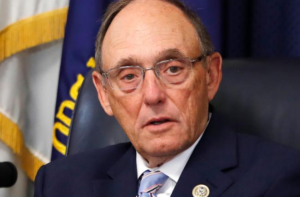
Tennessee Rep. Phil Roe to Retire

By Jim Ellis

Tennessee Rep. Phil Roe (R-Johnson City/Kingsport)

Jan. 7, 2020 — The House open seat total reached 40 over the weekend as veteran Tennessee Rep. Phil Roe (R-Johnson City/Kingsport) announced that he will not seek a seventh term later this year. Rep. Roe is the former mayor of Johnson City, Tenn., and ostensibly entered federal office when he defeated first-term Congressman David Davis in the 2008 Republican primary.

Roe initially pledged to serve only five terms. He changed his mind and successfully sought re-election in 2018 saying that he had unfinished business as chairman of the House Veterans Affairs Committee. As we know, the Democrats would go onto win the majority that year, thus relegating Roe to the committee’s ranking minority member position. Losing the chairmanship virtually eliminated the foremost reason for him remaining in Congress.

The 1st District is one of the safest Republican seats in the country. The last time a Democrat was elected to the House from easternmost Tennessee dates all the way back to 1878. The longest-serving representative from the region is former Rep. Jamie Quillen (R) who held the seat for 34 years after his original election in 1962.

The 1st District occupies the eastern tail of the Volunteer State. It contains 11 counties and part of Jefferson, a domain it shares with the 2nd District that is anchored in Knoxville. The largest 1st District population centers surround the cities of Johnson City and Kingsport. Sevier County, with a population figure of just under 90,000, is the third largest segment. It contains the cities of Sevierville and the tourist centers of Gatlinburg and Pigeon Forge in the district’s southern sector.

The TN-1 electorate votes heavily Republican. President Trump carried the seat 77-20 percent in 2016. Mitt Romney defeated President Obama here, 73-26 percent, and John McCain recorded a 70-29 percent victory margin in 2008. In his six victorious congressional elections, Rep. Roe averaged 77.8 percent of the vote in what were always lightly contested general election campaigns.

Continue reading

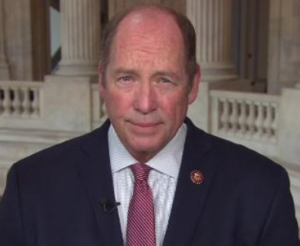
Rep. Yoho to Retire; Texas Filings

By Jim Ellis

Dec. 12, 2019 — Keeping his pledge to serve only four terms in the House, Florida Rep. Ted Yoho (R-Gainesville) announced in a local radio interview earlier this week that he will not seek re-election next year. Also, the 2020 Texas candidate filing deadline came on Monday, and lists of the qualifying candidates are now becoming public.

REP. YOHO, FL-3

Florida Rep. Ted Yoho (R-Gainesville)

There had been some speculation brewing as to Yoho’s plans for 2020 with some suggesting he might eschew his original pledge. Making this now the 37th open House seat and second in Florida, potential candidates will have until May 1 to file for the Aug. 25 primary.

The eventual Republican nominee will clearly have the inside track to hold this seat for the GOP. Florida’s 3rd District is strongly, and consistently, Republican. President Trump scored 56.2 percent of the vote in 2016. This number is almost identical to the 56.6 percent that Mitt Romney posted against President Obama in 2012, and John McCain’s 54.6 percent that he garnered in the 2008 presidential election.

Rep. Yoho has averaged 61.0 percent of the vote here over four elections, but the district was significantly changed in the 2015 mid-decade court-ordered redistricting plan. In the current configuration, Yoho averaged almost exactly what the Republican presidential candidates scored: 57.2 percent in his two elections since the boundary alteration.

The 3rd District occupies five whole counties and parts of a sixth. The major population center is the city of Gainesville in Alachua County. The remaining portion of the CD is nestled squarely in the north/central section of the Florida peninsula.

Three Republicans had already announced their candidacies, but none seems particularly viable. The contender raising the most money through the Sept. 30 financial disclosure period is businesswoman Amy Pope Wells, but her receipts showed just under $40,000 raised for the campaign with a cash-on-hand figure of just under $8,500.

Continue reading

NY-2: Trump for Congress?

NOTE: Happy Thanksgiving. Our Political Updates will return on Monday, Dec. 2.

By Jim Ellis

Lara Trump

Nov. 27, 2019 — Action about who the Republicans might nominate to succeed retiring New York Rep. Peter King (R-Seaford) is beginning to simmer, especially since the Club for Growth released a poll of the district’s GOP electorate late last week.

The Club contracted with WPA Intelligence to test Lara Trump, wife of Eric Trump and daughter-in-law of President Trump. Rumors had been surfacing that she might be contemplating running in the 2nd District; hence, the interest in gauging what type of support she might have for such a race. WPAi paired Lara with former congressman, Rick Lazio, who is considering becoming a candidate, in a hypothetical Republican primary. According to their data (Nov. 17-18; 400 likely NY-2 Republican primary voters), Lara Trump would lead Lazio by a whopping 53-19 percent.

The result is not particularly surprising because Donald Trump has a solid Republican base in the district. The WPAi survey finds the president’s favorability ratio at 78:19 percent within this GOP primary voter sample.

In response to the poll, Lara told Breitbart News that she’s, “ … incredibly honored by this showing of support from my fellow New Yorkers. While I would never close the door on anything in the future, right now I am focused on winning a second term for President Trump.” Lara serves as an advisor to the president’s re-election campaign.

So far, Islip Town Councilwoman Trish Bergin Weichbrodt and Suffolk County Elections Commissioner Nick LaLota are announced Republican candidates. State Assemblyman Mike LiPetri (R-Massapequa) has formed a congressional exploratory committee and is expected to join the race. Early last week, former Suffolk County executive, Steve Levy, and County Legislature Minority Leader Tom Cilmi both said they would not run for the seat.

The Democrats appear to be coalescing around Babylon Town Councilwoman Jackie Gordon, who is a retired Army officer. Gordon had announced a challenge campaign against Rep. King and raised just under $188,000 through the Sept. 30 deadline. The 2018 Democratic nominee, Liuba Grechen Shirley, who held the congressman to a surprisingly close 53-47 percent victory, has already announced that she will not enter the 2020 open seat campaign.

Continue reading

Rep. Peter King to Retire

By Jim Ellis

Nov. 13, 2019 — Over the Veterans holiday weekend, long-time New York Rep. Peter King (R-Seaford/ Islip) announced that he will not seek re-election to a 15th term next year, ending what will be 28 years of service in the US House.

Rep. Peter King (R-NY-2)

Prior to winning the South Shore Long Island seat in 1992, King served as the Nassau County comptroller for 11 years. In 1977, he was elected to the Hempstead Town Council, his first political campaign.

King, a former chairman of the House Homeland Security Committee, represents New York’s 2nd District, bordering the Great South Bay, which travels along the Sunrise Highway from Bayport through Babylon all the way to Seaford. The district leans Republican. President Trump carried the seat 53-44 percent in 2016, though both Mitt Romney and John McCain fell several percentage points short of winning here.

Through his 14 elections, King has averaged 55.4 percent of the vote through different configurations of the district. In 2018, the congressman defeated business consultant Liuba Gretchen Shirley, 53.1–46.9 percent, in a race where his opponent raised just under $2 million. For his part, the congressman spent almost $3.2 million.

There had been retirement speculation surrounding the 75-year-old King, for several months. Earlier it had been assumed that the congressman’s daughter, Erin King Sweeney, would run to succeed him when he eventually left office but apparently that will not happen. In September, Sweeney announced that she would not seek re-election to her current position as the Republican leader on the Hempstead Town Council because her husband accepted a position in North Carolina and the family is moving.

While 2018 Democratic nominee Shirley has not announced that she is returning for a re-match, Babylon Town Councilwoman Jackie Gordon (D) did declare her candidacy. Additionally, Trump impeachment activist Max Sax is in the Democratic field. Now that the 2nd District has become an open seat we can expect to see stronger Democrats come forward to make the race. A crowded Republican primary is also forecast.

The New York candidate filing deadline is not until April 2, so Democratic and Republican Party leaders have sufficient time to fully develop a credible group of candidates. The New York state primary is June 23. We can expect two competitive primaries and a tight general election. The early rating for this new open seat is Lean Republican.

King now becomes the 32nd sitting House member who will not seek another term in office. Within this group, more than two-thirds, or 22, are currently Republican-held. Ten are from the Democratic side of the political aisle.

As reported earlier, four of the seats are vacant and headed to a special vote before the next general. The elections for resigned Rep. Sean Duffy (R-WI) and the late Rep. Elijah Cummings’ (D-MD) seats have already been scheduled. The governors of New York and California must still schedule special votes to replace resigned Reps. Chris Collins (R-Clarence/Batavia) and Katie Hill (D-Agua Dulce/Palmdale).

Rep. Walden to Retire; Ex-Rep. Knight to Return

Veteran Republican US Rep. Greg Walden (OR-2)

By Jim Ellis

Oct. 30, 2019 — Veteran Republican US Representative Greg Walden (R-OR) joined the growing group of House members to announce that his congressional career will come to an end. Rep. Walden issued a statement Monday indicating that he will not seek a 12th term in office. OR-2 becomes the 30th open seat. There are now four vacancies in the House.

The veteran congressman, first elected in 1998, is the ranking Republican member on the House Energy & Commerce Committee, a panel he chaired while the GOP held the majority. He is also a past chairman of the National Republican Congressional Committee.

Oregon’s 2nd District is the only Republican seat in the Beaver State. It occupies 19 eastern counties and part of one other. The land mass covers three-quarters of the state and houses the two larger population centers of Jackson and Deschutes Counties, which contain the cities of Medford and Bend, respectively.

The Census Bureau indicates that the 2nd District now contains over 830,000 people, over 100,000 more people than originally constructed in 2011. In fact, all of the Oregon districts are now approximately this size, which explains why the state looks to be gaining an additional seat in congressional reapportionment.

Walden won 11 elections in the 2nd and has averaged 68.7 percent of the vote over his 11 victorious federal campaigns. The only time he dropped below 61 percent of the vote occurred last November when he was re-elected with 56.3 percent.

President Trump carried the district in 2016 with a 57-37 percent margin. Four years earlier, Mitt Romney notched a similar 57-41 percent victory spread. John McCain won 54-43 percent in 2008. Therefore, this seat should easily remain in Republican hands, but first the candidate fields must develop for both parties.

The district touches eight state Senate and 14 state House seats. Seven of the eight Senate seats are Republican held. In the House, the GOP advantage is twelve to two. We can expect several of these legislators to enter the open House race and what is likely to be a large number of local officials from the expansive regions.
Continue reading

A Brewing Battle Emerging in Kansas

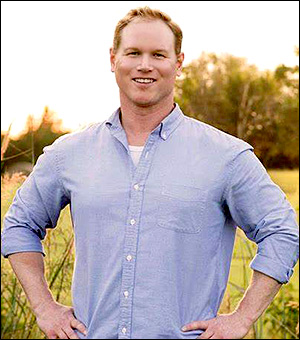
Freshman Rep. Steve Watkins (R-Topeka)

By Jim Ellis

Oct. 17, 2019 — Former legislative aide Abbie Hodgson, the only announced Democratic candidate in the KS-2 congressional race, withdrew her challenge to freshman Rep. Steve Watkins (R-Topeka) Wednesday because she claims not to possess the fundraising ability to conduct a credible campaign. At this point, there is no alternative Democrat on the horizon in the Kansas district, but that will soon likely change.

Rep. Watkins won a tight 48-47 percent general election victory over former state House Minority Leader and 2014 gubernatorial nominee Paul Davis (D) last November to succeed retiring Rep. Lynn Jenkins (R). This came after political newcomer Watkins, a West Point graduate, Army Ranger and Afghanistan veteran, won a tight seven-way Republican primary but with only 26.5 percent of the vote. Controversy arose when a major independent expenditure committee emerged, which was principally funded by the candidate’s father, to back Watkins.

More potential upheaval surrounds Rep. Watkins, but it simmers below the surface. Rumors were flying around in August that the congressman would imminently resign his office because of a rumored scandal that was about to become public. Watkins took no such action, and to date nothing involving scandalous activity has come to light.

This has not stopped certain Republicans from taking action, however. In early September, reportedly at the behest of former Gov. Jeff Colyer (R) who lost his own bitter primary to then-Secretary of State Kris Kobach, state Treasurer Jake LaTurner made a surprising move. He was the first declared US Senate candidate after incumbent Pat Roberts (R) announced his retirement, but he then transferred from the statewide campaign to instead enter the primary to challenge Watkins in the Topeka-anchored congressional district.

Kansas’ 2nd is a decidedly Republican seat, but not intensely so. The CD occupies 23 eastern Kansas counties and parts of two others. It runs vertically from the Nebraska border to Oklahoma and consumes the territory between the Kansas City metro area and Wichita.

Continue reading

Rep. Shimkus to Retire

Illinois Rep. John Shimkus (R-Collinsville)

By Jim Ellis

Sept. 4, 2019 — Twelve-term Illinois Rep. John Shimkus (R-Collinsville), a key member of the House Energy & Commerce Committee, announced over the Labor Day weekend that he will not seek re-election next year, becoming the latest GOP House member to join the increasing line of incumbents voluntarily not returning for the next Congress.

Rep. Shimkus’ retirement makes his IL-15 the 18th open House seat for the next election, including the two September 10th North Carolina special elections. Of this group, Republicans currently hold 14 of the 18 seats, with the vacant NC-9 — one of those currently in special election and the district that featured a disputed 2018 electoral result — previously in the GOP column as well.

Shimkus, in his written statement, said, “[A]s Illinois candidates begin to circulate petitions next week, now is the time for me to announce that I will not be seeking re-election.

“It has been the honor of my lifetime to be asked by the people of Illinois to represent them in our nation’s capital. Each day I have tried to do this as best as I possibly could, and my success lies squarely at the feet of my incredible staff in Illinois and Washington, DC.”

IL-15 is a safe Republican district. President Trump carried the seat, 71-24 percent, in 2016. Four years earlier, Mitt Romney’s margin was 64-34 percent, and John McCain won here 55-43 percent in 2008. Therefore, over the course of time, the 15th has become more Republican. In his four elections in this district configuration, Shimkus has averaged 78.6 percent of the general election vote.

The district is predominantly located in the eastern sector of the state, hugging the Indiana border and traveling due south all the way to Kentucky. It then stretches west to almost the other side of the state in order to annex the Collinsville area, an outer St. Louis metro area community where Shimkus resides.

Continue reading