Tag Archives: Sen. Martha McSally

Another Close Arizona Race Beckons

By Jim Ellis

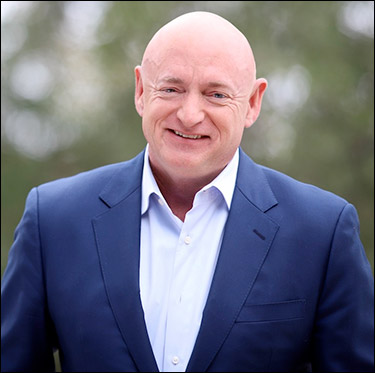
Arizona Sen. Mark Kelly (D)

Jan. 31, 2022 — The state of Arizona has become a volatile political domain, and a new poll suggests we will see another razor-thin US Senate race evolve later this year.

Over the course of history, the Arizona voting universe boasts a pattern of electing similar numbers of candidates from both parties. Admitted to the Union in 1912 as the 48th state, Arizonans have elected just 14 individuals to their two Senate seats, seven of whom have been Democrats with an equal number of Republicans. Since 2010, however, the electorate has strayed from its conservative political roots and moved toward the ideological center.

With this backdrop, the Data for Progress research organization just released their major statewide survey of the Grand Canyon State electorate (Jan. 21-24; 1,469 likely Arizona general election voters, online & text). The DfP finds Sen. Mark Kelly (D) already falling into a tight battle with Attorney General Mark Brnovich, should the latter man win the GOP nomination.

In the campaign from two years ago, you will remember that Sen. Kelly won a special election in 2020 and now serves the remaining two years of the late Sen. John McCain’s (R) final term. In this election year, he stands for a full six-year term.

The ballot test found Kelly holding a slight 49-47 percent edge over AG Brnovich, but with the senator’s personal approval rating lapsing into the negative realm, 46:49 percent favorable to unfavorable. He still rates higher, however, than President Biden (45:54 percent), fellow Arizona Democratic Sen. Kyrsten Sinema (42:52 percent), and Republican Gov. Doug Ducey (39:57 percent).

Brnovich also records a negative personal approval rating at 26:32 percent, while venture capitalist Blake Masters, another top Republican in the US Senate field, posts a 16:17 percent ratio, with 68 percent replying that they “haven’t heard enough (about him) to say.”

In a ballot test against Gov. Ducey, who is not a Senate candidate, Sen. Kelly’s advantage is 50-47 percent. Masters was not included in the head-to-head pairing questions with Sen. Kelly.

Continue reading

Assessing Arizona

By Jim Ellis

Sen. Mark Kelly (D) won the special election in November to fill the balance of the late Sen. John McCain’s (R) final term in office. He again comes before the voters in this election cycle to stand for a full six-year term.

April 13, 2021 — The Club for Growth released the results of their new Arizona Republican primary poll on Friday, and it draws attention to a race that should become a top-tier 2022 campaign.

As you will remember, Sen. Mark Kelly (D) won the special election in November to fill the balance of the late Sen. John McCain’s (R) final term in office. Therefore, he again comes before the voters in this election cycle to stand for a full six-year term. Kelly, a retired astronaut and husband of former Arizona Rep. Gabrielle Giffords (D), defeated appointed Sen. Martha McSally (R), 51-49 percent, in a result much closer than the polling predicted.

WPA Intelligence conducted the Club for Growth 2022 poll during the April 5-6 period of 505 likely Republican primary voters via live interview. They tested Rep. Andy Biggs (R-Gilbert) against Gov. Doug Ducey. The results found the congressman holding a 46-45 percent lead over the governor and, in what seems to be a clear indication that base Republican voters still follow ex-President Donald Trump’s lead, the margin swells to 59-32 percent if the latter man endorses Rep. Biggs.

It is important to note, however, that Gov. Ducey has already announced that he is not running for the Senate. National Republican leaders are attempting to convince the governor to reverse his decision, but his entrance in the Senate race, at least for now, appears highly unlikely. Rep. Biggs has not given a firm public indication if he will become a statewide candidate.

Currently, the only Republican to announce for the Senate is software engineer Rob Paveza. While the pace of this eventual competitive contest is slow in the early going when compared to states such as Ohio, Pennsylvania, and North Carolina, a full year remains before candidate filing closes in Arizona, a state that hosts an August primary.

Those mentioned as possible candidates aside from Rep. Biggs include Attorney General Mark Brnovich, State Treasurer Kimberly Yee, state Republican Party chair and former Senate candidate Kelli Ward, ex-US representative and 2002 gubernatorial nominee Matt Salmon, State Adjutant General Michael McGuire, and solar energy company executive Jim Lamon, all according to the Politics1 blog.

Sen. Kelly was one of the top fundraisers of the 2020 election cycle, obtaining more than $101,000,000 for his campaign committee. Only Georgia Sens. Jon Ossoff (D) and Raphael Warnock (D), who both were forced to compete in general election runoff campaigns, and South Carolina’s Jaime Harrison, the current Democratic National Committee chairman, raised more. Already for 2022, Sen. Kelly announced that he pulled in $4.4 million during the first quarter of this year.

Continue reading

Arizona’s Importance

By Jim Ellis

Does Arizona hold the key in the Trump-Biden election?

Oct. 9, 2020 — Now moving quickly toward Election Week, it is becoming apparent that the ultimate bellwether state for the 2020 presidential election is the Grand Canyon State of Arizona. Formerly a rock solid Republican political domain, the state has been trending toward the political center in recent elections, most particularly 2018.

Coming into the closing weeks of this year’s presidential campaign, it appears that Arizona may be this election’s “tell.” While it’s possible mathematically for President Trump to win in the Electoral College without Arizona, realistically doing so may be a bridge too far.

The principal reason is Arizona has 11 electoral votes, and the idea that Trump could replace it with taking Wisconsin or Minnesota, for example, fails because those states each have 10 votes. Therefore, losing Arizona would lead to him either falling into a tie, or losing the national electoral vote count, 270-268.

The latter electoral vote margin occurs if he also drops the 2nd Congressional District of Nebraska, a state that is one of a pair to split their electoral votes. The most recent public NE-2 poll, from Siena College/New York Times (Aug. 25-27; 420 NE-2 likely voters, live interview), finds the president trailing former vice president Joe Biden in the Omaha metro district, 41-48 percent.

The Trump math also fails without Arizona even if he carries Pennsylvania as his lone Great Lakes State. Losing Arizona, Michigan, and Wisconsin from his 2016 state coalition map, along with NE-2, would also yield a 270-268 Biden victory.

Earlier this week, the Data Orbital polling firm headquartered in Phoenix and is the most prolific survey research firm in testing the Arizona electorate from statewide through local offices, released their latest presidential and US Senate numbers. Their poll (Oct. 3-5; 550 likely Arizona voters, live interview) is the first Arizona survey taken wholly after both the first presidential debate and President Trump being hospitalized for COVID-19.

Continue reading

SCOTUS: The Effect of Replacing Late Supreme Court Justice Ruth Bader Ginsburg On The 35 Senate Races

By Jim Ellis

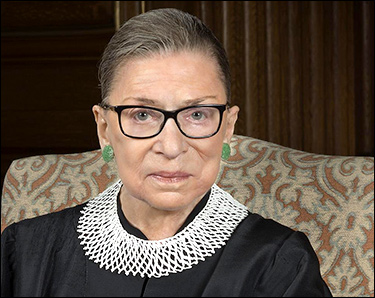
Late Supreme Court Justice Ruth Bader Ginsburg

Sept. 22, 2020 — A secondary question surrounding the replacement process for the late Supreme Court Justice Ruth Bader Ginsburg is how will the confirmation fight over the next judicial nominee resonate in the 35 Senate races?

In the 18 campaigns that appear non-competitive (9D; 8R) – for example, in Illinois (Sen. Dick Durbin-D), Rhode Island (Sen. Jack Reed-D), Arkansas (Sen. Tom Cotton-R), and Idaho (Sen. Jim Risch-R) to name a representative quartet – the Supreme Court battle will have little influence over the Senate outcome since those situations are virtually decided.

If the individual campaigns play the issue correctly, however, the Supreme Court vacancy development could be a boon to most competitive Republican incumbents and candidates in traditionally conservative states that are moving closer to the political center.

Democratic challengers in the more conservative states could have trouble because the issue matrix likely to be discussed through the nomination and confirmation process should activate the more conservative voting base. This is likely the case in the key competitive southern domains (AL, GA, NC), and in the Midwest and Rocky Mountain states, particularly in Iowa, the Kansas open seat, and for the Montana duel, in addition to the far west campaign in Alaska.

Perhaps the senator in the worst confirmation question situation, and one who can ill afford to be embroiled in such a predicament, is Maine Sen. Susan Collins (R). Already trailing in polling to state House Speaker Sara Gideon, Sen. Collins’ immediate call to postpone the process, and what will likely lead to a vote against the motion to proceed, will likely cost her conservative votes that she badly needs.

Her position to postpone has likely angered many who comprise the conservative base and gained her nothing with the Independents and soft Democrats that she desperately needs to close the gap between she and Gideon.

Continue reading

Arizona Polling: Whatever You Want


Best wishes for a Happy 4th of July holiday weekend.
Our daily column will return on Tuesday, July 7.


By Jim Ellis

July 2, 2020 — We saw a polling bonanza released yesterday in the swing battleground state of Arizona and, no matter who you support or what you believe, there is survey data for you.

Arizona Senate candidate, retired astronaut Mark Kelly (D), and Sen. Martha McSally (R)

Three pollsters released results that tested the presidential race and the Arizona Senate contest between retired astronaut Mark Kelly (D) and appointed Sen. Martha McSally (R). The three pollsters, all conducting their surveys within the June 26-29 period, gave us starkly different ballot test conclusions.

Two of the pollsters are from out of state, while one is based in Phoenix and specializes in researching the Arizona electorate. One of the pollsters tested six battleground states as part of their national polling series, including Arizona, but did not disclose the size of the Grand Canyon State respondent cell. This makes analyzing very difficult. The other two firms revealed similar sized Arizona likely voter sampling universes.

The three pollsters were Change Research, Data Orbital, and Gravis Marketing. All have done national work and are published regularly in political blogs and websites as well as being frequently quoted in national news stories.

Despite testing the same electorate during the same time period, we see an 11-point swing in the presidential race, and a 13-point spread among the three survey results for the Senate race.

Change Research was the most bullish for the Democratic candidates, posting former vice president Joe Biden to a 51-44 percent advantage, and an even larger 53-44 percent margin in Kelly’s race.

Conversely, Gravis Marketing produced the most Republican results. They find President Trump holding a 49-45 percent lead and Sen. McSally up by the same point margin, 46-42 percent.

In between is Data Orbital, the local pollster. They find Biden ahead 47-45 percent, and Kelly up by a similar, but not as pronounced, margin as Change Research found, 50-43 percent.
Continue reading

The Senate Barometer

Sen. Cory Gardner Senate campaign attack ads hitting former Colorado Gov. John Hickenlooper hard (see COLORADO writeup below)


By Jim Ellis

June 18, 2020 — Next to discussion of the presidential race, the political contests attracting the most political attention and debate are the 2020 US Senate campaigns.

As we know, Republicans have a 53-47 Senate majority, meaning the Democrats will have to convert a net three GOP seats if Joe Biden wins the presidency, or four if President Trump is re-elected. Many believe that the winning presidential candidate will also sweep in a Senate majority for his party.

Below is an update of the key races:


• ALABAMA: In many ways, this could be the most important race on the board. Republicans must convert this seat back to their column in order to provide a greater cushion toward protecting their chamber majority. Sen. Doug Jones (D), who scored a fluke special election win in 2017, stands for a full six-year term in November.

Republicans are in a runoff election that will be decided on July 14, postponed from the original March 31 date. In the March 3 primary, retired Auburn University head football coach Tommy Tuberville placed first over former attorney general and ex-Alabama senator Jeff Sessions within a field of seven total candidates, 33-32 percent.

Runoff polling, however, gives Tuberville a large lead as the contenders enter the last month of the secondary election campaign. The May 26-27 OnMessage survey gave Tuberville a 49-43 percent edge, down considerably, however, from the 55-32% margin the former coach posted in a Cygnal research group poll conducted over the May 7-10 period.

Tuberville, with President Trump’s endorsement and running an ad saying Sessions’ appointment as AG is the president’s top regret since taking office, clearly has the advantage. In the general election, this race is a must-win for the GOP. If converted, the Republican majority expands to 54, which will be critical for their chances to hold.


• ARIZONA: Things continue to break retired astronaut Mark Kelly’s (D) way in the early going opposite appointed Sen. Martha McSally (R). Being one of the top national fundraisers with $31 million raised and millions more coming into the state in the form in independent expenditures, Kelly is the favorite to convert the seat in November. He has led in the last 11 publicly released polls, the latest coming from the Civiqs organization, polling for the Daily Kos Elections website (June 13-15), which posts Kelly to a 51-42 percent advantage.


• COLORADO: Sen. Cory Gardner (R) seeks a second term, and with the state’s electorate moving decidedly to the left since the incumbent’s original election in 2014, the Colorado race sets up well for Democratic conversion.

There is some weakness developing, however, surrounding Sen. Gardner’s likely Democratic opponent, former governor and presidential candidate John Hickenlooper. Recently, the Colorado Ethics Commission ruled that Hickenlooper, while governor, twice violated the state’s gift ban, which has caused him negative statewide publicity.

Now, the National Republican Senatorial Committee has launched an ad campaign underscoring the commission finding just as the former governor approaches his June 30 primary election against former state house speaker Andrew Romanoff. Sen. Gardner also is on the air in a new ad highlighting Hickenlooper’s statements during the presidential campaign when he was quoted extensively as saying he didn’t want to be a US senator. Taking this into consideration, more people are looking toward the Democratic primary, in which Romanoff is gaining some momentum. This general election is a must-win for the Democrats.
Continue reading

Rating the Senate – Overview

By Jim Ellis

April 13, 2020 — Taking advantage of the lull in active campaign time because the COVID-19 stay-at-home orders in effect around the country yields a relatively stable political picture, we have developed early ratings for this year’s 35 US Senate races. Of course, this comes with the understanding that great unknowns associated with the virus after-effects on the US and world economies will certainly alter the political climate.

As we know, 33 in-cycle Senate races are on the board for November along with two special elections, one in Arizona and the other in Georgia. In this cycle, Republicans must defend 23 of the states hosting Senate races as compared to just 12 for the Democrats. This is almost a complete reversal of the 2018 political map when Democrats were forced to defend 26 of 35 electoral contests.

To review, appointed Sen. Martha McSally (R-AZ) must run in November to attempt to secure the remaining two years of the late Sen. John McCain’s (R) final term. In the Peach State, appointed Sen. Kelly Loeffler (R-GA) will be on the ballot in hopes of winning her first election, which would yield her two more years of service in replacing resigned Sen. Johnny Isakson (R).

Looking at the entire Senate picture after reviewing all 35 races, it appears that 18 of the 35 campaigns can be considered safe for the incumbent party (10R; 8D). The GOP has five “Likely Republican” races and six more that lean their way today. The Democrats have two “Likely Dem” contests and three more that currently tilt in their direction. We consider only one race a toss-up at this point in the election cycle.

Already in this cycle, we project three conversion situations landing in the “Lean” category for the challenger party, two R to Ds, and one D to R. And, we will take a closer and more expansive look at these “Toss-up” and “Lean”-rated situations in an update tomorrow.

Continue reading

Early Clues for Dems’ Early Targets

By Jim Ellis

April 1, 2020 — The Senate Majority PAC, one of the chief advocacy entities for Democratic candidates, has reserved media time totaling $69.2 million from August through the election, as reported on the Daily Kos Elections website. The expenditures provide us some clues into how the Democratic establishment and their progressive left allies view their strategic attack points in relation to the national political landscape.

The early media time reservations are invested in five states: Arizona, Colorado, Iowa, Maine, and North Carolina. This is certainly not the limit of the SMP planned expenditures, nor is the organization likely committed to fulfilling the entirety of this time buy without having negotiated an escape clause. All depends upon their agreements with the individual television outlets and does not include any future expenditure the group may make for radio and digital advertising.
Setting the stage, the five states are all clearly top-tier Republican-held targets of which the Democrats would have to convert nearly all in order to wrest Senate control away from the current majority. That number grows if they fail to defend their own vulnerable seats in either Alabama or Michigan, or both.

The largest time reservation is in North Carolina, where Democrats hope newly nominated Cal Cunningham, a former state senator and 2010 US Senate candidate (lost Democratic nomination to then-secretary of state Elaine Marshall who would lose the general election to GOP Sen. Richard Burr), can unseat first-term incumbent Thom Tillis (R) in a state that has defeated more senators than any other in the modern political era. Of the $69.2 million in national reservations the group made, $25.6 million is dedicated to North Carolina media markets.

Arizona gets the second largest share with $15.7 million dedicated toward helping retired astronaut Mark Kelly, already the consensus Democratic candidate, challenge appointed Sen. Martha McSally (R). Iowa, where Democrats will nominate a candidate on June 2 to challenge first-term Sen. Joni Ernst (R), will see $13.1 million of the SMP media buy. Maine gets $9.6 million to oppose Sen. Susan Collins (R), and Colorado $5.2 million largely for negative ads against first-term Sen. Cory Gardner (R).

Continue reading

New Arizona Data

By Jim Ellis

Arizona Senate candidate, retired astronaut Mark Kelly (D), and Sen. Martha McSally (R)

Jan. 10, 2020 — Public Policy Polling conducted a study of the Arizona electorate (Jan. 2-6; 760 registered Arizona voters) to test the highly important impending US Senate race between appointed Sen. Martha McSally (R) and retired astronaut Mark Kelly, the presumed Democratic nominee.

PPP also ran ballot tests involving President Trump paired individually against the major Democratic presidential contenders. Even though Arizona is a critical state in the 2020 presidential general election, the early projection numbers are not particularly salient because the contest has yet to begin in earnest, but the Trump results do provide a credibility foundation to analyze the PPP Senate numbers.

The Senate ballot test shows, as does every other previous survey of this race, that the McSally-Kelly battle is within the polling margin of error. The PPP numbers, at 46-42 percent in Kelly’s favor, project a four-point spread between the candidates, which is a bit more separation than revealed in past Arizona surveys.

Both Kelly and McSally have been near the top of national Senate fundraising charts, so it is clear that each will have plenty of resources to communicate their specific campaign messages in addition to expected independent expenditures that will come into the state to aid and attack both candidates. It is already clear that the Arizona Senate race will become a national campaign.

At this point, the Grand Canyon State campaign looks to be the Democrats’ best conversion opportunity, and a victory for them becomes even more important to offset what is likely a predicted loss for Sen. Doug Jones (D) in Alabama. With the Democrats needing a net gain of at least three seats, or four depending upon the presidential race outcome, every swing seat becomes critical for both parties.

Continue reading

Pompeo for Senate?

By Jim Ellis

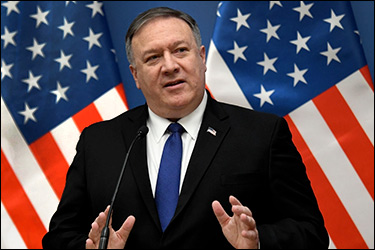
US Secretary of State Mike Pompeo

Nov. 25, 2019 — Ever since Kansas Sen. Pat Roberts (R) announced last January that he would retire at the end of the current Congress there has been consistent speculation that US Secretary of State and former Wichita area congressman, Mike Pompeo, would resign his national position and return to Kansas to run for the open seat. Despite repeated denials from Secretary Pompeo, the speculation would not die.

Now, it appears the rumors of him entering the race have greater foundation, as more concrete stories that he will soon resign and announce his candidacy are regularly surfacing. The Senate Republican leadership is clearly in favor of the Pompeo move, originally fearing that former Kansas Secretary of State Kris Kobach could win a crowded August Republican primary with only a vote plurality and then perform as badly in the general election as he did when he lost the 2018 open governor’s race.

With Republicans holding 53 of the chamber’s 100 seats but having to defend 23 incumbents and open seats on the 2020 Senate election map versus only 12 for the Democrats, the GOP cannot afford an electoral debacle in what should be a safe seat. It was only two years ago that another flawed Republican Senate candidate bungled the Alabama special election, thus allowing Democrat Doug Jones to win the position that Sen. Jeff Sessions had resigned to become US Attorney General.

Currently, eight individuals have announced for the Republican nomination led by Kobach, US Rep. Roger Marshall (R-Great Bend), and state Senate President Susan Wagle (R-Wichita). Polling and local political intel suggests that Pompeo would have little trouble winning the nomination, and the seat, if he were to enter the race. If he does become a candidate, some of the others, and particularly Rep. Marshall, would have time to exit the race and pivot back toward seeking re-election to their current position.

Originally, state Treasurer Jake LaTurner (R) had been in the Senate race – in fact, he was the first to enter the contest immediately after Sen. Roberts made public his intentions – but he has already exited and, at the behest of former Gov. Jeff Colyer (R), is now challenging freshman Rep. Steve Watkins (R-Topeka) for re-nomination in the 2nd Congressional District.

Continue reading