Tag Archives: Dan McCready

Is A Budding Red Rebound Emerging?

By Jim Ellis

May 19, 2020 — Two years ago, several national political prognosticators were predicting a strong Democratic election, i.e., “a blue wave,” by using special election results, mostly from state legislative campaigns, as one of their fundamental support arguments. As we know, the forecast proved correct.

To what degree the special election totals were a precursor is difficult to say, but it is reasonable to believe that real-time results are a better voting trend indicator than publicly released polls, many of which are methodologically flawed. Therefore, it is worth analyzing similar voting patterns as we approach the 2020 election.
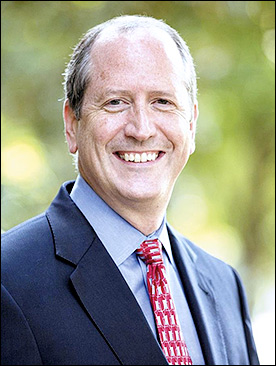
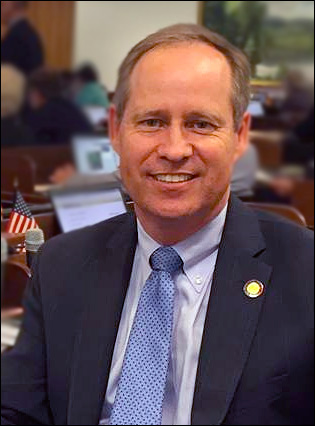
North Carolina Rep. Dan Bishop (R-Charlotte)

The victory of Republican Mike Garcia in California last week marked the first congressional special election of this election cycle to flip from one party to the other. Republicans have won five of the six special US House contests, including those of Garcia and Wisconsin state Sen. Tom Tiffany (R-Minocqua), who easily claimed his state’s vacant 7th District, last Tuesday.

The other significant special election occurred late last year. Though Rep. Dan Bishop’s (R-Charlotte) victory in North Carolina came in a seat that historically produced Republican victories, he was certainly considered an underdog at the outset of the special election campaign. He rebounded, however, to score a two-point victory, nonetheless, which in many ways makes it as noteworthy as the Garcia win.

The NC-9 election was necessitated because voter fraud in the 2018 general election prevented the Republican candidate from being certified the winner. After almost a year of keeping the seat vacant, the state’s Board of Elections called a new election that Gov. Roy Cooper (D) scheduled for Sept. 10, 2019.

In the campaign, Bishop was outspent $7.5 million to $2.7 million and that was on top of the $6.1 million Democrat Dan McCready expended in the 2018 general election. Furthermore, Democratic strategists predicted victory in this race because the Charlotte-Fayetteville seat contains a large suburban population, the type of district where their candidates certainly excelled in 2018, and President Trump’s job approval ratings were languishing around the 40 percent mark at the time. All things considered, the Bishop victory should not be characterized as a routine Republican hold.

According to the Ballotpedia election research organization, during the 2018 voting cycle, 197 special state legislative elections were held around the country, 98 of them in 2017, and 99 in 2018. Republicans risked 110 of the seats, substantially higher than the 87 the Democrats were forced to defend. In 2017, Democrats gained a net 11 legislative seats nationally, and eight more in 2018 for a cycle total of 19 net flips (Democrats actually won 26 Republican-held seats, but the GOP took back seven Democratic districts). It was these numbers that largely led the prognosticators to point to changing trends.

Continue reading

The North Carolina Filings

All the best for a wonderful holiday season.
Ellis Insight daily updates will return on Jan. 3, 2020.

By Jim Ellis

Dec. 24, 2019 — Candidate filing in the Tar Heel State closed Friday, and the North Carolina political contestants are now set for the March 3 Super Tuesday state primary. In addition to the presidential race, North Carolina voters will choose nominees for governor, US Senate, 13 congressional races, the state constitutional offices, and state legislature.

No surprises came from the presidential filings, though 38 individuals filed to run for the nation’s highest office. Twenty of the 38 are minor party candidates, however. Fifteen Democrats are running, including all of the major contenders. President Trump draws Republican primary opposition from former Massachusetts governor Bill Weld and Illinois ex-congressman Joe Walsh.

Sen. Thom Tillis sees only minor Republican primary opposition and now is a cinch for re-nomination. Businessman Garland Tucker was expected to run a competitive primary race but decided to end his effort prior to the filing deadline. When Rep. Mark Walker (R-Greensboro) was drawn out of a winnable district in the court-mandated redistricting plan, he began considering entering the Senate race. The congressman, however, ultimately decided to wait a cycle and looks to run for Sen. Richard Burr’s (R) open seat in 2022.

Five Democrats filed for the Senate, but the nomination battle is realistically between former state senator Cal Cunningham, who is the party leadership favorite, and state Sen. Erica Smith (D-Gaston). The eventual Democratic nominee will face Sen. Tillis in what promises to be a competitive general election in a state that has defeated more incumbents in the modern political era than any other place.

Continue reading

North Carolina Polling Review:
Under-Estimating the GOP Vote

By Jim Ellis

Sept. 13, 2019 — The recent North Carolina special elections’ polling appears slightly flawed, containing a pattern that came to the forefront in the previous presidential race. The weakness: under-estimating the Republican vote. Doing so became a major discussion point within the research community after they cumulatively missed the 2016 Trump-Clinton race but did not regularly appear in most of the subsequent midterm campaigns.

In the two North Carolina special elections that were decided on Tuesday night, the winning Republican candidates exceeded the published polling projections. The same pattern also occurred in Pennsylvania back in late May when Rep. Fred Keller (R-Middleburg), while predicted to win comfortably, garnered a considerably larger vote percentage than projected when he scored a 68 percent special election victory.
Four different polls were publicly released during the week preceding Tuesday’s North Carolina elections. Only RRH Elections sampled the 3rd District and tested the eventual winner, state Rep. Greg Murphy (R-Greenville), against former Greenville mayor, Allen Thomas. The polling result projected Murphy to a 51-40 percent lead. He won 62-37 percent, meaning RRH under-estimated Murphy’s strength and over-estimated Thomas’.

The survey was conducted during the Aug. 26-28 period, two full weeks before the election, which means the situation on the ground could have certainly changed during the intervening time between the poll and the vote. Advertising was heavy during the campaign’s final two weeks, and the survey could not account for which campaign would be more adept at turning out its vote.

Three polls, from three different survey research firms, were released for the more competitive 9th CD at irregular times, and here RRH was the closest to the actual result. Their study was also conducted over the Aug 26-28 period, and it correctly forecast a close Dan Bishop win. At the time, RRH saw a 46-45 percent spread in favor of Bishop over Democrat Dan McCready, and the actual result was 50.7 – 48.7 percent.

Harper Polling, also testing during the same Aug. 26-28 span, missed. They projected McCready to be holding a five point, 51-46 percent advantage. At the time, we mentioned that their sample contained 56 percent female respondents, which could have been a major reason for the Democratic skew.

The final poll from a lesser known firm, co/efficient, also came very close to the actual result, projecting a 44 percent tie between the two candidates over a much later Sept. 5-6 period, but this result may have come through happenstance.

Continue reading

Republicans Sweep the North Carolina Special Elections

By Jim Ellis

Sept. 12, 2019 — Republican special election candidates Greg Murphy and Dan Bishop won their respective congressional campaigns Tuesday night in different parts of North Carolina.

North Carolina’s 3rd Congressional District

Murphy, a state representative from Greenville, was an easy winner in the 3rd District, as expected. He recorded a 62-37 percent win over former Greenville Mayor Allen Thomas (D) in taking 16 of the district’s 17 counties and falling in Hyde County by just 43 votes. Rep-Elect Murphy now replaces the late congressman, Walter Jones (R-Farmville), who passed away in February.

For the special election, 113,607 individuals cast their ballots, some 40 percent fewer than the number voting in the 2018 regular election even though Rep. Jones was unopposed. In the presidential election year of 2016, congressional race turnout exceeded 323,000 voters.

North Carolina’s 9th Congressional District

The hotly contested election occurred to the southwest in the 9th District, the seat left vacant all year because the 2018 result was never certified because of voter fraud allegations in Bladen County. Today, the district finally has a new representative. Bishop, a state senator from Charlotte, slipped past Democratic businessman Dan McCready despite being outspent $5 million to $2 million — though the outside group spending, particularly from the National Republican Congressional Committee, added at least another $2 million to the Bishop support effort.

Continue reading

NC Special Elections Decided Today

By Jim Ellis

North Carolina’s 9th Congressional District

Sept. 10, 2019 — Voters in eastern and south-central North Carolina will go to the polls today to fill the state’s two vacant congressional seats. The 3rd Congressional District is open because Rep. Walter Jones (R-Farmville) passed away in February. The 9th District will finally get a representative after going vacant for this entire Congress. As we remember, the 2018 electoral result was not certified due to voter fraud allegations; hence, the calling of this new election.

North Carolina’s 3rd Congressional District

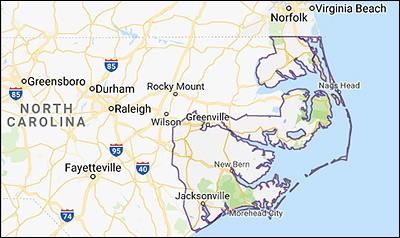
The 3rd District, which includes the Outer Banks area that Hurricane Dorian recently hit, hosts the cities of Jacksonville, New Bern, and part of Greenville within the 17-county region. It should remain in Republican hands. The seat has performed strongly for the GOP, including a 60-37 percent win for President Trump in 2016. Jones represented the district since his original election in 1994, when he unseated then-Rep. Martin Lancaster (D) in the Republican landslide of that year. Rep. Jones averaged 74.5 percent of the vote in the four elections of the present decade.

The Republican special election nominee, state Rep. Greg Murphy (R-Greenville), is favored to defeat former Greenville mayor Allen Thomas, who won the Democratic nomination outright at the end of April. The latest available polling yielded a low double-digit lead for Murphy.

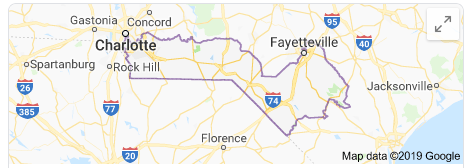
The 9th District begins in Charlotte, encompassing approximately 20 percent of Mecklenburg County, and continues to annex Union – the most Republican county and largest population entity – Robeson, Richmond, Scotland, and Anson counties along with parts of Cumberland and Bladen. The final county, Bladen, was the site of the voter fraud allegations in the last regular election.

Continue reading

Murphy Wins Run-off in NC-3

By Jim Ellis

North Carolina state Rep. Greg Murphy (R-Greenville)

July 11, 2019 — North Carolina state Rep. Greg Murphy (R-Greenville) scored an easy 60-40 percent victory over Dr. Joan Perry in the special Republican congressional run-off Tuesday night, thus becoming the party nominee in a special general election to succeed the late Congressman Walter Jones, Jr. (R-Farmville) who passed away in February.

The run-off campaign was particularly low key. Neither candidate raised nor spent a huge amount money throughout the entire nomination process. Rep. Murphy will have expended approximately $600,000, while Dr. Perry only reached the $400,000 mark. Both, however, saw independent expenditures conducted on their behalf.

Originally, it appeared the conservative groups would be lining up behind Dr. Perry, and particularly pro-life groups, but when House Freedom Caucus chairman Mark Meadows (R-Skyland/Asheville) publicly endorsed Rep. Murphy the ideological lines appeared to break down.

Murphy carried 12 of the district’s 17 counties, and scored big in his home county of Pitt, with an 82-18 percent victory margin that accounted for more than half of his district-wide 6,972 vote win from a low turnout of 35,916 Republican run-off ballot casters.

Dr. Perry rebounded in her own home county of Lenoir, registering 75 percent of the vote there and cutting Murphy’s district vote margin by 1,482 votes. Though Murphy won 70 percent of the district’s counties, several were by very close margins: 4, 26, 61, 93, 127, and 227 votes.

Now, we move to the Sept. 10 special general election. Back in the April 30 primary, former Greenville Mayor Allen Thomas won the Democratic primary outright and automatically advanced into the general election. Now he and Rep. Murphy will battle for the seat in a campaign that should favor the new Republican nominee.

Continue reading

A Counter Poll in NC-9

By Jim Ellis

North Carolina Republican state Sen. Dan Bishop (left) | Democrat Dan McCready (right)

June 5, 2019 — The Atlantic Media & Research organization went into the field in North Carolina’s 9th Congressional District and found a different special election leader than last week’s JMC Analytics poll. Atlantic’s conclusion sees Democrat Dan McCready topping state Sen. Dan Bishop 41-39 percent, which is the inverse of JMC’s result.

JMC projected Sen. Bishop leading 46-42 percent in their survey of 350 likely special election voters conducted on May 21-24. Atlantic polled 358 “definite or very likely” special election voters from May 20-23 and continuing through May 28-30. Though the two polls produced separate leaders, their combined data conclusions are similar in that the participants are within the polling margin of error. While the spread yields an eight-point net difference between the two polls, the margin of error contained in each is less than four percent.

But the Atlantic methodology is a bit different. The research firm polled on consecutive weekdays in two separate weeks leaving the Memorial Day weekend period unsampled. The gap leads to a longer than average polling stage, which could mean a less accurate conclusion.

Atlantic Media also reviews its previous poll completed five months ago in December of last year, just after the general election, and compares those results with the most current data set. The numbers are similar in that the partisan ballot tests and the president’s job approval rating varies by only a percentage point or two. And, attempting to discount the final 2018 result that was infected with voter fraud, the Atlantic December post-election poll finds candidate McCready topping Republican Mark Harris by a tight 46-43 percent margin.

Continue reading

NC-9: The First Poll is Surprising

By Jim Ellis

North Carolina’s 9th Congressional District

May 30, 2019 — The JMC Analytics survey research firm released the first special general election poll for North Carolina’s 9th District, and some may consider the results surprising.

According to JMC (May 21-24; 350 NC-9 registered voters), Republican state Sen. Dan Bishop (R-Charlotte) has taken a 46-42 percent lead over Democrat Dan McCready, the solar energy businessman who was the 2018 party nominee. Considering the seven-month-long vote fraud controversy that kept the North Carolina Board of Elections from certifying Republican Mark Harris as the general election victor over McCready (the unofficial total gave the GOP nominee a 905-vote edge) many expected the Democrat to open the special election campaign with a discernible advantage.

There is no doubt that McCready has a resource advantage, however, which should play a major role as this contest moves toward a Sept. 10 conclusion. In the pre-primary financial disclosure period report that ended April 24, McCready reported already raising over $2.01 million, with a $1.57 million cash-on-hand figure. In contrast, Sen. Bishop stated $505,000 raised within the same time frame, more than any individual Republican candidate at the time, but the total included a $250,000 personal loan.

Continue reading

Weekly Political Synopsis,
Period Ending May 17, 2019

By Jim Ellis

PRESIDENT
• Gov. Steve Bullock: As has been expected for some time, Montana Gov. Steve Bullock (D) officially announced his presidential effort this week, becoming the 23rd Democratic candidate. Bullock made the argument that he will be an effective national candidate because he’s won two elections in a conservative state and has been able to earn legislative achievements, like Medicaid expansion, in negotiating with Republican leaders.

• Mayor Bill de Blasio: Following Gov. Bullock, New York City Mayor Bill de Blasio released an announcement video at the end of the week making him the 24th Democratic presidential candidate for the 2020 election cycle. His declaration centered around being the candidate for “working families,” and cited the $15 minimum wage, a free pre-K school program, a comprehensive healthcare program that especially covers mental health, and paid sick leave.

• Florida: Former Vice President Joe Biden continues to see strong polling numbers, with the latest data coming from Florida. The Tel Opinion Research organization is reporting its latest results (released May 8; 800 likely Florida Democratic primary voters) that show Biden pulling away from his Democratic opponents on an open-ended ballot test poll. An open-ended ballot test is one where the respondent is not given the candidates’ names. That approach tests for committed strength.
According to Tel Opinion, Biden leads Sen. Bernie Sanders (I-VT), 39-16 percent, with Sens. Elizabeth Warren (D-MA) and Kamala Harris (D-CA) each pulling only five percent support. South Bend (IN) Mayor Pete Buttigieg follows at three percent preference. All of the candidates scored well on the favorability index scale. Biden is viewed positively with an 81:13 percent ratio, where Sen. Sanders’ score is 68:23 percent.

SENATE
• Arizona: Phoenix-based pollster OH Predictive Insights released their latest data from their May 1-2 poll (600 likely Arizona voters) where they queried the respondent universe about the impending Senate race between appointed Sen. Martha McSally (R) and retired astronaut Mark Kelly (D). Though we are more than a year before Arizona’s 2020 late August primary, the chances are strong that the aforementioned will be their respective party standard bearers.
According to the OH poll results, the early race again earns toss-up status. The sample breaks 45-44 percent in Sen. McSally’s favor, which is virtually identical with the firm’s late February poll giving the incumbent a 46-44 percent edge.

Continue reading

Today’s Special Election is Step 1
In Filling Vacant NC-9 Seat

By Jim Ellis

North Carolina’s 9th Congressional District

May 14, 2019 — Voters go to the polls today in North Carolina’s second 2019 special congressional election primary, this time in the Charlotte-anchored 9th District.

The seat, which begins in southeastern Charlotte and then travels along the South Carolina border to encompass the counties of Union, Anson, Richmond, Scotland, and Robeson, before turning northward to annex parts of Bladen, and Cumberland Counties – the latter entity includes the south Fayetteville suburban population center – has been vacant since the beginning of the year.

Originally, it appeared that Republican Mark Harris, who had denied Rep. Bob Pittenger (R-Charlotte) re-nomination in the 2018 Republican primary, had defeated businessman Dan McCready (D) to keep the seat in the GOP column. But, voter fraud allegations in Bladen County, which have led to criminal charges being filed, caused the state Board of Elections to deny Harris a certificate of election. After a prolonged period, made even longer when the board members were terminated and new appointments made, the panel members ordered a new election.

Today marks the first in what could be a series of three elections to determine who will succeed the defeated Rep. Pittenger. McCready returns for the special election and is unopposed in today’s Democratic primary. Therefore, he will automatically advance to the general election. The Republicans feature a field of 10 candidates, but only three, and possibly four, are in serious contention.

If no Republican receives at least 30 percent of the vote tonight, a run-off between the top two finishers will be held on Sept. 10. If the first-place finisher exceeds 30 percent, the general election, between the Republican winner and McCready, will then move to the aforementioned September date. If no one reaches 30 percent, thus requiring the run-off, the special general will occur on Nov. 5.

Continue reading