
Monthly Archives: March 2019

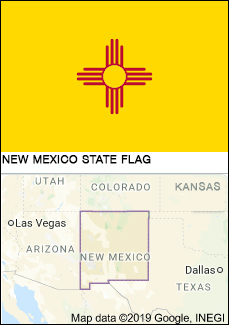
Democratic Primary Simmering in New Mexico: Candidates Waste No Time Lining Up to Succeed Udall

By Jim Ellis

March 29, 2019 — Sen. Tom Udall (D) surprised the political world on Monday when he released a video announcing that the will retire when this session of Congress adjourns instead of running for a third term. Though he appeared to be a lock for re-election, the 70-year-old senator said it was time for him to look for other political avenues from which to contribute.

Potential Democratic successors are wasting no time. Later today, state Attorney General Hector Balderas (D) is releasing a video message that will presumably contain his Senate announcement. He may soon have company from Secretary of State Maggie Toulouse Oliver and US Rep. Ben Ray Lujan (D-Nambe/Santa Fe).

Balderas is no stranger to statewide office in the Land of Enchantment. After winning a seat in the state House of Representatives in 2004, the freshman legislator was elected state Auditor in 2006. He then ran for an open Senate seat in 2008, but decisively lost the Democratic primary to now-incumbent Sen. Martin Heinrich (D). He was re-elected Auditor in 2010, and then ran for, and won, the attorney general’s post in 2014. Balderas was re-elected in November with 62 percent of the vote.

Though he ran for re-election last year, it was originally thought that Balderas would challenge Rep. Michelle Lujan Grisham (D-Albuquerque) for the open gubernatorial nomination. But, Grisham opened with a large lead, took advantage of her strong inside connections, and Banderas, knowing he could not afford to lose another statewide race, decided to stay put. Therefore, instead of running for governor, he made a major public production of supporting Grisham and unifying the party for the gubernatorial push. That move may well pay-off for him in this open Senate election.

Continue reading

The Effect of Two Retirements

By Jim Ellis

March 28, 2019 — Sen. Tom Udall (D-NM) and Rep. Jose Serrano (D-NY) both made public on Monday their intentions not to seek re-election in their respective houses of Congress. The Udall announcement was a surprise, and we updated our outlook on his open seat in our 2020 Senate Review, Part III, yesterday. Retirement rumors had begun to swirl around Rep. Serrano, especially with New York City Councilman Ritchie Torres (D) last week declaring his intention to run for the congressional seat.

The New Mexico Senate After Udall

Sen. Udall’s announcement saying that he will not seek a third term was unexpected. Both parties are now scrambling to see who will begin to line up to run for the open seat.

There is no question that Democrats will be favored to hold the seat but the new campaign evolving into a competitive battle is not out of the question. Though Republicans last won a New Mexico Senate seat with the late Sen. Pete Domenici’s last victory in 2002, the party did elect Susana Martinez governor both in 2010 and 2014.

Though Gov. Martinez’s approval numbers were low when she left office, she would have to be considered a possible, and viable, Senate candidate. Additionally, former US representative, and Senate and gubernatorial nominee Steve Pearce (R-Hobbs), who is now the New Mexico Republican Party state chairman, will also likely surface as a potential candidate.

Continue reading

2020 Senate Review – Part III

By Jim Ellis

March 27, 2019
— The third and final segment of our three-part Senate review covers the races alphabetically from North Carolina through Wyoming, with a re-visit to the new open seat in New Mexico:

  • New Mexico – Sen. Tom Udall (D)Open Seat – Since our Senate review began, Sen. Udall, who looked to be a lock for election to a third term, announced he will not run in 2020. Democrats will be favored to hold the seat, but Republicans have won statewide races here as late as 2014, so the potential for a competitive 2020 campaign exists.
    So far, Attorney General Hector Balderas (D) and US Rep. Ben Ray Lujan (D-Nambe/Santa Fe) both confirm they are considering running, as is 2018 Republican nominee Mick Rich. Two individuals have already said they will not enter the Senate race: Gov. Michelle Lujan Grisham (D) and Santa Fe Mayor Alan Webber (D). Many more potential candidacies from both parties are being discussed. Currently, this open seat earns at the very least a Lean Democrat rating but is realistically Likely Democratic.

  • North Carolina – Sen. Thom Tillis (R) – This will be a top-tier race, as are almost all North Carolina Senate races. Sen. Tillis ousted then-Sen. Kay Hagan (D) in 2014 in a state that has re-elected only one senator since the days of Sam Ervin (D) and Jesse Helms (R).
    The Democrats failed to recruit their top target in Attorney General Josh Stein (D), and so far, their field is second tier. Only Mecklenburg County commissioner-at-large Trevor Fuller (D) and state Sen. Erica Smith (D-Gaston) have declared their candidacy.
    Sen. Tillis received pushback for originally opposing President Trump’s emergency border declaration, which has fueled rumors of a potential primary challenge. Therefore, the North Carolina campaign is in a state of flux. Much will change here in the coming year to affect the outcome. Currently, rate this seat as Lean Republican.

  • Oklahoma – Sen. Jim Inhofe (R) – The major discussion surrounds whether 84-year-old veteran Sen. Inhofe will retire. If he runs, the election campaign may be slightly more competitive based upon the 2018 Oklahoma results, in which the Democrats made some significant gains. Even if they continue to build momentum, their chances of winning a statewide election in the Sooner State still remain slim. Likely Republican until it becomes clear whether or not Sen. Inhofe will seek re-election.

  • Continue reading

2020 Senate Review – Part II

By Jim Ellis

March 26, 2019 — The second of our three-part Senate review covers the races alphabetically from Louisiana through New Mexico:

  • Louisiana – Sen. Bill Cassidy (R) – Sen. Cassidy will seek a second term next year but, as in Kentucky, no real action will occur in the federal campaigns until the 2019 governor’s race is decided. Currently, Sen. Cassidy faces no serious opposition. Likely Republican

  • Maine – Sen. Susan Collins (R) – Sen. Collins appears near the top of the 2020 Democratic target list, but she may not be as vulnerable as it might appear on paper. The four-term senator is a good fit for her constituency; she racked up win percentages of 67 and 61 in her past two elections (2014; 2008) and, unless Rep. Chellie Pingree (D-North Haven/ Portland) runs, the Dems don’t appear to have a top tier candidate.
    Neither newly elected Democratic Gov. Janet Mills nor Rep. Jared Golden (D-Lewiston) appear to be looking at a Senate run. Currently, Lean Republican and closer to Likely Republican than Toss-up

  • Massachusetts – Sen. Ed Markey (D) – Sen. Markey’s only concern is a potential Democratic primary challenger and, with Rep. Seth Moulten (D-Salem) looking more toward the presidential contest than the Senate, the veteran incumbent should be secure for a second full term. Adding his long tenure in the House, Sen. Markey will be in Congress 44 consecutive years at the end of the current session. Safe Democratic

  • Michigan – Sen. Gary Peters (D) – Republican manufacturing company owner and retired Army Ranger John James’ better-than-expected performance against Sen. Debbie Stabenow (D) last year, and first-term Sen. Peters’ below-average polling numbers are moving Michigan fast up the Republican target list. Assuming James runs, the Michigan Senate race could become quite interesting. Lean Democratic

  • Continue reading

2020 Senate Review – Part I

By Jim Ellis

March 25, 2018 — Only nearing the end of March in the off-year, already a great deal of early 2020 Senate action has occurred. Thus, it is a good time to begin reviewing all 34 statewide federal races that will adorn next year’s ballot in a three-part series. Today, we look at the first dozen in alphabetical order:

  • Alabama – Sen. Doug Jones (D) – From the Republican perspective, this could be the most important race in the country. The GOP must convert this seat in order to provide a better cushion to protect their Senate majority.
    The 2017 special election became a debacle for the Republicans that allowed Sen. Jones to unexpectedly slip past politically wounded former state Supreme Court Chief Justice Roy Moore. Already, Rep. Bradley Byrne (R-Mobile) and state Auditor Jim Zeigler (R) have announced their 2020 Senate candidacies. Judge Moore claims to be seriously considering running again, which could again create the same adverse situation that previously plagued the Republicans. Toss-up

  • Alaska – Sen. Dan Sullivan (R) – At this point, there seems little in the way of opposition developing either in the Republican primary or general election against Sen. Sullivan. Safe Republican

  • Arizona – Appointed Sen. Martha McSally (R) – Another critically important Senate race that has already featured substantial action. Sen. McSally’s appointment came after her defeat in the 2018 Senate race and she faces a difficult campaign ahead to win the 2020 special election. Whoever wins next year serves the remaining two years of the late Sen. John McCain’s (R) final term. The seat next comes in-cycle for a full six-year term in 2022.
    Mark Kelly, a retired astronaut and husband of former Rep. Gabrielle Giffords (D-Tucson), has already announced his candidacy and will be a major candidate. In early April, Rep. Ruben Gallego (D-Phoenix), whose ex-wife, Kate Gallego, was just elected Mayor of Phoenix in a special election, is expected to enter the Democratic primary. Since Arizona holds a late August primary, a tough Democratic nomination fight would benefit McSally just as her difficult 2018 Republican primary played to Democratic Sen. Kyrsten Sinema’s advantage. Toss-up

  • Continue reading

New CNN National Numbers Are Out

By Jim Ellis

March 22, 2019 — The CNN television network released their new national survey of the Democratic presidential contest (conducted by SSRS research company; March 14-17; 1,003 US adults, 456 self-identified Democrats and those Independents who lean to the Democratic Party, 448 self-identified Republicans and those Independents who lean to the Republican Party), and while the ballot test results were consistent with most other polling, some different and interesting questions were asked.

CNN compared this poll to their previous study conducted during the Dec. 6-9 period. The first four finishers remain in relatively the same order, but the percentages have shifted and some significantly.

In the current poll, former Vice President Joe Biden continues to lead the pack of 17 tested candidates. He tops the field with 28 percent, down from the 30 percent support he held in December. Sen. Bernie Sanders (I-VT) is second with 20 percent, making a big jump from the 14 percent base CNN found three months earlier.

Sen. Kamala Harris (D-CA) surpasses former US Rep. Beto O’Rourke (D-TX), and tripled her preference from December. Sen. Harris leaps from 4 to 12 percent support. For his part, O’Rourke drops to fourth but still gains two percentage points in comparison to December (rising from 9 to 11 percent). All of the others remain in single-digits, though Sen. Elizabeth Warren (D-MA) doubled her support from 3 to 6 percent.

Continue reading

Biden’s Strong Rebound, and a
Michigan Senate Surprise

By Jim Ellis

March 21, 2019 — Earlier this week, Emerson College Polling released a survey of Wisconsin Democrats that found Sen. Bernie Sanders (I-VT) leading former Vice President Joe Biden, 39-24 percent, but an even newer Emerson offering detects that the tables have already turned.
According to the latest Emerson Michigan poll (March 7-10; 743 registered Michigan voters; 317 likely Michigan Democratic presidential primary voters), it is Biden who is claiming 40 percent support within the Democratic sample, while Sen. Sanders pulls 23 percent. As is the case with the Wisconsin poll, California Sen. Kamala Harris is third, well back with 12 percent, and Sen. Elizabeth Warren (D-MA) follows with 11 percent. All others fall into low single digits. New entry Beto O’Rourke was not included on the survey questionnaire.

The results are not surprising. Biden has long been a favorite of the private sector unions, which are a strong force in Michigan politics. Additionally, President Obama, with Biden on the ticket, ran strongly here. In 2012, he defeated Mitt Romney, 54-45 percent. The former Republican nominee’s father, George Romney, is a past governor of Michigan. Four years earlier, Obama’s margin over John McCain was an even greater 57-41 percent.

Michigan is an important state on the Democratic nomination circuit, eighth largest of the 57 voting entities. Currently scheduled for a March 10 primary, the Wolverine State is awarded 125 elected delegates, ballooning to an aggregate 147 when Super Delegates are added to the total. The Super Delegates, or party leaders, may not vote on the first ballot, but are eligible if more than one roll call becomes necessary.

Continue reading

Understanding Independent Voters

By Jim Ellis

March 20, 2019 — In most elections, particularly in today’s polarized political climate, the independent vote is often the determining factor. As the non-affiliated share grows within the American electorate, these individuals become even more important.

But, who are the independents and how different are they from the average partisan Republican or Democrat? The Pew Research Center released a new study at the end of last week about the independent voter. Their data sources were a compilation of polls taken during the past few years, up to and including 2019.

The Pew conclusions are interesting in that the study basically reveals the lion’s share of independents align very closely with partisan Republicans and Democrats. Or, in other words, they generally vote with one party or the other, hold similar views and values as one of the major parties, but don’t want to associate themselves with the particular entity.

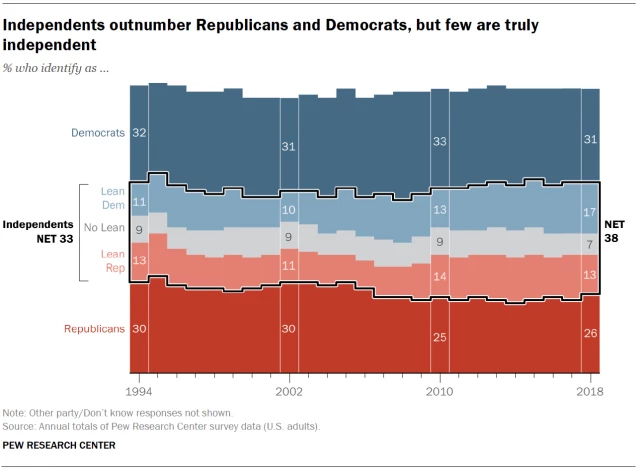
Based upon the sourced data, Pew denotes that approximately 38 percent of the electorate considers themselves to be independent. This compares with 31 percent who self-identify as Democrats and 26 percent who say they are Republican. Within the aggregate independent segment, 46 percent align with the Democrats while 35 percent identify with Republicans. Therefore, 19 percent of this group can be considered the true swing voter.

While those identifying more closely with the Republican Party are fewer, they have a higher voter turnout proclivity. According to the 2018 midterm election statistics, 54 percent of the Independent/Lean Republicans cast a ballot versus 48 percent of those generally identifying with the Democrats. The greater turnout figure for Republicans, even in a more Democratic year like 2018, suggest that the two parties are basically at parity within the independent voting sector.

Continue reading

NC-9: Ten Republicans File

By Jim Ellis

North Carolina’s 9th Congressional District

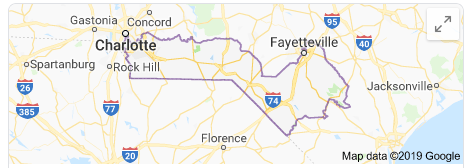
March 19, 2019 — Candidate filing for the upcoming special election cycle closed for North Carolina’s 9th District on Friday, and the official field now features 10 Republicans, one Democrat, and two minor party candidates.

The special election is necessary because no winner was officially declared in the 2018 general election due to voter fraud accusations in one county. If the special cycle extends through the full calendar, which will happen if any one of the nomination battles are forced into a run-off, the special general won’t occur until Nov. 5, a day short of what will be a full year since the 2018 votes were cast.

We already know the Democratic Party won’t require a runoff. The 2018 nominee, Dan McCready, will be unopposed for the special election nomination, meaning he is guaranteed a ballot position in the general. Minor party candidates Allen Smith (Green) and Jeff Scott (Libertarian) will also advance because they, too, are unopposed in their respective party primaries.

But, with 10 Republicans running, there is a good chance that none of the GOP contenders will reach the 30 percent threshold necessary to claim a plurality nomination. If the Republicans nominate someone in the May 14 primary, the special general then moves to Sept. 10. If, however, a runoff is required, the campaign then stretches to the aforementioned November date.

Continue reading

Now That Beto Is In,
What Are His Chances?

Beto O’Rourke | Facebook Photo

By Jim Ellis

March 18, 2019 — Former Texas Congressman Beto O’Rourke, as expected, officially joined the Democratic presidential race with a formal announcement while traveling to Iowa to begin campaigning.

O’Rourke’s entry now means that the Democratic field features 14 candidates, with more, including former Vice President Joe Biden, soon to join.

O’Rourke comes into the field generally viewed as a top-tier candidate, though he has been dropping into mid-single digits in the latest national polls. He appears to be battling Massachusetts Sen. Elizabeth Warren for fourth position behind Biden, Sen. Bernie Sanders (I/D-VT), and Sen. Kamala Harris (D-CA).

As we remember, O’Rourke was hyped as a major US Senate candidate with the opportunity of converting Republican Texas to the Democratic column with an upset win over first-term incumbent and 2016 presidential candidate Ted Cruz (R).

Though he fell three points short of victory, losing to Cruz 51-48%, he did prove his prowess as a national fundraiser. O’Rourke attracted over $80 million from across the country for his Senate race.

In the Texas campaign, then-Rep. O’Rourke moved left to appeal to the national Democratic donor constituency, which worked. And, his voting record over three terms in the House supported the issue positions he was advocating during his statewide campaign.

Continue reading