Tag Archives: Sen. Bill Cassidy

Louisiana’s Cassidy Strikes Back

By Jim Ellis — Friday, January 30, 2026

Senate

Already, the Louisiana Senate Republican primary is taking shape, and we are witnessing a highly competitive and largely negative race beginning to unfold.

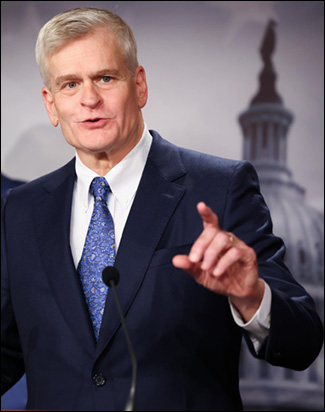
Louisiana Sen. Bill Cassidy (R)

Rep. Julia Letlow (R-Start) attracted a great deal of political attention last week as she announced her Republican primary challenge to Sen. Bill Cassidy along with an endorsement from President Trump. Now, the Senator is seizing the offensive.

The Cassidy campaign just released the results of a Public Opinion Strategies poll (Jan. 20-22; sample size not publicized) that largely outlines what promises to be the Cassidy campaign’s line of attack against Rep. Letlow.

According to the POS survey, Sen. Cassidy leads Rep. Letlow and state Treasurer and former Congressman John Fleming, 32-21-16 percent. State Sen. Blake Miguez (R-New Iberia) and Public Service Commissioner Eric Skrmetta trail the group with nine and one percent support levels.

Another recently released survey, this from JMC Analytics & Polling for the Fleming campaign (Jan. 12-14; 650 likely Louisiana Republican primary voters) finds an entirely different ballot test result. This data projects Fleming with a 23-22 percent edge over Sen. Cassidy. The remaining candidates split an aggregate 16 percent of the preference responses. The JMC poll was conducted before Rep. Letlow entered the race; hence, she was not included.

Under the Cassidy POS poll’s “informed ballot” result, meaning a series of messages about the poll sponsor’s opponent(s) that are usually negative, the Cassidy lead increases to 55-13-13 percent over Rep. Letlow and Treasurer Fleming. When the push questions isolate Rep. Letlow, the one-on-one “informed” ballot test moves to a whopping 69-22 percent in Cassidy’s favor.

While the query verbiage was not included in the poll analysis, the summary indicates that Rep. Letlow’s stock transactions will be at the forefront of the attack against her, and it is probable the information is at least somewhat sensationalized.

In the poll analysis, the text claims that Rep. Letlow has “over 200 violations of the Stock Act.” When reading the supporting story from the NOTUS (News of the United States) website, we see that the violations were for the late reporting of a group of 210 stock transactions on her financial disclosure report. The combined value of the transactions is reported in the range of $225,000 to $3.3 million. The disclosure report does not delineate further, but the campaign inference will be that she hid millions of dollars in stock transactions.

It appears that the Cassidy campaign is also targeting Letlow as a “RINO” (Republican In Name Only), claiming that her voting record is to the left of the Senator’s. Another attack, as also outlined in the poll analysis, is her taking a trip to Qatar “funded by a pro-Doha group.”

The most serious early campaign obstacle for Rep. Letlow and the other candidates is overcoming Sen. Cassidy’s large war chest. Again, according to the Cassidy polling analysis, the Senator’s campaign reports having $26 million in the bank, the year-end Federal Election Commission filing to be released early next month.

According to Rep. Letlow’s Sept. 30 campaign filing, she held just under $2.3 million in her account, but her total will likely be larger when the latest disclosure reports are made public. For his part, Fleming posted slightly over $2 million.

As previously reported, Louisiana has a new nominating system. Instead of a jungle primary held concurrently with the general election, Louisiana nominations for federal and certain state offices will revert to a traditional partisan primary and runoff procedure. If no candidate receives majority support in the first vote on May 16, the top two finishers advance to a June 27 runoff election.

In addition to Sen. Cassidy, Rep. Letlow, Treasurer Fleming, and Sen. Miguez, seven more Republicans have entered the race. The candidate filing deadline is Feb. 13, so it remains to be seen just how many of these individuals actually follow through and complete their final statement of candidacy. State Rep. Julie Emerson (R-Carencro) had also announced her candidacy but withdrew after Rep. Letlow entered the race.

The Louisiana and Texas Republican primaries feature the party’s two incumbent Senators, Cassidy and John Cornyn, who are in danger of losing their renomination efforts. Both the Texas primary on March 3 and Louisiana in May will be closely watched until the vote count is complete. Expect both the Texas and Louisiana campaigns to run at a frenetic pace throughout the remainder of the primary calendar.

Rep. Letlow to Challenge Sen. Cassidy

By Jim Ellis — Friday, January 23, 2026

Senate

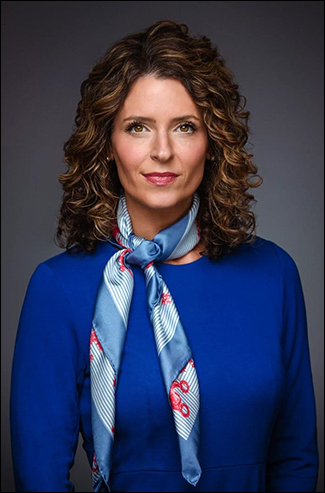
Louisiana Rep. Julia Letlow

Three-term Louisiana Rep. Julia Letlow (R-Start) has joined the group challenging GOP Sen. Bill Cassidy. The Senator confirmed he received a message from Rep. Letlow saying that she will oppose him in this year’s Republican primary and then subsequently publicly declared her intentions. Reports are also surfacing that President Trump has endorsed her candidacy.

The move is a bit of a surprise since a reported understanding existed between Rep. Letlow and state Rep. Julie Emerson (R-Carencro), chair of Louisiana’s House Ways and Means Committee, that the two would not oppose each other in the Senate challenge. Rep. Emerson announced her candidacy in late October.

It has long been presumed that President Trump would be active in this race since Sen. Cassidy is one of just two Republican Senators on the 2026 ballot to have voted for impeachment over the Jan. 6 controversy at the Capitol. Recently, Trump has been more conciliatory toward the Senator, but it is still clear that he would prefer a different Republican join Sen. John Kennedy (R) in representing Louisiana.

Clearly, the Bayou State race will be one of the premier GOP primary contests. Aside from Rep. Letlow and state Rep. Emerson, 10 others — including State Treasurer and former Congressman and ex-Deputy White House Chief of Staff in the first Trump Administration John Fleming, state Sen. Blake Miguez (R-New Iberia), Public Service Commissioner Eric Skrmetta, and St. Tammany Parish Councilwoman Kathy Seiden — are all in the nomination race against Sen. Cassidy.

Typically, such a large field would generally help an incumbent because the anti-incumbent votes would be split among so many contenders. In Louisiana, however, the political dynamics have changed. At the end of 2024, the legislature and Governor reinstituted the partisan primary and runoff system to replace the jungle primary structure the state had used since the late 1970s.

Now, such a crowded field likely ensures that the initial vote ends with no candidate receiving majority support, thus forcing the top two finishers to a secondary runoff election.

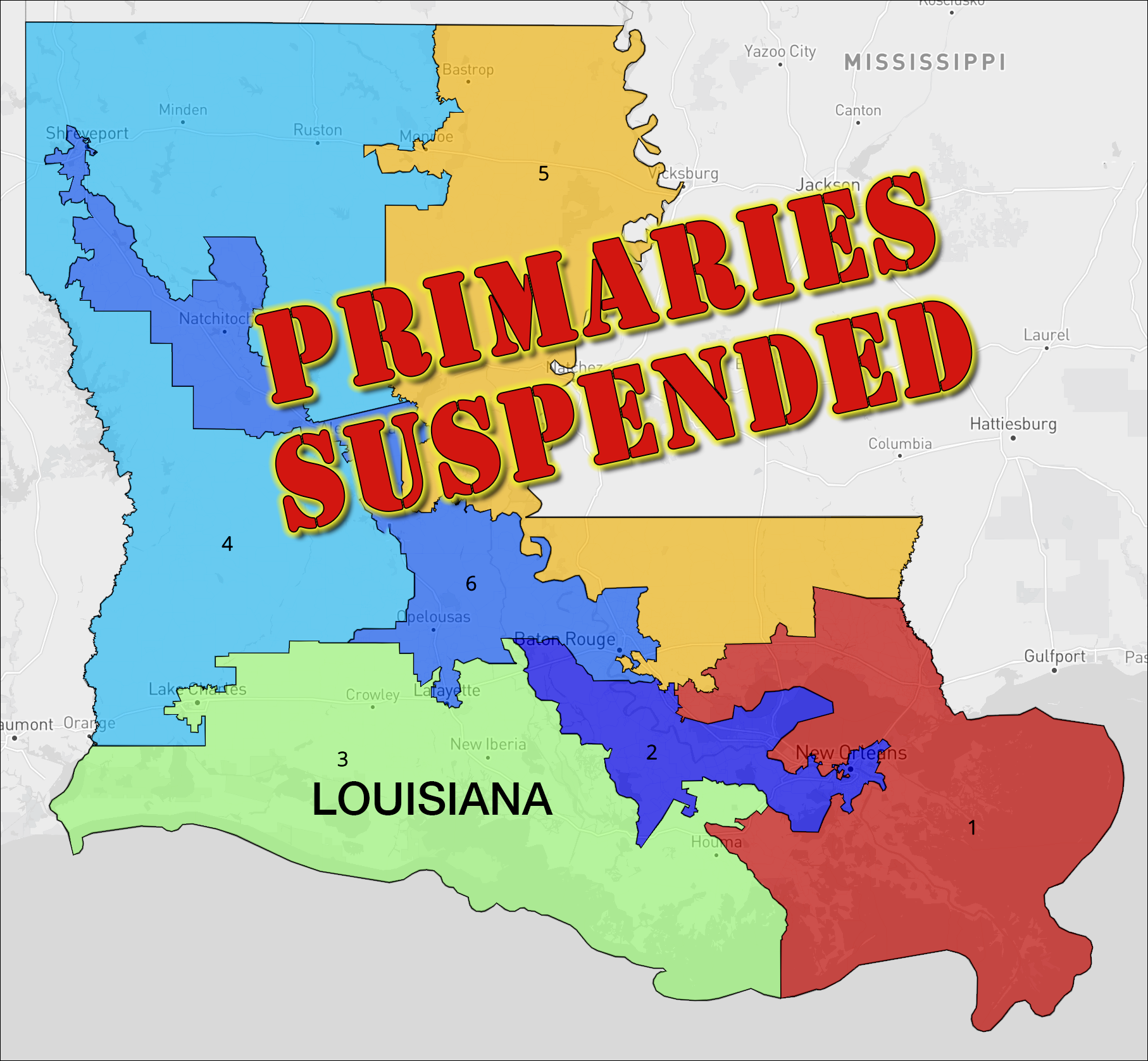
Originally, the new primary election was scheduled for April 18 but because the US Supreme Court has yet to render a decision on the Louisiana racial gerrymandering case, the state has postponed the first vote to May 16 and the runoff, if necessary, to June 27.

The candidate filing deadline for major party candidates is Feb. 13, so it remains to be seen just how many of the dozen candidates follow through with the filing process. It is a good bet that the field will narrow once the filing deadline arrives.

Rep. Letlow was elected to the US House in a 2021 special election after her husband, Luke Letlow, won the 2020 election. Unfortunately, he would die of COVID before he was able to take office. After winning the initial special election, Rep. Letlow was easily re-elected in 2022 and 2024, averaging 65.2 percent of the vote.

With Letlow leaving the House, it means there are 54 open seats with three vacancies moving toward special elections. She is the 29th Republican not to seek re-election and 14th retiring House member to enter a 2026 US Senate race.

The battle for her 5th District House seat becomes interesting in that the district could significantly change depending upon SCOTUS’s ruling on the Louisiana redistricting case. Therefore, who might run to succeed Rep. Letlow won’t be completely settled until the high court justices make their decision and district boundaries are set.

In California, Gov. Gavin Newsom (D) scheduled the special election to replace the late US Rep. Doug LaMalfa (R) concurrently with the state’s June 2 regular primary. If no candidate receives majority support, the top two will run off on Aug. 4. At this point, state Assemblyman James Gallagher (R) is the only announced candidate.

Surprisingly, the special election will occur in the current 1st District and not the new 1st that voters adopted in the November special election. Republicans will hold the seat in the special election, but Democrats will likely convert it in November under the new lines that clearly favor their party.

The other two special elections, TX-18 and NJ-11, are scheduled for Jan. 31 and Feb. 5, respectively. The Texas seat is in the final runoff stage while the New Jersey district will host partisan primaries in early February and fill the seat in a special general election on April 16. Democrats are expected to win both of the latter elections.

Sen. Cassidy Draws New Opponent

By Jim Ellis — Thursday, June 19, 2025

Senate

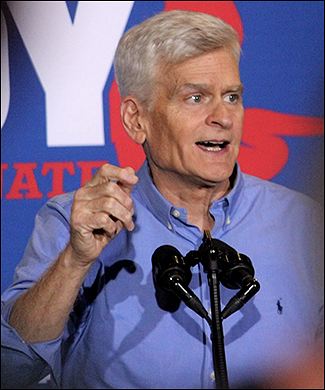
Sen. Bill Cassidy (R-LA)

In an attempt to deny Sen. Bill Cassidy (R-LA) renomination, Louisiana state Sen. Blake Miguez (R-New Iberia) announced early this week that he will enter the 2026 Republican Senate primary. Already in the race is State Treasurer John Fleming, along with four minor GOP candidates.

Cassidy is one of the seven Republican Senators (just three remain in office) who voted to impeach President Trump in post-election 2020; therefore, Cassidy earning an endorsement from Trump seems unlikely. Trump’s public support in Republican primaries has, for the most part, been extremely helpful to the anointed candidate.

Hence, Sen. Cassidy faces some obstacles toward his 2026 re-election bid. In addition to his problems with the President and facing credible opponents, he also must navigate an entirely new election system.

In 2024, Gov. Jeff Landry (R) and the state legislature changed Louisiana election law. For federal races, the jungle primary system is eschewed, and a partisan structure reimposed. The new primary schedule means that Sen. Cassidy, and all other federal incumbents, must stand for renomination on April 18, 2026, with a runoff election scheduled for May 30 if no candidate secures majority support on the first vote.

In Louisiana’s previous system, and one that still holds for most state races, all candidates are placed on the same ballot for an election scheduled in November. If a leading candidate fails to receive majority support, the top two finishers advance into a December runoff.

The argument for adopting the new law for federal elections was accentuated with change proponents saying that the Louisiana freshmen US House members forced into December runoffs were put in an adverse position that hurt the state. They pointed out their new members were getting lesser committee assignments and behind in other internal House matters because the entire body was elected a full month earlier.

According to Louisiana’s Advocate news site, Sen. Cassidy was actively opposing the new election law even after adoption. He was lobbying the legislature this year to eliminate the law’s runoff provision in order to allow plurality victories. The current session ended without the legislature making such a change.

Incumbents forced into runoff elections generally fare poorly because a majority of primary voters have already chosen a different candidate. Such is likely the principal reason Sen. Cassidy was attempting to convince the legislature to change the new law.

John Fleming, a physician, was elected State Treasurer in 2023. He previously served four terms in the US House, succeeding former House Ways and Means Committee chairman Jim McCrery in the 4th Congressional District and immediately preceding now-Speaker Mike Johnson. Rep. Fleming ran for US Senate in 2016, losing the Republican nomination to now-Sen. John Kennedy (R).

Upon leaving the House, Dr. Fleming was appointed by President Trump as Assistant Secretary of Commerce for Economic Development, and later Deputy White House Chief of Staff. In the House, Dr. Fleming was an original co-founder of the House Freedom Council.

In the initial Federal Election Commission campaign finance disclosure report for the 1st Quarter of 2025, Dr. Fleming self-funded his campaign with a $2.03 million cash influx but raised only $269,479 from other sources. It remains to be seen how well he does in the 2nd Quarter, which will end on June 30.

Blake Miguez was first elected to the state House of Representatives in a 2015 special election. He secured full terms later in 2015 and 2019 before winning a state Senate seat in 2023. During his tenure in the House, Miguez was elected Majority Leader in 2020. Professionally, he is an oil and gas company executive and has won national handgun shooting contests.

We can expect a primary campaign to be dominated with attacks against Cassidy arguing that he is a “RINO” (Republican In Name Only) because he voted to impeach Trump and for his votes, stances, and public statements on certain other issues.

With at least two major candidates making similar arguments against the Senator, the possibility grows that he will be forced into a runoff. If so, Cassidy’s chances of winning renomination would become diminished.

The Louisiana Senate primary will be a race to watch early next year because Sen. Cassidy’s renomination appears far from certain. We have yet to see any major action on the Democratic side, but it is certain the party will file a credible nominee.

Sen. Cassidy Considers No Labels Party; Newsom Clarifies Potential Appointment; Another Challenger to Sen. Cruz Emerges; NM-3, NY-4 News

By Jim Ellis — Wednesday, Sept. 13, 2023

President

Sen. Bill Cassidy (R-LA)

No Labels Party: Sen. Cassidy Says He’ll Talk — From Sunday’s NBC interview, Sen. Bill Cassidy (R-LA) admitted that he would “talk” to the No Labels Party leaders if they approached him about becoming their presidential nominee. Sen. Cassidy also explained it would depend upon who the major parties nominate, but he intimated if we are going to see a Biden-Trump re-match he would be more inclined to run as a third-party candidate.

Sen. Cassidy is the type of candidate the No Labels Party would like to recruit. It is clear their main goal is to deny former President Donald Trump re-election, so they will be looking for a candidate who has some ability to attract suburban Republican voters away from Trump. The No Labels Party will decide who to nominate, if anyone, at their national conclave scheduled for April 14-15, 2024.

Senate

California: Gov. Newsom Clarifies Potential Appointment — Some Democrats are still urging Sen. Dianne Feinstein (D), who is suffering from failing health, to resign her seat so that Gov. Gavin Newsom (D) can appoint a more able individual. Gov. Newsom now says that he will only appoint someone who will serve as a caretaker if the vacancy were to occur.

The governor said it would be unfair to give an advantage to any of the candidates currently running for the Senate if he were to appoint one of the contenders. Early rumors suggested he was leaning towards appointing US congresswoman and 2024 Senate candidate Barbara Lee (D-Oakland). She hails from Newsom’s northern California political base, but his latest statement suggests he would now go in a different direction.

Texas: Another Cruz Challenger Emerges — Back in May when Texas Rep. Colin Allred (D-Dallas) announced his Senate campaign it looked as if the Democratic leadership had the candidate they wanted to challenge Sen. Ted Cruz (R). Two months later, state Sen. Roland Gutierrez (D-San Antonio) announced his candidacy, and then resigned Nueces County District Attorney Mark Gonzalez followed. Another candidate has now joined them — Dallas state Rep. Carl Sherman Sr. (D), a former local mayor and pastor.

While Rep. Allred still may top what is now becoming a crowded field, he will undoubtedly be forced to drain his campaign treasury just to win the nomination; he had raised over $6 million before the June 30 campaign finance quarterly report. Sen. Cruz will then be able to build an uncontested campaign treasury, and force all four Democratic candidates far to the left on key issues such as the Biden energy policy and the Texas-Mexico border.

House

NM-3: Ex-State Rep to Challenge Rep. Leger Fernandez — Former state Rep. Sharon Clahchischilliage (R), a member of the Navajo Nation who served three terms in the legislature before being defeated for re-election in 2018, announced that she will challenge two-term Rep. Teresa Leger Fernandez (D-Santa Fe) next year. The FiveThirtyEight data organization rates New Mexico’s 3rd District as D+5, meaning we could see a competitive general election develop. In 2022, Rep. Leger Fernandez was re-elected with 58 percent of the vote, but against a Republican candidate who spent only $301,000 on her campaign.

NY-4: Democrat Withdraws — Sarah Hughes (D), who was a member of the 2002 US Olympic figure skating team and had formed a congressional exploratory committee earlier in the year to challenge Rep. Anthony D’Esposito (R-Island Park), announced Monday that she will not pursue her candidacy. The top Democrats appear to be state Sen. Kevin Thomas (D-Nassau) and ex-Hempstead town supervisor and 2022 nominee Laura Gillen (D). In the face of such competition, Hughes’ chances of winning the Democratic primary were poor; hence, the decision to end her political quest.

New York’s 4th District, at D+10 according to the FiveThirtyEight data organization, is likely to become the Democrats’ top conversion opportunity in the country.

2024 Presidential Polls Already Emerging; CNN Exit Polling Numbers; Senate Election Turnout Stats; Sen. Kennedy Planning to Run for Gov?

By Jim Ellis — Wednesday, Nov. 16, 2022

President

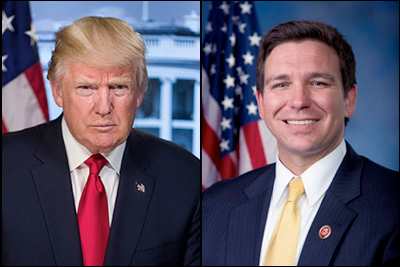
Former President Donald Trump; Florida Gov. Ron Desantis (R)

New Polling: Already Testing for 2024 — The House of Representatives isn’t even decided yet, and already we see a series of polls testing newly re-elected Florida Gov. Ron DeSantis (R) pitted against former President Donald Trump. The WPA Intelligence polling series finds the Florida governor opening up big Republican primary leads against Trump in several important nomination states: Iowa (+11), New Hampshire (+15), Texas (+11), Georgia (+20), and of course, Florida (+20). Count on presidential fever going non-stop for the next two years.

Voting

Exit Polling: CNN Releases Results — Though exit polling has not proven particularly accurate in past elections, looking at the results of the organization’s data still has value. A quick glance at the CNN data brings forth a couple of key observations. First, the Independent vote, which polling suggested through most of the election cycle was moving toward the Republicans, came back to the Democrats at election time. Self-described moderates were breaking Democratic, 56-41 percent. Those describing themselves as Independents voted Democratic in a 49-47 percent split. Within the cell segment, Independent women moved toward the Democrats in a 54-42 percent clip.

On the other end of the spectrum, Republicans actually were making their marks with minority voters, at least according to this data. Republicans were able to attract 39 percent of the Hispanic vote, 40 percent among Asians, and 13 percent with black voters. All of these numbers are an improvement from immediate past elections.

Additionally, while all men break toward the Republicans 56-42 percent, all women prefer the Democrats, 53-45 percent. Still, CNN measures that the national vote went Republican in a 51.3 – 46.7 percent swing even though Democrats held the Senate majority and it appears House control will come down to a minimum number of seats.

Senate

Senate States: Key Turnout Stats — Now that we are seeing closer to final turnout numbers in many places, we have derived some interesting participation statistics from the most competitive US Senate states.

In Georgia, the turnout may fall just short of the 4.0 million voters who cast ballots in 2018. The Nevada turnout, projected to just exceed the 1 million mark, will be an approximate four percent increase over 2018. In Wisconsin, once the final turnout report is released will likely show the same relative participation rate as recorded in 2018.

The Pennsylvania turnout looks to be up five percent from 2018. Florida, where Sen. Marco Rubio won an impressive 58-41 percent victory over US Rep. Val Demings (D-Orlando), who was clearly one of the strongest Democratic candidates in the nation, looks to be six percent under 2018’s total. In Iowa and Ohio, where Sen. Chuck Grassley (R) won an eighth term and Republican J.D. Vance held the open seat over US Rep. Tim Ryan (D-Warren/Youngstown), turnout appears to be down just under nine percent when compared to the 2018 participation rate in both states.

Governor

Louisiana: Sen. Kennedy Releases Poll — Armed with a fresh six years in the Senate with his 62 percent re-election vote against nine opponents, Sen. John Kennedy (R) is now admitting he is considering a run for governor next year when incumbent John Bel Edwards (D) will be ineligible to seek a third term. He then released a Torchlight Strategies poll (Nov. 9-12; 800 likely 2023 Louisiana jungle primary voters; live interview & text) that posted him to a 22-18-13-7-6 percent lead over state Transportation Secretary Shawn Wilson (D), attorney general and former Congressman Jeff Landry (R), Lt. Gov. Billy Nungesser (R), and fellow US Sen. Bill Cassidy (R), respectively.

2020 Senate Review – Part II

By Jim Ellis

March 26, 2019 — The second of our three-part Senate review covers the races alphabetically from Louisiana through New Mexico:

  • Louisiana – Sen. Bill Cassidy (R) – Sen. Cassidy will seek a second term next year but, as in Kentucky, no real action will occur in the federal campaigns until the 2019 governor’s race is decided. Currently, Sen. Cassidy faces no serious opposition. Likely Republican

  • Maine – Sen. Susan Collins (R) – Sen. Collins appears near the top of the 2020 Democratic target list, but she may not be as vulnerable as it might appear on paper. The four-term senator is a good fit for her constituency; she racked up win percentages of 67 and 61 in her past two elections (2014; 2008) and, unless Rep. Chellie Pingree (D-North Haven/ Portland) runs, the Dems don’t appear to have a top tier candidate.
    Neither newly elected Democratic Gov. Janet Mills nor Rep. Jared Golden (D-Lewiston) appear to be looking at a Senate run. Currently, Lean Republican and closer to Likely Republican than Toss-up

  • Massachusetts – Sen. Ed Markey (D) – Sen. Markey’s only concern is a potential Democratic primary challenger and, with Rep. Seth Moulten (D-Salem) looking more toward the presidential contest than the Senate, the veteran incumbent should be secure for a second full term. Adding his long tenure in the House, Sen. Markey will be in Congress 44 consecutive years at the end of the current session. Safe Democratic

  • Michigan – Sen. Gary Peters (D) – Republican manufacturing company owner and retired Army Ranger John James’ better-than-expected performance against Sen. Debbie Stabenow (D) last year, and first-term Sen. Peters’ below-average polling numbers are moving Michigan fast up the Republican target list. Assuming James runs, the Michigan Senate race could become quite interesting. Lean Democratic

  • Continue reading