By Jim Ellis — Tuesday, July 14, 2026
The South Carolina Republicans and Maine Democrats have made decisions about plans for replacing their respective US Senate nominees, bringing greater logistical clarity to both states’ 2026 US Senate political landscapes.
South Carolina
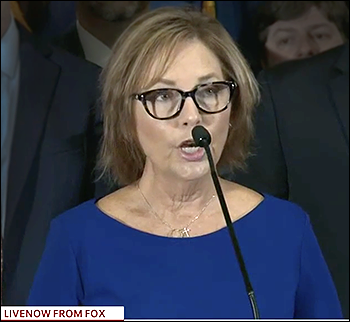
Darline Graham Nordone
The party is working with the Department of War to satisfy the Uniformed and Overseas Citizens Absentee Voting Act (UOCAVA), which requires adequate notice and ballot access for covered voters. Meeting these requirements under such a compressed timeline remains a major challenge.
In the interim, Gov. Henry McMaster (R) has appointed the late Sen. Graham’s sister, Darline Graham Nordone, to fill the vacancy. She will serve until Jan. 3, 2027, unless she chooses to enter the special primary. Nordone has not announced her intentions, but she is not expected to run.
Most early interest in the Republican nomination is coming from the US House delegation, which creates additional logistical complications for both the state party and House GOP leadership. Reps. Ralph Norman (R‑Rock Hill) and Nancy Mace (R‑Charleston), both of whom ran for Governor – Norman finishing a close third and Mace placing a distant fifth – are unencumbered because they are not seeking House re-election.
Other members expressing varying degrees of interest include Reps. Joe Wilson (R‑Springdale), William Timmons (R‑Greenville), and Russell Fry (R‑Murrells Inlet/Myrtle Beach), with Fry appearing the most serious about entering the race.
Each of these three, however, faces a significant hurdle: they are already the official Republican nominees in their respective House districts. Because a candidate cannot seek two federal offices in the same election, entering the Senate primary would require withdrawing their congressional nominations.
While the Republican primary is a stand-alone vote, the regular general election, where Sen. Graham’s successor will ultimately be chosen, would feature both the US Senate and congressional contests.
Thus, should one or all of the aforementioned three House members enter the Senate special – win or lose – they would have to resign as the congressional district party nominee. This would lead to the district Republican Party apparatus also having to choose new nominees in the affected districts.
More developments are expected in the coming days as the party works to stabilize its nomination process and navigate the legal and logistical challenges because of Sen. Graham’s passing.
Maine
The Maine Democratic Party has scheduled a snap convention in Bangor on July 25 to select a replacement for withdrawn US Senate nominee Graham Platner. After delivering a video address late last week, Platner formally submitted his withdrawal papers to the Maine Secretary of State.
The convention will consist of 601 voting delegates: the 101 members of the Democratic State Committee and 500 county‑based delegates apportioned according to the raw vote totals Kamala Harris received in 2024. Because Harris performed strongest in southern Maine, the delegate pool will be heavily weighted toward that region, even though the in‑person convention is being held in Bangor. The northern location may simply reflect the challenge of securing a large venue on short notice.
In order to receive convention delegate votes, each individual must obtain 500 petition signatures from registered Democratic voters, with at least 50 coming from eight different counties. All signatures must be collected and returned to the proper election authorities by July 21.
This is a more difficult task than the seemingly small numbers indicate because the time frame is so short. Therefore, it is unclear exactly how many prospective candidates will qualify for the convention.
Under the party’s announced rules, once the candidate field is finalized, the five contenders receiving the most votes on the first ballot will advance to subsequent rounds. Voting will continue until one candidate secures a majority of the 601 delegates, assuming full attendance.
Several individuals have already begun positioning themselves for the nomination. Three losing gubernatorial candidates – former Maine Health Director Nirav Shah, who finished first in the initial vote but lost under Ranked Choice Voting; former state Senate President Troy Jackson, who placed third; and Secretary of State Shenna Bellows, who finished fourth – are taking steps toward entering the race. Former congressional aide Jordan Wood, who placed a close third in the initial 2nd District primary vote, and fourth‑place finisher Paige Loud have also expressed interest.