Tag Archives: Kansas

Governors’ Races: 2027 Redistricting

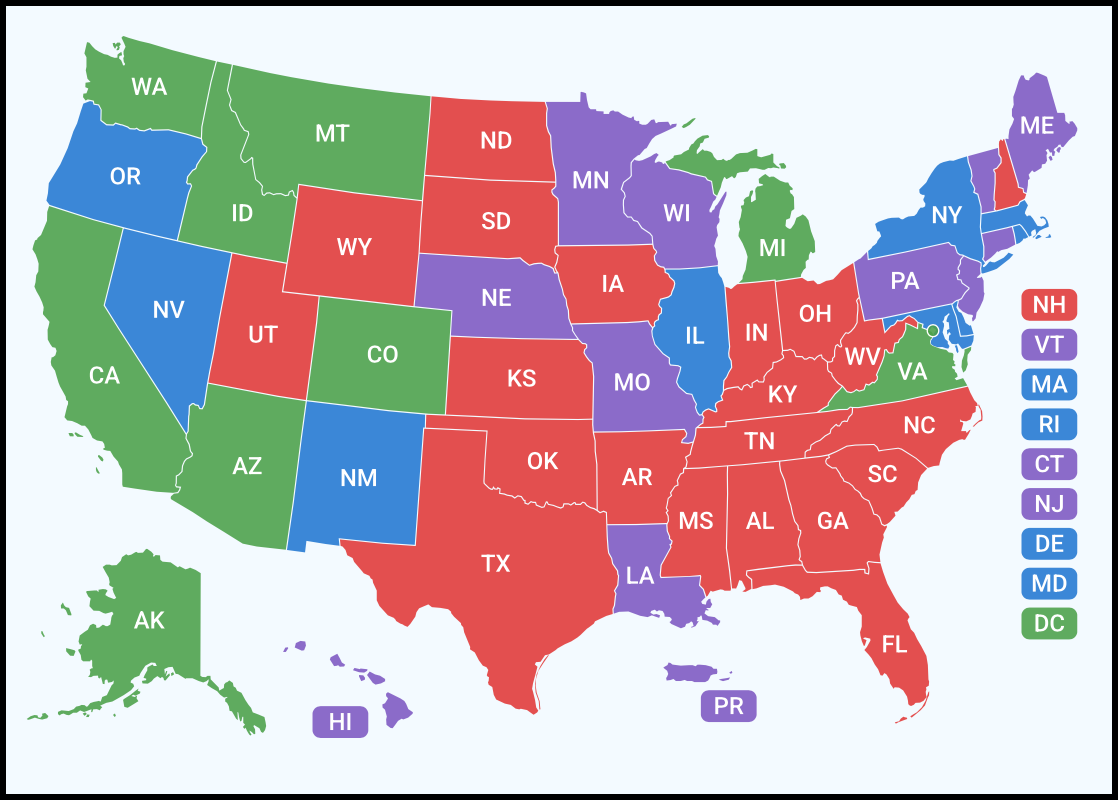
Click on map to go to Dave’sRedistrictingApp. Use the dropdown on the left labeled US Map View to navigate to the Redistricting Control Map.


By Jim Ellis — Wednesday, October 7, 2026

The Governors’ races are plentiful in 2026, with 36 statewide chief executive contests heading toward conclusion. How the most competitive races will shape the post‑Callais v. Louisiana redistricting cycle next year is a key question the new Governors will partially answer. The 2026 map is unusually symmetrical: of the 36 races, 18 are in Democratic‑held states, 18 in Republican states, and exactly half are open‑seat contests.

With Democrats primed to take the House majority in the new Congress, redistricting will again be a major factor in the 2028 election cycle. The landmark Supreme Court decision last April on the Callais case effectively eliminates the need to create protected majority minority districts, giving states the opportunity to bring their congressional and state legislative maps into compliance with the new redistricting criteria.

Republican‑led states will have incentive to adjust their maps to limit Democratic gains to a single cycle, while Democratic‑led states will seek to make their newly elected members more secure heading into 2028.

Of the 36 gubernatorial races, 15 appear competitive or moderately competitive. In those states, the 2026 outcomes could materially influence the 2027 redistricting picture. Redistricting will not occur in two of the competitive gubernatorial states, Alaska and Vermont, because both have at-large congressional districts.

Arizona

Gov. Katie Hobbs (D) is in a competitive race but continues to hold polling leads over Rep. Andy Biggs (R‑Gilbert), thus positioning her as the favorite for re‑election based on current data. Republicans maintain narrow majorities in both legislative chambers, but if Democrats were to gain control in November, movement on redistricting could follow.

Arizona was one of the first states to adopt an independent citizens’ redistricting commission, yet the 2026 cycle has shown that several states have found ways to maneuver around their commissions in order to implement new maps.

Florida

Polling shows a close Governor’s race in early October, but pollsters have badly missed the Florida elections for the past four cycles. Republicans have big majorities in both legislative chambers, so it is unlikely that the state will be a factor in 2027 redistricting irrespective of the gubernatorial outcome.

Georgia

Georgia was among the states that initially considered redrawing its maps after the Callais decision, but legislative leaders ultimately chose not to proceed. They later announced plans to call a post‑election special session, yet no such scheduling action has been taken.

If Democrat Keisha Lance Bottoms were to win the Governor’s race, legislative leaders would likely move quickly to convene and advance a map designed to add two Republican seats while Gov. Brian Kemp (R) remains in office.

Iowa

Democrat Rob Sand is well positioned to win the governorship, but it remains unlikely that redistricting will occur in a state that has effectively ceded the map‑drawing process to a legislative algorithm. Republican majorities in both legislative chambers are strong, so even with a Sand victory, it is improbable that we will see a redistricting effort regardless of how the competitive congressional elections unfold.

Kansas

Democratic Gov. Laura Kelly is term‑limited this year, giving Republicans a strong opportunity to reclaim the governorship. In most polling, state Senate President Ty Masterson (R‑El Dorado) holds an advantage over state Sen. Cindy Holscher (D‑Olathe). With Republicans maintaining solid majorities in both legislative chambers, a Masterson victory would likely place redistricting on the table for 2027. The result could be a one‑seat Republican gain.

Michigan

Secretary of State Jocelyn Benson (D) is poised to succeed term‑limited Gov. Gretchen Whitmer (D), placing the focus squarely on the legislature. Democrats hold a narrow majority in the state Senate, while Republicans control the House. If the latter chamber flips, Democrats could attempt a redistricting move.

Michigan has an independent redistricting commission, but as noted earlier, several states have successfully maneuvered around their citizens’ panels in 2026. Should Democrats capture the state House majority, Michigan will become a state to watch in the redistricting arena.

Nebraska

Gov. Jim Pillen (R) faces competition in this cycle but is still expected to prevail. Republicans were just one vote short of advancing a redistricting plan in 2026, so any changes in the unicameral legislature could determine whether a new map is implemented. With the open 2nd District likely to elect a Democrat next month, Republicans would have added partisan incentive to pursue a redraw in 2027.

Nevada

Gov. Joe Lombardo (R) is in a tight re‑election campaign, and if Democratic Attorney General Aaron Ford were to unseat him, redistricting could quickly emerge as an issue in the new legislative session. Democrats appear positioned to retain their majorities in both legislative chambers.

Should they also capture the state’s lone Republican congressional district, the Reno‑anchored 2nd District, a Democratic legislature and Governor would likely move to redraw the map in order to make that seat more secure for their new Representative. Whether redistricting occurs in 2027 will largely hinge on the gubernatorial outcome.

New York

The Empire State will be particularly interesting to watch next year on the redistricting front. Gov. Kathy Hochul (D) is favored to win re‑election, and the legislature will remain solidly Democratic. Although New York has a redistricting commission, Democrats believe they can draw additional Democratic‑leaning districts.

Their challenge, however, is the state’s significant population loss concentrated entirely in New York City. According to mid‑decade Census Bureau estimates, New York has lost more than 200,000 residents, all from NYC, while the rest of the state has experienced modest growth. As a result, efforts to increase Democratic seats when the party’s anchor population base is likely to lose representation in the next apportionment may prove more difficult than a cursory overview suggests.

Ohio

The Buckeye State conducts redistricting through a bipartisan commission composed of seven elected officials. Because the panel adopted a new map with unanimous support earlier this year, that plan can remain in place for the rest of the decade. As a result, it is unlikely the Commission will reopen the contentious process in 2027.

Oregon

Democratic Gov. Tina Kotek is unexpectedly locked in a very tight re‑election race, but redistricting is unlikely to occur regardless of the outcome. The Democratic majority has already maximized its advantage under the current congressional map, leaving little room for improvement. As a result, a 2027 redistricting effort does not appear likely.

Texas

Gov. Greg Abbott (R) is likely to win a fourth term, though by a closer‑than‑expected margin. Republicans will retain control of the state Senate, but their House majority may narrow. Because the congressional map was redrawn this year, it is unlikely that redistricting will make a return appearance in 2027.

Wisconsin

In Wisconsin, the gubernatorial and legislative elections will directly determine whether redistricting occurs. The state Supreme Court declined to act on a case that could have triggered a redraw this year, so a Democratic sweep in November is the most plausible path for redistricting to move to the forefront in 2027.

The Governor’s race between Milwaukee County Executive David Crowley (D) and Rep. Tom Tiffany (R‑Minocqua) remains tight, and Republicans currently hold tentative majorities in both legislative chambers. Should Democrats gain control and pursue a redraw, they could potentially add two congressional seats.

Senate Race Clues

By Jim Ellis — Monday, September 28, 2026

There are 14 competitive US Senate races that will determine which party controls the chamber in the next Congress, but factors beyond polling provide additional insight into how these campaigns may ultimately conclude. Today, we examine the first seven of these 14 contests in alphabetical order. Tomorrow, we will review the remaining seven.

Alaska

Alaska races typically follow a familiar pattern: major‑party candidates poll closely through early October, only for the Republican to pull ahead once voting begins. In the end, the GOP nominee usually wins comfortably. Recent polling again shows a tight contest, with Sen. Dan Sullivan (R) gaining ground on former Rep. Mary Peltola (D). The latest Trafalgar Group survey (Sept. 22-24; 1,079 likely voters; mixed sampling) shows Sullivan edging back into a narrow 47-46 percent lead.

The jungle primary results, however, told a different story. Alaska reports votes by its 40 state House districts rather than counties. On Aug. 18, Sen. Sullivan carried only 13 of the 25 districts that typically vote Republican; but turnout was just 22 percent. This race carries genuine upset potential.

Georgia

Sen. Jon Ossoff (D), seeking a second term that could serve as a springboard for a 2028 presidential bid, has led all candidates nationwide in fundraising throughout the cycle. His opponent, Rep. Mike Collins (R‑Jackson), remains significantly under-funded. The latest Insider Advantage poll (Sept. 22-23; 1,200 likely voters; online & text) again shows Ossoff ahead, this time beyond the margin of error, 50-42 percent. Sen. Ossoff enters the final stretch as a clear favorite.

Iowa

The Hawkeye State also exhibits a familiar polling pattern, particularly since the 2016 election: the two major‑party candidates run close through September, only for the Republican to pull away in the final weeks of October. The historical record suggests we may see the same dynamic again this November. Rep. Ashley Hinson (R‑ Marion/Cedar Rapids) and state Rep. Josh Turek (D‑Council Bluffs) remain locked in a tight contest, with polling leads seesawing between them.

Historically, Rep. Hinson is in a stronger position at this stage than retiring Sen. Joni Ernst (R) was during either of her successful campaigns. In her 2020 re‑election bid, Ernst trailed in multiple late‑September polls by margins ranging from one to 12 points, yet ultimately won by seven. In 2014, across 14 cumulative surveys, Ernst led in six, Democrat Bruce Braley led in six, and two were tied — before she went on to record a 52-44 percent victory.

Though the 2026 campaign remains competitive, the historical pattern and comparative positioning suggest that Rep. Hinson is well‑placed as the race enters its decisive phase.

Kansas

Once again, we are seeing close polling in a Kansas Senate race, but the likely outcome mirrors every Senate contest since 1932: a Republican victory. This marks the third Senate election since 2014 in which September polling has shown a tight race. The numbers in the 2026 contest between Sen. Roger Marshall (R) and pastor Allen Hamilton (D) project a virtual toss‑up, just as the polls did for Sen. Pat Roberts (R) in 2014 and then‑Congressman Marshall in 2020.

The 2026 race certainly merits watching, but history suggests a familiar pattern. In both 2014 and 2020, the Republican nominee pulled away in October to win a comfortable victory after a competitive September. It is likely that Sen. Marshall will again follow the same trajectory in the closing weeks of this campaign and score a convincing victory.

Maine

Being in a tough race is nothing new for Sen. Susan Collins (R); she has won five times in a state that is consistently difficult terrain for Republicans. In 2020, Sen. Collins never led a single general‑election poll, yet ultimately won by 8.5 points despite massive spending against her. This year, her opponent is former state Senate President Troy Jackson (D), who entered the race after Democratic leaders forced their primary winner, oysterman Graham Platner (D), out of the race.

Polling has bounced back and forth between the two candidates, and Republicans have identified vulnerabilities in Jackson’s record that they are working to exploit. The race is unquestionably competitive, but far less intense than the 2020 contest. As a result, Sen. Collins again has a strong chance to defy the Pine Tree State’s political odds.

Michigan

In many ways, the Michigan Senate race is the most important campaign on the political board. If former Congressman and 2024 Senate nominee Mike Rogers (R) wins and flips the state into the Republican column, the Democratic path to a Senate majority becomes immensely more difficult.

Polling has been abundant, and most surveys show Democratic nominee Abdul El‑Sayed — the former director of the Wayne County Health, Human and Veterans Services Department — holding a small lead.

While El‑Sayed generally posts narrow advantages on the ballot test, he has reached 50 percent only twice in 19 post‑primary polls, suggesting his political support ceiling may be in the 48 percent range. In the primary, nine pollsters projected him ahead by an average of 16 points heading into the Aug. 4 election, yet he won by just one percentage point.

Additionally, in the 2024 campaign, Rogers consistently outperformed his polling. Taken together, these factors underscore that the 2026 Michigan race remains wide open.

Minnesota

The Minnesota campaign being virtually tied in polling is a considerable surprise given that the state is the most reliably Democratic political entity in the country. The last time Minnesota voted for a Republican presidential candidate was in 1972 for President Richard Nixon; every other state has supported at least one Republican nominee since. Still, Republicans do occasionally win Minnesota statewide offices.

GOP nominee Michele Tafoya, a former national sportscaster who built her media career in Minnesota, appears to be gaining traction. Polling suggests her attacks on government corruption within various transfer‑payment programs are resonating, particularly her criticism of Gov. Tim Walz’s (D) administration as lax and incompetent. Her opponent, Lt. Gov. Peggy Flanagan (D), has seen the polling gap narrow as Tafoya’s message takes hold.

Whether Tafoya can ultimately cross the finish line as a winner remains uncertain, but the tightening numbers indicate that an upset is clearly possible.

Kansas Now In Play

By Jim Ellis — Thursday, September 3, 2026

Senate

One of the Democratic Party’s 2026 objectives in its bid to regain the Senate majority is to push the maximum number of Republican seats into the competitive realm.

The death of South Carolina Sen. Lindsey Graham has placed that typically safe GOP seat into competitive mode, as have the credible Democratic candidacies that are emerging in Alaska and Iowa.

Party strategists have also taken the unusual step of persuading three Democratic nominees – in Idaho, Nebraska, and South Dakota – to withdraw in favor of coalition aligned Independents, each a former Democrat or clear liberal ideologue, in hopes of consolidating enough support to tighten those races.

The party leaders’ similar quest fell short in Montana, where Democratic nominee Alani Bankhead declined to step aside for former University of Montana president Seth Bodnar, who is running as an Independent.

The latest state to show signs of competitiveness is Kansas. A new Global Strategy Group survey (Aug. 12-16; 800 likely voters) finds Democrat Adam Hamilton holding a narrow 44-43 percent edge over Republican Sen. Roger Marshall. Kansas polling finding a Democrat within striking distance in September is not unusual, however, and recent history suggests caution in interpreting such numbers.

Certainly, this is not the first time in recent memory where we have seen Kansas polling data putting the Democratic nominee on the same footing as their Republican opponent only to see the GOP prevail by about 10 percentage points on election day.

Sen. Marshall himself faced similar polling volatility in 2020. That September, he led in two polls, trailed in two, and was tied in two more. He ultimately won the open Senate race with a 53-42 percent margin.

The pattern was even more pronounced in 2014, when four term incumbent Pat Roberts (R) appeared to be in serious trouble. This campaign started as a three-way contest among Sen. Roberts, the Democratic nominee, and a strong Independent, Greg Orman, who would eventually narrow the race to a choice between he and the incumbent.

In September of that year, Orman led in six of eight polls and the two were tied in a ninth. Roberts nevertheless prevailed by the same 53-42 percent spread as Marshall would six years later.

Therefore, seeing a Kansas Senate race close in the month of September before a regular election is nothing new. It is important to remember, that regardless of polling reports, the last time a Democrat was elected as a Jayhawk State US Senator came in 1932.

Democrats, however, have fared better in gubernatorial contests, winning seven races since 1932, most recently with current two term Gov. Laura Kelly. Kathleen Sebelius also won two terms in 2002 and 2006. Over that same period, Republicans have elected 13 governors.

Hamilton, a Methodist minister, has run a credible campaign and performed well financially. According to Federal Election Commission pre primary filings through July 15, he raised $4.2 million and reported $1.7 million cash on hand. Sen. Marshall raised $6.2 million over the same period and entered the late summer stretch with nearly $5.4 million in his campaign account. A noticeable uptick in spending from the Senator’s campaign will occur in the coming days and weeks.

It is probable that both the Kansas and South Carolina Senate races will soon show a stronger Republican trend and they will likely exit the competitive board as election day approaches. For now, however, each warrants monitoring in case signs of a long shot upset begin to crystallize.

El-Sayed’s Close Primary Win;
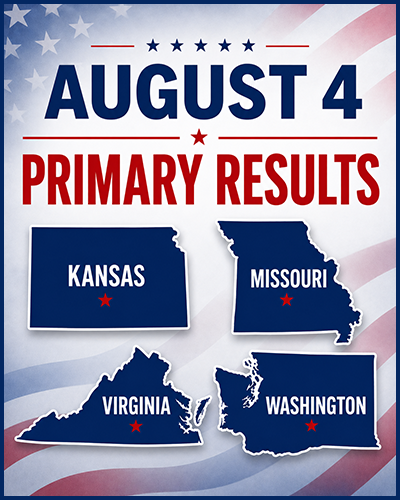
Results Wrap-Up From Four States

By Jim Ellis — Wednesday, August 5, 2026

The marquee race of the Aug. 4 primary night – the Michigan Senate Democratic primary race – came down to a small number of votes, which defied the polling projections. Former Wayne County Health/Human/Veterans Department director Abdul El-Sayed was projected late last night as a close winner over Rep. Haley Stevens (D-Birmingham). The night began with El-Sayed initially tallying up a large lead, but Stevens consistently chipped away until the final El-Sayed margin should be approximately 20,000 votes from more than 1.4 million Democratic primary votes cast.

Nine different July pollsters all forecast a large El-Sayed lead, one where he was averaging just under a 15-percentage point advantage, but the final margin proved razor thin. Abdul El-Sayed now faces former seven-term Congressman and 2024 US Senate nominee Mike Rogers, who was unopposed in the Republican primary. The Michigan general election is likely to be the key to which party will hold the Senate majority in the new Congress.

Kansas

The open Governor’s race for both parties was the premier draw in last night’s Kansas primary. State Senate President Ty Masterson (R-Andover) was an easy winner for the Republicans, who are aiming to convert the Governor’s office back to their party after what will be eight years of Democratic control under term-limited state chief executive Laura Kelly.

On the Democratic side in a battle between two state Senators, Cindy Holscher (D-Overland Park) defeated Gov. Kelly’s endorsed candidate, Ethan Corson (D-Prairie Village). The general election is expected to be competitive. Republican primary turnout exceeded the Democratic numbers, which gives Sen. Masterson a boost as the candidates turn toward November.

Michigan

Beyond the close Senate race, voters chose nominees in the Governor’s campaign. As predicted, Secretary of State Jocelyn Benson recorded a landslide victory in the Democratic primary. For the Republicans, Rep. John James (R-Farmington Hills), who has twice come close in statewide campaigns, won the party nomination with just over 50 percent of the vote against three Republican candidates, though one of them ended his active campaign last week.

Looking at the state’s voting history and the strong Democratic primary turnout as compared to the Republican number, Benson will begin the general election race as the favorite.

In the House races, we first look toward the western 4th District. Rep. Bill Huizenga (R-Holland) will attract more than 80 percent of the final Republican primary vote. His opponent, as expected for the competitive general election, is state Sen. Sean McCann (D-Kalamazoo), an easy Democratic primary winner.

In the 7th District, which is likely to be the most competitive race in the general election, freshman Rep. Tom Barrett (R-Charlotte/Lansing) was unopposed for renomination. His general election opponent will be political activist William Lawrence who scored a 43 percent Democratic primary victory over former US Ambassador Bridget Brink and retired Navy SEAL Matt Maasdam.

In the open 10th District that Rep. James vacated to run for Governor, National Guard officer and Iraq War veteran Michael Bouchard Jr., son of the long-time Oakland County Sheriff and ex-statewide candidate, recorded a 73 percent victory over three Republican opponents. For the Democrats, in what promises to be a very tight general election, former Macomb County Prosecutor nominee Christina Hines defeated two Democratic opponents with 46 percent of the vote.

Turning to Rep. Stevens’ open 11th District, state Senate President Pro Tempore Jeremy Moss captured 41 percent of the vote against three Democratic opponents to clinch the party nomination. He now becomes the prohibitive favorite to win the general election in a safely Democratic seat.

The 13th District Democratic primary challenge to Rep. Shri Thanedar (D-Detroit) could end in deposing the incumbent. With just under half the vote counted, state Rep. Donovan McKinney (D-Detroit) leads Rep. Thanedar, 51-49 percent, in a race that is still too close to call.

Missouri

With no Senate or Governor’s race on the ballot, the US House races led the ballot.

In the 1st District, former Congresswoman Cori Bush launched a political comeback attempt against the man who defeated her in the 2024 Democratic primary, current Congressman Wesley Bell (D-St. Louis).

Last night, Rep. Bell posted a strong 59-37 percent victory over the former Congresswoman and “Squad” member. Winning the Democratic primary in this St. Louis district is tantamount to claiming the general election, so Rep. Bell is virtually guaranteed re-election in November.

In the redistricted 5th CD, state Sen. Rick Brattin (R-Kansas City) was the clear Republican primary winner. He will now face Rep. Emanuel Cleaver (D-Kansas City) in a district that does not resemble the downtown Kansas City seat that the Congressman has represented since the beginning of 2005. Now the 5th District is a Republican seat that stretches into the state’s rural areas, and Rep. Cleaver must be considered an underdog for the general election.

The MO-5 race now becomes a must-win Republican campaign if the GOP is to have a chance at holding their slim national majority.

The open 6th District was decided last night in the Republican primary. There, radio talk show host Chris Stigall, who carried retiring 13-term Congressman Sam Graves’ (R-Tarkio) endorsement, won last night’s Republican primary with 44 percent of the vote over four Republican opponents. Stigall will cruise to victory in the general election from this safe Republican northwestern Missouri congressional seat.

Virginia

In the US Senate race, Republicans chose retired Army Major General Bert Mizusawa to oppose Sen. Mark Warner (D) who is on the ballot for a fourth term. The Senator had no Democratic opposition. Sen. Warner is expected to glide to another November victory. The Senator says this new term will be his last as he will not seek re-election in 2032.

No surprises in the key competitive House races. In the 1st District, Henrico County Commonwealth Attorney Shannon Taylor easily won the Democratic primary against six Democratic opponents. Taylor will now challenge veteran Rep. Rob Wittman (R-Montrose) in the general election.

In the Tidewater-anchored 2nd District, former Rep. Elaine Luria won a landslide Democratic primary victory opposite three opponents. The Luria victory sets up a rematch of the 2022 campaign between she and two-term Rep. Jen Kiggans (R-Virginia Beach).

In the mid-state 5th District, another former House member is attempting a political comeback. Former Rep. Tom Perriello scored a big Democratic primary win and will now challenge freshman Rep. John McGuire (R-Manakin-Sabot) who also won renomination in a landslide proportion. In a good sign for Rep. McGuire, Republican primary turnout far exceeded his Democratic counterparts’ participation figure.

In the Alexandria-Arlington 8th District, veteran Rep. Don Beyer (D-Alexandria) won renomination with two-thirds of the Democratic primary vote against four opponents.

Washington

The all-mail Washington ballots were reported quickly, because the state election officials allow the counting and release of the vote totals after the polls close. Therefore, result reporting is quick. Approximately 50 percent of the projected vote total came through early voting.

In the 3rd District, with under 60 percent of the vote counted, it is clear that Rep. Marie Gluesenkamp Perez (D-Skamania County) and state Senate Minority Leader John Braun (R-Chehalis) will advance to the general election. The early vote totals have Rep. Perez and Sen. Braun virtually even, again suggesting that this will be a premier general election campaign and a likely must-win for the GOP if they are to hold the majority.

The open 4th District sees Yakima County Commissioner Amanda McKinney (R) and retired Air Force officer John Duresky advancing to the general election. The open 4th District (Rep. Dan Newhouse-R retiring) is one of two safe Republican seats in the state. This gives McKinney the clear inside track to claiming the general election in November.

In the Spokane-anchored 5th District, freshman Rep. Michael Baumgartner (R-Spokane) captured just about 50 percent of the early vote and has clinched the first general election slot. It appears that Democratic retired US diplomat Carmela Conroy will also advance. Rep. Baumgartner will be favored for re-election.

Political Roundup

By Jim Ellis — Monday, June 23, 2025

Governor

Virginia  Lt. Gov. Winsome Earle-Sears (R)

Virginia Lt. Gov. Winsome Earle-Sears (R)

Virginia –– Lt. Gov. Winsome Earle-Sears and former Rep. Abigail Spanberger won their respective Republican and Democratic gubernatorial primaries as unopposed candidates.

A pre-primary poll from the co/efficient research firm conducted for the Founders Insight Public Policy Research organization (June 8-10; 1,127 likely Virginia voters) sees Spanberger leading Lt. Gov. Earle-Sears by a 46-43 percent margin. Seven credible polls have been released for the Virginia race and six find Spanberger leading by an average of four percentage points. The other poll found the two candidates locked in a tie. The November 2025 election is expected to be highly competitive.

Kansas — Democrats have their first announced gubernatorial candidate to replace term-limited Gov. Laura Kelly (D) as the party’s 2026 nominee. State Sen. Cindy Holscher (D-Overland Park) declared her gubernatorial candidacy late last week.

Though Gov. Kelly has won two elections as the state chief executive, the eventual GOP nominee will be favored in an open seat contest since the state’s electorate typically votes Republican. For the GOP, former Governor Jeff Colyer and Secretary of State Scott Schwab are the leading contenders.

Michigan — Former state House Speaker Tom Leonard (R) announced that he will enter the open Republican gubernatorial primary. He last ran statewide in 2022 where he came within a 49-46 percent margin of unseating Attorney General Dana Nessel (D). Leonard joins a Republican field that includes Representative and former statewide candidate John James (R-Farmington Hills), ex-Attorney General Mike Cox, and state Senate Minority Leader Aric Nesbitt (R-Paw Paw).

On the Democratic side, the announced candidates are Secretary of State Jocelyn Benson, Lt. Gov. Garlin Gilchrist, and Genesee County Sheriff Chris Swanson. Gov. Gretchen Whitmer (D) is ineligible to seek a third term.

House

AZ-1 — Jimmy McCain, son of the late Sen. John McCain (R), said last week he will not enter the Democratic field to challenge Rep. David Schweikert (R-Fountain Hills) in Arizona’s politically marginal 1st Congressional District. In the race are 2024 Democratic nominee and former state Rep. Amish Shah, who held Rep. Schweikert to a 52-48 percent re-election victory, and ex-TV news anchor and 2024 congressional candidate Marlene Galan-Woods, along with four others. The general election here is expected to hold toss-up status throughout the campaign cycle.

FL-19 — Former New York US Rep. Chris Collins and ex-Illinois state Sen. Jim Oberweis, both former elected officials from other states, have each separately announced their intention to compete in the open southwest Florida congressional primary. Candidates with an actual Florida political history are also expected to enter. FL-19 is a safely Republican district (Dave’s Redistricting App partisan lean: 62.5R – 36.1D), so the eventual GOP nominee will be a lock to win the general election. Incumbent Rep. Byron Donalds (R-Naples) is running for Governor.

IA-1 — Ex-state Rep. Christina Bohannan (D), who has twice run for Congress and held Rep. Mariannette Miller-Meeks (R-Le Claire) to a 799-vote win in 2024, announced that she will return for a third run in 2026. Bohannan will have little trouble securing the Democratic nomination, and we can expect to see another tight general election in this district where Rep. Miller-Meeks has run under the Republican benchmark. President Trump posted a 2024 victory margin of 53.5 – 45.0 percent here over Kamala Harris, while Rep. Miller-Meeks recorded only 48.4 percent.

MO-2 — Retired St. Louis Cardinals pitcher Adam Wainwright said during the week that he will not enter the Democratic primary to challenge Rep. Ann Wagner (R-Ballwin). Democratic leaders had been attempting to recruit Wainwright even though he has never said whether he considers himself a Democrat. Missouri is one of 19 states where political party affiliation is not a stated voter registration condition.

City & State

New York City — An internal campaign poll from Public Policy Polling (for the Mamdani campaign; June 6-7; 573 likely New York City Democratic primary voters; multiple sampling techniques) finds state Assemblyman Zohran Mamdani taking the first ballot lead over former Gov. Andrew Cuomo, 35-31 percent, in the city’s Democratic primary scheduled for tomorrow, June 24. This is the first time a published poll has not shown Cuomo leading.

Conversely, a Cuomo campaign poll from Expedition Strategies (June 3-7; 600 likely New York City Democratic primary voters; live interview & text) sees Cuomo holding a substantial 42-30 percent lead over Mamdani. The Data for Progress polling organization carried the questionnaire through eight RCV rounds and projected Cuomo prevailing over Mamdani, 51-49 percent.

The most recent release, from Marist College (June 9-12; 1,350 likely New York City Democratic primary voters; live interview & text) also projects Cuomo with the lead, 43-31 percent, in this case.

The Ranked Choice Voting system is used for this campaign. The pollsters find Cuomo eventually winning the primary but it will likely take six to seven rounds to determine a winner. Incumbent Mayor Eric Adams is running as an Independent.

Virginia — State Sen. Ghazala Hashimi (D-Richmond) edged Richmond Mayor Levar Stoney and state Sen. Aaron Rouse (D-Virginia Beach) by a 27.4 – 26.6 – 26.3 percent margin to win the Democratic nomination for Lieutenant Governor on June 17. In November, Sen. Hashimi will face Republican radio talk show host John Reid.

In the Attorney General’s primary, we saw another close finish. Former state Delegate and 2023 Attorney General candidate Jay Jones defeated Henrico County Commonwealth Attorney Shannon Taylor, 51-49 percent, to win the Democratic nomination. Jones will now challenge incumbent Attorney General Jason Miyares (R).

All Virginia statewide races, including the gubernatorial battle between Lt. Gov. Winsome Earle-Sears (R) and former Rep. Abigail Spanberger (D), project close finishes in 2026.

Georgia Gov. Kemp Out; Which
Other Governors Could Be In?

By Jim Ellis — Thursday, May 8, 2025

Senate

Georgia Gov. Brian Kemp (R)

Georgia Gov. Brian Kemp’s announcement earlier in the week that he would not challenge Sen. Jon Ossoff (D) next year was surprising to many but not all political observers.

In fact, it’s possible that we will see all of the Governors or ex-Governors who could run for the Senate in the various states take a pass on challenging a Senatorial incumbent or competing in an open seat situation.

The Kemp announcement now unfreezes the Republicans waiting in the wings who want to run statewide. Individuals who have expressed interest or at least confirm they are considering challenging Sen. Ossoff, include four members of the US House delegation. They are: Reps. Buddy Carter (R-Pooler/Savannah), Rich McCormick (R-Suwanee), Mike Collins (R-Jackson), and Marjorie Taylor Greene (R-Rome). Also counted among the possible candidates are state Agriculture Commissioner Tyler Harper and state Insurance Commissioner John King.

The Atlanta Journal-Constitution newspaper conducted a statewide Georgia poll (April 15-24; 1,000 registered Georgia voters) and found Gov. Kemp, if he were to challenge Sen. Ossoff, leading the prospective race 49-46 percent.

Now, without Kemp in the candidate field, the advantage turns to Ossoff. The AJC poll found him leading King 51-38 percent, and topping Rep. Greene, 54-37 percent. Also tested was Secretary of State Brad Raffensperger who has said he’s considering a Senate bid but is more likely to enter the open Governor’s race. Raffensperger, however, polls best within this group against Sen. Ossoff, trailing 48-39 percent in the AJC poll. Reps. Carter, McCormick, and Collins were not tested.

The outlook suggests that the Georgia Republicans will now see a crowded Senate primary field, meaning it will become difficult for one candidate to win the nomination outright. The 2026 Peach State election calendar has not yet been set, but the likely statewide primary date will be May 19, 2026, with a runoff for the top two finishers, should no one reach the 50 percent threshold, probably scheduled for June 16. Therefore, the most plausible projection is that the Georgia GOP won’t have an official Senate nominee until late June of next year.

With Sen. Ossoff already possessing over $11 million in his campaign account, a number that will grow exponentially before the Republicans nominate their Senate candidate, he is in a favorable pre-election position.

Elsewhere, there are a dozen situations where a Governor or ex-Governor could conceivably run for an open Senate seat or challenge an incumbent of the opposite party.

Of the 12, we see one reverse situation. Tennessee Sen. Marsha Blackburn (R) appears intent on running for an open gubernatorial position.

Alabama Gov. Kay Ivey (R) could look at an open Senate seat campaign if Sen. Tommy Tuberville (R) decides to run for Governor as expected, and Maine’s Janet Mills (D) could challenge Sen. Susan Collins (R) with the encouragement of many Democratic leaders. Neither, however, is likely to run for Senate because both are over or nearing 80 years old.

Aside from Gov. Kemp, four other Governors have already turned down opportunities to run for the Senate.

Illinois Gov. J.B. Pritzker (D) has already endorsed Lt. Gov. Juliana Stratton (D) to replace retiring Sen. Dick Durbin (D), while the Governor himself appears to be preparing a third run for his current position.

Term-limited Michigan Gov. Gretchen Whitmer (D) is very likely to run for President in 2028 and will therefore bypass a run for her state’s open Senate seat.

Like Gov. Pritzker in Illinois, Minnesota Gov. Tim Walz, the 2024 Democratic Vice Presidential nominee, has endorsed Lt. Gov. Peggy Flanagan to replace retiring US Sen. Tina Smith (D). As with Pritzker, Gov. Walz is preparing to run for a third term.

New Hampshire ex-Gov. Chris Sununu (R), who like Gov. Kemp in Georgia would give the Republicans their best chance of converting a Democratic Senate seat, has also said he will not run in 2026. His future plans are only speculated upon, but a future presidential bid would not be out of the question.

Term-limited Kansas Gov. Laura Kelly (D) is not mentioned as a possible presidential candidate, but party leaders are encouraging her to challenge first-term Sen. Roger Marshall (R). It remains to be seen what the Governor will decide for 2026.

Two term-limited Governors and one ex-state chief executive are at the forefront of presidential prognostication, yet each sees a viable Senate situation developing in their respective state.

Gov. Glenn Youngkin (R) could challenge Sen. Mark Warner (D) next year, since his one term will expire in early 2026. Though clearly looking at a presidential run, Gov. Youngkin, and any Republican, would face an uphill battle against Vice President J.D. Vance for the party nomination. A race against Sen. Warner would also be uphill, so Gov. Youngkin may see his electoral window closing.

On the Democratic side, Gov. Andy Beshear (D-KY) and former Gov. Roy Cooper (D-NC) could enter what promises to be a very crowded 2028 Democratic presidential campaign. Should only one of these two run, that individual, either Beshear or Cooper coming from the southern region, would be a viable prospective nominee because of their opportunity to accumulate a large quantity of delegate support from the vote-rich South.

Signs are pointing to a situation where the aforementioned Governors or ex-Governors follow the Sununu and Kemp example and decline their party leaders overtures to launch a 2026 Senate campaign.

The Hot Senate Cycle

By Jim Ellis — Wednesday, March 19, 2025

Senate

Examining developing political events, we are already seeing the prelude to what might become the most competitive US Senate campaign cycle in decades.

Since Michigan Sen. Gary Peters (D) declared in late January that he will not seek re-election, three other Senators announced that they will also retire at the end of the current term. Depending upon the candidates each party fields, all of these newly open races have the potential of becoming expensive toss-up campaigns.

As we know, the other open seats are found in Kentucky (Sen. Mitch McConnell-R), Minnesota (Sen. Tina Smith-D), and New Hampshire (Sen. Jeanne Shaheen-D). Should the Kentucky Democrats convince Gov. Andy Beshear to run and likewise the New Hampshire Republicans recruit former Gov. Chris Sununu, these two states would certainly host major toss-up campaigns. Absent Beshear and Sununu running, each party would be favored to hold their respective seat.

Democrats expect to have the advantage in Minnesota, but it is unclear at this early point who their party will nominate. With Gov. Tim Walz (D) not running for Senate, Lt. Gov. Peggy Flanagan and former state Senate Minority Leader Melisa Lopez Franzen have announced their candidacies, while Rep. Angie Craig (D-Prior Lake) is listed as a possible contender. If Republicans can recruit a credible nominee, this open seat could transform into a competitive battle.

Perhaps the Republicans’ most vulnerable incumbent is North Carolina’s Thom Tillis; Democrats are trying to convince former Gov. Roy Cooper to enter that state’s Senate race. Like many others, Cooper is said to have presidential ambitions that could forestall a Senate challenge.

National Democrats would also like to see Maine US Rep. Jared Golden (D-Lewiston) challenge Sen. Susan Collins (R), but this is unlikely to happen. Golden is a former Collins staff member, and if he does run statewide it is more likely he will enter the open Governor’s race.

Two other Republican Governors are being recruited to run for the Senate, but it is unclear at this point if either will declare a bid. Georgia Gov. Brian Kemp and Virginia Gov. Glenn Youngkin would pair with Sens. Jon Ossoff (D-GA) and Mark Warner (D-VA), but there is no guarantee that either will make the move. Both have presidential aspirations and may not want to test their prospects for a national campaign in a Senate race where they stand a reasonable chance of losing.

Alabama Sen. Tommy Tuberville (R), reversing himself from his earlier statements and now saying he may well enter his state’s open Governor’s race, means we could see a very crowded, but determinative nominating campaign to succeed the Senator as the Republican nominee. Such an individual would then become a heavy favorite to win the general election, but the nominating process would be highly competitive.

Alaska Democrats would like to recruit former Rep. Mary Peltola (D) to challenge Sen. Dan Sullivan (R), but the lure of an open Governor’s race will likely be more tempting for Peltola.

Kansas Sen. Roger Marshall (R) stands for a second term next year, and the Democrats’ best potential candidate for this race is term-limited Governor Laura Kelly who cannot succeed herself. Kelly or Rep. Sharice Davids (D-Roeland Park) would be the Democrats’ best options for the Senate, but at this point there is little indication that either plan to run.

Expect, however, that Democratic Senatorial Campaign Committee chair Kirsten Gillibrand (D-NY) will make a strong push to convince one of those two to enter the Jayhawk State Senate race.

Louisiana Sen. Bill Cassidy (R) is likely to also experience a competitive re-election race but not for the general election. With his state returning to a partisan primary system, Sen. Cassidy, for the first time, will have to face a strong Republican challenger before only Republican voters. One such individual, State Treasurer and former Rep. John Fleming (R), is already campaigning and leading in a late February poll (JMC Analytics; Feb. 26-28; 600 likely Louisiana Republican primary voters; Fleming 40 – Cassidy 27 percent).

Should Texas Sen. John Cornyn (R) stumble in the early 2026 Republican primary, Democrats would have a chance of putting Texas in play particularly if flawed Attorney General Ken Paxton becomes the Republican nominee. National Democrats would like to see 2024 Senate nominee and former Congressman Colin Allred run again.

Additionally, two appointed Senators, Florida’s Ashley Moody (R) and Jon Husted of Ohio (R) must run in special elections to fill the balance of the current terms and both will be expensive campaigns in large states.

If all of the most prominent potential candidates were to run in these 15 potentially competitive states, we would see a very volatile set of US Senate campaigns.

Chances are, however, the list of eventual nominees from both parties will be a bit more mundane than in the aforementioned outlined scenarios. Several of these big-name potential Senate contenders may be more inclined, like former US Transportation Secretary Pete Buttigieg who just bowed out of the Michigan race, to follow the presidential winds.

House Member Movement, Part I

By Jim Ellis — Tuesday, Feb. 18, 2025

House

Open races for Governor and in some cases Senator have already led to anticipated movement in the US House delegations. Today, we look at action from half the country. Tomorrow, Part II.


Alaska — Gov. Mike Dunleavy (R) is ineligible to seek a third term, and most of the early political speculation involves defeated Rep. Mary Peltola (D) and what might be her next political move. Peltola says she’s been getting encouragement to run for Governor, or even against Sen. Dan Sullivan (R), or to seek a re-match with freshman Republican at-large Congressman Nick Begich III (R-Chugiak). The former Congresswoman jokingly said, “I might run for all three!”

In reality, her best chance for victory would be in the open Governor’s race. Expect her to enter that battle, which leaves Rep. Begich in a much stronger position for re-election.

Karrin Taylor Robson / Photo by Gage Skidmore

Arizona — Rep. Andy Biggs (R-Gilbert) is already making moves to challenge Gov. Katie Hobbs (D). It appears, however, that he will first face 2022 gubernatorial candidate Karrin Taylor Robson in the Republican primary. Robson already has an endorsement from President Donald Trump. Still, Rep. Biggs begins with an early polling lead. Arizona’s 5th District is safely Republican. Therefore, we can expect to see a crowded and competitive Republican primary in late July of 2026.

Largely due to health reasons, Rep. Raul Grijalva (D-Tucson) announced even before the end of last year that he would not seek re-election in 2026. His retirement will yield a contested Democratic primary in a seat that stretches from just southeast of Tucson along the Mexican border all the way to California.

Colorado — Gov. Jared Polis (D) is term-limited in 2026, and his lame duck status is igniting a round of political musical chairs.

Two Democratic members of the House delegation are likely to run for Governor. Reps. Joe Neguse (D-Lafayette/Boulder), who is staked to small early Democratic primary polling leads, and Jason Crow (D-Aurora) are both testing the waters for a statewide run. Should both enter the Governor’s race, we will see hotly contested Democratic primaries in Districts 2 and 6. Each seat is safely Democratic, so the major political action will be in the June primary.

Connecticut — Gov. Ned Lamont (D) could run for a third term but has said he won’t make a decision about his electoral future until after the legislative session ends halfway through this year. The most likely House member to make a statewide move, should Gov. Lamont decide to retire, is Rep. Jim Himes (D-Cos Cob). If the Governor runs again, which is likely, expect no movement in the Connecticut congressional delegation.

Florida — Gov. Ron DeSantis (R) is ineligible to seek a third term, but his wife, Casey DeSantis, is sending signals that she may run. Rep. Byron Donalds (R-Naples) has opened with a big polling lead in surveys that have not yet included Casey DeSantis. Should Rep. Donalds run for Governor, he will leave a crowded Republican primary in his wake. The 19th District, however, is strongly Republican, so don’t expect the Democrats to contest the seat in the general election.

Two-term Rep. Cory Mills (R-New Smyrna Beach) was threatening, before Gov. DeSantis chose state Attorney General Ashley Moody (R) to replace now Secretary of State Marco Rubio in the Senate, to primary the appointed Senator. His rhetoric has been less intense since Moody took the seat, so it remains to be seen if Rep. Mills launches a primary challenge. If the 7th District opens, expect a highly competitive Republican primary followed by a moderately contested general election.

Georgia — It appears we will see a great deal of action in the Peach State next year. Two-term Gov. Brian Kemp (R) cannot succeed himself, but he may challenge first-term Sen. Jon Ossoff (D).

Irrespective of Gov. Kemp’s plans, his position will be open. Already four House members, Reps. Buddy Carter (R-Pooler/Savannah), Rich McCormick (R-Suwanee), Mike Collins (R-Jackson), and Marjorie Taylor Greene (R-Rome) have discussed running statewide either for Governor or Senator. Most would defer to Gov. Kemp if he decides to run for the Senate. Depending upon eventual circumstances, we could see wholesale change within the Georgia Republican House delegation.

For the Democrats, largely due to health problems, Rep. David Scott (D-Atlanta) is expected to either retire or face a difficult Democratic primary challenge. State Sen. Emanuel Jones (D-Decatur), who has won 11 elections to his current state legislative seat, has already declared his intent to run for Congress in 2026. This guarantees that a highly competitive Democratic primary will commence irrespective of whether Rep. Scott seeks re-election.

Kansas — Gov. Laura Kelly (D) is ineligible to seek a third term, so the focus will be upon those vying to succeed her. National Democratic leaders would like to see four-term Rep. Sharice Davids (D-Roeland Park/Kansas City) run for Governor, but it is unclear whether Rep. Davids, who has secured what had been, heretofore, a marginal political seat, will risk her current position to run statewide as an underdog in reliably red Kansas. No Republican House member is expected to run statewide.

Kentucky — Rep. Andy Barr (R-Lexington) has already expressed interest in running for the Senate if former Majority Leader Mitch McConnell (R) announces his retirement as expected. Barr is likely to face ex-Attorney General and 2023 Republican gubernatorial nominee Daniel Cameron in the Republican primary.

Democrats are attempting to recruit Gov. Andy Beshear for the Senate race, so Kentucky will become a very interesting political state in 2026. Should Rep. Barr run statewide, his 6th District would become moderately competitive, but the eventual Republican nominee would be favored to hold the seat.

Maine — Gov. Janet Mills (D) is another of the term-limited Governors, and as such all eyes are on four-term Rep. Jared Golden (D-Lewiston) to see if he will make the move into the open statewide race. At this point, Golden is non-committal about his 2026 political plans. He survived a close 2024 re-election battle with former NASCAR driver and then-state Rep. Austin Theriault (R).

Therefore, the Congressman would very likely face a competitive re-match should he decide to seek re-election if he eschews a bid for Governor.

Michigan — For the first time in the modern political era, Michigan will host an open Governor and open Senate race in the same election cycle. Gov. Gretchen Whitmer (D) is another of the term-limited state chief executives, and Sen. Gary Peters (D) has already announced his retirement. Rep. John James (R-Farmington Hills) leads all Republicans in polling for the open Governor’s office and is expected to again run statewide.

Democratic Reps. Haley Stevens (D-Birmingham) and Hillary Scholten (D-Grand Rapids) have been tested in Senate polling, but neither fare well. Despite two major statewide openings, it is probable that Rep. James, at least at this time, is the only House member willing to risk his seat for a statewide bid.

Gubernatorial Campaigns Projected to Affect US House Balance of Power

By Jim Ellis — Monday, Jan. 6, 2024

Governor

Term-limited Alabama Gov. Kay Ivey (R)

As the new Congress begins, election observers are already contemplating how the many open 2026 Governors’ campaigns might affect the razor-thin US House majority.

Looking toward next year’s election, a total of 36 states will host gubernatorial campaigns. In the 19 places where term limits are in effect, we will see open statewide contests. In many of these developing races, US House members are potential candidates. Therefore, protecting the small GOP majority with a large number of open seats becomes an even more difficult task.

Representatives who could run for an open Governor’s position are already rumored or announced in 10 states: Alabama, Colorado, Florida, Kansas, Maine, Michigan, Minnesota, New Jersey, South Carolina, and Tennessee.

Alabama Sen. Tommy Tuberville (R) opting to seek re-election instead of running for Governor opens the field to replace term-limited Gov. Kay Ivey (R).

It is unlikely that Rep. Mike Rogers (R-Weaver/Gadsen) will risk his role as chairman of the House Armed Services Committee to run for Governor, but he is considered a possible candidate. Rep. Gary Palmer (R-Hoover), chairman of the House Policy Committee, is also a potential gubernatorial contender.

Already, polling is suggesting that Rep. Joe Neguse (D-Lafayette/Boulder) is the leading potential candidate to succeed term-limited Colorado Gov. Jared Polis (D). Yet we can expect a lively Democratic primary possibly between Reps. Neguse and Jason Crow (D-Aurora). It is doubtful that any Centennial State Republican House member, largely comprised of freshmen, will jump into the open Governor’s campaign.

Florida Gov. Ron DeSantis (R), being ineligible to seek a third term, leaves a wide-open succession field. The person DeSantis appoints as the new Senator when incumbent Marco Rubio is confirmed as the US Secretary of State may influence who runs for Governor. Rep. Byron Donalds (R-Naples) is the congressional member most often mentioned as having an interest in running for the office. The eventual GOP nominee will have the inside track of winning the next Sunshine State gubernatorial general election.

In Maine, all eyes are on whether Rep. Jared Golden (D-Lewiston) will attempt to replace term-limited Gov. Janet Mills (D). So far, Golden has not provided any hints about his future political plans.

The odd-year New Jersey open Governor race has already attracted two Democratic House members into the 2025 campaign, Reps. Mikie Sherrill (D-Montclair), who leads in early polling, and Josh Gottheimer (D-Wycoff) who enjoys a big edge in fundraising.

At the end of this term, Henry McMaster (R) will be the longest-serving Governor in South Carolina history but cannot run again to succeed himself. South Carolina has a two-term limit, but McMaster ascended to the office from his post as Lieutenant Governor when then-Gov. Nikki Haley resigned to become US Ambassador to the United Nations and did so during a time frame that still allowed him to run for two full terms.

A crowded open Republican primary field will form and could feature two US House members. Both Reps. Nancy Mace (R-Charleston) and Ralph Norman (R-Rock Hill) have indicated they are considering gubernatorial bids. Mace has also not quelled speculation that she could challenge Sen. Lindsey Graham (R) as he seeks renomination for a fifth term.

In Tennessee, several Republican House members are considering a bid for Governor but could be effectively blocked should just re-elected Sen. Marsha Blackburn (R) continue to make moves suggesting that she will run.

Reps. Tim Burchett (R-Knoxville), Andy Ogles (R-Columbia), John Rose (R-Cookeville), and Mark Green (R-Clarksville) have all either indicated they are considering running for Governor or speculation has surrounded them regarding launching such a campaign. Incumbent Republican Bill Lee is ineligible to run for a third term.

While a midterm election cycle typically attracts lower voter interest, 2026 will feature a large number of competitive statewide campaigns. Expect the many open Governors’ races to also ignite a round of political musical chairs in several US House delegations.

Missouri’s Cori Bush Out in Primary; Other Primary Results From Kansas, Washington, Michigan

By Jim Ellis — Wednesday, August 7, 2024

Primary Results

Missouri Rep. Cori Bush (D-St. Louis)

Missouri: Rep. Bush Unseated — In an expensive race where the incumbent was heavily outspent, former St. Louis County prosecutor Wesley Bell denied two-term Rep. Cori Bush (D-St. Louis) renomination by just over 6,800 votes. Rep. Bush is the third incumbent to lose to an intra-party challenger, joining Reps. Jamaal Bowman (D-NY) and Bob Good (R-VA) as defeated incumbents. Rep. Jerry Carl (R-AL) also lost his bid for renomination, but that race was an incumbent pairing due to a new redistricting map.

In the open 3rd District, in a race that winnowed down to two former state senators vying to replace retiring Rep. Blaine Luetkemeyer (R-St. Elizabeth), Bob Onder, armed with an endorsement from former President Donald Trump, saw a late vote surge propel him over Kurt Schaefer for a Republican nomination win, which is tantamount to winning the November election.

In the open governor’s race, Lt. Gov. Mike Kehoe defeated state Sen. Bill Eigel (R-Weldon Spring) and Secretary of State Jay Ashcroft in a close three-way result. Kehoe advances into the general election as the favorite against state House Minority Leader Crystal Quade (D-Springfield). Gov. Mike Parson (R), who endorsed Lt. Gov. Kehoe, was ineligible to seek a third term.

Kansas: Schmidt Clinches GOP Primary — In Kansas’ open 2nd District, former Attorney General and ex-Republican gubernatorial nominee Derek Schmidt easily won the open Republican nomination. Schmidt was topping the 53 percent mark in a field of five candidates. The former statewide official is now a clear favorite to win the general election and keep the seat in the Republican column.

For the Democrats, former Rep. Nancy Boyda won a close primary with just over 51 percent of the vote in her political comeback attempt. Advancing to the general election, Boyda will be a big underdog to Schmidt in a 2nd District that is much different than the seat she represented for one term 16 years ago. Two-term Rep. Jake LaTurner (R-Topeka) chose not to seek re-election.

Washington: Rep. Newhouse Trails in Jungle Primary — The Washington jungle primary featured a full slate of races. Sen. Maria Cantwell (D) captured first place in the Senate race, with 58 percent at this writing. She will face Republican physician Raul Garcia in the general election. Sen. Cantwell is now a prohibitive favorite to capture a fifth term.

The competitive House races find five-term Rep. Dan Newhouse (R-Sunnyside) fighting to finish second in the jungle primary and advance to the general election against retired NASCAR driver Jerrod Sessler (R), who was one of two candidates who former President Donald Trump endorsed.

In the state’s southwestern District 3, Rep. Marie Glusenkamp Perez (D-Skamania County) placed first over technology company executive Joe Kent (R), the man she upset in the general election from two years ago. While she captured just over 10,000 votes compared to Kent, the combined Republican turnout was almost 5,000 votes larger than the Democratic participation figure. Therefore, we can surmise that the Perez-Kent re-match will again end in close fashion, just as in 2022.

In the open 5th District, Spokane County Treasurer Mike Baumgartner (R), who had the backing of most conservative activists, placed first in the crowded jungle primary and will face Democrat Carmela Conroy, the Spokane County Democratic chair, in the general election. Because he drew a Democratic opponent in the general election in this safely Republican seat, Baumgartner is now the clear favorite to succeed retiring Rep. Cathy McMorris Rodgers (R-Spokane).

In the open 6th, with candidates vying to succeed retiring six-term Rep. Derek Kilmer (D-Gig Harbor), it appears that two state senators, Emily Randall (D-Bremerton) and Drew MacEwen (R-Union) will advance into the general election. State Land Commissioner Hilary Franz (D) lies about 5,500 votes behind MacEwen. With a large percentage of the vote left unreceived and uncounted, this race is not yet over, but the early numbers suggest the order will not change.

In the governor’s race, Attorney General Bob Ferguson (D) easily outpaced former Congressman Dave Reichert (R), but both will advance to the general election. With Democrats comprising 56 percent of the early turnout figure, Ferguson will be difficult to defeat in the November election especially with Vice President Kamala Harris likely to record a big Washington state win over former President Trump.

Michigan: No Surprises — In the open Senate race, both Rep. Elissa Slotkin (D-Lansing) and former Rep. Mike Rogers (R) won landslide victories in their respective primaries. A tight general election is expected between these two top performing candidates.

The House races concluded as expected.

In what is sure to be a toss-up general election campaign, both former state senators Tom Barrett (R) and Curtis Hertel (D) were unopposed for their respective party nominations. The November battle will determine Rep. Elissa Slotkin’s (D-Lansing) successor.

In the competitive 8th District, as expected state Sen. Kristen McDonald Rivet (D-Bay City) and former news anchor and two-time congressional nominee Paul Junge (R) won their respective primaries. Both the 7th and 8th districts will carry toss-up ratings into the general election. Overall Democratic turnout in the 8th CD was higher than the Republican participation rate which is a good sign for Rivet especially because, at this writing, GOP statewide turnout is higher than the Democratic number.

In the competitive 10th District, we will see a rematch between former judge and Macomb County prosecutor Carl Marlinga (D), who easily topped a crowded Democratic field, and freshman Rep. John James (R-Fountain Hills). In District 13, freshman Rep. Shri Thanedar (D-Detroit) turned back two Democratic challengers to virtually clinch a second term.