By Jim Ellis
 Jan. 20, 2021 — With the presidential Inauguration dominating political attention this week, it is a good time to set the upcoming electoral stage for the US House on a 50-state basis. Today, a first of a four-part series, will begin to look at the 13 western states. During the rest of the week, we will move eastward.
• Alaska – 1 Seat (1R)
Rep. Don Young (R-Ft. Yukon), the Dean of the House, won his 25th term in November with a 54-45 percent victory in a competitive race. With Alaska being an at-large state, reapportionment and redistricting won’t change the political situation. The big question surrounding the 87-year-old congressional veteran is when will he retire?
• Arizona – 9 Seats (5D–4R)
The Arizona population growth rate makes them a cinch to gain a 10th District in reapportionment. It is also clear that the new seat will be placed in the Phoenix metropolitan area. Arizona has a redistricting commission comprised of two Democrats, two Republicans, and one Independent. The latter member becomes the chairman. The membership has not yet been chosen.
The state’s marginal nature suggests that we will see a very competitive state once all 10 seats are in place. Currently, there are two districts where the winning House member received 52 percent of the vote or less. This means GOP Rep. David Schweikert (2020 winning percentage: 52.2) and Democratic incumbent Tom O’Halleran (2020 winning percentage: 51.6) will be looking to add more Republicans and Democrats to their seats, respectively.
An open governor’s race (Republican Gov. Doug Ducey ineligible to seek a third term) and what should be a competitive re-election for Sen. Mark Kelly (D) could cause open seats in the House delegation should any of the sitting members attempt to run statewide.
• California – 53 Seats (42D–11R)
For the first time in history, the Golden State appears positioned to lose a seat in their US House delegation. With migration exiting the state exceeding those incoming, it appears the California growth rate did not keep up with the specified threshold in order to keep all of their 53 seats. The Los Angeles area is likely to absorb the loss of the seat, but which member will be paired with another is an open question.
California voters adopted an initiative before the 2010 census that established a citizens’ commission to administer redistricting under strict parameters that emphasizes keeping cities and counties whole when possible and irrespective of where any particular incumbent may reside. Therefore, with the mapping power removed from the legislature, it is possible that inside Democratic politics might play a lesser role in the redistricting process.





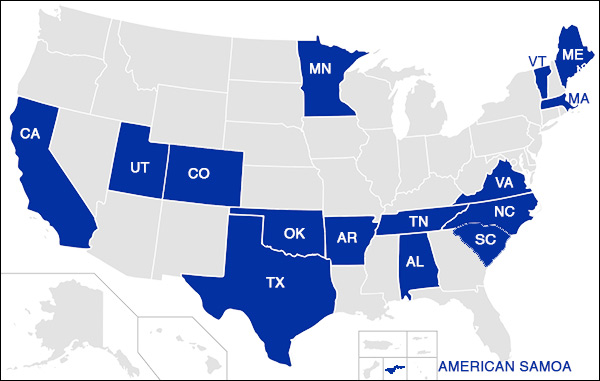
 Jan. 3, 2020 — The Census Bureau just released its new population growth estimates for the 12-month period between July 1, 2018 and July 1, 2019. Their data allows us to assess just which states will likely gain and lose congressional districts in 2020 reapportionment, both in terms of the real numbers just presented and for projecting the final count once the decade’s final-year patterns are calculated and the census is actually conducted.