Tag Archives: Utah

Democrats Back Independent in Utah; House Race News; Kansas Redistricting Map Rejected

By Jim Ellis

April 28, 2022:

Senate

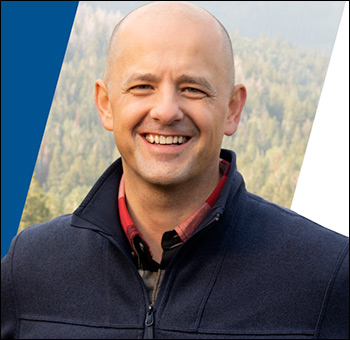
Utah Independent Senate candidate Evan McMullin

Utah: Democrats Back Independent — The Utah Democratic nominating convention over last weekend voted with a 57 percent majority not to field a party candidate against Sen. Mike Lee (R), but instead form a coalition to back Independent candidate Evan McMullin.

The move was the first of its kind in Utah political history. The delegates clearly agreed with the argument that the party was better coalescing behind McMullin, a 2016 Independent presidential candidate and former Republican who placed a strong third in the state (21.5 percent) behind Republican Donald Trump (45.5 percent) and Democrat Hillary Clinton (27.5 percent than nominating their own Democratic contender. They understood that supporting Democrat Kael Watson and producing a three-way campaign meant a sure victory for Sen. Lee.


House

FL-5: US Rep. Al Lawson May Challenge Fellow Incumbent — Florida US Rep. Al Lawson (D-Tallahassee) has difficult choices ahead of him in determining where to seek re-election in the north Florida region. The new Florida congressional map collapses his current district. The Politico publication reports that Lawson is leaning toward challenging Rep. Neal Dunn (R-Panama City) in the new 2nd District, an R+16 CD but one that includes Rep. Lawson’s home base of Tallahassee.

MA-4: No Re-Match — Former Brookline Selectwoman Jesse Mermell, who lost the 2020 Democratic primary to current US Rep. Jake Auchincloss (D-Newton) by just one percentage point, announced that she will not return for a re-match. Therefore, Rep. Auchincloss becomes a prohibitive favorite for re-nomination and re-election. The Massachusetts primary is not until Sept. 6, and the candidate filing deadline is May 31.

MN-1: No Official GOP Endorsement — First Congressional District Republicans convened over the weekend to potentially endorse a candidate in the special election to replace the late Rep. Jim Hagedorn (R-Blue Earth/Rochester). Though state Rep. Jeremy Munson (R-Lake Crystal) attracted 55 percent of the delegate vote, it was not enough to secure the official endorsement. Doing so requires 60 percent. This means we will see an open special election primary on May 24 with no officially endorsed candidate, though Rep. Munson appears to be a clear front runner.

Utah: Two Reps Under-Perform at Convention — US Rep. John Curtis (R-Provo), posted only 41 percent of the convention vote on the first ballot, which was just enough to avoid an embarrassing defeat, since he did not also opt to obtain petition signatures. The later rounds pushed him to 45 percent, but the congressman still must win a Republican primary against the man whom he defeated in a 2017 special election and the 2018 GOP primary, — former state Rep. Chris Herrod. Despite Rep. Curtis’ poor showing at the party convention, he is still expected to win the primary and general elections.

Continue reading

Nevada and Utah Maps Released

Nevada 2021 proposed Congressional redistricting map

By Jim Ellis

Nov. 12, 2021 — Two new proposed redistricting maps were released early in the week, both of which the Dave’s Redistricting App personnel, from the statistical analysis website that specializes in redistricting, call partisan gerrymanders. Democrats drew the Nevada map in anticipation of the special state legislative session beginning next week; Republicans crafted the Utah plan that has now cleared both houses of the state legislature.

In 2020, two of the Las Vegas area congressional districts turned in close re-election victories for Democratic incumbents, Rep. Susie Lee (District 3: 49-46 percent) and Rep. Steven Horsford (District 4: 51-46 percent). The Democratic controlled legislature is looking to improve their districts, from a partisan perspective, but that comes at the expense of Rep. Dina Titus’ downtown Las Vegas CD (District 1) that will become more competitive should this map be enacted as currently drawn. Titus’ 2020 victory spread was 62-33 percent.

Utah 2021 proposed Congressional redistricting map (click on map to see larger view)

The Utah Republican legislature’s redistricting team has designed a new map that would give all four Republican incumbents equivalently strong GOP districts. The big winner is freshman Rep. Burgess Owens (R-Salt Lake City), who sees his marginal district grow from one that produced only his plurality Republican victory over then-Rep. Ben McAdams (D) into the safest Republican seat in the state.

As with many of the smaller population western states with an expansive land mass and one metropolitan area that dominates the entity, the Republican map drawers chose a pie-shaped option, that is a plan where all of the state’s congressional districts share a piece of, in this case, the Salt Lake City metro area.

The Nevada map, on paper, is designed to send three Democrats and one Republican to the US House. The lone Republican, Rep. Mark Amodei (R-Carson City), will again have the northern 2nd District, a seat too far from Las Vegas to take any part of the metro area.

The geography, and the number of people in Nevada’s northern sector, makes drawing a 4D-0R map almost impossible. Therefore, in order to help craft three districts that Democrats should win in typical election years, the map drawers packed as many Republican voters as possible into the one northern district.

Dave’s Redistricting App’s analysts divided the new districts on a partisan basis, but their percentages are estimates. Almost 30 percent of the Nevada electorate registers as Nonpartisan, so dividing only into Democrat and Republican segments may not be particularly accurate.

Continue reading

House Vulnerables – Part II

By Jim Ellis

July 13, 2021 — On Monday, we began a two-part series on what are arguably the most vulnerable dozen US House seats based upon the individual district’s political performance over the past two elections.

Below is the priority order update covering the second half of the top 12 most vulnerable CDs. As you will continue to see below, all of the seats except one are Republican held.

To refresh, the first six covered were:

• IA-2 (Rep. Mariannette Miller-Meeks, R-Ottumwa)
• IA-1 (Rep. Ashley Hinson, R-Marion/Cedar Rapids)
• IA-3 (Rep. Cindy Axne, D-Des Moines)
• FL-27 (Rep. Maria Elvira Salazar, R-Miami)
• CA-48 (Rep. Michelle Steel, R-Orange County)
• NY-22 (Rep. Cynthia Tenney, R-New Hartford)

Here’s our look at the next six:

UT-4: Rep. Burgess Owens (R-Salt Lake City) – Ave R vote: 48.8%
• Former NFL football star and businessman Burgess Owens defeated freshman Rep. Ben McAdams (D) by one percentage point in 2020, and we can expect another competitive race here again within this mostly suburban Salt Lake City congressional district located in the metropolitan area’s southern sector.

Republicans, who are in full control of the Utah redistricting process, will attempt to improve the district for Owens, which is possible since the 4th CD is the fastest growing district in the fastest growing state over the past decade. The best estimates suggest that the 4th District must shed approximately 50,000 people to other CDs. This should allow map drawers to subtract a substantial number of Democratic voters from the district, thus yielding Burgess a slightly more favorable political domain.

At this point, McAdams, who was the Salt Lake County mayor prior to his election to Congress, has not indicated whether he will return for a re-match.

MN-1: Rep. Jim Hagedorn (R-Rochester) – Ave R vote: 49.3%
• Two-term Rep. Hagedorn just announced that his cancer has returned, meaning an immediate treatment regimen. How this will affect his re-election campaign is yet to be determined. Hagedorn has won two close elections, as has his Democratic colleague in the adjacent district, Rep. Angie Craig (D-Eagan).

Minnesota is the only state in the nation that sees a split control legislature, meaning each party controls one house. Since the state did not lose a congressional district in apportionment as originally projected, it would not be surprising to see a legislative deal made where Democrats and Republicans are flipped between the two adjoining districts. The changes would result in Hagedorn gaining Republicans and Craig adding Democrats. Redistricting will perhaps be the most critical factor in determining the outcome of both districts come 2022 and beyond.

Continue reading

Senate: Recapping the Latest

By Jim Ellis

June 21, 2021 — We have seen quite a few recent US Senate moves that help set the picture for a very competitive 2022 election cycle that will almost certainly break the current 50-50 chamber tie. Below is a recap of the action:

Alabama: Katie Britt (R), the former president and CEO of the Alabama Business Council joined the race and immediately secured the endorsement of her former boss, retiring Sen. Richard Shelby (R). Before joining the Business Council, Britt was the senator’s chief of staff. She joins Rep. Mo Brooks (R-Huntsville) and former US Ambassador Lynda Blanchard in the GOP field. No Democrat has yet announced.

Arizona: Two-term Attorney General Mark Brnovich (R) announced his candidacy in the past week, giving the GOP a candidate who has won statewide to face freshman Sen. Mark Kelly (D), who stands for a full six-year term in 2022 after winning the 2020 special election. Also in the Republican field are retired Air Force Major General Mick McGuire and solar energy company executive Jim Lamon. Venture capitalist Blake Masters and US Rep. Andy Biggs (R-Gilbert) remain as possible candidates.

Florida: US Rep. Val Demings (D-Orlando), the former police chief whose husband is mayor of Orange County and the former county Sheriff, formally announced her US Senate challenge to Sen. Marco Rubio (R). Former congressman Alan Grayson and Miami City Commissioner Ken Russell are also Democratic US Senate candidates, among others.

Georgia: Former University of Georgia football star and NFL player Herschel Walker (R) is re-locating back to his home state from Texas ostensibly to soon announce a challenge to freshman Sen. Raphael Warnock (D) who, like Sen. Kelly in Arizona, must stand for a full six-year term in 2022 after winning a 2020 special election. Also in the GOP nomination race are state Agriculture Commissioner Gary Black, construction company owner Kelvin King, and financial executive and former Trump White House staff member Latham Saddler.

Iowa: Sen. Chuck Grassley (R), who will be 89 at the next election, appears poised to seek an eighth term. At this point, state Sen. Jim Carlin (R-Sioux City) is an announced Republican primary challenger, and ex-Crawford County Supervisor Dave Muhlbauer (D) is the lone Democratic announced candidate. Former one-term US Rep. Abby Finkenauer is a potential candidate along with current US Rep. Cindy Axne (D-Des Moines), and Waterloo Mayor Quentin Hart.

Missouri: Six-term US Rep. Vicky Hartzler (R-Harrisonville/Columbia) is the latest Republican to join the open field with Sen. Roy Blunt (R) retiring. She will oppose former governor, Eric Greitens, Attorney General Eric Schmitt, and St. Louis attorney Mark McCloskey, with US Reps. Ann Wagner (R-Ballwin), Billy Long (R-Springfield), and Jason Smith (R-Salem) remaining as possible candidates.

Former St. Louis area state Sen. Scott Sifton is the lone prominent announced Democrat. Ex-governor, Jay Nixon, and Kansas City Mayor Quentin Lucas are potential Democratic candidates.

Nevada: The Republican leadership believes that former Attorney General and 2018 gubernatorial nominee Adam Laxalt, grandson of the late former Sen. Paul Laxalt (R), will soon announce his Senate candidacy to oppose first-term Sen. Catherine Cortez Masto (D).

Continue reading

Apportionment Surprises


By Jim Ellis

April 28, 2021 — In virtually every 10-year apportionment announcement at least one surprise occurs, but the census unveiling Monday contained multiple blockbusters.

For example, two states had their final number of congressional districts determined by less than 90 people. Reportedly, if New York had just had 89 more people, that would have saved an Empire State congressional seat. Minnesota becomes the beneficiary allowing the state to barely hold its eighth district.

Instead of 10 seats changing states as had been forecast, only seven, affecting 13 domains, switched. Perhaps the main reason for the lower number is the decade population growth rate. According to yesterday’s final report, the nation grew at only a 7.4 percent rate, the lowest since the 1930 census’s 7.3 percent. By contrast, the population increase from the 2010 total was 9.7 percent.

Pre-census projections, for better than a year, had been predicting that Texas would gain three seats, Florida two, and Arizona one. The analysts also estimated seat losses for Alabama, Minnesota, and Rhode Island. None of these projections proved accurate.

On the other hand, prognostications for the balance of the map were accurate. Texas, and Florida did gain, but two and one, respectively, instead of three and two seats. Colorado, Montana, North Carolina, and Oregon each added one district apiece as expected. The one-seat losers were California, for the first time in history, Illinois, Michigan, New York, Ohio, Pennsylvania, and West Virginia.

It’s a bit too soon to determine which party will benefit the most from these numbers at the congressional level, though Republicans should be up slightly in the Electoral College for the next presidential campaign. Once we see how the population is distributed within the states will better tell us whether Democrats or Republicans will take the most advantage of the apportionment. This will depend upon how the population spreads through the cities, suburbs, and rural regions.

Continue reading

Analyzing the 2020 Turnout Increase

By Jim Ellis

March 29, 2021 — As we know, election year 2020 produced the largest voter participation level in history, including a substantial increase from the last presidential turnout in 2016. Now that all states have reported finalized election numbers, we know that a total of 158,507,137 individuals cast ballots in the 2020 presidential election, a number that shattered even the highest pre-election turnout predictions.

The figure also represents a 15.9 percent turnout increase when compared with 2016, which, at that time also set a record for raw number voter participation. Attempting to explain the large jump, the proponents of the election system overhaul legislative package in Congress, HR-1/S.1, credit the rise to the heightened use of early and mail voting, and therefore want to make permanent most of the court ordered COVID-19 pandemic response procedural changes. Digging deeper, however, we find that there are other factors present that help explain the voting uptick.

While all but five states (Alabama, Connecticut, Mississippi, Missouri, and New Hampshire) employed some form of early voting, another five conducted their elections only through the mail. The usual all-mail states of Colorado, Oregon, and Washington were joined by Hawaii and Utah according to the Ballotpedia election statistics organization that regularly publishes related data.

All five of these latter states saw turnout growth rates that exceeded the national average, including the state posting the highest increase, the Aloha State of Hawaii, which saw a whopping 32.5 percent rise in voting.

As stated earlier, the national average turnout increase when comparing the 2020 figures with 2016 is 15.9 percent. Eighteen states saw an increase greater than the national mean average, while 32 states and the District of Columbia fell below that number. All 51 entities, however, reported an upsurge in voting from 2016. The median average calculated to an increase of 12.8 percent.

Let’s concentrate on the 10 states with the highest increase from 2016. They are:

STATE        PERCENT INCREASE
Hawaii 32.5%
Arizona 31.6%
Utah 31.5%
Texas 26.2%
Idaho 25.8%
Nevada 24.9%
California 23.4%
Washington 23.2%
Tennessee 21.8%
Georgia 21.5%

Continue reading

CO-3: Rep. Boebert Challenge Looming

By Jim Ellis

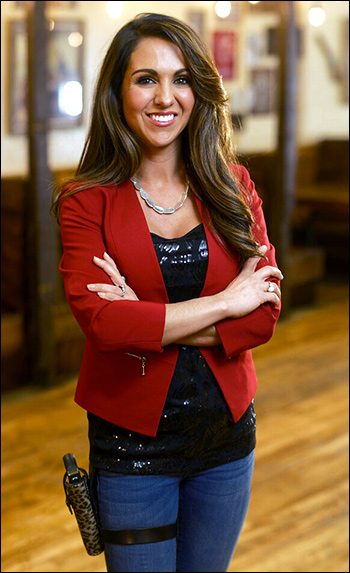
2nd Amendment activist, local restaurant owner and now US Rep. Loren Boebert represents Colorado’s 3rd CD.

Feb. 8, 2021 — Colorado freshman Rep. Lauren Boebert (R-Silt), who first upset then-Rep. Scott Tipton in the 2020 Republican primary and later overcame more than $6 million in combined spending from her general election opponent and outside organizations, can count on seeing another tough campaign in 2022.

Already, candidates are lining up, and the most prominent one in the early going announced late last week. State Senate President Pro Tempore Kerry Donovan (D-Gunnison) released a video announcing that she will forego re-election to the state legislature in order to challenge Rep. Boebert in the next congressional campaign. Rancher Gregg Smith and former state House candidate Colin Wilhelm had previously declared their intentions to compete for the Democratic nomination.

Lauren Boebert is a Florida native who moved with her family to the Denver area when she was 12 years old. She then re-located to the Western Slope region in 2003 and, with her husband, opened their restaurant, Shooters Grill, in 2013.

Congresswoman Boebert has attracted much national attention so far with her insistence of carrying a firearm on the House floor. Such is nothing new since she has always holstered a side arm in her restaurant establishment and made defending the 2nd Amendment the cornerstone of her congressional campaign effort.

Despite being heavily outspent, Boebert carried the general election against former state representative and 2018 congressional nominee Diane Mitsch Bush (D) by a 51-45 percent margin, meaning a spread of 26,512 votes. Former President Trump, who recorded only 42 percent of the statewide vote, also carried the 3rd District in a similar 52-46 percent margin.

Continue reading

Early House Outlook – Part I

By Jim Ellis

Jan. 20, 2021 — With the presidential Inauguration dominating political attention this week, it is a good time to set the upcoming electoral stage for the US House on a 50-state basis. Today, a first of a four-part series, will begin to look at the 13 western states. During the rest of the week, we will move eastward.


• Alaska – 1 Seat (1R)
Rep. Don Young (R-Ft. Yukon), the Dean of the House, won his 25th term in November with a 54-45 percent victory in a competitive race. With Alaska being an at-large state, reapportionment and redistricting won’t change the political situation. The big question surrounding the 87-year-old congressional veteran is when will he retire?


• Arizona – 9 Seats (5D4R)
The Arizona population growth rate makes them a cinch to gain a 10th District in reapportionment. It is also clear that the new seat will be placed in the Phoenix metropolitan area. Arizona has a redistricting commission comprised of two Democrats, two Republicans, and one Independent. The latter member becomes the chairman. The membership has not yet been chosen.

The state’s marginal nature suggests that we will see a very competitive state once all 10 seats are in place. Currently, there are two districts where the winning House member received 52 percent of the vote or less. This means GOP Rep. David Schweikert (2020 winning percentage: 52.2) and Democratic incumbent Tom O’Halleran (2020 winning percentage: 51.6) will be looking to add more Republicans and Democrats to their seats, respectively.

An open governor’s race (Republican Gov. Doug Ducey ineligible to seek a third term) and what should be a competitive re-election for Sen. Mark Kelly (D) could cause open seats in the House delegation should any of the sitting members attempt to run statewide.


• California – 53 Seats (42D11R)
For the first time in history, the Golden State appears positioned to lose a seat in their US House delegation. With migration exiting the state exceeding those incoming, it appears the California growth rate did not keep up with the specified threshold in order to keep all of their 53 seats. The Los Angeles area is likely to absorb the loss of the seat, but which member will be paired with another is an open question.

California voters adopted an initiative before the 2010 census that established a citizens’ commission to administer redistricting under strict parameters that emphasizes keeping cities and counties whole when possible and irrespective of where any particular incumbent may reside. Therefore, with the mapping power removed from the legislature, it is possible that inside Democratic politics might play a lesser role in the redistricting process.

Continue reading

Michigan Reverses Direction
On Mail-In Ballot Oversight

By Jim Ellis

Oct. 20, 2020 — The Michigan Court of Appeals on Friday reversed a lower court ruling that allowed a post-election ballot reception period that would have lasted until Nov. 17, and granted the process known as “ballot harvesting,” where another individual or individuals can deliver unspecified numbers of ballots for voters.

The three-judge high court unanimously overturned a ruling from Court of Claims Judge Cynthia Stephens who made the original directive in deciding an election lawsuit that the Michigan Alliance for Retired Americans, a union-funded organization, brought forth.

When the Michigan attorney general and secretary of state jointly decided not to appeal Judge Stephens’ ruling, the Republican controlled state House and Senate filed the motion and were granted standing. It is unclear now whether the Michigan Alliance will appeal to the state Supreme Court.

According to the Detroit News’s reporting, the original ruling contained the directive that the ballots must be postmarked by Nov. 3. That clerical distinction, however, will be difficult to enforce once we advance into the post-election counting and challenge stage.

The US Postal Service, themselves, according to their employee practices handbook, indicate that many mail pieces do not require postmarks. In most of the 21 states that are now allowing the post-election reception period, the ballots will fall into one of these categories thus making the postmark question moot, and that will invariably lead to further lawsuits and litigation. Below is the official language for the postmark directives:

“Postmarks are not required for mailings bearing a permit, meter, or precanceled stamp for postage, nor to pieces with an indicia applied by various postage evidencing systems.”

The Appellate Court ruling means, at least until if and when the state Supreme Court addresses the issue, that there will be no post-election ballot reception period in Michigan. Ballot harvesting pertaining to individuals who are not immediate family members of the person wanting to vote absentee or is not an election office clerk, will again be prohibited. Therefore, all ballots are required to be in the possession of election authorities throughout Michigan’s counties before the polls close on Election Day, Nov. 3.

Continue reading

Pennsylvania Voting Rules

By Jim Ellis

Sept. 21, 2020 — Pennsylvania’s Democratic controlled Supreme Court changed their state election procedures late last week in a series of rulings on a lawsuit that the Pennsylvania Secretary of State and PA Democratic Party previously filed.

Under the new process, receiving votes after the election is allowed if “no evidence exists” that the ballot was mailed after Election Day, Nov. 3. The deadline for ballot acceptance now moves from 8 pm on Election Day to 5 pm, Friday, Nov. 6. Pennsylvania becomes the 17th state to allow post-election reception for this 2020 election. The ruling increases the chances that we will not have a winner declared on election night.

Additionally, three other rulings will allow drop boxes to be used as ballot receptacles in the various counties, affirmed that poll watchers can only serve in their own county of residence, and Green Party candidate Howie Hawkins’ name was removed from the ballot. The court did not grant the lawsuit motion to allow ballot harvesting, which would permit third parties to deliver ballots to the authorities or ballot drop boxes.

The drop boxes will be placed in various locations around a county and voters can deposit their ballots without using the postal service to transfer their vote to the county election authorities. Hawkins’ name was removed from the ballot because the court said he “failed to comply with the Election Code’s strict mandate” and the attempts to fix the problem “did not suffice to cure that error,” but the specifics were not addressed.

With the large number of absentee ballots expected here and in other states, the trend toward allowing post-election reception, and the laws that some states, like Pennsylvania, have to control when the mail ballots can be counted, makes it less likely that we will see a definitive presidential campaign result on Nov. 3. The same will be true for certain US Senate and House races.

Of the 17 states, now including Pennsylvania, that are allowing post-election ballot reception, seven appear competitive. The others, Alaska, California, Kansas, Massachusetts, Mississippi, New Jersey, Utah, Virginia, Washington, and West Virginia will likely declare a clear winner relatively early in the counting period.

Continue reading