Tag Archives: Utah

2020 Open House Seats Review

By Jim Ellis

June 12, 2019 — Since the last national redistricting completed in 2011 for the 2012 election cycle, we have seen 222 US House seats come open, for a mean average of 55.5 per cycle during the eight-year period. Prior to this decade, the average House open seat factor was typically closer to 35.

In 2012, reflective of the new reapportionment from the 2010 census, the House featured 62 open seats. This was followed by 47 more in 2014, another 49 in 2016, and finally 64 opens in the 2018 election cycle.

So far in this current 2020 election cycle, the exodus syndrome appears to be winding down as we see only nine districts now opening, assuming that Montana at-large Rep. Greg Gianforte follows through with his stated plans to announce his gubernatorial campaign later this week. One open district, PA-12, was already filled at the end of May as Republican Rick Keller replaced resigned Rep. Tom Marino (R-Williamsport).

Below is a listing of the nine seats and the preliminary replacement outlook:


Special Elections – Sept. 10, 2019

NC-3: Rep. Walter Jones (R) – passed away Feb. 10, 2019
The Republicans are in a run-off election that will be decided on July 9. Participants are state Rep. Greg Murphy (R-Greenville) and physician Joan Perry of Kinston. The winner faces Democratic nominee Allen Thomas, the former mayor of Greenville. The eventual GOP nominee will begin the special general election as a heavy favorite for a seat that has been in Republican hands since 1995.


NC-9: Vacancy, non-declaration of 2018 election winner due to alleged voter fraud
Both parties nominated outright in this special election. Democrats feature 2018 nominee Dan McCready, who ran unopposed in the special primary. Republicans nominated outright state Sen. Dan Bishop (R-Charlotte), who captured 48 percent of the vote in a crowded Republican primary. A minimum total of 30 percent was needed to win outright nomination and avoid a run-off. Two polls have been released, both showing the race in toss-up mode with each candidate leading in one of the surveys.


Regular-Cycle Open Seats

AL-1: Rep. Bradley Byrne (R-Mobile) running for Senate
With the Republican presidential nominee topping 60 percent of the vote here in the past three national elections, including President Trump attracting 63.5 percent, the Republicans will be in strong position to hold this seat. With candidate filing coming on Nov. 8 for the March 3 primary, the field of four announced candidates could swell to as many as 10 before the filing cycle concludes. No Democrat has yet come forward to declare.


Continue reading

The Early Targets

By Jim Ellis

April 3, 2019 — Continuing our early outlook of the 2020 House situation, we can begin by narrowing the field to those districts where Republicans will be concentrating at least their initial efforts in order to reclaim the majority they lost in November.

After the 2016 election, there were 12 districts that supported President Trump but elected a Democrat to the House. After the 2018 midterm, that number rose to 31. For the Republicans to regain the majority, they will need to convert a net 18 seats back to their column, or 19 if the Democrats score a victory in the NC-9 special election to be held later this year in the Charlotte-Fayetteville metro areas in southern North Carolina.

The other two House special elections, PA-12 (May 21) and NC-3 (Sept. 10), unless huge upsets occur, look to remain within the Republican stable of districts.

Of the 31 Trump/House Democrat seats, 16 of them also voted for Mitt Romney over President Obama in 2012. Furthermore, a dozen within this group elected a Republican Representative until the 2018 election. They are:

  • GA-6 – Rep. Lucy McBath (D) – Defeated Karen Handel (R)
  • IL-14 – Rep. Lauren Underwood (D) – Defeated Randy Hultgren (R)
  • MI-8 – Rep. Elissa Slotkin (D) – Defeated Mike Bishop (R)
  • MI-11 – Rep. Haley Stevens (D) – Replaced David Trott (R)
  • NJ-11 – Rep. Mikie Sherrill (D) – Replaced Rodney Frelinghuysen
  • NM-2 – Rep. Xochitl Torres Small (D) – Replaced Steve Pearce (R)
  • NY-22 – Rep. Anthony Brindisi (D) – Defeated Claudia Tenney (R)
  • OK-5 – Rep. Kendra Horn (D) – Defeated Steve Russell (R)
  • SC-1 – Rep. Joe Cunningham (D) – Replaced Mark Sanford (R)
  • UT-4 – Rep. Ben McAdams (D) – Defeated Mia Love (R)
  • VA-2 – Rep. Elaine Luria (D) – Defeated Scott Taylor (R)
  • VA-7 – Rep. Abigail Spanberger (D) – Defeated Dave Brat (R)

Continue reading

Apportionment Projections:
Who is Gaining, Who is Losing

By Jim Ellis

Jan. 3, 2019 — Late last year, we covered the new Census Bureau report for the states gaining and losing population during the past 12-month period. Now, we see the agency’s latest just-released numbers for the decade through this past July. Armed with the new data, outside mathematicians have made apportionment projections to provide a more defined picture as to which states will be gaining or losing US House seats in the 2020 post-census reapportionment.

With two years remaining in the present decade, trends can still change and we must remember that the reapportionment formula is complex, but the new projections give us a strong idea as to just how many seats, give or take a small variance, will transfer. At this point, according to the Washington, DC-based Election Data Services, it appears that as many as 22 seats could change location affecting 17 states.

Texas, having gained 3.55 million people since the 2010 census, looks to be adding as many as three seats for the 2022 elections and beyond. This will give the Lone Star State 39 seats during the next decade, and 41 electoral votes in the succeeding presidential elections.

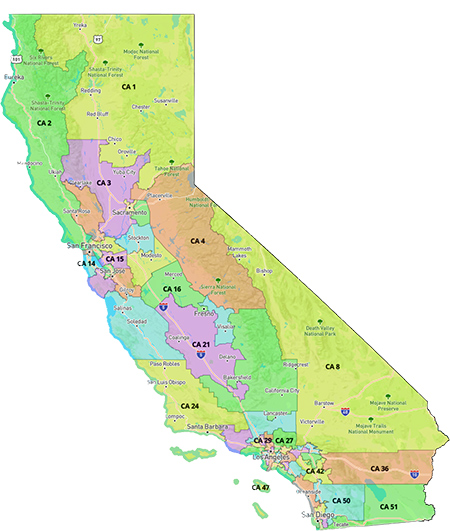
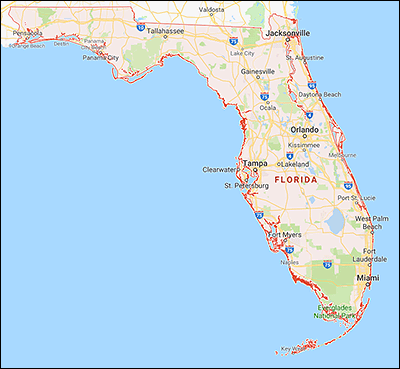
Florida was the second largest gainer with just under 2.5 million new residents, meaning the Sunshine State will likely gain two seats, going from 27 to 29. In terms of raw numbers, California gained more than 2.3 million people, but it actually dropped a tenth of a point below the national growth average of 6.3 percent for the past eight years. This means the Golden State is currently on the hook to actually lose a district for the first time in history.

Continue reading

Projecting Apportionment

By Jim Ellis

Dec. 7, 2018 — New population growth numbers are now available from the Census Bureau, allowing us to gain more clues about how the coming 2020 post-census apportionment might look for the nation’s congressional districts.

Every 10 years, states gain and lose CDs based upon their total population and percentage growth figures. The current US population of 327,774,453 represents a growth rate of 5.96 percent when compared to 2010.

Currently, Idaho is the fastest growing state for 2018, with a gain of 2.15 percent for the current year, the only state to break the two percent barrier for the period. Nevada (1.96 percent), Utah (1.85 percent), Washington (1.69 percent), and Florida (1.56 percent) round out the top five.

The group constituting the bottom half of the top 10 in 2018 growth contains Arizona (1.53 percent), Texas (1.41 percent), Colorado (1.37 percent), Oregon (1.37 percent), and South Carolina (1.28 percent).

On the other hand, eight states, led by Wyoming (-0.97 percent), actually lost population during the year. The others are West Virginia, Illinois, Alaska, Hawaii, Mississippi, Louisiana, and North Dakota.

Continue reading

Looks Like the House Settles at 235

California Congressional Districts


By Jim Ellis

Nov. 29, 2018 — The 2018 House election cycle is finally drawing to a close, and it looks like the Democrats are gaining their 40th conversion seat. Monday night in California, as the state’s marathon vote counting process meanders on, Democratic challenger T.J. Cox overtook Rep. David Valadao (R-Hanford/Bakersfield) and may well be headed toward victory.

Rep. Valadao, who had earlier been projected as the winner, trails his opponent by 438 votes, but the counting is still not complete. New votes were counted in Kern County that greatly favored Cox, allowing him to take the lead for the first time.

The California counting system literally takes weeks because the state allows voters to postmark their mail ballots on Election Day, and the counties only process ballots on certain days. The 21st District is split among four counties, so it is difficult to know exactly how many mail, overseas, and provisional ballots still remain since the numbers are only released by complete county domain.

It is probable that we will not have a final result until next week because Kern won’t release more totals until Monday. The remaining counties: Fresno, Kings, and Tulare, should record their final numbers this week.

Continue reading

Mia Love Falls in UT-4

Utah Rep. Mia Love (R-Saratoga Springs)

By Jim Ellis

Nov. 21, 2018 — It appears the final undecided House race has now come to at least an unofficial end, and the result is a bit surprising.

Some, including me, were predicting the culminating vote tabulation trend in Utah’s UT-4 District would favor incumbent US Rep. Mia Love (R-Saratoga Springs), based upon her overwhelming performance from the late votes in the 4th District’s two rural counties and the more populous Utah County. But the substantial number of remaining ballots in Salt Lake County proved decisive in that Democratic nominee Ben McAdams over-performed, which flipped the race back in his direction as the count concluded.

On election night, it appeared that Rep. Love had been defeated when she fell almost 9,000 votes behind as Salt Lake County was being tabulated. But she came roaring back when the outlying counties’ votes were counted. As the late votes were finally being recorded, Love rebounded to forge a 1,615 district-wide vote edge. Her advantageous situation was precarious, however, as thousands of same-day registration, absentee, and provisional votes still remained in Salt Lake County.

Yesterday, those latter votes were counted while Love found herself slightly under-performing within the last group of Utah County votes. She garnered only 66 percent in the final Utah County vote pool, below the 74% she was posting in previous totals within this entity.

According to local reports, this meant that Democrat McAdams, the Salt Lake County mayor, could overtake the congresswoman should he score approximately 59 percent from the remaining votes. This, he did, and then some, as McAdams erased MLove’s previous lead and ended the counting day with a 739-vote advantage.

McAdam’s surge was largely due to approximately 9,000 same-day registrants, many of whom were coming to the polls to vote for the medical marijuana ballot proposal that passed the state 53-47 percent but was overwhelmingly approved in Salt Lake County. It is evident that a strong majority of these voters supported McAdams.

Continue reading

Florida Ends; Others Called

By Jim Ellis

Nov. 20, 2018 — In a final result where the candidates were divided by less than two votes per precinct statewide, Gov. Rick Scott (R) defeated Sen. Bill Nelson (D) in the hotly contested Florida Senate race that proved a Herculean battle both before and after the election.

With the original vote falling within a half-percent margin, a mandatory machine recount commenced. Since it produced a separation of less than one-quarter percent between the two candidates, a mandatory hand recount began of the “under and “over votes”, i.e., those ballots where a voter either didn’t make their selection clear or appears to have marked more than one contender in the same contest.

Yesterday, when the afternoon hand count deadline produced a 10,033 vote margin for Gov. Scott, Sen. Nelson conceded the race and ended the seven lawsuits that had been filed by various parties contesting pools of votes and the post-election counting process.

The senator now completes a political career in which he served in elective office for 42 of the past 46 years as a state representative, US congressman, state insurance commissioner, and US senator. Counting his combined time in the House and Senate, Nelson will have served 30 years as a federal lawmaker when he leaves office in January.

Continue reading

Rep. Marcia Fudge Emerges

Rep. Marcia Fudge (D-OH)

By Jim Ellis

Nov. 16, 2018 — While Republicans chose their leadership team yesterday with little in the way of surprise as California Rep. Kevin McCarthy was easily elected to lead the new GOP minority, the bigger news surrounds former Speaker Nancy Pelosi’s (D-CA) internal campaign to return to the House’s top post.

Also, yesterday the Huffington Post news website released the list of 17 Democrats, including five freshmen (one still in an uncalled race), who say they will not support Pelosi for Speaker.

The number is significant. If the House final party division margin breaks 233-202, the group, if they all follow through and don’t vote for Pelosi on the first roll call, would be enough to keep her from gaining majority support. Pelosi is still favored to become Speaker, but her road to the office is appearing a bit rockier than perceived immediately after the Democrats officially clinched the new House majority.

Continue reading

House Campaigns Turning Around

By Jim Ellis

daily-kosOct. 16, 2018 — According to the liberal Daily Kos Elections website, six congressional races that appeared to be headed in one direction look to be reversing themselves.

Four campaigns that Democrats earlier projected as red to blue conversions are now either tilting toward the Republican candidate or coming back into play. An additional campaign that we believed was always miscategorized is now performing as we predicted, while a further Republican incumbent, already projected to be in a close race, has actually dropped behind for the first time in a published poll. Descriptions for each of these contests follow.

Two GOP incumbents who were trailing in several polls — the Siena College/New York Times polls had one lagging 15 points behind and the other by 10, for example — have come back to take the lead or are hovering in virtual tie range.


IOWA

Iowa Rep. Rod Blum (R-Dubuque) has represented the most Democratic seat in Iowa for two terms. He fell significantly behind state Rep. Abby Finkenauer (D-Dubuque) to the point where the Democratic Congressional Campaign Committee (DCCC) even canceled a flight of media advertising because they presumably believed the race was sealed.

Continue reading

The Democrats’ Path

By Jim Ellis

Sept. 25, 2018 — Most of the contemporary political talk surrounds the Democrats’ ability to gain the US House majority, but is there a viable path for a power shift in the Senate? Their road to a new Senate majority is much rockier than for the House, but at least a mathematical chance of that becoming reality does exist.

senate 2018 midterm election competitionLast week we reviewed the status of the 17 states that see legitimate competition for the in-cycle Senate seats. Now, looking at the latest Fox News Senate ratings, we can draw some conclusions about the Democrats’ victory chances.

It is important to remember that the minority Dems must defend 26 of the 35 in-cycle Senate races in the current election cycle. Thus, the party’s least complicated path is to run the table of their current 26 seats, and then take two of the five GOP states where they are fielding credible opposition candidates. Doing so would give the Dems a 51-49 majority.

But, this is easier said than done. According to Fox, and virtually all other media prognosticators, one of the Democratic seats, North Dakota, is already leaning to the Republicans, while three more (Florida, Indiana, and Missouri) reside in the “Toss-up” column.

Of the nine seats the Republicans need to defend, three reside in the Toss-up category (Arizona, Nevada, and Tennessee), while one is classified as a Lean Republican (Texas), and the remaining five (Nebraska, the two Mississippi seats, Utah, and Wyoming) are rated as Likely Republican. (Fox does not use a “safe” designation. The best a candidate of either party can achieve from a Fox News political rating is “likely.”)

Continue reading