Tag Archives: Julian Castro

We Now Have Candidate #22 In
The Race, And Sanders is Falling

By Jim Ellis

May 6, 2019 — A new Democratic presidential candidate entered the race late last week, one whom we didn’t expect to see this soon.

Colorado Sen. Michael Bennet

Despite undergoing prostate cancer surgery last month, Colorado Sen. Michael Bennet says he has already received a “clean bill of health” and is embarking upon his national political effort. Now at 22 candidates in the field of Democrats seeking their party’s nomination for the 2020 presidential election, eyes turn to Montana Gov. Steve Bullock who could be the last widely discussed potential candidate yet to make a decision about forming a campaign.

It’s difficult to see how Sen. Bennet breaks through to the top tier, however. He is not well known outside of Colorado and starts well behind most of the field, putting him in a difficult position from which to even qualify for the first two debate forums scheduled for late June and the end of July.

To earn a debate podium, all candidates must either tally at least one percent support in three Democratic National Committee designated polls, or attract financial support from 65,000 donors, from which they must have a minimum of 200 in at least 20 states. For the lesser known candidates, debate participation is a necessity in order to propel themselves into serious contention for the nomination.

Furthermore, Sen. Bennet doesn’t even have his home state electorate to himself. Former Colorado Gov. John Hickenlooper is also in the race, a man who Bennet once served as chief of staff. Just two days ago, Colorado moved its new primary – they used to apportion delegates through the caucus system – to March 3, the 2020 campaign’s Super Tuesday, which could serve to boost one of the two Centennial State candidates. Yet, with both men in the race, the state’s 67 first-ballot delegate contingent will prove less of a base for either one.

Continue reading

Texas by the Numbers

Map of US Congressional districts in Texas


By Jim Ellis

May 2, 2019 — The Lone Star State continues to move toward competitiveness, meaning the Texas political apparatus will see new approaches from both parties in the 2020 election campaigns.

A new Emerson College poll (April 25-28; 779 likely Texas voters, 342 likely Democratic primary voters, 344 likely Republican primary voters via Interactive Voice Response system) finds President Trump tied with two of the Democratic presidential candidates and only slightly ahead of the rest of the field. And, in Democratic Party trial heats, the results project an equally close potential finish for the state’s 228 first ballot delegates.

According to the Emerson numbers, President Trump would slightly trail former Vice President Joe Biden with each man finishing in the 50 percent realm. Trump is then slightly ahead of Texas former Rep. Beto O’Rourke (D-El Paso) but, here too, both men are in the 50 percent realm.

The president fares better against the others, but even they are within striking distance of him in what is arguably his most important state. With 38 Electoral Votes, Texas was the only big state that Republicans could count upon winning without having to campaign, but apparently those days are over.

The next closest Democrat is Vermont Sen. Bernie Sanders. He trails by two points, 51-49 percent. The president has healthier margins against Sen. Kamala Harris (D-CA) and South Bend (IN) Mayor Pete Buttigieg, ahead of both, 54-46 percent, and tops Massachusetts Sen. Elizabeth Warren, 53-47 percent. The fact that all scenarios present no undecideds tells us the pollsters prodded respondents for a definitive answer or are extrapolating some of the results.

Continue reading

A Momentum Poll For the Democrats

By Jim Ellis

April 23, 2019 — A new poll was released at week’s end last week, and it may be our best glimpse of the national Democratic presidential picture. As we know, the national count matters little in how the individual states will select delegates, but this polling category does provide a sound measurement of candidate momentum.
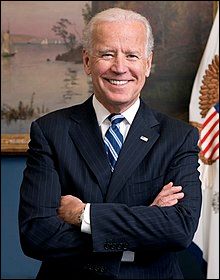
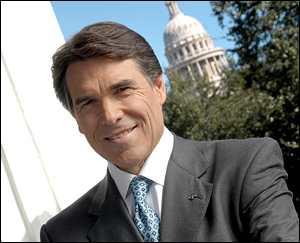
Change Research (April 12-15; 2,519 likely Democratic primary voters) just returned results from their latest field poll. Though the 538 statistical research organization only rates Change Research as a C+ pollster, the large respondent universe of just over 2,500 participants certainly gives us the largest national sample sector producing data. Contrast this, for example, with Emerson College’s national primary poll released last week that segmented only 356 respondents.

The Change results find Sen. Bernie Sanders (I-VT) pulling into a virtual tie with former Vice President Joe Biden. Looking at the numbers, Sen. Sanders polls 20 percent, just one point behind Biden’s 21 percent.

Jumping all the way to third place is South Bend (IN) Mayor Pete Buttigieg with a healthy 17 percent support factor. Dropping back into single-digits (nine percent) is former Rep. Beto O’Rourke (D-TX). Massachusetts Sen. Elizabeth Warren records her typical eight percent, within the tight range she finds in most surveys, which, in this case, is one point ahead of Sen. Kamala Harris (D-CA). The latter senator’s seven percent also represents a considerable support drop, as much as 50 percent when compared to early surveys.

Change also surveyed the field without Biden included. Under this scenario, Sen. Sanders pulls just over a quarter of the sampling universe at 26 percent with Mayor Buttigieg moving into a strong second place with 21 percent, and O’Rourke rebounding to secure 14 percent and third place. Sens. Harris and Warren tie for fourth place with 10 percent.

From a momentum perspective, the Change poll provides further evidence that Sen. Sanders is clearly on the upswing, Biden has stalled just before what is expected to be his official announcement week, Buttigieg is the candidate leaping forward from the back, Harris and O’Rourke appear to be losing support, and Warren remains stagnant at a low level.

Continue reading

Poll: Harris Underwhelms in CA

By Jim Ellis

Declared presidential candidate, Democrat Sen. Kamala Harris of California.

Feb. 19, 2019 — A new Change Research poll was just released of the California Democratic presidential electorate and should former Vice President Joe Biden enter the race, he apparently would fare quite well in Sen. Kamala Harris’ home state.

According to the survey (Feb. 9-11; 948 likely California Democratic presidential primary voters) Biden and Sen. Harris would actually tie at 26 percent apiece. Sen. Bernie Sanders (I-D/VT) closely trails with 20 percent.

Considering the delegate proportionality rules, the two men would score a handsome number of committed delegates in Sen. Harris’ own backyard if this poll happens to correctly predict what could happen a year from now.

California is projected to send 495 delegates to the July 2020 Democratic National Convention, the largest contingent from any state. If Sen. Harris is to become a first-tier presidential candidate, she will have to reap a major delegate bounty in her home domain. Thus, merely breaking even with Mr. Biden would certainly be considered a disappointment in her quest for the nomination.

The rest of the field trails badly. No one, aside from the top three, even breaks into double-digits. In this survey, former Rep. Beto O’Rourke (D-TX) is fourth with eight percent, followed by Massachusetts Sen. Elizabeth Warren who posts a paltry seven percent, ahead of Sen. Cory Booker (D-NJ) with three percent, while former Housing & Urban Development secretary Julian Castro holds a two percent preference.

Continue reading

What to Expect

We’re back after going dark briefly over the Christmas holiday. (No, just in case you were wondering, we’re not part of the government shutdown.) We trust that you are rested, recharged and ready for the new year and the ever-evolving political developments that will come.

By Jim Ellis

Jan. 2, 2019 — We kick off a new calendar and political year looking at several anticipated events. On the presidential front, we can expect several candidate announcements coming in January, along with a changing primary/caucus schedule. Additionally, some close losing congressional candidates are already declaring they want a re-match.

Sen. Elizabeth Warren (D-MA) began the new year by forming a presidential exploratory committee and stating that she would begin her potential national campaign with a four-city information-gathering tour in Iowa, site of the first presidential votes scheduled for early February of 2020.

Four potential Democratic candidates are reportedly close to hiring key personnel either as national managers or Iowa state leaders. Aside from Sen. Warren, Sens. Kamala Harris (D-CA), Cory Booker (D-NJ), and Kirsten Gillibrand (D-NY), are apparently poised to make staffing announcements possibly within the first two weeks of this new month and year.

An imminent presidential candidacy declaration is expected from former Housing and Urban Development Secretary Julian Castro (D-TX), who formed an exploratory committee in early December. Rumors in Texas abound, however, that while Castro may begin to compete in the presidential race he could pivot out of the national campaign and into a US Senate challenge against Sen. John Cornyn (R-TX) if he fails to gain traction.

Continue reading

Biden Up Twice

By Jim Ellis

Former vice president and ex-Delaware senator Joe Biden

Dec. 18, 2018 — A pair of Democratic presidential primary polls were just released — one with a national respondent universe, and the other for the first-in-the-nation Iowa Caucus. In both, former vice president and ex-Delaware senator Joe Biden is staked to a lead. The most disappointing performer appears to be Massachusetts Sen. Elizabeth Warren, who settles into middle-of-the-pack status in both surveys.

CNN conducted the national poll (conducted by the SSRS firm; Dec. 6-9; 463 Democrats and independent-leaning Democrats). For two reasons, this survey is of little statistical relevance. First, the national sample of only 463 individuals is very low, thus leading to a huge error factor. Second, as we know, the presidential nomination process is decided by winning delegate support in every state and territory, thus monitoring a candidate’s national standing, while being of media interest, actually provides little in the way of tangible political value.

The Des Moines Register/CNN Mediacom Iowa poll (conducted by Selzer & Company; Dec. 10-13; 455 likely Iowa Democratic Caucus attenders) is the more relevant of the two studies since it previews the Iowa Caucus, which is responsible for apportioning the state’s nominating delegates and tentatively scheduled for Feb. 3, 2020.

In the national poll, Biden places first with 30 percent preference followed by Vermont Sen. Bernie Sanders (I/D-VT) who posts 14 percent. These are the only two potential candidates in double figures.

Continue reading

Action Breaking in Texas

By Jim Ellis

Aug. 24, 2017
— Early last week, the three-judge federal panel considering the Texas redistricting lawsuit issued a ruling, one that contained a rather major surprise.

It was expected that Reps. Blake Farenthold (R-Corpus Christi) and Lloyd Doggett’s (D-Austin) districts would certainly be ordered re-drawn for racial gerrymandering reasons, but it was assumed that Rep. Will Hurd’s (R-San Antonio) 23rd District would also be in the same predicament. In a ruling that certainly caught the Democratic plaintiffs off guard, the court allowed the current 23rd to stand while striking down the other two. The panel also left north Texas in tact, another region the Democrats wanted re-configured.

Now with some certainty that the district will remain intact – though it could tangentially change as a result of re-crafting Doggett’s nearby 35th District – candidates already are starting to make their moves regarding challenging vulnerable two-term incumbent Hurd.

Rep. Will Hurd (R-San Antonio)

Congressman Hurd was first elected to represent his sprawling central-west Texas district, a seat that stretches more than 550 miles from San Antonio to El Paso, in 2014 when he upset then-Rep. Pete Gallego (D-Alpine), 50-48 percent, yielding a margin of just over 2,400 votes. This past November, Rep. Hurd again beat Gallego, this time 48-47 percent, a spread of just over 3,000 votes. Knowing that the turnout would literally double in the presidential year from the previous mid-term, many observers expected Gallego to re-claim the seat and were again surprised when the re-match evolved into a rerun.

Continue reading

The VP Sweepstakes

By Jim Ellis

July 6, 2016 — The media carried stories over the July 4th weekend that one or both of the presidential candidates is close to naming a running mate. It is a virtual certainty that Donald Trump will announce first, since there is little or no incentive for Hillary Clinton to do so. It is to her advantage to wait until after Trump makes his move, since the Democratic National Convention follows the Republican conclave.

Clinton has the opportunity to pivot from Trump’s eventual choice, and help use the VP choice to balance her own ticket and counter whomever the Republican eventually selects.

Some media reports are suggesting that Trump will unveil his running mate this week. It would make better political sense for him to wait until convention week, thus drawing more attention to the national assemblage, but there is one reason he might announce earlier.

Continue reading

Gov. Perry’s “Exciting Future Plans”

Texas Gov. Rick Perry

Texas Gov. Rick Perry

Texas Gov. Rick Perry (R) just emailed political supporters pledging to announce his “exciting future plans” at a Monday San Antonio event. Normally, when a politician schedules an official speech that will either be a formal campaign kick-off or retirement statement, everyone knows what will be said. Not in this case. One only needs to look back to 2009, when the governor surprisingly announced for another term even though everyone “knew” that he would step down.

Gov. Perry has kept his own counsel about his “exciting future plans,” and there is diverse speculation surrounding what he will do. Many who are close to the governor, who is Texas’ longest-serving chief executive, believe that he has already decided to run for president again in 2016. Assuming this line of thought is true, what is his best move as it pertains to either keeping or relinquishing his current office?

If he is to run for president, he needs to re-establish political credibility. He does that by convincingly winning another re-election.

You’ll remember that he began the 2012 campaign in exalted fashion, entering the race with a first-place polling standing. His August 2011 presidential campaign announcement speech from South Carolina on the day of the Iowa Straw Poll was very well received and he appeared to lay legitimate claim to front-runner status. Few knew, however, that this day marked his campaign’s apex. We all remember his disastrous debate performance when the governor couldn’t recall one of the three federal agencies that he was planning to eliminate should he win the presidency. After this glaring error he tumbled down the polling charts with lightning speed and soon  Continue reading >

Incumbents Facing Challenges in 2012 – Part II

In concluding our two-part series about House members who will face serious 2012 re-election challenges, below we list 22 more competitive incumbents from states where redistricting has been completed or which is pending but clear.

IN-8 – Larry Bucshon (R) – In attempting to gain a 7R-2D advantage for the delegation, the 8th district of freshman Rep. Bucshon was weakened, from the Republican perspective. Expect competition here, but the new incumbent remains the favorite.

IA-3 – Leonard Boswell (D) / Tom Latham (R) – In the only intra-party pairing of the new election cycle so far, veteran Reps. Boswell and Latham square-off in a marginal district. Mr. Boswell represents more of the new district, but the voting patterns tilt a touch toward Mr. Latham. This race begins as a pure toss-up.

IA-4 – Steve King (R) – The new western-based 4th district is mostly comprised of Rep. King’s current 5th district and part of Mr. Latham’s old 4th. Christie Vilsack (D), wife of former Gov. Tom Vilsack who serves as President Obama’s Agriculture Secretary, already has announced her intention to challenge Rep. King. This will be a competitive race because of Vilsack’s fundraising capability. However, King begins with the decided advantage.

LA-3 – Jeff Landry (R) / Charles Boustany (R) – Louisiana’s loss of a congressional seat pits freshman Rep. Jeff Landry against veteran Charles Boustany in a Republican primary battle. The winner retains the seat. Boustany is the early favorite.

MI-9 – Sander Levin (D) / Gary Peters (D) – Michigan’s loss of a district pairs 15-term Rep. Levin against two-term Rep. Peters. Levin, who will be 80 at the time of the next election, is a retirement possibility. Peters has also tested the waters to run for Oakland County Executive. The winner of this primary battle, should it occur, holds the seat.

MO-2 – Russ Carnahan (D) – The loss of a seat in Missouri has forced Rep. Carnahan either to challenge Rep. Lacy Clay in the 1st district Democratic primary or try to survive in the neighboring Republican 2nd district seat, in open status because Rep. Todd Akin is running for the Senate. Carnahan is competitive here, but will be the underdog.

NH-2 – Charlie Bass (R) – The 2nd district is now more like Vermont than New Hampshire in terms of voting patterns. This means the seat is decidedly Democratic. Rep. Bass regained the position he lost in 2006, but by just one percentage point over Democratic lobbyist Anne McLane Kuster. Redistricting must move only 254 people between the two districts, so Bass’s hopes for a more Republican seat are gone. This is a prime Democratic conversion opportunity.

NY-25 – Ann Marie Buerkle (R) – Though redistricting won’t be completed well into next year, we can count on a competitive race in this Syracuse-based district. Chances are the city will remain intact, meaning it will anchor a seat in the Upstate region. Former Rep. Dan Maffei (D), the man Ms. Buerkle unseated in 2010, has already announced his intention to run again next year.

NC-3 – Rep. Walter Jones (R) – Though Rep. Jones has a safe Republican seat in which to run for re-election, the district has vast new territory for him. Already, retired New Bern Police Chief Frank Palumbo (R) has announced a GOP primary challenge to Mr. Jones. Others could follow suit.

NC-4 – David Price (D) / Brad Miller (D) – The Republican redistricting plan placed two Democratic incumbents in a seat that now stretches from Raleigh to Fayetteville. This will be a difficult primary as each man represents about one-third of this new district. The winner retains the seat for the Democrats.

NC-7 – Mike McIntyre (D) – Redistricting also threw Rep. McIntyre into a difficult district. This will be a top Republican conversion target. Both 2010 GOP nominee Ilario Pantano and state Sen. David Rouzer (R) have announced their intentions to run.

NC-8 – Larry Kissell (D) – Rep. Kissell loses a great number of Democratic votes in this new redistricting plan, making him a tempting GOP target. Three local officials, including one who isn’t from the district, have announced for the seat. Expect more candidates to soon enter the fray.

NC-11 – Heath Shuler (D) – Rep. Shuler may have received the most difficult draw of all, as he now represents the most Republican congressional district in North Carolina. Local District Attorney Jeff Hunt and several local officials already are officially running.

OR-4 – Peter DeFazio (D) – The seat became a touch more Republican in redistricting and Rep. DeFazio raised eyebrows with his comment earlier this week that he is thinking about retirement. Could be competitive in an open situation. Republican Art Robinson, who received 44% of the vote against DeFazio in 2010, is running again.

RI-1 – David Cicilline (D) – Negative stories about Rep. Cicilline’s financial management of Providence when he was mayor has made the freshman congressman potentially vulnerable. Two strong Republican candidates, including 2010 nominee John Loughlin and former state police chief Brendan Doherty, are running. Chances appear high that Cicilline could draw Democratic primary opposition, too.

TN-3 – Charles Fleischmann (R) – Though redistricting is not yet finalized in Tennessee, freshman Rep. Fleischmann in the Chattanooga-based seat will likely face primary opposition. Robin Smith, the local county Republican Party chair who lost to Fleischmann by less than 1,500 votes in 2010, is considering a re-match.

TN-4 – Scott DesJarlais (R) – Mr. DesJarlais, who unseated then-Rep. Lincoln Davis (D) by more than 30,000 votes last November, could see a GOP primary challenge from state Sen. Bill Ketron (R). Sen. Ketron is on the legislative committee in charge of redistricting, which presumably allows him to draw the 4th district to his liking.

TN-8 – Stephen Fincher (R) – Though redistricting is not completed, the 8th district, by virtue of its geographic location in the northwest corner of the state, will likely be competitive in 2012. Mr. Fincher is the first modern-day Republican congressman from this region.

TX-35 – Lloyd Doggett (D) – If the Texas map survives its legal challenges, Rep. Doggett will face a stiff Democratic primary battle in the new 35th District that includes parts of Austin and San Antonio. Already, state Rep. Juan Castro (D), twin brother to San Antonio Mayor Julian Castro (D), has announced he will challenge Doggett.

UT-2 – Jim Matheson (D) – Redistricting will likely put Rep. Matheson in another strongly Republican seat. He already represents the most Republican district held by a Democratic member. Matheson is also a potential statewide candidate. The Republicans will win the seat if he vacates.

WV-1 – David McKinley (R) – Redistricting kept the 1st district largely intact, which is a seat Mr. McKinley can hold, despite it being in Democratic hands for generations before 2010. Ex-Rep. Alan Mollohan, who was defeated in the Democratic primary after 14 terms in office, is a possible candidate in 2012. The Democrats will field a strong challenger here, and this race will be competitive.

WI-7 – Sean Duffy (R) – Mr. Duffy won a seat that was in former Rep. David Obey’s (D) hands for more than 40 years. The district gained Republicans in the re-draw, but Rep. Duffy can expect a stiff re-election challenge from a strong Democrat.

In these two reports (go to our Part I report) we already have isolated 44 incumbents who will face a competitive re-election challenge in either the primary or the general election. Keep in mind that no less than 13 major states still have not completed their redistricting, including Florida, New York, Pennsylvania, and Ohio. Add in at least 26 more open seats and it is conceivable that as many as 90-100 House seats could be contested as the 2012 election hits its stride.
___________________________________________________
For further detailed insights, to sign up for my daily email updates, or to sign up to track specific issues or industries, please contact me at PR***@*******************ts.com.