Tag Archives: Minnesota

Rep. Banks Announces for Senate; Ohio Senate Rerun; More CA-30 Candidates; Mayor Announces House Challenge in Minnesota

By Jim Ellis — Thursday, Jan. 19, 2023

Senate

Indiana Rep. Jim Banks (R-Columbia City)

Indiana: Rep. Banks (R) Announces for Senate — Not backing down from a potential Republican primary race against former Gov. Mitch Daniels, four-term US Rep. Jim Banks (R-Columbia City) announced Tuesday that he will enter Indiana’s open Senate race next year. Daniels has been sending signals that he will also run for the Senate, but the Banks move means the May Republican primary will likely be the big battle to replace first-term Sen. Mike Braun (R) who is bypassing re-election to run for governor. Other potential GOP candidates include term-limited Gov. Eric Holcomb and US Rep. Victoria Spartz (R-Noblesville), among others.

Banks ended the 2022 election cycle with approximately $1.4 million remaining in his campaign account. Gov. Daniels last appeared on the ballot in 2008 when he was re-elected to a second term with a 58-40 percent victory margin. Rep. Banks leaving the safely Republican 3rd Congressional District means we will see a crowded and hotly contested GOP congressional field in a district that the FiveThirtyEight data organization rates as R+34.

Ohio: 2022 GOP Senate Candidate Returns — Ohio State Sen. Matt Dolan (R-Chagrin Falls), a minority owner of the Cleveland Guardians Major League Baseball club, will return for a second consecutive US Senate contest. This time, he hopes to challenge veteran Sen. Sherrod Brown (D) in the 2024 general election.

In the last election, for the open seat created when Sen. Rob Portman (R) announced he would not seek a third term, Sen. Dolan competed against six opponents, losing to now-Sen. J.D. Vance (R) by a 32-23 percent margin with former state Treasurer Josh Mandel placing second just a point ahead of Dolan. In the current election cycle, Dolan’s chances for the party nomination appear better. If he is successful in the Republican primary, Dolan faces a difficult general election opponent in Sen. Brown even though Ohio has been moving decidedly closer to the GOP in recent elections. In 2018, Sen. Brown defeated then-US Rep. Jim Renacci (R), 53-47 percent.

House

CA-30: Yet, Another — Businessman Josh Bocanegra (D) who was looking to enter the US Senate race has instead decided to compete for the Burbank-anchored congressional race that most presume will be open. Rep. Adam Schiff (D-Burbank) is widely expected to run for the Senate once incumbent Dianne Feinstein (D) announces her retirement. Already in the congressional race are state Assemblywoman Laura Friedman (D-Burbank) and Los Angeles Unified School Board Vice Chairman Nick Melvoin.

The seat will remain in Democratic hands, but it is likely we will see two Democrats advance to the general election from the top two jungle primary format that California has used since the 2012 election. The FiveThirtyEight data organization rates CA-30 as D+45.

MN-2: Local Mayor Announces for House — After Navy veteran Tyler Kistner (R) ran two close but unsuccessful campaigns against Rep. Angie Craig (D-Prior Lake) in 2020 and 2022, Lexington Mayor Mike Murphy (R) announced that he will attempt to win the party nomination in hopes of becoming the congresswoman’s 2024 challenger. There is little indication as to what Kistner might be thinking about a third congressional run, but him losing two consecutive races suggests that the party leaders will be looking for a new contender.

2022 Midterm Turnout Trends

Click on the graph above or here to see story and full-size image on BALLOTPEDIA

By Jim Ellis — Wednesday, Jan. 18, 2023

Elections

A Look at the Midterm Numbers — Particularly in low turnout elections, the voter participation figure tends to be definitive as to which party commands the final result. Now that election statistics are final for the 2022 election, we can better analyze the voting patterns and compare them to past trends.

2018 proved to be the highest turnout midterm election in history. In that year, more than 114 million people cast their ballots. The 2022 midterm is now second highest even though voter turnout dropped seven percent from four years previous. In November, just under 106 million total votes were recorded. 

According to the Ballotpedia data organization in their state-by-state turnout recap, 50.33 percent of the eligible voting population participated in 2018 and a commensurate 46.76 percentage is recorded for 2022. By contrast, Ballotpedia finds that 66.8 percent of the eligible voting population participated in the 2020 presidential election. Based upon their calculations, 2020 saw the highest eligible voter turnout in the 21st century.

The Ballotpedia data tells us that the 2022 election’s top five turnout states were Oregon (61.51 percent of the state’s eligible voter figure), Maine (61.46 percent), Minnesota (61.01 percent), Wisconsin (60.1 percent), and Michigan (59.31 percent). 

Conversely, the lowest five turnout states were Tennessee (31.34 percent of the state’s eligible voter figure), Mississippi (32.89 percent), West Virginia (35.66 percent), Alabama (37.74 percent), and Oklahoma (40.11 percent). 

Three of the top turnout states saw a much higher ratio of registered voters casting their ballots when compared to the eligible figures. Maine’s registered voter turnout soared to 75.3 percent, Wisconsin recorded 75.1 percent, and Minnesota reached 69.4 percent. Michigan was one of just 11 states where 2022 turnout exceeded that of 2018.

Except for Tennessee and Alabama, the lowest turnout states also produced substantial increases in registered voter turnout when compared to their eligible voter number. Oklahoma rose to a 50.23 percent participation rate from the registered voter population; Mississippi 44.3 percent; and West Virginia 40.8 percent. Even among registered voters, the Tennessee and Alabama totals failed to reach the 40 percent plateau.

Continue reading

Murkowski’s Lead Tenuous in Alaska; Blumenthal Gains Momentum in Conn.; Still a Tight Race in NH; More House News

By Jim Ellis — Wednesday, Oct. 26, 2022

Senate

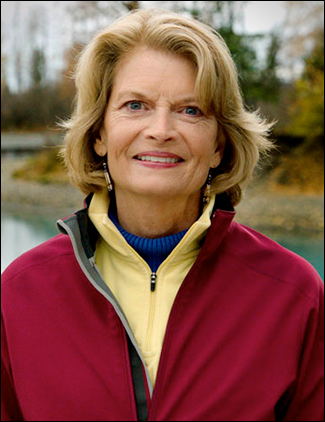
Alaska incumbent Sen. Lisa Murkowski (R)

Alaska: Sen. Murkowski’s Tenuous Lead — A new Alaska Survey Research organization poll (Oct. 19-22; 1,276 likely Alaska general election voters; text to online) forecasts a tight US Senate election between incumbent Sen. Lisa Murkowski (R) and former state Director of Administration Kelly Tshibaka (R).

The actual vote is projected to break 41-39-16-4 percent with Sen. Murkowski leading Tshibaka, Democrat Pat Chesbro, and Independent Buzz Kelley. Such a result would eliminate the fourth-place finisher who has already withdrawn from the race and endorsed Tshibaka. The first RCV round would eliminate Chesbro by a closer 41-40-17 percent. The final RCV round between Sen. Murkowski and Tshibaka would then break the incumbent’s way, according to the ASR poll, 56-44 percent. Therefore, while Sen. Murkowski will likely not reach an outright victory in the actual vote, she is positioned to fare well under the ranked choice system.

Connecticut: Momentum for Sen. Blumenthal — Last week we saw a Fabrizio Lee & Associates survey that found Sen. Richard Blumenthal’s (D) lead over Republican nominee Leora Levy shrinking to 49-44 percent. Countering this data is a new survey from Connecticut based Quinnipiac University (Oct. 19-23; 1,879 likely Connecticut general election voters) that restores Sen. Blumenthal to a 56-41 percent advantage, similar to what the September Q-Poll produced. The latter data is more consistent with other polls of this race, suggesting that the Fabrizio Lee survey may be an outlier.

New Hampshire: Not Quite Over — Three recent pollsters find that the New Hampshire Senate race, one many Republicans conceded to Sen. Maggie Hassan (D) once retired Army Gen. Don Bolduc (R) won the Sept. 13 Republican primary, may not yet be clinched. The three pollsters, all surveying the Granite State electorate within the Oct. 17-23 period with sample sizes ranging from 600 to 727 likely New Hampshire general election voters, finds Sen. Hassan’s lead dwindling to between one and three percentage points.

Fabrizio Ward & Associates, Emerson College, and Insider Advantage, found respective 49-47 percent, 48-45 percent, and 48-47 percent results. Such results suggest this race is headed back to toss-up status.

House

AK-AL: Rep. Peltola’s Strong Lead — The aforementioned Alaska Survey Research organization poll (see Alaska Senate above), while projecting a tight result for Sen. Murkowski (R) sees the opposite trend for August special congressional election winner Mary Peltola (D-Bethel). The House poll suggests that Rep. Peltola has a chance to win outright opposite former governor and 2008 vice presidential nominee Sarah Palin, businessman Nick Begich III (R), and Libertarian Chris Bye. Even if she does advance into the RCV round, it also appears that she would easily beat both Palin and Begich in one-on-one contests.

The ASR polling results find the initial vote cutting 49-26-21-5 percent for Peltola, Palin, Begich, and Bye, respectively. Obviously, the polling margin of error could mean that Rep. Peltola wins at this point since she is so close to the majority mark. Should Rep. Peltola fail to reach 50 percent, she would then likely advance to a final RCV round with Palin. The poll projects that the congresswoman would win the one-on-one pairing with 57 percent of the Ranked Choice Vote.

MN-1: Rep. Finstad Expands Lead — August special congressional election winner Brad Finstad (R-New Elm/Rochester) has jumped out to a nine-point lead in his re-match race with retired Hormel Corporation CEO Jeff Ettinger (D) according to a just released Survey USA poll (Oct. 20-23; 563 likely MN-1 general election voters). In what many believed to be a toss-up general election campaign, this study producing a 46-37 percent advantage for Rep. Finstad suggests that the race is clearly leaning to the Republican side.

Oz Closing the Gap in PA; MN-2 a Bellweather for House Majority; Split Georgia Vote May Be Developing; Zeldin Closes in on Hochul in NY

By Jim Ellis — Thursday, Oct. 20, 2022

Senate

Pennsylvania Senate Republican candidate, Dr. Mehmet Oz, the television doctor

Pennsylvania: Oz Closing the Gap — The AARP polling series that Republican pollster Fabrizio Ward and the Democratic data firm Impact Research jointly conduct again tested the Pennsylvania electorate. Their new poll (Oct. 4-12; 1,400 likely Pennsylvania general election voters; live interview & text) projects Lt. Gov. John Fetterman (D) as having only a 48-46 percent lead over Republican nominee Dr. Mehmet Oz, the television doctor. Previously, the AARP poll June poll found Fetterman holding a larger six-point advantage.

Within the same period, The Trafalgar Group also ran a Pennsylvania survey (Oct. 8-11; 1,078 PA likely general election voters; multiple sampling techniques) and arrived at a virtually identical 47-45 percent split. It is becoming clear, with early voting already underway, that this critical Senate race is going down to the wire, just as we saw back in May when the state Republican primary ended in a razor-thin result. In fact, from the last 10 polls released of this race, seven of the 10 found Fetterman leading by four percentage points or less.

House

MN-2: Close Again — In a surprise 2020 finish, Republican challenger Tyler Kistner, a military veteran who hadn’t gotten much national attention, lost only a battle to Rep. Angie Craig (D-Eagan) by only two points — 48-46 percent. It appears the two are headed for another razor-thin finish this year in their re-match campaign. A just-released Survey USA poll (Oct. 15-16; 586 likely MN-2 general election voters; automated telephone & online) projects Craig to be holding a slim 46-45 percent lead over Kistner in a polling result wholly consistent with this electorate’s voting history.

Both Minnesota’s southern sector districts — the 1st and 2nd — are important toward determining the new House majority. The GOP would conceivably be on a majority track by winning one of the state’s two southern swing seats. Should their candidates win both, a big Republican night could be in the making. If the Democrats win both, such a performance would suggest that the party would have a legitimate chance of holding their slim majority.

Governor

Georgia: Disconnect with Senate Race — Two more polls were released that find Gov. Brian Kemp (R) leading former state House Minority Leader and 2018 gubernatorial nominee Stacey Abrams (D), and running substantially ahead of Republican senatorial candidate Herschel Walker. The juxtaposition makes these races interesting to watch.

Insider Advantage (Oct. 16; 550 likely Georgia general election voters) gives Gov. Kemp a 50-43 percent lead over Abrams, but also sees Democratic Sen. Raphael Warnock posting a 46-43 percent edge over Walker. Similarly, while Landmark Communications (Oct. 15-17; 500 likely Georgia general election voters) projects Gov. Kemp’s lead at 51-45 percent, the firm derives a 46-46 percent tie between Warnock and Walker. Therefore, we continually see a relatively substantial single-digit swing in Sen. Warnock’s favor when comparing the gubernatorial results from consistent polling samples. This suggests we could see a split decision from these major Georgia statewide races.

New York: More Data Finding Tightening Race — Quinnipiac University has joined the group of pollsters projecting the New York governor’s race between Gov. Kathy Hochul (D), on the ballot for the first time in her own right after ascending to the position when former Gov. Andrew Cuomo (D) resigned, and US Rep. Lee Zeldin (R-Shirley/East Long Island) as a close race. The Q-Poll (Oct. 12-16; 1,617 likely New York general election voters; live interview) sees the spread between Gov. Hochul and Rep. Zeldin dropping to 50-46 percent.

Four of the past seven polls see the contest falling between two and six percentage points, which represents a notable improvement for Rep. Zeldin. With New York early voting not beginning until Oct. 29, this race’s patterns still have a significant period in which to firm.

Early Voting Open in Four States; Sen. Bennet Up Comfortably in Colorado; Utah Senate Polling Shows Close Results; Florida House Turmoil

By Jim Ellis — Tuesday, Sept. 27, 2022

Voting

Early voting has begun in Minnesota, South Dakota, Virginia, and Wyoming.

Voting Begins: Early Voting Open in Four States — The first general election votes of the 2022 election cycle will be received soon. The early voting calendar has opened in Minnesota, South Dakota, Virginia, and Wyoming. Ballots have been mailed to voters in North Carolina and Pennsylvania, so we can expect to see early voting commence in those two states, as well.

Most of the states return to their pre-2020 voting status, since the court-ordered Covid related universal mailing voting rules were in effect only for the previous election year unless the state enacted new electoral procedures in their 2021-22 legislative session. Even though the universal mail balloting provisions revert to previous law, 45 states now feature some type of early voting procedure.

Senate

Colorado: Sen. Bennet Up Comfortably — Emerson College tested the Centennial State electorate (Sept. 18-19; 1,000 likely Colorado general election voters; multiple sampling techniques) and found Sen. Michael Bennet (D) leading GOP businessman Joe O’Dea by a ten-point, 46-36 percent, margin. Republicans have tagged this race as an upset possibility, but this poll shows little weakness for the Democratic incumbent who is seeking his third full term.

Utah: Another Close Result — Polling data suggests that the Utah Senate race is the closest campaign that attracts the least national attention. A new Dan Jones & Associates survey for the Deseret News/Hinckley Institute of Politics (Sept. 3-21; 815 registered Utah voters; 786 likely general election voters) finds Sen. Mike Lee (R) ahead of Independent Evan McMullin by only a 37-34 percent margin. Though this poll has a very long sampling period, which adversely affects accuracy, it is consistent with some others we’ve seen of this race.

Early in September, both Impact Research and Kurt Jetta, polling for the Center Street PAC, found the candidates languishing within a combined four-point range. Impact Research actually found McMullen claiming a one-point edge.

Back in April, the majority of Utah Democratic Party convention delegates voted not to field a candidate for the purpose of coalescing behind McMullin. Though he is more conservative than what most of the delegates would have desired in a candidate, they did want to see McMullin have a one-on-one shot to challenge Sen. Lee.

House

FL-22: Rep. Deutch Announces Resignation Plans — In February, Florida Rep. Ted Deutch (D-Boca Raton) announced that he would leave the House before the end of the current legislative session in order to assume the leadership of the American Jewish Committee. At the time, Deutch said he would leave sometime on or around Oct. 1. Late last week, the congressman confirmed he will officially resign his seat before the end of September.

It is unlikely that Gov. Ron DeSantis (R) will have the time to call a special election to replace Deutch for a probable lame duck session since Florida law dictates a relatively long voting schedule period once such an election is called. Therefore, with the party nominations having been decided in the Aug. 23 primary, the new 23rd District will remain open until the new Congress convenes on Jan. 3, 2023. In the open seat general election, Broward County Commissioner Jared Moskowitz (D) is favored over Republican Joe Budd in a South Florida district that the FiveThirtyEight data organization rates D+9.

Boozman Looks to be in Strong Shape in Arkansas; Two Pollsters, Same Tight Result in Arizona; Minnesota Gov. Walz Has Comfortable Lead

By Jim Ellis — Sept. 21, 2022

Senate

Arkansas Sen. John Boozman (R)

Arkansas: Rare Data — It has been assumed that Sen. John Boozman (R) secured a third term in office when he won his contested Republican primary back in March. A Hendrix College/Talk Business Net survey, from the organizations that regularly sponsor Arkansas political polls, finds Boozman in predictably strong shape for the November election. The survey (Sept. 12; 835 likely Arkansas general election voters) gives the senator a 44-31 percent advantage over civil rights activist and realtor Natalie James (D).

Arizona: Two Pollsters, Same Tight Result — The Trafalgar Group’s new Arizona survey (Sept. 14-17; 1,080 likely Arizona general election voters; multiple sampling techniques) sees Sen. Mark Kelly’s (D) previously large lead dwindling to 47-45 percent over Republican venture capitalist Blake Masters.

Earlier in September, Emerson College (Sept. 6-7; 627 likely Arizona general election voters; multiple sampling techniques) arrived at exactly the same conclusion: Sen. Kelly leading 47-45 percent. Remembering that the 2020 Senate race closed quickly against Kelly, limiting him to a 51-49 percent victory over appointed Sen. Martha McSally (R) after leading by an average margin of 6.6 percent through 21 October polls according to the Real Clear Politics polling archives, the 2022 race looks to be headed toward a very interesting conclusion.

House

IA-3: An Unsurprising Dead Heat — In one of America’s tightest congressional districts, Rep. Cindy Axne’s (D-Des Moines) campaign just made an interesting move. The congresswoman’s political leadership yesterday released Rep. Axne’s new internal Impact Research survey (Sept. 7-11; 500 likely IA-3 voters; live interview & text) that reports she and her Republican challenger, state Sen. Zach Nunn (R-Bondurant), are tied at 47 percent apiece.

The point of releasing the poll, however, is to show emphasis on the abortion issue among the respondents, which the campaign strategists believe will swing voters to the Democratic incumbent. Even when knowing Sen. Nunn’s abortion position, however, the best Rep. Axne can do is tie, suggesting that despite deep disagreements over the issue in the central Iowa region it does not appear to be bringing any more voters into Axne’s camp. Her 47 percent support figure quoted in this poll is consistent with her two 49 percent victory percentages in 2020 and 2018.

Governor

Minnesota: Gov. Walz With Comfortable Lead — In a race where the polling has been inconsistent during the past few months, Mason-Dixon Polling & Strategy has released a new ballot test result from their research study conducted for the Minneapolis Star Review and Minnesota Public Radio (Sept. 12-14; 800 likely Minnesota general election voters; live interview). The M-D conclusion finds Gov. Tim Walz (D) leading former state Sen. Scott Jensen (R), 48-41 percent.

The governor’s job approval score is 52:42 percent favorable to unfavorable. President Biden remains upside-down in Minnesota on his favorability index, but the number is improving. In this M-D poll, 46 percent approve of the job the president is doing and 49 percent disapprove.

Ohio: Conflicting Surveys — We are seeing places around the country where pollsters are producing very diverse ballot test results even when testing an electorate within the same time realm. The Ohio governor’s race is another such example. A Civiqs organization poll, surveying for the Daily Kos Elections site (Sept. 10-13; 780 likely Ohio general election voters; online) projects a close race developing between Gov. Mike DeWine (R) and Dayton Mayor Nan Whaley (D). The Civiqs ballot test projects Gov. DeWine to hold only a 44-41 percent edge.

Emerson College, however, sees a much different margin when polling within exactly the same time frame. Their poll (Sept. 10-13; 1,000 likely Ohio general election voters; multiple sampling techniques) yields the governor a wide 50-33 percent spread over Mayor Whaley. The latter poll result is more consistent with other publicly released surveys for this campaign.

No Third Party Challenge in NY-10; Back and Forth in NC-13;
Upsets Brewing in Oregon

By Jim Ellis — Friday, Sept. 9, 2022

House

State Assemblywoman Yuh Line-Nioh (D-Manhattan)

NY-10: No Third Party Challenge — State Assemblywoman Yuh Line-Nioh (D-Manhattan) placed second to winner Dan Goldman in the hotly contested open Democratic primary for the new 10th District in the June 28 election, but she did claim the ballot line for the Working Families Party. This means she could have advanced into the general election under that party banner. However, the assemblywoman announced Wednesday that she would not pursue a third party bid, thus virtually guaranteeing Goldman the November election.

In this crowded Democratic primary, both Goldman and Line-Nioh finished ahead of US Rep. Mondaire Jones (D-Westchester County), who decided to seek re-election in this district instead of the upstate 17th or 18th.

NC-13: Swing District, Swing Forecast — The new North Carolina 13th Congressional District has something for everyone. The cities of Fayetteville’s and south Raleigh’s suburbs tend to vote more liberal, while Johnston County’s conservatives neutralize those votes, thus making the district a basically even from a partisan perspective. Therefore, it’s not surprising to see polling go back and forth.

Previously, we reported on two August polls, one from RMG Research and the other from Public Policy Polling, and now we see another new survey from the Democratic firm Global Strategy Group (Aug. 29-Sept. 1; 500 likely NC-13 general election voters; live interview). RMG found Republican Bo Hines leading 44-39 percent; PPP saw Hines and state Sen. Wiley Nickel (D-Raleigh) tied at 40-40 percent; and, now GSG posts Nickel to a 44-40 percent edge. Obviously, this is a toss-up campaign.

OR-5: A Brewing Upset? — When centrist Rep. Kurt Schrader (D-Canby) lost his Democratic primary election to attorney and former California local elected official Jamie McLeod-Skinner, the race in the competitive new 5th District took a major turn. A recently released survey from Republican pollster Clout Research (Aug. 15-18; 410 likely OR-5 general election voters; live interview) finds Republican Lori Chavez-DeRemer (R) opening up a significant lead over McLeod-Skinner, with a 44-34 percent spread.

The only other poll released here, one from the Democratic firm Public Policy Polling in early June, also found DeRemer with an edge, but only one-point, 42-41 percent. With the available information, it appears that Republicans could well be positioned to see a future upset victory here in November.

OR-6: New District, New Leader — Another surprising Oregon Clout Research poll (Aug. 14-19; 409 likely OR-6 general election voters; live interview) finds Republican Mike Erickson posting a lead over state Rep. Andrea Salinas (D-Lake Oswego). Though this district is considerably more Democratic than the neighboring 5th CD (D+7 according to the FiveThirtyEight data organization), Erickson holds a 43-34 percent advantage over Salinas according to the Clout results.

Governor

Minnesota: Gov. Walz Pulling Away — While early polling suggested a close race between first-term Gov. Tim Walz (D) and former state Sen. Scott Jensen (R), a new survey finds the incumbent pulling away and now possesses a large lead. The Survey USA poll (Aug. 30-Sept. 4; 562 likely Minnesota general election voters) projects Gov. Walz to be currently holding a 51-33 percent advantage.

Wisconsin: New Poll Yields Dead Even Projection — While the Minnesota governor’s race is becoming definitive, the neighboring Wisconsin battle appears to be getting even closer. For the second time, a polling firm found Gov. Tony Evers (D) and businessman Tim Michels (R) to be deadlocked in a flat tie. The Trafalgar Group (Sept. 22-25; 1,091 Wisconsin general election voters; multiple sampling techniques) projects the two candidates each pulling a 48 percent support factor in the contest’s most recently released survey. This result is identical to the previously reported OnMessage firm’s data derived during the same polling period (Aug. 22-24; 600 likely Wisconsin general election voters; live interview).

Senate Victory for Trump-Endorsed Candidate in Connecticut; Omar Barely Survives in Minnesota; Easy Wins in Other Primaries

By Jim Ellis — Aug. 10, 2022

Primary Results

Former Trump ambassadorial appointee Leora Levy wins in Connecticut.

Connecticut: Trump-Endorsed Candidate Scores Senate Victory — Former Trump ambassadorial appointee Leora Levy, though she failed to win Senate confirmation, easily won the Republican Senate nomination in Connecticut. Levy defeated former state House Minority Leader Themis Klarides by a significant 51-40 percent share of the statewide vote. She now advances to challenge Sen. Richard Blumenthal (D) who is seeking a third term.

Minnesota: Finstad Wins; Omar Barely Survives — Last night, Minnesota former state Rep. Brad Finstad (R) appears to have won the open 1st District special congressional election left vacant when Rep. Jim Hagedorn (R) passed away in mid-February. At this writing, Finstad leads former Hormel corporation CEO Jeffrey Ettinger (D) 51-47 percent with all counties reporting and 99 percent of the expected vote tabulated.

Finstad holds a 4,920-vote lead over Ettinger, which should be more than enough to account for any mailed absentee ballot not included in the overall count. The currently recorded turnout of 118,018 votes is high for a special election. Finstad carried 16 of the district’s 21 southern Minnesota counties.

Finstad also easily won the regular Republican primary in the 1st District after state Rep. Jeremy Munson (R-Crystal Lake) made a run at the nomination despite losing the special election primary back in late May. Following suit on the Democratic side, Ettinger was an easy winner in last night’s regular primary, so the two will again do battle in the regular term for a House seat that has been trending more Republican in recent years.

In the 5th District, suggestions that former Minneapolis City Councilman Don Samuels could give two-term controversial Rep. Ilhan Omar (D-Minneapolis) a highly competitive battle proved true. Rep. Omar was renominated in a 50-48 percent squeaker over Samuels, thus guaranteeing her another term in the November election.

Vermont: Scott, Welch, Balint Easily Win — Vermont Gov. Phil Scott was a 69 percent winner in his state’s Republican primary. As expected, the Vermont Democratic open Senate primary resulted in a landslide 87 percent-plus victory for at-large Congressman Peter Welch (D-Norwich). He automatically becomes a prohibitive favorite against the new Republican nominee Gerald Malloy, a retired Army officer.

With Rep. Welch running for the state’s open Senate seat, now in strong position to succeed the retiring Sen. Patrick Leahy (D), the open al-large House seat will go to the Democratic primary winner, state Senate President Pro Tempore Becca Balint (D-Burlington). Her 60 percent-plus primary win puts her in position to score a landslide general election victory in November.

Wisconsin: Barnes Confirmed; Michels Defeats Kleefisch — Wisconsin Democratic voters confirmed that Lt. Gov. Mandela Barnes will be their candidate to oppose Sen. Ron Johnson (R). With his three major opponents dropping out of the race within the past two weeks and all endorsing Barnes as a show of party unity, the lieutenant governor captured 77 percent-plus of the Democratic primary vote. Sen. Johnson topped 83 percent in the Republican primary.

Finally, the lone competitive Wisconsin House primary also resulted as expected. State Sen. Brad Pfaff (D-La Crosse) recorded a 39 percent plurality victory over three opponents to win his party’s nomination for the open 3rd District House seat of retiring Rep. Ron Kind (D-La Crosse). Sen. Pfaff earned Rep. Kind’s endorsement as his successor.

Republican Derrick Van Orden, a retired Navy SEAL who held Rep. Kind to a tight 51-49 percent re-election win in 2020, returns in another attempt to capture the seat. Van Orden was unopposed in last night’s election. Winning this seat in November becomes a must for Republican House majority prospects in the fall.

Today’s Primaries; Final Results Close to Complete in Ariz.; Herrera Beutler Hanging By a Thread in Washington

By Jim Ellis — August 9, 2022

Primaries

Voting Today: Four States Holding Primaries; One Special Election — The final phase of primary season continues today with nomination elections occurring in Connecticut, Minnesota, Vermont and Wisconsin. The most competitive statewide races include choosing Senate candidates in Connecticut and governor’s contests in Minnesota and Wisconsin.

A total of 22 House races are on the cumulative political card tonight, including three open seats, one each in Minnesota, Vermont, and Wisconsin, and a special election to replace the late Rep. Jim Hagedorn (R) in southern Minnesota. With a victory tonight, either former state Rep. Brad Finstad (R) or ex-Hormel corporation CEO Jeffrey Ettinger (D) will take the seat immediately upon election certification and serve the balance of Hagedorn’s final term.

Primary Results

Former news anchor Kari Lake (R)

Arizona: Final Results Close to Complete — In states that feature large numbers of mail ballots and allow such votes to count even when arriving after election day, the better part of two weeks is needed to finalize the election totals. From Arizona’s Aug. 2 primary, the winners of all races are now statistically projected as the last remaining votes are being tabulated. The latest published figures show 98 percent of the Republican ballots and 92 percent of the Democratic votes recorded. Republican turnout looks to top 815,000, while Democrats are likely to exceed 625,000.

In the general election, Sen. Mark Kelly (D) will face venture capitalist Blake Masters (R), while Secretary of State Katie Hobbs (D) and former news anchor Kari Lake (R) square off in the open governor’s race.

The key House races feature Rep. David Schweikert (R-Fountain Hills) against businessman Jevin Hodge (D); retired Navy SEAL Eli Crane (R) challenging Rep. Tom O’Halleran (D-Sedona); Rep. Greg Stanton (D-Phoenix) in a competitive contest against business owner Kelly Cooper, who upset favored Tanya Wheeless in the 4th District Republican primary; and former state Sen. Kirsten Engel (D) and ex-Hispanic Chamber of Commerce executive Juan Ciscomani (R) doing battle in the Tucson-anchored open new 6th District.

Washington: Rep. Herrera Beutler Hanging By a Thread — Washington’s laborious vote counting procedure continues from the Aug. 2 all-mail jungle primary, and the biggest development is that Rep. Jaime Herrera Beutler (R-Battle Ground) has not yet secured a general election ballot slot, and may in fact lose to challenger Joe Kent (R).

With just under 96 percent of the 3rd District votes counted, Democrat Marie Perez, with 31.2 percent of the vote, has clinched the first ballot position. Rep. Herrera Beutler barely holds the second qualifying position with 22.6 percent (41,603 votes) nipping Kent’s 22.5 percent (41,346 votes), a margin of just 257 votes with as many as 7,000 votes remaining to be counted. Since 45.1 percent of the voters chose either Herrera Beutler or Kent, it is reasonable to believe approximately 3,000 of those votes will determine the second-place qualifier. Of the remaining votes for either Herrera Beutler or Kemp, the latter man would need 54 to overcome the congresswoman’s edge.

In the 4th District, Rep. Dan Newhouse (R-Sunnyside) who, like Rep. Herrera Beutler, voted to impeach former President Trump, has clinched a general election ballot position with 25.4 percent, but with as many as 25,000 votes to count. In second place, also clinching a general election slot, is Democratic businessman Doug White. Eliminated in third place is Trump-endorsed former town police chief and 2020 gubernatorial finalist Loren Culp (R).

Turning to the 8th District, 2020 Attorney General qualifier Matt Larkin (R) has clinched second position over King County Councilman Reagan Dunn and 2020 general election qualifier Jesse Jensen. Larkin now advances to the 2022 general election to challenge Rep. Kim Schrier (D-Sammamish). This is evolving into a top competitive national congressional campaign. Schrier only secured 47.9 percent in the jungle primary, and the cumulative partisan totals suggest that a very tight general election is coming. The cumulative Democratic vote so far totals 97,341 with 91.3 percent of the expected vote tabulated compared to the cumulative Republican total of 96,572.

House

MN-1: Finstad Leading in Final Special Election Poll — The closing poll in the special election to replace the late Rep. Jim Hagedorn (R) was released late last week. The Survey USA poll (July 26-30; 544 likely MN-1 special election voters; live interview) finds Republican former state Rep. Brad Finstad leading ex-Hormel corporation CEO Jeff Ettinger (D) by a 46-38 percent margin. Finstad also faces a regular election primary contest with former state Rep. Jeremy Munson whom the former defeated in the May 24 special primary election by just 427 votes.

MN-5: Rep. Omar Facing Serious Primary Challenge — Former Minneapolis City Councilman Don Samuels is waging a strong Democratic primary challenge against controversial Rep. Ilhan Omar (D-Minneapolis) in an election that will be decided today. The Minneapolis Star-Tribune announced its editorial board endorsement of Samuels and so did the city’s mayor, Jacob Frey (D). In the last week, a Super PAC entitled “Make A Difference” sponsored a $350,000 television buy to support Samuels. This will be a race to watch tonight.

NY-12: Rep. Nadler Leads in New Poll — Emerson College tested the upcoming Democratic-paired incumbent primary between Reps. Carolyn Maloney (D-Manhattan) and Jerrold Nadler (D-Manhattan). The survey (Aug. 1-2; 1,000 likely NY-12 Democratic primary voters; live interview, text & interactive voice response system) finds Rep. Nadler, largely with the overwhelming support of men, leading Rep. Maloney 40-31 percent, with the third candidate, businessman and former congressional candidate Suraj Patel attracting 11 percent support. The New York congressional primary is scheduled for Aug. 23.

New Polls Lean to GOP Leaders in Missouri; Fetterman Expands Lead in Pennsylvania; Getting Close in NJ-1

By Jim Ellis — July 28, 2022

Senate

Scandal-tainted Gov. Eric Greitens (R) trending downward in Missouri.

Missouri: New Polls Pleasing GOP Leaders — The hard-fought Missouri Republican primary is a week away, and three new late July polls are bringing sighs of relief to GOP leaders. It has long been believed that the Missouri race comes off the table if either Attorney General Eric Schmitt or US Rep. Vicky Hartzler (R-Harrisonville) wins the party nomination, but danger looms for the GOP if resigned, scandal-tainted Gov. Eric Greitens were to forge through a crowded field with plurality support.

Three polls were conducted from July 21 through 24, and the results are consistent. The Remington Research Group (July 23-24; 802 likely Missouri Republican primary voters; interactive voice response system), the Trafalgar Group (July 22-24; 1,059 likely Missouri Republican primary voters; multiple sample-gathering tactics) and Emerson College, polling for The Hill newspaper (July 21-23; 1,000 likely Missouri Republican and Democratic primary voters, but the number of each is unspecified; multiple sample-gathering tactics), all arrived at similar conclusions. That is, Attorney General Schmitt seems to be developing a secure lead.

RRG sees Schmitt leading Rep. Hartzler and Greitens, 32-25-18 percent. Trafalgar finds the candidates placing in the same order, but a bit closer, 27-24-20 percent. Emerson’s numbers are better for Schmitt, at 33-21-16 percent. For the Democrats, Emerson projects philanthropist Trudy Busch Valentine, despite being under heavy political attack, as leading Iraq War veteran Lucas Kunce 39-35 percent with a 22 percent undecided factor.

Pennsylvania: Fetterman Expands Lead — The Democratic firm Blueprint Polling released a new PA statewide poll (July 19-21; 712 likely Pennsylvania voters; live interview) and found Lt. Gov. John Fetterman (D), still recovering from a serious stroke he suffered just before the primary election, expanding his lead to 49-40 percent over Dr. Mehmet Oz (R). The most recent Senate survey prior to Blueprint’s, from Fabrizio Ward (R) and Impact Research (D) for AARP (June 12-19; 1,382 likely Pennsylvania voters), projected a 50-44 percent Fetterman edge. In the governor’s race, Blueprint found Attorney General Josh Shapiro (D) topping state Sen. Doug Mastriano (R-Fayetteville), 51-39 percent, which is also a significant improvement for him over the previous statewide poll.

House

MN-1: Republicans Have Special Trouble — State Rep. Jeremy Munson (R-Crystal Lake), who lost the special primary election to succeed the late US Rep. Jim Hagedorn (R) by just 427 votes, confirms he is running to win the regular primary election. This means that former state Rep. Brad Finstad (R), who won the special primary, must continue conducting two separate campaigns through the Aug. 9 election.

In slightly different district configurations, Finstad must separately win the special general election against former Hormel Corporation CEO Jeffrey Ettinger (D), and the nomination for the regular term since the special general is being run concurrently with the regular statewide primary. With Munson competing in the regular election, the confusing scenario of having two different District 1 Republican winners could occur. With the only public post-special primary poll suggesting a dead heat between Finstad and Ettinger, so many mixed messages could yield a Democratic special election upset.

NJ-1: Surprisingly Close — According to a new Grassroots Targeting survey (July 13-19; 625 likely NJ-1 general election voters), New Jersey Rep. Donald Norcross (D-Camden City) lies barely beyond the polling margin of error in yet another potential warning sign for Democrats.

The GT results find Rep. Norcross topping Republican nominee Claire Gustafson, 49-44 percent, despite the fact that 83 percent of the respondents said they have not heard of the GOP nominee. To underscore matters, Rep. Norcross’ favorability index has dropped to 42:41 percent favorable to unfavorable. This contrasts with his 2020 re-election margin of 62-38 percent, similar to what President Biden recorded in the district. The FiveThirtyEight data organization rates NJ-1 as D+20, so seeing a close poll featuring an unknown Republican with little money from this district is surprising to say the least.