
Tag Archives: Mitch Daniels

Rep. Banks Announces for Senate; Ohio Senate Rerun; More CA-30 Candidates; Mayor Announces House Challenge in Minnesota

By Jim Ellis — Thursday, Jan. 19, 2023

Senate

Indiana Rep. Jim Banks (R-Columbia City)

Indiana: Rep. Banks (R) Announces for Senate — Not backing down from a potential Republican primary race against former Gov. Mitch Daniels, four-term US Rep. Jim Banks (R-Columbia City) announced Tuesday that he will enter Indiana’s open Senate race next year. Daniels has been sending signals that he will also run for the Senate, but the Banks move means the May Republican primary will likely be the big battle to replace first-term Sen. Mike Braun (R) who is bypassing re-election to run for governor. Other potential GOP candidates include term-limited Gov. Eric Holcomb and US Rep. Victoria Spartz (R-Noblesville), among others.

Banks ended the 2022 election cycle with approximately $1.4 million remaining in his campaign account. Gov. Daniels last appeared on the ballot in 2008 when he was re-elected to a second term with a 58-40 percent victory margin. Rep. Banks leaving the safely Republican 3rd Congressional District means we will see a crowded and hotly contested GOP congressional field in a district that the FiveThirtyEight data organization rates as R+34.

Ohio: 2022 GOP Senate Candidate Returns — Ohio State Sen. Matt Dolan (R-Chagrin Falls), a minority owner of the Cleveland Guardians Major League Baseball club, will return for a second consecutive US Senate contest. This time, he hopes to challenge veteran Sen. Sherrod Brown (D) in the 2024 general election.

In the last election, for the open seat created when Sen. Rob Portman (R) announced he would not seek a third term, Sen. Dolan competed against six opponents, losing to now-Sen. J.D. Vance (R) by a 32-23 percent margin with former state Treasurer Josh Mandel placing second just a point ahead of Dolan. In the current election cycle, Dolan’s chances for the party nomination appear better. If he is successful in the Republican primary, Dolan faces a difficult general election opponent in Sen. Brown even though Ohio has been moving decidedly closer to the GOP in recent elections. In 2018, Sen. Brown defeated then-US Rep. Jim Renacci (R), 53-47 percent.

House

CA-30: Yet, Another — Businessman Josh Bocanegra (D) who was looking to enter the US Senate race has instead decided to compete for the Burbank-anchored congressional race that most presume will be open. Rep. Adam Schiff (D-Burbank) is widely expected to run for the Senate once incumbent Dianne Feinstein (D) announces her retirement. Already in the congressional race are state Assemblywoman Laura Friedman (D-Burbank) and Los Angeles Unified School Board Vice Chairman Nick Melvoin.

The seat will remain in Democratic hands, but it is likely we will see two Democrats advance to the general election from the top two jungle primary format that California has used since the 2012 election. The FiveThirtyEight data organization rates CA-30 as D+45.

MN-2: Local Mayor Announces for House — After Navy veteran Tyler Kistner (R) ran two close but unsuccessful campaigns against Rep. Angie Craig (D-Prior Lake) in 2020 and 2022, Lexington Mayor Mike Murphy (R) announced that he will attempt to win the party nomination in hopes of becoming the congresswoman’s 2024 challenger. There is little indication as to what Kistner might be thinking about a third congressional run, but him losing two consecutive races suggests that the party leaders will be looking for a new contender.

Arizona’s Ducey Not Considering Running; Ex-Gov Daniels Tops GOP Field; Former Incumbent, Challenger to Return to House Races

By Jim Ellis — Thursday, Jan. 5, 2023

Senate

Arizona Gov. Doug Ducey (R)

Arizona: Ex-Gov Out; Gubernatorial Candidate Considering — Upon exiting office at the end of his two full terms, Arizona Gov. Doug Ducey’s (R) name continues to be mentioned prominently as a potential US Senate candidate. The now-former governor again confirmed, however, that he is not even considering running for the federal post in 2024. Another potential Senate candidate who is considering making a run is 2022 gubernatorial candidate Karrin Taylor Robson (R), who lost to former news anchorwoman Kari Lake, 48-43 percent, in the Republican gubernatorial primary.

Sen. Kyrsten Sinema (I) has not yet announced her re-election intentions but appears to be preparing her Independent run in a three-way race. Reps. Ruben Gallego (D-Phoenix) and Greg Stanton (D-Phoenix) are actively assessing their individual chances in what could become a seriously contested Democratic primary. Again, the Arizona Senate race will be one of the focal points of the 2024 election cycle, but this time will feature a unique procedural contest.

Indiana: Ex-Gov Daniels Tops GOP Field — A Bellwether Research survey (Dec. 11-17; 1,000 registered Indiana Republican voters; 457 likely Republican primary voters; online & text) was fielded just before Christmas and found former governor, and most recently Purdue University President Mitch Daniels leading a prospective open Indiana Republican US Senate primary. If he were to run, Daniels would top Rep. Jim Banks (R-Columbia City) 32-10 percent with former Rep. Trey Hollingsworth, current US Rep. Victoria Spartz (R-Noblesville), and attorney general and former Congressman Todd Rokita trailing with 9-7-7 percent support levels, respectively.

Sen. Mike Braun (R) is running for governor. None of the aforementioned has officially declared their intention to run for the Senate, but all admit to at least be considering the possibility of launching a campaign.

House

NY-17: Former Incumbent May Return — Democrat Mondaire Jones, who won the 17th Congressional District in 2020 only to depart for a post-redistricting New York City seat in 2022, says he is considering returning to Westchester County to challenge Rep-Elect Mike Lawler (R-Pearl River) in 2024. Jones did not want to oppose then-Rep. Sean Patrick Maloney in the Democratic primary after the latter man declared his candidacy, so he instead moved to a new Manhattan-Brooklyn 10th District that Rep-Elect Dan Goldman (D-New York City), an heir to the Levi Strauss fortune, eventually won.

In the 17th, Lawler, then a state assemblyman, unseated Rep. Maloney with a 51-49 percent general election victory margin. This, in a new district that the FiveThirtyEight data organization rates as D+7. There is no question that NY-17 will be a top target in 2024.

WA-3: Defeated Favorite to Return — Joe Kent, the Republican who denied then-Rep. Jaime Herrera Beutler advancement into the general election but then lost in November to Rep-Elect Marie Gluesenkamp Perez (D-Skamania County) in one of the nation’s biggest 2022 upsets, says he will return for a 2024 re-match. Because Kent was widely favored to win the seat but failed to convert, we can expect intense competition in what will be an August Washington jungle primary. FiveThirtyEight rates WA-3 as R+11.

Governor

Indiana: Braun Tops Field — The aforementioned Bellwether Research poll (see Indiana Senate above) projects Sen. Mike Braun to a large lead in the impending open 2024 GOP gubernatorial contest.

Braun holds a 25-9-7-6-3 percent Republican primary advantage over Attorney General Todd Rokita, Lt. Gov. Suzanne Crouch, ex-Rep. Trey Hollingsworth, and businessman Eric Doden, respectively. At this point, Crouch and Doden have announced their candidacies, as has Sen. Braun. Gov. Eric Holcomb (R) is ineligible to seek a third term.

Michigan Senate Okays Primary Move; Sen. Braun Moving Toward Indiana Gov Race; West Virginia Senator’s Son Announces for Gov

By Jim Ellis — Friday, Dec. 2, 2022

President

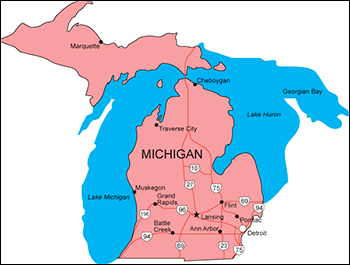
Michigan: State Senate Okays Primary Move — The Michigan Senate approved a bill to move up the Wolverine State presidential primary from the day designated as Super Tuesday in March to the second Tuesday in February. The move underscores the state leadership’s desire to move Michigan into one of the state slots allowed to vote before Super Tuesday.

With the Democrats clearly preparing to change the nominating rules, voting schedule, and primary order of the states, Michigan is attempting to get a head start toward being one of at least the first four states to vote before Super Tuesday. If the state formally takes this action, it is likely that the Republicans would have to follow suit and schedule the Michigan primary early in the process.

Senate

Indiana: Sen. Braun Moving Toward Gov Race — As expected, Indiana Sen. Mike Braun (R) filed papers with the Secretary of State’s office in Indianapolis Tuesday to become an open-seat gubernatorial candidate, which is his first step toward foregoing re-election to a second term in the US Senate. Incumbent Gov. Eric Holcomb (R) is ineligible to seek a third term under Indiana’s term limit law.

Should he become a candidate, Sen. Braun will very likely face credible opposition in the Republican gubernatorial primary. Already venture capitalist Eric Doden (R) has announced his Senate candidacy. Other potential names being bandied about include former two-term Gov. Mitch Daniels, Lt. Gov. Suzanne Crouch, retiring Congressman Trey Hollingsworth (R-Jeffersonville), and former state senator and ex-Indianapolis mayoral candidate Jim Merritt. For the Democrats, the only announced candidate is Superintendent of Public Instruction Jennifer McCormick.

Assuming he shortly makes a formal announcement of candidacy, the Indiana Senate seat will be the first to open in the 2024 election cycle.

House

IN-3: Rep. Banks Signals Interest in Senate — With Indiana Sen. Braun (R) making moves to enter the open governor’s race, a fierce Republican primary battle for the right to succeed him in the Senate is sure to occur. Already saying through a spokesman that he is considering competing for the open statewide position is US Rep. Jim Banks (R-Columbia City), who was recently defeated in his run for House Majority Whip. Other Republican names popping up are Attorney General Todd Rokita, retiring US Rep. Hollingsworth, and Congresswoman Victoria Spartz (R-Noblesville), who was just re-elected to a second term. Term-limited Gov. Holcomb’s (R) political plans at this point are unknown.

Should Banks run for the Senate, we can expect a heated open battle for his northeastern Indiana 3rd District seat anchored in Ft. Wayne. A crowded GOP primary is sure to form with the winner punching his or her ticket to Washington in a district that the FiveThirtyEight organization rates as R+34.

Governor

West Virginia: Senator’s Son Announces for Governor — West Virginia state Delegate Moore Capito (R-Charleston), son of US Sen. Shelley Moore Capito (R) and grandson of the late former Gov. Arch Moore (R), this week announced his own campaign for governor. He hopes to succeed term-limited Gov. Jim Justice (R) who may soon launch his own run for US Senate. Delegate Capito was first elected to the state House in 2016 and currently chairs the House Judiciary Committee.

Johnson, Stein Likely Out

By JIm Ellis

Aug. 17, 2016 — The Commission on Presidential Debates has now provided more specific criteria pertaining to who will be invited to participate in the four presidential and vice presidential debates that are scheduled to begin Sept. 26.

Long ago, the commission members decided that the main qualification for national debate series participation is an arbitrary standing derived from a number of previously undetermined political surveys. Earlier reports indicated that only candidates obtaining 15 percent popular support as determined from the designated polls would be included.

Yesterday, in little way of surprise, the commission members announced that the official debate polls will be: ABC News/ Washington Post, CBS News/New York Times, CNN/Opinion Research, Fox News and NBC News/Wall Street Journal.

These polls, all using the same methodology in terms of sample size – normally around the 1,000 registered voter mark nationally – will likely continue to produce similar numbers. Therefore, it will be very difficult for Libertarian Party nominee Gary Johnson, and almost impossible for Green Party candidate Jill Stein, to consistently reach the 15 percent plateau.

Continue reading

Our Indiana Primary Preview

Tuesday features two congressional primary elections: Indiana and North Carolina. Today, we preview the Indiana races; on Monday, North Carolina.

Governor: Incumbent Mitch Daniels (R) is term-limited, so an open-seat contest will occur in the fall. Rep. Mike Pence (R-IN-6) and former state House Speaker John Gregg (D) will be the general election combatants, with Pence beginning the race as a heavy favorite.

Senate: We all know that six-term Sen. Richard Lugar (R), who ran unopposed just six years ago, is in the fight for his political life against fellow Republican state Treasurer Richard Mourdock. The race has been hard-fought, with each man and their outside group supporters running a spate of negative ads. The focal points have been Lugar straying too far from his conservative base, the fact that he does not have a residence in Indiana, and that he has lost touch with his Hoosier State roots. Lugar counters with criticism of the way Mourdock has managed both the taxpayers’ public funds and his office.

The key to determining a victor in this contest, as is most often the case, is turnout. Indiana has an open primary law, meaning any registered voter, regardless of previous primary voting history, may participate in the party primary of his or her choice. Therefore, with little in the way of contested campaigns in the Democratic primary, it is likely the preponderance of voters will choose to cast their ballot on the Republican side. This could affect the Senate race in two ways: first, Democrats and Independents supportive of Lugar can vote for him and potentially provide enough of a margin to overcome Mourdock’s strong support among conservatives; second, activist Democrats, believing that Mourdock would be the weaker candidate in the general election against consensus Dem candidate Rep. Joe Donnelly (D-IN-2), could vote for the challenger and potentially weaken the non-Republican support that Lugar might attract.

Tuesday will host a close race with several uncontrollable factors positioned to decide the final outcome. It’s too close to call.

  • IN-1: Rep. Peter Visclosky (D) is unopposed in the Democratic primary.
  • IN-2: This is an open seat, with Rep. Joe Donnelly (D) running for Senate. The open seat battle will be hot and heavy in November, but Tuesday’s vote looks secure for Republican former state Rep. Jackie Walorski and Democratic businessman Brendan Mullen.
  • IN-3: Freshman Rep. Marlin Stutzman (R) is unopposed in Tuesday’s Republican primary and will find out which of six Democrats will win the right to oppose him in November. This should be a relatively easy re-election run for Stutzman.
  • IN-4: Freshman Rep. Todd Rokita (R), Indiana’s former Secretary of State, gains 35 percent new territory but the Obama number is only 45 percent. He is safe in November.
  • IN-5: Rep. Dan Burton (R) is retiring, making this an open seat. With 30-year veteran Rep. Burton not seeking a 16th term, eight Republicans, including former congressman and 2000 gubernatorial nominee David McIntosh (R-IN-2), vie for the new 5th District. McIntosh is the clear favorite to win the nomination. Democratic state Rep. Scott Reske is favored for his party’s nomination.
  • IN-6: Rep. Mike Pence (R) is running for governor, making this an open seat. Seven Republicans and five Democrats are running for the right to succeed Pence, with Tuesday’s GOP nominee becoming the prohibitive favorite in a district that gave 55 percent of its votes to John McCain in 2008. Former state representative and Republican Party executive director Luke Messer is the leading candidate for the nomination.
  • IN-7: Three Democrats, seven Republicans, and two Independents are opposing Rep. Andre Carson (D), but that’s rather irrelevant. The congressman will win again in November.
  • IN-8: First-term southwestern district congressman, Rep. Larry Bucshon (R), faces a Republican primary opponent, Kristi Risk, who held Bucshon to only a 33-29 percent victory margin two years ago. But Bucshon is the favorite in a district that contains 88 percent of his previous constituency. Democrats will nominate former state representative and broadcaster Dave Crooks.
  • IN-9: Five Democrats, none of whom had even raised $100,000 prior to the two-week financial reporting deadline, are fighting for the right to take on yet another Indiana freshman congressman, southeastern district Rep. Todd Young (R). This shouldn’t be much of a contest in the fall, as Rep. Young is cruising toward a second term.

South Carolina’s DeMint Considers Presidential Run

South Carolina Sen. Jim DeMint (R)

South Carolina Sen. Jim DeMint confirms reports that he is now considering entering the GOP presidential contest. Previously, he said he would not become a candidate. Like former VP nominee Sarah Palin who is sending outward signs that she might jump into the fray and Texas Gov. Rick Perry also confirming new interest in a presidential campaign, DeMint sees opportunity for a newcomer who could carry the Southern states. The south is the heart of the Republican voter base. Since former Arkansas Gov. Mike Huckabee, Mississippi Gov. Haley Barbour, and Indiana Gov. Mitch Daniels have all said they won’t run for President, the south is left without an obvious candidate to support.

Sen. DeMint actually has two bases of support, both of which are formidable. As a Tea Party spokesman within the halls of Congress, the Palmetto State solon would command sizable backing from the grassroots within the Republican Party base, which is significant in primary elections. Secondly, his own state of South Carolina is one of the key early nomination battlegrounds, following the Iowa caucuses and the New Hampshire primary. Since no non-incumbent Republican presidential candidate has ever carried both Iowa and New Hampshire, South Carolina plays a major role in defining the pre-Super Tuesday momentum. Though DeMint is likely to be a second-tier candidate if he enters the race, his inherent bases of support could generate more for him than originally meets the eye.
___________________________________________________
For further detailed insights, to sign up for my daily email updates, or to sign up to track specific issues or industries, please contact me at PR***@*******************ts.com.

A Wide-Open Republican Presidential Field

Indiana Gov. Mitch Daniels’ announcement over the weekend that he would not seek the presidency means the Republican nomination is completely up for grabs. Though former Massachusetts Gov. Mitt Romney has a substantial lead in the New Hampshire primary according to a new CNN/WMUR-TV poll (784 New Hampshire adults, 347 Republicans), the same data shows that 87 percent of those sampled have not definitely decided who they will support for president. In the south, the heart of the Republican nomination voter base, no remaining candidate has the inside track to winning the critical South Carolina, Florida, and Georgia primaries, among others.

With southern favorites like ex-Arkansas Gov. Mike Huckabee, Mississippi Gov. Haley Barbour, and presumably former vice-presidential nominee Sarah Palin all out of the race, does this open the door for others such as former New York City Mayor Rudy Giuliani or Texas Gov. Rick Perry? Both have made recent comments suggesting that they could enter the race. Giuliani would jump-start his campaign with a strong New Hampshire strategy, where Perry would be attractive to the base conservative voter, particularly those residing in the south. Former Minnesota Gov. Tim Pawlenty, now an official candidate, and Rep. Michele Bachmann (R-MN-6), a likely one, could hurt each other in neighboring Iowa, since they may negate what could be each other’s regional advantage in the first-in-the-nation caucus. Former House Speaker Newt Gingrich, who usually polls toward the end of the top tier of candidates, has stumbled out of the gate with a series of early gaffes.

This Republican primary is shaping up to become the most wide open race we’ve seen in the modern political era.
___________________________________________________
For further detailed insights, to sign up for my daily email updates, or to sign up to track specific issues or industries, please contact me at PR***@*******************ts.com.

Presidential Mathematics

In the past few days, developments have occurred that help define the Republican presidential field of candidates. Mississippi Gov. Haley Barbour, after giving every indication he was beginning to build a bona-fide presidential campaign apparatus, now says he won’t run. Rep. Ron Paul (R-TX-14) is forming a presidential exploratory committee, meaning his son, Sen. Rand Paul (R-KY), will not become a candidate. Former New York City Mayor Rudy Giuliani, now traveling to New Hampshire on a regular basis, says he will run if he doesn’t believe that another Republican candidate could actually defeat Pres. Barack Obama in a general election.

We still must hear definitively from former Arkansas Gov. Mike Huckabee, ex-VP nominee Sarah Palin, and Indiana Gov. Mitch Daniels, all of whom may not enter the race, and Massachusetts ex-Gov. Mitt Romney, Rep. Michele Bachmann (R-MN-6), ex-House Speaker Newt Gingrich, and former Minnesota Gov. Tim Pawlenty, all of whom either will, or probably will, run.

Looking at the delegate counts and apportionment systems that each state employs uncovers a road map to victory for one of the eventual candidates. Eleven states are winner-take-all (of Republican delegates) and another nine are winner-take-all by congressional district. These states proved key to Sen. John McCain’s come-from-behind victory in 2008. Remember, the McCain candidacy had been given up for dead until the actual voting began. His close wins in South Carolina, Florida, Missouri, and Arizona (though the margin between McCain and the other candidates wasn’t particularly close in his home state, he still managed to garner only 47 percent of the vote within his own Arizona party base) gave him such a commanding lead in the delegate count that it soon became obvious no one could catch him.

Interestingly, despite his under-the-radar approach to the 2012 campaign, the delegate-rich states stack up pretty well in former Mayor Giuliani’s favor, considering his home base of New York (101 delegates) and New Jersey (53), are in the winner-take-all category. Connecticut (28), the District of Columbia (19), Delaware (17), and Vermont (17) are all other places the ex-NYC chief executive could win. Maryland (37 delegates), another Giuliani potential, is in the winner-take-all by congressional district category. The big states of California (172) and Florida (93) are also there, as are Ohio (72) and Wisconsin (42).

All totaled, the winner-take-all and the winner-take-all by congressional district states contain 1,096 delegates of the grand total of 2,422 that form the Republican National Convention. This means 45.2 percent of all delegates will be chosen in either winner-take-all or winner-take-all by CD states. The remainder are in caucus, proportional systems, or hybrids like Louisiana (48 delegates) where both a primary and caucus are used.

The winner-take-all by congressional district awards a candidate a certain number of delegates for winning the statewide vote (usually their base 10 delegates that all states receive, and whatever extra and bonus votes they earn for electing Republican candidates to office) and another three delegates for every congressional district won. This system is interesting because some congressional districts in places like Los Angeles, where Republicans routinely receive well less than 30 percent of the vote are of equal stature to the strongest of GOP districts in terms of delegate allocation for the Republican presidential primary. While it is unlikely that any one candidate would win all of the delegates in a winner-take-all by CD state, it is possible for an individual to snare the vast majority, which matters greatly in the national vote count.

Whether Rudy Giuliani comes back from political oblivion to stake his comeback on a winner-take-all state strategy is unclear right now. What is evident, however, is that the person carrying the preponderance of these winner-take-all states and districts will almost assuredly win the 2012 Republican nomination and become Obama’s future general election opponent.

Winner-Take-All States
• Arizona – 54 delegates
• Connecticut – 28
• Delaware – 17
• District of Columbia – 19
• Missouri – 56
• Montana – 26
• New Jersey – 53
• New York – 101
• Utah – 36
• Vermont – 17
• Virginia – 49

Winner Take All by Congressional District
• California – 172 delegates
• Florida – 93
• Georgia – 72
• Maryland – 37
• Michigan – 62
• Ohio – 72
• Oklahoma – 43
• South Carolina – 47
• Wisconsin – 42

___________________________________________________
For further detailed insights, to sign up for my daily email updates, or to sign up to track specific issues or industries, please contact me at PR***@*******************ts.com.

The (Way Too) Early Line – Vulnerable or Not?

While it’s far too early to place any value on hypothetical match-ups in a presidential election that’s 18 months away, some preliminary polling numbers are starting to raise eyebrows and interest in the 2012 Presidential sweepstakes.

Some polls released into the public domain do little to enlighten or inform about public opinions because of small or meaningless sampling methodologies or survey techniques. Others, however, provide a snapshot of informed opinion that can influence future outcomes.

A question on the minds of Democrats and Republicans alike is: “Is President Obama vulnerable in 2012?” Since the 1932 Great Depression era election of Franklin Delano Roosevelt, only two incumbent presidents have been beaten by opposing candidates in a general election. Jimmy Carter’s loss to Ronald Reagan in 1980 and George H.W. Bush’s 1992 defeat at the hands of Bill Clinton stand out as the only two examples of incumbent presidents losing a November election during that time span. (Lyndon Johnson’s withdrawal ended his 1968 re-election candidacy during the primary campaign.)

While Pres. Barack Obama continues to enjoy fairly high personal approval ratings from likely 2012 voters, his policy agenda doesn’t command the same level of support. In fact, looking at the trend line from the Rasmussen Reports tracking polls, conducted daily since the presidential inauguration, one sees that Mr. Obama’s overall approval rating has been under 50 percent every day since Feb. 18, while his disapproval score has consistently exceeded 50 percent post-Feb. 10.

These numbers might not mean much taken in and of themselves because Obama won’t be facing a “stay or go” plebiscite in November 2012. Instead, he will square off with a Republican challenger and, perhaps, an independent entry with a stark ideological bent.

During the month of March, Rasmussen conducted a series of presidential ballot test studies that included 10 different hypothetical GOP nominees. The comparison surveys all sampled at least 1,000 (and in some cases 2,000) likely voters and were conducted during the March 6-31 period. The sampling margin of error for surveys of 2,000 is +/- 2 percent with a 95 percent level of confidence; the error rate for surveys of 1,000 is +/- 3 percent with a 95 percent level of confidence.

Interestingly, regardless of who becomes Obama’s Republican opponent, the data shows he garners support between 49 and 42 percent of the respondents. The match-ups project Arkansas former Gov. Mike Huckabee to be running dead even with the president (43-43 percent), while Massachusetts ex-Gov. Mitt Romney trails 40-45 percent. Rep. Ron Paul (R-TX-14) is down 34-42 percent and Mississippi Gov. Haley Barbour lags behind by exactly that same percentage. As you have seen, all of the aforementioned Republicans trail by single-digit margins. GOP potential candidates down double-digits include: former vice-presidential nominee and Alaska Gov. Sarah Palin (38-48 percent), Minnesota former Gov. Tim Pawlenty (35-45 percent), Ambassador to China Jon Huntsman (31-41 percent), former Speaker of the House Newt Gingrich (37-49 percent), Indiana Gov. Mitch Daniels (32-45 percent), and businessman, newspaper columnist and Tea Party activist Herman Cain (25-43 percent).

At this early point in the election cycle, there are few definitive conclusions to draw from the president’s middling approval ratings and his less than dominant showing in these hypothetical horse races. However, there is also little to suggest that Mr. Obama will have the luxury of running a relaxed, Rose Garden re-election strategy either.
___________________________________________________
For further detailed insights, to sign up for my daily email updates, or to sign up to track specific issues or industries, please contact me at PR***@*******************ts.com.

Redistricting in Iowa, Indiana, Arkansas & Maryland

The Census Bureau is sending four more states their block data this week and soon Iowa, Indiana, Arkansas, and Maryland will begin their redistricting processes.

Iowa: The Hawkeye State — which draws its lines through a special legislative committee and does not add the incumbents’ home addresses to their data pull, thereby ensuring that districts are built only around population figures and not politics — will be the most interesting of this bunch. Iowa will lose a seat, and it’s still unclear which two members will be paired. Prior to the actual census data being released, it was estimated that Iowa had two of the 20 lowest populated districts. The current delegation stands at three Democrats and two Republicans, so statistically the Democrats have a greater chance of having at least one of their districts in a pairing. On the Republican side, Rep. Tom Latham’s 4th district, the more interior seat, has a greater chance of being paired than the western-most 5th district of Rep. Steve King. The final four-seat plan could assume one of many diverse variations, but it’s simply too soon to tell what may happen here. We do know for sure, however, that at least one current sitting incumbent will not return in the next Congress.

Indiana: The new Indiana Republican delegation approaches redistricting in strong position. The delegation is divided 6R-3D, after the GOP gained two seats in the 2010 election. All six Republicans can expect to gain safe seats from the GOP-controlled state legislature and Gov. Mitch Daniels (R). Expect the southern Indiana seats, districts 8 and 9, to be strengthened with more Republicans, thus reconfiguring to some extent the safe 4th (Rep. Todd Rokita) and 6th districts (Rep. Mike Pence; likely an open seat). The aforementioned central state seats will all remain heavily Republican, including the 5th district of Rep. Dan Burton, but they will likely contain some different territory. The big Indiana question is whether the Republicans will try to weaken Rep. Joe Donnelly’s (D) 2nd district. He barely secured a third term last November with a very tight 48-47% victory over state Rep. Jackie Walorski (R).

Arkansas: The Republicans gained two seats in the Arkansas delegation, flipping the 3D-1R advantage into a 3:1 split in the GOP’s favor. With Democrats in control of the redistricting pen, will they draw a map that protects all incumbents to the detriment of their own party? Today, that’s difficult to say. The wild card in the picture is Rep. Mike Ross’ (D-AR-4) open desire to run for governor in 2014, since Democratic Gov. Mike Beebe will be term-limited. Ross wants to ensure the safest congressional seat possible for himself to build a strong base for the statewide contest. The more Democratic Ross’ district becomes, the greater the chance all three Republicans survive.

Maryland: This is a state where the Democrats must be concerned about over-reaching. Currently ensconced with a solid 6D-2R delegation split, some Ds want to see the Eastern Shore seat strengthened to give a legitimate shot a unseating freshman Rep. Andy Harris (R-MD-1). Geography favors Harris, as the Eastern Shore is unlikely to be split. If the region has grown, this will help Harris, too. The Congressman hails from the mainland of the state, and his strength on the Eastern Shore may be weaker than most incumbents, but he has a full term in which to personalize his seat. The only Maryland question to resolve is how far will the Democrats go? Will they secure a strong 6D-2R map, or stretch to 7D-1R?
__________________________________________________
For further detailed insights, to sign up for my daily email updates, or to sign up to track specific issues or industries, please contact me at PR***@*******************ts.com.