Tag Archives: Rep. Kurt Schrader

Kemp Expanding Federal PAC; NJ Senate Race; Oregon House Challenger; More Chicago Data

By Jim Ellis — Monday, Feb. 13, 2023

National

Georgia Gov. Brian Kemp (R)

Gov. Brian Kemp: Expanding Federal PAC — Georgia Gov. Brian Kemp (R) has hired two national fundraisers to expand his federal political action committee’s financial base. Some believe his strengthening the Hardworking Americans PAC is a prelude for Kemp joining the presidential campaign, but it could also bring long term benefits for a potential US Senate run when Sen. Jon Ossoff (D) next comes in-cycle in 2026. Gov. Kemp was re-elected to a second term over Stacey Abrams (D) with a 53-46 percent victory margin. He is ineligible to again run for his current position in the 2026 election.

Senate

New Jersey: Local Democrat to Challenge Sen. Menendez — Two-term Roselle Park Mayor Joe Signorello announced late last week that he will launch a Democratic primary challenge to Sen. Bob Menendez in the New Jersey June 2024 primary election. Sen. Menendez is not expected to have much trouble winning renomination and re-election next year, but he now has at least one opponent who attracts significant media attention even though he is a small town mayor. Roselle Park is a city of approximately 14,000 people within populous Union County.

House

OR-5: Freshman Republican Gets First Opponent — Oregon freshman Rep. Lori Chavez-DeRemer (R-Happy Valley) has drawn her first 2024 opponent. Former congressional aide and political consultant Kevin Easton (D), who originally ran for the state’s new 6th District in 2022 only to suspend his campaign prior to the Democratic primary, announced that he will run in the 5th District in 2024.

In November, Chavez-DeRemer defeated former local California elected official Jamie McLeod-Skinner (D), 51-49 percent, to convert the new 5th District to the Republicans after the latter woman unseated veteran Rep. Kurt Schrader (D) in the May Democratic primary. After losing the primary, Schrader correctly predicted the seat would go Republican in the general election because he claimed McLeod-Skinner is well to the left of the district’s electorate.

Cities

Chicago: More Polling Fluctuation — We have covered several polls of the upcoming Chicago mayor’s campaign, and one more was released yesterday. This latest survey finds US Rep. Jesus “Chuy” Garcia (D-Chicago) rebounding from some previous polls that were showing him trending downward. The new Mason-Dixon Polling & Strategies survey conducted for four local Chicago news outlets (Jan. 31-Feb. 3; 625 likely Chicago primary voters; live interview) returns Rep. Garcia to the lead with 20 percent support followed by former Chicago Schools CEO Paul Vallas at 18 percent, and Mayor Lori Lightfoot placing a close third with 17 percent.

The non-partisan primary is scheduled for Feb. 28, and since it is clear no candidate will get close to the 50 percent mark, the top two finishers will advance to an April 4 primary. The polling is so tight that any two of the top five candidates could qualify for the April election. Should she make the runoff, the outlook for the secondary election is poor for Mayor Lightfoot, however. With more than 80 percent of voters first choosing someone other than the incumbent, the chances of her prevailing in a runoff would seem highly unlikely.

No Third Party Challenge in NY-10; Back and Forth in NC-13;
Upsets Brewing in Oregon

By Jim Ellis — Friday, Sept. 9, 2022

House

State Assemblywoman Yuh Line-Nioh (D-Manhattan)

NY-10: No Third Party Challenge — State Assemblywoman Yuh Line-Nioh (D-Manhattan) placed second to winner Dan Goldman in the hotly contested open Democratic primary for the new 10th District in the June 28 election, but she did claim the ballot line for the Working Families Party. This means she could have advanced into the general election under that party banner. However, the assemblywoman announced Wednesday that she would not pursue a third party bid, thus virtually guaranteeing Goldman the November election.

In this crowded Democratic primary, both Goldman and Line-Nioh finished ahead of US Rep. Mondaire Jones (D-Westchester County), who decided to seek re-election in this district instead of the upstate 17th or 18th.

NC-13: Swing District, Swing Forecast — The new North Carolina 13th Congressional District has something for everyone. The cities of Fayetteville’s and south Raleigh’s suburbs tend to vote more liberal, while Johnston County’s conservatives neutralize those votes, thus making the district a basically even from a partisan perspective. Therefore, it’s not surprising to see polling go back and forth.

Previously, we reported on two August polls, one from RMG Research and the other from Public Policy Polling, and now we see another new survey from the Democratic firm Global Strategy Group (Aug. 29-Sept. 1; 500 likely NC-13 general election voters; live interview). RMG found Republican Bo Hines leading 44-39 percent; PPP saw Hines and state Sen. Wiley Nickel (D-Raleigh) tied at 40-40 percent; and, now GSG posts Nickel to a 44-40 percent edge. Obviously, this is a toss-up campaign.

OR-5: A Brewing Upset? — When centrist Rep. Kurt Schrader (D-Canby) lost his Democratic primary election to attorney and former California local elected official Jamie McLeod-Skinner, the race in the competitive new 5th District took a major turn. A recently released survey from Republican pollster Clout Research (Aug. 15-18; 410 likely OR-5 general election voters; live interview) finds Republican Lori Chavez-DeRemer (R) opening up a significant lead over McLeod-Skinner, with a 44-34 percent spread.

The only other poll released here, one from the Democratic firm Public Policy Polling in early June, also found DeRemer with an edge, but only one-point, 42-41 percent. With the available information, it appears that Republicans could well be positioned to see a future upset victory here in November.

OR-6: New District, New Leader — Another surprising Oregon Clout Research poll (Aug. 14-19; 409 likely OR-6 general election voters; live interview) finds Republican Mike Erickson posting a lead over state Rep. Andrea Salinas (D-Lake Oswego). Though this district is considerably more Democratic than the neighboring 5th CD (D+7 according to the FiveThirtyEight data organization), Erickson holds a 43-34 percent advantage over Salinas according to the Clout results.

Governor

Minnesota: Gov. Walz Pulling Away — While early polling suggested a close race between first-term Gov. Tim Walz (D) and former state Sen. Scott Jensen (R), a new survey finds the incumbent pulling away and now possesses a large lead. The Survey USA poll (Aug. 30-Sept. 4; 562 likely Minnesota general election voters) projects Gov. Walz to be currently holding a 51-33 percent advantage.

Wisconsin: New Poll Yields Dead Even Projection — While the Minnesota governor’s race is becoming definitive, the neighboring Wisconsin battle appears to be getting even closer. For the second time, a polling firm found Gov. Tony Evers (D) and businessman Tim Michels (R) to be deadlocked in a flat tie. The Trafalgar Group (Sept. 22-25; 1,091 Wisconsin general election voters; multiple sampling techniques) projects the two candidates each pulling a 48 percent support factor in the contest’s most recently released survey. This result is identical to the previously reported OnMessage firm’s data derived during the same polling period (Aug. 22-24; 600 likely Wisconsin general election voters; live interview).

Budd Leads Beasley in NC; Oz Declares; Schrader Concedes in OR-5

By Jim Ellis — June 1, 2022

Senate

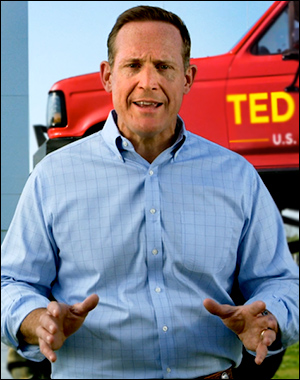
North Carolina Rep. Ted Budd (R-Advance)

North Carolina: Budd Lead Diminished — As we know, the May 17 North Carolina primary featured Rep. Ted Budd (R-Advance) scoring a major 59-25 percent win over former Gov. Pat McCrory in the 2022 Republican US Senate primary. Immediately after, East Carolina University released the first post primary poll (May 19-20; 635 registered North Carolina voters) that projected the congressman leading Democratic nominee Cheri Beasley, the former state Supreme Court Chief Justice, by a 47-39 percent margin. This is well beyond the polling margin of error.

The Cygnal research group then conducted a subsequent study for the Civitas Institute (May 21-22; 600 likely North Carolina voters; live interview, text, and email). They also find Budd holding the advantage, but in only a small 44-42 percent spread. This result is a bit surprising when seeing that the same Cygnal poll posts President Biden with a heavily upside-down 33:61 percent favorable to unfavorable job approval rating, the Republicans ahead on the congressional generic question, 50-43 percent, and the right track/wrong track question breaking 22:73 percent.

Pennsylvania: Oz Declares Presumptive Victory — The Pennsylvania Republican Senate contest continues to drag on, and we probably won’t see a final determination until June 8, the day the Secretary of State must certify the election. According to the Pennsylvania Secretary of State’s unofficial preliminary count, Dr. Mehmet Oz, who on Friday declared himself the “presumptive” nominee, leads former hedge fund CEO David McCormick, by 922 votes from 1,344,104 ballots cast, an astoundingly high number for a Keystone State Republican primary.

The mandatory recount is already underway. Once the totals are reported and the election certified, the challenges to individual votes may begin. Therefore, this political drama could go on for quite awhile longer. The Pennsylvania primary was May 17.

House

OR-5: Rep. Schrader Concedes — Another political overtime race officially ended over the Memorial Day break. With the Clackamas County vote counting bar code problem finally being corrected, it became clear that seven-term Rep. Kurt Schrader (D-Canby) would not overcome his Democratic primary opponent’s early lead, and conceded the nomination to former local city manager Jamie McLeod-Skinner. The Oregon Secretary of State reports the McLeod-Skinner lead at 55.1 – 44.3 percent with 80,423 votes counted.

McLeod-Skinner will now face the new Republican nominee, former Happy Valley Mayor Lori Chavez-DeRemer, in what will be the most competitive congressional seat in Oregon. The Democratic voting trends in the area favor McLeod-Skinner, but with a D+3 rating from the FiveThirtyEight data organization, this seat becomes a 2022 Republican target.

Schrader becomes the fourth incumbent to be denied re-nomination joining Reps. David McKinley (R-WV), Madison Cawthorn (R-NC), and Carolyn Bourdeaux (D-GA).

Texas: Final Decision Due Thursday — Yesterday was the last day that overseas votes could be received and counted for the Texas runoff elections that were held May 24. Two South Texas congressional seats are without confirmed Democratic nominees, the open 15th CD and Rep. Henry Cuellar’s (D-Laredo) 28th District.

Adjusted totals from two counties in the 15th give businesswoman Michelle Vallejo just a 27 vote lead over attorney and Iraq War veteran Ruben Ramirez in a low turnout election that features a universe of only 12,063 individuals. The 15th District Democratic winner will face Republican Monica de la Cruz, the 2020 GOP congressional nominee.

In the 28th, either Rep. Cuellar or Jessica Cisneros will battle Republican Cassy Garcia, a former South Texas aide to Sen. Ted Cruz (R-TX). Rep. Cuellar has declared victory, saying his 177-vote margin over attorney Cisneros will be sustained. Cisneros says she believes the final count will reverse his lead. The counties must report their final runoff numbers to the Secretary of State tomorrow, Thursday, June 2.

Pennsylvania Ballot Count Goes On; Ballot Issues in Oregon; Redistricting News

By Jim Ellis
May 24, 2022

Senate

Pennsylvania ballot

Pennsylvania: Related Court Ruling Could Add Votes — A three-judge federal panel sitting in the capital city of Harrisburg issued a ruling Friday on a Lehigh Valley case that relates to the current vote counting situation. The judicial action mandated the counting of mail ballots where no date appears on the carrier envelope. PA ballot procedure requires the voter to date the envelope before mailing. Immediately upon the ruling being announced, the Dave McCormick for Senate campaign sent a letter to all 67 county chief election officials reiterating the decision. The Dr. Mehmet Oz-Dave McCormick race is down to a lead of 1,070 votes for the doctor, suggesting that any new ballots added to the mix could theoretically help McCormick. It is unclear when we will see a final count publicized.

House

OR-5: Counting Stalled — Oregon’s 5th District ballot counting has ground to a halt because of a major malfunction in one of the district’s anchor areas, Clackamas County. Due to a reported bar code error on the printed ballots, election officials are having to record the votes of every ballot individually, punching a new ballot for each with the correct bar code. Hence, only 57 percent of the expected vote has been reported.

Rep. Kurt Schrader (D-Canby) is trailing badly, 60-40 percent in the Democratic primary, to former local city manager Jamie McLeod-Skinner. The congressman’s base is Clackamas County, but it appears, according to votes currently recorded there, that he won’t likely have enough support there to fully overcome his opponent’s large early advantage. If Schrader does lose, he will be the third House incumbent who fails to secure re-nomination, joining Reps. David McKinley (R-WV) and Madison Cawthorn (R-NC).

PA-12: State Rep Nearing Victory — One of the other Pennsylvania races that was too close to originally call was the open 12th District Democratic primary. Though she has not yet been officially projected the winner, state Rep. Summer Lee (D-Braddock) has increased her small lead to 737 votes of more than 94,000 ballots cast. Her main opponent is lobbyist Steve Irwin, and Lee’s lead may now be too wide for him to overcome. The eventual Democratic nominee becomes the prohibitive favorite in the general election and will replace retiring Rep. Mike Doyle (D-Pittsburgh) from the downtown Pittsburgh-anchored district.

Redistricting

Florida: Congressional Districts Still Unclear — Legal wrangling among judges imposing and then lifting and then re-imposing stay rulings regarding the Florida’s congressional map may be decided this week at the appellate court level. It is increasing possible, however, that the state Supreme Court will become the final arbiter should the Republicans’ motion to fast-track the maps to the high court be granted. Many argue that fast tracking the maps is the only way to give candidates adequate time to campaign in districts with definable boundaries prior to the Aug. 23 primary election. Most of the objections pertain to eliminating the majority black 5th District of Rep. Al Lawson (D-Tallahassee) that extends from Tallahassee to Jacksonville.

New York: Congressional Districts Enacted — Steuben County Supreme Court Judge Patrick McAllister approved the special master’s congressional maps with some changes, particularly in the Brooklyn area. The special master’s footprint helps Republicans to an extent, cutting their current delegation size from eight to five, which is one better than the Democratic map provided.

The new map does create at least five additional Democratic districts that will be competitive, and pairs Democrats Carolyn Maloney (D-Manhattan) and Jerry Nadler (D-Manhattan) into a new 12th District. Rep. Mondaire Jones (D-Westchester County) will move from his current 17th CD into a new west-side Manhattan 10th District where he will face former NYC Mayor Bill de Blasio and many others in a hotly contested primary. New York’s congressional and state Senate primaries are delayed until Aug. 23. The statewide contests and all other races will be decided in the previously scheduled June 28 primary.

Budd Wins in NC; PA Senate Race
Still Too Close to Call

By Jim Ellis
May 18, 2022

Primary Results

Yesterday’s Voting — As predicted, North Carolina US Rep. Ted Budd (R-Advance) soundly defeated former North Carolina Gov. Pat McCrory to win the US Senate nomination, winning 99 of the state’s 100 counties. Former US Rep. Mark Walker and author Marjorie Eastman finished third and fourth. The general election is now set, as Rep. Budd advances to face former state Supreme Court Chief Justice Cheri Beasley, who became a consensus Democratic candidate. The Tar Heel contest will be one of the most important Senate races in the country.

US Rep. Madison Cawthorn (R-Hendersonville) lost his battle for re-nomination last night to state Sen. Chuck Edwards (R-Hendersonville). In the field of eight candidates, Edwards claimed the nomination with 33 percent of the vote, as compared to the scandal-plagued congressman’s 32 percent. In North Carolina, runoffs only occur if all of the candidates fall below a 30 percent threshold.

In what appears to be another congressional defeat, veteran Oregon Congressman Kurt Schrader (D-Canby) is running far behind his Democratic primary challenger, Jamie McLeod-Skinner, a former city manager, but half of the vote is still outstanding under Oregon’s all-mail voting system. Still, with a 61-39 percent margin, Rep. Schrader appears too far behind to make up all of the vote difference.

The Pennsylvania Senate Republican race is still too close to call, as television Dr. Mehmet Oz and former hedge fund CEO David McCormick are locked in a battle separated with less than two-tenths of a percentage point. It is difficult to tell how many votes remain uncounted because the state will allow ballots postmarked yesterday to be received in the coming days. It will be some time before we know the outcome, but Dr. Oz has a 2,672-vote lead of the more than 1.31 million votes cast. Pennsylvania election law guarantees an automatic recount if the margin is within .5 percent. McCormick claims the remaining mail votes will hand him the victory.

As expected, the Pennsylvania Democrats nominated Lt. Gov. John Fetterman who lays in a hospital recovering from a recent stroke that occurred from a blood clot in his heart. Fetterman, who underwent a pacemaker procedure, is expected to make a full recovery but will be sidelined for some time.

In the election, Fetterman easily defeated US Rep. Conor Lamb (D-Pittsburgh) and state Rep. Malcolm Kenyatta (D-Philadelphia) with a 59-26-10 percent landslide victory margin. He won all of the state’s 67 counties in a turnout of more than 1.17 million voters. Surprisingly, Democratic turnout dropped below that of Republicans for the first time in decades. This, despite the party’s 45.8 to 35.9 percent voter registration advantage.

In the PA governor’s race, state Sen. Doug Mastriano (D-Fayetteville) easily won the open Republican nomination and will face Attorney General Josh Shapiro (D) in the general election. The latter man was unopposed in the Democratic primary. Media reports suggest that Mastriano may be too conservative to win in Pennsylvania, but the large Republican primary turnout is a precursor that this race will be competitive.

In other key statewide races, Kentucky Sen. Rand Paul romped to an 86 percent Republican primary victory. He will face former Louisville state Rep. Charles Booker who was an easy winner on the Democratic side. Sen. Paul is a heavy favorite for re-election. In the open 3rd Congressional District, state Senate Minority Leader Morgan McGarvey, also as expected, won a landslide Democratic primary victory last night and will succeed retiring Rep. John Yarmuth (D-Louisville) in the Autumn.

Idaho Gov. Brad Little (R) defeated Trump backed Lt. Gov. Janice McGeachin, 53-32 percent, and becomes a prohibitive favorite in the general election. US Rep. Mike Simpson (R-Idaho Falls) again defeated his 2014 primary opponent, attorney Bryan Smith, this time by 13 percentage points and will claim a 13th term in November.

Governor

Wisconsin: New Republican Leader According to Dem Poll — Democratic pollster Public Policy Polling surveyed the Wisconsin Republican gubernatorial primary and produced results not found in other polls. The study (May 9-10; 675 likely Wisconsin Republican primary voters) projected construction company executive and 2004 US Senate nominee Tim Michels taking a small lead over former Lt. Gov. Rebecca Kleefisch. This is the first poll find anyone but Kleefisch claiming the top position. The ballot test gave Michels a 27-26 percent edge, with businessman Kevin Nicholson trailing well behind in third place with nine percent preference. The Milwaukee Works, Inc. organization released the ballot test portion of the PPP survey.

States

Texas: Conflicting AG Polls — Next Tuesday, Texas Republican voters will decide the runoff election between incumbent Attorney General Ken Paxton and Land Commissioner George P. Bush. The race has turned negative and earlier polls were giving Paxton, who is still under a stalled 2015 SEC indictment, a strong lead. The new University of Texas at Tyler survey (May 2-10; 570 likely Texas Republican runoff voters) projects Paxton’s lead to be only 41-35 percent.

During the same sampling period, as previously reported, the CWS Research group (May 4-10; 992 likely Texas Republican runoff voters) produced a much different 58-31 percent ballot test result in the attorney general’s favor. Since these polls were conducted during the same period, we will have to see more data to determine the correct trajectory. It appears clear, however, that Paxton is the race leader, but whether his margin is wide or tight is open to question.

Ohio Poll Indicates Changes; Oregon 5th CD Shows Disappointing Development; More

By Jim Ellis

April 27, 2022:

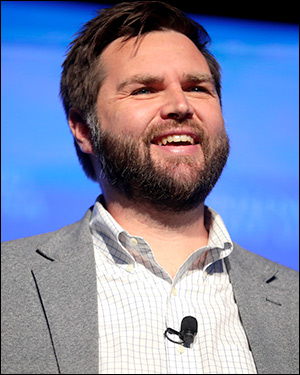
Author J.D. Vance, Ohio Senate Candidate

Ohio: Poll Posts Dolan to GOP Lead; Fox Shows Vance as Being Up — The Blueprint Polling firm tested the Ohio Republican field for the upcoming Senate primary next week (April 21-24; 634 likely Ohio Republican primary voters; live interview), and yet another candidate has been identified as moving into first place. This is the first survey that projects state Sen. Matt Dolan (R-Chagrin Falls), who is a minority owner of the Cleveland Guardians baseball club, in the top position and the fourth of the five major candidates who in one poll or another has led the field.

In this study, Sen. Dolan posts 18 percent support, just a point ahead of author J.D. Vance, with businessman Mike Gibbons, former state Treasurer Josh Mandel, and ex-Ohio Republican Party chair Jane Timken following with 13, 12, and 7 percent preference.

Fox News was also in the field during virtually the same time period (April 20-24; 906 likely Ohio Republican primary voters; live interview), but they produce a much different result. According to this poll, it is Vance, who picked up former President Donald Trump’s endorsement just a handful of days before the poll period, in the lead at 23 percent with Mandel, Gibbons, Dolan, and Timken trailing with 18-13-11 and 8 percent, respectively.

As both the Blueprint and Fox analyses illustrate, with less than one week remaining in the campaign, realistically four of the candidates still have a chance to catch a flyer at the end and claim the nomination. Early voting continues for the May 3 primary election.


House

OR-5: Biden Endorses Rep. Schrader — In a disappointing development for challenger Jamie McLeod-Skinner, President Biden just involved himself in the impending May 17 Oregon primary by endorsing veteran Rep. Kurt Schrader (D-Canby) over the more progressive contender who is an attorney and former local city manager. The two are vying to win the party primary for the newly constructed 5th District that is rated D+3, making it the most competitive seat in the Beaver State.

Continue reading

Redistricting Challenges – Part II

By Jim Ellis

Jan. 26, 2022 — Yesterday, we covered the US House members whose districts have changed to the point of having seats where a majority of their new constituencies are unfamiliar. Today, we delve deeper.

To reiterate, a total of 28 states have now completed their redistricting process, and 41 incumbents seeking re-election in these places will be in new seats where a majority of the electorate has not previously seen their names on the congressional ballot.

Interestingly, many of the changes are positive for some of the members in question, because the new constituents are favorable to the incumbent’s party. Others, however, face potentially tough re-nomination or re-election battles, and some will see challenges coming from both Republicans and Democrats.

In 16 specific instances the outlook is seriously negative as nine Democratic members and five Republicans face major challenges toward continuing their congressional careers.

The members in the worst situations are those paired with another incumbent. Illinois Rep. Sean Casten (D-Downers Grove) faces freshman Rep. Marie Newman (D-La Grange). Casten has only a quarter of the new Chicago suburban constituency as compared to Newman’s 42.9 percent carryover factor. Her home base in La Grange, however, is not included in the new 6th District.

Remaining in Illinois, neither paired Republican Reps. Mary Miller (R-Oakland) nor Rodney Davis (R-Taylorville) have large constituencies in the new 15th CD. Rep. Miller has only a 34.7 percent carryover factor from the current 15th but is larger than her opponent’s, Mr. Davis, 30.8 percent figure coming from his 13th CD.

Michigan Rep. Bill Huizenga (R-Holland) has announced that he will run in his state’s new 4th District, meaning a pairing with veteran Rep. Fred Upton (R-St. Joseph). He has only 25.1 percent of his constituents in the new 4th as compared to Upton’s much stronger 68.8 percent carryover factor. Still, Rep. Upton says he is unsure as to whether he will seek re-election to a 19th term.

Staying in Michigan, Rep. Andy Levin (D-Bloomington Township) has decided to enter in a paired battle with Rep. Haley Stevens (D-Rochester Hills). He has only 26.7 percent of his current 9th District constituency in the new 11th CD as compared to Rep. Stevens’ having 46.1 percent coming from her current 11th District. Her home base of Rochester Hills, however, does not carryover, while Rep. Levin’s base in Bloomington Township becomes the anchor population in the new CD.

Continue reading

New Redistricting Numbers

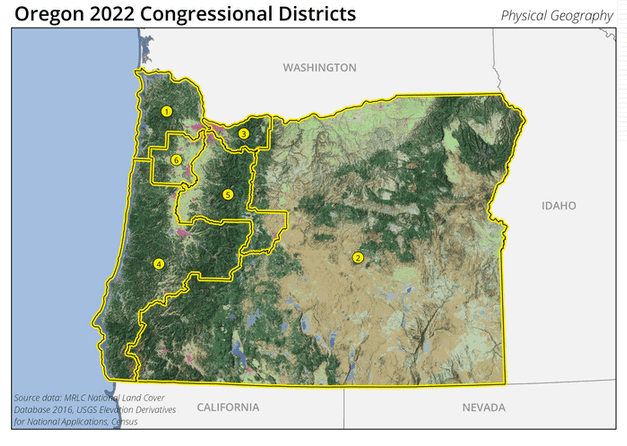
Oregon 2022 Congressional Districts (Go to Daily Kos story on Oregon’s new House map)

By Jim Ellis

Oct. 12, 2021 — The Daily Kos Elections website’s statistical team has already published presidential election numbers for some of the states that have completed their redistricting process. Therefore, we have a bit more information about the new districts in Oregon and Maine, which allows us to better analyze the political landscape.

In Oregon, the Daily Kos team has published the Biden-Trump 2020 numbers for the new six Beaver State congressional districts, which makes comparing with previous data possible.

Rep. Suzanne Bonamici’s (D-Washington County) 1st District actually makes her previously safe northwestern Oregon seat even stronger. This new district gives her all of downtown Portland. President Biden posted a 68-29 percent margin in the new 1st, a net 10-point increase from his spread in the current district (63-34 percent).

The state’s lone Republican district, OR-2, also sees its percentages increasing for the incumbent’s benefit, who is freshman Rep. Cliff Bentz (R-Ontario/East Oregon). Instead of finding a 56-42 percent margin in former President Donald Trump’s favor, the new 2nd expands to 61-37 percent, a similar net 10-point improvement for the GOP as the Democrats saw in District 1.

Making the 2nd District so overwhelmingly Republican is reflective of the Democratic legislature’s plan to pack as many GOP voters as possible into the 2nd to facilitate achieving their goal of drawing a 5D-1R statewide map.

Rep. Earl Blumenauer’s (D-Portland) 3rd District, previously the Democrats’ safest Oregon seat, remains so, but with a slightly smaller margin. Under the newly adopted district lines, President Biden would have recorded a 73-25 percent victory as opposed to his 74-23 percent spread under the current map.

Perhaps the biggest change on the Oregon map, other than adding a new district, was making the Eugene-anchored 4th District safer for veteran representative and House Transportation and Infrastructure Committee Chairman Peter DeFazio (D-Springfield).

The Biden margin in the previous 4th was 51-47 percent, and the congressman only recorded 51.5 percent in his 2020 re-election victory, one of the smallest of his 18 electoral triumphs. In the new 4th, President Biden’s victory spread would have been 55-42 percent, a net Democratic gain of nine percentage points.

Continue reading

Oregon Completes Redistricting

Oregon’s new congressional map features six seats for the first time.

By Jim Ellis

Sept. 30, 2021 — Tuesday night, the state of Oregon became the first in the country to complete the redistricting process.

After Republicans decided not to break the quorum in the current legislative session because redistricting power in Oregon solely reverts to the Democratic Secretary of State if the legislature deadlocks, the Democratic House and Senate passed the new congressional, state Senate, and state House maps and sent them to Gov. Kate Brown (D). She immediately signed all three into law, thus the culmination of redistricting 2021 in the Beaver State.

The new congressional map features six seats for the first time, as Oregon was awarded a new district in reapportionment. The Democratic strategy was one of pushing the partisan envelope to the max, but the end result may force them to witness more competitive campaigns than they desire.

The final map looks to have two solid Democratic districts (1 & 3) and one safe Republican seat (2). The remaining three districts (4, 5 & 6) all lean Democratic to varying degrees. The Democrats’ idea is to create a 5D-1R map, but it’s possible in a good Republican year that the GOP gains two, and in a wave election could conceivably even add a third to their partisan column.

The 1st and 3rd Districts share the city of Portland, with CDs 5 and 6 coming into the metro area to annex some of the outer suburbs. The Portland area region is what gives those districts the Democrats the need to tip them further left.

The member in the most difficult situation is Rep. Kurt Schrader (D-Canby). He won his 2020 re-election with only a 52-45 percent margin against a Republican opponent who spent just $221,000 on her campaign effort. More than half of Schrader’s current constituency is now in new District 6, and the partisan numbers in District 5 are slightly worse than they were in the previous version. Therefore, it is a virtual certainty that Rep. Schrader will draw significant Republican opposition in his new district.

An Oregon incumbent who needed an influx of Democrats is House Transportation and Infrastructure Committee chairman Peter DeFazio (D-Springfield). He defeated Republican Alek Skarlatos, 51-46 percent, after the GOP challenger raised and spent over $5.4 million. Of the three new potentially swing districts, the DeFazio 4th is now the strongest Democratic seat but still could play competitively in a wave Republican year.

Data research conducted by the staff at Dave’s Redistricting website and augmented through the Daily Kos Elections statistical analysis provides us with some early partisan details. The model races they use are from 2016 and 2018.

Below are the key population and partisan numbers for the new seats:

Continue reading

Bass for Mayor; Redistricting Update

By Jim Ellis

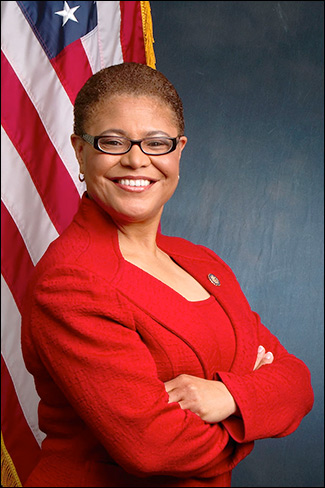
California Rep. Karen Bass (D-Los Angeles)

Sept. 29, 2021 — Reports were surfacing last week that California Rep. Karen Bass (D-Los Angeles), who had been on candidate Joe Biden’s short list for the vice presidential nomination, was deciding whether to eschew re-election next year for a chance to run for LA mayor. Now, she has made the decision. On Monday, Rep. Bass formally entered the citywide race.

The mayor’s election likely will be semi-open. Mayor Eric Garcetti (D) has been nominated as US ambassador to India, and upon obtaining his Senate confirmation, the City Council will be empowered to appoint an interim mayor. That individual will have the opportunity of then seeking a full four-year term during the regular election cycle. Certainly, Rep. Bass could be a potential appointee. Should Mayor Garcetti not receive a timely confirmation as ambassador, he would be ineligible to seek a third term, so in any event, the mayor’s contest will be highly competitive.

From a federal perspective, Bass running for mayor means her 37th Congressional District will be open. Of the 18 congressional districts that are wholly or partially contained within Los Angeles County, 17 of them need a population influx. With California losing a seat, it appears that the Los Angeles area will absorb the reduction.

Since Rep. Bass is the first Golden State House member to announce that he or she won’t seek re-election, her 37th District that needs 38,173 people to meet the state’s CD population quota of 760,350 people for the new 52 district map – a west Los Angeles County seat centered around the Culver City community – now becomes a prime target for elimination.

In the mayor’s race, Bass will at least face Los Angeles City Council President Pro Tempore Joe Buscaino, LA City councilman and former state Senate president and ex-US Senate candidate Kevin de Leon, and LA City Attorney Mike Feuer. It is likely others will enter the race once the political situation surrounding Mayor Garcetti is defined, and the congressional and legislative redistricting picture becomes clearer.

Redistricting Update

Several states are making progress in drawing new congressional maps. Colorado will send a final plan to the state Supreme Court as early as today. Indiana and Maine are close to finalizing maps that will strengthen both states’ political divisions, 7R-2D in the Hoosier State, and 2D-0R in the latter.

Oregon is also moving toward completion of a map that may prove a reach for the Democratic majority. Gaining a sixth seat in national reapportionment, the Democrats are trying to craft a 5D-1R map. Though Republicans have a significant base in the state, the Democrats maintain a tight grip on the statewide races thanks to dominant Portland, which serves as the lynchpin to their Beaver State political success.

Therefore, though the Dems have a clear edge in five of the new CDs, the early partisan analysis figures suggest that the Republicans would have at least an outside chance of prevailing in one of the districts, most likely that of Rep. Kurt Schrader (D-Canby/Salem), and possibly in the new 6th District open seat. More will be known when in depth political data is available and candidates begin to come forward.

The Texas Republican Senate’s congressional map was unveiled yesterday. As predicted, the GOP map drawers used the state’s two new seats as somewhat of a buffer, at least in the Austin area, to strengthen districts that were showing weakness. Should this map be enacted, Reps. Chip Roy (R-Austin), Michael McCaul (R-Austin), John Carter (R-Round Rock), and Roger Williams (R-Austin) all receive much stronger Republican seats. In exchange, one of the new seats goes to Travis County and will await a new Democratic inhabitant.

The other new seat appears destined for Harris County. There, sophomore Rep. Lizzie Pannill Fletcher (D-Houston) moves from a political marginal district to a rock solid Harris-Ft. Bend County Democratic District. This allows the second new seat to fall to a Republican and be fully contained within Harris County. In the northern part of the region, Rep. Dan Crenshaw (R-Houston) receives a substantially better district, and assumes part of Republican Montgomery County.

In the Dallas-Ft. Worth Metroplex, the region doesn’t get a new district, but a reconfiguration allows all incumbents, both Republicans and Democrats, to improve upon their present internal political standing.

This Texas map is a long way from enactment. The state House Democrats are unified to vote against any Republican map, and while the GOP has the strength to pass what they want in the Senate, the state House is a different story. It is likely we will see the current 30-day special session end in deadlock, with another 30-day session to follow. The Democratic strategy is to force the redistricting process to court, while the Republicans will attempt to pass a series of maps into law. Expect this story to be with us for many weeks to come.