

Tag Archives: Gov. Steve Bullock

Democrats Up the Debate Ante

By Jim Ellis

May 31, 2019 — The Democratic National Committee just announced the imposition of new requirements for presidential candidates to participate in the series of subsequent debates to begin in mid-September. The first two sessions are scheduled for June 26-27 and July 30-31 in Miami and Detroit, respectively.

The field is close to being set for the initial forums with 20 candidates qualifying according to the Intelligencer publication, the personnel from which have been tracking the debate process since the schedule was first announced.

To earn a podium in the first two debates, the candidates are required to either score one percent support in three of eight designated polls or reach 65,000 donors, of which at least 200 must come from 20 specific states.

The participants will include some of the more obscure candidates including author Marianne Williamson, New York City businessman Andrew Yang, and the two western governors, Jay Inslee of Washington, and Steve Bullock from Montana.

This means that Sen. Michael Bennet (D-CO), Rep. Seth Moulton (D-MA), former Sen. Mike Gravel (D-AK), and Miramar, Fla., Mayor Wayne Messam likely will not be part of the first forum, though time remains for them to still qualify.
Continue reading

The Scorecard – Part I

By Jim Ellis

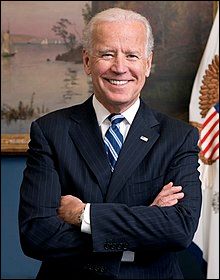
Former vice president and ex-Delaware senator Joe Biden is the Democratic front-runner in the 2020 presidential campaign.

May 20, 2019 — It is often said, “you can’t tell the players without a scorecard,” and that is certainly becoming the case with the presidential campaign. A 24th candidate entered the national political fray just late last week — New York City Mayor Bill de Blasio.

Greeted with the reminder that the last Quinnipiac University poll of New York City residents found that 76 percent of those polled didn’t want the mayor to run for president, de Blasio launched his late-starting campaign with a video of him talking about “putting working people first,” interspersed with video footage of being chauffeured around the city in a limousine. Saddled with poor approval ratings within his home base and a late start, de Blasio is the longest of shots to become a viable candidate.

It is likely that the de Blasio declaration is the last significant announcement, meaning all of the major players are finally in the race. Seeing two dozen candidates – and while many media networks report different numbers, the total clearly exceeds 20 – it is a good time to review the field (alphabetically) and summarize how the plethora of candidates is doing. We’ll go through the first 12, and tomorrow finish up the field:

• Former Vice President Joe Biden: The clear early race leader. Biden received the announcement bump that he desired and is proving to be the man to beat. Still, much will happen before he can legitimately clinch the party nomination. In the first 24 hours after his announcement, the former VP raised $6.3 million.

• Sen. Michael Bennet (D-CO): A prostate cancer diagnosis and surgery delayed Sen. Bennet’s entry into the race, so his campaign is just getting underway. He is a second-tier candidate who is unlikely to seriously challenge for the nomination.

• Sen. Cory Booker (D-NJ): Has not gotten much early attention, but reports suggest his campaign is among the best organized in terms of ground operation. Sen. Booker could surprise in the national candidate forums and, despite current low polling performance, might become a factor as the campaign develops.

Continue reading

Weekly Political Synopsis,
Period Ending May 17, 2019

By Jim Ellis

PRESIDENT
• Gov. Steve Bullock: As has been expected for some time, Montana Gov. Steve Bullock (D) officially announced his presidential effort this week, becoming the 23rd Democratic candidate. Bullock made the argument that he will be an effective national candidate because he’s won two elections in a conservative state and has been able to earn legislative achievements, like Medicaid expansion, in negotiating with Republican leaders.

• Mayor Bill de Blasio: Following Gov. Bullock, New York City Mayor Bill de Blasio released an announcement video at the end of the week making him the 24th Democratic presidential candidate for the 2020 election cycle. His declaration centered around being the candidate for “working families,” and cited the $15 minimum wage, a free pre-K school program, a comprehensive healthcare program that especially covers mental health, and paid sick leave.

• Florida: Former Vice President Joe Biden continues to see strong polling numbers, with the latest data coming from Florida. The Tel Opinion Research organization is reporting its latest results (released May 8; 800 likely Florida Democratic primary voters) that show Biden pulling away from his Democratic opponents on an open-ended ballot test poll. An open-ended ballot test is one where the respondent is not given the candidates’ names. That approach tests for committed strength.
According to Tel Opinion, Biden leads Sen. Bernie Sanders (I-VT), 39-16 percent, with Sens. Elizabeth Warren (D-MA) and Kamala Harris (D-CA) each pulling only five percent support. South Bend (IN) Mayor Pete Buttigieg follows at three percent preference. All of the candidates scored well on the favorability index scale. Biden is viewed positively with an 81:13 percent ratio, where Sen. Sanders’ score is 68:23 percent.

SENATE
• Arizona: Phoenix-based pollster OH Predictive Insights released their latest data from their May 1-2 poll (600 likely Arizona voters) where they queried the respondent universe about the impending Senate race between appointed Sen. Martha McSally (R) and retired astronaut Mark Kelly (D). Though we are more than a year before Arizona’s 2020 late August primary, the chances are strong that the aforementioned will be their respective party standard bearers.
According to the OH poll results, the early race again earns toss-up status. The sample breaks 45-44 percent in Sen. McSally’s favor, which is virtually identical with the firm’s late February poll giving the incumbent a 46-44 percent edge.

Continue reading

We Now Have Candidate #22 In
The Race, And Sanders is Falling

By Jim Ellis

May 6, 2019 — A new Democratic presidential candidate entered the race late last week, one whom we didn’t expect to see this soon.

Colorado Sen. Michael Bennet

Despite undergoing prostate cancer surgery last month, Colorado Sen. Michael Bennet says he has already received a “clean bill of health” and is embarking upon his national political effort. Now at 22 candidates in the field of Democrats seeking their party’s nomination for the 2020 presidential election, eyes turn to Montana Gov. Steve Bullock who could be the last widely discussed potential candidate yet to make a decision about forming a campaign.

It’s difficult to see how Sen. Bennet breaks through to the top tier, however. He is not well known outside of Colorado and starts well behind most of the field, putting him in a difficult position from which to even qualify for the first two debate forums scheduled for late June and the end of July.

To earn a debate podium, all candidates must either tally at least one percent support in three Democratic National Committee designated polls, or attract financial support from 65,000 donors, from which they must have a minimum of 200 in at least 20 states. For the lesser known candidates, debate participation is a necessity in order to propel themselves into serious contention for the nomination.

Furthermore, Sen. Bennet doesn’t even have his home state electorate to himself. Former Colorado Gov. John Hickenlooper is also in the race, a man who Bennet once served as chief of staff. Just two days ago, Colorado moved its new primary – they used to apportion delegates through the caucus system – to March 3, the 2020 campaign’s Super Tuesday, which could serve to boost one of the two Centennial State candidates. Yet, with both men in the race, the state’s 67 first-ballot delegate contingent will prove less of a base for either one.

Continue reading

McAuliffe Pulls Back From Running

By Jim Ellis

April 22, 2019 — After once indicating that he was preparing to announce a presidential effort, former Virginia governor and ex-Democratic National Committee chairman Terry McAuliffe said that he would not become a national candidate. Rather, he said late last week, he plans to work in Virginia to help Democrats make further political gains in the Old Dominion.

Though McAuliffe continued to keep his name alive as a potential presidential candidate, the preparatory actions surrounding such a move never seemed to be in evidence.

Interestingly, when asked whether he would consider running for governor again in 2021, he didn’t rule out the possibility. Virginia is the only state in the nation that bars a governor from running for two consecutive terms, but it doesn’t prohibit an ex-chief executive from returning after a break in service.

Currently, the number of officially announced presidential contenders is 19, with former Vice President Joe Biden still not confirming his informal candidacy.

Montana Gov. Steve Bullock and US Rep. Seth Moulton (D-MA) are also making visits to early primary states and appear to be readying a respective campaign apparatus.

Sen. Michael Bennet (D-CO) indicated last week that he wants to enter the national campaign, but a prostate cancer diagnosis has derailed any short-term plans he had to join the large field; however, his long-term health prognosis appears strong.

Continue reading

Ohio Rep. Ryan Makes it #17 for Dems

By Jim Ellis

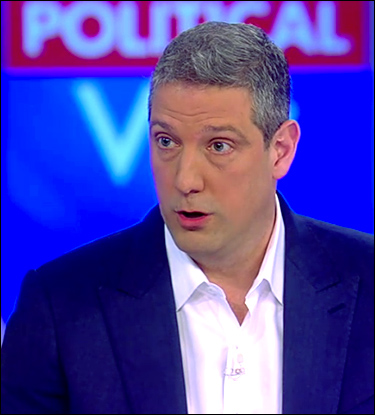
Ohio Rep. Tim Ryan announces his candidacy for the 2020 Presidential Election on the TV talk show, “The View.”

April 8, 2019 — Calling himself a “reform-minded Democrat” who is “for the free enterprise system,” and a “progressive who knows how to talk to working-class people,” Ohio Rep. Tim Ryan (D-Youngstown) announced his presidential campaign at the end of last week.

Rep. Ryan becomes the 17th official presidential candidate, but he will not necessarily be leaving the House if he loses his long shot national bid. Under Ohio election law, individuals may simultaneously run for more than one office and the congressman says he will also file for re-election.

More announcements are expected in April. As we have recently seen, it appears former Vice President Joe Biden will soon enter the race, as will at least one and possibly a second House member. California Rep. Eric Swalwell (D-Dublin/Hayward) will reportedly announce his presidential campaign next week, an effort he has been discussing for more than a year.

Swalwell is saying he won’t run for both offices as is Rep. Ryan, but he does leave himself a path to return to the House. Rep. Swalwell indicates that if his presidential effort isn’t proceeding as planned when the California candidate filing deadline approaches, he could end his national campaign and then file for re-election.

Continue reading

New Poll: Biden Still Holds First

By Jim Ellis

Former vice president and ex-Delaware senator Joe Biden

April 4, 2019 — Former Vice President Joe Biden has been under attack in recent days over past inappropriate behavior around women but, so far, it hasn’t yet damaged his standing with Democratic primary voters according to the latest monthly Morning Consult poll (March 25-29; 12,940 US likely Democratic primary or caucus voters).

While Biden has been hit with a series of negative articles and television news reports, which may be only the beginning of political assaults as the other candidates need to dislodge the former vice president from the front runner position, he still stands atop the Democratic field with his best showing from any recent poll.

According to the Morning Consult data, Biden has open up a 33-25-8-8 percent advantage over Vermont Sen. Bernie Sanders, Sen. Kamala Harris (D-CA), and ex-Rep. Beto O’Rourke (D-TX), respectively. The 33 percent figure is the single-best number that Biden has attracted from any poll during his pre-announcement period.

For his part, Sen. Sanders continues to command a strong-second place position, while Harris drops back a bit from her 10 percent showing in the March 10 Morning Consult track. Her high point from any MC survey came in early February when she touched 14 percent. O’Rourke continues to hover consistently around his eight percent mark, always placing either in third or fourth position.

Continue reading

Democratic Presidential Candidate Field Could Number 23 Very Shortly

By Jim Ellis

April 1, 2019
— Several presumed presidential candidates whose aspirations appeared dormant have suddenly sprung to life. In reading the current political tea leaves, and should the latest trends prove true, we could return to projections of a Democratic presidential field as large as 23 candidates.

While it has been generally regarded as a given that former Vice President Joe Biden would enter the race next month, and all indications are that he will, as many as six others may also soon join according to individual published reports late last week.

Sen. Michael Bennet (D-CO), whose name surfaced months ago as an individual contemplating becoming a national candidate, all of a sudden says that he will likely do so. This, after seemingly weeks of not even being mentioned in the long list of aspiring candidates.

Ex-Virginia Gov. Terry McAuliffe, who looked to be gearing up early but hadn’t been heard from lately, also confirms that he is headed toward announcing his candidacy this month.

Montana Gov. Steve Bullock has brandished more overt signs of planning to run. Always admitting that he was considering becoming a candidate, Gov. Bullock has spent some time in Iowa conducting meetings and getting to know the political terrain. He has also firmly ruled out challenging Sen. Steve Daines (R-MT) and appears headed toward the national stage. Bullock is ineligible to seek a third term as governor, so these underlying signals seem more indicative that he will, in fact, run for president.

Continue reading

Biden Up Twice

By Jim Ellis

Former vice president and ex-Delaware senator Joe Biden

Dec. 18, 2018 — A pair of Democratic presidential primary polls were just released — one with a national respondent universe, and the other for the first-in-the-nation Iowa Caucus. In both, former vice president and ex-Delaware senator Joe Biden is staked to a lead. The most disappointing performer appears to be Massachusetts Sen. Elizabeth Warren, who settles into middle-of-the-pack status in both surveys.

CNN conducted the national poll (conducted by the SSRS firm; Dec. 6-9; 463 Democrats and independent-leaning Democrats). For two reasons, this survey is of little statistical relevance. First, the national sample of only 463 individuals is very low, thus leading to a huge error factor. Second, as we know, the presidential nomination process is decided by winning delegate support in every state and territory, thus monitoring a candidate’s national standing, while being of media interest, actually provides little in the way of tangible political value.

The Des Moines Register/CNN Mediacom Iowa poll (conducted by Selzer & Company; Dec. 10-13; 455 likely Iowa Democratic Caucus attenders) is the more relevant of the two studies since it previews the Iowa Caucus, which is responsible for apportioning the state’s nominating delegates and tentatively scheduled for Feb. 3, 2020.

In the national poll, Biden places first with 30 percent preference followed by Vermont Sen. Bernie Sanders (I/D-VT) who posts 14 percent. These are the only two potential candidates in double figures.

Continue reading

Senate 2020: The Second Tier – Part I

By Jim Ellis

Dec. 14, 2018 — Looking ahead to the 2020 US Senate cycle, eight states are clearly in the first tier, but there is budding action occurring in a secondary set of places, also. Today, we look at the first group of prospects.

With Republicans having to defend 22 of the 34 in-cycle seats, six are at the top of their protect list: (in alphabetical order) Arizona special, Colorado (Sen. Cory Gardner), Georgia (Sen. David Purdue), Iowa (Sen. Joni Ernst), Maine (Sen. Susan Collins), and North Carolina (Sen. Thom Tillis).

Democrats look to be defending two top targets: Alabama (Sen. Doug Jones) and New Hampshire (Sen. Jeanne Shaheen).

But developments are occurring, or could occur, in a series of other states, some of which could become highly competitive under the right circumstances.

• KANSAS: Sen. Pat Roberts (R) faced strong competition six years ago, and whether or not he decides to seek a fifth term is unclear at this point. With Democrats just winning the governor’s campaign here, it is possible there could soon be renewed interest in challenging for what is traditionally a safe Republican seat.

• KENTUCKY: Senate Majority Leader Mitch McConnell is on the ballot again in 2020. He won his last two competitive campaigns with 56 and 53 percent of the vote in 2014 and 2008, respectively. Potential candidates likely won’t come forward until the 2019 statewide campaigns, including the governor’s race, are completed.

Continue reading