Tag Archives: Vermont

Biden Showing Up Strong in North Carolina – But Is It Enough?

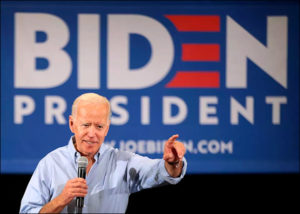
Former vice president and 2020 Democratic presidential candidate, Joe Biden

By Jim Ellis

Oct. 11, 2019 — Raleigh-based Public Policy Polling just released their latest North Carolina survey (Oct. 4-6; 963 likely North Carolina voters, 410 likely North Carolina Democratic primary voters) Wednesday, which projects a two-person race developing in the Tar Heel State as former Vice President Joe Biden leads Sen. Elizabeth Warren (D-MA), 39-22 percent. South Bend Mayor Pete Buttigieg receives nine percent support, while Sen. Bernie Sanders (I-VT) earns only a disappointing six percent. All other candidates fail to break the three percent level.

North Carolina is one of the Super Tuesday states, a state whose electorates will cast ballots on March 3, the largest voting day of the nominating season. On March 3, a total of 14 states and one territory will host primaries or caucuses, seven of which come from the south. It is here where former Biden would have to make his stand, since his southern numbers are the best of any candidate by a wide margin.

The question being posed is whether a sluggish Biden start in the first three voting states, Iowa, New Hampshire, and Nevada, where he could conceivably fail to place first in any, would derail his momentum to the point of lessening his southern advantage.

Making rudimentary delegate calculations from the 19 entities that would vote on or before Super Tuesday, we find that current polling would place the former vice president in the lead on the evening of March 3, but that his delegate edge would certainly not be dominating.

To re-cap, based upon the latest polling from Iowa, New Hampshire, and Nevada, the delegate estimate prior to South Carolina would find the former VP and Sen. Warren tied with 37 delegates apiece, while Sen. Sanders would have 27, meaning a virtual three-way tie despite Biden not winning any of the states outright. If he can stay in the hunt — with neither of his key opponents establishing themselves as a clear leader — the tide turns Biden’s way.

Continue reading →

Sanders’ Problem as an Independent

By Jim Ellis

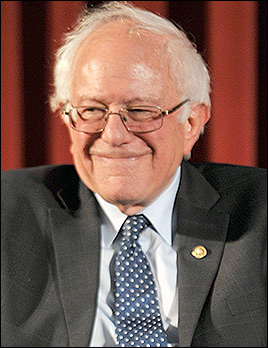
Sen. Bernie Sanders of Vermont — an Independent, not a Democrat

Feb. 22, 2019 — A day after announcing his entry into the 2020 presidential campaign, Vermont Sen. Bernie Sanders jumped off to a strong start, raising a reported $6 million in just his first 24 hours as a repeat candidate. But, a technical problem also looms in the distance.

Last year, the Democratic National Committee adopted a new party rule that states any future presidential nominee must be an official Democratic Party member or, if an office holder, must have served as a Democrat. Sen. Sanders meets neither requirement.

Vermont has no party registration, so he is not a party member in that regard, and has continually, including during the present time, represented Vermont as an Independent. In fact, when offered the Vermont Democratic senatorial nomination for his re-election campaign in 2018, Sanders turned down the overture.

The fact that Sanders is still not a Democrat is confirmed when looking at the list of unpledged delegate slots, those commonly referred to as “Super Delegates.” An unpledged delegate is one who can vote as he or she pleases and is not subject to any binding vote law their particular state may have enacted.

Those who qualify as Super Delegates are Democratic National Committee members (430), every elected Democratic US senator (45), the two District of Columbia “Shadow” senators, all elected Dems in the House of Representatives (235 at the present time), the four Democratic delegates to the US House (District of Columbia, Guam, the Northern Marianas Islands, and the US Virgin Islands), and all of the party’s elected governors (26, including the District of Columbia mayor, and the territorial governors from American Samoa and Puerto Rico).

Continue reading →

With Sanders Now a Democratic
Presidential Candidate,
What is His Path to Victory?

By Jim Ellis

Sen. Bernie Sanders (I-D/VT)

Feb. 21, 2019 — Calling Donald Trump “the most dangerous president in modern American history,” Sen. Bernie Sanders (I-D/VT) announced his 2020 presidential campaign through You Tube and email this week.

His further virulent attack on President Trump was softened by his call to unite America under his presidential campaign, with a goal, he stated, of recruiting more than 1 million volunteers to participate in a grassroots message delivery operation.

The rhetoric notwithstanding, where is Sen. Sanders’ path to the Democratic nomination? This will only be the second time in his long career where he has actually entered Democratic Party primaries. Has his political opportunity window closed as many believe to be the case?

Though the senator is now 77 years of age and would be 79 when sworn into office, should he win the presidency next year, he still has strong support within the youngest segment of the American electorate. He also attempts to appeal to racial minorities, union workers, and climate change activists as the core constituencies of a political base that he believes can expand and carry him to the nomination.

But, unlike 2016, when he battled eventual nominee Hillary Clinton one-on-one through all of the primaries and to the Democratic National Convention only to lose 60-40 percent on the first ballot roll call, he does not have the Democratic left all to himself.

Continue reading →

Senate Approvals

By Jim Ellis

Jan. 14, 2019 — The Morning Consult firm just released their quarterly ranking of Senate job approval scores. All 100 senators are surveyed, and the numbers cover the fourth quarter of 2018. Several categories are of interest.

First, a number of ratings are similar for both senators in a particular state. Vermont respondents were particularly pleased with Sens. Bernie Sanders (I/D-VT) and Patrick Leahy (D). The duo placed first and second nationally, with approval ratings of 64:28 percent and 62:23 percent favorable to unfavorable, respectively.

They were closely followed by Republican senators John Barrasso (R-WY; 62:26 percent) and John Thune (R-SD; 59:27 percent). The two senators’ state mates, Sens. Mike Enzi (R-WY; 56:27 percent) and Mike Rounds (R-SD; 56:29 percent), were also in the top 10.

Now-former Sen. Jeff Flake (R-AZ) recorded the worst rating in the body, with a 28:49 percent negative ratio. Two Senate leaders, Majority Leader Mitch McConnell (R-KY; 38:47 percent) and Minority Whip Dick Durbin (D-IL; 36:39 percent) were also in the Bottom 10.

Since this is the fourth quarter 2018 report, the five senators who lost re-election along with those who won competitive races are included. Below are their favorability scores Continue reading →

National Early Voting Report

By Jim Ellis

i-vote-i-countOct. 31, 2018 — Now more than halfway through the early voting period in the 37 states that offer early voting options for the populace, some places are turning in record participation rates. Each state has various nuances in their early voting procedures, so comparing the early reports to each other is of little value. Going back to contrast the current 2018 reported numbers with how that particular state voted in the last midterm election (2014) does have significance, however.

Already, in the latest available reports according to the United States Election Project administered by the personnel at the University of Florida, seven states are reporting more received early voting ballots than were recorded for the entire 2014 pre-election period. They are:

• Tennessee – 162.3% more ballots (1,029,846 versus 634,364 recorded in 2014)
• Texas – 144.3% increase (2,980,915 versus 2,066,368 recorded in 2014)
• Indiana – 127.9% increase (292,726 versus 228,932 recorded in 2014)
• Nevada – 122.5% increase (372,455 versus 304,005 recorded in 2014)
• Georgia – 111.1% increase (1,188,636 versus 1,069,912 recorded in 2014)
• Minnesota – 106.0% increase (249,909 versus 235,808 recorded in 2014)
• Delaware – 103.2% more ballots (8,550 versus 8,288 recorded in 2014)


An additional seven states have so far recorded better than 85 percent of their early voting total in comparison to their entire 2014 pre-election voting universe:

• North Carolina – 97.1% of previous (1,140,657 versus 1,174,188 recorded in 2014)
• Virginia – 94.2% of previous total (191,755 versus 203,556 recorded in 2014)
Continue reading →

Primary Results:
Pawlenty Falls; Wisconsin Set

the-primariesBy Jim Ellis

Aug. 15, 2018 — Forty states have now chosen their nominees for the fall, as voters in Connecticut, Minnesota, Vermont, and Wisconsin made their choices known yesterday.


MINNESOTA

The big story was former two-term Gov. Tim Pawlenty failing in his bid to return to the Governor’s mansion. Pawlenty, who served from 2003-2011 and won two tough general elections, lost last night to Hennepin County Commissioner Jeff Johnson, the party’s 2014 gubernatorial nominee and this election’s endorsed Republican Party candidate. Johnson recorded a 53-44 percent primary victory.

For the Democrats, US Rep. Tim Walz (D-Mankato), who scored the barest of re-election victories in 2016, won a highly competitive party primary last night with a 42-32-24 percent win over state Rep. Erin Murphy (D-St. Paul), the party-endorsed candidate, and Attorney General Lori Swanson who was originally running for re-election but switched races when she failed to win the party endorsement at the state convention. Rep. Walz performed strongly in his southern Minnesota base, carrying every county from the Iowa border through the central part of the state while splitting the Twin Cities area. Though Rep. Murphy won a convincing victory at the party convention, she was never able to convert her momentum into a winning coalition among voters.

In the two Senate races, two-term Democratic incumbent Amy Klobuchar was easily re-nominated for the fall as was appointed Sen. Tina Smith. Sen. Klobuchar is a lock in the general election, while Sen. Smith will face a competitive challenge from state Sen. Karin Housley (R-St. Croix River Valley), who scored a clear Republican primary victory.

In the competitive House races, Republican Jim Hagedorn, who came within less than one percentage point of upsetting Rep. Walz in 2016, again won the party nomination, this time over state Sen. Carla Nelson (R-Rochester) who had support from some conservative organizations. Hagedorn will face the Democratic winner, former Defense Department official Dan Feehan, in what should be a hotly contested general election campaign.

Continue reading →

Four More Primaries Today

the-primariesBy Jim Ellis

Aug. 14, 2018 — Voters in Connecticut, Minnesota, Vermont, and Wisconsin will choose their nominees today. Minnesota and Wisconsin, in particular, feature some key contests.


MINNESOTA

Most of today’s action will occur in the Land of 10,000 Lakes, as a major open race for governor will see party finalists determined in both political camps. Republicans feature former Gov. Tim Pawlenty and 2014 gubernatorial nominee Jeff Johnson, a Hennepin County commissioner who is the officially endorsed party candidate.

Democrats have a three-way battle among state Rep. Erin Murphy (D-St. Paul), the official party endorsed candidate, Attorney General Lori Swanson, and US Rep. Tim Walz (D-Mankato). Though Murphy is the sanctioned candidate, she appears to be trailing both Swanson and Walz. The winners will set up a highly competitive general election that will probably be considered a toss-up campaign all the way to Election Day.

Both US senators are on the ballot. Sen. Amy Klobuchar (D) is a lock for re-election, while appointed Sen. Tina Smith (D) is finding a competitive battle coming from state Sen. Karin Housley (R-St. Croix River Valley), but these scenarios are dependent upon all of the aforementioned easily winning their respective nominations tonight.

The state could yield as many as four competitive campaigns from their eight congressional districts, but today the real nomination battles are in Districts 1, 5, and 8.

Continue reading →

Looking at the Governors’ Races

2018-gubernatorial-elections

By Jim Ellis

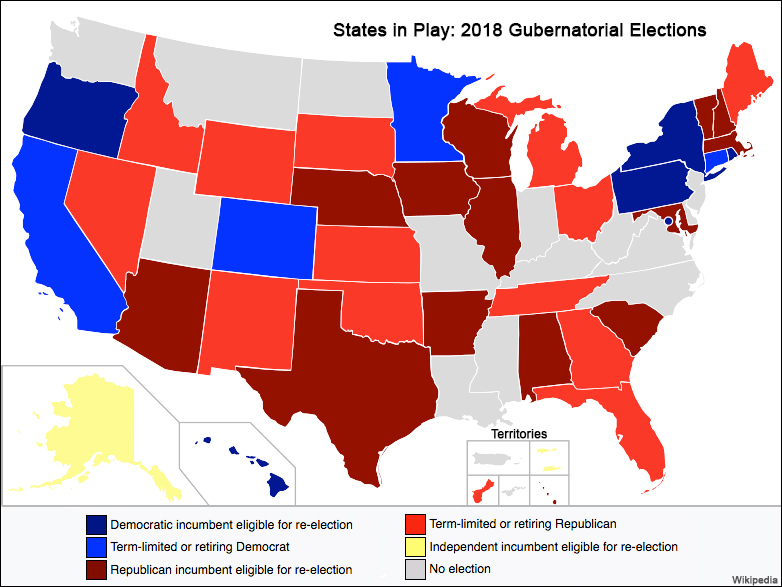
Jan. 25, 2018 — Earlier this month, we set the stage for the Senate and House campaigns. Today, we look at another important election platform, that of the nation’s governors. Though these races will elect people who will obviously determine future individual state policy, most of the 2018 gubernatorial winners will carry redistricting veto power in 2021. Therefore, these elections also carry national implications.

Of the 36 governors’ campaigns, 17 will be open races mostly due to state term limit laws. While the Democrats must protect the preponderance of US Senate seats this year, the opposite situation exists in the governors’ races. Here, Republicans must defend 26 state houses, 13 of which are open seats.

Of the 13 GOP incumbents seeking re-election, three are actually running for governor for the first time. Govs. Kay Ivey (R-Alabama), Kim Reynolds (R-Iowa), and Henry McMaster (R-South Carolina) were all lieutenant governors who ascended to their current position because the person elected in 2014 is no longer in office.

Alabama’s Gov. Robert Bentley (R) was forced to resign as part of a plea bargain arrangement over campaign finance violations. The other two state chief executives, Terry Branstad (IA) and Nikki Haley (SC), accepted positions in the Trump Administration. At this point in the election cycle, all three unelected governors are favored to win a full term.

Continue reading →

Senate Candidates 2018 – Part II

By Jim Ellis

Jan. 18, 2018 — We continue with our two-part series reviewing the announced candidate status in each state. Yesterday, Minnesota former Gov. Tim Pawlenty (R) announced that he would not enter the special election against appointed Sen. Tina Smith (D). Therefore, the second Minnesota seat will be re-stated:

Minnesota: Appointed Sen. Tina Smith (D) – seeking election
Candidate Filing Deadline: June 5, 2018
State Primary: Aug. 14, 2018
• Karin Housley (R) – State Senator; Attorney
• Tom Emmer (R) – US Representative; 6th District; 2010 Governor nominee – possible candidate
• Michele Bachmann (R) – Former congresswoman; former presidential candidate – possible candidate

New Jersey: Sen. Bob Menendez (D) – seeking re-election
Candidate Filing Deadline: April 2, 2018
State Primary: June 5, 2018
• Bob Hugin (R) – Pharmaceutical company CEO – possible candidate
2 Minor Democratic candidates
2 Minor Republican candidates
1 Independent candidate

New Mexico: Sen. Martin Heinrich (D) – seeking re-election
Candidate Filing Deadline: Feb. 6, 2018
State Primary: June 5, 2018
• Mick Rich (R) – State Labor Commissioner

New York: Sen. Kirsten Gillibrand (D) – seeking re-election
Candidate Filing Process Ends: April 19, 2018
State Primary: June 26, 2018
1 Minor Democratic candidates
3 Minor Republican candidates

North Dakota: Sen. Heidi Heitkamp (D) – seeking re-election
Candidate Filing Deadline: April 9, 2018
State Primary: June 12, 2018
• Tom Campbell (R) – State Senator; agri-business owner
• Rick Berg (R) – Former at-large US Representative
• Gary Emineth (R) – Former ND Republican Party chairman

Ohio: Sen. Sherrod Brown (D) – seeking re-election
Candidate Filing Deadline: Feb. 7, 2018
State Primary: May 8, 2018
Michael Gibbons (R) – Venture capitalist
• Jim Renacci (R) – US Representative; 16th District
• Jim Tressel (R) – Youngstown State U President; former football coach, Ohio State University – possible candidate
• J.D. Vance (R) – Venture capitalist; author – possible candidate

Pennsylvania: Sen. Bob Casey Jr. (D) – seeking re-election
Candidate Filing Deadline: March 6, 2018
State Primary: May 15, 2018
• Paul Addis (R) – Energy company executive
• Cynthia Ayers (R) – Former National Security Agency staff member
• Lou Barletta (R) – US Representative; 11th District
• Jim Christiana (R) – State Representative
3 Minor Democratic candidates
3 Minor Republican candidates
1 Independent candidate

Rhode Island: Sen. Sheldon Whitehouse (D) – seeking re-election
Candidate Filing Deadline: June 27, 2018
State Primary: Sept. 12, 2018
• Bob Flanders (R) – Former state Supreme Court justice
• Bobby Nardolillo (R) – State representative
1 Independent candidate

Tennessee: Sen. Bob Corker (R) – Retiring – Open Seat
Candidate Filing Deadline: April 5, 2018
State Primary: Aug. 2, 2018
• Marsha Blackburn (R) – US Representative; 7th District
• Stephen Fincher (R) – Former US Representative; 8th District
• Phil Bredesen (D) – Former governor; former Nashville mayor
4 Minor Republican candidates
1 Minor Democratic candidate

Texas: Sen. Ted Cruz (R) – seeking re-election
Candidate Filing Deadline: Completed December 11, 2018
State Primary: March 6, 2018
Run-off Election: May 22, 2018
• Beto O’Rourke (D) – US Representative; 16th District
• Bruce Jacobson (R) – Evangelical Cable TV executive
2 Minor Democratic candidates
3 Minor Republican candidates
5 Libertarian candidates

Utah: Sen. Orrin Hatch (R) – Retiring – Open Seat
Candidate Filing Deadline: March 15, 2018
State Primary: June 26, 2018
• Dan McCay (R) – State representative – possible candidate
• Evan McMullin (R) – Former Independent presidential candidate – possible candidate
• Mitt Romney (R) – Former GOP presidential nominee; ex-MA governor – possible candidate
• Chris Stewart (R) – US Representative; 2nd District – possible candidate
• Jenny Wilson (D) – Salt Lake County councilwoman
1 Minor Republican candidate
2 Minor Democratic candidates
1 Libertarian candidate

Virginia: Sen. Tim Kaine (D) – seeking re-election
Candidate Filing Deadline: March 29, 2018
State Primary: June 12, 2018
• Nick Freitas (D) – State Delegate
• E.W. Jackson Sr. (R) – Minister; former lieutenant governor nominee
• Corey Stewart (R) – Pince William Co Bd Chairman; 2017 Governor candidate
• Jim Gilmore (R) – Former governor; ex-Senate & presidential candidate – possible candidate
1 Minor Republican candidate

Vermont: Sen. Bernie Sanders (I/D) – seeking re-election
Candidate Filing Deadline: May 31, 2018
State Primary: Aug. 14, 2018
1 Minor Democratic Candidate
1 Independent Candidate

Washington: Sen. Maria Cantwell (D) – seeking re-election
Candidate Filing Deadline: May 18, 2018
State Primary: Aug. 7, 2018
1 Minor Democratic candidate
1 Libertarian candidate
3 Independent candidates

West Virginia: Sen. Joe Manchin (D) – seeking re-election
Candidate Filing Deadline: Jan. 27, 2018
State Primary: May 8, 2018
• Don Blankenship (R) – Former coal company CEO; convicted felon
• Evan Jenkins (R) – US Representative; 3rd District
• Patrick Morrisey (R) – Attorney General
• Paula Jean Swearingen (D) – Environmental activist
6 Minor Republican candidates
2 Minor Democratic candidates

Wisconsin: Sen. Tammy Baldwin (D) – seeking election
Candidate Filing Deadline: June 1, 2018
State Primary: Aug. 14, 2018
• Kevin Nicholson (R) – Businessman
• Leah Vukmir (R) – State Senator
• Eric Hovde (R) – Venture capitalist; 2012 Senate candidate – possible candidate
4 Minor Republican candidates
1 Constitution Party candidate
1 Veterans Party candidate
1 Independent candidate

Wyoming: Sen. John Barrasso (R) – seeking re-election
Candidate Filing Deadline: June 1, 2018
State Primary: Aug. 21, 2018
• Gary Trauner (D) – Former Teton County School Board Chair; ex-congressional nominee (2006; ’08)
• Foster Freiss (R) – Mutual Fund founder; GOP donor – possible candidate
• Erik Prince (R) – Security firm founder – possible candidate


Major Sources:
• Politics1.com political blog
• Ballotpedia.com website
• State Elections offices
The Senate Picture – Re-cap

34-in-cycle-us-senate-seats

By Jim Ellis

Nov. 28, 2017 — During the Thanksgiving holiday week, we previewed all 34 current Senate races. Today, we wrap-up with the often-described 30,000-foot national overview perspective.

The Alabama special Senate election scheduled for Dec. 12 will tell us a great deal about the coming regular cycle. While the Roy Moore-Doug Jones race is not likely to provide a voting trend preview since the contest has been tainted with scandal, it will signal whether or not the Democrats own a path to the Senate majority.

If Democrat Jones wins the Alabama special, it would give his party 49 seats, thus making their two primary Republican conversion targets in Arizona and Nevada enough to claim majority status, assuming all 25 of their defense seats are held, which, of course, is no easy task. If Republican Moore can hold Alabama, despite being jettisoned by the national GOP leadership, that would secure the Republican majority because such an outcome relegates Democrats’ chances of netting the three GOP seats they need within the regular cycle as highly unlikely.

Continue reading →