Tag Archives: Gov. Tom Wolf

Fetterman Leads Oz in PA;
Beasley Takes a Lead Over Budd in NC;
Sisolak Edges Lombardo in NV

By Jim Ellis — June 17, 2022

Senate
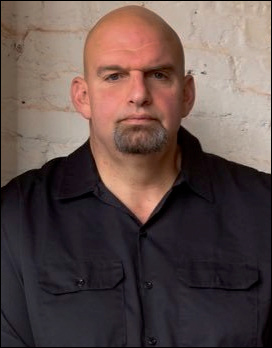
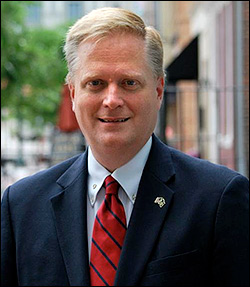
Democratic Pennsylvania Senate nominee, Lt. Gov. John Fetterman

Pennsylvania: Recuperating Fetterman Leads Oz — A new Suffolk University survey looks to be the first poll taken after the marathon Republican primary finally settled for Dr. Mehmet Oz by a total of 951 votes of 1.345 million ballots cast. The Suffolk poll (June 10-13; 500 likely Pennsylvania voters; live interview) produces interesting and mixed results. On the ballot test, Democratic nominee John Fetterman, the state’s lieutenant governor, leads Dr. Oz 46-37 percent, but a full 50 percent of the respondents said they want their vote “to change the direction President Biden is leading the nation.”

While President Biden has an upside-down job approval rating — 39:54 percent favorable to unfavorable, Dr. Oz surprisingly records an equivalently bad 28:50 percent ratio. On the other hand, Fetterman, at home recovering from a stroke suffered from a blood clot to the heart, records a positive 45:27 percent favorability index.

North Carolina: Beasley Up in New Study — Survey USA, polling for WRAL-TV in Raleigh (June 8-12; 650 likely North Carolina voters; online) found former North Carolina state Supreme Court Chief Justice Cheri Beasley taking a 44-40 percent lead over US Rep. Ted Budd (R-Advance). It is probable that we can expect to see close polls like this all the way through the general election.

Turning back to the 2020 NC Senate campaign, and just in the month of October during the Sen. Thom Tillis (R) vs. Cal Cunningham (D) campaign, 28 surveys were publicly released and the Democratic nominee led in all but four studies. Sen. Tillis would go onto win re-election with a 49-47 percent margin, suggesting that North Carolina aggregate polling contained a slight structural Republican undercount.

Governor

Nevada: Sheriff Lombardo Tips Gov. Sisolak — On Tuesday, Clark County Republican Sheriff Joe Lombardo scored a 38-28-13-8 percent Republican primary win over retired professional boxer Joey Gilbert, ex-US Sen. Dean Heller, and North Las Vegas Mayor John Lee to set the general election card. Lombardo will oppose Democratic Gov. Steve Sisolak in November.

Sheriff Lombardo, with a plurality of 37.8 percent of the vote within a field of 15 candidates, including former US Sen. Dean Heller who placed third in the primary vote, captured the party nomination for the state’s top post. This will be a battleground contest in November.

WPA Intelligence, polling for the Club for Growth organization just before the Nevada primary but released a day after (June 4-6; 502 likely Nevada voters; live interview) projects Lombardo taking a one-point, 48-47 percent, edge over rival Sisolak. The poll appears to undercount the non-affiliated voters, which is the largest of the party division segments.

How emphasizing both major parties changes the ballot test is unknown, but with the Lombardo-Sisolak question breaking virtually even, it is clear that this race begins as a toss-up.

Pennsylvania: Mastriano Closely Trails — The aforementioned Suffolk University poll (see Senate section above), while finding Republican nominee Mehmet Oz trailing Lt. Gov. John Fetterman well outside the polling margin of error, sees state Sen. Doug Mastriano (R-Fayetteville) trailing Attorney General Josh Shapiro (D) by only a 44-40 percent margin.

Gov. Tom Wolf’s job approval is a very poor 38:60 percent favorable to unfavorable. And, by a 29:54 percent ratio, the respondents believe Pennsylvania is on the wrong track. Though Sen. Mastriano is viewed by many as being extreme, the sour taste voters apparently have for the current gubernatorial administration and their poor perception of how the state is performing economically is putting the new Republican nominee in competitive position despite whatever perceived negative baggage he might be carrying.

House

NV-4: Peters Projected as Primary Winner — Insurance agency owner and Army veteran Sam Peters has been projected the winner of the 4th District Republican primary, with a 48-41 percent victory spread over Nevada state Assemblywoman Annie Black (R-Mesquite).

Peters now advances to challenge incumbent Steven Horsford (D-Las Vegas) in a seat that rates D+5, but is staged to be competitive in 2022. The 4th stretches from northern Clark County into the central part of the state. Horsford was unopposed for re-nomination.

In the state’s other three congressional races, 1st District incumbent Rep. Dina Titus (D-Las Vegas) will face financial planner Mark Robertson who placed first in a field of eight Republican candidates that included former US Rep. Cresent Hardy.

In the northern Nevada 2nd CD, Rep. Mark Amodei (R-Carson City) was re-nominated with 54.5 percent of the vote against perennial candidate Danny Tarkanian (32.7 percent) and three others. In the general election, Rep. Amodei will face Democrat Elizabeth Krause. The congressman becomes a heavy favorite for re-election.

In competitive District 3, another of the Clark County seats, Rep. Susie Lee (D-Las Vegas) was easily re-nominated and will face Republican attorney April Becker who captured two-thirds of the Republican vote.

Considering these results and that it appears more Republicans voted in this primary than Democrats (about one-third of the vote is still unaccounted for), Nevada will be one of the key battleground states in the nation’s 2022 midterm election.

Pennsylvania Candidate Filings Close

Click on image to go to FiveThirtyEight.com’s interactive redistricting map.


By Jim Ellis

March 18, 2022 — Pennsylvania’s candidate filing period closed late Tuesday, yielding official May 17 primary candidates for the Keystone State’s federal and state offices. A total of 11 contenders are competing in the Republican gubernatorial primary, while Attorney General Josh Shapiro is unopposed on the Democratic side. Gov. Tom Wolf (D) is ineligible to seek a third term.

The Senate race is also a crowded affair, with seven Republicans compared to five candidates in the Democrat primary. The Senate contest is also open because Sen. Pat Toomey (R) is not seeking a third term. A total of 66 Democrat, Republican, and some minor party candidates filed for the congressional races. The state’s Independent and minor party filing deadline does not conclude until Aug. 1.

Among the Republican gubernatorial candidates are two former US House members, Lou Barletta and Melissa Hart, two state senators, Doug Mastriano (R-Fayetteville) and Senate President Pro Tempore Jake Corman (R-Bellefonte), former US Attorney Bill McSwain, Montgomery County Commissioner Joe Gale, and former Delaware County Commissioner Dave White. Shapiro will begin the general election campaign as the favorite, if for no other reason than seeing the eventual Republican nominee having to fight through a tough crowded primary.

The Senate race features primaries on both sides. The Democrats are in basically a two-way affair between Lt. Gov. John Fetterman, who leads in all polls and fundraising, and US Rep. Conor Lamb (D-Pittsburgh). Both Democrats are from western Pennsylvania, but Fetterman should have the advantage in the vote-rich southeastern PA region considering his statewide ties, thus making him the favorite for the party nomination.

Two candidates on the Republican side have been spending heavily to attempt to separate themselves from the rest of the field, and they look to have succeeded. Former hedge fund CEO David McCormick is leading in the latest two statewide surveys over television doctor Mehmet Oz. Former US Ambassador to Denmark Carla Sands and 2018 lieutenant governor nominee Jeff Bartos are the trailing candidates.

The Pennsylvania Senate general election will be one of the most important in the nation, and the results will go a long way toward determining which party will control the majority in the next Congress.

In the congressional races, Reps. Brendan Boyle (D-Philadelphia), Dwight Evans (D-Philadelphia), Mary Gay Scanlon (D-Swarthmore), Dan Meuser (R-Dallas), Lloyd Smucker (R-Lancaster), John Joyce (R-Hollidaysburg/Altoona), Guy Reschenthaler (R-Peters Township), Glenn Thompson (R-Howard/State College), and Mike Kelly (R-Butler) all should have easy rides to re-election. Rep. Reschenthaler has no Republican or Democratic opposition post-filing. Rep. Joyce faces only one minor Republican opponent.

Rep. Fred Keller’s (R-Middleburg) safe Republican 12th District was eliminated because Pennsylvania lost a seat in national reapportionment. He originally was going to challenge Rep. Meuser in the 9th District Republican primary, but later decided to retire.

Pennsylvania hosts four major congressional races: two open seats and two top challenger efforts against vulnerable Democratic incumbents.

Rep. Lamb’s open 17th District, which sits west of Pittsburgh and stretches to the Ohio border, has a rating of D+1 according to the FiveThirtyEight data organization; this is the type of seat that Republicans must convert if they are to win the majority in November.

Continue reading

Lamb Decision Affects Redistricting

Pennsylvania Congressional Districts


By Jim Ellis

Aug. 2, 2021 — Last week’s news reports indicating that western Pennsylvania US Rep. Conor Lamb (D-Mt. Lebanon/Pittsburgh) will enter the open Senate race on Aug. 6, could mean the congressional district he leaves behind becomes a redistricting victim.

Assuming the reports are accurate, and the congressman does launch a Senate campaign, he will be the only Pennsylvania US House delegation member to create an open seat. All others appear poised to run for re-election. This means the Lamb district will likely become the top option for elimination since reapportionment reduces by one the 18-member Keystone State delegation.

The Census Bureau is now telling the states they will finally begin receiving their redistricting data the during the week of Aug. 16. It appears the total data transmission will come in two waves, so all states should have what they need to begin holding public input hearings in early September, and then drawing districts. This is more than six months behind a typical redistricting calendar.

Based upon the latest available information, the state will have 17 congressional districts with a population number of what appears to be just under 765,000 individuals. Looking at the current 18 districts, all must gain population, hence the reason the state is losing another CD. Since 1930, Pennsylvania has lost more congressional districts than any other state.

The region requiring the least new population is Pennsylvania’s southeastern sector, in and around the city of Philadelphia. The western segment is the area that needs the most population with the exception of Rep. Scott Perry’s (R-Dillsburg/Harrisburg/York) south-central 10th District that will require the lowest human increase, most likely fewer than 20,000 persons.

The three seats needing the greatest influx are all in west Pennsylvania, surrounding the city of Pittsburgh. Rep. Glenn “GT” Thompson’s (R-Howard) predominantly rural 15th CD looks to be the district most in need of additional residents, likely over 85,000 individuals. Next is Rep. Mike Kelly’s (R-Butler) 16th District that begins north of Pittsburgh and moves all the way to Lake Erie. This seat would need approximately 80,000 more people. Third is the district south of Pittsburgh to the West Virginia border, Rep. Guy Reschenthaler’s (R-Peters Township) 14th CD, that must also gain another 80,000 bodies.

Lamb’s 17th District that encompasses almost half of Allegheny County, all of Beaver County, and a sliver of Butler, needs over 50,000 more people, which pairs well with Rep. Mike Doyle’s (D-Pittsburgh) downtown 18th District that will likely require approximately 65,000 new residents. Therefore, eliminating District 17 with now no incumbent to protect it would allow the downtown seat to be filled and remain solidly Democratic, but also meet the population needs in the districts to the south, southeast, and north of Pittsburgh.

Politically, such a configuration would likely change the 9R-9D delegation to 9R-8D, and that will be a hard sell for the Republican legislature to make to Democratic Gov. Tom Wolf, especially when he knows a partisan Democratic state Supreme Court could well have the final say once the inevitable lawsuits are filed.

Such a configuration involving the elimination of current District 17 works fairly seamlessly, though, particularly if the final map improves for the Democratic incumbents in the politically marginal eastern PA seats of District 7 (Rep. Susan Wild-D; Allentown/ Bethlehem/Easton), and 8 (Rep. Matt Cartwright-D; Scranton/ Wilkes-Barre/Mt. Pocono). This might be enough to sell a map that forces the Democrats to take the one-seat loss in the west.

There are many ways to re-configure congressional maps, and we will soon see many versions coming from Pennsylvania and all other multi-district states. Rep. Lamb’s move to the Senate race, however, if in fact he ultimately makes the statewide jump, will significantly change the course of Pennsylvania congressional redistricting.

PA-12 NOMINEE KELLER IMMEDIATELY HITS OPPONENT, PELOSI, SANDERS, CORTEZ

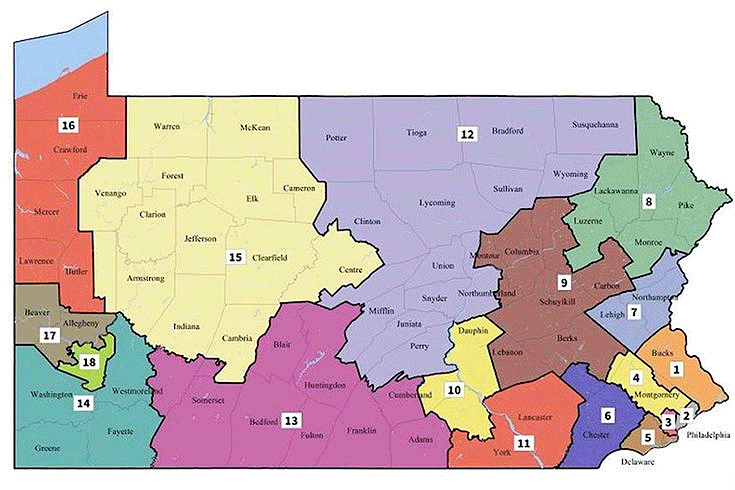
Pennsylvania Congressional Map | Source: Pennsylvania State Supreme Court (click on image to see full size)

By Jim Ellis

Pennsylvania state Rep. Fred Keller
(R-Mifflinburg)

March 5, 2019 — On Saturday, during a seven-hour marathon special district convention marked with controversy, the central Pennsylvania Republican delegates chose state Rep. Fred Keller (R-Mifflinburg) as the party nominee for 12th District Congressman Tom Marino’s (R-Williamsport) vacated seat. Marino resigned from the House at the end of January due to professional and health reasons.

Gov. Tom Wolf (D) scheduled the replacement special election for May 21. Under Pennsylvania election law, the various political parties call a district convention or meeting for purposes of choosing a special election nominee. Originally, 24 potential Republican candidates expressed interest in running, but only 14 were successful in having their names placed into nomination before the 200-plus assembled delegates.

After Rep. Marino’s unexpected announcement, Democrats responded quickly and re-nominated their 2018 candidate, local college professor Marc Friedenberg, who advances into the special general election hoping to perform better than he did against Marino. In November, Friedenberg lost 66-34 percent while spending just over $90,000 on his federal campaign.

Saturday’s convention became controversial once the Club for Growth organization began sending mailers to the delegates attacking state Rep. Jeff Wheeland (R-Williamsport), over his record on tax issues as a legislator first elected in 2014. Prior to gathering in Williamsport, Wheeland appeared as the candidate most likely to become the delegates’ choice.

But, the convention was rocked when the representative’s stepson distributed a letter detailing how Wheeland abused he and his mother. The combination attack was enough to drive Wheeland from the race just before the fourth ballot, yielding the victory for Keller.

Continue reading

Special Election Called in PA

By Jim Ellis

Pennsylvania Congressional Map | Source: Pennsylvania State Supreme Court (click on image to see full size)

Jan. 29, 2019 — While most of the special election banter surrounds the still undecided North Carolina situation (NC-9), the first new election of the year has just been scheduled.

With Pennsylvania Rep. Tom Marino’s (R-Williamsport) surprise announcement earlier this month that he was resigning from the House, a move he made official on Jan. 23 to accept a position in the private sector, Gov. Tom Wolf (D) has already called the replacement special election to fill the new vacancy.

As expected, Gov. Wolf made the 12th District special election concurrent with the Pennsylvania statewide municipal primary, which is scheduled for May 21. There will be only the one election, and the candidate receiving the most votes, regardless of percentage attained, will serve the balance of the current term.

In the meantime, the 15 county chairmen from the qualified political parties will schedule a convention in the district to choose their respective nominee. Generally, the convention is weighted to accurately reflect the population spread throughout the district. Therefore, the most populous counties within the 12th CD, Lycoming and part of Centre that together possess 29 percent of the district’s population, will likely have a commensurate number of votes at the special nominating convention.

Continue reading

Pennsylvania Rep. Marino to Resign

By Jim Ellis

New Pennsylvania Congressional Map | Source: Pennsylvania State Supreme Court (click on image to see full size)

Jan. 22, 2019 — Five-term Pennsylvania Rep. Tom Marino (R-Williamsport) announced that he is leaving Congress next week to accept a professional position in the private sector. Marino was first elected to the House in 2010, after serving five years as the US Attorney for the Middle District of Pennsylvania, and 11 years as District Attorney of Lycoming County.

In the Republican wave election of 2010, Marino ousted then-Rep. Chris Carney (D) by a 55-45 percent margin and has averaged 66.1 percent of the vote in his subsequent re-elections. The 2018 Pennsylvania court-ordered redistricting plan re-numbered his 10th Congressional District to 12 and created a seat where 68 percent of the constituency carried over from the previous district.

In 2017, President Trump nominated Rep. Marino as the Director of the Office of National Drug Control Policy, commonly referred to as the nation’s “drug czar.” But the congressman withdrew his name when experiencing some negative reaction during the confirmation process.

The 12th District will now go into a special election cycle. After the seat becomes officially vacant on Jan. 23, Gov. Tom Wolf (D) will have 10 days to issue a writ of election to fill the newly open seat. The various political parties will meet in special conventions to choose their nominees, with the winners proceeding to an election date that the governor will assign. It is most likely he will schedule the 12th District special to run concurrently with the Pennsylvania municipal primary, which is calendared for May 21.

Continue reading

Post-Primary Pennsylvania:
Setting the Stage

By Jim Ellis

New Pennsylvania Congressional Map - Philadelphia Area

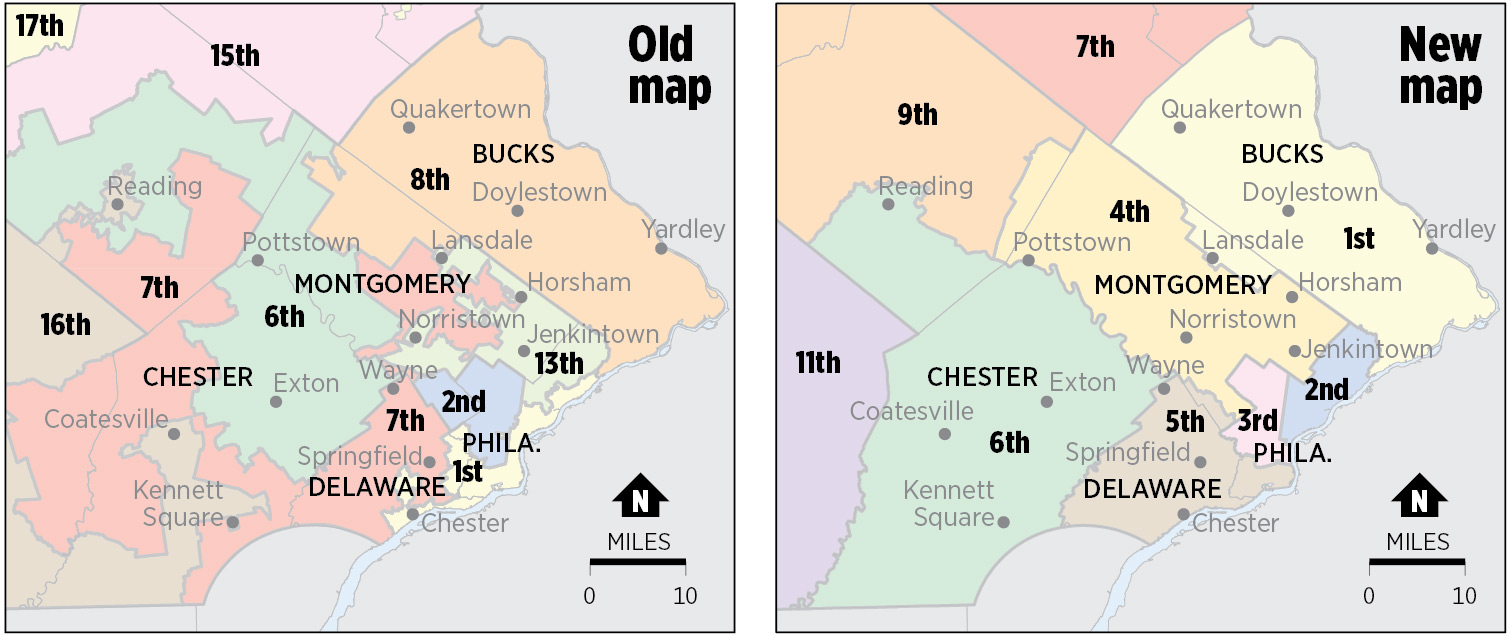
New Pennsylvania Congressional Map – Philadelphia Area | Click on map to see full-size Philadelphia area congressional line up

May 17, 2018 — Now that the dust is settling from the May 15 Pennsylvania primary, we can firmly look at which of the races have already produced November winners and the match-ups for what will be key toss-up races.

Keystone State voters chose nominees for the statewide offices and congressional races where incumbents and candidates ran for the first time in newly drawn districts.

The governor’s race will feature incumbent Democrat Tom Wolf seeking a second term against York Republican state senator and businessman Scott Wagner. With Gov. Wolf’s job approval improving after a rocky first two years in office, he is clearly favored for re-election in the fall.

Sen. Bob Casey Jr. (D) runs for a second term against Rep. Lou Barletta (R-Hazelton). Barletta tallied a 63 percent Republican primary victory on Tuesday, setting up the general election contest. Sen. Casey is favored for re-election, and it remains to be seen if Rep. Barletta can attract the attention and financial support to make this a top-tier challenge race.

The Pennsylvania primaries produced Tuesday winners who have virtually punched their tickets to Washington in districts that heavily favor their political party. Aside from incumbents Brendan Boyle (D-Philadelphia), Dwight Evans (D-Philadelphia), Lloyd Smucker (R-Lancaster), Tom Marino (R-Williamsport), Glenn Thompson (R-Howard), Mike Kelly (R-Butler), and Mike Doyle (D-Pittsburgh) securing re-election, the following non-incumbents will also head to DC after the general election:

• District 4 (Montgomery County) – State Rep. Madeleine Dean (D)
• District 5 (Delaware County) – Ex-local official Mary Gay Scanlon (D)
• District 9 (East-Central PA) – Former Revenue Comm. Dan Meuser (R)
• District 13 (Central PA) – Dr. John Joyce (R)
• District 14 (Southwest PA) – State Sen. Guy Reschenthaler (R)

Races that heavily favor a particular candidate, yet still feature competition:

• District 6 (Chester County) – Chrissy Houlahan (D) vs. Greg McCauley (R)
• District 10 (Harrisburg/York) – Rep. Scott Perry (R) vs. George Scott (D)

The following are the highly competitive districts that will dominate the Pennsylvania congressional campaign landscape in the fall:

• District 1 (Bucks County) – Rep. Brian Fitzpatrick (R) vs. Scott Wallace (D)
• District 7 (Allentown/Bethlehem) – Marty Nothstein (R) vs. Susan Wild (D)
• District 8 (Scranton/Wilkes-Barre) – Rep. Matt Cartwright (D) vs. John Chrin (R)
• District 17 (Allegheny County) – Rep. Keith Rothfus (R) vs. Rep. Conor Lamb (D)

An Open Review – Part II

By Jim Ellis

Feb. 7, 2018 — Continuing our look at the 53 open seats, today we look at those in the Lean R & D categories. It is here where Democrats will have to score big if they are to claim the House majority.

2018-elections-open-seatsThe US Supreme Court declined to hear the Pennsylvania Republicans’ arguments earlier this week to move the live redistricting case to the federal level. To review, the Pennsylvania Supreme Court ruled the current congressional map a political gerrymander, but without citing any election law statute violations. State Senate Republicans are refusing to provide the court with their requested data until the legislative bodies are informed about what is legally wrong with the current map.

In the meantime, the court has already appointed a special master from Stanford University to draw a new plan, and moved the congressional candidate filing deadline from March 6 to March 20. Additionally, Gov. Tom Wolf (D) is already saying he will veto the legislature’s map, so all of these developments suggest that a new, Democrat-friendly map will likely be in place before the 2018 elections.

In our overview of the current House open seat configuration, two of the Pennsylvania seats are either in the Lean D category (PA-7; Rep. Pat Meehan-R) or Lean R (PA-15; Rep. Charlie Dent). With a new map likely to collapse most, if not all, of the four open Republican seats, it is likely that both of the aforementioned districts will find themselves in the Democratic column after the next election.

Currently, the Lean Democrat column consists only of Republican seats. In addition to PA-7, and probably adding at least PA-15 post-redistricting, retiring GOP Reps. Ileana Ros-Lehtinen (R-FL) and Frank LoBiondo (R-NJ) are leaving seats that are also trending toward the Democratic side of the political ledger.

Continue reading

Looking at the Governors’ Races

2018-gubernatorial-elections

By Jim Ellis

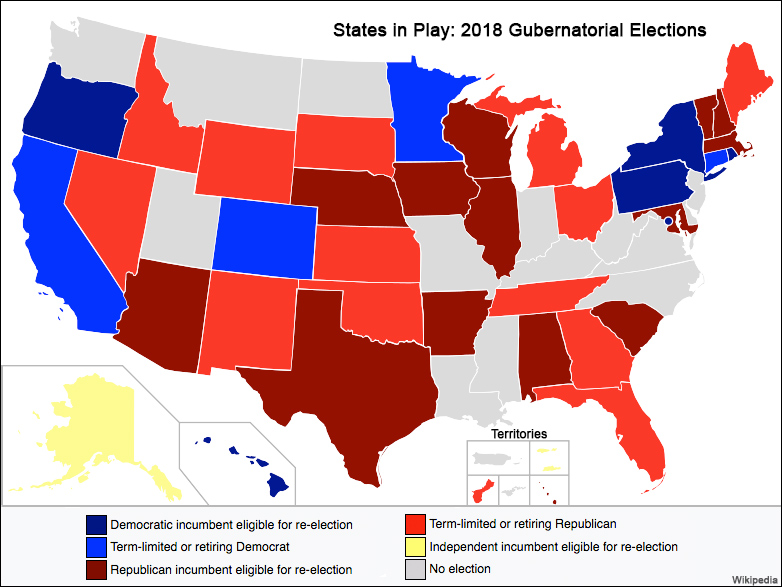
Jan. 25, 2018 — Earlier this month, we set the stage for the Senate and House campaigns. Today, we look at another important election platform, that of the nation’s governors. Though these races will elect people who will obviously determine future individual state policy, most of the 2018 gubernatorial winners will carry redistricting veto power in 2021. Therefore, these elections also carry national implications.

Of the 36 governors’ campaigns, 17 will be open races mostly due to state term limit laws. While the Democrats must protect the preponderance of US Senate seats this year, the opposite situation exists in the governors’ races. Here, Republicans must defend 26 state houses, 13 of which are open seats.

Of the 13 GOP incumbents seeking re-election, three are actually running for governor for the first time. Govs. Kay Ivey (R-Alabama), Kim Reynolds (R-Iowa), and Henry McMaster (R-South Carolina) were all lieutenant governors who ascended to their current position because the person elected in 2014 is no longer in office.

Alabama’s Gov. Robert Bentley (R) was forced to resign as part of a plea bargain arrangement over campaign finance violations. The other two state chief executives, Terry Branstad (IA) and Nikki Haley (SC), accepted positions in the Trump Administration. At this point in the election cycle, all three unelected governors are favored to win a full term.

Continue reading

The Pre-Redistricting Wars

redistricting-2018By Jim Ellis

Jan. 23, 2018 — Though we are in the fourth election cycle of the decade, the 2011 redistricting fights are still continuing. The US Supreme Court has been dealing with redistricting cases from five states, but it all could come to a head soon.

The lawsuits first break down into the familiar racial gerrymandering claims, which have been in the courts in some fashion or another since the Voting Rights Act was created in 1965. Currently, the topic of political gerrymandering is hot as both parties are pursuing live complaints against their opponents for drawing congressional and state legislative boundaries to maximize the political standing of one party to the unfair detriment of the other.

The major political gerrymandering case comes from Wisconsin and will likely set the tone for other such suits in Michigan, North Carolina, Texas, and possibly Maryland. Democrats are bringing the action in the first four states, while Republicans are challenging Maryland’s 6th Congressional District.

Obviously, the high court is getting involved to craft a new set of rulings relating to both racial and political gerrymandering before the entire country goes into a 50-state redistricting round upon completion of the 2020 census. Therefore, election results in 2018 and 2020 to establish incumbency both in the House of Representatives and the state legislatures become critically important.

Last week, the US Supreme Court stayed the most recent North Carolina lower court redistricting ruling. The three-judge panel invalidated the maps, determining that majority Republicans engaged in political gerrymandering. In the last election cycle the Tar Heel State boundaries were also re-drawn to remedy what the panel cited as racial gerrymandering reasons, but the Democrats were unable to make a dent in the Republicans’ 10R-3D delegation advantage.

Continue reading