Tag Archives: Josh Mandel

Vance on the Move Up in Ohio; Kemp Leads in Georgia While McKee Trails in Rhode Island; Redistricting News

By Jim Ellis

May 3, 2022:

Senate
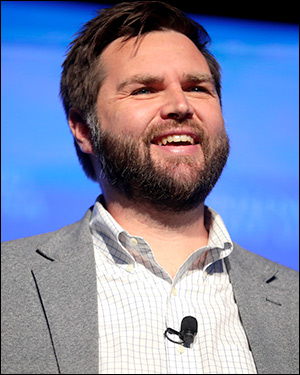
Author J.D. Vance, Ohio Senate Candidate

Ohio: Vance Continues Upward Swing — A pair of ending polls were released late last week as the Ohio Senate candidates move toward today’s primary election. Fabrizio Lee & Associates survey (April 25-26; 800 likely Ohio Republican primary voters) and Emerson College (April 28-29; 885 likely Ohio Republican primary voters) both see author J.D. Vance forging into the lead.

FL&A, polling for the Protect Ohio Values PAC, posts Vance to his largest lead of the campaign, 31-19-12-12-8 percent over former state treasurer, Josh Mandel, businessman Mike Gibbons, state Sen. Matt Dolan (R-Chagrin Falls), and ex-Ohio Republican Party chair Jane Timken, respectively. Emerson College sees a similar division, but with Vance holding a much smaller edge, 24-22-18-14-7 percent over Mandel, Dolan, and Gibbons, with Timken again trailing behind. It has become clear that both Vance and Dolan have upward momentum, while Gibbons and Timken have lost their earlier political steam. Mandel continues to poll relatively well but appears unable to expand his base of support.

The numbers are close enough that any of the current top four candidates, meaning Vance, Mandel, Dolan, and Gibbons could win the nomination vote.


Governor

Georgia: Gov. Kemp Takes Commanding Lead — Survey USA largely confirms the University of Georgia poll that found Gov. Brian Kemp (R) establishing a firm lead in his battle against former US Sen. Davide Perdue, who former President Donald Trump endorses. The S-USA poll (April 22-27; 2,000 Georgia adults; 1,587 registered Georgia voters; 559 likely Georgia Republican primary voters; online) posts Gov. Kemp to a strong 56-31 percent advantage, suggesting that he would win the Republican nomination outright on May 24. Should all candidates be held under the majority mark, however, the top two would advance to a July 26 runoff election.

The general election ballot test gave Gov. Kemp a 50-45 percent edge over former state House Minority Leader and 2018 gubernatorial nominee Stacey Abrams (D).

Rhode Island: Gov. McKee Trailing — A Lake Research Partners survey for the Nellie Gorbea gubernatorial campaign was released on Friday (April 11-14; 600 likely Rhode Island Democratic primary voters; live interview) and the results project Rhode Island Gov. Dan McKee as falling behind Secretary of State Gorbea as the candidates move toward the late Sept. 13 Democratic primary. The ballot test posts Gorbea to a 30-24-10 percent edge over Gov. McKee and ex-Secretary of State Matt Brown. All other candidates fell below the 10 percent threshold. Gov. McKee ascended to his position in March when then-Gov. Gina Raimondo (D) resigned to accept her appointment as US Commerce Secretary.


Redistricting

New York: Deadlines; Primary Moved — Steuben County Surrogate Court Judge Patrick McAllister, who first declared the New York congressional and state Senate maps unconstitutional in reference to the New York constitution, now has the responsibility of drawing the new plans. He has appointed Dr. Jonathan Cervas of the Institute of Politics and Strategy at Carnegie Mellon University as the special master who will prepare the maps for judicial review. He was given a May 16 deadline to submit the plans, and the court has set May 20 as the date to publicly announce the final maps for the 2020 election cycle.

Additionally, the judge moved the date of at least the congressional and state Senate primary from June 28 to Aug. 23. The legislature now has the opportunity of moving the races not affected by the congressional and state Senate redistricting maps to join those who are now scheduled for Aug. 23. If the legislators take no action, New York will have two primary dates this year.


States

Georgia: Sec of State Race Runoff Bound — As mentioned above in the Georgia governor’s section, Survey USA conducted a statewide Peach State poll. Secretary of State Brad Raffensperger (R), who was at the focal point of the state’s post-election voting controversy, has captured the lead in the Republican primary ballot test, but with just 31 percent. While enjoying an 11-point lead over US Rep. Jody Hice (R-Greensboro), Raffensperger is well short of reaching the 50 percent mark in order to clinch the nomination. Therefore, the most likely scenario is he and Rep. Hice will advance to a July 26 runoff election.

Southern incumbents who are forced into secondary votes typically fail to finish on top, so even if he places first on May 24, Raffensperger will likely be regarded as an underdog for the run-off election.
Ohio Poll Indicates Changes; Oregon 5th CD Shows Disappointing Development; More

By Jim Ellis

April 27, 2022:

Author J.D. Vance, Ohio Senate Candidate

Ohio: Poll Posts Dolan to GOP Lead; Fox Shows Vance as Being Up — The Blueprint Polling firm tested the Ohio Republican field for the upcoming Senate primary next week (April 21-24; 634 likely Ohio Republican primary voters; live interview), and yet another candidate has been identified as moving into first place. This is the first survey that projects state Sen. Matt Dolan (R-Chagrin Falls), who is a minority owner of the Cleveland Guardians baseball club, in the top position and the fourth of the five major candidates who in one poll or another has led the field.

In this study, Sen. Dolan posts 18 percent support, just a point ahead of author J.D. Vance, with businessman Mike Gibbons, former state Treasurer Josh Mandel, and ex-Ohio Republican Party chair Jane Timken following with 13, 12, and 7 percent preference.

Fox News was also in the field during virtually the same time period (April 20-24; 906 likely Ohio Republican primary voters; live interview), but they produce a much different result. According to this poll, it is Vance, who picked up former President Donald Trump’s endorsement just a handful of days before the poll period, in the lead at 23 percent with Mandel, Gibbons, Dolan, and Timken trailing with 18-13-11 and 8 percent, respectively.

As both the Blueprint and Fox analyses illustrate, with less than one week remaining in the campaign, realistically four of the candidates still have a chance to catch a flyer at the end and claim the nomination. Early voting continues for the May 3 primary election.


House

OR-5: Biden Endorses Rep. Schrader — In a disappointing development for challenger Jamie McLeod-Skinner, President Biden just involved himself in the impending May 17 Oregon primary by endorsing veteran Rep. Kurt Schrader (D-Canby) over the more progressive contender who is an attorney and former local city manager. The two are vying to win the party primary for the newly constructed 5th District that is rated D+3, making it the most competitive seat in the Beaver State.

Continue reading

Ohio Entering Home Stretch

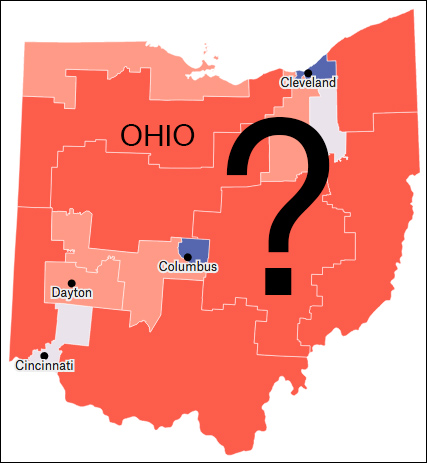
Ohio redistricting map in question (click on map above or here to go to FiveThirtyEight’s interactive map)

By Jim Ellis

April 18, 2022 — We’re on the threshold of entering the final two weeks before the Ohio primary on May 3, and the candidates for all offices are swinging into high gear just as the state Supreme Court rejected another set of redistricting maps.

The state House of Representatives and Senate primaries having been postponed, because the legislature and state Supreme Court cannot find common ground pertaining to the new district lines; no new primary date has been set. Late last week, for the fourth time, the judicial body rejected the legislature’s draw for their own political boundaries in both chambers. Since the Ohio Constitution does not give the courts the authority to draw maps, all the justices can do is return the plans to the legislature and order them to begin yet again.

News is occurring in the races that are headed toward nominations. The new Remington Research Group US Senate GOP primary survey (April 11-12; 884 likely Ohio Republican primary voters, interactive voice response system) finds former state treasurer, Josh Mandel, forging back into the lead and state Sen. Matt Dolan (R-Chagrin Falls), a minority owner of the Cleveland Guardians MLB franchise, moving into contention.

The statewide GOP primary ballot test finds Mandel leading the pack with 23 percent as compared to businessman Mike Gibbons’ 17 percent, Sen. Dolan’s 15 percent, former Ohio Republican Party chair Jane Timken posting 12 percent, and author J.D. Vance trailing at 10 percent.

Reports suggest that an endorsement coming for Vance from former President Donald Trump is imminent. If so, the polling standings will change. Remington posed a second ballot test question to the current respondent pool asking how they would vote if knowing Trump had endorsed Vance. While Mandel would still lead, his edge shrinks to 19 percent; Gibbons, Dolan, and Vance would bunch together at 15 percent; and Timken drops to 11 percent.

If the reports of Trump endorsing Vance prove true, the Remington poll suggests that such a move would likely change the race’s flow. The Trump involvement in such a manner appears to make a close contest even closer.

The Remington survey is the tenth poll taken of the Republican Senate primary since the beginning of February. Gibbons has led in six of them and Mandel three, with one showing a three-way tie among the two aforementioned men and Vance. The fact that all five of the key candidates, at one time or another, have been within shouting distance of the lead suggests that any one of them could catch a flyer at the end and propel themselves into a nomination victory with a small plurality.

On the Democratic side, US Rep. Tim Ryan (D-Warren/Youngstown) appears to be cruising toward an easy nomination victory against former Consumer Financial Protection Bureau official and 2020 failed congressional candidate Morgan Harper.

Continue reading

Senate Candidate Gibbons Confirmed to be in Top Tier of Ohio Race

By Jim Ellis

Ohio US Senate candidate Mike Gibbons forges into a small lead.

Feb. 15, 2022 — At the end of January, a Cygnal research poll found investment banker and 2018 Ohio US Senate candidate Mike Gibbons forging into a small lead over perennial GOP primary leader Josh Mandel, the state’s former treasurer and 2012 US Senate nominee. Two new polls now confirm Gibbons’ outright lead in the battle to succeed retiring Republican Sen. Rob Portman.

The previously released internal Gibbons’ campaign Cygnal January poll (Jan. 28-30; 929 likely Ohio Republican primary voters, SMS text & email) gave their candidate a 16-13 percent lead over Mandel, with author J.D. Vance showing in double-digits at 10 percent.

The new pair of statewide Buckeye State Republican US Senate primary surveys find the businessman again overtaking Mandel to claim first place. A co/efficent independent survey (Feb. 6-8; 613 likely Ohio Republican primary voters, text & automated interview responses) posts Gibbons to a 20-18 percent lead over Mandel, with state senator and Cleveland Guardians MLB club minority owner Mike Dolan, former state Republican Party chair Jane Timken, and Vance trailing with 7, 6 and 5 percent support, respectively.

The new Cyngal research firm’s internal poll for the Gibbons campaign (Feb. 8-10; 609 likely Ohio Republican primary voters, SMS text & email), however, gives their candidate a much larger margin over the rest of the field.

One possible reason for the increase in support is that another business candidate, car dealer Bernie Moreno, who had reached as high as 11 percent in a January poll, withdrew from the race in early February, reportedly at the behest of former President Donald Trump. It is conceivable that much of the Moreno support base went to Gibbons, since the two candidates were similar in several ways.

The most recent Cygnal numbers find Gibbons holding a surprisingly large 23 percent support figure, with Mandel, Vance, Timken, and Dolan trailing with 11, 9, 8 and 6 percent, respectively. The Gibbons’ media blitz, to an extent featuring Sen. Rand Paul (R-KY) endorsing the investment banker’s candidacy, has clearly achieved its goal of propelling Gibbons into serious contention for the party nomination that will be decided in the open May 3 primary election.

Though the study’s analysis report doesn’t provide segmented numbers, the Cygnal pollsters claim the Gibbons lead is widespread within the key Republican voter groups. They report Gibbons leads by double digits among “self-identified Trump Republicans as well as Traditional Republicans.”

Gibbons also maintains similar leads with “self-identified Extremely Conservative, Very Conservative, and Somewhat Conservative voters, and over the nearest competitor among both men and women.” He also “holds strong advantages among Evangelical Protestants, Mainline Protestants, and Catholic voters.”

Gibbons’ effort is almost exclusively self-financed, to the tune of $11.4 million, all as a loan to the campaign. He has spent $5.8 million and had a cash-on-hand reserve of $6.4 million at the end of 2021. Therefore, even if his fundraising operation does not raise major money, Gibbons has enough to compete for the nomination.

Continue reading

Ohio Data: Below the Surface

By Jim Ellis

Sept. 10, 2021 — The London-based Redfield & Wilton Strategies international survey research firm tested electorates in several American states at the end of August, and today we look at their Ohio results. With a major open Senate campaign and a Republican governor seeking re-election in 2022, the Buckeye State is once again a national political focal point for the coming political year.

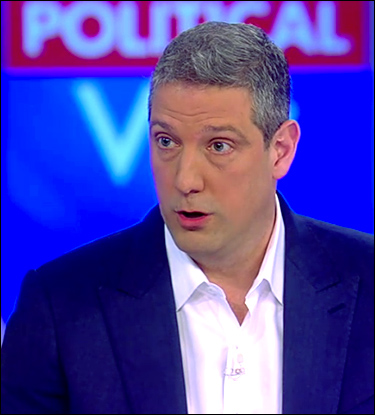
Ohio Rep. Tim Ryan announces his candidacy for the 2020 Presidential Election on the TV talk show, “The View.”

The Redfield & Wilton poll (Aug. 20-24; 1,200 likely Ohio voters) finds the Republican Senate candidates performing adequately opposite US Rep. Tim Ryan (D-Warren/Youngstown), who, at this early stage, has become the Democrats’ consensus statewide Senate contender.

Former state treasurer and 2012 US Senate candidate Josh Mandel (R) holds a 51-47 percent ballot test lead over Rep. Ryan within the sample segment who are self-identified as likely 2022 general election voters. Author J.D. Vance (R) largely falls into a dead heat with Ryan, trailing 37-36 percent, as does former Ohio Republican Party chair Jane Timken who places within two points of the congressman, 38-36 percent.

In the governor’s race, incumbent Republican Mike DeWine, who former Rep. Jim Renacci is challenging in the GOP primary from the ideological right, looks to be in strong shape against potential Democratic opponents. If Dayton Mayor Nan Whaley were the Democratic gubernatorial nominee, Gov. DeWine would post a 46-27 percent advantage. Should Cincinnati Mayor John Cranley become the Democratic nominee, he would trail the governor by a slightly larger 47-25 percent spread.

Generally, the Ohio polling pattern leans Democratic in the early going and then closes in the Republican candidates’ favor, while consistently understating GOP strength.

In the 2020 presidential election, Ohio polls in July of the election year were returning Joe Biden leads of 4-8 percentage points before former President Trump would rebound to score a mean average 1.0 percent polling lead close to election day, and then win the state going away with an eight-point margin, 53-45 percent. In 2016, the pattern was similar. In the July-September period, Hillary Clinton held leads of between 4 and 7 percentage points only to see the average favor Trump by a 2.2 percent spread. He would win the state 51-43 percent.

The same pattern occurred for Sen. Rob Portman (R) in 2016 and was present to a degree against Sen. Sherrod Brown (D) in 2018. In June through September of that year, certain polls found former Gov. Ted Strickland (D) leading incumbent Portman with a 3-6 point edge. As the race closed, Sen. Portman established an average 18-point lead and won 58-37 percent.

Even in a Democratic victory, the polling trend favoring Democrats early and then closing for the GOP toward election day was again present. During June-September of 2018, Sen. Brown held leads between 13-17 points. Going into the election, his polling average had slipped to 11 points, and he only won with a 6.4 percent margin.

Keeping this pattern in mind and then looking at the underlying Biden job approval numbers in the R&W poll suggests that even today, the GOP candidates are poised for a stronger finish than the current results yield. Overall, the Redfield & Wilton figures point to a 40:46 percent favorable to unfavorable presidential approval ratio for Biden, which isn’t particularly bad particularly in a state that the subject did not win. The underlying numbers, however, point to a much greater negative.

Continue reading

Dueling Dual Polls

By Jim Ellis

Detroit Police Chief James Craig

June 14, 2021 — We open the week looking at conflicting polls from two Midwestern statewide races. The Michigan Republican Party published a survey that conflicts with earlier data we’ve seen about their state’s gubernatorial race, and the two leading Ohio Republican Senate contenders both released recent surveys that best tell their own campaign story.

In the Wolverine State, the Competitive Edge Research & Communication firm, polling for the Michigan Republican Party (May 26-June 4; 809 likely Michigan voters), projects retired Detroit Police Chief James Craig (R), who is soon expected to announce his bid for governor, leading incumbent Gretchen Whitmer (D) by a spread beyond the polling margin of error, 45-38 percent.

Curiously, the MIGOP leadership also released the ballot test that featured the party’s 2020 and 2018 US Senate nominee, John James. Here, the CERC finds Gov. Whitmer leading James, 50-45 percent. James has not indicated that he is going to enter the gubernatorial race, so it is surprising to see the Republican Party releasing data that puts one of their top political figures in a weaker position. James lost the 2020 Senate race to incumbent Gary Peters (D) by a tight 50-48 percent count.

In May, the Target Insyght survey research company (May 9-11; 800 registered Michigan voters) painted a different picture, forecasting a 48-42 percent lead for Gov. Whitmer over Craig and 49-39 percent against James.

The difference could be attributed to James retiring as chief of police after the TI poll was conducted and before the CERC survey was taken. Former chief Craig is a well-known and popular figure in Detroit, and the accolades given him for his tenure could certainly have helped his polling data at least on a short-term basis.

Additionally, Gov. Whitmer has been caught in several inconsistencies regarding her COVID shutdown policies, which were some of the most drastic in the country. More than once, she was found not following the letter of her own directives for herself and family.

Continue reading

Rep. Murphy to Challenge Sen. Rubio

By Jim Ellis

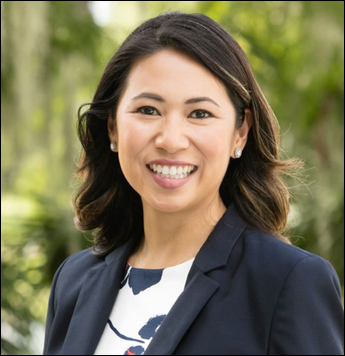
Florida Rep. Stephanie Murphy (D-Winter Park)

May 14, 2021 — According to the Axios news site, insiders close to Florida Rep. Stephanie Murphy (D-Winter Park) say that she has made the decision to challenge Sen. Marco Rubio (R) next year and will formally announce her campaign next month. The move had been expected for some time.

Rep. Murphy, a native of the country of Vietnam, was first elected to the House in 2016, defeating veteran Republican incumbent John Mica after the state Supreme Court had re-drawn the Florida congressional districts and made the 7th CD more Democratic. She unseated Rep. Mica 51-49 percent, and then scored re-election victories of 58 and 55 percent in 2018 and 2020, respectively.

A strong fundraiser, Rep. Murphy obtained over $3 million for both of her incumbent re-election campaigns. She ended the 1st quarter 2021 with a cash-on-hand figure of $1.43 million. Sen. Rubio posted $3.9 million in his campaign account during the same reporting period.

Assuming Murphy does enter the race next month, Democrats will have a credible challenger to Sen. Rubio, but one who still must be considered a decided underdog. In 2010, Sen. Rubio, then a state representative, defeated then-governor Charlie Crist, who was running as an Independent, and Democratic Congressman Kendrick Meek by a 49-30-20 percent margin. He was re-elected in 2016 with a 52-44 percent vote spread over then-congressman Patrick Murphy (D).

Florida races, as we know, are always competitive and usually very close, though the state has been trending more Republican over the past several elections. A Rubio-Stephanie Murphy race promises to become a national campaign.

With the Democrats apparently attracting a strong candidate in Florida, it is a good time to review the other key races.

In Pennsylvania, both parties are headed for very crowded primaries as each works to nominate a candidate to hopefully succeed retiring Sen. Pat Toomey (R). Afghan War veteran Sean Parnell entered the Republican primary earlier this week, but his only venture into elective politics was recording a two-point loss to Rep. Conor Lamb (D-Pittsburgh) last November in an Allegheny County suburban district.

Rep. Lamb, himself, may join the Democratic Senate campaign, meaning both parties are going to host political dogfights for the party nomination. In any event, however, the Pennsylvania race will be a top-tier national campaign.

Continue reading

Senate Action

Ohio Rep. Tim Ryan (D-Warren/Youngstown)

By Jim Ellis

April 29, 2021 — While most of the political world was focused on the census’s national apportionment announcement, several Senate moves of merit were also made this week.

In Ohio, US Rep. Tim Ryan (D-Warren/Youngstown) finally made his fledgling US Senate campaign official. Originally saying he would announce sometime in March only to postpone formal entry to an undetermined time, Ryan finally made his declaration on Monday. Once former Ohio Health Director Amy Acton — who was running slightly ahead of Rep. Ryan in early Democratic primary polling — said that she was not going to run, that paved the way for the 10-term congressman to open with an apparently clear path to the Democratic nomination.

Simultaneously, in Georgia, another announcement was made but one that contained a surprising message. Former Rep. Doug Collins (R), who placed third in the 2020 US Senate jungle primary, also declared his political intentions for 2022 on Monday. While observers were expecting the former four-term congressman to enter the current Senate race, he instead said he will not run for any office next year but didn’t close the door on returning to elective politics in another election cycle.

Yesterday, in another largely expected move, former North Carolina state Supreme Court Chief Justice Cheri Beasley (D), who lost her position in November by a scant 401 votes statewide, announced via video that she will enter the open Tar Heel State Senate race.

The three moves help further set the stage for a trio of critical Senate contests that will each contribute mightily toward determining which party breaks the 50-50 tie and assumes control of the body after the next election.

Despite Rep. Ryan looking as the candidate to beat for the Ohio Democratic nomination, the general election won’t be easy. Additionally, this political cycle could be different in terms of political options for Ryan. He has several times dipped his toe in the statewide or national waters only to return to the safety of his House district. With it now a certainty that Ohio will lose another congressional seat, and with at least one scenario suggesting that the eliminated seat could become Rep. Ryan’s 13th District, his usual fail-safe move might not again be available.

Continue reading

Senate Money

By Jim Ellis

April 23, 2021 — Continuing our analysis of early 2022 campaign cycle fundraising based upon the first quarter 2021 Federal Election Commission disclosure reports, today we look at the key US Senate contests.

Tracking the Senate race dollars is much different than the House because the FEC groups incumbent statewide campaigns by election cycle. Therefore, the receipts column covers the period from when the incumbents last ran through March 31, 2021. This means the senators are reporting dollars raised from Jan. 1, 2017 through the first quarter deadline. For candidates just entering the 2022 campaign — those in the open seats for example — the disclosure period begins Jan. 1, 2021.

Therefore, the receipts category is not as telling for Senate campaign standing as it is for the House campaigns. Thus, the key category to gauge where the Senate candidates stand in relation to the 2022 campaign cycle is their cash-on-hand total.

The chart below focuses on the races thought to be competitive for the 2022 election. As we have seen in modern times, the financial aspect of Senate campaigns is less important than for the House in determining or projecting final outcome because so much is now spent on the statewide races even in the smallest of states.

Typically, Senate nominees from both parties consistently have more than adequate financial resources with which to communicate their messages. Furthermore, the current income/spending figures as they relate to candidate committees don’t account for the large amount of outside independent expenditures that now accompany almost all competitive US Senate campaigns, which certainly can alter final outcome.

In terms of clarification, Sen. Raphael Warnock’s (D-GA) total of $27,517,878 includes the amount raised for his statewide runoff campaign that was decided on Jan. 5, 2021. This explains why his receipts total is so high, and far beyond any other incumbent or candidate listed on the chart.

Continue reading

Ohio Rep. Stivers to Resign

By Jim Ellis

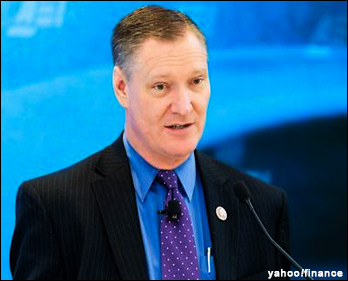
Ohio Rep. Steve Stivers (R-Columbus)

April 21, 2021 — The growing list of US House vacancies has risen again, but this one came as a surprise. Ohio Rep. Steve Stivers (R-Columbus), who had raised close to $1.4 million in the first quarter of 2021 in testing the waters for a possible US Senate campaign, has decided to leave elective politics altogether.

Effective May 16, Stivers will resign from the 15th District in the Buckeye State’s US House delegation in order to become President/CEO of the Ohio Chamber of Commerce. His about-face from joining the open Senate race leaves former Ohio Republican Party chair Jane Timken and ex-state Treasurer Josh Mandel in the GOP field along with author and venture capitalist J.D. Vance, who appears ready to enter.

Also in the contest are businessmen Mike Gibbons, a 2018 US Senate candidate, and Bernie Moreno. North Ohio state senator and Cleveland Indians baseball club minority owner Matt Dolan is also a possible Republican candidate. Democrats appear to be coalescing around Rep. Tim Ryan (D-Warren/Youngstown), though he has yet to formally announce his Senate campaign.

The Stivers move could open the door for one or more of his congressional colleagues who have been considering the Senate race, namely Reps. Mike Turner (R-Dayton), Bill Johnson (R-Marietta), and David Joyce (R-Russell Township).

The Stivers’ seat will become the fifth vacated House district once he departs in the middle of May and the Louisiana congressional vacancy (LA-2) is filled in a special election this Saturday, April 24. Currently, in addition to Rep. Stivers, seven House members have announced they will not be standing for re-election in 2022, either retiring or seeking a different office.

Once Rep. Stivers officially resigns, Gov. Mike DeWine (R) will schedule a replacement special election for the balance of the term. It is more than likely he will follow the same calendar set for the state’s other congressional vacancy, the 11th District of former representative and now-Housing & Urban Development Secretary Marcia Fudge (D-Cleveland/Akron).

The 11th CD schedule calls for a partisan primary on Aug. 3 with the general election Nov. 2. Ohio election law allows for special elections to be called only in certain months, hence the long cycle for these vacant seats.

The 15th District sits largely in the center of the state and occupies approximately 20 percent of Franklin County, including part of the city of Columbus, and also contains all or portions of 11 other counties. The seat encompasses the rural areas west, southwest, and southeast of the Columbus metro area. It is traditionally Republican, though a version of the seat elected Democrat Mary Jo Kilroy in the 2008 election after eight-term Rep. Deborah Pryce (R) had retired. Kilroy defeated Stivers, then a state senator, in a close 46-45 percent result. He returned for a re-match in 2010 and won a convincing 13-point victory, ousting Kilroy after just her first term in office. Since his first victorious congressional election, Stivers averaged 63.1 percent of the vote over five re-election campaigns.

In presidential elections, the 15th District backed Donald Trump in both of his national elections, 56-42 percent last November, and 55-40 percent against Hillary Clinton in 2016. We can expect a crowded special Republican primary with the eventual nominee beginning the general cycle as the favorite. Democrats can be expected, however, to field a credible nominee and will likely make a concerted effort to win the special election.

Though Ohio is set to lose a congressional district in reapportionment, the 15th, which touches the main growth region of the state, in and around Columbus, will likely remain relatively intact. According to the latest available Census records, the 15th would need to gain less than 10,000 residents, while adjacent Districts 3 (Rep. Joyce Beatty-D) and 12 (Rep. Troy Balderson-R), the only two over-populated CDs in Ohio, must shed people.