Tag Archives: Utah

Electoral College — Left Coast, Right Coast; Republicans Choose Nominee in VA-4; North Carolina Supreme Court Rejects Map

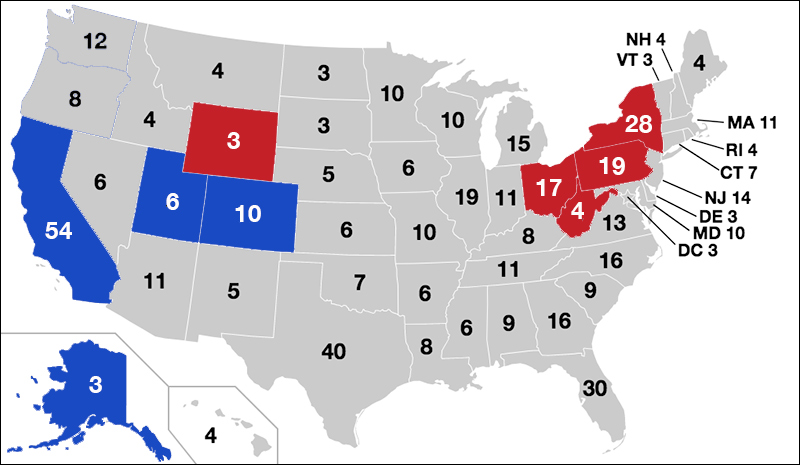
Electoral College Votes Per State, 2022 — blue moving more left, red moving more right


By Jim Ellis — Tuesday, Dec. 20, 2022

President

Electoral College: West Moving Left, East Moving Right — The researchers at the University of Virginia’s Center for Politics have completed a study regarding the country’s ideological shift during the past 20-plus years. Tracking all 50 states’ presidential votes from the 2000-2020 elections, we first see all of the western states now voting Democratic in greater percentages with the exception of Wyoming. The biggest shifts came in Alaska, California, Colorado, and Utah, though two of those four states still regularly produce at least smaller majority or plurality Republican victories.

Conversely, the south and east have trended more Republican with the strongest swings generally occurring in central south with only Maryland, Rhode Island, Vermont, and Virginia becoming more Democratic. Mid-Atlantic states such as New York, Ohio, Pennsylvania, and West Virginia have moved decidedly more Republican, though two of these four continue to regularly deliver clear Democratic majorities. Remaining constant in their voting pattern during this entire 20-year span are Illinois, Maine, Massachusetts, Minnesota, and South Carolina.

House

VA-4: Republicans Choose Special Election Nominee — Republicans re-nominated their 2020 and 2022 candidate in the Saturday, Dec. 17 “firehouse primary” through Ranked Choice Voting. The local 4th District Republican Party leadership did not release the actual results, only to say that pastor and US Navy veteran Leon Benjamin had defeated former Mecklenburg School Board member Dale Sturdifen, and non-profit advocacy organization director Derrick Hollie. Benjamin now advances to the Feb. 21 special general election to replace the late Rep. Donald McEachin (D-Richmond). He will again be a decided underdog in a district that the FiveThirtyEight data organization rates D+30.

The Democratic firehouse primary will be held today. Four candidates filed to run: state Sens. Jennifer McClellan (D-Richmond) and Joseph Morrisey (D-Richmond), former state Delegate Joseph Preston, and businessman Tavorise Marks. While the special election will be held in late February, Gov. Glenn Younkin’s (R) call required the parties to choose nominees by Dec. 23.

In another development, Colette McEachin, the late congressman’s widow, announced her endorsement of Sen. McClellan, joining most of the Virginia Democratic establishment who has already done so.

States

North Carolina: NC Supreme Court Tosses State Senate Map — The North Carolina state Supreme Court, with the 4-3 Democratic majority on the cusp of expiring, rejected the NC Senate map on a partisan vote as a partisan gerrymander. But, the action is likely to be short-lived and adds fuel to the speculation that the new legislature will re-draw all of the state’s redistricting maps after commencement. Doing so may well render moot the partisan gerrymandering case that the US Supreme Court recently heard.

Under North Carolina legislative procedure, the governor has no veto power over redistricting legislation, so whatever the legislature passes will become law. Because of the current court’s farewell action, the state Senate map must be re-configured. Since Republicans gained two seats on the state Supreme Court in the November election and will have a 5-2 majority beginning in January, the likelihood of not only the Senate map being redrawn but also the state House and congressional delegation plans is greater. The latter two maps are court-drawn interim placeholders, which the legislature can replace at any time.

Race Roundup: Closing Trends — Volatile and/or Interesting Races to Watch on Election Day

By Jim Ellis — Tuesday, Nov. 8, 2020

With Election Day upon us, we have come to the end of the 2022 cycle; while strategists from both parties are either confidently or reluctantly predicting a Republican victory, not all of the numbers suggest a Red Wave outcome.

Polling generally suggests a good trend for Republicans, but the margin spread is certainly not overwhelming, and under what should be present if this were to become a wave election.

The Biden favorability index is an upside-down 44:53 percent favorable to unfavorable, which is commensurate with Donald Trump’s numbers prior to the 2018 midterm election.

Overall, it does appear that Republicans are well positioned to claim the House majority. The professional and media pollster range is wide and runs from a Republican +14 to +48 seats, but even the low-end prediction would deliver the majority. It is reasonable to believe that the Republican gain factor will be under 30, but this lower number range would still project a comfortable House majority in the new Congress.

The Senate is a flat toss-up with so many races, Arizona, Georgia, Nevada, New Hampshire, Ohio, Pennsylvania, and Wisconsin all polling within a small single-digit margin. Therefore, predicting the eventual outcome has a high difficulty factor. One point that is predictable, though: count on many of these races going into political overtime. This means it could take days if not more than a week to report a final tally on an inordinate number of close races.

With that said, let’s look at the competitive/volatile/interesting races to watch this Election Day:

Senate

Georgia — The Peach State features one of the top US Senate races, and one of only four Republican major conversion targets. Sen. Raphael Warnock (D), who won the special election runoff in 2021, is now running for a full six-year term. His opponent is former University of Georgia and professional football star Herschel Walker (R), and the two will continue to battle until the last vote is counted. Georgia has a majority vote rule, so if neither Sen. Warnock nor Walker reaches 50 percent, the two will advance to a post-election runoff on Dec. 6.

Ohio — The Senate race dominates the Buckeye State political landscape as US Rep. Tim Ryan (D-Warren/Youngstown) and author J.D. Vance (R) battle to the last day of this election cycle. Vance has led in most polls, 15 of the last 19 with two ties, but the Democrats appear to be performing slightly better in early voting. Vance has to be rated at least a soft favorite to win today. Ohio is a must-win for the GOP.

Helping Vance is a strong Gov. Mike DeWine (R) at the top of the ticket who is poised to win a landslide victory. Keeping the DeWine coalition consistent for Vance will be a boost that could well propel him to the victory.

Pennsylvania — Possibly the most publicized Senate race in the country, the open contest between Democratic Lt. Gov. John Fetterman and television’s Dr. Mehmet Oz (R), could well decide the Senate majority. Many believe that the party carrying Pennsylvania punches their majority ticket. Dr. Oz now leads in most polls after the two met in a highly publicized debate on Oct. 25. Early voting patterns, however, appear to favor the Democrats. Remembering that the Republican primary took about a month to decide because the result was so close, it wouldn’t be surprising to see something similar occur for the general election.

Arizona — The Grand Canyon State is one of the hottest political domains in the country. A now toss-up Senate race featuring Sen. Mark Kelly (D) and venture capitalist Blake Masters (R) suggests that this contest will end with a very tight result. Sen. Kelly has a slight lead in polling, but Republicans have the edge in early voting. The governor’s race is also close, but late polls suggest that Republican Kari Lake has late momentum in her race opposite Democratic Secretary of State Katie Hobbs.

Utah — The US Senate race is dominating the Utah political talk as Sen. Mike Lee (R) is on the ballot for a third term, but this time he faces a strong Independent opponent in former presidential candidate (2016) Evan McMullin. Democrats decided not to file their own candidate so they could coalesce behind McMullin and give Sen. Lee a serious challenge. The strategy has worked, as polling shows this race falling into the single-digits. Chances are still good that Sen. Lee pulls away, but this contest has evolved into much more of a serious battle than once believed. Look for a close result.

Nevada — Tough races from the top of the ballot to the bottom face Silver State voters, and the Senate race may yield the Republicans their top conversion opportunity. Polling between former Attorney General Adam Laxalt (R) and Sen. Catherine Cortez Masto (D) has been nip and tuck. With an improved standing among Hispanics, who now are 31 percent of the state’s population, an upset here is possible. Additionally, Democratic Gov. Steve Sisolak is in a toss-up race with Clark County Sheriff Joe Lombardo (R), and this seat could flip, too. Also, in the House races, the new redistricting plan drew three lean Democratic seats in Las Vegas. To gain the majority, Republicans will need to score at least one win here.

Washington — Republicans recruited a strong candidate in former nurse and veterans’ activist Tiffany Smiley. She has become a very good fundraiser and has polled close to veteran Sen. Patty Murray (D). Though Smiley has put forth a strong effort, it will likely not be enough in a strongly Democratic state like Washington. Though she may do well, a close loss is likely on the political horizon for Smiley as opposed to losing big.

Iowa — Sen. Chuck Grassley (R) leads a very busy Iowa ballot. The senator, seeking an eighth term at the age of 89, is in a closer battle than he usually finds, this time against retired Navy Adm. Michael Franken (D). Late polling suggests that Sen. Grassley will still win a comfortable, but not overwhelming victory, meaning he is likely to win in the 50s instead of his customary 60s. Conversely, Gov. Kim Reynolds (R) looks to be cruising to re-election and is expected to easily win a second full term.

North Carolina — The Senate race tops the Tar Heel State ballot this year, and we see another typically tight North Carolina race concluding. US Rep. Ted Budd (R-Advance) looks to have a slight edge over former state Supreme Court Chief Justice Cheri Beasley (D). Early voting is about even between the two parties in terms of past performance, so this is another race that comes down to the wire.

New Hampshire — In what is arguably the most prevalent swing state in the country, the Granite State ballot is filled with competitive races. Gov. Chris Sununu (R) looks set to win a fourth two-year term, but the state’s US Senate race is one of the country’s hottest. Though retired Gen. Don Bolduc (R) was virtually left for politically dead after winning the Sept. 13 primary by a percentage point, he has battled back into competitive status against one-term incumbent and former governor, Sen. Maggie Hassan (D). This race is now in upset alert status.

House

Alaska — The Last Frontier was the host of an interesting special at-large US House election that saw the new Ranked Choice Voting (RCV) system produce state Rep. Mary Peltola (D-Bethel) as the replacement for the late Rep. Don Young (R), even though Republican candidates received an aggregate 60 percent of the vote.

Now, however, it appears Rep. Peltola will win a full term regardless of whether she faces former Gov. Sarah Palin or businessman Nick Begich III, whose late grandfather and uncle served in the House and Senate, respectively, as Democrats. It is further possible that Peltola will win without even being forced into an RCV round because she may garner majority support on the initial vote.

Conversely, Sen. Lisa Murkowski could be forced into a RCV runoff with former State Administration Director Kelly Tshibaka in what would be a double-Republican race. This is a competitive contest, though the Republicans will retain the seat regardless of the outcome.

Iowa — In the state’s four congressional districts, three are highly competitive. In new District 1, freshman Rep. Ashley Hinson (R-Marion/Cedar Rapids) is favored for a second term against state Sen. Liz Mathis (D-Hiawatha). Rep. Mariannette Miller-Meeks (R-Ottumwa), who was a six-vote winner in 2020, looks to be favored over state Rep. Christina Bohannan (D-Iowa City) by more than her previous victory margin, but this contest will still be close in a historically competitive southeastern Iowa district.

The 3rd District battle may be the most competitive within this trio of races. Rep. Cindy Axne (D-Des Moines) is running for a third term having never achieved majority support. State Sen. Zach Nunn (R-Bondurant) is one of the Republicans’ better challenge candidates, and certainly has a strong chance of unseating the congresswoman. This race will draw national attention on election night.

Ohio — In the House races, veteran Cincinnati Rep. Steve Chabot (R) has a much more difficult district (D+3 according to the FiveThirtyEight data organization) than his previous seat. Cincinnati City Councilman Greg Landsman (D) is the Democratic nominee. Rep. Chabot will need a strong turnout model to record another victory in his long 26-year congressional career.

Though veteran Rep. Marcy Kaptur (D-Toledo), the dean of the Democratic conference with 40 years of congressional service, fared poorly in redistricting as her seat went from D+16 to R+6, the Republicans nominating January 6th participant J.D. Majewski has helped paved the path for the congresswoman’s re-election.

The new 13th District, located southeast of Cleveland and anchored in Akron, features a tight contest between Republican attorney Madison Gesiotto Gilbert and Democratic state Rep. Emilia Sykes (D-Akron). In a seat rated R+2, this contest is anybody’s game.

Arizona — Four competitive seats are on tap in the House delegation. Rep. David Schweikert (R-Fountain Hills) face a tough first-time candidate in businessman Jevin Hodge (D) from a new 1st District that is much less Republican than his current 6th CD, a place in which his 2020 re-election percentage did not exceed 52.

Republican Eli Crane, in a new district that is heavily Republican, is favored to unseat Rep. Tom O’Halleran (D-Sedona). Restauranteur Kelly Cooper (R) is challenging Rep. Greg Stanton (D-Phoenix) in a new 4th CD that is now only slightly Democratic. While the congressman is favored, Cooper is a formidable challenger. Rep. Ann Kirkpatrick (D-Tucson) retiring leaves the new 6th CD as a toss-up battleground between former Hispanic Chamber of Commerce executive Juan Ciscomani (R) and ex-state Senator Kirsten Engel (D).

Oregon — Reapportionment delivered a new seat to Oregon, which was placed in the area between Salem and Portland. The primary saw Democratic Rep. Kurt Schrader (D-Canby) lose to newcomer Jamie McLeod-Skinner, who is a former local official in Santa Clara County, Calif. Polling suggests that businesswoman and former local mayor, Lori Chavez-DeRemer (R), has a chance to score an upset win. Competition is also strong in the new 6th District and in the adjacent seat from which veteran Rep. Peter DeFazio (D-Springfield) is retiring.

New Hampshire — The Granite State’s two congressional districts are also highly competitive. Two-term Rep. Chris Pappas’ (D-Manchester) 1st District has defeated more incumbents since 2004 than any seat in the country. Polling has generally posted him ahead of former Trump White House aide Karoline Leavitt (R), but nothing is ever certain in such a volatile political domain.

Rep. Annie Kuster’s (D-Hopkinton/Concord) western state 2nd District is more Democratic than the eastern 1st, but this seat too can record close elections. If what some predict is a coming red wave truly develops, both Democratic incumbents could be unseated.

Governor

Georgia — The governor’s race is also intense, which features a re-match between now-Gov. Brian Kemp (R) and former state House Minority Leader Stacey Abrams (D). Polling suggests that Gov. Kemp will win re-election with a larger vote than the small margin he garnered in 2018, which resulted in his claiming the governorship through a one-point plus win. Though polling is generally looking good for the Republicans here, Democrats are so far exceeding their 2020 early vote performance.

Florida — Florida voters are navigating through a very busy ballot that the governor’s race headlines. Incumbent Gov. Ron DeSantis (R) appears likely to earn a comfortable, low double-digit victory over former governor and resigned congressman, Charlie Crist (D). The late-cycle polling, early voting matrix, and turnout model looks to favor Republicans, which will allow Sen. Marco Rubio (R) to turn back a strong challenge from US Rep. Val Demings (D-Orlando).

Michigan — Inconsistent polling suggests at least a semi-competitive governor’s race featuring incumbent Gretchen Whitmer (D) and challenger Tudor Dixon (R), an online radio personality. Early voting reports are heavily Democratic, which could be an indication of an impending Whitmer victory.

Oregon — The Beaver State is one of the 2022 political hotbeds. With an open governor’s race where a strong independent might flip the race to the Republican nominee in a plurality finish, Oregon is certainly a state to watch from the Pacific zone. Sen. Ron Wyden (D) faces only perennial opposition as he is on the ballot for a fifth full term.

New York — This is a close race, and incumbent Gov. Kathy Hochul (D), who ascended to the office when then-Gov. Andrew Cuomo (D) was forced to resign, finds herself in a much more difficult campaign against GOP US Rep. Lee Zeldin (R-Shirley/East Long Island) than she originally anticipated. Polling is now showing that the governor’s race is a potential toss-up. Still, the overwhelming Democratic margin in New York City should be enough to deliver Hochul a close victory at the very least.

Texas — Polling suggests a relatively close race between Gov. Greg Abbott (R) and former congressman and 2020 presidential candidate Beto O’Rourke (D). Texas Republicans typically are under-counted in polling, so it is likely that Gov. Abbott will score a stronger victory than currently projected.

Wisconsin — The Badger State is a major political battleground as close races for Gov. Tony Evers (D) and Republican Sen. Ron Johnson, are nip and tuck. Both are considered toss-ups, though polling now slightly favors Sen. Johnson in his re-election contest.

Intriguing “Real Clear” Projections Show the GOP Winning the Senate

To see this map and the data behind it, visit Real Clear Politics (RCP).

By Jim Ellis — Thursday, Oct. 27, 2022

Senate

How Republicans Look to Claim Senate Majority — The Real Clear Politics (RCP) data group released their updated US Senate projections, and their formula suggests that Republicans will claim a surprising 53-47 majority.

Such a projection seems to cut against most of the data we currently see, and, in at least three cases, their win projection is opposite of what their own current Real Clear Politics formula shows.

The crux of their predictions lies in a field entitled “Polls Underestimated,” which factors in an average under-poll for one party or the other. In the 10 Senate races they isolated, Republicans are the under-polled party in most but not all of the targeted campaigns.

Utah, Alaska, Iowa, Washington — The two competitive Senate races not included were first, Utah, where they list Sen. Mike Lee (R) as a “likely” winner, though polling generally shows his race with Independent Evan McMullin falling to within single digits. The second is Alaska, which is excluded because the contest is evolving into a race between two Republicans; hence, the seat is not a factor in determining the overall Senate majority. Also, the race between Sen. Chuck Grassley (R) and retired Navy Adm. Michael Franken (D) is also not included, but Sen. Patty Murray’s (D) battle against Republican Tiffany Smiley in Washington is added.

As mentioned above, in three of the races the RCP prognosticators are expecting a turnaround since their own current data is suggesting an opposite result.

Nevada — The RCP current polling projection in the Silver State suggests that Republican former state Attorney General Adam Laxalt holds a slight 0.8 percent lead over Sen. Catherine Cortez Masto (D). Here, RCP estimates that Democrats under-poll in Nevada by one percentage point. This should leave Sen. Cortez Masto with a 0.2 percent edge, but the table shows Laxalt holding such a lead. This appears to be an error. In any event, their final prediction shows a Laxalt victory, which is reasonable.

Arizona — A state away, Sen. Mark Kelly (D) currently holds an RCP polling lead of 2.5 percentage points over Republican opponent Blake Masters. A Republican under-poll of 1.6 is factored from results during the last three election cycles, which reduces the senator’s advantage to 0.9 percent. In 2020, a total of 21 polls were conducted of the Kelly-Martha McSally Senate race, and Kelly’s average margin was 6.6 points, yet he won only 51-49 percent. Therefore, concluding a Republican under-poll exists in Arizona is reasonable. In this situation, while their model finds Sen. Kelly leading today, RCP predicts a Republican victory for venture capitalist Masters.

Georgia — The other conclusion that is perhaps inconsistent is their prediction for the Georgia Senate race. Showing Republican Herschel Walker with a 1.1 percentage point edge after an under-poll factor of 1.4 is added to the Republican column leads the RCP final prediction that Walker and Sen. Raphael Warnock (D) would be forced into a post-election runoff on Dec. 6. Yet, in the overall count, Georgia is counted in the Republican column. Though not stated, RCP must be predicting that Walker would win the runoff election.

Under Georgia law, as we will remember from 2020, a candidate must receive majority support to win the general election. On the ballot with Sen. Warnock and Walker is Georgia Libertarian Party chairman Chase Oliver. If Warnock and Walker split the vote to where both candidates post in the neighborhood of the 48-49 percent number, then a few points going to Oliver could send the two major party nominees into a Dec. 6 secondary election with Oliver being eliminated from the mix. Thus, we will see more even intrigue on election night coming from the Peach State.

Pennsylvania — RCP is also predicting victory for two candidates who their model suggests are currently behind but who flip after adding the under-poll factor. In Pennsylvania, Democratic Lt. Gov. John Fetterman is running ahead by 1.3 percentage points according to the current RCP survey average. Adding a 3.9 percent Republican under-poll to the aggregate gives Dr. Mehmet Oz a 2.6 percent adjusted lead. RCP predicts a Dr. Oz victory on Nov. 8.

New Hampshire — The race between Sen. Maggie Hassan (D) and retired Army Gen. Don Bolduc (R) has tightened. The RCP average sees a Hassan lead of 3.6 percent but adding a large 5.4 New Hampshire Republican under-poll actually gives Gen. Bolduc a 1.8 percent edge. Still, RCP predicts a Hassan Democratic victory on Election Day.

Other Wins — Finally, the Real Clear Politics data team predicts Republicans to win the Senate races in Florida, North Carolina, Ohio, and Wisconsin, with Democrats holding Washington.

Added up, these numbers result in a 53-47 Republican majority. Possible? Yes. Likely? No.

Sen. Kennedy Poised for Win in Louisiana; Close as Ever in Georgia Senate Race; Sen. Lee struggling in Utah; Kemp Maintains Advantage

By Jim Ellis — Monday, Oct. 17, 2022

Senate

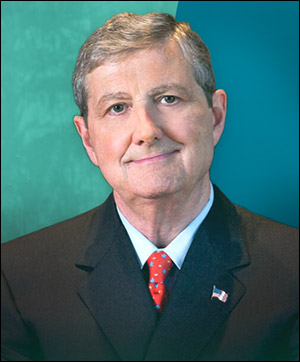
Louisiana Sen. John Kennedy (R)

Louisiana: Sen. Kennedy Poised for Outright Win — Louisiana Sen. John Kennedy (R) is on the ballot for a second term and a just released Public Policy Polling survey (Oct. 10-11; 633 likely Louisiana general election voters; interactive voice response system & text) projects that his outright win is probable. Sen. Kennedy leads retired Navy officer Luke Mixon (D) and community organizer Gary Chambers (D), 53-16-8 percent.

Even after the PPP surveyors posed negative questions about Sen. Kennedy in an effort to push respondents away from him, the ballot test did not change. On election night, expect Sen. Kennedy to be re-elected in Louisiana’s jungle primary system with a majority vote and thus avoiding a secondary Dec. 10 runoff election.

Georgia: As Close as Ever — Despite the serious attacks that Republican Herschel Walker has absorbed over the past 10 days, a series of three polls, including one from a Democratic source, finds little change in the senatorial campaign battle that pits the former football star against Democratic incumbent Raphael Warnock.

All three of the polls were conducted over the Oct. 8-11 period, with sample sizes ranging from 717 to 1,084, using multiple sampling techniques. Moore Information actually sees Walker leading the race, 46-44 percent. The Trafalgar Group posts a similar 46-45 percent cut, but with Sen. Warnock on top. Civiqs, polling for the Daily Kos Elections website, gives Warnock his best showing, but even that is a tepid, 49-46 percent.

Utah: McMullin Tops Sen. Lee in Poll — The Hill Research Consultants, polling for the Put Utah First Super PAC (Oct. 5-11; 500 likely Utah general election voters; live interview & online) has found Independent Evan McMullin posting his first significant lead over Utah Sen. Mike Lee (R). The ballot test reveals a 46-42 percent McMullin edge over the two-term incumbent. Sen. Lee’s favorability index has gone south, and now reaches a 42:52 percent favorable to unfavorable ratio. The failure of Utah’s junior senator, Mitt Romney (R), to endorse Sen. Lee has also attracted a large amount of attention. This is another race to watch as the election cycle continues to wind down.

Governor

Georgia: Two More Surveys Find Gov. Kemp with the Advantage — Two of the three pollsters that surveyed the Georgia Senate race (see above) also released numbers for the Peach State governor’s campaign. Both the Trafalgar Group and Civiqs, polling for the Daily Kos Elections website, find that Gov. Brian Kemp has a lead beyond the polling margin of error over 2018 gubernatorial nominee and former state House Minority Leader Stacey Abrams (D). Trafalgar sees the governor holding a nine-point advantage over Abrams, 53-44 percent. Civiqs projects a closer contest, posting the Governor to a 51-46 percent edge.

In 2022, a total of 40 polls have been publicly released of the Georgia Governor’s campaign, and Kemp has the lead in 39 of these surveys.

Early Voting Open in Four States; Sen. Bennet Up Comfortably in Colorado; Utah Senate Polling Shows Close Results; Florida House Turmoil

By Jim Ellis — Tuesday, Sept. 27, 2022

Voting

Early voting has begun in Minnesota, South Dakota, Virginia, and Wyoming.

Voting Begins: Early Voting Open in Four States — The first general election votes of the 2022 election cycle will be received soon. The early voting calendar has opened in Minnesota, South Dakota, Virginia, and Wyoming. Ballots have been mailed to voters in North Carolina and Pennsylvania, so we can expect to see early voting commence in those two states, as well.

Most of the states return to their pre-2020 voting status, since the court-ordered Covid related universal mailing voting rules were in effect only for the previous election year unless the state enacted new electoral procedures in their 2021-22 legislative session. Even though the universal mail balloting provisions revert to previous law, 45 states now feature some type of early voting procedure.

Senate

Colorado: Sen. Bennet Up Comfortably — Emerson College tested the Centennial State electorate (Sept. 18-19; 1,000 likely Colorado general election voters; multiple sampling techniques) and found Sen. Michael Bennet (D) leading GOP businessman Joe O’Dea by a ten-point, 46-36 percent, margin. Republicans have tagged this race as an upset possibility, but this poll shows little weakness for the Democratic incumbent who is seeking his third full term.

Utah: Another Close Result — Polling data suggests that the Utah Senate race is the closest campaign that attracts the least national attention. A new Dan Jones & Associates survey for the Deseret News/Hinckley Institute of Politics (Sept. 3-21; 815 registered Utah voters; 786 likely general election voters) finds Sen. Mike Lee (R) ahead of Independent Evan McMullin by only a 37-34 percent margin. Though this poll has a very long sampling period, which adversely affects accuracy, it is consistent with some others we’ve seen of this race.

Early in September, both Impact Research and Kurt Jetta, polling for the Center Street PAC, found the candidates languishing within a combined four-point range. Impact Research actually found McMullen claiming a one-point edge.

Back in April, the majority of Utah Democratic Party convention delegates voted not to field a candidate for the purpose of coalescing behind McMullin. Though he is more conservative than what most of the delegates would have desired in a candidate, they did want to see McMullin have a one-on-one shot to challenge Sen. Lee.

House

FL-22: Rep. Deutch Announces Resignation Plans — In February, Florida Rep. Ted Deutch (D-Boca Raton) announced that he would leave the House before the end of the current legislative session in order to assume the leadership of the American Jewish Committee. At the time, Deutch said he would leave sometime on or around Oct. 1. Late last week, the congressman confirmed he will officially resign his seat before the end of September.

It is unlikely that Gov. Ron DeSantis (R) will have the time to call a special election to replace Deutch for a probable lame duck session since Florida law dictates a relatively long voting schedule period once such an election is called. Therefore, with the party nominations having been decided in the Aug. 23 primary, the new 23rd District will remain open until the new Congress convenes on Jan. 3, 2023. In the open seat general election, Broward County Commissioner Jared Moskowitz (D) is favored over Republican Joe Budd in a South Florida district that the FiveThirtyEight data organization rates D+9.

DeSantis Comfortably Ahead in Fla; Conflicting Results in Ga. Senate; McMullin Lead Reversed in Utah

By Jim Ellis — Friday, Sept. 23, 2022

Governor

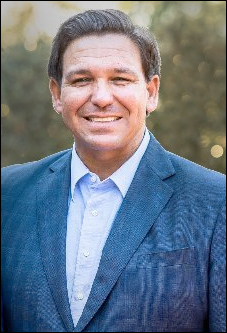
Florida Gov. Ron DeSantis (R)

Florida: DeSantis Comfortably Ahead — We haven’t seen a Florida governor’s poll in weeks that showed enough change to report upon, but yesterday we two were almost simultaneously released. Both largely confirmed that Gov. Ron DeSantis (R) has a lead beyond the polling margin of error.

Civiqs, polling for the Daily Kos Elections site (Sept. 17-20; 617 likely Florida general election voters; online), posts the governor to a 52-45 percent advantage over former governor and recently resigned Congressman Charlie Crist (D). Suffolk University (Sept. 15-18; 500 likely Florida general election voters; live interview) derived similar results. They project the governor’s lead to be 48-41 percent over Crist.

Senate

Georgia: Conflicting Results — Continuing the seesaw political affair between Sen. Raphael Warnock (D) and former NFL and University of Georgia football star Herschel Walker (R), we reported yesterday that the new Atlanta Journal-Constitution/University of Georgia poll (Sept. 5-16; 861 likely Georgia general election voters) finds Walker leading Sen. Raphael Warnock (D), 46-44 percent.

Later in the day, YouGov, polling for CBS News (Sept. 14-19; 1,148 registered Georgia voters; online) released their Georgia survey that pushed voters to make a Senate race choice, and found the same two-point margin but in Sen. Warnock’s favor, 51-49 percent. The exhaustive poll asked 72 questions, and while Sen. Warnock is clearly more favorably viewed than Walker, the vote continues to remain virtually even. The University of Georgia and YouGov/CBS News surveys are even more evidence that the Georgia Senate campaign will be decided in a turnout battle.

Utah: McMullin Lead Reversed — It took awhile to rebuff the Impact Research group’s early September poll that posted Independent Evan McMullin to a 48-47 percent lead over two-term Utah Sen. Mike Lee (R), but we now see conflicting looks as to what may be happening in this largely under-the-radar Senate challenge. OnMessage (Sept. 13-15; 700 likely Utah voters; live interview), polling for the National Republican Senatorial Committee (NRSC), reports Sen. Lee to be holding a 51-34 percent advantage, a major difference from the Impact Research survey of two weeks earlier.

Following OnMessage, Lighthouse Research (Aug. 30-Sept. 13; 509 likely Utah voters), polling for the Utah Debate Commission, sees the senator holding a similar 48-37 percent margin over McMullin. Utah’s strongly Republican voting history suggests that these two latter polls finding Sen. Lee holding a substantial edge are likely more reflective of what will happen on Election Day.

House

WA-3: GOP Rebound — In late August, Expedition Strategies released a survey (Sept. 19-20; 400 likely WA-3 general election voters) that was cause for concern among local southwest Washington GOP activists and supporters. After Republican Joe Kent and Democrat Marie Gluesenkamp Perez denied Rep. Jaime Herrera Beutler (R-Battle Ground) advancement into the general election from the Aug. 2 jungle primary, ES released their survey that gave the Democrat a 47-45 percent lead in the general election.

Democratic pollster Public Policy Polling, surveying for the Northwest Progressive Institute, (Sept. 19-20; 834 WA-3 voters; live interview & text) now projects Kent to have overtaken Perez with a slight 47-44 percent margin. The WA-3 race is a must-win for the GOP if they are to reclaim the House majority, so this race merits further national attention.

Sen. Warnock Back Ahead in Georgia; Utah: Response Results; Sen. Johnson Rebounds in Wisconsin

By Jim Ellis — Monday, Sept. 19, 2022

Senate

Georgia Sen. Raphael Warnock (D) and Republican challenger Herschel Walker

Georgia: Sen. Warnock Back Ahead — After several polls were released showing Republican Herschel Walker topping Sen. Raphael Warnock (D), Quinnipiac University publicized their most recent Georgia poll (Sept. 8-12; 1,278 likely Georgia voters) that projects a different conclusion. Not only does the Q-Poll place Sen. Warnock back into the lead, but the margin, 52-46 percent, is larger than any regular poll released since July. More will have to be seen in order to determine if a new trend is forming or if the Q-Poll is an anomaly.

Utah: Response Poll — Last week’s surprise Impact Research poll that showed Independent challenger Evan McMullin leading Sen. Mike Lee (R) by a slight 47-46 percent margin has now been countered, at least to a degree. The Center Street PAC released the results of their new Utah survey (Sept. 6-9; 563 likely Utah general election voters) that posts Sen. Lee to only a 43-39 percent edge. The Utah Democratic Party did not field a candidate in order to coalesce behind McMullin. The move allowed McMullin a head-to-head match-up with the two-term incumbent, and it appears, at least in the short term, that the strategy to make this a competitive race has worked.

Wisconsin: Sen. Johnson Rebounds — After seeing a series of three post-primary surveys where Lt. Gov. Mandela Barnes (D) held a lead over Sen. Ron Johnson (R), the regular Marquette Law School Wisconsin poll (Sept. 6-11; 801 registered Wisconsin voters; live interview) finds the incumbent forging a one-point edge, 49-48 percent. Lagging in the polls is nothing new for Sen. Johnson. In 2016, 30 polls were conducted of the Wisconsin Senate race according to the Real Clear Politics polling archive, and Sen. Johnson trailed in 29; yet, on election night, he claimed a three-point victory.

Though he was behind in most of the polling this year, the margins are much closer than in 2016, and Sen. Johnson has now already captured a lead. Compared to his last race against former Sen. Russ Feingold (D), the two-term incumbent appears to be in much better political shape in this election campaign.

Governor

Wisconsin: Gov. Evers in Toss-Up Campaign — The Marquette Law School Wisconsin poll (see Wisconsin Senate race above) also finds a tight governor’s race. The MU survey posts Gov. Tony Evers (D) to a 47-44 percent lead over GOP nominee and businessman Tim Michels. If the undercount of Republican voters that has been present in recent Wisconsin races is again in evidence, Michels could already effectively be in a dead even race.

Tight Polls in Arizona; Independent Fairs Well in Utah; More Alaska Ranked Choice Voting Analysis

By Jim Ellis — Thursday, Sept. 15, 2022

Senate

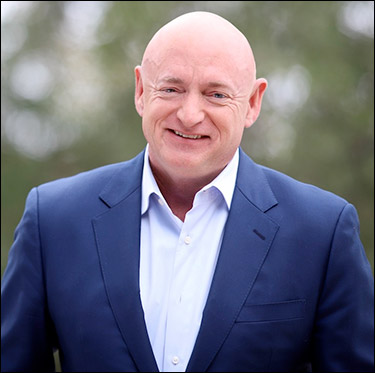
Arizona Sen. Mark Kelly (D)

Arizona: Two Tight Polls — In the 2020 special US Senate election, then-candidate Mark Kelly (D) consistently ran ahead of then-Sen. Martha McSally (R) and by an average of 7.1 percentage points in 21 polls conducted from Oct. 1 to Election Day, but only won the race, 51-49 percent. In the 2020 cycle, we see much closer polling as two new surveys exemplify.

The pair of studies, both taken during the Sept. 6-7 period, are from Emerson College (627 likely Arizona voters; multiple sampling techniques) and the Republican research firm Insider Advantage (550 likely Arizona voters). Emerson finds the race well within the polling margin of error at 47-45 percent, while the IA result projects a 45-39 percent division. Both post Sen. Kelly leading Republican nominee and venture capitalist Blake Masters.

Utah: Another Independent Faring Well — Utah Independent US Senate candidate Evan McMullin released a Democratic firm’s poll that yields him a one-point edge. Impact Research (Aug. 29-Sept. 1; 800 likely Utah general election voters) found McMullin leading Sen. Mike Lee (R) by a 47-46 percent margin. Sen. Lee quickly countered with re-releasing his early August WPA Intelligence poll that saw him holding a major 50-32 percent advantage. Expect the Lee campaign to soon release more recent data.

House

AK-AL: More Ranked Choice Analysis — The Fair Vote organization, which is the principal promoter of the Ranked Choice Voting system, released a further analysis of the RCV vote in the Alaska special election that elected Democrat Mary Peltola, even though she attracted only 40 percent of the actual vote. The Ranked Choice advocates claim the system rewards the candidate who has the broadest support, but it tends to do the opposite since candidates with minority support have won most of the major races where the system has been used.

The analysis suggests that had candidate Nick Begich III been opposite Peltola in the final round instead of former governor and vice presidential nominee Sarah Palin, he would have won the race. The Fair Vote analysis reveals that 59 percent of the Palin vote would have gone Begich’s way — as opposed to Palin gaining only 50.3 percent of the Begich second choice votes. The bigger difference, however, was Peltola attracting only six percent of the Palin second-choice votes as compared to the 28 percent she received from Begich voters.

What the analysis fails to include, however, are the more than 11,000 Begich voters whose ballots were not counted in the second round. The analysis claims those people simply didn’t make an additional ranked choice, but in reality, it may be due to a lack of understanding the confusing system. In other places, attorneys who have challenged the system report that most ballots are disqualified because the voter inaccurately completed the ballot. Since Palin lost by 5,219 votes, more than 11,000 non-counted Begich ballots could have made the difference, and it is likely that a large number of these had their ballots disqualified as opposed to not making a choice. Therefore, the Fair Vote conclusion that Palin lost because the Begich voters eschewed her may not be entirely accurate.

Governor

Arizona: Evolving Dead Heat Race — The aforementioned pair of Arizona polls from Emerson College and Insider Advantage (see Arizona Senate race above) forecasts an even closer race for governor than they do for US Senate. Emerson College projects a straight tie between Secretary of State Katie Hobbs (D) and former Phoenix news anchor Kari Lake (R), with both candidates posting 46 percent support scores. Insider Advantage finds a similar result with Hobbs leading by the slightest of margins, 44-43 percent.

Senate & House Dollar Report Charts;
Sen. Lee’s Lead in Utah Eroding

By Jim Ellis — July 22, 2022

Senate

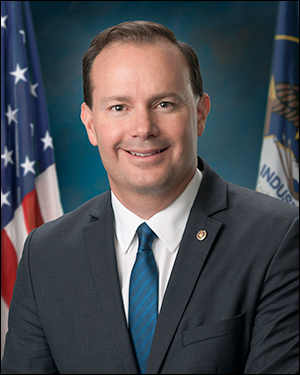
Utah Sen. Mike Lee (R)

Utah: McMullin Drawing Closer — Dan Jones & Associates, polling for the Deseret News and the Hinckley Institute at the University of Utah (July 11-13; 801 registered Utah voters), projects Sen. Mike Lee (R) to have only a 41-36 percent lead over Independent Evan McMullin. This is the closest general election poll reported in the current election cycle.

The Democrats coalesced behind McMullin instead of fielding a candidate of their own. The move looks to be working since Sen. Lee would be faring better in a three-way race with a Democratic candidate peeling away from McMullin. Sen. Lee is likely in better position that this one poll indicates, but the Utah race is certainly beginning to attract some national attention.

Dollar Report: Hot Senate Races — Now that the June 30 Federal Election Commission disclosure reports have been released, we can measure the financial wherewithal of the candidates in the most competitive Senate races. In each instance, the top fundraising challenger is the point race listed against an incumbent or open seat contender. The listed category is cash-on-hand at the June 30 reporting deadline:

Alaska: Sen. Murkowski (R): $6.1 million Kelly Tshibaka (R): $1.08 million
Arizona: Sen. Kelly (D): $24.9 million Jim Lamon (R): $2.1 million
Florida: Sen. Rubio (R): $14.6 million Val Demings (D): $12.6 million
Georgia: Sen. Warnock (D): $22.2 million Herschel Walker (R): $6.8 million
Iowa: Sen. Grassley (R): $4.0 million Michael Franken (D): $1.1 million
Missouri: Vicky Hartzler (R): $1.5 million Lucas Kunce (D): $871,000
North Carolina: Cheri Beasley (D): $4.8 million Ted Budd (R): $1.8 million
New Hampshire: Sen. Hassan (D): $7.4 million Chuck Morse (R): $975,000
Nevada: Sen. Masto (D): $9.8 million Adam Laxalt (R): $2.1 million
Ohio: Tim Ryan (D): $3.6 million J.D. Vance (R): $629,000
Pennsylvania: John Fetterman (D): $5.5 million Mehmet Oz (R): $1.1 million
Utah: Sen. Lee (R): $2.5 million Evan McMullin (I): $1.3 million
Washington: Sen. Murray (D): $7.5 million Tiffany Smiley (R): $3.5 million
Wisconsin: Sen. Johnson (R): $3.6 million Mandela Barnes (D): $1.5 million

Source for $ figures: Daily Kos Elections Blog

House

PA-13: Ex-Rep. Critz Returns — Former Congressman Mark Critz (D), who represented the Johnstown anchored 12th District from May of 2010 when he won a special election to replace the late Rep. John Murtha (D), until his defeat in the 2012 regular election, will be back on the ballot in November. The Pennsylvania Board of Elections has ruled that Critz received enough write-in votes during the May primary election to qualify as the Democratic nominee in the 13th CD that incumbent John Joyce (R-Hollidaysburg) represents. Though Rep. Joyce is a prohibitive favorite in the R+49 district, the Democrats now have a credible standard bearer for the general election.

Dollar Report: Paired & Special House Races — Similar to the above report on the most competitive Senate races, we also look at the resource counts from the June 30 reports for the four races featuring paired incumbents and four in special elections. Two pairings are in nomination mode, with the remaining two as inter-party general election pairings. All four special elections are in the general election mode. Again, the financial number listed is the cash-on-hand amount each candidate held at the June 30 reporting deadline.

PAIRINGS

Aug. 2 Primary:
MI-11: Rep. Haley Stevens (D): $1.8 million Rep. Andy Levin (D): $1.1 million
Aug. 23 Primary:
NY-12: Rep. Caroyln Maloney (D): $2.1 million Rep. Jerrold Nadler (D): $1.2 million
Nov. 8 General Election:
FL-2: Rep. Neil Dunn (R): $763,000 Rep. Al Lawson (D): $412,000
TX-34: Rep. Vicente Gonzalez (D): $1.4 million Rep. Mayra Flores (R): $114,000

Specials

Aug. 9 Special General:
MN-1: Jeff Ettinger (D): $548,000 Brad Finstad (R): $334,000
Aug. 16 Special General:
AK-AL: Nick Begich, III (R): $708,000 Mary Peltola (D): $115,000
Aug. 23 Special General:
NY-19: Marc Molinaro (R): $996,000 Pat Ryan (D)*: $576,000
NY-23: Joe Sempolinski (R): $173,000 Max Della Pia (D): $89,000

*Note: Pat Ryan is also running in the contested Democratic primary for the 18th Congressional District nomination on the same day as the 19th CD’s special election

Source for $ figures: Daily Kos Elections Blog

Casten and Miller Win in Illinois; Colorado Statewide Races Set;
More Primary Results News

By Jim Ellis — June 29, 2022

Primary Results

Rep. Sean Casten (D-Downers Grove)

Illinois: Reps. Casten and Miller Win — The big news from last night’s primary election surrounded the two paired districts. In the Chicago suburbs, Rep. Sean Casten (D-Downers Grove), who unexpectedly lost his 17-year-old daughter just two weeks ago, scored a landslide win over fellow Rep. Marie Newman (D-La Grange) in the new 6th District that contained more of the latter member’s current turf.

Freshman Rep. Mary Miller (R-Oakland)

In the downstate Republican 15th CD, freshman Rep. Mary Miller (R-Oakland), armed with an endorsement and rally appearance from former President Donald Trump, recorded a decisive 57-43 percent over veteran Rep. Rodney Davis (R-Taylorville). Davis will now see his congressional career draw to a close after serving what will be ten years in the House.

The Democratic pairing occurred in order to create a new Chicago-anchored Hispanic district. State Rep. Delia Ramirez (D-Chicago) easily won the Democratic nomination in this seat, and becomes the prohibitive favorite for the general election. State Sen. Darren Bailey (R-Louisville) won an outright majority with 57 percent of the vote opposite five opponents in the governor’s primary. He advances to the general election to oppose incumbent J. B. Pritzker (D). Conservative activist Kathy Salvi won the Republican Senate nomination, and now faces a likely insurmountable opponent in Sen. Tammy Duckworth (D).

Colorado: Statewide Races Set — As expected, University of Colorado Regent Heidi Ganahl captured the Republican gubernatorial nomination with a 53 percent majority over GOP nominating convention winner Greg Lopez. In the Senate contest, as most predicted, construction company owner Joe O’Dea defeated state Rep. Ron Hanks (R-Penrose) with just under 55 percent of the vote. Like Lopez, Rep. Hanks also won the Republican nominating convention endorsement.

The two will advance to the general election against Gov. Jared Polis (D) and Sen. Michael Bennet (D). Neither incumbent was opposed for re-nomination and both are now heavy favorites to win re-election in November.

MS-3 and 4: Guest Wins; Palazzo Loses — As predicted, despite a scare in the primary election, Mississippi 3rd District Rep. Michael Guest (R-Brandon) easily won re-nomination last night in the Mississippi congressional runoff election. He topped challenger Michael Cassidy with two-thirds of more than 70,000 votes that were cast in last night’s election. Rep. Guest will now have an easy run in the general election.

Rep. Steven Palazzo (R-Biloxi) was not so fortunate in his southern Mississippi 4th CD. He failed to overcome Jackson County Sheriff Mike Ezell and lost his seat in a 54-46 percent count. Palazzo becomes the eighth House incumbent to be denied re-nomination and the fourth who lost to a challenger that was not a fellow incumbent forced into a paired district. Sheriff Ezell is now the heavy favorite to win the seat in November.

NE-1: Flood Wins Special — Another special congressional election was held last night, and this result ended in a closer final tally than originally expected. Nebraska state Sen. Mike Flood (R-Norfolk), a media company owner, claimed the seat with a 53-47 percent victory over fellow state Sen. Patty Pansing Brooks (D-Lincoln) in a district the FiveThirtyEight data organization rates as R+17.

Flood will be sworn into the House upon official election certification. He will replace convicted Rep. Jeff Fortenberry (R-Lincoln). Rep-Elect Flood and Sen. Pansing Brooks will see each other again. Both are the party nominees for the regular general election in November.

New York: Hochul vs. Zeldin — The New York statewide contests also ended as expected. Gov. Kathy Hochul (D), who ascended from the lieutenant governor’s position when Andrew Cuomo (D) resigned, easily defeated NYC Public advocate Jumaane Williams and US Rep. Tom Suozzi (D-Glen Cove), 68-19-13 percent. Williams was unopposed for the Working Families ballot line, so he will advance into the general election despite his loss last night.

The Republican battle was a bit closer. US Rep. Lee Zeldin (R-Shirley; East Long Island) topped Andrew Giuliani, son of ex-NYC Mayor Rudy Giuliani, in a 44-23 percent split. Former Westchester County executive and 2018 gubernatorial nominee Rob Astorino and businessman Harry Wilson recorded 18 and 15 percent, respectively. Gov. Hochul begins the general election as the decided favorite.
Continue reading