Tag Archives: Super Tuesday

Delegate Reallocation
Brings Increase to 4,750

By Jim Ellis

Jan. 22, 2020 — As we approach the first votes being cast for the Democratic presidential nomination next month, the Democratic National Committee has reallocated delegate slots among certain state contingents, thus increasing the size of the overall delegate universe to 4,750.

The changes are relatively substantial within the states when compared to the last national convention in 2016, while the recent Super Delegate total sees an increase of five new votes. The alterations within the state counts — an increase in every affected place but California — feature an additional 210 delegate votes when compared with the totals from four years ago.

Most of the boosts reflect a reward for increased Democratic votes in the 2016 and 2018 elections. The calculations include results in the recent races for president, US Senate, US House, governor, and for state legislature. States that hold their presidential nominating event after April 1 are also rewarded.

The largest increases are found in New York, Pennsylvania, and New Jersey where their respective delegations have grown by 50, 33, and 19 slots respectively, largely due to Democratic gains in the US House and state legislatures particularly from the 2018 elections. New Jersey, for example, converted a governor’s chair to the Democratic column in their 2019 election, after gaining five congressional seats in 2018 and ‘16, thus accounting for their delegation increase. And, all three states vote after April 1.

California’s regular delegate total has been reduced by one vote, possibly for moving their previous June primary to before April 1, on Super Tuesday, March 3. The state still has, by far, the largest contingent with 494 total delegates and 415 of those voting on the first ballot. The next largest delegation, after calculating their increase, is New York with 320 overall delegate slots, 274 of which are eligible to cast first-ballot votes.

Continue reading

Latest Early-State Polling

By Jim Ellis

Jan. 16, 2020 — The most recent early-state polling again underscores the distinct possibility that we will not see a clear Democratic presidential leader emerge before Super Tuesday.
We are now inside three weeks before the Iowa Caucuses and the survey data and candidate messaging strategies are beginning to take firm hold. Polling is close among the top four candidates, though they appear to be in a proverbial pinball machine as the four bounce from top to bottom at least in the Hawkeye State.

It is likely that either former Vice President Joe Biden, Sen. Bernie Sanders (I-VT) or former South Bend Mayor Pete Buttigieg places first. Sen. Elizabeth Warren (D-MA) is likely to finish midway within the four leaders, seeing her support drop as we get closer to actual voting.

The Caucus rules could change some precinct outcomes. It is probable that the party will adopt a rule, as they have in the past, that allows a voter to change his or her vote if their candidate finishes last in a precinct Caucus tally. In any event, projections suggest that the top four will each exceed 15 percent of the at-large vote to qualify for delegates, and potentially achieve such a preference number in each of the four congressional districts.

This means we could well see a splitting of the 41 first-ballot delegates among the four candidates with the first-place finisher getting approximately just 12 delegates and the fourth-place qualifier earning as many as eight.

The news improves for Biden in New Hampshire, but the just released Patinkin Research Strategies study (Jan. 5-7; 600 likely New Hampshire Democratic primary voters) also shows at least three candidates qualifying for delegate apportionment. Here, Sen. Warren again appears to be falling off the pace.

Continue reading

Sanders Leading in California

By Jim Ellis

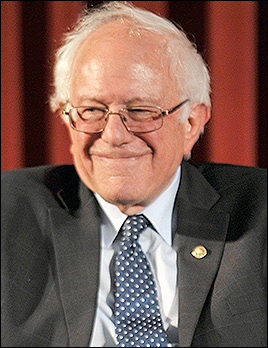
2020 Presidential candidate Sen. Bernie Sanders takes the lead in California

Jan. 13, 2020 — The new Capitol Weekly research survey (Jan. 1-9; 1,053 likely California Democratic primary voters) finds Sen. Bernie Sanders (I-VT) taking a slight polling lead in the California Democratic primary over Sen. Elizabeth Warren (D-MA), former Vice President Joe Biden, and South Bend Mayor Pete Buttigieg in what is consistently becoming a closely bunched field.

With two months to go before the Golden State primary is conducted but less than a month before early voting begins there on Feb. 3, the possibility of multiple candidates receiving portions of the state’s 415 first ballot delegates is becoming very real.

Sanders leads Warren, Biden, and Buttigieg by a 24-21-20-11 percent spread. Under party rules, a candidate must secure 15 percent of the statewide vote to earn at-large delegates. Therefore, Buttigieg must work to gain strength during the remaining time in order to reap the all-important mandated delegate commitments.

If he were to obtain 15 percent, and the others remained constant with these present percentages, the at-large delegate division would break 43 for Sanders and 38 for Warren, while Biden would earn 36 and Buttigieg 27 votes.

Should only the top three qualify for at-large delegate apportionment, Sanders would earn 53 votes, Warren 46, and Biden 45. Therefore, Buttigieg qualifying would significantly change the state and overall race because the large California delegation will be a major presence at the Democratic National Convention.

Scoring at-large delegate commitments is not the only way to earn votes, however. A larger total of 271 delegates will be awarded through the state’s 53 congressional districts. Each district, based upon its historical support performance for Democratic candidates, is awarded between 4 and 7 delegates, inclusive.

Continue reading

The North Carolina Filings

All the best for a wonderful holiday season.
Ellis Insight daily updates will return on Jan. 3, 2020.

By Jim Ellis

Dec. 24, 2019 — Candidate filing in the Tar Heel State closed Friday, and the North Carolina political contestants are now set for the March 3 Super Tuesday state primary. In addition to the presidential race, North Carolina voters will choose nominees for governor, US Senate, 13 congressional races, the state constitutional offices, and state legislature.

No surprises came from the presidential filings, though 38 individuals filed to run for the nation’s highest office. Twenty of the 38 are minor party candidates, however. Fifteen Democrats are running, including all of the major contenders. President Trump draws Republican primary opposition from former Massachusetts governor Bill Weld and Illinois ex-congressman Joe Walsh.

Sen. Thom Tillis sees only minor Republican primary opposition and now is a cinch for re-nomination. Businessman Garland Tucker was expected to run a competitive primary race but decided to end his effort prior to the filing deadline. When Rep. Mark Walker (R-Greensboro) was drawn out of a winnable district in the court-mandated redistricting plan, he began considering entering the Senate race. The congressman, however, ultimately decided to wait a cycle and looks to run for Sen. Richard Burr’s (R) open seat in 2022.

Five Democrats filed for the Senate, but the nomination battle is realistically between former state senator Cal Cunningham, who is the party leadership favorite, and state Sen. Erica Smith (D-Gaston). The eventual Democratic nominee will face Sen. Tillis in what promises to be a competitive general election in a state that has defeated more incumbents in the modern political era than any other place.

Continue reading

Impeachment Politics

By Jim Ellis

Dec. 20, 2019 — As the most recent polling from national research sources and in key states shows President Trump gaining political strength, the US House last night, on a virtual party line vote, approved the resolution to send the Articles of Impeachment to the US Senate for trial.

The vote was 229-198, with three Democrats voting against the articles and one Republican-turned-Independent, Michigan’s Justin Amash, supporting the measures. Presidential candidate Tulsi Gabbard, who represents the 2nd District of Hawaii, voted “Present”. Three members, two Republicans and one Democrat, were absent. Rep. Duncan Hunter (R-CA) will soon resign his seat due to pleading guilty to a federal campaign finance charge. Retiring Reps. Jose Serrano (D-NY) and John Shimkus (R-IL) were the others who did not vote. All present and voting Republicans opposed the impeachment measures.

Two of the three opposition Democrats were expected to vote no, Reps. Collin Peterson (D-MN) who represents the strongest Trump district in the country to elect a Democrat to the House, and New Jersey’s Jeff Van Drew who is about to leave his party to join the Republicans. The third no vote came from freshman Rep. Jared Golden (D-ME), who represents the northern district in Maine that delivered its electoral vote to Trump in 2016 even though the state voted for Hillary Clinton. Maine and Nebraska are the only two states that choose to divide their electoral votes.

Two pollsters who had been showing national political support for the impeachment are now projecting a swing toward the opposite conclusion.

The CNN poll, conducted by their usual research partner, the SSRS firm, surveyed 1,005 adult respondents over the Dec. 12-15 period. A total of 45 percent of the respondents favored impeaching the president, while 47 percent said, “they don’t feel that way.” In contrast, their Nov. 21-24 survey found 50 percent favoring impeachment while 43 percent said they didn’t agree with the move. Previously, the CNN polls had reported positions consistently favoring impeachment since late September.

Continue reading

Super Tuesday Senate Primaries

Super Tuesday 2020 States and Territories; *Important Senate primaries will also be occurring in four states — Texas, Arkansas, Alabama & North Carolina


By Jim Ellis

Nov. 26, 2019 — Super Tuesday is scheduled for March 3, and while the national focus will be on the 14 states and one territory whose electorates will vote in the Democratic presidential nomination contest, important Senate primaries will also be occurring in four states. Five places moved their regular-cycle primary to run concurrently with the early March presidential vote, and four from this group host 2020 Senate campaigns. The lone exception is California.

The Alabama Senate contest has drawn much attention lately since former US Attorney General and ex-Sen. Jeff Sessions has re-emerged as a candidate. His nomination is not a foregone conclusion, however. He faces a significant field of Republican opponents on March 3, all of whom became candidates before he decided to run again.

Along with Sessions, Alabama Secretary of State John Merrill, US Rep. Bradley Byrne (R-Mobile), retired Auburn University head football coach Tommy Tuberville, former state Supreme Court Chief Judge and 2017 Senate special election nominee Roy Moore, and state Rep. Arnold Mooney (R-Shelby County) comprise the credible candidate field.

Polling since Sessions returned to the race suggests that both the former senator and Coach Tuberville would advance to an April 14 run-off, but campaign prime time still remains, and much could change. Though Sessions has a residual base, he is unlikely to win the nomination outright against this field, none of whom have departed the race since his return. Therefore, the eventual nomination victor is still in doubt. The winner will face Sen. Doug Jones (D) in the general election.

Arkansas Sen. Tom Cotton (R) stands for a second term and currently has no opponent. Democratic businessman and former congressional candidate Josh Mahony had been traveling the state to organize support from local party leaders and became the sole filer at the deadline against Sen. Cotton, but then ended his effort just two hours after submitting his candidate documentation citing family issues. Since the Democrats have no candidate, the party will convene to choose a replacement nominee. Regardless of whom they select, Sen. Cotton looks solid for re-election.

Continue reading

Filings & Primaries

By Jim Ellis

Nov. 22, 2019 — As we approach the end of this year, two states have already held their 2020 candidate filings and six more will do so in December. This sets the stage for eight statewide primaries in March, four from large states. Mississippi, with a March 10 primary, set its filing deadline for Jan. 10.

In total, and in addition to the presidential campaign, filings during this period in these states have occurred or will occur for six Senate races and 151 US House districts. All five Super Tuesday primary states will host US Senate contests and hold an aggregate of 113 congressional districts.

Alabama and Arkansas have already filed, and the major stories coming from these places as already covered were former US Attorney General and senator, Jeff Sessions, again declaring for his former position and the lone Democrat challenging Arkansas Sen. Tom Cotton (R) dropping out of the race just two hours after he had filed. In the pair of states, two House incumbents, Alabama Rep. Terri Sewell (D-Birmingham) and Arkansas Rep. Rick Crawford (R-Jonesboro), are totally unopposed in their 2020 campaigns.

The other states heading for December candidate filing deadlines are Illinois on Dec. 2; California, Dec. 6; Texas, Dec. 9; and Ohio, Dec. 11. North Carolina is currently scheduled for Dec. 20, but it is conceivable that the pending redistricting lawsuits could potentially postpone the state primary and thus the qualifying candidate deadline.

The five Super Tuesday (March 3) primary states are: Alabama, Arkansas, California, North Carolina, and Texas.

Alabama has the first Senate primary and that will likely determine which two of the six major Republican candidates move into an April 14 run-off election. Currently, polling suggests that former Sen. Sessions and Auburn University retired head football coach Tommy Tuberville would advance to a run-off. Secretary of State John Merrill, US Rep. Bradley Byrne (R-Mobile), and former state Supreme Court Chief Judge and 2017 US Senate special election nominee Roy Moore round out the group of main competitors. The eventual nominee will face Sen. Doug Jones (D) in the November campaign.

Two open seat congressional races, both in South Alabama, will almost assuredly go to run-offs, though the eventual Republican nominee in the respective districts will be heavily favored to replace Reps. Byrne and Martha Roby (R-Montgomery), who is retiring.

The March 3 primary is relatively inconsequential in Arkansas since it appears the general election is relatively set. Since the Democrats have no candidate in the Senate race, the party structure will meet to nominate a consensus candidate for a ballot slot in the general election.

Continue reading

Buttigieg a Clear Factor in Iowa

By Jim Ellis

Nov. 19, 2019 — Selzer & Company, again polling for the Des Moines Register publication (Nov. 8-13; 2,012 active registered Iowa voters, 500 likely Democratic Caucus attenders), finds South Bend Mayor Pete Buttigieg pulling away from the rest of the field. YouGov, polling for CBS News (Nov. 6-13; 856 registered Democratic voters), projects a different perspective, however, in finding a virtual four-way tie.

Selzer sees Mayor Buttigieg leading the pack with 25 percent, nine points ahead of Sen. Elizabeth Warren (D-MA) and 10 points beyond both Sen. Bernie Sanders (I-VT) and former Vice President Joe Biden.

YouGov, however, finds Sanders and Biden tied at the top with 22 percent, while Buttigieg is only one point behind. The top pair leads Sen. Warren by four points. All are clearly within the polling margin of error.

The numbers again suggest that the Democratic caucus, now less than three months away on February 3rd, is a wide-open affair. All of the most recent polling also yields that Mayor Buttigieg has transformed the campaign, at least in Iowa, into a legitimate four-way race. There is also no recent poll suggesting that any one candidate is in position to secure a majority vote among the prospective Iowa Caucus attenders.

How the Iowa vote will affect the rest of the primaries is anybody’s guess at this point, but the state has proven to be a trend-setter in the past. Whether a strong showing for Mayor Buttigieg will keep him in the top tier as the process moves through New Hampshire, Nevada, and South Carolina prior to Super Tuesday is difficult to currently assess.

Sessions Jumps Into Alabama Senate Race; Indiana Rep. Visclosky Is Out

By Jim Ellis

Nov. 8, 2019News Items: 1) Former senator and ex-US attorney general, Jeff Sessions (R), yesterday announced his candidacy to re-claim the US Senate seat he left in 2017.
2) On the 35th anniversary of his being elected to Congress, 18-term US Rep. Peter Visclosky (D-Merrillville/Gary) announced via Twitter that he will be retiring from the House at the end of his current term.

Alabama

Former Senator and US Attorney General, Jeff Sessions (R)

Rumors had abounded for weeks that Sessions was considering a return to elective politics, and he ran out of time to make a decision. The Alabama candidate filing deadline is today for the statewide primary scheduled for Super Tuesday, March 3. If no candidate receives majority support in the semi-closed primary election where only Republicans and non-affiliated voters can participate, the top two finishers advance to a secondary run-off vote that will occur on April 14.

The eventual Republican nominee will oppose first-term Sen. Doug Jones (D), who won the special election to replace Sessions when he resigned to assume his duties as attorney general. This seat may be the most important in the 2020 cycle as a determining factor for the next majority.

If the Republicans could convert Alabama, a state that will be one of President Trump’s strongest in next year’s election, the GOP conference will expand to 54 members. Considering the configuration of other competitive seats during the Senate election cycle, winning this race might be enough for the Republicans to hold at least a smaller majority.

It’s unclear at the outset exactly how Sessions’ entry will affect the GOP primary. Already in the race are Secretary of State John Merrill, US Rep. Bradley Byrne (R-Mobile), former Auburn University head football coach Tommy Tuberville, state Rep. Arnold Mooney (R-Shelby County), and former Alabama state Supreme Chief Judge Roy Moore, the man who bungled the 2017 special election campaign that resulted in Sen. Jones’ victory.

Several surveys have been conducted of the GOP field, but none of the pollsters included Sessions in their ballot test. Therefore, we have little information as to the degree of residual strength he currently possesses as the campaign begins for real.

It is probable, however, that the emerging Sessions campaign effort polled the state before moving forward, and the fact that the former senator is announcing his candidacy suggests that the data reveals a path to victory.

Because of his public feud with President Trump, however, his standing with the Alabama Republican electorate is undoubtedly weaker than it was when he last ran for the Senate, an unopposed campaign in 2014, but it appears this 2020 Alabama GOP primary has become much more interesting and less predictable within the last 24 hours.

We will see new polls rapidly going into the field so we can expect to see new data very soon about how Sessions might fare as he returns to the political fray.

Continue reading

Biden Showing Up Strong in North Carolina – But Is It Enough?

Former vice president and 2020 Democratic presidential candidate, Joe Biden

By Jim Ellis

Oct. 11, 2019 — Raleigh-based Public Policy Polling just released their latest North Carolina survey (Oct. 4-6; 963 likely North Carolina voters, 410 likely North Carolina Democratic primary voters) Wednesday, which projects a two-person race developing in the Tar Heel State as former Vice President Joe Biden leads Sen. Elizabeth Warren (D-MA), 39-22 percent. South Bend Mayor Pete Buttigieg receives nine percent support, while Sen. Bernie Sanders (I-VT) earns only a disappointing six percent. All other candidates fail to break the three percent level.

North Carolina is one of the Super Tuesday states, a state whose electorates will cast ballots on March 3, the largest voting day of the nominating season. On March 3, a total of 14 states and one territory will host primaries or caucuses, seven of which come from the south. It is here where former Biden would have to make his stand, since his southern numbers are the best of any candidate by a wide margin.

The question being posed is whether a sluggish Biden start in the first three voting states, Iowa, New Hampshire, and Nevada, where he could conceivably fail to place first in any, would derail his momentum to the point of lessening his southern advantage.

Making rudimentary delegate calculations from the 19 entities that would vote on or before Super Tuesday, we find that current polling would place the former vice president in the lead on the evening of March 3, but that his delegate edge would certainly not be dominating.

To re-cap, based upon the latest polling from Iowa, New Hampshire, and Nevada, the delegate estimate prior to South Carolina would find the former VP and Sen. Warren tied with 37 delegates apiece, while Sen. Sanders would have 27, meaning a virtual three-way tie despite Biden not winning any of the states outright. If he can stay in the hunt — with neither of his key opponents establishing themselves as a clear leader — the tide turns Biden’s way.

Continue reading