Tag Archives: Sen. Ron Johnson

WI-Senate: Lt. Gov. Announces

By Jim Ellis

Wisconsin Lt. Gov. Mandela Barnes

July 22, 2021 — As expected, Lt. Gov. Mandela Barnes (D) declared his candidacy Tuesday for a Wisconsin Senate seat. Incumbent Sen. Ron Johnson (R) has yet to say if he will seek a third term (when he first ran in 2010, he committed to serving only two terms) but there is no question whatever the senator decides that the Wisconsin race will be highly competitive and become a national campaign.

Before the eventual Democratic nominee even gets the opportunity to face Sen. Johnson, he or she must traverse a difficult primary battle that won’t conclude until August of next year. Already vying for the party nomination in addition now to Lt. Gov. Barnes are state Treasurer Sarah Godlewski, state Sen. Chris Larson (D-Milwaukee), Outagamie County Executive Tom Nelson, and Milwaukee Bucks basketball club senior executive and former Obama White House aide Alex Lasry. Still others may enter.

Wisconsin has been the site of very close election in the latter part of the decade. Two presidential campaigns and a gubernatorial race fell within one percentage point (2016 Presidential: Trump: 47.2 – 46.5 percent; 2020 Presidential: Biden 49.4 – 48.8 percent; 2018 Governor: Tony Evers-D: 49.5 – 48.4 percent; 2016 US Senate: Johnson: 50-47 percent), and another photo finish is expected for 2022.

Polling will again be another question mark since the survey research community’s joint record in Wisconsin has been poor since 2016.

In the Trump-Clinton race, pollsters ran 32 polls and Donald Trump led in none, yet he won the state. In the 2016 Senate race, Sen. Johnson was ahead only once in 29 public polls, yet claimed a three-point re-election victory when the actual votes were tabulated. Again, in the 2020 presidential race, while correctly predicting that Biden would carry Wisconsin, their average margin was way off the mark, finding the Democrat leading by a mean average of 6.7 percentage points in eight polls conducted after Oct. 20. The actual Biden victory margin was just beyond 22,000 votes.

Continue reading

2022: The Unannounced

By Jim Ellis

July 19, 2021 — The Fox News website ran a story late last week saying that there remain five in-cycle US senators who have not yet revealed their political plans for 2022. Below is a review of those senators’ political situations and clues that could provide a glimpse whether they are headed toward re-election or retirement.

The best hints will be forthcoming in a matter of days as the second quarter campaign financial disclosure reports will be released shortly on the Federal Election Commission website. Last Thursday was the deadline for filing the reports for the period covering April 1 through June 30.

The five senators, listed alphabetically by state are Sens. Lisa Murkowski (R-AK), Chuck Grassley (R-IA), John Thune (R-SD), Patrick Leahy (D-VT), and Ron Johnson (R-WI).


Sen. Murkowski:

State: Alaska
Appointed: 2002
Re-elected: 2004, 2010, 2016
Age at time of 2022 election: 65
Victory Margin 2016: 44.4 – 29.2%

Announced Major Opponents:
• Karl Speights (R) – Retired Air Force officer
• Kelly Tshibaka (R) – Former AK Administration Commissioner

It is assumed that Sen. Murkowski will run for re-election, though her return path to Washington may be a difficult one to traverse. Last night, her campaign spokesperson stated that the Senator’s second quarter disclosure report would show $1.15 million raised for the quarter with $2.3 million cash-on-hand. These are financial numbers that suggest she will seek re-election.

Alaska has changed its nominating system and will be the first state to adopt a “top four” primary procedure. Similar to California, Louisiana, and Washington that use the jungle primary format to send the top two candidates to the general election, Alaska will instead advance the top four from the slate primary. The change virtually ensures that Sen. Murkowski will not again lose the Republican primary as she did in the 2010 election. In that year, she was forced to run a highly efficient general election write-in operation to win her second full term.

Early polling numbers find Sen. Murkowski with very poor favorability numbers among Republicans and running a distant third behind Kelly Tshibaka (R), who is already the state Republican Party’s officially endorsed candidate. Dr. Al Gross (D), the 2020 Senate nominee, has not yet committed to running again, but he, too, runs ahead of the Senator in the previously released surveys.

While the top four system guarantees Sen. Murkowski will secure a ballot position for the general election, winning her re-election is in doubt.


Sen. Grassley:

State: Iowa
First Elected: 1980
Re-elected: 1986, 1992, 1998, 2004, 2010, 2016
Age at time of 2022 election: 89
Victory Margin 2016: 60.1 – 35.7%

Announced Major Opponents:
• Jim Carlin (R) – State Senator; former State Representative
• Glenn Hurst (D) – Minden City Councilman; Physician
• Dave Muhlbauer (D) – Ex-Crawford County Commissioner; Farmer

Last week Sen. Grassley stated that he would make his political plan public before Nov. 1. Despite his advanced age, it is presumed in all sectors now that Sen. Grassley will seek re-election. He has filed a 2022 campaign committee with the FEC, has a semi-updated website, and it will be interesting to see how active his fundraising became in the second quarter. His March 31 report revealed a cash-on-hand figure of $2.04 million to begin the re-election cycle.

Continue reading

Rep. Murphy to Challenge Sen. Rubio

By Jim Ellis

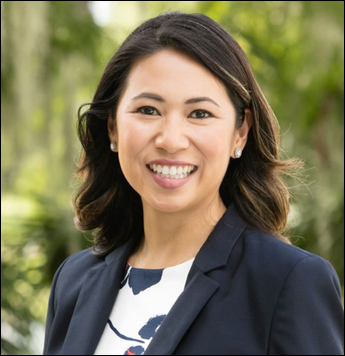
Florida Rep. Stephanie Murphy (D-Winter Park)

May 14, 2021 — According to the Axios news site, insiders close to Florida Rep. Stephanie Murphy (D-Winter Park) say that she has made the decision to challenge Sen. Marco Rubio (R) next year and will formally announce her campaign next month. The move had been expected for some time.

Rep. Murphy, a native of the country of Vietnam, was first elected to the House in 2016, defeating veteran Republican incumbent John Mica after the state Supreme Court had re-drawn the Florida congressional districts and made the 7th CD more Democratic. She unseated Rep. Mica 51-49 percent, and then scored re-election victories of 58 and 55 percent in 2018 and 2020, respectively.

A strong fundraiser, Rep. Murphy obtained over $3 million for both of her incumbent re-election campaigns. She ended the 1st quarter 2021 with a cash-on-hand figure of $1.43 million. Sen. Rubio posted $3.9 million in his campaign account during the same reporting period.

Assuming Murphy does enter the race next month, Democrats will have a credible challenger to Sen. Rubio, but one who still must be considered a decided underdog. In 2010, Sen. Rubio, then a state representative, defeated then-governor Charlie Crist, who was running as an Independent, and Democratic Congressman Kendrick Meek by a 49-30-20 percent margin. He was re-elected in 2016 with a 52-44 percent vote spread over then-congressman Patrick Murphy (D).

Florida races, as we know, are always competitive and usually very close, though the state has been trending more Republican over the past several elections. A Rubio-Stephanie Murphy race promises to become a national campaign.

With the Democrats apparently attracting a strong candidate in Florida, it is a good time to review the other key races.

In Pennsylvania, both parties are headed for very crowded primaries as each works to nominate a candidate to hopefully succeed retiring Sen. Pat Toomey (R). Afghan War veteran Sean Parnell entered the Republican primary earlier this week, but his only venture into elective politics was recording a two-point loss to Rep. Conor Lamb (D-Pittsburgh) last November in an Allegheny County suburban district.

Rep. Lamb, himself, may join the Democratic Senate campaign, meaning both parties are going to host political dogfights for the party nomination. In any event, however, the Pennsylvania race will be a top-tier national campaign.

Continue reading

A Wisconsin Senate Struggle:
Sen. Ron Johnson Trailing … Again

By Jim Ellis

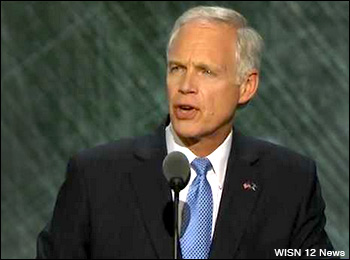
Wisconsin Sen. Ron Johnson (R)

April 5, 2021 — Another tough statewide campaign appears to be brewing in the Badger State.
Thomas Nelson is the Outagamie County, Wisconsin, executive (Appleton area) and a former Wisconsin state assembly majority leader who is assessing his chances of challenging Sen. Ron Johnson (R) next year. For his part, Sen. Johnson has not indicated whether he will seek a third term. He has hinted both toward running again and keeping the pledge he made during his first campaign in 2010 to serve only two terms.

Nelson just released the results of an internal Change Research poll that posts him to a four-point 48-44 percent lead over Sen. Johnson. Looking back to the senator’s last election campaign (2016), trailing in a survey is nothing new. It was the repetitive data continually pegging him as trailing that led to the National Republican Senatorial Committee abandoning him as a lost cause until the late polls showed him rebounding with at least a chance to win.

In the end, Johnson defeated former Sen. Russ Feingold (D), 50-47 percent, in one of the most surprising results of campaign year 2016.

Wisconsin is likely the least accurately polled state during the past few elections. In the aforementioned Johnson-Feingold race, a total of 74 surveys were publicly released, and 70 of them showed Sen. Johnson trailing. In the same election year, 33 research studies were placed in the public domain for the presidential race and only the Trafalgar Group, just as the campaign was closing, correctly projected Donald Trump with an edge.

In 2020, a total of 70 presidential polls were released and 66 gave Joe Biden the lead. He did carry the state, but only by 20,682 votes translating into a 0.7 percent margin. The final 20 polls, all conducted after Oct. 1, found President Biden carrying a 7.0 percent average advantage, well beyond the polling margin of error in relation to the final result.

Therefore, with a consistent pattern of underestimating Republican strength, seeing Sen. Johnson trailing by only four points in the early stages of the 2022 campaign suggests his actual standing is likely much better.

Continue reading

Missouri Sen. Roy Blunt to Retire

By Jim Ellis

Missouri Sen. Roy Blunt (R)

March 10, 2021 — Missouri Sen. Roy Blunt (R) announced via video yesterday that he is not seeking a third term next year. He will conclude an era of elected public service that spanned 14 years in the House in addition to completing a dozen years in the Senate. Prior to his federal career, he served as Missouri’s secretary of state, was the Greene County clerk, ran for governor, and saw his son elected governor.

The Blunt exit brings the number of Republican open Senate seats to five and could soon go to seven if Sens. Chuck Grassley (R-IA) and Ron Johnson (R-WI) follow suit. Sen. Grassley will turn 89 years of age before the next election, and Sen. Johnson originally made a two-term promise when he first ran in 2010. The other announced GOP retirees are Sens. Richard Burr (NC), Pat Toomey (PA), Rob Portman (OH), and Richard Shelby (AL).

Without Sen. Blunt in the 2022 race, we can expect a contested Republican primary. Potential candidates include Lt. Gov. Mike Kehoe, Secretary of State Jay Ashcroft, the son of former senator and US Attorney General John Ashcroft, and US Reps. Ann Wagner (R-Ballwin/St. Louis County), Blaine Luetkemeyer (R-St. Elizabeth/Jefferson City), Sam Graves (R-Tarkio/St. Joseph), Billy Long (R-Springfield), and Jason Smith (R-Salem/Southeast MO) among others.

Resigned Gov. Eric Greitens, who was forced from office due to a sex scandal, was beginning to talk about launching a primary against Sen. Blunt, so in an open-seat situation he will be another person whose name will regularly surface.

We’re seeing almost the opposite response among Democrats. The initial public comments from two of the most well-known Missouri Dems, former Sen. Claire McCaskill and 2016 nominee Jason Kander, who held Sen. Blunt to a tight 49-46 percent win in 2016, both immediately indicated that they will not run in 2022. Thus, a previously announced Senate candidate, former state Sen. Scott Sifton, apparently becomes the early leader for the party nomination.

Continue reading

Ohio Sen. Portman to Retire

By Jim Ellis

Ohio Sen. Rob Portman (R) surprisingly announced his retirement Monday.

Jan. 27, 2021 — Ohio Sen. Rob Portman (R) surprisingly announced Monday that he will not seek a third term next year, opening the third Senate seat for the 2022 election cycle.

Addressing reporters at a news conference in Cincinnati yesterday, Sen. Portman said, “Our country’s polarized right now. It’s kind of shirts and skins. That makes it more difficult to find that common ground. Elected officials aren’t rewarded for that. What they’re rewarded for is throwing red meat to the talk show.”

The two-term senator indicated that the “partisan gridlock” is one of the reasons for his retirement. He further said in explaining his retirement decision, “we just keep pushing out to the right and to the left, there’s not going to be much left in the middle to solve the real problems we face.”

For the Republicans, they now have three big state open seats to defend as Sen. Portman joins Pennsylvania GOP Sen. Pat Toomey and North Carolina’s Richard Burr as incumbents who have already made their 2022 retirement plans public. Several others could be on the horizon.

Senators Richard Shelby (R-AL) and Chuck Grassley (R-IA) will be 88 and 89 years of age, respectively, at the time of the next election, and Wisconsin Sen. Ron Johnson (R) originally took a two-term pledge when he was first elected in 2010. None of these three lawmakers have made their future political plans public to date, however.

Ohio, once a bedrock Republican state, developed a swing image beginning in 1992 when the state deserted GOP President George H.W. Bush and backed Democrat Bill Clinton. They did so again in 1996. In 2000 and 2004, Ohio returned to the Republican column awarding George W. Bush with its electoral votes. In 2008 and 2012, the Buckeye State ventured back to the Democratic side of the political ledger, supporting Barack Obama in both of his national elections.

Therefore, rather than being cast as a swing state during this 20 year period, Ohio may actually have been a microcosm of the national electorate since the state’s voters chose the winning candidate in each of the presidential elections during that time span, and had done likewise for the three previous decades.

Continue reading

2022 Senate Outlook

By Jim Ellis

Jan. 13, 2021 — Now that we know Democrats will have a bare 50-50 majority with the vice president breaking the tie, it’s an appropriate time to look ahead to the next election in order to see which party might have the initial advantage.

In an ironic bad news/good news scenario for Republicans, because the party lost the Georgia runoff elections and their majority, the GOP now has further winnable 2022 targets in order to attempt to regain the chamber advantage.

In the new election cycle, a total of 34 Senate seats will be on the ballot. Adding the 2020 final results, we see that 20 Republicans will be defending theirs seats in 2022 as compared with 14 Democrats. The ’22 cycle also includes two reruns from 2020 as both Sens. Mark Kelly (D-AZ) and Raphael Warnock (D-GA), winners of special elections, will again be on the ballot in order to secure respective six-year terms.

Reviewing political voting trends for the past six years in each of these states reveals that now the Democrats actually have more senators seeking re-election (4-3) than Republicans where the four-year major statewide vote average is under 50 percent.

Averaging five data points: the partisan vote percent from the individual senator’s most recent election, the two presidential campaigns (2020 and 2016), the state’s other Senate election, and the most recent gubernatorial vote provides us a partisan mean average vote from the immediate past four-year period.

Doing so finds that Democratic Sens. Mark Kelly (AZ), Maggie Hassan (NH), Catherine Cortez Masto (NV), and Raphael Warnock (GA) see their party’s cumulative four-year average dropping under 50 percent.

Republicans have three such Senate situations. Sens. Pat Toomey (PA), Ron Johnson (WI), and Richard Burr (NC) all represent states where their party’s average vote total drops under the majority mark for the tested period. Already, Sens. Toomey and Burr have announced they will not seek re-election, leaving at least two of the Republicans’ three most vulnerable seats in an open situation.

Continue reading

Special Election Nominees Chosen
In WI-7: Tiffany (R), Zunker (D)

By Jim Ellis

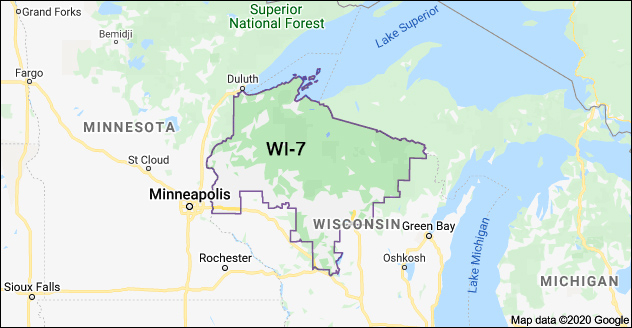
Feb. 20, 2020 — Wisconsin Republican state Sen. Tom Tiffany (R-Minocqua) and Wausau School Board member Tricia Zunker (D) won their respective party primaries Tuesday night and now head to the special general election scheduled for May 12. The winner of the succeeding contest replaces resigned Rep. Sean Duffy (R-Wausau) in WI-7 who departed Congress earlier in the year for family reasons.

Sen. Tiffany recorded a 57-43 percent win over Army veteran Jason Church who was previously a staff member for Sen. Ron Johnson (R-WI). Church, who lost both legs in Afghanistan, made military service the centerpiece of his campaign. Sen. Tiffany was originally elected to the state assembly in 2010. He won his state Senate seat in 2012 and was re-elected in 2016.

Zunker was an easy winner on the Democratic side, amassing a landslide 89-11 percent victory margin in a race where she became the obvious consensus candidate early in the process.

Sen. Tiffany now becomes the heavy favorite to win the seat in May. The northern Wisconsin region has transformed into a dependable Republican area after this district laid in Democratic hands from early 1969 all the way to the beginning of 2011 in the person of former House Appropriations Committee chairman David Obey.

Over his five elections here, Rep. Duffy averaged 57.9 percent of the vote. President Trump carried the 7th with a 58-37 percent majority, which was a substantial upgrade over Mitt Romney’s 51-48 percent performance. The Republican trend has clearly grown as the decade progressed.

Turnout in the primary election greatly favored the Republican candidates. When the final count is tabulated, the combined GOP participation factor looks to be well over 76,000 as compared to the Democratic total of just over 40,000 votes. The turnout ratio is another factor that provides Sen. Tiffany with a major advantage heading into the special general election.

Continue reading

Alabama Stats;
Minnesota’s New Senator

By Jim Ellis

Dec. 15, 2017 — Predictably, Democrats and media commentators are promoting the premise that Doug Jones’ victory in Tuesday’s Alabama special Senate election is another sign that a Democratic wave is building to transform the minority party into one that wins control of at least one congressional chamber next year. But the actual numbers do not provide evidence for such an analysis.

In actuality, Sen. Ron Johnson (R-WI) may have succinctly and correctly described what happened in the Alabama election, which caused Republicans to lose one of their safest seats in the nation. During an interview with NBC News, Sen. Johnson simply said, “Alabamians didn’t want somebody who dated 14-year-old girls.”

Looking at the actual figures, there is more supporting data for the supposition that Jones’ win is more likely due to Republican defections from former state Supreme Court Chief Justice Roy Moore, rather than a massive increase in Democratic turnout. While the Alabama special did feature a higher turnout than the last midterm election (2014), we also saw this phenomenon occur in two earlier special elections: the Montana at-large and GA-6 congressional contests. Republicans won both of those votes, proving that the GOP base was sufficiently energized in those two places to withstand increased Democratic turnout. But, Alabama doesn’t fit that same model either in the mode of Republican loyalty or an energized Democratic base.

Continue reading

New Wisconsin Senate Data

By Jim Ellis

Feb. 24, 2017 — The 2018 Senate Democrats have the same problem as last year’s Senate Republicans. That is, the Dems must protect too many seats in the coming election, which obviously diminishes opportunities for gains.

The Dems current situation is worse than the Republicans’ in the previous cycle. In 2018, the party candidates must win 25 of the 34 in-cycle seats (now including the Alabama special election for purposes of completing the current term that Attorney General Jeff Sessions began) just to break even. The 2016 Republicans were forced to defend 24 states to the Democrats’ 10, and ended the campaign cycle dropping a net two seats.

Adding further vulnerability to the Democrats’ potential quagmire is seeing 10 of their 25 incumbents hailing from states that President Trump carried last November. In nine of those 10 – Michigan is the lone exception – the state’s other senator is a Republican.

One of the top Republican conversion targets is the Badger State of Wisconsin. Here, first-term Sen. Tammy Baldwin (D) seeks re-election in what should be a highly competitive general election campaign.

Continue reading