Tag Archives: Trafalgar Group

Missouri Anxiety

By Jim Ellis

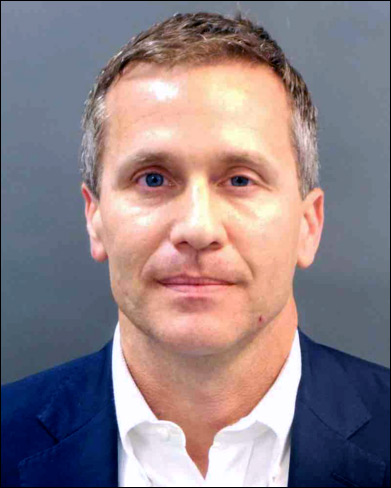
Ex-Missouri Gov. Eric Greitens (R)

March 21, 2022 — In 2016, retired Navy SEAL Eric Greitens was an upset winner in the Missouri governor’s contest and was quickly looked upon as a rising national Republican political star, but the glow would soon fade. Nineteen months later Gov. Greitens would resign his office in disgrace as a pre-election extra-marital affair came to the forefront followed by associated criminal charges relating to actions toward the woman and alleged campaign finance violations.

Later, the criminal charges were dropped because the prosecuting St. Louis District Attorney’s proven corrupt actions transformed into official prosecutorial misconduct. The embarrassing details that surfaced around the Greitens affair, however, underscored with him having a pregnant wife at home, ruined his previously stellar reputation.

Despite his tarnished personal image, Greitens was not finished with electoral politics, and decided to enter the open US Senate race after Sen. Roy Blunt (R) chose not to seek re-election to a third term. Speculation had been rampant earlier in the cycle that Greitens was even considering launching a primary challenge against the veteran politician if Sen. Blunt had run again. Had such a contest come to fruition, Greitens was viewed as having little to no chance of pulling an upset victory.

When the resigned governor entered the open seat Senate campaign, many Republican leaders began expressing trepidation that if he won the nomination the door would open to the party losing the general election against the eventual Democratic nominee. With virtually any other Republican standard bearer, the Missouri race would be considered safely Republican.

The new Trafalgar Group survey (March 9-13; 1,075 likely Missouri Republican primary voters, live interview, interactive voice response, online and text) gives credence to the previous analysis. Paired individually with two Democrats, Greitens only ties former St. Louis area state Sen. Scott Sifton, 45-45 percent, and holds the smallest of leads, 46-45 percent, over Iraq/Afghan War veteran Lucas Kunce.

In contrast, US Rep. Vicky Hartzler (R-Harrisonville/Columbia) would defeat Sifton, 57-37 percent, and Kunce, 56-39 percent. Attorney General Eric Schmitt (R) would also easily top the two Democrats (against Sifton: 54-40 percent; opposite Kunce: 55-40 percent).

However, a previous February Trafalgar poll (Feb. 22-24; 1,026 likely Missouri Republican primary voters) posted Greitens to a 31-23-17 percent Republican primary lead over Schmitt and Rep. Hartzler, respectively.
Continue reading

Georgia Turning, Again?

By Jim Ellis

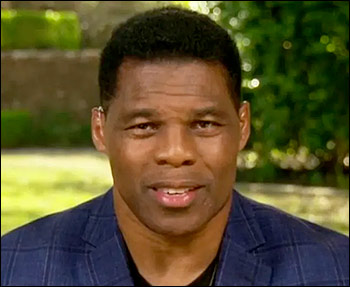
Herschel Walker (R), former University of Georgia and ex-NFL football star and current Senate candidate, enjoys his largest lead of the early election cycle.

March 11, 2022 — It was well publicized in the 2020 election cycle that the state of Georgia is beginning to swing toward the Democrats, but a new Democratic poll contains some evidence that predicting a long-standing transformational flip may have been premature. Now, the new polling suggests that Georgia voters could be open to a Republican comeback.

Blueprint Polling released their new Georgia statewide study earlier this week, and projects that GOP candidate Herschel Walker enjoys his largest lead of the early election cycle but it’s only a three-plus percentage point edge, well within the polling margin of error. The Blueprint survey (March 2-8; 662 definite (90 percent) and probable (10 percent) Georgia voters; live interview) produces a ballot test featuring Walker holding a 48.5 – 45.4 percent slight advantage over Sen. Raphael Warnock (D).

The most surprising part of the Warnock-Walker crosstabs was the Republican leading among younger voters. Walker led Warnock by just over one percentage point among those aged 18-34, typically a group that widely supports Democrats, and trails only among those aged 45-54. Among the highest turnout age sector, those 65 and older, Walker held a five-point advantage.

While Sen. Warnock still held a slight edge among Independents, 42-40 percent, Walker attracted 12 percent of Democratic votes while Sen. Warnock could manage only 9.5 percent among Republicans. The two were tied among college educated voters, a strong improvement for the Republican in this category, while Walker led by five points among those who had not attended or graduated from college.

But this result is far from the poll’s most interesting piece of information. Rather, the question about who the respondents would support in a presidential re-match produces an eye-opening result. This is particularly true when remembering that Georgia came down to an official, though disputed, small margin of 11,779 votes in Democratic candidate Joe Biden’s favor from just under 5 million ballots cast.

Continue reading

Michigan Gov. Whitmer
Falters in New Polls

By Jim Ellis

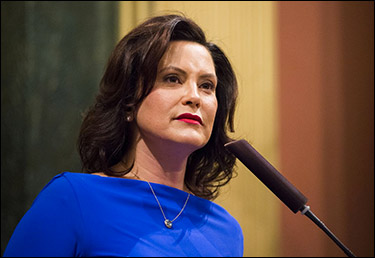
Michigan Gov. Gretchen Whitmer (D)

Sept. 23, 2021 — We have further evidence that the Michigan governor’s race is going to be a highly competitive political contest next year. A pair of new polls, following one in late August, find Gov. Gretchen Whitmer (D) either in a virtual dead heat with, or trailing, former Detroit Police Chief James Craig (R).

The Trafalgar Group and Strategic National, Inc. were both in the Michigan field during virtually the same time realm to test the impending governor’s race. Trafalgar (Sept. 13-15; 1,097 likely Michigan voters; live interview, interactive voice response system, online, and text) actually finds the governor slipping behind Craig by a 50-44% count. Strategic National (Sept. 18-19; 600 likely Michigan voters) arrived at a much tighter contest with the governor still in the lead. Their result projected a razor thin 46.6 – 46.0 percent margin.

Gov. Whitmer has become controversial even nationally through her draconian COVID shut down measures, and then being caught on several occasions as eschewing the dictates for herself and family. As the Strategic National poll shows, however, the governor’s favorable and unfavorable opinions are equivalent … and almost everyone feels strongly about their preference.

In terms of her personal favorability index, the responses divide 50:48 percent favorable to unfavorable. The strongly held position, however, spins toward the negative category. Of those who comprise Gov. Whitmer’s 50 percent positive rating, 35 percent, or 70 percent of those professing a positive opinion, feel strongly.

The negative segmentation is more intense. From the 48 percent who hold a negative view of Whitmer, 42 percent, or 87 percent of those holding an adversarial opinion, believe so strongly. Her job approval rating responses, though a different question, yields an almost identical pattern.

The polarization factor is, unsurprisingly, extreme when it comes to the respondents’ opinion about how she’s handled the coronavirus. By a margin of 52:47 percent, the sampling universe approves of her measures to combat the disease. And, in this instance, those feeling strongly on both sides break about evenly.

Continue reading

VA-Gov: Still Polling Close

Former Virginia governor, Terry McAuliffe

By Jim Ellis

July 15, 2021 — A new Trafalgar Group poll was released this week on the 2021 Virginia governor’s campaign, and the results supported data from two other pollsters that we analyzed in June.

The Trafalgar numbers (July 8-10; 1,104 likely Virginia voters, combination live interview and online) give former Virginia governor and ex-Democratic National Committee chairman Terry McAuliffe a slight 47-45 percent edge over retired hedge fund CEO Glenn Youngkin (R) in a political contest that is much closer than analysts would have foretold at the very beginning of this election cycle.

The Trafalgar results were consistent with those found in June from WPA Intelligence (June 2-6; 508 likely Virginia voters, live interview) and JMC Analytics (June 9-12; 550 likely Virginia voters, live interview). In those surveys, McAuliffe held leads of 48-46 percent (WAPi) and 46-42 percent (JMC). Therefore, we see virtually no change within the five-week period, which has to be considered good news for underdog Youngkin.

None of the three polls published a geographic segmentation, which would have been interesting since Youngkin must hit certain benchmarks in the state’s most populous areas if he is to score an upset. All of these regions have been moving decidedly Democratic in the most recent elections.

Alternatively, if we look at the most competitive previous election result, one that elected McAuliffe, we can begin to pinpoint how the current race must form and if we are to see a Republican upset.

The first clue that a close race might develop came in this year’s Democratic primary held on June 8. Turnout, when compared with the 2017 primary that nominated current Gov. Ralph Northam in a lightly competitive race, reached 542,858. This year, the Democratic participation number fell by more than 34,000 voters to 508,616. This may suggest a lesser enthusiasm factor within the Democratic base for McAuliffe’s rerun campaign.

Continue reading

Another Close Michigan Race

By Jim Ellis

Detroit Police Chief James Craig

May 18, 2021 — As it is becoming clear that retiring Detroit Police Chief James Craig (R) is preparing to challenge Michigan Gov. Gretchen Whitmer (D) next year, Target Insyght, polling for the Michigan Information & Research Service (MIRS), tested the potential general election pairing in a recent study. The results portend another tight Wolverine State campaign.

The TI poll (May 9-11; 800 registered Michigan voters, live interview) finds Gov. Whitmer leading Chief Craig by a six-point, 48-42 percent, spread. More importantly, the survey identified key areas of weakness for the governor, ones that could potentially allow a GOP contender to construct a reasonable path to victory. Chief Craig has not yet announced his candidacy but is expected to do so once he officially retires from the police force on June 1.

Where Chief Craig may have a significant advantage in such a race is his potential ability to draw more votes from the African American community particularly in heavily Democratic Detroit.

While President Biden averaged 79.1 percent of the vote in Congressional Districts 13 and 14 that encompass the city, the Target Insyght poll finds Gov. Whitmer pulling only 64 percent among black voters, while the outgoing police chief attracts 36 percent. In Detroit, 78.3 percent of the population is African American according to the latest publicly available Census Bureau estimates (July 2019).

Gov. Whitmer’s bigger weakness, however, lies in the area of jobs and rebuilding the state’s economy. According to this issue segmentation, voters would favor Chief Craig over Gov. Whitmer by a whopping 63-30 percent margin.

John James, the African American Republican who has run highly competitive campaigns in the last two consecutive Michigan Senate races, was also tested but he doesn’t perform as well as Chief Craig in a general election pairing. While the governor tops Chief Craig by six points, as mentioned above, James trails by 10 percentage points, 49-39 percent.

In the Republican primary, however, it is James who would have a clear advantage. If he and Chief Craig oppose each other for the 2022 GOP gubernatorial nomination, the former man would begin the race with a 36-21 percent advantage in the primary according to this particular survey.

Continue reading

A Wisconsin Senate Struggle:
Sen. Ron Johnson Trailing … Again

By Jim Ellis

Wisconsin Sen. Ron Johnson (R)

April 5, 2021 — Another tough statewide campaign appears to be brewing in the Badger State.
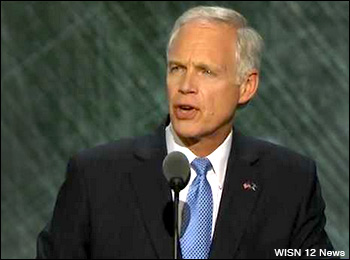
Thomas Nelson is the Outagamie County, Wisconsin, executive (Appleton area) and a former Wisconsin state assembly majority leader who is assessing his chances of challenging Sen. Ron Johnson (R) next year. For his part, Sen. Johnson has not indicated whether he will seek a third term. He has hinted both toward running again and keeping the pledge he made during his first campaign in 2010 to serve only two terms.

Nelson just released the results of an internal Change Research poll that posts him to a four-point 48-44 percent lead over Sen. Johnson. Looking back to the senator’s last election campaign (2016), trailing in a survey is nothing new. It was the repetitive data continually pegging him as trailing that led to the National Republican Senatorial Committee abandoning him as a lost cause until the late polls showed him rebounding with at least a chance to win.

In the end, Johnson defeated former Sen. Russ Feingold (D), 50-47 percent, in one of the most surprising results of campaign year 2016.

Wisconsin is likely the least accurately polled state during the past few elections. In the aforementioned Johnson-Feingold race, a total of 74 surveys were publicly released, and 70 of them showed Sen. Johnson trailing. In the same election year, 33 research studies were placed in the public domain for the presidential race and only the Trafalgar Group, just as the campaign was closing, correctly projected Donald Trump with an edge.

In 2020, a total of 70 presidential polls were released and 66 gave Joe Biden the lead. He did carry the state, but only by 20,682 votes translating into a 0.7 percent margin. The final 20 polls, all conducted after Oct. 1, found President Biden carrying a 7.0 percent average advantage, well beyond the polling margin of error in relation to the final result.

Therefore, with a consistent pattern of underestimating Republican strength, seeing Sen. Johnson trailing by only four points in the early stages of the 2022 campaign suggests his actual standing is likely much better.

Continue reading

Georgia: New Poll, Same Story

By Jim Ellis

Sen. Raphael Warnock will face an interesting challenge depending upon who emerges from the Republican primary.

March 18, 2021 — The Trafalgar Group and the Insider Advantage entity, both Atlanta-based firms, partnered to test the politically beleaguered Georgia electorate about freshman Sen. Raphael Warnock’s (D) standing as he looks to run for a full six-year term in 2022.

Being one of the top battleground states in the 2020 presidential contest and hosting two US Senate campaigns last year, 56 public polls were conducted of this electorate from July of last year through the Jan. 5 runoff election. Almost all of them repeatedly showed results within the margin of error on the presidential and both US Senate races; and, with the final total showing President Biden and former President Trump separated by just 11,779 votes while the Senate races came down to one and two-point finishes, the polling proved correct.

Now we see Trafalgar and IA beginning the 2022 Georgia election cycle polling. The new survey (March 7-9; 1,093 likely Georgia voters, interactive response system and online) again finds very tight hypothetical Senate race results. Because Sen. Warnock won the special election in January, he must stand for election to a full six-year term in 2022.

Trafalgar and IA tested three Republicans against Sen. Warnock: former Sen. Kelly Loeffler, ex-US Rep. Doug Collins, and the past University of Georgia and NFL football star Herschel Walker. None of the three have announced their candidacies but all confirm they are considering the race.

According to the results, Sen. Warnock fares best against the woman he defeated in January, ex-Sen. Loeffler. In this ballot test, he leads 46-41 percent. Both Collins and Walker perform better, especially the latter. The Warnock edge narrows to one point against Collins, 46-45 percent, and the new incumbent actually drops behind Walker, 46-48 percent. Notice that Sen. Warnock records 46 percent against all three potential opponents suggesting that he is vulnerable heading into what promises to be another hard-fought Peach State US Senate battle.

While the pollsters tested the job approval ratings for both President Biden and Gov. Brian Kemp (R), they surprisingly did not include such a question regarding Sen. Warnock.

The approval ratios were poor for both the president and governor. Biden scored a 41:55 percent favorable to unfavorable job approval rating, with 32 percent strongly approving and a large 46 percent strongly disapproving.

Gov. Kemp continues to show weakness as he heads into what will be a difficult run against his former opponent, ex-state House Democratic Leader Stacey Abrams. The governor is again in upside-down territory, recording a 33:53 percent negative approval rating. Only nine percent responded that they strongly approve of the governor’s performance while 26 percent strongly disapproved.

At this point, the pollsters asked Republican primary questions to those most likely to vote in the 2022 GOP nomination election.

If Loeffler, Collins and Walker were all to oppose each other in the Senate primary, we see the latter two men virtually tied at 32 percent apiece. Loeffler trails with 24 percent support.

A Collins-Loeffler match would favor the former, as the ex-north Georgia congressman would record a strong 52-32 percent lead. Walker would lead Collins 50-36 percent in a one-on-one match-up, and the former football player would hold a commanding 62-26 percent advantage over Loeffler.

The Georgia Republican respondent cell is strongly pro-Donald Trump with 70 percent saying they would “absolutely” vote for the former president if he were to run again. Only 14 percent of this sample cell said they would vote for anyone other than Trump. Another eight percent said they would consider voting for the ex-president.

We can expect another very active Georgia election cycle, with the Senate and governor’s race assuredly being covered as if they are national campaigns.

The Trafalgar Effect

By Jim Ellis

Oct. 15, 2020 — The Trafalgar Group is the polling firm that came to national political notoriety four years ago when they correctly predicted a Donald Trump victory in both Michigan and Pennsylvania and were the only survey research firm to do so. Since that time, they have forecast at least four other wins when the active polling community was arriving at opposite conclusions.

Yesterday, Trafalgar released its latest Pennsylvania data (Oct. 10-12; 1,034 likely Pennsylvania voters) and finds former vice president Joe Biden leading President Trump 47.4 – 45.1 percent — just over a two-point spread. In October, not counting the Trafalgar number, we see 12 other pollsters returning Pennsylvania data and they average a pro-Biden forecast of just under seven points.

Routinely, Trafalgar’s data shows President Trump in better position than most pollsters because they attempt to quantify what is termed the “shy Trump voter,” i.e., those who are actually voting for the incumbent but won’t admit it to a pollster. In most cases, the Trafalgar calculations, derived from a proprietary algorithmic formula, have been reliably accurate.

From 2016, we remember that, generally, the polling community missed badly in the Trump-Clinton presidential race. While their national count was accurate – predicting a tight plurality for Hillary Clinton (final result: 48.2 – 46.1 percent) – many state projections were off, particularly those in the Great Lakes region.

In the previous presidential election cycle, a total of 62 surveys were conducted in the state of Pennsylvania, and only three found a lead for President Trump, including the Trafalgar pre-election survey. In Michigan, 45 polls were publicly released, and Trump led in just two, one of which was Trafalgar’s final 2016 study. In Wisconsin, 33 polls were taken, and none found President Trump running ahead. Yet, in all three cases, he won the state.

The Great Lakes/Mid-Atlantic region was not the only area where 2016 polling missed the mark. In North Carolina, the margin average looked to be dead even heading into the election, but President Trump won with a 3.6 percent spread. The cumulative polling missed Arizona by two points, and Florida by 1.2 percent. In all of these instances, the Republican voted was under-estimated.

Continue reading

Is Minnesota In Play?

By Jim Ellis

Aug. 24, 2020 — The state of Minnesota has been the most loyal of Democratic states in the presidential election since 1972, but the latest survey research data suggests that the northern domain is returning to the competitive realm this year.

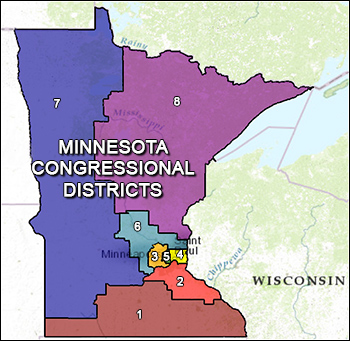
Four years ago, President Trump fell just 1.5 percent short of winning Minnesota, thus providing a sign that the electorate was beginning a possible transformation. That was partially underscored in 2018 even when the party lost two suburban Minneapolis districts but gained two back in the rural north and south. The latter two congressional seats were the only ones Republicans converted from Democrats in the whole nation, except for a Pennsylvania seat that flipped to the GOP because of a court-imposed redistricting map that substantially changed the boundaries.

The 2020 Minnesota polls have seesawed. Mason-Dixon Polling and Research was the first to release a statewide poll this year and did so just before the George Floyd killing occurred in Minneapolis. The M-D survey was conducted over the May 18-20 period and yielded former vice president Joe Biden a five-point lead, 49-44 percent. The Morning Consult organization was also in the field during that same relative period, May 17-26, and found a similar spread between Biden and President Trump, with the former posting a seven-point edge.

Within this same period, the Floyd controversy began on May 25. During the next two months, a pair of Minnesota polls were conducted, and Biden’s lead soared into double digits. Gravis Marketing executed a single-day poll on June 19 and found Biden’s lead had grown to 16 percentage points. Fox News followed with their survey a month later, July 19-20, and found a similar 13-point Biden advantage.

The situation began to change when Morning Consult again tested the Minnesota electorate over the July 17-26 period and saw the race closing back into the three-point range. This survey was confirmed with the Trafalgar Group’s numbers derived from their July 23-25 poll that found a similar five-point margin developing between the two candidates.

The next two, however, from Public Policy Polling and David Binder Research, both conducted during the July 22-31 time frame, produced 10 and 18 point spreads in Biden’s favor. The Binder poll, however, utilized a sample size of only 200 respondents, far below what would be typically required for a reliable statewide poll for a domain housing eight congressional districts.

Continue reading

Hagerty Wins; Harshbarger Takes 1st

By Jim Ellis

Former US Ambassador to Japan Bill Hagerty won the Tennessee Senate Republican nomination.

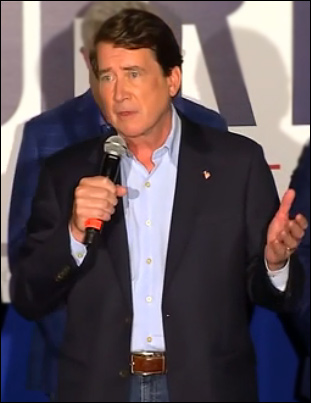
Aug. 10, 2020 — Former US Ambassador to Japan Bill Hagerty won the Tennessee Senate Republican nomination last Thursday night with a 51-39 percent victory margin over his chief opponent, Dr. Manny Sethi, a Nashville surgeon, in the nation’s only Thursday primary.

Now as the official Republican nominee, Hagerty becomes the prohibitive favorite in the general election against businesswoman and environmental activist Marquita Bradshaw, who was an upset winner in the Democratic primary despite spending virtually no money on her campaign.

The last three publicly released Republican primary polls, from JMC Analytics, the Trafalgar Group, and Victory Phones, all forecast a 3-4 point edge, far below Hagerty’s actual percentage spread. The Tarrance Group, which polled at the end of June, was much closer to the final result, predicting a 46-29 percent split in Hagerty’s favor. The surveys, however, were completed through July 19, so it is possible that his late message blitz was responsible for Hagerty gaining strong momentum in the campaign’s final stage that led to a strong victory.

The Democratic side actually became more curious. Attorney James Mackler, who raised and spent more than $2 million and was viewed as a heavy pre-election favorite for Thursday night’s vote, not only lost to Bradshaw, but placed a poor third. In between Bradshaw and Mackler was attorney and Unitarian minister Robin Kimbrough. Together, she and Bradshaw are reporting spending only $17,000 on their combined political effort through the July 17 pre-primary financial disclosure period.

The Republican primary turned into a hard-fought battle between Hagerty, who spent over $9 million, and Dr. Sethi, who was making his first venture into elective politics. Sethi raised and spent well over $4 million. The contest was personal at the end, with both candidates trying to get to the right of the other and launching negative attacks. Hagerty had President Trump and Sen. Marsha Blackburn’s (R) combined endorsement, signaling that he had the conservative credentials necessary to win a Tennessee Republican primary.

East Tennessee Rep. Phil Roe (R-Johnson City) is retiring after serving what will be six complete terms and his successor will be pharmacist and political activist Diana Harshbarger.

Continue reading