Category Archives: Retirement

Missouri Rep. Sam Graves to Retire

By Jim Ellis — Monday, March 30, 2026

House

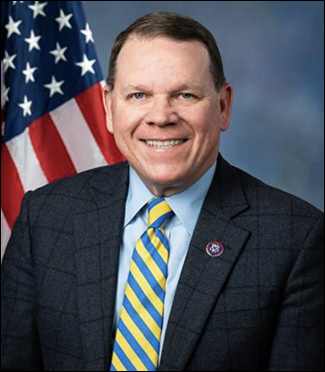
Veteran US Rep. Sam Graves (R-Tarkio)
of Missouri

Veteran US Rep. Sam Graves (R-Tarkio), the chairman of the House Transportation and Infrastructure Committee who has represented northern Missouri since the turn of the century, will not seek re-election later this year. Rep. Graves, who had previously filed his documents to mount a campaign, changed his mind about running, now saying he believes it is his time to step aside.

Graves was initially elected to the House in 2000 and only dropped below 60 percent support one time in his 12 re-election campaigns. Prior to serving in Congress, Graves won seats in both the Missouri state House of Representatives and state Senate. He has been in elective office consecutively since the 1992 election.

The Graves retirement means there are temporarily 61 open US House seats headed to the next election. The number will recede to 59 when the special elections in GA-14 (April 7) and NJ-11 (April 16) occur to fill vacant seats. Of the 61 open positions, 27 members, including Rep. Graves, are retiring from elective politics. The remainder are running, or have run, for a different office.

Missouri’s 6th District contains the state’s northern counties beyond Kansas City to the Iowa border and all the way to the western Illinois border. Under the new Missouri congressional map drawn for the 2026 election cycle, the 6th now contains a significant part of Kansas City including the major Kansas City International Airport and the North Kansas City community.

The addition of the Kansas City metro region reduces the district’s Republican partisan lean by approximately six percentage points, but CD-6 remains as the GOP’s third strongest domain in the Show Me State. According to the Dave’s Redistricting App (DRA) partisan lean calculations, the new MO-6 records a 61.5R – 36.5D split. President Trump received 68.8 percent of the vote in the previous district as compared to Kamala Harris’ 30.0 percent.

With the Missouri candidate filing deadline expiring tomorrow, we can expect a number of candidates to come forward to file in the new open 6th District. The eventual Republican nominee coming from the Aug. 4 primary should have little trouble holding the seat in the November general election.

Whether the new map will be used for the 2026 election remains in question, however, even as candidate filing is closing. Petition signatures have been filed for an initiative to repeal the new map, but the qualification process is not complete. More than enough signatures have been submitted to meet the basic requirement for ballot line acquisition, but whether all additional legal requirements have been met remains unanswered.

Therefore, as the candidates file under the new map, the possibility remains that the repeal initiative could force a re-filing under the previous map. A court ruling on Friday upheld the new plan, but the Secretary of State has until the Aug. 4 primary to rule on signature validation.

According to Missouri initiative law, a ballot proposition requires signatures equal to five percent of the total number of votes cast for the most recent gubernatorial campaign. In this case, the 2024 gubernatorial election saw 2,960,266 ballots cast, meaning the five percent total would require 148,013 valid signatures.

The procedure, however, requires the petitions to equal five percent of the gubernatorial total vote in two-thirds of the state’s congressional districts, or likely six of the eight. Therefore, the actual number of required signatures could be lower than the calculated statewide total. The redistricting opponents have submitted more than 305,000 signatures.

The new draw centers around the state’s 5th District that veteran Congressman Emanuel Cleaver (D-Kansas City) represents. Instead of being a Kansas City metro district, the new 5th stretches from the city of Independence eastward through central Missouri and past the capital city of Jefferson City.

The new map changes the 5th District from a seat with a DRA partisan lean of 60.8D – 35.9R to one that would likely elect a Republican with a 56.6R – 41.1D spread. The remaining seven seats, 6R and 1D, will remain with the current party.

The Montana Shockwave


Montana Sen. Steve Daines (R) announces his retirement from the Senate.

By Jim Ellis — Monday, March 9, 2026

Senate

The Treasure State of Montana’s political world experienced a political earthquake at the close of candidate filing the other night when two-term Sen. Steve Daines (R) withdrew his previous re-election candidacy statement and instead announced his retirement.

Having his successor already prepped, US Attorney Kurt Alme (R) then filed for the office just as the deadline was expiring. In addition to Sen. Daines endorsing Alme, the Trump presidential endorsement was also pre-determined. With Alme as the only major Republican filing, his path to the party nomination appears virtually unencumbered.

The Democrats have five announced contenders, but the Montana race is not likely going to attract the type of political financial investment it did in the 2024 election when current Sen. Tim Sheehy (R-MT) unseated now-former Sen. Jon Tester (D). By some counts, including the many independent expenditures on both sides of the ’24 Senate race, the aggregate campaign spending approached an incredible $200 million before a state population of only about 1.2 million people.

Daines now becomes the tenth Senator to retire in this election cycle, making almost one-third of the 2026 Senate races open (10 of 35; 6R – 4D).

Before the Daines announcement, another shoe had dropped. Together the pair of political moves means that half of the Montana federal delegation is leaving office.

Two days earlier, Representative and former Interior Secretary Ryan Zinke (R-Whitefish) announced that he would not seek re-election to a third consecutive term from the state’s western, and more politically competitive, 1st Congressional District.

The veteran Representative says he must endure some medical procedures related to long-term injuries sustained from his days as a Navy SEAL, which, though non-life threatening, would require him to be absent from Congress over what will likely be a long recovery period.

Thus Zinke, who returned to the House in 2023 after winning the 2016 and ’18 at-large congressional elections (Montana was awarded a second congressional seat in the 2020 national apportionment), said that western Montana deserves a full-time Representative and will not seek a third consecutive term.

In conjunction with the situation surrounding Sen. Daines’ departure, the Zinke move had obviously been quietly planned for a sustained period. As part of his retirement announcement, the Congressman endorsed radio talk show host Aaron Flint as his successor. The Zinke endorsement of Flint was quickly followed with an equivalent show of support from President Trump proclaiming his “complete and total endorsement” for Flint. Sen. Sheehy also publicly endorsed the new congressional candidate.

Not everyone is on board the Flint bandwagon, however. Montana GOP Secretary of State Christi Jacobsen quickly announced her own candidacy, so we will see some competition in the 1st District Republican primary.

The 1st CD can become competitive. The Dave’s Redistricting App partisan lean is calculated at 50.7R – 46.9D, as compared with 55.1R – 42.6D for the state as a whole. In his two elections from this district, Rep. Zinke averaged just 50.9 percent of the vote. President Trump carried MT-1 with a 54.2 – 42.7 percent spread in 2024 but won the statewide vote with a more robust 58.4 – 38.5 percent victory spread over Kamala Harris.

Zinke’s retirement and Texas Rep. Dan Crenshaw’s (R-Humble) defeat in Tuesday’s primary means there are now 58 open US House seats headed toward the next election, with 34 coming from Republican districts and 19 from the Democratic column, while redistricting in California, Texas, and Utah has created five new seats.

Nevada Rep. Mark Amodei to Retire;
Malinowski Likely to Lose NJ-11

By Jim Ellis — Monday, February 9, 2026

NV-2

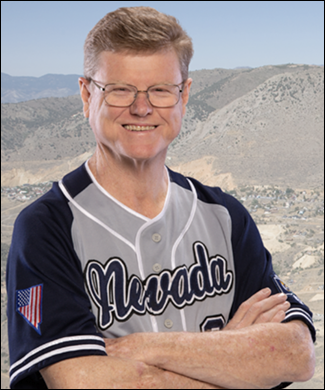
Nevada Rep. Mark Amodei (R-Carson City)

Ending what will be a 30-year career in elective and party politics when this Congress concludes, Nevada Rep. Mark Amodei (R-Carson City) announced on Friday that he will not seek a ninth term in the House later this year.

Rep. Amodei is the 51st House member not to seek re-election in this cycle. Another five open seats are created through new redistricting maps in California and Texas. The number includes the three districts, in California, Georgia, and New Jersey, that are vacant and currently in special election cycles.

Amodei was first elected to federal office in a 2011 special election after then-Rep. Dean Heller (R) was appointed to the Senate. Rep. Amodei has been re-elected seven times and averaged 58.7 percent of the vote in those elections. Prior to winning the US House seat, he served 14 years in the Nevada legislature. Amodei was then elected as Nevada Republican Party chairman but kept the position for only one year because the congressional seat came open.

Nevada’s 2nd District, which covers the domain’s northern sector and is anchored in the cities of Reno and Carson City, is the state’s only Republican congressional seat. The Dave’s Redistricting App statisticians calculate a 53.8R – 40.5D partisan lean, meaning that Rep. Amodei consistently ran ahead of the party benchmark. In 2024, President Trump carried the seat with a 55.8 – 41.9 percent spread, a margin that was largely responsible for catapulting him to a close statewide win.

Now that CD-2 is open, it remains to be seen if perennial GOP candidate Danny Tarkanian enters this race. Since 2004, Tarkanian, the son of the late famed college basketball coach Jerry Tarkanian, has run for 10 different offices in Nevada including twice for US Senate and Congressional Districts 2, 3 and 4.

Danny Tarkanian is currently a Douglas County Commissioner, which is in the 2nd CD. He has won a fair number of Republican primaries but typically fails to win the general election. In 2022, he challenged Rep. Amodei in the 2nd District Republican primary and lost 55-33 percent in a campaign where he had little chance of prevailing from the outset.

Currently, Tarkanian is an announced candidate in the open Attorney General’s race. He still has time to pivot into the congressional race, however. The candidate filing period doesn’t close until March 13.

A crowded 2nd District Republican candidate field is expected to form. The eventual Republican nominee should be a clear favorite in the general election. Should Tarkanian enter the race and win the primary, Democrats will invest here because of his previous electoral track record. Therefore, a spending advantage and a weaker Republican nominee is enough political fodder for Democrats to believe an upset is possible.

NJ-11

An estimated 5,000-plus votes still remain to be counted in the New Jersey special congressional election to replace Gov. Mikie Sherrill (D) in the US House.

In the first round of political overtime counting, Democratic Socialist and former Sen. Bernie Sanders’ (I-VT) staff member Analila Mejia expanded her advantage over former 7th District Rep. Tom Malinowski to 868 votes according to NBC News.

Even bleaker for Malinowski’s chances, almost an equal number of votes remain from the two counties, Essex and Passaic, where Mejia topped Malinowski as compared to Morris County, an entity the former Congressman carried.

Counting will resume today and presumably be completed today or tomorrow. With Mejia as the nominee staking out the far left from a district’s electorate that has habitually trended toward the political center, it will be interesting to see if the Republicans fully back their nominee for the April 16 special general election. Randolph Township Mayor Joe Hathaway won the Republican primary on Thursday in unopposed fashion.

Candidate filing for the regular election closes on March 23 for the June 2 primary. The timing complicates matters since the candidates must file for the regular term before the special election concludes.

Washington Rep. Newhouse to Retire

By Jim Ellis — Friday, Dec. 19, 2025

House

Washington Congressman Dan Newhouse (R-Sunnyside) / Facebook photo

Central Washington Congressman Dan Newhouse (R-Sunnyside) announced that he will not seek a seventh term next year. Rep. Newhouse’s retirement decision increases the House open-seat count to 48.

Newhouse was originally elected to Congress in 2014 after serving as Director of the Washington Department of Agriculture. His career in electoral politics began with winning a seat in the state House of Representatives in 2002, where he served three-plus terms before being appointed to the agriculture position.

The Congressman averaged 59.3 percent of the vote in his six federal general elections, but under Washington’s jungle qualifying election system three of those contests were opposite another Republican. Rep. Newhouse’s 4th Congressional District is one of two safe Republican seats in Washington; hence, he faced a Republican opponent in three general elections, two when he was first elected and re-elected, and the last one in 2024.

As one of just 10 Republicans to vote in favor of impeaching President Trump in early 2021 over the Jan. 6 situation at the Capitol, Newhouse did face pressure from Republican contenders in both the 2022 and 2024 elections. Of the group of 10 House Republicans, only Rep. Newhouse and California Congressman David Valadao (R-Hanford) remain in office.

While Newhouse fared well in the general election, he did rather poorly in the associated qualifying elections under the jungle system. In the last two such votes, Newhouse only averaged 24.5 percent of the vote within crowded multi-candidate fields.

In 2024, the Congressman finished a full ten percentage points behind Trump-endorsed Republican Jerrod Sessler in the August qualifying election, but he managed to rebound to score a 52-46 percent win in the November general election. Retirement rumors were prevalent regarding Newhouse during the 2024 election cycle, so seeing him not seeking re-election in 2026 is unsurprising.

The 4th District of Washington lies in the central part of the state and stretches from the Canadian border to Oregon. The district contains six counties and parts of two others. In the 2024 presidential election, the WA-4 electorate voted for President Trump over Kamala Harris with a 59.0 – 38.3 percent margin, making it the strongest Trump district in Washington. The major population centers are the cities of Yakima, Kennewick, and Richland, all located in the CD’s southern sector.

We can expect a large Republican field to form with the possibility of again seeing the voters send two party members into the general election. Sessler, who ran in the last two elections, previously announced that he will return for a third campaign and must be viewed as a strong contender to qualify for the general election. Yakima County Commissioner Amanda McKinney (R) had also previously announced her intention to run.

Republican Tiffany Smiley, who challenged Sen. Patty Murray (D) in the 2022 general election and for a time was viewed as having upset potential, eventually lost in a 57-43 percent result. She then entered the 2024 jungle primary to challenge Rep. Newhouse. Smiley finished third in the jungle primary with 19 percent of the vote, thus failing to qualify for the general election. Therefore, it is possible that she will return to again compete for the congressional post. Without Rep. Newhouse in the field, Smiley would be viewed as another potentially strong candidate.

In terms of the national open-seat count, we now see 48 open seats headed to the next election with three special elections coming in late January (TX-18; replacing the late Rep. Sylvester Turner-D), February (NJ-11; replacing Gov-Elect Mikie Sherrill-D), and March (GA-14; replacing soon-to-resign Rep. Marjorie Taylor Greene-R). The remaining 45 open seats will all be filled in the regular 2026 election cycle.

From the 48 open seats, a total of 25 Republican members are not seeking re-election, 18 are Democrats, with five new seats created in California and Texas under those states’ new redistricting maps.

Within the subset of 42 serving members who are departing, a total of 15 are opting to retire from elective politics, another 14 are running for Governor of their respective states, 12 are US Senate candidates, and one is competing in an open state Attorney General’s contest, while one member passed away.

46 Open US House Seats With Rep. Nehls’ Retirement Announcement

By Jim Ellis — Tuesday, Dec. 2, 2025

US House

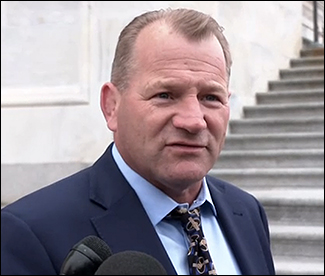
Texas Rep. Troy Nehls (R-Richmond) / Photo: abc13.com

After what will be only three terms in Congress, Texas Rep. Troy Nehls (R-Richmond) surprisingly announced last weekend that he will not seek re-election next year.

Though Nehls is under a House Ethics Committee investigation under allegations that he used some of his campaign money for personal gain, there was unsurprisingly no mention of that situation in his retirement announcement. Now that Rep. Nehls has indicated he won’t seek re-election, it is possible the probe will be dropped.

With Rep. Nehls’ 22nd District now coming open, a total of 10 Texas US House districts will have no incumbent for the 2026 election, assuming the 2025 map remains in place. As you will remember during the past 10 days, a three-judge federal panel, on a 2-1 vote, declared the new map a racial gerrymander. Immediately, however, Supreme Court Justice Samuel Alito, administrator for the 5th Circuit Court of Appeals where Texas lies, placed a temporary stay on the lower court ruling.

It is unclear what further action the high court will take, but the odds are strong that the 2025 map will be in place at the Texas candidate filing deadline, which is Dec. 8.

Under the new map, the 22nd remains a Republican district. The 2025 draw encompasses parts of the CD’s traditional three counties, Brazoria, Ft. Bend, and Harris. According to the newly calculated partisan lean from Dave’s Redistricting App, the district yields a reliable Republican calculation of 60.0R – 38.0D. The partisan lean tracks with President Trump’s 2024 performance as he carried the district over Kamala Harris with a 59-39 percent margin.

Immediately upon the Nehls’ retirement announcement becoming public, the Congressman’s twin brother, former County Constable and retired US Army Colonel Trever Nehls, announced his candidacy.

Prior to winning election to Congress in 2020, Rep. Nehls served for eight years as the Ft. Bend County Sheriff. Before earning the Sheriff’s position in 2012, Nehls was himself one of four Ft. Bend County Constables, a position he held from 2004 to 2012.

An interesting phenomenon has unfolded among the Texas open seats. Of the 10 districts where no incumbent is running, assuming the 2025 map receives favorable action from the Supreme Court, a total of six of the districts feature no state legislator and few local officials venturing forth to become a congressional candidate. The number does not include what might happen with a developing open TX-22 field.

Some Texas observers believe this unusual situation is because many legislators believe they can accomplish more remaining in the state House or Senate rather than as a freshman US Representative in a tightly divided chamber within a highly partisan atmosphere. Regardless of the reason, we will see a large number of freshmen Texas US House members coming to Washington at the beginning of 2027 with very little legislative experience.

Nationally, the Nehls retirement decision brings to 46 the number of open seats headed to the next election. On Tuesday, the open-seat race in Tennessee was decided, thus reducing the open seat contingent to 45. Of that latter group, 23 of the open seats are currently Republican held and 17 Democratic, with five new seats created from the 2025 redistricting maps in California and Texas.

Of the 46 open seats after tomorrow, 14 of the departing members are running for Governor of their respective states, 13 are retiring from elective politics, 11 are announced US Senate candidates, five new districts were created in redistricting including forcing two California incumbents to seek election in different districts, and one seat each from a member who is running for another office (Texas Attorney General), resigned (Rep. Marjorie Taylor Greene; R-GA) and passed away (Rep. Sylvester Turner; D-TX).

Two New Special Elections

By Jim Ellis — Wednesday, Nov. 26, 2025

This is our last update for the week. We’ll take a pause for Thanksgiving and pick up again Monday, Dec. 1. Wishing all a very Happy Thanksgiving!


House

Governors in two states are making moves to calendar elections to fill new congressional vacancies in their states. With Rep. Mikie Sherrill (D-NJ) resigning her congressional seat to prepare for her swearing in as the Garden State Governor, and Rep. Marjorie Taylor Greene (R-GA) declaring that she will leave Congress on Jan. 5, two more districts will soon host special elections.

Since this Congress began, we have seen four seats filled in special elections; two more are scheduled, the first on Dec. 2 (TN-7) and the other Jan. 31 (TX-18), and now the Georgia-New Jersey pair open.

Three seats became vacant because the incumbent passed away — Reps. Raul Grijalva (AZ), Sylvester Turner (TX), Gerry Connally (VA); one accepted an appointment from President Trump, Rep. Mike Waltz (FL); three resigned for other opportunities, Reps. Matt Gaetz (FL), Greene (GA), Mark Green (TN); and one, Sherrill, won election to a different office.

NJ-11

Rep. Mikie Sherrill being elected New Jersey Governor on Nov. 4 creates a new vacancy in the Garden State congressional delegation. The 11th District lies in the northern part of the state and is reliably Democratic.

Under previous redistricting plans in the early part of the century, the 11th, which now includes parts of three counties, Essex, Morris, and Passaic, and the population centers of Morristown, Parsippany-Troy Hills, and Gov-Elect Sherrill’s hometown of Montclair, was a Republican district.

The Dave’s Redistricting App partisan lean for the current NJ-11 shows a 55.6D – 42.5R ratio. Kamala Harris carried the district 53.3 – 44.6 percent. Therefore, the stats show that Gov-Elect Sherrill’s successor will very likely be determined in the special Democratic primary.

Gov. Phil Murphy (D) just announced that the District 11 special partisan primaries will be held on Feb. 5, with the special general scheduled for April 16. Candidates must file right after Thanksgiving, on Dec. 1.

A total of 14 Democrats have announced their candidacies, including former 7th District Congressman Tom Malinowski. In 2022, Malinowski, who saw his district become a touch more Republican in 2021 redistricting largely to make the 11th and now-Sen. Andy Kim’s (D) former 3rd District more Democratic. Then-Rep. Malinowski would lose to current Rep. Tom Kean, Jr. (R-Westfield) as a result.

Beyond Malinowski, the Democratic field includes former Lt. Gov. Tahesha Way, five local officials from various townships, and former Obama White House aide Cammie Croft. Only one Republican is in the race, Randolph Town Commissioner and Mayor Joe Hathaway.

GA-14

Rep. Marjorie Taylor Greene’s (R-Rome) surprise resignation means an ensuing special election will be held in northwest Georgia. Reportedly, sources close to Gov. Brian Kemp (R) say he is leaning toward scheduling a March primary.

Under Georgia election law, when special elections are held all candidates are placed on the same ballot regardless of political party affiliation. If a contender receives majority support in the first election, the individual is elected. If no one reaches such a level, the top two finishers, again regardless of political party affiliation, advance to a runoff election within 28 days of the initial vote.

With an overwhelming Republican partisan lean (Dave’s Redistricting App: 69.2R – 28.9D), meaning the 14th District is the safest Georgia Republican congressional district, the possibility of two Republicans advancing to the runoff is relatively high.

A total of six state Senate seats and 17 districts in the state House contain part of the 14th CD. Encompassing all or part of 10 counties, a multitude of Republican state and local officials are likely to enter the congressional campaign.

State Senate Majority Leader Jason Anavitarte (R-Doraville) and state Sen. Colton Moore (R-Trenton), who for a time was in this year’s US Senate campaign, are viewed as potentially strong candidates.

The field will form once Rep. Greene resigns after the first of the year and Gov. Kemp officially calls the special election.

Texas Rep. Jodey Arrington to Retire

By Jim Ellis — Wednesday, Nov. 12, 2025

House

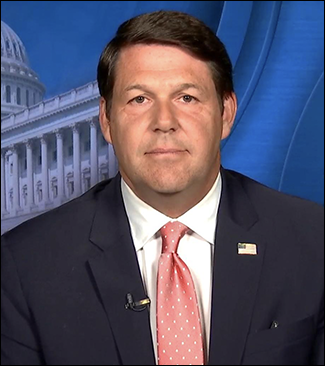
Texas Rep. Jodey Arrington (R-Lubbock)

The number of US House members announcing they won’t seek re-election next year is beginning to form a cavalcade.

Five-term Texas Rep. Jodey Arrington (R-Lubbock), chairman of the House Budget Committee, yesterday announcing that he won’t seek re-election next year, increased the number of retirement decisions to six in just the past 10 days.

In his retirement announcement, Rep. Arrington said, “I believe, as our founding fathers did, in citizen leadership – temporary service, not a career; and, it’s time to do what George Washington did, and to ride off into that big, beautiful West Texas sunset, and to live under the laws that I passed.”

Since 2010, we have seen the number of House open seats fall to anywhere between 48 and 64 in each election cycle. This year the pace of those voluntarily leaving Congress was slower until recently.

Now, the open-seat count, adding the newly drawn seats in Texas and California but not including the vacant districts in special elections (TN-7; TX-18) and the soon-to-be open seat in New Jersey (NJ-11; Governor-Elect Mikie Sherrill), lies at 40 with others to follow once candidate filing deadlines begin to appear on the political horizon.

We are about to see other seats open in California once members decide where they will run under the new map. We have already seen two Golden State members, Reps. Ami Bera (D-Sacramento) and Ken Calvert (R-Corona), switch districts.

In northern California, Rep. Bera is eschewing his Sacramento County 6th District, where he would be the lone incumbent, to challenge 3rd District Republican Rep. Kevin Kiley (R-Rocklin/ Sacramento) in a district that now favors the Democrats.

Speculation is underway that Rep. Kiley may depart his 3rd District for another seat, possibly even challenging fellow Republican Rep. Tom McClintock (R-Elk Grove) in the new 5th CD that stretches from the Sacramento suburbs south into the San Joaquin Valley of Central California.

In Southern California, Rep. Calvert found his 41st District broken into several pieces, thus forcing him into new District 40 to challenge fellow Republican Young Kim (R-La Habra). Other Los Angeles County members could be shifted to other seats as well and we may see Rep. Linda Sanchez (D-Whittier) run in what is now a Democratic version of District 41. Expect to witness several interesting political musical chairs moves once the California redistricting dust begins to settle.

Of the 40 open seats, counting the three newly created seats from Texas redistricting, we see Rep. Arrington becoming the 12th exiting House member to retire from elective politics. Eleven are running for the Senate, an additional 11 have entered their state’s gubernatorial campaign, two are running for election in a different congressional district than the one they currently represent, and one, Texas Rep. Chip Roy (R-Austin), is running for state Attorney General.

In terms of the two special election districts, a new poll was released for the TN-7 race in the western Tennessee district from which four-term Rep. Mark Green (R) resigned to accept a position in the private sector.

A Workbench Strategy survey (Oct. 15-19; 400 likely TN-7 special election voters; 100 oversample of Democratic voters; live interview & text) found Republican former state cabinet official Matt Van Epps leading state Rep. Aftyn Behn (D-Nashville) by a 52-44 percent count.

A segment defined as “the most motivated voters” found the two candidates tied. This suggests that the Democrats have an enthusiasm edge, meaning this Dec. 2 general election could be closer than the Republican historical voting patterns would suggest.

The TX-18 race will go to a double Democratic runoff between Harris County Attorney Christian Menefee and former Houston City Councilwoman Amanda Edwards. When the final totals become official, Gov. Greg Abbott (R) will schedule the runoff election, likely for a date in January.

With New Jersey Rep. Mike Sherrill (D-Montclair) being elected Governor last week, expect her to resign her congressional seat in mid-January just before taking the oath of office. She will then schedule a special election for voters to choose her successor.