Category Archives: Voting Rights

Sen. Warnock Wins Re-Election; Florida Sen. Scott to Seek Re-Election; Nebraska Gov. Ricketts to Apply for Senate Appointment; SCOTUS Hears Redistricting Case Today

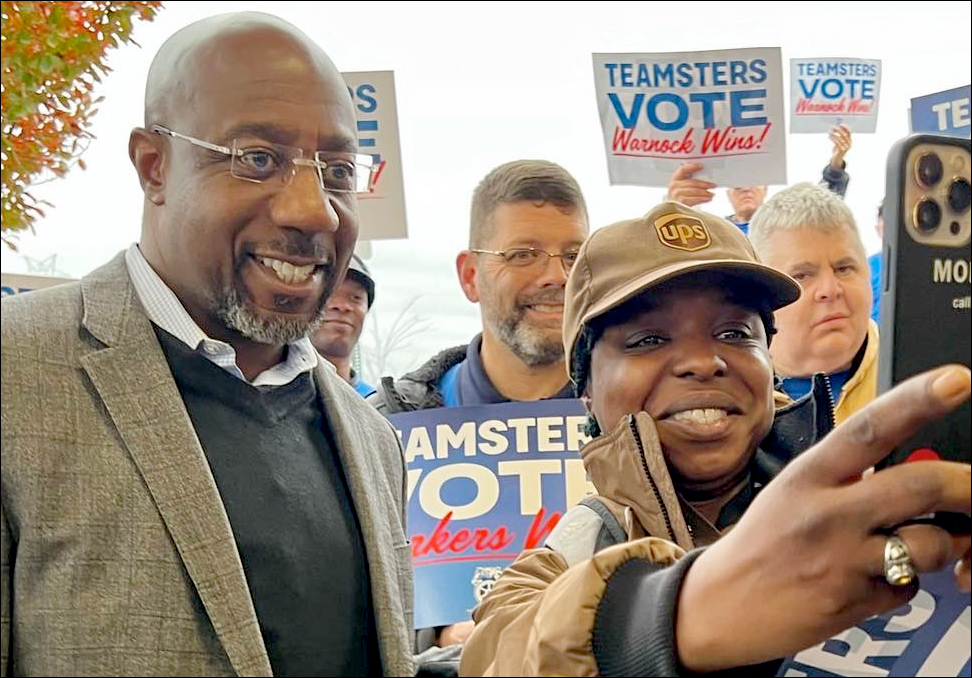
Georgia Sen. Raphael Warnock (D) wins re-election. | Facebook photo

By Jim Ellis — Wednesday, Dec. 7, 2022

Senate

Georgia: Sen. Warnock Wins Re-Election — As predicted, Georgia Sen. Raphael Warnock (D) defeated GOP former professional football player Herschel Walker (R) last night in the Senate runoff, but the approximate 51-49 percent contest split was much closer than many prognosticators expected. The Warnock win gives the Democrats a 51-49 majority in the Senate, a net gain of one seat from the present 50-50 makeup. The outright majority will give the party at least one more vote than the Republicans on every Senate committee, and make it easier for the leadership to confirm administration appointments, including federal judges.

Turnout is one of the bigger stories, as the projected 3.6 million people voting in the runoff election is actually 200,000-plus individuals greater than those voting in the regular Senate contest back on Nov. 8. It is unprecedented for a runoff to draw more voters than a regular election, but such has apparently happened in this Peach State election.

Yesterday’s secondary election was necessitated under Georgia election law because neither Warnock nor Walker received majority support in November. Unlike in most states, an absolute majority is required to win a Georgia general election.

Sen. Warnock has now secured a full six-years in the Senate after winning the 2020 special election to fill the balance of then-Sen. Johnny Isakson’s (R) final term. Sen. Isakson resigned at the end of 2019 due to health reasons and then later passed away. Gov. Brian Kemp (R) then appointed businesswoman Kelly Loeffler (R) to fill the post until the 2020 special election of which Rev. Warnock won in that cycle’s subsequent runoff.

Florida: Sen. Rick Scott (R) to Seek Re-Election — Quelling political speculation that he would run for president in 2024, Sen. Rick Scott (R-FL) early this week made clear his intentions for the next election. Saying in a response to a question from radio host and national commentator Hugh Hewitt, Sen. Scott said, “I have no plans to run for president and I have a 100 percent plan to run for the US Senate [in 2024]. I’m running for re-election for senator from the great state of Florida.”

Speculation is also surfacing that outgoing US Rep. Stephanie Murphy (D-Winter Park) may challenge Sen. Scott. In a response to a reporter’s inquiry, Rep. Murphy didn’t close the door on such an option and pointed out that Florida is still not as “red” as the electorate voted in the 2022 election. Of the 11 Republican in-cycle seats for 2024, the Florida campaign could be the most competitive, but even here Sen. Scott must be rated a heavy early favorite for re-election.

Nebraska: Gov. Ricketts Will Apply for Senate Appointment — Nebraska junior Sen. Ben Sasse (R) has now set Jan. 8, 2023, as the date he will officially resign his elected position in order to become president of the University of Florida. Governor-elect Jim Pillen (R), who will appoint a replacement for Sen. Sasse, has asked individuals who want to be considered for the Senate appointment to apply before Dec. 23. One person who confirmed he will apply is outgoing Gov. Pete Ricketts (R).

In the open Republican gubernatorial primary back in May, Gov. Ricketts became actively involved and endorsed Pillen, a University of Nebraska Regent, over eight other Republican candidates including Trump endorsed businessman and rancher Charles Herbster. Pillen would win the Republican primary with four percentage-point margin and claimed the general election with just under 60 percent of the vote.

Though others will apply for the soon-to-be vacant Senate position, Gov. Ricketts is viewed as the clear favorite for the early January appointment. The new senator then will stand for election in 2024 to fill the unexpired portion of Sen. Sasse’s final term. The seat is next in-cycle for a full six-year term in 2026.

States

North Carolina: SCOTUS Hears Redistricting Case Today — The North Carolina partisan gerrymandering case that contains challenges to judicial authority over the redistricting process is before the US Supreme Court later today. North Carolina is challenging, among other points in the lawsuit, whether judges have the power to invalidate redistricting maps, since the US Constitution specifically gives re-mapping power to the state legislatures. While it is doubtful that the judicial panel will rule against judicial power, the legitimacy of the redistricting commissions that several states have adopted could be in question.

Along with the previously heard Alabama racial gerrymandering case, the Supreme Court is apparently prepared to issue landmark rulings on Voting Rights Act interpretation for the first time in decades. The rulings should end the inconsistent interpretations we have seen coming from various state judicial systems. Rulings on both the Alabama and North Carolina cases will be issued before the end of next June.
House Updates – Including Gerrymandering: AL, CO, NM, NJ & NY

By Jim Ellis — Thursday, Oct. 6, 2022

House

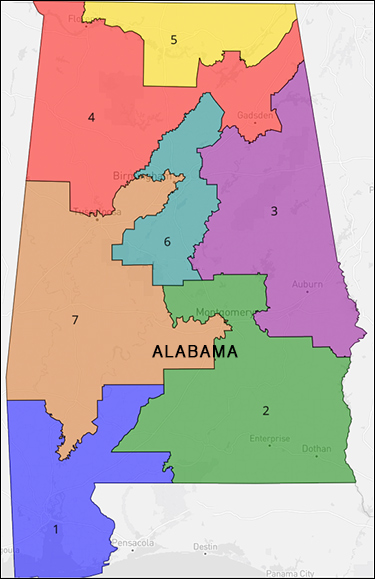
Alabama redistricting map

Redistricting: Supreme Court Hears Alabama Case — In one of the first cases on the US Supreme Court’s new term docket, oral arguments were heard for the Alabama racial gerrymandering redistricting case, which could result in a landmark ruling relating to future interpretation of the Voting Rights Act.

The state of Alabama is arguing its reasons for keeping the state’s congressional map, which features one strong majority minority district. The US government is arguing that a second minority seat can be drawn. The presentations consumed more time than usual for Supreme Court oral arguments, and now it is up to the nine justices to craft a definitive ruling, which will be released sometime before June next year.

In November, the high court will hear oral arguments on the North Carolina redistricting case, which will lead to a definitive ruling pertaining to judicial power over the constitutional authority of state legislatures.

CO-3: Rep. Boebert’s Slight Lead — Despite representing a relatively safely Republican western slope 3rd Congressional District, Colorado Rep. Lauren Boebert (R-Silt) looks to have a competitive race on her hands as we begin the campaign cycle’s final weeks. Colorado-based Keating Research conducted a poll for the Adam Frisch (D) campaign (Sept. 28-Oct. 2; 500 likely CO-3 voters; live interview & text). The ballot test results found Rep. Boebert’s lead shrinking to 47-45 percent, down from Keating’s 49-42 percent spread detected in its July survey.

Expect to see countering numbers from either the Boebert campaign or the National Republican Congressional Committee to soon be released.

NM-2: Gerrymandered District Yields Dem a Slight Edge — The Global Strategy Group, polling for the Gabe Vasquez (D) campaign, tested the NM-2 electorate to determine the state of the race featuring freshman Rep. Yvette Herrell (R-Alamogordo) and Vasquez, a Las Cruces City councilman. The GSG survey (Sept. 20-26; 500 likely NM-2 voters; live interview) sees Vasquez pulling ahead of Rep. Herrell, 45-43 percent.

The result is not particularly surprising in that the Democratic legislature and governor crafted the new 2nd CD to flip. Before redistricting, the FiveThirtyEight data organization rated the seat, R+14. Post-redistricting, we see a D+4 categorization. This district will still yield a close finish, and voter turnout will tell the ultimate tale.

NJ-7: Rep. Malinowski Internal Poll Shows Dead Heat — The Greenberg Quinlan Rosner Research organization conducted a congressional poll for two-term Rep. Tom Malinowski (D-Rocky Hill), who is again in a tight battle with former state Senate Minority Leader Tom Kean Jr. (R). In 2020, Kean held Rep. Malinowski to a 51-49 percent re-election win in a district that was more Democratic than the new 7th. The GQR survey (Sept. 20-26; 500 likely NJ-7 general election voters) sees both candidates now attracting 48 percent of the vote. The Democratic pollster, however, also detects a partisan generic party label split of 50-45 percent favoring the Republicans. NJ-7 is a key Republican conversion opportunity seat.

NY-22: Republican Breaks Ahead — The Syracuse-anchored 22nd District is open in the 2022 election cycle because Rep. John Katko (R-Syracuse), one of the 10 House Republicans who voted to impeach former President Trump, is not seeking a fifth term. Ironically, the court-drawn map actually makes this district two points more Republican than the seat the Rep. Katko consistently won.

Siena College conducted an independent poll for the Spectrum News Service (Sept. 25-28; 453 likely NY-22 general election voters) and sees Republican technology company executive Brandon Williams jumping out to a five point, 45-40 percent, advantage over former intelligence agency analyst Francis Conole (D).

With the respondents believing the country is on the wrong track by a 25:63 percent margin, it is not particularly surprising to also see Gov. Kathy Hochul (D) falling behind Rep. Lee Zeldin (R-Shirley/East Long Island) in this Upstate District. NY-22 is a must-win for the GOP in November.

Sen. Warnock Jumps to Significant Lead, Kemp & Abrams Tied in Georgia; Incumbent Rep. Lee Trailing in NV-3

By Jim Ellis — July 1, 2022

Senate

Georgia Sen. Raphael Warnock (D) and Republican challenger Herschel Walker

Georgia: Sen. Warnock Jumps to Significant Lead — The new Georgia Quinnipiac poll (June 23-27; 1,497 registered Georgia voters; live interview) finds Sen. Raphael Warnock (D) claiming a 54-44 percent lead over Republican Herschel Walker, the most lopsided pro-Democratic ballot test to date. The previous polling from December to mid-April (six polls) had given Walker a slight edge.

Sen. Warnock carries a positive 49:39 percent job approval rating in contrast to President Biden’s upside-down 33:60 percent approval rating. Walker scores rather poorly on honesty, 39:43 percent honest to dishonest, and is not perceived to have particularly good leadership skills, 37:43 percent. As point of reference, the same polling sample finds Gov. Brian Kemp (R) and former state House Minority Leader and 2018 gubernatorial nominee Stacey Abrams (D) tied at 48 percent.

However, the study could be an anomaly.

Though polls have been moving toward Sen. Warnock, the Q-Poll takes a giant leap, so it is possible that this survey is an outlier. Democrats support Warnock, 97-2 percent; Republicans are for Walker in a 93-7 percent clip.

The Independent sector is where we may be detecting a significant skew. This group, on virtually every question but the Biden job approval query moves significantly toward the Democratic position and/or candidate, and in a greater degree than one would expect from people who self-identify as “independents” (62-33 percent for Warnock).

While this particular poll may well skew toward Sen. Warnock, it is probable that we will soon see other data yielding a much closer ballot test. The Georgia Senate race is one that is far from over.

Missouri: Independent Joins Race — Answering former Sen. John Danforth’s (R) call for a new candidate in the Senate race, former US Attorney John Wood announced his plans to enter the contest as an Independent. He claims this is a move to potentially stop former Gov. Eric Greitens from prevailing in the general election should he win the Republican nomination. In reality, however, by splitting the vote in such a manner — if Wood were to become a top-tier candidate — would likely elect the Democratic nominee.

Wood says that if elected, he would support Sen. Mitch McConnell (R-KY) for Majority Leader and would presumably caucus with the Republicans. To qualify for the ballot in Missouri, an Independent candidate must submit 10,000 valid registered voters’ signatures by an Aug. 1 deadline.

House

FL-2: Close Poll in Paired Race — The new northern Florida’s 2nd District is rated R+16 according to the FiveThirtyEight data organization. A new Sachs Media poll (June 20-23; 400 likely FL-2 general election voters), however, finds Rep. Neal Dunn (R-Panama City) leading Rep. Al Lawson (D-Tallahassee) by only a 43-40 percent margin. Perhaps the most troubling segment for Rep. Dunn is the unaffiliated voters who are breaking for Lawson by a 42-18 percent margin.

NV-3: Rep. Lee Trailing in New Survey — The Tarrance Group, polling for the April Becker (R) campaign (June 20-23; 400 likely NV-3 general election voters), posts their client and Republican challenger to a 46-44 percent edge over incumbent Rep. Susie Lee (D-Las Vegas). Likely most troubling for the Lee campaign is her deficit among Hispanic voters who comprise almost 19 percent of the 3rd District of Nevada’s population. Within this segment, Becker leads the congresswoman 48-42 percent. President Biden’s job approval rating here is a poor 37 percent.

OK-2: Runoff Set — With enough votes counted, it is now clear that the Republican runoff to replace Rep. Markwayne Mullin (R-Westville) will feature state Rep. Avery Frix (R-Muskogee), who finished first with just 14.7 percent among the crowded field, and former state Sen. John Brecheen, who was close behind with 13.8 percent support. The two just eclipsed Muskogee Police Chief Johnny Teehee (13.0 percent) and Oklahoma Republican Party chairman John Bennett (11.3 percent). The runoff winner is a lock to win the general election in a R+55 rated seat according the the 538 data group.

Redistricting

Louisiana: Supreme Court Stays Ruling — The federal judge’s ruling that disqualified the new Louisiana congressional map because it did not draw a second black district has been stayed. The United States Supreme Court (SCOTUS) took the action to at least temporarily block the ruling from taking effect. The conclusion will mean the legislature’s map will return at least for the 2022 election.

The courts, either through this case or the Alabama Voting Rights case that the SCOTUS has already scheduled for hearing, will likely determine how the Voting Rights Act is to be interpreted moving forward. This could mean that the Louisiana map and many others will be re-drawn for the 2024 election and beyond.

GOP Dogfight Continues in Arizona; Rep. Cori Bush’s Competitive Primary

By Jim Ellis — June 10, 2022

Senate

Arizona: GOP Dogfight Continues — A new Data Orbital poll (June 1-3; 550 likely Arizona Republican primary voters) again finds a three-way virtual tie for the party’s US Senate nomination that will be decided on Aug. 2. In the last 10 published polls, all three top candidates, Attorney General Mark Brnovich and businessmen Blake Masters, who now has former President Trump’s endorsement, as well as Jim Lamon have led in at least two polls apiece.

The latest Data Orbital results also suggests that any of the three can win the primary. In their ballot test results, Lamon leads AG Brnovich and Masters, 20-18-15 percent. The eventual winner will challenge Sen. Mark Kelly (D) in what promises to be a competitive general election campaign.

House

Freshman Missouri Rep. Cori Bush (D-St. Louis) has a competitive race on her hands.

MO-1: Rep. Bush’s Tenuous Lead — A new internal campaign poll suggests that controversial freshman Missouri Rep. Cori Bush (D-St. Louis) has a competitive race on her hands as the candidates look ahead to the Aug. 2 state primary. State Sen. Steve Roberts (D-St. Louis) released a Lincoln Park Strategies poll (May 24-29; 500 MO-1 registered voters; live interview) that finds the congresswoman leading by only a 36-19 percent spread over the poll sponsor, and that obviously places the incumbent far below the 50 percent threshold. Three other Democrats are also on the ballot, suggesting that the winner can claim the party nomination with only a plurality margin.

This survey suggests that the MO-1 Democratic primary, for the second consecutive election cycle, will be competitive. In 2020, Bush upset veteran Congressman Lacy Clay in the party primary that paved the way for her easy general election victory. The Democratic primary controls the general election since the district is rated D+52.

NY-23: State Chair Langworthy New Nominee — The local Republican chairmen whose counties comprise the current 23rd Congressional District have decided that newly announced congressional candidate Nick Langworthy — the New York Republican Party chairman — will be the party’s special election nominee for the race to succeed resigned Rep. Tom Reed (R-Corning). Langworthy will face retired Air Force Colonel Max Della Pia whom the Democratic chairmen had previously selected. Under New York election law, the county parties choose nominees in the event of a vacancy.

Gov. Kathy Hochul (D) scheduled the special to be concurrent with the regular congressional primary on Aug. 23. We can expect both Langworthy and Della Pia to win their respective regular election primaries, so we can count on seeing the two battle not only on Aug. 23, but also for the general election. Langworthy now becomes a big favorite in the southwestern upstate district that the FiveThirtyEight data organization rates as R+23. Dave’s Redistricting App scores it 55.37 percent R and 41.98 percent D. Former President Trump carried the new 23rd District in 2020 by a 55-43 percent count.

Redistricting

Louisiana: Federal Judge Rejects Map — A federal judge has struck down the Louisiana legislature’s 2022 congressional map under the argument that another minority seat can be drawn in the state. The current map and the new plan features a 5R-1D delegation split with the lone Democratic seat, which is 58.6 percent black and 70.2 percent minority, stretching from New Orleans to Baton Rouge. The judge ruled that such a plan violates the Voting Rights Act.

Expect the Republicans to appeal to the 5th Circuit Court of Appeals. The US Supreme Court has already agreed to hear a similar Alabama case, and this one will set the record for Voting Rights interpretation. Therefore, the chances of the Appellate Court staying the new Louisiana ruling and reinstating the map for the 2022 elections are high. Under the rejected plan, all six of the state’s incumbents would have safe seats in which to run for re-election.

Alaska’s Palin in Trouble?
Florida Redistricting Map Tossed

By Jim Ellis
May 13, 2022

House

Sarah Palin, former Alaska governor and vice presidential candidate, now running for US House Representative

AK-AL: Palin Begins Special with Slight Lead, but May Not Prevail — The Alaska Survey Research firm, headed by longtime local pollster Ivan Moore, released their new special election US House study featuring 48 candidates. The survey (May 6-9; 605 AK-AL likely special election voters; online) finds former governor and 2008 vice presidential Republican nominee Sarah Palin leading the huge field with 19 percent, followed closely by officially endorsed Republican Party candidate Nick Begich III at 16 percent, with Independent and former 2020 Democratic US Senate nominee Al Gross and North Pole City Councilman Santa Claus (the former Thomas O’Connor) capturing the third and fourth qualifying positions with 13 and six percent, respectively.

Under the new Alaska election law, the top four finishers from the jungle primary, in this case scheduled for June 11, will advance to the Aug. 16 special general election. If no one receives majority support among the finishing four in the succeeding vote, the Ranked Choice Voting System takes effect. It is here where Palin may find trouble. Under this configuration, ASR projects that Claus would be first eliminated, then Palin in the next round. A Begich-Gross final round would favor Begich at 53-47 percent.

Nick Begich III is the grandson of former US Rep. Nick Begich (D), who died in a plane crash before the 1972 election. His uncle is former US Sen. Mark Begich (D). Nick Begich, III, however, is a Republican. ASR tested four different iterations with four separate fourth-place contenders, and in each scenario Begich ultimately wins the seat.

NE-2: Dem Group Poll Shows Rep. Bacon Trailing — Democratic pollster Change Research, polling for the left of center 314 Action group (May 6-10; 564 NE-2 general election voters of whom 94 percent say are definite or probable voters; online) finds Omaha Democratic state Sen. Tony Vargas leading US Rep. Don Bacon (R-Papillion/Omaha), 42-39 percent, in a survey conducted just before the Nebraska primary.

The poll skews slightly left, meaning that the race is likely no worse then being tied from Rep. Bacon’s perspective. Approximately 25,000 more people voted in the NE-2 Republican primary than Democratic suggesting the enthusiasm level favors the GOP. The seat became three points more Republican in redistricting. Despite this particular poll result, Rep. Bacon is still favored for re-election.

Redistricting

Florida: Congressional Map Tossed — A Florida state judge, whom Gov. Ron DeSantis (R) appointed, disqualified the new Florida congressional map, ruling that the elimination of Rep. Al Lawson’s (D-Tallahassee) majority minority District 5 violates Florida’s Fair Districts Act. The state will clearly appeal, but the map’s fate, the Republicans’ best in the country, now is suspended in political limbo.

Governor

Alabama: Gov. Ivey Below 50 Percent — A Cygnal group poll for the Alabama Daily News and Gray Television (May 6-7; 600 likely Alabama Republican primary voters) two days ago covered the Alabama Senate race confirming that Rep. Mo Brooks (R-Huntsville) is gaining on his two GOP opponents. Wednesday, Cygnal released its data on the state’s gubernatorial campaign. While Gov. Kay Ivey (R) still holds a comfortable lead according to the poll, the survey shows that she has dropped to 40 percent support.

Real Estate developer Tim James, son of former Gov. Fob James, is second with 18 percent, and former US ambassador to Slovenia, Lindy Blanchard, is a close third with 15 percent. Three more candidates divide 14 percent of the vote, while the remainder is recorded as undecided/won’t say. There is little doubt that Gov. Ivey will finish first, but the question remains whether she can attain the 50 percent threshold to avoid being forced into a secondary runoff election. The Alabama primary is May 24. If a runoff becomes necessary, that election would occur on June 21.

SC Filing Closes; Rep. Rice in Battle

By Jim Ellis

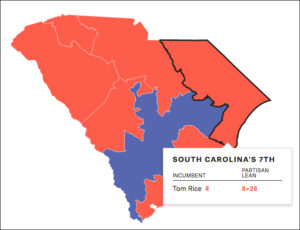
South Carolina’s 7th District contest will be the race to watch on June 14. (Go to Interactive Map on FiveThirtyEight.com)

April 4, 2022 — South Carolina election officials late last week published the 2022 qualified candidates list after filing closed the previous day, and there are several points of note for the June 14 primary election.

While several notable Republican figures were at one point talking about challenging Gov. Henry McMaster in this year’s GOP primary, none did, and he should have an easy re-election campaign not only in the primary, but the general election, too.

McMaster, as the state’s lieutenant governor in 2017, ascended to the governorship to fill the unexpired portion of then-Gov. Nikki Haley’s second term after she resigned to become US Ambassador to the United Nations. This allowed Gov. McMaster to serve the final two years of the Haley term and run for a pair of consecutive stints in his own right. After winning again this past November and serving the next full term, Gov. McMaster will be the longest-serving state chief executive in South Carolina history.

Sen. Tim Scott (R) is poised to win a second full term. He is unopposed in the Republican primary and his strongest general election competition comes from state Rep. Krystle Matthews (D-Ladson). Sen. Scott was originally appointed to the Senate in 2013, serving the four-year balance of Sen. Jim DeMint’s (R) term after the latter’s resignation. Scott was easily elected in his own right in 2016 with a 61-37 percent victory.

In the House races, primary challenges are on tap for Reps. Nancy Mace (R-Charleston), William Timmons (R-Greenville), Jim Clyburn (D-Columbia) and Tom Rice (R-Myrtle Beach). Reps. Joe Wilson (R-Springdale), Jeff Duncan (R-Laurens), and Ralph Norman (R-Rock Hill) are unopposed for re-nomination. Rep. Duncan has no opposition in June or November.

Rep. Mace is fighting a challenge from 2018 GOP congressional nominee Katie Arrington, a former state representative who is a Trump appointee and has the former president’s endorsement.

Freshman Rep. Timmons faces three GOP opponents, two of whom have run unsuccessfully in other elections. The congressman will face business consultant Ken Hill (D) in the general election.

Rep. Clyburn, the House Majority Whip, sees two Democratic opponents file against him, but he will have little trouble in winning both the primary and general election.

Rep. Rice, on the other hand, has major competition. One of the 10 House Republicans to vote in favor of impeaching then-President Trump over the Jan. 6 situation, the congressman was originally facing a dozen GOP opponents. At the end of the filing process, six would not follow through with their challenge, but six did become official qualified candidates, including his three main competitors, state Rep. Russell Fry (R-Surfside Beach), former Myrtle Beach Mayor Mark McBride, and Horry County School Board chairman Ken Richardson.

Continue reading

House Incumbent Primaries, Part I: Republicans

By Jim Ellis

Feb. 18, 2022 — As the states complete their individual redistricting processes and candidate filing deadlines appear on the political horizon, some incumbents find themselves facing serious primary challenges. Today, we look at Republican nomination situations in states where redistricting is complete, and Monday next week, we’ll look at the Democrats.


CA-5: Rep. Tom McClintock

Primary: June 7 (Jungle)

• McClintock Cash-on-Hand (Dec. 31, 2021): $372,569
FiveThirtyEight Statistical Rating: R+17
Dave’s Redistricting App Historical Voting: 56.6% R

The California Citizens Redistricting Commission made significant changes to the Golden State congressional map. As a result, veteran northern California Rep. Tom McClintock (R-Elk Grove) had his choice of two districts, one less Republican that contained more of his home area, and the other more strongly favoring the GOP but stretched from the Sacramento suburbs all the way to the Fresno area. McClintock chose the latter.

The congressman’s most serious opponent is Fresno County Supervisor Nathan Magsig (R). California imposes a jungle primary system meaning that the top two finishers in the June qualifying election advance to the general election. Considering the Republican trends in this district, it is wholly possible that both Rep. McClintock and Supervisor Magsig will advance into the general election, especially with three Democratic candidates dividing the liberal base.


IL-15: GOP Pairing

Primary: June 28

Rep. Rodney Davis (R-Taylorville)
Rep. Mary Miller (R-Oakland)
• Davis Cash-on-Hand (Dec. 31, 2021): $1,234,171
• Miller Cash-on-Hand (Dec. 31, 2021): $414,795
FiveThirtyEight Statistical Rating: R+42
Dave’s Redistricting App Historical Voting: 64.6% R

The Illinois Democratic gerrymander created a new uber-safe Republican 15th District that attracted both Reps. Rodney Davis and Mary Miller. Therefore, the new member here will be chosen in the June 28 Republican primary.

The race is shaping up as a clear GOP establishment versus movement conservative contest. Virtually all of the state and national Republican leaders, including House Minority Leader Kevin McCarthy, have endorsed Davis. All of the movement right-of-center groups such as the Club for Growth and Freedom Works, along with former President Donald Trump, have endorsed Rep. Miller.

Davis also has a major fundraising advantage. Miller, on the other hand, sees 31 percent of her constituents carrying over to the new 15th, versus 28 percent for Davis. Rep. Darin LaHood (R-Peoria) has the largest contingent of current constituents in the new IL-15 (36 percent) but he is running for re-election in the new 16th CD.


MI-4: GOP Pairing

Primary: Aug. 2

Rep. Bill Huizenga (R-Holland)
Rep. Fred Upton (R-St. Joseph)
• Huizenga Cash-on-Hand (Dec. 31, 2021): $1,141,056
• Upton Cash-on-Hand (Dec. 31, 2021): $1,467,055
FiveThirtyEight Statistical Rating: R+9
Dave’s Redistricting App Historical Voting: 51.6% R

With Michigan losing a seat in reapportionment, two of the state’s western members were destined to be paired. The new 4th District features a potential contest between Reps. Huizenga and Upton, though the latter man has not yet decided whether to seek re-election. A third candidate, state Rep. Steve Carra (R-Kalamazoo), who carries former President Trump’s endorsement, is also in the race.

Carra is not likely to be a major factor because he represents very little of the new 4th Congressional District constituency in the state legislature. This race will come down to Rep. Upton’s decision whether to seek a 19th term in the House or retire. If he runs, this will be a major summer primary contest. Should he retire, Rep. Huizenga becomes the prohibitive favorite in the primary, with the inside track for the general election, though the new 4th is more competitive than his current 2nd CD.


MS-4: Rep. Steven Palazzo

Primary: June 7 | Runoff: June 28

• Palazzo Cash-on-Hand (Dec. 31, 2021): $ 385,211
FiveThirtyEight Statistical Rating: R+42
Dave’s Redistricting App Historical Voting: 66.5% R

A congressional ethics investigation into Rep. Steven Palazzo’s (R-Biloxi) use of campaign funds is an obvious negative as he strives to win re-nomination for a seventh term.

The investigation prompted state Sen. Brice Wiggins (R-Ocean Springs) and Jackson County Sheriff Mike Ezell to launch a primary challenge against the congressman, in addition to four others. Local business owner Carl Boyanton has thrown $550,000 of his own money into his campaign, making him a factor, too. This field could grow or retract as the March 1 candidate filing deadline looms on the political horizon.

It remains to be seen whether the investigation hinders Rep. Palazzo to the point of forcing him into a runoff — he has survived other tough primary challenges with larger than expected percentages — but the possibility of going to a secondary vote is certainly real. Should Palazzo be forced into a runoff, his re-nomination could be in serious jeopardy.
Continue reading

Alabama Map Ruling Stayed; Redistricting Update

By Jim Ellis

Alabama redistricting map (Click on the map above or go to DavesRedistricting.org to see interactive map)

Feb. 9, 2022 — On a 5-4 vote, the US Supreme Court voted to stay the lower court ruling that invalidated the new Alabama congressional map. A Republican three-judge panel had ruled that a second majority minority district could have been drawn among the state’s seven congressional districts, and thus disqualified the plan on Jan. 23.

Writing a concurring opinion, Justice Brett Kavanaugh stated that the lower court decision was made too close to the 2022 election, meaning that the judicial process would not have proper time to hear the appeal and make an educated ruling prior to the state’s scheduled primary election. The ruling does not mean the appeal was granted, but merely postpones hearing the case to a later date.

Analysts say the stay ensures that the original map will be in place for this year’s election. It does not mean, however, that the map won’t be altered for the 2024 election and beyond.

The new plan is virtually an extension of the current map, which elected six Republicans and one Democrat in the 2020 election. It was a curious original decision, not only because the judges that ruled against the GOP map drawers were appointed by former President Donald Trump (2) and the late President Ronald Reagan (1), but that the same map footprint stood unencumbered for the past 10 years.

The major change made from the current map to the new draw came in the 7th CD, which is the Voting Rights district. The legislature, however, had no choice but to make a substantial change. AL-7 was 53,143 people short of reaching the state’s congressional district population quota of 717,754 individuals.

The previous ruling also postponed the Jan. 28 candidate filing deadline for the Alabama US House candidates. Those running for all other offices have now already filed and been qualified for the respective party primary ballots. The congressional candidates will now file on Feb. 11.

Redistricting Notes

• Summarizing the legal action in other states, the North Carolina map has been disqualified and the legislature will now return to redraw the congressional and state legislative maps. As has been the case throughout the previous decade, the partisan Republican legislature and the partisan Democratic state Supreme Court continue to go back and forth over the issue of partisan gerrymandering.

• The lower court ruling in Michigan rejected the Detroit area Democratic current and former state legislators’ claim that the Michigan Independent Citizens Redistricting Commission members violated the Voting Rights Act in drawing the city of Detroit’s congressional and state legislative maps. Unless an appeal is granted, the new Michigan maps will stand for this year’s elections.

• The Kansas legislature adjourned without voting to override Gov. Laura Kelly’s (D) veto of the state’s congressional map. The hasty adjournment move, however, allows the legislature to reconsider the veto override. Without a successful override vote, the map will go to the courts for a redrawing of the Kansas City metro area.

Continue reading

Michigan House Action Wave

Michigan Congressional Redistricting Map. (Click on image to go to FiveThirtyEight.com to see interactive map.)

By Jim Ellis

Feb. 3, 2022 — Though the Michigan congressional lines are in litigation and filing time is still more than two months away in preparation for the state’s August 2nd primary election, Tuesday was a busy day on the Wolverine State’s US House front.

First, in the paired Republican incumbent 4th District where Rep. Bill Huizenga (R-Holland) is seeking re-election and appears ready to face fellow Rep. Fred Upton (R-St. Joseph), a third candidate announced that he would not abandon his own Republican campaign despite seeing an unfavorable district draw.

State Rep. Steve Carra (R-Portage) said that he intends to remain in the new 4th Congressional District race despite potentially having to face two incumbents and not having any of his current state House District lying in the new 4th. His legislative district will now be fully contained in Rep. Tim Walberg’s (R-Tipton) new 5th CD that stretches the width of Michigan along the state’s southern border. Carra earned former President Trump’s endorsement in his pre-redistricting bid against Rep. Upton.

When queried about the difficulty of the paired nomination race for a non-incumbent such as himself, Carra said, “It doesn’t matter whether there’s one or two status quo Republicans in the race.”

For his part, Rep. Upton is not yet committing to run for a 19th term, saying he wants to further study the new district and see whether the courts disqualify the current map. A group of current and former Democratic state legislators have filed suit against the Michigan Independent Citizens Redistricting Commission claiming the members violated the Voting Rights Act with their draw of the congressional and state legislative districts in Detroit and Wayne County.

The 4th District will be one of the most interesting primary campaigns in the state and possibly the nation if Huizenga and Upton ultimately face each other. With Carra coming to the race with the Trump endorsement and potentially testing just how much the ex-President’s support actually means, he becomes a wild card entry.

Another incumbent who did not fare well in the redistricting process is freshman Rep. Peter Meijer (R-Grand Rapids). His 3rd District moves from an R+9 to a D+3 seat according to the FiveThirtyEight statistical site. Dave’s Redistricting App scores the CD at 50.1 percent Democratic and 46.5 percent Republican. President Biden would have carried the new 3rd, 53-45 percent. Therefore, Rep. Meijer, along with potential primary problems because he, too, voted in favor of the Trump impeachment, has a difficult political road ahead.

Continue reading

Rep. Jim Cooper to Retire;
Alabama Map Tossed

By Jim Ellis

Jan. 27, 2022 — The Tennessee state Senate passed the state House version of the new 9-District congressional map on Tuesday, which led to a political move. The redistricting plan now goes to Gov. Bill Lee (R), and he is expected to sign the legislation.

Retiring Tennessee Rep. Jim Cooper (D-Nashville)

Upon passage of the new map that would significantly change the Nashville area, veteran Rep. Jim Cooper (D-Nashville) quickly announced that he will not seek re-election later this year.

The map drawers divided Davidson County, which houses the Democratic city of Nashville, and split it among three districts: Cooper’s 5th, Rep. John Rose’s (R-Cookeville) 6th CD, and Rep. Mark Green’s (R-Clarksville) TN-7.

The effect creates a new 5th District that moves from a victory margin of 60-37 percent for President Biden to a seat that former President Trump would have carried 54-43 percent according to the Daily Kos Elections site statisticians. Both Reps. Rose and Green would continue to have solid Republican seats even with the Davidson County additions to their districts. Under the plan, the Tennessee delegation is expected to move from 7R-2D to 8R-1D.

Cooper is serving his 16th term in the House, winning his first election from the state’s east/southeastern 4th District in 1982, which he represented until he ran unsuccessfully for the US Senate in 1994. He returned to the House from the Nashville district in 2002 when then-Rep. Bob Clement (D-Nashville) left the seat to challenge then-Sen. Fred Thompson (R), the same man who defeated Cooper in his statewide bid.

During his second tour of duty in the House, Rep. Cooper was not seriously challenged for re-election. He is a member of the House Armed Services Committee where he chairs the Strategic Forces Subcommittee. He also is a member of the House Oversight and Reform Committee, and the House Budget panel. It appeared that Cooper was preparing for a Democratic primary challenge this year, but that is moot now that the new 5th District becomes decidedly Republican.

Rep. Cooper is the 29th Democrat not to seek re-election. Counting the Democratic and Republican retirements along with the new and created (through redistricting) open seats, the House will see a minimum of 50 new members coming into office at the beginning of 2023.
Continue reading