Tag Archives: Rep. Sean Duffy

Money Report: The Specials

By Jim Ellis

April 21, 2020 — The April 15 deadline for releasing the 1st Quarter 2020 campaign finance reports has come and gone, so we can now begin to assess where some of the key campaigns stand with regard to their fundraising, spending, and available resources. The races headed to special elections are best defined; hence, we begin our series with this group.

Three special general elections will culminate in May and June. On May 12, voters in California and Wisconsin will select new House members. The New York special election follows on June 23.

The California special vote to replace resigned Rep. Katie Hill (D) in the Los Angeles/Ventura County 25th District is between state Assemblywoman Christy Smith (D-Newhall) and Republican retired Navy fighter pilot Mike Garcia.

This race looks to be about even across the board, so it may be an interesting precursor for the 2020 general elections. While Smith placed first in the special and regular primaries by relatively substantial margins (11 points in the special; 9 points in the regular), the combined Republican vote among the 13 candidates in the latter election’s jungle format was actually greater than the combined Democratic vote.

In terms of spending according to the just released numbers, Smith expended $1.529 million in the first set of elections as compared to Garcia’s $1.462 million. First quarter fundraising favors Garcia, $277,234 opposite Smith’s $258,972. Garcia also led in cash-on-hand at the end of March, $446,742 to $357,256. Each candidate can also expect at least $1 million coming into the district from party and outside organizations to aid their respective cause.

Regardless of what happens in the special election, both of these candidates have ballot position in the November general election to battle for the regular term beginning in 2021. The special election to fill the balance of the unexpired term is an all-mail exercise scheduled for May 12.

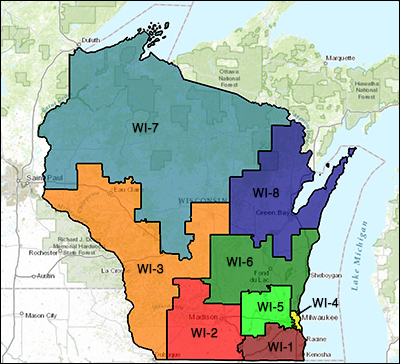
Also on May 12, northwestern Wisconsin’s 7th Congressional District vacancy will be filled. In late August, five-term Rep. Sean Duffy (R-Wausau) resigned for family reasons and the special election to replace him is just about upon us. In the early April special primary, state senator Tom Tiffany (R-Minocqua) and Wausau School Board member Tricia Zunker (D) advanced to the special general. The winner will serve the balance of the current term, and at least the future new member will file to compete in the regular election by the June 1 candidate filing deadline. The regular Wisconsin primary is scheduled for Aug. 11.
Continue reading

Wisconsin: A Precursor?

Wisconsin Congressional Districts

By Jim Ellis

April 16, 2020 — The April 7th Badger State primary election results were announced this Monday, and former vice president Joe Biden easily defeated Sen. Bernie Sanders (I-VT), 63-32 percent, but that’s not the real story behind the final statewide totals.

The bigger race was an ostensibly nonpartisan state Supreme Court judicial election between appointed incumbent Daniel Kelly and Dane County Circuit Court judge Jill Karofsky. Though the Republican and Democratic labels did not appear on the ballot, both parties were heavily invested. And, with much money being spent and both sides “all-in”, many believed it to be a precursor to this year’s presidential campaign in a state that could well become the deciding factor nationally.

Wisconsin Republicans needed the seat to maintain their 5-2 majority on the court, and Democrats wanted to narrow the margin to 4-3 in order to position themselves to take the majority in the next election; hence, this contest’s importance.

Controversy surrounded whether to even hold the election. Democratic insiders and activists were lobbying Gov. Tony Evers (D) to petition the legislature to delay the vote because of the Coronavirus situation. Evers delayed taking action, but finally went to the legislature a week before the vote. The Republican legislative leaders turned Evers down, and subsequent court decisions backed the decision to hold the election on schedule, virtually the only state that was moving forward with an in-person voting mode.

The announced results gave Judge Karofsky a big 55-45 percent upset win, and whether or not this is a precursor to the presidential result remains to be seen. Some believe the fact that the Republican leadership was insisting on moving forward with the election – with people believing they wanted the election as scheduled because they felt the quicker vote favored them – resulted in a voter backlash; hence, Karofsky’s large margin in what was projected to be a much closer electoral contest.

Democrats fought hard to postpone the election and increase the mail-in facet – and most believe they wanted such because they perceived it favored them – but clearly won the election even under the voting structure that the Republicans desired.

Continue reading

Wisconsin Primary Moving Forward

By Jim Ellis

Wisconsin Gov. Tony Evers

April 8, 2020 — Whether or not the Wisconsin primary would be held as scheduled took rulings from two Supreme Courts to decide, but we will see voting today throughout the Wolverine State.

The Democratic presidential primary is interesting since the Wisconsin electorate will be the first to vote post-March 17, and so far, becomes the only group to cast ballots during the COVID-19 lockdown situation. How this affects today’s vote in terms of turnout and candidate loyalty will be interesting to analyze.

Whether or not this election would even happen today has been a point of discussion for the past two weeks. Many Democratic strategists were lobbying Gov. Tony Evers, a fellow Democrat, for several days to move the election, but he was slow to act. Late last week, Gov. Evers decided to ask the legislature to pass a bill changing the election date, but the Republican majority leadership in the two chambers refused. Gov. Evers then made a last-ditch effort to declare a state of emergency and attempted to move the election.

The latter action drew the Republican leadership’s ire, and they immediately petitioned the state Supreme Court arguing that the governor has no power to arbitrarily move an election. They also went to the US Supreme Court attempting to get a lower-court ruling to extend the absentee ballot return deadline past the original election schedule countermanded.

At the heart of the election date becoming a political football was not the presidential race, but rather an important state Supreme Court election. Though the race is ostensibly nonpartisan, it is clear that Democrats believe chances for the candidate they are backing improve in a later election, while Republicans think the appointed incumbent they support fares better in a quicker, and presumably lower turnout contest.

Continue reading

Reviewing the House Vacancies

By Jim Ellis

April 2, 2020 — With the COVID-19 virus playing havoc with virtually every aspect of American life, including elections, how are the House vacant seats being affected?

North Carolina Rep. Mark Meadows (R-Skyland/Buncombe County) resigned from Congress Monday night to become White House Chief of Staff, which brings the total number of vacancies to a half-dozen. Special elections are scheduled in four of those, with three to be decided on or before May 12.

Originally, the special elections in Maryland and New York were supposed to be the first to go to the voters, but the COVID-19 precautions changed the date of the New York election and the voting system in Maryland. Former Rep. Kweisi Mfume, who easily won the crowded Democratic primary on Feb. 7, will win the special general on April 28 but the process now becomes all-mail. The Republican nominee is event planner Ken Klacik, but this Baltimore city district and surrounding area will easily remain in Democratic hands. We can expect Mfume to break 75 percent of the vote.

The former congressman was elected to five terms in the House beginning with the 1986 election. He resigned to become president and CEO of the NAACP in 1996. Mfume served in that position until running unsuccessfully for the Senate in 2006, losing the Democratic primary to then-congressman, Ben Cardin. Then-state Delegate Elijah Cummings replaced Mfume in the House at that time and served until his death in October. Now, ironically, Mfume returns to replace the late Rep. Cummings.

California’s 25th District, which begins in the state’s Simi Valley and stretches to the Palmdale area, potentially features the hottest of the current special elections. Rep. Katie Hill (D) resigned the seat because of a sexual scandal leading to a multi-candidate concurrent special and regular election.

Democratic state Assemblywoman Christy Smith topped the field on March 3, and she advances to the special election runoff on May 12 with Iraq War fighter pilot Mike Garcia (R). The latter individual placed ahead of, and eliminated, former US Rep. Steve Knight (R) who was attempting a political comeback after losing to Hill in 2018. Polling is projecting a tight finish. Regardless of what happens on May 12, both Smith and Garcia are advancing to the regular general election to battle for the full term beginning in 2021. The May 12 winner is immediately sworn into the House and serves the remaining part of the current congressional session.

Continue reading

New House Vacancies:
Meadows, Ratcliffe

By Jim Ellis

Rep. Mark Meadows (R-NC) announced as the new White House chief of staff

March 9, 2020 — With Rep. Mark Meadows (R-NC) being announced as the new White House chief of staff and following the late February declaration that Rep. John Ratcliffe (R-TX) would again be put forth for confirmation as the Director of National Intelligence, it means as many as two more US House seats could be added to the vacancy list.

Currently, five districts are without representation: CA-25 (Katie Hill-D), CA-50 (Duncan Hunter-R), MD-7 (Elijah Cummings-D), NY-27 (Chris Collins-R), and WI-7 (Sean Duffy-R). All but CA-50 are currently in special election cycles with nominees or finalists either being chosen or awaiting the general election in CA-25, MD-7, and WI-7. The NY-27 seat will be filled in an April 28 election, which is concurrent with the New York presidential primary. There will be no special election for CA-50, as Gov. Gavin Newsom (D) has decided to let this seat remain vacant until the next Congress.

The regular California primary election occurred on Super Tuesday. In the 25th District, it is apparent that state Assemblywoman Christy Smith (D-Newhall) and defense contractor and Iraq War veteran Mike Garcia (R) will advance to the May 12 special election. They will also face each other in the regular general election. Though all the votes are not yet tabulated and won’t be for some time because of the California verification and counting system, leads are strong enough that the final result is unlikely to change the order of finish. Therefore, assuming the current trend continues, former Rep. Steve Knight (R), a relatively close third place finisher, will be eliminated from further competition.

In the 50th District, 2018 Democratic finalist Ammar Campa-Najjar has secured the first general election position. It appears that former Rep. Darrell Issa (R) will also advance, since his vote margin over former San Diego City Councilman Carl DeMaio (R) is expected to hold.

When Rep. Meadows indicated that he would not seek re-election speculation quickly built that he was headed to the administration, especially when he made his surprise announcement just two days before the candidate filing period expired. The retirement declaration began a chain of events that just culminated with the Super Tuesday regular primary.

In last week’s North Carolina vote Democrat Moe Davis advanced to the general election from the 11th District. Republicans Lynda Bennett and Madison Cawthorn were forced to a run-off election scheduled for May 12.

Continue reading

Special Elections Update

By Jim Ellis

Nov. 1, 2019 — Four seats are now vacant in the House, each headed to a special election prior to the regular cycle calendar, and action is beginning to occur.

• CA-25: Rep. Katie Hill, Resigned — Gov. Gavin Newsom will call a special election to replace the scandal-tainted Rep. Hill (D-Agua Dulce/Palmdale), and it is highly likely that either the special primary, or (and probably more likely) the general will be set concurrently with the California presidential primary on Super Tuesday, March 3.

Rep. Hill unseated then-Rep. Steve Knight (R) in 2018, and it appears the former congressman will become a candidate in the special election. It is unlikely that he will be the lone Republican, however. Lancaster City Councilwoman Angela Underwood-Jacobs (R) was already in the race planning to challenge Hill. It is likely that she will remain.

Former Trump campaign advisor George Papadopolous, who was a major target of the Russia investigation, is already an announced candidate. Defense contractor Mike Garcia is also a pre-resignation announced candidate and will likely remain. And, we will probably see others come forward as well.

Democrats were beginning to coalesce around freshman state Assemblywoman Christy Smith (D-Newhall/Santa Clarita) but now state Sen. Henry Stern (D-Calabasas) is beginning to sound like a candidate. The 25th is a politically marginal district, so this special election campaign promises to be highly competitive.

Continue reading

Open Seat Round-up

By Jim Ellis

Oct. 31, 2019 — With six US House seats coming open in October, it’s a good time to re-set where the incumbent-less districts stand for the next election.

To review the half-dozen October happenings in this regard, in consecutive order Reps. Nita Lowey (D-NY) announced her retirement, Elijah Cummings (D-MD) passed away, Francis Rooney (R-FL) declared that he would not seek re-election, Tulsi Gabbard (D-HI) decided not to make another congressional run in order to concentrate on her presidential campaign, Katie Hill (D-CA) resigned in scandal, and Greg Walden (R-OR) released his statement saying he will not seek a 12th term in office.

Within the aggregate group of 30 opens, we now see four vacancies. In addition to Rep. Cummings passing away and Hill resigning, two more seats are also headed to special elections because of resignations. Those lie in New York (Chris Collins-R) and Wisconsin (Sean Duffy-R).

Two of the four have election calendars. The MD-7 seat will see a primary on Feb. 4 with a general April 28. The WI-7 district will hold a primary on Feb. 18, and a special general on May 12. Govs. Andrew Cuomo (NY) and Gavin Newsom (CA) will soon set special voting calendars in their states. Gov. Cuomo, who let the 25th District sit vacant for almost a year in 2018 after Rep. Louise Slaughter passed away, chose to fill the seat concurrently with the regular election cycle. The governor has already said he would like to follow the same course this year, but the law won’t allow such a long vacancy.

At this point, the Wisconsin and New York seats should remain Republican, but the GOP has a spotty record in holding NY districts in special elections including this 27th District (then numbered 26), which went Democratic that last time it went to special election in 2011. The Maryland seat will remain Democratic.

Though the House opens now reach 30 seats, a relative few are seriously in play for the districts’ next election. Of the majority Democrats’ nine open seats, seven are considered safe and the next Democratic nominee is a lock to win in each circumstance. For the GOP, which currently holds 21 of the 30, a total of 13 will assuredly elect another Republican.

In terms of competitive seats, the Democrats only risk two. The Hill seat in California is marginal and certainly competitive in an open special election. Democrats have carried the district in two of the last three presidential elections, but Republicans have won three of the four congressional elections in the current configuration during the decade.

The other is IA-2, the seat from which Rep. David Loebsack (D-Iowa City) is retiring. The 2nd District is generally reliably Democratic, but President Trump carried it in 2016, 49-45 percent. Democrats are coalescing behind former state Senator and 2018 lieutenant governor nominee Rita Hart as their candidate. It is here where former Illinois Rep. Bobby Schilling (R), hopes to make a serious run at an upset. First, however, he must clear the GOP primary and faces state Sen. Marianette Miller-Meeks (R-Ottumwa) who will be making her fourth run for the US House.

Continue reading

Florida Rep. Rooney to Retire

By Jim Ellis

Florida Rep. Francis Rooney (R-Naples)

Oct. 23, 2019 — Two-term Florida Rep. Francis Rooney (R-Naples) announced over the weekend that he would not seek election to a third term next year, thus FL-19 becomes the 27th open House seat for the current cycle.

Three of the open seats are vacant, meaning they will each go to special election to fill the balance of their respective terms. The trio of districts are: MD-7 (the late Elijah Cummings-D), NY-27 (Chris Collins-R), and WI-7 (Sean Duffy-R). The Wisconsin election calendar has been set for a Feb. 18 special primary and May 12 general. Maryland election law dictates that Gov. Larry Hogan (R) announce the 7th District special election calendar on or before Oct. 28. No calendar announcement has yet been made for the New York situation.

Rooney, despite serving in Congress for only a brief while, had been on the unofficial retirement watch list because he had raised only $6,600 cycle-to-date for his next campaign and is at odds with his party on several issues. The congressman is independently wealthy, so the low total was not solely an indication of his intention since he has the wherewithal to self-fund his campaigns. Rep. Rooney had been a Republican critic of President Trump, took the no corporate PAC contribution pledge, and indicated he may support the impeachment inquiry.

Florida’s 19th District is a safely Republican southwest Florida seat. President Trump carried the district, 60-37 percent, while Mitt Romney won here with a similar 60-39 percent margin. In his two elections, Rep. Rooney racked up victory percentages of 62 (2018) and 66 percent (2016).

In a similar configuration over four previous terms, then-Rep. Connie Mack IV (R) averaged 65 percent of the vote. And, after Mack left the House to run for the Senate, Republican Trey Radel, who a year later would be convicted for cocaine possession and forced to resign, scored a 62 percent victory in 2012. GOP businessman Curt Clawson followed with win margins of 67-29 percent in the 2014 special election, and then 65-33 percent in the regular election cycle before choosing not to seek re-election in 2016.

Therefore, it is probable that the next Republican primary winner will summarily be elected to the House in November, 2020. The 19th District contains two-thirds of Lee County along with approximately half of Collier County. Its main population centers are the Cape Coral, Ft. Myers, Naples, and Marco Island localities.

Republicans Sweep the North Carolina Special Elections

By Jim Ellis

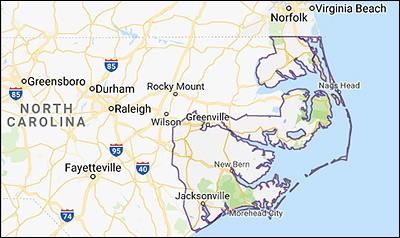
Sept. 12, 2019 — Republican special election candidates Greg Murphy and Dan Bishop won their respective congressional campaigns Tuesday night in different parts of North Carolina.

North Carolina’s 3rd Congressional District

Murphy, a state representative from Greenville, was an easy winner in the 3rd District, as expected. He recorded a 62-37 percent win over former Greenville Mayor Allen Thomas (D) in taking 16 of the district’s 17 counties and falling in Hyde County by just 43 votes. Rep-Elect Murphy now replaces the late congressman, Walter Jones (R-Farmville), who passed away in February.

For the special election, 113,607 individuals cast their ballots, some 40 percent fewer than the number voting in the 2018 regular election even though Rep. Jones was unopposed. In the presidential election year of 2016, congressional race turnout exceeded 323,000 voters.

North Carolina’s 9th Congressional District

The hotly contested election occurred to the southwest in the 9th District, the seat left vacant all year because the 2018 result was never certified because of voter fraud allegations in Bladen County. Today, the district finally has a new representative. Bishop, a state senator from Charlotte, slipped past Democratic businessman Dan McCready despite being outspent $5 million to $2 million — though the outside group spending, particularly from the National Republican Congressional Committee, added at least another $2 million to the Bishop support effort.

Continue reading

Three More to Retire From Congress

By Jim Ellis

Sept. 6, 2019 — Yet another Texas Republican House member has decided not to seek re-election next year, but additionally, two representatives from other states, including the second-longest serving member and a 20-year Democratic congresswoman, also made similar announcements late Wednesday.

In Texas, five-term Rep. Bill Flores (R-Bryan) becomes the fifth Lone Star State GOP congressman to voluntarily end his congressional career. Veteran Wisconsin Rep. Jim Sensenbrenner (R-Menomonee Falls), who was first elected in 1978 and is second in seniority only to Alaska Rep. Don Young (R-At-Large), also released a statement saying that he will not seek a 22nd term next year. And 10-term California Rep. Susan Davis (D-San Diego) was the third to delcare retirement. She indicated it is time for her to again live full-time back in the Golden State.

Neither Flores, Sensenbrenner, nor Davis faced difficult re-election campaigns, so electoral politics is certainly not driving these decisions. In his five House victories, Flores averaged 64.8 percent of the vote, including obtaining 62 percent when he ousted veteran incumbent Chet Edwards (D-Waco) back in 2010. Rep. Sensenbrenner posted a 66.5 percent average over the last four elections, while Davis recorded a similar 64.1 percent mean during this decade’s elections.

All three of these districts should remain in the controlling party’s hands. President Trump carried TX-17 with a 56-39 percent margin, though that was down from Mitt Romney’s 60-38 percent victory spread four years earlier. Trump’s victory spread in WI-5 was 57-37 percent, but only 30-64.5 percent in CA-53.

The Central Texas district is home to eight whole counties and parts of four others. The seat has three population anchors, the Waco/McLennan County region, Bryan-College Station, the home of Texas A&M University, and the Pflugerville area of Travis County, just north of Austin. Crawford, Texas, the home site of former President George W. Bush’s ranch, is also found within the district confines and located west of Waco.

Sensenbrenner’s western Milwaukee largely suburban district contains all of Washington and Jefferson Counties, and parts of Waukesha, Milwaukee, Dodge, and Walworth Counties. In addition to what will be 42 years of service in the House at the end of his tenure, Rep. Sensenbrenner also spent four years in the Wisconsin state Senate.

Continue reading