Tag Archives: President Trump

New Hampshire Results

By Jim Ellis

Sept. 9, 2020 — The New Hampshire nomination vote was held yesterday, ironically very late in an election cycle in which this state was the first to host a presidential primary. The results unfolded as generally predicted.

Sen. Jeanne Shaheen stands for a third term and was easily re-nominated with 94 percent of the vote against a weak Democratic opposition field. On the Republican side, businessman Bryant “Corky” Messner, who has already loaned his campaign approximately $4 million, defeated retired Army general Don Bolduc with a 51-42 percent victory margin. Sen. Shaheen is a clear favorite for the general election, but upsets are a frequent occurrence in New Hampshire politics, so no victory can be taken for granted.

A close election here is possible again. In Sen. Shaheen’s two federal election victories, her win percentages were only 51.6 and 51.5 percent in 2008 and 2014, respectively. Additionally, in the 2002 campaign, as the sitting governor, she lost to then-US Rep. John E. Sununu (R), 51-46 percent. Returning for the 2008 race she unseated her former opponent, and then six years later defeated former Massachusetts US Sen. Scott Brown (R) who launched a new Senate bid from his neighboring state.

The last election for the state’s other Senate seat was also very close. In 2016, then-Gov. Maggie Hassan (D) unseated Sen. Kelly Ayotte, 48.0 – 47.8 percent, a margin of just 1,017 votes from more than 739,000 ballots cast.

Gov. Chris Sununu (R) is running for a third two-year term – New Hampshire and neighboring Vermont are the only two states that mandate two-year gubernatorial terms – and was easily re-nominated with 90 percent of the Republican primary vote. The Democrats, however, featured a more competitive contest, with state Senate Majority Leader Dan Feltes (D-Concord) apparently topping Executive Councilor Andru Volinsky, 51-49 percent, but with several precincts still outstanding. It is likely the Feltes margin will hold, though it is still mathematically possible for the final outcome to switch.

Turnout in the state was interesting because of its inconsistency between the two statewide offices, which is unusual. In the governor’s race, more Republicans than Democrats voted, so far 129,404 to 124,697 with further ballots to count. The Senate campaign, however, featuring a Democratic incumbent, saw a reversal of the turnout model. In that race, more Democrats have voted so far, 133,729 to 122,676.
Continue reading

Senate Sleepers in Minnesota
and South Carolina

By Jim Ellis

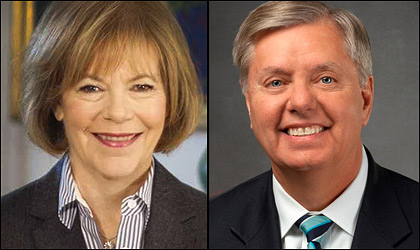
Are incumbents Sen. Tina Smith (D-MN), left, and Sen. Lindsey Graham (R-SC) in re-election trouble?

Sept. 8, 2020 — At the beginning of the 2020 election cycle, it appeared that Sens. Tina Smith (D-MN) and Lindsey Graham (R-SC) were set for re-election. That no longer appears to be the case.

Polling is now consistently showing close races in the two states, and Sen. Smith’s recent comments about the police have seemingly moved her re-election campaign closer to the toss-up category according to a just-released Harper Polling survey.

Looking at the HP data (Aug. 30-Sept. 1; 50 likely Minnesota voters via live interview), Sen. Smith’s ballot test edge has dropped to just 43-41 percent over former US Rep. Jason Lewis (R).

In May, Harper found Sen. Smith posting a 46-35 percent advantage over Lewis. After this release, Public Policy Polling forecast a 48-39 percent split toward the end of July. Lastly, Emerson College published what appears to be precursor data to the latest Harper findings. The Boston-based university poll (Aug. 8-10; 73 likely Minnesota voters) found a three-point split between the two contenders, 48-45 percent, again in Sen. Smith’s favor.

To the southeast of liberal Minnesota, in conservative South Carolina, veteran Sen. Lindsey Graham (R) has also fallen into a competitive contest with former state Democratic Party chairman Jaime Harrison, who had raised an incredible $29 million for his smaller state race through the end of June.

The most recent poll we have seen from the Palmetto State was released at the beginning of August. Quinnipiac University (July 30-Aug. 3; 91 registered South Carolina voters) detected a 44-44 percent tie between Sen. Graham and Harrison. From mid-July through the beginning of August, six surveys were conducted, including the Quinnipiac study, and Sen. Graham’s average lead was only 2.8 percentage points.

Continue reading

The Presidential Debates Loom

By Jim Ellis

Sept. 1, 2020 — The Presidential Debate series looms on the political horizon, and controversy is beginning to swirl even though the first forum is still a month away.

The first in a series of currently three presidential debates is set for Sept. 29.

House Speaker Nancy Pelosi said last week that Democratic nominee Joe Biden shouldn’t debate President Trump. “I wouldn’t legitimize a conversation with him, nor a debate in terms of the presidency of the United States,” she was quoted as saying at a news conference.

At the end of July, former Bill Clinton news secretary Joe Lockhart wrote for CNN.com that Biden shouldn’t debate the president. “Whatever you do, don’t debate Trump. Trump has now made more than 20,000 misleading or false statements according to the Washington Post,” Lockhart penned as public advice to Biden.

Some on the Republican side argue that these Democratic leaders are beginning to lay the groundwork for Biden to avoid the debates because of concerns their candidate would fare poorly opposite President Trump.

For his part, Biden says he will debate the president, and become his own “fact checker on the floor.” He will also begin holding campaign events after Labor Day. In an Aug. 28 interview with the Associated Press, Biden said he’ll “meet people where it matters – not at irresponsible rallies or staged for TV to boost egos, but real people’s communities, in real local businesses, in their lives.” Biden further said he’ll “hold events consistent with the state rules about crowd sizes and other regulations.”

The first debate is scheduled for Tuesday, Sept. 29, the second on Thursday, Oct. 15, and the final forum culminates a week later on Oct. 22. The vice presidential debate between incumbent Vice President Mike Pence and Sen. Kamala Harris (D-CA) is scheduled for Wednesday, Oct. 7.

The debates have proven important in the past and always draw large audiences. According to the Pew Research Center, even the first televised debate, between then-Sen. John F. Kennedy and then-Vice President Richard Nixon, drew over 66 million viewers usually on black and white televisions, at a time when the US population was just under 181 million people, or approximately 55 percent of today’s total populace.

Continue reading

Presidential Polling Progress

By Jim Ellis

Aug. 27, 2020 — The Republican National Convention coverage featured several mentions of swing state polling getting closer between the two presidential candidates, and recent moves from both sides would seem to suggest that internal survey numbers also reflect such a trend.

Below, we compare the 10 most recent polls with the 10 prior surveys in each of the key states to better illustrate the campaign’s movement:


ARIZONA

Last 10 Public Polls: July 17 – August 23
• Biden Aggregate Average Lead: 3.2%

Previous 10 Public Polls: June 26 – July 24
• Biden Aggregate Average Lead: 4.4%

Swing: Trump +1.2%


FLORIDA

Last 10 Public Polls: July 17 – August 22
• Biden Aggregate Average Lead: 3.2%

Previous 10 Public Polls: June 8 – July 21
• Biden Aggregate Average Lead: 6.9%

Swing: Trump +3.7%


GEORGIA

Last 10 Public Polls: July 9 – August 15
• Trump Aggregate Average Lead: 0.4%

Previous 10 Public Polls: May 4 – July 2
• Trump Aggregate Average Lead: 0.1%

Swing: Trump +0.3%


MICHIGAN

Last 10 Public Polls: July 24 – August 23
• Biden Aggregate Average Lead: 7.0%

Previous 10 Public Polls: July 9 – July 26
• Biden Aggregate Average Lead: 7.4%

Swing: Trump +0.4%


Continue reading

House-Critical Runoff in OK-5 Today

By Jim Ellis

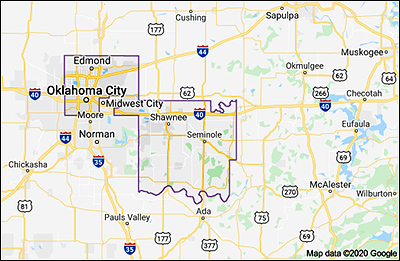
OK-5 encompasses just over 91 percent of Oklahoma County, and all of Oklahoma City.

Aug. 25, 2020 — Voters in the Oklahoma City area will go to the polls today to choose a Republican general election opponent for freshman Rep. Kendra Horn (D-Oklahoma City) who scored a major upset victory here in 2018. The Sooner State’s 5th District race is one of the top national congressional races, and a Republican must win if the party is to have any chance of re-taking the House majority they lost two years ago.

The 5th District of Oklahoma had been a Republican domain since 1977 when GOP candidate Mickey Edwards captured the seat after 47 consecutive years of Democratic representation, though in the final two years of Rep. John Jarman’s 26-year congressional career before retiring, he served as a Republican.

During the interval between Edwards’ election and 2018, four other Republicans were elected here including future Gov. Mary Fallin and current US Sen. James Lankford. In 2018, then-Rep. Steve Russell lost to Horn in a 51-49 percent result, a margin of 3,338 votes.

Today’s GOP competitors are former lieutenant governor nominee Terry Neese, from both the 1990 and 1994 elections, and state Sen. Stephanie Bice (R-Oklahoma City). In the June 30 Republican primary, Neese secured 36.5 percent of the vote, outdistancing Bice’s 25.4 percent from a turnout of 68,032 GOP votes cast. A total of seven Republicans were on the ballot. A mandatory 50 percent was required for outright nomination. With no one receiving the required majority, the top two finishers, Neese and Bice, advanced into today’s runoff election.

Both Neese and Bice were the top fundraisers for the primary. For the campaign through the Aug. 5 pre-election period before this runoff, Bice had raised over $1.463 million, just ahead of Neese’s $1.235 million. According to Neese’s financial disclosure report, however, $450,000 of her receipts were self-contributed in the form of a candidate loan. Helping Neese has been an ongoing $982,000-plus media independent expenditure from the Club for Growth whose leadership is opposing Bice. An expenditure of this size obviously gives Neese a huge boost in the runoff election.

Continue reading

Is Minnesota In Play?

By Jim Ellis

Aug. 24, 2020 — The state of Minnesota has been the most loyal of Democratic states in the presidential election since 1972, but the latest survey research data suggests that the northern domain is returning to the competitive realm this year.

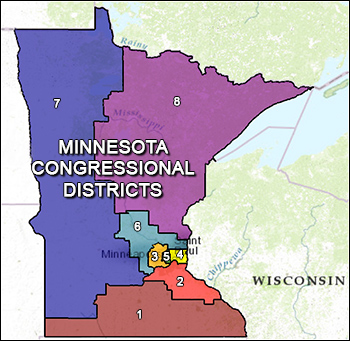
Four years ago, President Trump fell just 1.5 percent short of winning Minnesota, thus providing a sign that the electorate was beginning a possible transformation. That was partially underscored in 2018 even when the party lost two suburban Minneapolis districts but gained two back in the rural north and south. The latter two congressional seats were the only ones Republicans converted from Democrats in the whole nation, except for a Pennsylvania seat that flipped to the GOP because of a court-imposed redistricting map that substantially changed the boundaries.

The 2020 Minnesota polls have seesawed. Mason-Dixon Polling and Research was the first to release a statewide poll this year and did so just before the George Floyd killing occurred in Minneapolis. The M-D survey was conducted over the May 18-20 period and yielded former vice president Joe Biden a five-point lead, 49-44 percent. The Morning Consult organization was also in the field during that same relative period, May 17-26, and found a similar spread between Biden and President Trump, with the former posting a seven-point edge.

Within this same period, the Floyd controversy began on May 25. During the next two months, a pair of Minnesota polls were conducted, and Biden’s lead soared into double digits. Gravis Marketing executed a single-day poll on June 19 and found Biden’s lead had grown to 16 percentage points. Fox News followed with their survey a month later, July 19-20, and found a similar 13-point Biden advantage.

The situation began to change when Morning Consult again tested the Minnesota electorate over the July 17-26 period and saw the race closing back into the three-point range. This survey was confirmed with the Trafalgar Group’s numbers derived from their July 23-25 poll that found a similar five-point margin developing between the two candidates.

The next two, however, from Public Policy Polling and David Binder Research, both conducted during the July 22-31 time frame, produced 10 and 18 point spreads in Biden’s favor. The Binder poll, however, utilized a sample size of only 200 respondents, far below what would be typically required for a reliable statewide poll for a domain housing eight congressional districts.

Continue reading

Rep. Spano Loses; Lummis to Return

By Jim Ellis

Aug. 19, 2020 — In the wake of yesterday’s primaries, here’s a quick look and analysis of the three states where voters cast their ballots — Florida, Wyoming and Alaska:


FLORIDA

Freshman Rep. Ross Spano (R-Dover), who had been under fire and investigation for accepting improper loans to his 2018 campaign, lost his re-nomination campaign last night to Lakeland City Commissioner, local business owner, and retired Navy pilot Scott Franklin in a 51-49 percent count with over 60,000 votes tabulated.

Spano becomes the eighth House incumbent and fifth Republican to lose re-nomination this year, the highest number we’ve seen during recent times in a non-redistricting election. With Franklin now as the new GOP nominee, it is reasonable to believe that the GOP is actually in stronger position to hold the seat because Franklin won’t have the political baggage that Rep. Spano carried.

For the Democrats, former TV News anchorman Alan Cohn defeated state Rep. Adam Hattersley (D-Riverview), 41-33 percent, to advance into the general election. Franklin becomes the clear favorite in this 53-43 percent Trump district that a congressional Democrat has never won since the Lakeland-anchored seat was first created in a similar configuration for the 1992 election.

Both primary winners here were outspent. Rep. Spano raised $1.06 million as compared to Franklin’s $587,000 according to the latest available campaign finance disclosure reports (through the July 29 pre-primary reporting period). Similarly, Rep. Hattersley out-raised Cohn, $642,000 to $589,000.

Elsewhere in the Sunshine State, the two open seats look to have GOP primary winners, both of whom are now prohibitive favorites to win the general election. In retiring Rep. Ted Yoho’s (R-Gainesville) 3rd District, his former staff member and ex-campaign manager Kat Cammack scored an upset win with just over 25 percent of the vote in a field of nine other candidates. She defeated former congressional aide and businessman Judson Sapp, and physician James St. George, both of whom substantially outspent Cammack. She now faces apparent Democratic primary winner Adam Christensen.

In the open 19th District, anchored in the Ft. Myers/Cape Coral area, two-term Rep. Francis Rooney (R-Naples/Ft. Myers) is retiring. In what turned into a very close finish, and one that is likely to venture into political overtime as more votes continue to be counted, state Rep. Byron Donalds (R-Naples) clings to a small 774-vote lead over state House Majority Leader Dane Eagle (R-Cape Coral).

Closely behind Eagle are Casey Askar, who has invested over $3 million into his campaign, and local physician William Figlesthaler who supplemented his effort with over $2 million from his personal funds. Both outspent Donalds by a better than 2:1 ratio. Once this race is officially determined, the new GOP nominee will be a lock in the November election. College professor Cindy Banyai was an easy winner on the Democratic side, but she is a severe underdog in the general election.

Continue reading

Florida Primary Preview

By Jim Ellis

Aug. 18, 2020 — The largest of the states hosting a primary today, Florida joins Alaska and Wyoming in holding their nominating elections. With no Senate or governor campaign on the Florida ballot this year, we look to the 27 US House districts. Of those, we see action in eight CDs today, with two of them almost assuredly choosing congressional successors in two open Republican districts.


FL-3

In the northern Florida 3rd District, Rep. Ted Yoho (R-Gainesville) is serving his fourth and final term in the House. Back in 2012, he pledged to serve no more than four terms to coincide with the state’s “Eight is Enough” (meaning years in office) term limit law for state legislative candidates.

This race could be a free-for-all finish tonight among the 10 Republican candidates in this 56-40 percent Trump ’16 district, as raised money is relatively evenly distributed among the top four candidates. Dr. James St. George, however, has added $600,000 of his own funds to the race.

The other top candidates appear to be businessman and former congressional staffer Judson Sapp, who has many endorsements from the Florida delegation, former Gainesville City commissioner Todd Chase, and an ex-Yoho House staff member, Kat Cammack. Tonight’s winner virtually punches his or her ticket to the succeeding Congress in January.


FL-19

The other open seat comes in southwest Florida, where two-term Rep. Francis Rooney (R-Naples/Ft. Myers) is retiring. This is another multi-candidate Republican primary for a seat that is even safer than the aforementioned Yoho district (Trump ’16: 60-37 percent).

This contest has a combination of wealthy self-funders, Marine Corps veteran and businessman Casey Askar who has invested over $3 million into his campaign, and local physician William Figlesthaler who has added $2 million of his own funds. Following are two local officeholders, state House Majority Leader Dane Eagle (R-Cape Coral), and state Rep. Byron Donalds (R-Naples). These four appear to be the top candidates, one of whom will prevail tonight and head to Washington as a member of the new House of Representatives.


FL-15

The other major attraction tonight is in the state’s 15th District, anchored in the city of Lakeland. Here, freshman Rep. Ross Spano (R-Dover) has been under investigation for accepting improper loans to his 2018 campaign. The controversy was one major reason that Lakeland City Commissioner Scott Franklin (R) joined the race.

Continue reading

TX-4 Convention; GA Runoff Preview

By Jim Ellis

Pat Fallon (R-Wichita Falls), is a virtual cinch to join the new Congress in January.

Aug. 10, 2020 — A shoo-in candidate in TX-4 and a naval battle in Georgia highlight tomorrow’s primaries in those states:


TX-4

Fourth Congressional District convention delegates chose a general election ballot replacement for resigned Rep. John Ratcliffe (R) on Saturday, and that replacement, state Sen. Pat Fallon (R-Wichita Falls), now becomes a virtual cinch to join the new Congress in January.

A high turnout of 144 individuals from the universe of 158 eligible precinct chairs, empowered under Texas election procedure to choose a new congressional nominee, gathered in the small community of Sulphur Springs, located on Interstate 30 in Hopkins County, which lies in the center of the 4th District. The seat is vacant because former Rep. Ratcliffe resigned in May when he was appointed Director of US Intelligence.

State Sen. Fallon, who does not live in the 4th District and currently represents only four of its 18 counties, scored a first-ballot victory. He came to Saturday’s meeting backed by US Sen. Ted Cruz (R-TX) who delivered an endorsement speech on Fallon’s behalf.

A total of 12 candidates’ names were placed into nomination, obviously including Sen. Fallon, and Ratcliffe former district chief of staff Jason Ross, Atlanta (TX) Mayor Travis Ransom, and US Rep. Lance Gooden’s (R-TX) chief of staff, Aaron Harris. Sen. Fallon recorded 82 votes on the first ballot, which allowed him to clinch the general election nomination outright.

The 4th District seat will remain vacant for the rest of the year because Gov. Greg Abbott (R) has decided not to call a special election to fill the unexpired portion of the current term. The 4th District is heavily Republican (Trump ’16: 75-22 percent), so Sen. Fallon becomes a prohibitive general election favorite and, barring a GOP political catastrophe, will take the seat in January with the incoming freshman class.

TX-4, once represented by legendary House Speaker Sam Rayburn (D-Bonham), is located in the Lone Star State’s northeastern corner. The district begins in Rockwall County, just east of the Dallas outer suburbs, and stretches all the way to Texarkana. It is bordered by Oklahoma and the Red River to the north and the Arkansas and Louisiana to the east.

Continue reading

Hagerty Wins; Harshbarger Takes 1st

By Jim Ellis

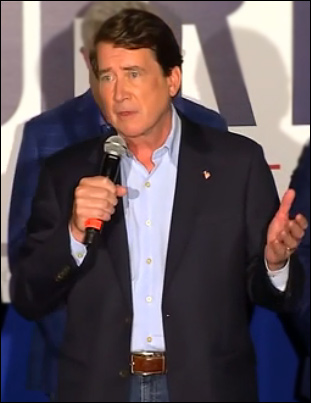
Former US Ambassador to Japan Bill Hagerty won the Tennessee Senate Republican nomination.

Aug. 10, 2020 — Former US Ambassador to Japan Bill Hagerty won the Tennessee Senate Republican nomination last Thursday night with a 51-39 percent victory margin over his chief opponent, Dr. Manny Sethi, a Nashville surgeon, in the nation’s only Thursday primary.

Now as the official Republican nominee, Hagerty becomes the prohibitive favorite in the general election against businesswoman and environmental activist Marquita Bradshaw, who was an upset winner in the Democratic primary despite spending virtually no money on her campaign.

The last three publicly released Republican primary polls, from JMC Analytics, the Trafalgar Group, and Victory Phones, all forecast a 3-4 point edge, far below Hagerty’s actual percentage spread. The Tarrance Group, which polled at the end of June, was much closer to the final result, predicting a 46-29 percent split in Hagerty’s favor. The surveys, however, were completed through July 19, so it is possible that his late message blitz was responsible for Hagerty gaining strong momentum in the campaign’s final stage that led to a strong victory.

The Democratic side actually became more curious. Attorney James Mackler, who raised and spent more than $2 million and was viewed as a heavy pre-election favorite for Thursday night’s vote, not only lost to Bradshaw, but placed a poor third. In between Bradshaw and Mackler was attorney and Unitarian minister Robin Kimbrough. Together, she and Bradshaw are reporting spending only $17,000 on their combined political effort through the July 17 pre-primary financial disclosure period.

The Republican primary turned into a hard-fought battle between Hagerty, who spent over $9 million, and Dr. Sethi, who was making his first venture into elective politics. Sethi raised and spent well over $4 million. The contest was personal at the end, with both candidates trying to get to the right of the other and launching negative attacks. Hagerty had President Trump and Sen. Marsha Blackburn’s (R) combined endorsement, signaling that he had the conservative credentials necessary to win a Tennessee Republican primary.

East Tennessee Rep. Phil Roe (R-Johnson City) is retiring after serving what will be six complete terms and his successor will be pharmacist and political activist Diana Harshbarger.

Continue reading