Tag Archives: President Obama

Is Michigan Rep. Justin Amash
Seeking a Political Exit Strategy Should He Run for President?

By Jim Ellis

Michigan Rep. Justin Amash (R-Cascade Township/Grand Rapids)

June 13, 2019 — The Michigan Information & Research Service (MIRS) released an independent poll just a couple days ago from the Practical Political Consultants organization (June 5-9; 335 likely MI-3 Republican primary voters) that finds western Michigan Rep. Justin Amash (R-Cascade Township/Grand Rapids) trailing his announced 3rd Congressional District Republican primary opponent, state Rep. James Lower (R-Greenville), by a lopsided 49-33 percent count.

After Rep. Amash became the only Republican to side with the Democrats’ informal impeachment caucus over whether to bring proceedings against President Trump, speculation became more rampant that the five-term Michigan congressman would seek the Libertarian nomination for president. The new poll and his action earlier in the week of resigning from the Freedom Caucus and its leadership fuels more speculation that he will jump into the presidential contest.

Many are arguing that Amash would have an effect upon the national election to the point of potentially costing President Trump victory, or at the very least, the state of Michigan, but such an outcome is far from determined.

The Libertarian presidential nomination has some value in that the party can qualify for the ballot in all 50 states and the District of Columbia. It is the only political entity aside from the Republican and Democratic parties that has such an ability. Jill Stein, the 2016 and 2012 Green Party presidential nominee, appeared on the ballot in 45 and 38 states, respectively.

However, just how much of a factor are the individuals who represent the minor parties on the presidential ballot? Former New Mexico governor Gary Johnson was the Libertarian nominee in both 2016 and 2012. He has already said he will not be a candidate in 2020. In 2012, his national vote total was 1.27 million. Four years later, his aggregate vote number soared to just under 4.5 million. But, was that due to Johnson himself, or is the Libertarian ballot position, regardless of the candidate’s name associated with it, simply the best place for disaffected voters to cast a ballot?
Continue reading

NC-9: The First Poll is Surprising

By Jim Ellis

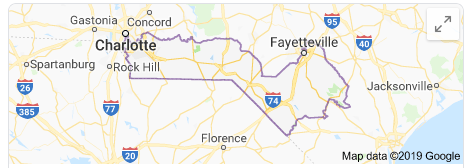
North Carolina’s 9th Congressional District

May 30, 2019 — The JMC Analytics survey research firm released the first special general election poll for North Carolina’s 9th District, and some may consider the results surprising.

According to JMC (May 21-24; 350 NC-9 registered voters), Republican state Sen. Dan Bishop (R-Charlotte) has taken a 46-42 percent lead over Democrat Dan McCready, the solar energy businessman who was the 2018 party nominee. Considering the seven-month-long vote fraud controversy that kept the North Carolina Board of Elections from certifying Republican Mark Harris as the general election victor over McCready (the unofficial total gave the GOP nominee a 905-vote edge) many expected the Democrat to open the special election campaign with a discernible advantage.

There is no doubt that McCready has a resource advantage, however, which should play a major role as this contest moves toward a Sept. 10 conclusion. In the pre-primary financial disclosure period report that ended April 24, McCready reported already raising over $2.01 million, with a $1.57 million cash-on-hand figure. In contrast, Sen. Bishop stated $505,000 raised within the same time frame, more than any individual Republican candidate at the time, but the total included a $250,000 personal loan.

Continue reading

Will Schilling Become a 2-State Rep?

By Jim Ellis

Republican Bobby Schilling

May 14, 2019 — In a dozen instances throughout American history a person has been elected to the House of Representatives from one state, departed Congress for whatever reason, moved to another domain, and then won an additional congressional election, or elections, from the adopted place.

Republican Bobby Schilling served one term in the House from western Illinois’ 17th District, losing his re-election bid in 2012. Relocating across the Mississippi River to Iowa in 2017, former Representative Schilling is reportedly looking to make a political comeback. It is expected that he will soon announce his candidacy for the Hawkeye State’s open 2nd Congressional District.

If the ex-Illinois representative were to win the Iowa seat, he would become the 13th person in American history to represent two different states in the House of Representatives. It last occurred when former Texas congressman, Ed Foreman (R), won a New Mexico US House seat in the 1968 election. Prior to that, the two-state switch had only happened one other time since the turn of the 20th Century.

Interestingly, the same number of individuals, 12, have represented two states by serving first in the House, moving, and then winning a Senate seat from the secondary place. The most famous of these is Sam Houston, who served in the House from Tennessee and as governor before helping found Texas as a country and state, and then subsequently serving as its president and US senator, respectively.

Schilling, a local restaurant owner, first won his Quad Cities anchored seat in the Republican landslide year of 2010, defeating then-two-term Rep. Phil Hare (D-Rock Island). But, in a redistricting year from a process the Democrats controlled, and with President Obama running for re-election at the top of his home state ballot in 2012, Schilling was unable to politically survive in the more Democratic district.

Continue reading

Another House Retirement Ahead

By Jim Ellis

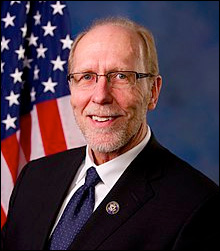
Iowa Rep. David Loebsack (D-Iowa City) to retire

April 16, 2019 — Seven-term Iowa Rep. David Loebsack (D-Iowa City) announced Friday that he will not seek re-election in 2020. Loebsack, a former college professor, first came to Congress in the 2006 election when he unseated GOP Rep. Jim Leach in a major upset victory.

Since his first re-election, Loebsack has generally faced Republican competition, but the GOP has never been able to elevate a challenge against him to top-tier status. Still, in his seven elections, Rep. Loebsack recorded only a 53.7 percent average victory margin. Last November, he defeated Republican Chris Peters, who also ran in 2016, 54-42 percent.

Iowa’s 2nd District occupies the southeastern quadrant of the four congressional districts in the state under a mapping plan that divided the territory geographically by quarters. The two largest 2nd District population centers are the cities of Davenport (102,000 population) and Iowa City (74,000).

Politically, the 2nd looks to be the strongest Democratic district of the state’s four seats, but the electorate did support President Trump with a 49-45 percent margin. Previously, however, President Obama ran strong here in both of his national campaigns, carrying the district 56-43 percent in 2012 and 57-42 percent during his initial 2008 campaign.

With President Trump needing to win Iowa next year, it is clear that his campaign will attempt to maximize right-of-center turnout in IA-2, meaning a potential Republican open seat congressional candidate should get an indirect boost. Now, with no Democratic incumbent running to defend the seat, this district figures to become a key GOP conversion opportunity.

Continue reading

Biden’s Strong Rebound, and a
Michigan Senate Surprise

By Jim Ellis

March 21, 2019 — Earlier this week, Emerson College Polling released a survey of Wisconsin Democrats that found Sen. Bernie Sanders (I-VT) leading former Vice President Joe Biden, 39-24 percent, but an even newer Emerson offering detects that the tables have already turned.
According to the latest Emerson Michigan poll (March 7-10; 743 registered Michigan voters; 317 likely Michigan Democratic presidential primary voters), it is Biden who is claiming 40 percent support within the Democratic sample, while Sen. Sanders pulls 23 percent. As is the case with the Wisconsin poll, California Sen. Kamala Harris is third, well back with 12 percent, and Sen. Elizabeth Warren (D-MA) follows with 11 percent. All others fall into low single digits. New entry Beto O’Rourke was not included on the survey questionnaire.

The results are not surprising. Biden has long been a favorite of the private sector unions, which are a strong force in Michigan politics. Additionally, President Obama, with Biden on the ticket, ran strongly here. In 2012, he defeated Mitt Romney, 54-45 percent. The former Republican nominee’s father, George Romney, is a past governor of Michigan. Four years earlier, Obama’s margin over John McCain was an even greater 57-41 percent.

Michigan is an important state on the Democratic nomination circuit, eighth largest of the 57 voting entities. Currently scheduled for a March 10 primary, the Wolverine State is awarded 125 elected delegates, ballooning to an aggregate 147 when Super Delegates are added to the total. The Super Delegates, or party leaders, may not vote on the first ballot, but are eligible if more than one roll call becomes necessary.

Continue reading

PA-12 NOMINEE KELLER IMMEDIATELY HITS OPPONENT, PELOSI, SANDERS, CORTEZ

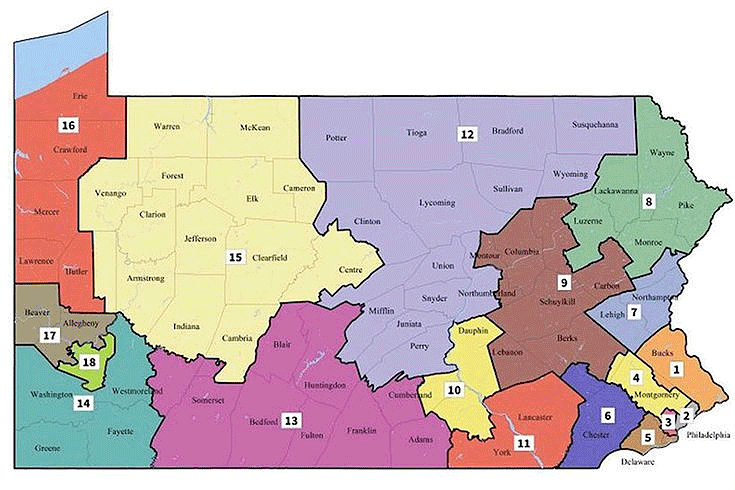
Pennsylvania Congressional Map | Source: Pennsylvania State Supreme Court (click on image to see full size)

By Jim Ellis

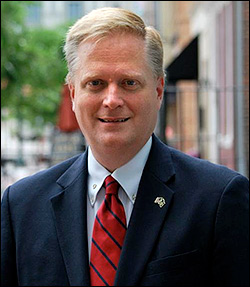
Pennsylvania state Rep. Fred Keller
(R-Mifflinburg)

March 5, 2019 — On Saturday, during a seven-hour marathon special district convention marked with controversy, the central Pennsylvania Republican delegates chose state Rep. Fred Keller (R-Mifflinburg) as the party nominee for 12th District Congressman Tom Marino’s (R-Williamsport) vacated seat. Marino resigned from the House at the end of January due to professional and health reasons.

Gov. Tom Wolf (D) scheduled the replacement special election for May 21. Under Pennsylvania election law, the various political parties call a district convention or meeting for purposes of choosing a special election nominee. Originally, 24 potential Republican candidates expressed interest in running, but only 14 were successful in having their names placed into nomination before the 200-plus assembled delegates.

After Rep. Marino’s unexpected announcement, Democrats responded quickly and re-nominated their 2018 candidate, local college professor Marc Friedenberg, who advances into the special general election hoping to perform better than he did against Marino. In November, Friedenberg lost 66-34 percent while spending just over $90,000 on his federal campaign.

Saturday’s convention became controversial once the Club for Growth organization began sending mailers to the delegates attacking state Rep. Jeff Wheeland (R-Williamsport), over his record on tax issues as a legislator first elected in 2014. Prior to gathering in Williamsport, Wheeland appeared as the candidate most likely to become the delegates’ choice.

But, the convention was rocked when the representative’s stepson distributed a letter detailing how Wheeland abused he and his mother. The combination attack was enough to drive Wheeland from the race just before the fourth ballot, yielding the victory for Keller.

Continue reading

Ohio: Contrasting Polls

By Jim Ellis

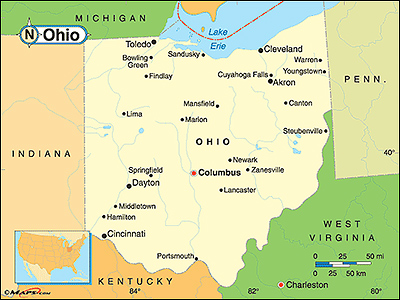
state-of-ohio-mapNov. 1, 2018 — The Buckeye State of Ohio is viewed as one of the country’s quintessential swing states. In 2016, however, the state exceeded polling and even Republican expectations in their presidential vote, as President Trump won a decisive 52-44 percent victory over Hillary Clinton.

Some suggested the Trump vote was an indication that the state could be moving more definitively to the political right, but new surveys suggest the Buckeye electorate is returning to its previous swing vote history.

Still, Ohio proves a reliable national political barometer. In both 2008 and 2012, the electorate here voted for President Obama after twice after backing President George W. Bush in his two elections. The state previously favored President Bill Clinton in his two successful national campaigns. In fact, the last time Ohioans failed to vote for the winning presidential candidate came in 1960 when the state awarded its electoral votes to Republican Richard Nixon in his national losing effort against John F. Kennedy.

Two new polls were released this week that paint different pictures of the Ohio electorate’s current state. Some of the results are curious to the point of questioning the polling reliability or not being able to adequately determine how the governor’s race will end and failing to understand the wide discrepancy in US Senate polling projections.

Continue reading

The Nevada Sway

By Jim Ellis

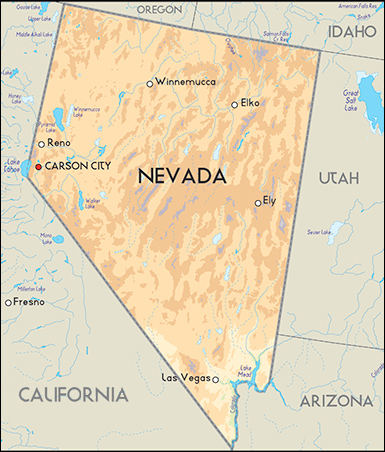
Nevada-mapOct. 17, 2018 — A new Emerson College poll (Oct. 10-12; 625 likely Nevada voters) projects Sen. Dean Heller (R) to a 48-41 percent lead over freshman Rep. Jacky Rosen (D-Henderson), which is the largest lead for either candidate since the June 12th primary.

For most of the election cycle, this race has been rated as a toss-up campaign, but most prognosticators believed it would eventually tilt toward the Democrats yielding a challenger victory.

Viewed as a state trending Democratic because of Hillary Clinton’s 48-45 percent victory in the most recent presidential campaign added to President Obama winning here in both of his elections: 52-46 percent over Mitt Romney, and in a 55-43 percent landslide over John McCain, the 2014 Republican sweep from the governor’s race through the state legislative campaigns has generally been disregarded as an anomaly.

Outgoing Gov. Brian Sandoval (R) has strong approval ratings and would clearly be a re-election favorite if the state did not have a term limit law. The governor is playing an interesting role in this year’s campaign. He is featured prominently in Sen. Heller’s advertising but refuses to endorse Attorney General Adam Laxalt (R) as his successor because the latter man refuses to support the Sandoval tax program, which is becoming the governor’s legacy as Nevada’s chief executive.

Continue reading

Dead Heats in New Nevada Senate Poll

By Jim Ellis

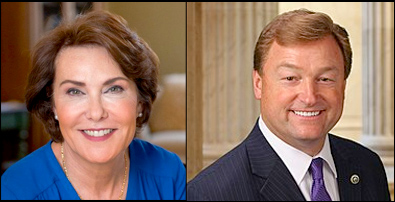
Nevada Senate candidate, Rep. Jacky Rosen (D) and Sen. Dean Heller (R)

Nevada Senate candidates: Rep. Jacky Rosen (D) and Sen. Dean Heller (R)

Aug. 2, 2018 — A new Suffolk University survey (July 24-29; 500 likely Nevada voters) returns numbers that again show Sen. Dean Heller (R) and Rep. Jacky Rosen (D-Henderson) falling within the margin of polling error with neither candidate attracting majority support.

According to Suffolk, Sen. Heller leads Rep. Rosen by a bare 41-40 percent margin, meaning the two are virtually tied. This is the first poll since mid-April that projects the senator to any kind of an advantage, but even the four surveys in between, all of which favored Rep. Rosen, showed margin spreads in the realm of two to six points. Of the eight polls publicized for this race during the entire election cycle, in only one, the April Survey Monkey study, did either candidate ever reach the 50 percent mark (Rosen, 50-44 percent; Survey Monkey; April 2-23; 1,332 Nevada registered voters in the Survey Monkey pool).

Suffolk also tested the state’s open governor’s race, and found an equally tight contest. Here, Republican Attorney General Adam Laxalt posts a 42-41 percent tally over Democratic Clark County Commissioner Steve Sisolak. In the one previously released post-primary general election poll, from Gravis Marketing (June 23-26; 630 likely Nevada general election voters), an almost identical result was projected: Laxalt leading 43-41 percent.

The Nevada Senate race is one of the most important in the nation this year, and one of two main Democratic conversion targets (the open race in Arizona is the other). Winning this race is the only gateway to the Democrats potentially gaining the Senate majority, thus we can expect to see major political action in this state for the remaining prime campaign months.

Continue reading

Mountain Polling

By Jim Ellis

the-primariesJune 25, 2018 — The Utah state primary is tomorrow, and we have finally seen a poll testing former presidential nominee Mitt Romney in his run for the open Senate seat that the venerable Orrin Hatch (R) is vacating after what will be 42 years of legislative service. In New Mexico, Carroll Strategies released a statewide survey last week of 1,199 of the state’s registered voters and segmented the respondents into the state’s three congressional districts. We look at the upcoming primaries in both states:

Utah Senate

According to the Hinckley Institute at the University of Utah (June 11-18; 654 registered Utah voters, 356 likely Utah Republican primary voters), Romney has a commanding lead as the campaigns enter the final days before Republican voters choose their nominee. In late April, state Democratic convention delegates nominated Salt Lake County Councilwoman Jenny Wilson as the party standard bearer, so there is no Democratic Senate primary on Tuesday.

The polling results find the 2012 Republican presidential nominee leading state Rep. Mike Kennedy, a Provo physician who outpaced Romney among delegates at the Republican state convention, by a whopping 65-23 percent margin. Therefore, little doubt exists that we will see a sizable Romney victory this coming Tuesday night.

Continue reading