Tag Archives: Joe Biden

Presidential Polling Progress

By Jim Ellis

Aug. 27, 2020 — The Republican National Convention coverage featured several mentions of swing state polling getting closer between the two presidential candidates, and recent moves from both sides would seem to suggest that internal survey numbers also reflect such a trend.

Below, we compare the 10 most recent polls with the 10 prior surveys in each of the key states to better illustrate the campaign’s movement:


ARIZONA

Last 10 Public Polls: July 17 – August 23
• Biden Aggregate Average Lead: 3.2%

Previous 10 Public Polls: June 26 – July 24
• Biden Aggregate Average Lead: 4.4%

Swing: Trump +1.2%


FLORIDA

Last 10 Public Polls: July 17 – August 22
• Biden Aggregate Average Lead: 3.2%

Previous 10 Public Polls: June 8 – July 21
• Biden Aggregate Average Lead: 6.9%

Swing: Trump +3.7%


GEORGIA

Last 10 Public Polls: July 9 – August 15
• Trump Aggregate Average Lead: 0.4%

Previous 10 Public Polls: May 4 – July 2
• Trump Aggregate Average Lead: 0.1%

Swing: Trump +0.3%


MICHIGAN

Last 10 Public Polls: July 24 – August 23
• Biden Aggregate Average Lead: 7.0%

Previous 10 Public Polls: July 9 – July 26
• Biden Aggregate Average Lead: 7.4%

Swing: Trump +0.4%

Continue reading

Is Minnesota In Play?

By Jim Ellis

Aug. 24, 2020 — The state of Minnesota has been the most loyal of Democratic states in the presidential election since 1972, but the latest survey research data suggests that the northern domain is returning to the competitive realm this year.

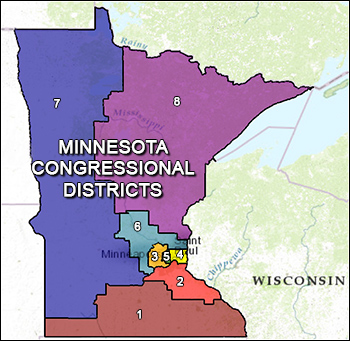
Four years ago, President Trump fell just 1.5 percent short of winning Minnesota, thus providing a sign that the electorate was beginning a possible transformation. That was partially underscored in 2018 even when the party lost two suburban Minneapolis districts but gained two back in the rural north and south. The latter two congressional seats were the only ones Republicans converted from Democrats in the whole nation, except for a Pennsylvania seat that flipped to the GOP because of a court-imposed redistricting map that substantially changed the boundaries.

The 2020 Minnesota polls have seesawed. Mason-Dixon Polling and Research was the first to release a statewide poll this year and did so just before the George Floyd killing occurred in Minneapolis. The M-D survey was conducted over the May 18-20 period and yielded former vice president Joe Biden a five-point lead, 49-44 percent. The Morning Consult organization was also in the field during that same relative period, May 17-26, and found a similar spread between Biden and President Trump, with the former posting a seven-point edge.

Within this same period, the Floyd controversy began on May 25. During the next two months, a pair of Minnesota polls were conducted, and Biden’s lead soared into double digits. Gravis Marketing executed a single-day poll on June 19 and found Biden’s lead had grown to 16 percentage points. Fox News followed with their survey a month later, July 19-20, and found a similar 13-point Biden advantage.

The situation began to change when Morning Consult again tested the Minnesota electorate over the July 17-26 period and saw the race closing back into the three-point range. This survey was confirmed with the Trafalgar Group’s numbers derived from their July 23-25 poll that found a similar five-point margin developing between the two candidates.

The next two, however, from Public Policy Polling and David Binder Research, both conducted during the July 22-31 time frame, produced 10 and 18 point spreads in Biden’s favor. The Binder poll, however, utilized a sample size of only 200 respondents, far below what would be typically required for a reliable statewide poll for a domain housing eight congressional districts.

Continue reading

The Polling Extremes

By Jim Ellis

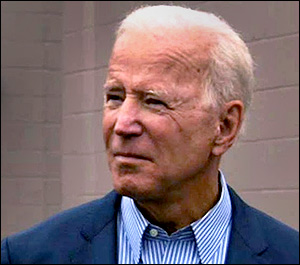
Former vice president and 2020 presidential candidate, Joe Biden (D)

July 31, 2020 — Two survey research organizations, Morning Consult and Change Research, just released the results of their recent battleground states polling series. Looking at all the recent public data in these places illustrates the polling volatility and movement within the states that will ultimately decide the presidential election.

The ballot test results listed for each state below illustrates the most extreme examples for President Trump and former vice president Joe Biden during the mid to late July period. With such a wide variance in most places, it is difficult to say with any certainty exactly how these defining states will actually perform come Election Day.

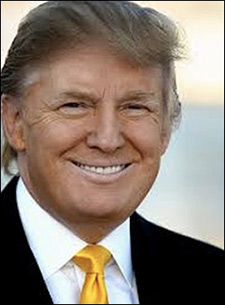
President Donald Trump

It is also important to take into account sample size, sample segmentation, and whether the poll was conducted through live interview, online questioning, or an interactive voice response system.


ARIZONA
• Morning Consult (JULY 17-26, 908 likely Arizona voters)
Joe Biden (D) ………….. 49% (+7)
Donald Trump (R) ……. 42%
• Change Research (July 24-26, 365 likely Arizona voters; targeted online sample)
Joe Biden (D) ………….. 47% (+2)
Donald Trump (R) ……. 45%

Arizona surveys have consistently yielded small leads for Biden over the past several months. Most of the recent results find the candidates falling within the polling margin of error.


FLORIDA
• Morning Consult (July 17-26, 3,593 likely Florida voters; online)
Donald Trump (R) ……. 48% (+1)
Joe Biden (D) ………….. 47%
• Quinnipiac University (July 16-20, 924 registered Florida voters; live interview)
Joe Biden (D) ………….. 51% (+13)
Donald Trump (R) ……. 38%

This is the most divergent spread within all of the battleground states. Florida’s polling history has routinely featured wide polling ranges that result in close election results.
Continue reading

Beneath the Numbers

By Jim Ellis

Is Maine Sen. Susan Collins (R) in trouble?

July 30, 2020 — Two Senate polls were released earlier this week, and though the ballot tests in Maine and South Carolina didn’t show us anything particularly new, the pollsters asked their respective sampling universes some interesting ancillary questions.

Colby College, a Waterville, Maine institution housing approximately 1,800 students, released its second political poll of 2020 in conjunction with the McVey Data Science Initiative. The questions touched upon the presidential and Senate ballot tests but delved deeper into the attitudes and perspectives of their 888-person sample over the July 18-24 period.

The presidential ballot test found former vice president Joe Biden leading President Trump statewide, 50-38 percent. The Senate ballot test was closer in that former state House speaker Sara Gideon (D) leads Sen. Susan Collins (R), 44-39 percent.

In looking deeper, it is probable that the actual race standings are likely a bit closer. There appears to be a Democratic skew in that all favorability indexes for Democratic public officials were positive and those of the tested Republican officials were decidedly negative. Additionally, 52 percent of the sampling universe comes from the state’s southern congressional district, the 1st, which is decidedly more liberal than the northern 2nd District. Together, these factors provide us the indication that the results are a few points more favorable for Democrats than what we might see in actual voting.

Continue reading

The Wild Polling Spectrum

By Jim Ellis

July 27, 2020 — We’ve seen a plethora of presidential state polls released in the past couple of days, and the results seem to swing wildly among the various pollsters. While most studies have shown former vice president Joe Biden at present winning most of the key states, his margins don’t seem particularly secure even while his national numbers appear stronger.

Let’s explore the polling divergence, and remember that sample selection, weighting, size of the respondent universe, and length of time to complete the survey process are all important variables in determining a ballot test result. Also, the huge number of people refusing to answer their phones or not participating in political surveys means that pollsters must further rely on weighting and mathematical supposition to compensate for the lack of live responses.

With that short background, let’s look at some of the key states producing the widest swings:


FLORIDA

• Quinnipiac University – July 16-20 (924 registered voters; live interview)

Biden 51
Trump 38
Biden plus 13

• St. Pete Polls – July 13-14 (3,018 likely voters via automated system)

Biden 50
Trump 44
Biden plus 6

Though Biden is up in both polls, the margin difference is stark. The Q-Poll, brandishing such a wide spread in what is typically a close political state raises reliability questions.


GEORGIA

• Garin Hart Yang Research – July 9-15 (800 likely voters)

Biden 47
Trump 43
Biden plus 4

• Spry Strategies – July 11-16 (701 likely voters; IVR)

Trump 49
Biden 46
Trump plus 3

Here we see two different leaders within two different polling samples within the same virtual period. Republicans tend to under-poll in the southern states, which could certainly be present in at least the GHY poll.


Continue reading

Alaska: Polling Uncertainty

By Jim Ellis

Anchorage, Alaska

July 10, 2020 — Public Policy Polling, the most prolific national pollster of late, just released a new survey of the upcoming Alaska elections from what could be the most difficult state in America to poll.

The PPP data find close races for president, Senate and US House, which isn’t particularly surprising when comparing today’s numbers to the previous Alaska polling ratio. Past actual results, however, reveal a relatively consistent Republican under-poll.

To begin, the PPP survey tested 1,081 “voters” via automated response device during the July 7-8 period. This firm is recently using the “voters” term to describe their sample. It is clear the respondents are not likely voters, but there is no associated definition that clearly identifies the “voters” universe.

The fact that the individuals are not identified as registered voters could mean they are eligible voters, which would translate into adults. Such a sample would substantially increase the polling error rate. Therefore, it is not surprising to see the poll producing some unusual totals.

The presidential race finds President Donald Trump holding a mere 48-45 percent edge over former vice president Joe Biden in a state that he won by 15 points in 2016. Additionally, the spread seems rather inconsistent with the results produced from the favorability questions. The President’s job approval was 46:49 percent positive to negative, which, despite being upside down, is far better than Trump’s national approval average. The more surprising number, however, was Biden’s poor 36:53 percent favorability index. Overlaying these numbers with the ballot test provides a seemingly inconsistent response pattern.

Sen. Dan Sullivan (R), standing for his first re-election, holds only a 39-34 percent lead over likely Democratic nominee, surgeon Al Gross. Looking back at the 2014 polling records when Sen. Sullivan was challenging then-incumbent Mark Begich (D), July polling of that year found Begich holding leads of 46-35 percent (CBS News/New York Times), and 44-37 percent (Harstad Strategic Services). Sullivan would then turn the race around and win 48-46 percent in that election year.

Continue reading

New Jersey Primary Results

By Jim Ellis

July 8, 2020 — Five weeks after the originally scheduled New Jersey primary was supposed to occur, Garden State voters went to the polls yesterday or mailed their ballots to choose party nominees for the Fall elections.

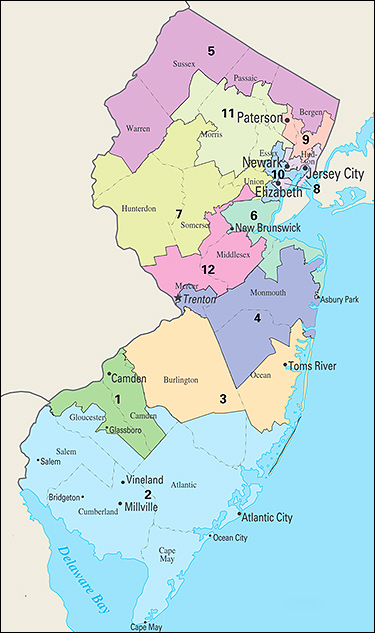
New Jersey Congressional Districts in 2020

Former vice president Joe Biden and first-term US Sen. Cory Booker scored easy wins in the Democratic primary, with each man recording almost 90 percent of the intra-party vote. The Republican Senate race is rather close, but it appears that 2018 congressional candidate and businessman Hirsch Singh will score a tight win and advance into the general election. Sen. Booker is a lock to win the general election.

Vote totals are low, suggesting that once again it will be several days before we have declared winners in all races. Unlike other states in this situation, however, few close races are on the board.

Party-switching Congressman Jeff Van Drew won his first Republican primary with a preliminary figure of 81 percent, which solidifies the Republican base for the November election. The 2nd District, which encompasses most of southern New Jersey, will now feature a competitive general election between Rep. Van Drew and preliminary Democratic primary winner, Amy Kennedy the wife of former Rhode Island Rep. Patrick Kennedy, who scored a win that looks to fall in the 59 percent range.

Freshman Democratic Rep. Andy Kim (D-Bordentown) looks to be facing venture capitalist David Richter in the 3rd District race. Richter appears to have scored a big win over former Burlington County freeholder Kate Gibbs. This race could potentially become the most competitive race in the state.

Continue reading

Arizona Polling: Whatever You Want


Best wishes for a Happy 4th of July holiday weekend.
Our daily column will return on Tuesday, July 7.


By Jim Ellis

July 2, 2020 — We saw a polling bonanza released yesterday in the swing battleground state of Arizona and, no matter who you support or what you believe, there is survey data for you.

Arizona Senate candidate, retired astronaut Mark Kelly (D), and Sen. Martha McSally (R)

Three pollsters released results that tested the presidential race and the Arizona Senate contest between retired astronaut Mark Kelly (D) and appointed Sen. Martha McSally (R). The three pollsters, all conducting their surveys within the June 26-29 period, gave us starkly different ballot test conclusions.

Two of the pollsters are from out of state, while one is based in Phoenix and specializes in researching the Arizona electorate. One of the pollsters tested six battleground states as part of their national polling series, including Arizona, but did not disclose the size of the Grand Canyon State respondent cell. This makes analyzing very difficult. The other two firms revealed similar sized Arizona likely voter sampling universes.

The three pollsters were Change Research, Data Orbital, and Gravis Marketing. All have done national work and are published regularly in political blogs and websites as well as being frequently quoted in national news stories.

Despite testing the same electorate during the same time period, we see an 11-point swing in the presidential race, and a 13-point spread among the three survey results for the Senate race.

Change Research was the most bullish for the Democratic candidates, posting former vice president Joe Biden to a 51-44 percent advantage, and an even larger 53-44 percent margin in Kelly’s race.

Conversely, Gravis Marketing produced the most Republican results. They find President Trump holding a 49-45 percent lead and Sen. McSally up by the same point margin, 46-42 percent.

In between is Data Orbital, the local pollster. They find Biden ahead 47-45 percent, and Kelly up by a similar, but not as pronounced, margin as Change Research found, 50-43 percent.
Continue reading

Coronavirus Polling Numbers

By Jim Ellis

COVID-19 virus

June 30, 2020 — The Pew Research Center yesterday released the results of their national poll about how the public is viewing the COVID-19 response, which enables us to put the data in a political context. The polling results contain some good news for both presidential candidates and the respective major party leaders who are attempting to craft national campaign agendas in unique times.

According to the Pew methodology report on page six of their synopsis, the survey was conducted from June 4-10 via “the American Trends Panel (ATP), as created by the Pew Research Center, [which] is a nationally representative panel of randomly selected U.S. adults. Panelists participate via self-administered web surveys.” The ATP has a total of 19,718 adults of which 11,013 were sampled for this poll and 9,654 responded.

The sampling error is reported to be plus or minus 1.6 percentage points, but Asians (8.2), Blacks (5.3), and Hispanics (4.5) were well over the average. While the pollsters show all segments falling between a plus or minus 1.8 and 8.2 error factor, they still list the overall sample rate (1.6 percent) as falling below even the low number on racial segmentation.

The best news for former vice president Joe Biden is that the Trump Administration scores the lowest rating relating to whom and what the respondents trust most about coronavirus information. The administration is believed either almost all (eight percent), most (21 percent), or some of the time (29 percent) by a combined 58 percent of the respondents. In contrast, the Center for Disease Control is the most reliable cited source with a combined 88 percent rating (22 percent almost all; 42 percent most; 24 percent some of the time).

With President Trump and his team scoring low on the believability scale, the better news for his campaign is that fewer people are following the disease coverage closely. Furthermore, it is clear that large segments don’t know what to believe from news accounts of the disease’s effects.
Continue reading

Last Night’s Results

By Jim Ellis

June 10, 2020 — Voters in Georgia, Nevada, North Dakota, South Carolina, and West Virginia chose nominees last night or sent finalists to runoffs in the two southern states.


• GEORGIA: Former vice president Joe Biden clinched his party’s presidential nomination with an 83 percent victory in the Georgia primary and sweeping the state’s 105 delegates. By all counts, Biden has secured the 1,991 bound first-ballot delegate votes to seal the nomination.

In the Democratic US Senate primary, former congressional candidate and documentary filmmaker Jon Ossoff looks to have fallen just short of the 50 percent mark to secure the party nomination. If the trend holds as the final votes are counted, he will advance to an Aug. 11 runoff election. After trailing former lieutenant governor nominee Sarah Riggs Amico most of the night, ex-Columbus mayor Teresa Tomlinson appears to have secured the second runoff position in a close vote.

Logistical problems in the Atlanta area could delay the final totals, so whether Ossoff won outright and deciding the second runoff position are still not necessarily determined. It is likely, however, that a runoff will occur between Ossoff and Tomlinson, assuming the latter candidate chooses to continue. The percentage spread between the two is a lopsided 49-16 percent.

Numbers are also not final in the Atlanta suburban 7th District, but it appears that 2018 Democratic nominee Carolyn Bourdeaux, who came within 420 votes of winning the seat in that year, came close to avoiding a runoff with 46 percent of the vote. Should this trend hold, she will face state Rep. Brenda Lopez Romero (D-Norcross) in the secondary election.

On the Republican side, retired Navy officer and physician Rich McCormick won the crowded primary outright as he topped 55 percent, an impressive total within a field of seven candidates. State Sen. Renee Unterman (R-Gwinnett County) placed a distant second.

In the open 9th District, the seat that Rep. Doug Collins (R-Gainesville) is leaving to run for the Senate, state Rep. Matt Gurtler (R-Tiger) and retired Navy officer Andrew Clyde will advance to the Aug. 11 runoff. Former US Rep. Paul Broun finished in fourth position. In this safely Republican northeast Georgia district, the runoff winner will clinch the general election.

Continue reading