Tag Archives: Joe Biden

Arizona’s Importance

By Jim Ellis

Does Arizona hold the key in the Trump-Biden election?

Oct. 9, 2020 — Now moving quickly toward Election Week, it is becoming apparent that the ultimate bellwether state for the 2020 presidential election is the Grand Canyon State of Arizona. Formerly a rock solid Republican political domain, the state has been trending toward the political center in recent elections, most particularly 2018.

Coming into the closing weeks of this year’s presidential campaign, it appears that Arizona may be this election’s “tell.” While it’s possible mathematically for President Trump to win in the Electoral College without Arizona, realistically doing so may be a bridge too far.

The principal reason is Arizona has 11 electoral votes, and the idea that Trump could replace it with taking Wisconsin or Minnesota, for example, fails because those states each have 10 votes. Therefore, losing Arizona would lead to him either falling into a tie, or losing the national electoral vote count, 270-268.

The latter electoral vote margin occurs if he also drops the 2nd Congressional District of Nebraska, a state that is one of a pair to split their electoral votes. The most recent public NE-2 poll, from Siena College/New York Times (Aug. 25-27; 420 NE-2 likely voters, live interview), finds the president trailing former vice president Joe Biden in the Omaha metro district, 41-48 percent.

The Trump math also fails without Arizona even if he carries Pennsylvania as his lone Great Lakes State. Losing Arizona, Michigan, and Wisconsin from his 2016 state coalition map, along with NE-2, would also yield a 270-268 Biden victory.

Earlier this week, the Data Orbital polling firm headquartered in Phoenix and is the most prolific survey research firm in testing the Arizona electorate from statewide through local offices, released their latest presidential and US Senate numbers. Their poll (Oct. 3-5; 550 likely Arizona voters, live interview) is the first Arizona survey taken wholly after both the first presidential debate and President Trump being hospitalized for COVID-19.

Continue reading

Debate Constituencies

By Jim Ellis

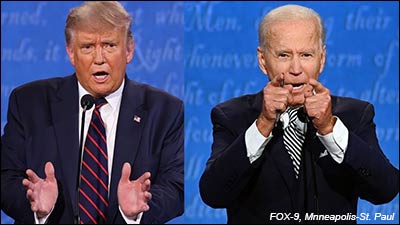
The candidates in action at the first presidential debate in Cleveland, Ohio: President Donald Trump (left) and former vice president Joe Biden.

Oct. 1, 2020 — In watching the first presidential debate the other night, the question that was hanging out there was, what was each candidate attempting to achieve in relation to the constituencies he needs to win the national election, and was each successful in achieving their specific goals?

The campaign is breaking down into two distinct issue areas for each man. President Trump wants to concentrate on rebuilding the economy and safety from the unrest in many metropolitan areas, while former vice president Joe Biden is zeroing in on healthcare, most specifically protecting the Affordable Care Act, often referred to as Obamacare, and attacking Trump over his COVID-19 record.

President Trump is attempting to rebuild his winning coalition in the battleground states that concentrated on 2016 economic issues. He did that in last night’s debate by highlighting his administration’s economic record pre-COVID and outlining how he would re-build the national economy moving forward after the related shutdown.

On law enforcement and public safety, an issue area emphasized in an attempt to re-connect with many suburban female voters who have left his coalition since the last election, Trump attacked hard. The president probably scored his strongest points of the night regarding this issue area as he pinned Biden down about the lack of law enforcement groups supporting the Democratic nominee’s candidacy.

Biden was strong in his defense of the Affordable Care Act, and again exposed the weakness in the Republican issue platform because the GOP doesn’t have an alternative plan to what currently exists. The Biden emphasis was also an attempt to target the higher educated suburban voter, and particularly the white, married female.

Additionally, the healthcare line of attack was also geared toward the base Democratic voter who depends on the ACA as their sole provider. Again illustrating that these individuals would lose their healthcare coverage if the Supreme Court were to declare the program as unconstitutional very likely scored political points for Biden within his targeted constituency groups.

In the closing section of the debate, President Trump used his time on the issue of mail voting to express his concerns about ballot security and the length of the post-election period that we will see in many states. Expecting political overtime to last “weeks, if not months,” Trump reiterated that concerns exist about whether we will have a verified election, while citing the many states that experienced problems during the primary season.

Continue reading

The Scenario: There’s an Electoral College Tie in the Presidential
Election; What Happens Next?

By Jim Ellis

Sept. 23, 2020 — As we move closer to Election Day, various scenarios are being discussed and theorized about who will win the presidential race and which states will fall to what candidate. A little-mentioned outcome, which is a mathematical possibility, is an Electoral College tie.

A deadlock would occur if each candidate received 269 electoral votes. Based upon the 2016 result, which saw President Trump receiving 306 electoral votes to Hillary Clinton’s 232, a tie would occur if the incumbent were to lose exactly 37 electoral votes from his previous performance.

The easiest way for that to occur is if President Trump and former vice president Joe Biden were to build the same coalition of states with the exception of Pennsylvania, Michigan and the 2nd District of Nebraska going from the Republican to Democratic column. In this instance, the two 2020 candidates, Trump and Biden, would have 269 electoral votes apiece.

If this were to happen, how is a tie in the Electoral College resolved? The answer: in the House of Representatives. The difference between the vote for president and a regular House vote is that individual members do not have his or her own vote for president. Rather, each state delegation has one vote.

Therefore, California, for example, with its 53 House members gets one vote for president. Conversely, the at-large states with one House member, such as Alaska, Delaware, Montana, North Dakota, South Dakota, Vermont, and Wyoming, would also each get one vote. So the vote for president skews toward the small states and rural regions.

Interestingly though, the Democrats control the House majority with 232 members and one Democratic vacancy to 198 Republican seats with one Libertarian sitting in what is typically a Republican seat and three GOP vacancies. Yet, if partisanship holds, the Republicans would win a presidential election vote 26 to 23 with one state, Pennsylvania, in a 9-9 split delegation. Assuming that the Keystone delegation would fail to agree on a candidate, the state would not be able to cast its vote.

Continue reading

Sen. Lindsey Graham’s Challenge

By Jim Ellis

Is incumbent Sen. Lindsey Graham (R-SC) in re-election trouble?

Sept. 18, 2020 — Quinnipiac University surveyed the South Carolina political situation as part of their three-state polling series, which again produces some eyebrow-raising data. The results help identify why Sen. Lindsey Graham, a Republican senator from a Republican state, finds himself languishing in a competitive contest.

The poll (Sept. 10-14; 969 likely South Carolina voters, live interview conducted by the RDD firm for Quinnipiac) tested both the presidential and Senate campaigns. President Trump leads former vice president Joe Biden 51-45 percent in a ballot test that seems to be an under-count when looking at the survey’s supporting numbers. Sen. Graham, however, falls into a tie with opponent Jaime Harrison, at 48-48 percent, in a result that the underlying responses do seem to support.

President Trump’s six-point lead appears low because he tops Biden on virtually every personal and issue question. The Trump favorability index is 51:45 percent positive to negative, but the Biden ratio is much worse at 43:50 percent. The generic Republican-Democrat number falls 52-44 percent in favor of the GOP label.

Despite poor coronavirus management numbers for the president nationally, this South Carolina survey returns a 49:48 percent approval number on his handling of the issue. Furthermore, the respondents, in a 50-46 percent break, believe President Trump would do a better job handling coronavirus in the future than Biden. Not a particularly strong performance in this issue area, but better for the President than in almost any other place.

Trump also scores better in his handling of the economy (55-40 percent), the military (54-42 percent), and “keeping your family safe” (52-43 percent). Biden is favored, and only barely, 48-46 percent, on just one issue: racial equality.

Most importantly, the issue matrix sets up perfectly for Trump. The top two issues, according to these respondents, are the ones upon which the president is basing his campaign, law and order (23 percent) and bringing back the economy (22 percent). The Biden key issues rate rather poorly: coronavirus (12 percent), racial equality (12 percent), and healthcare (10 percent).

All of these underlying numbers suggest the Trump ballot test margin should be stronger than six points, which could be a signal that there is a “shy Trump voter factor” even in what is typically a safe Republican state. The “shy Trump voter” is the phrase now used to describe the individual who only secretly favors the president.

Continue reading

Reading North Carolina

By Jim Ellis

Sept. 17, 2020 — CNN released new North Carolina poll results earlier this week, and we again see a familiar pattern unfolding. There has been a Republican under-poll in the southern states detected in the past few elections, and the North Carolina pattern appears to form relatively consistently upon studying its most competitive statewide races in 2014, ’16, and what may be happening in 2020. There were no statewide Tar Heel State contests in 2018.

The CNN poll (conducted through the SSRS statistical firm; Sept. 9-13; 787 likely North Carolina voters; live interview through landline and mobile phones) found former vice president Joe Biden leading President Trump, 49-46 percent; Democratic US Senate nominee Cal Cunningham edging incumbent Republican Thom Tillis, 47-46 percent; and Gov. Roy Cooper (D) easily outdistancing Republican Lt. Gov. Dan Forest, 53-44 percent.

How do these mid-September races compare with other campaigns at this same interval, and what does that tell us for autumn?

First, the CNN poll is one of seven polls conducted in North Carolina during the month of September, and its three-point margin for Biden is the Democrat’s second-best showing within this group. The only better Biden performance came from the Fox News poll at the beginning of September (Aug. 29-Sept. 1; 722 likely North Carolina voters, live interview), which posted him to a four-point, 50-46 percent, advantage.

Among the five other surveys, Biden is ahead in two, President Trump in two, and one has the pair tied at 47 percent apiece (Survey USA for WRAL-TV; Sept. 10-13; 596 likely North Carolina voters). From the eight polls conducted from Aug. 29-Sept. 13, Biden’s edge is just 0.7 percent, meaning the two candidates average to a statistical tie.

Recent political history suggests that this type of an average spread sets up well for President Trump, and possibly Sen. Tillis. It appears that Gov. Cooper’s margin is beyond the statistically relevant late-term Republican swing.

In September of 2016, a total of 14 publicly released polls were conducted during that month. Within this group, Hillary Clinton led in 10 of the surveys with an average spread of 2.4 percentage points. Trump was ahead in just three polls with an average margin of 2.0 percent. Two polls found the candidates tied. Therefore, Clinton’s overall September edge was an average 1.1 percent.

Continue reading

Why Arizona is So Pivotal

By Jim Ellis

Does Arizona hold the key in a Trump-Biden election?

Sept. 16, 2020 — For several reasons, the Grand Canyon State of Arizona is possibly the most important state on the political map to determine the ultimate presidential election outcome.

Primarily, Arizona is one of five core states that President Trump must win to form a foundation for a favorable remaining state coalition map. The other four, geographically from west to east, are Texas, Georgia, Florida, and North Carolina. Should Joe Biden break through in any one of these five states, he will likely win the national election.

At this point, Arizona appears to be the most precarious of the Trump core states. While the President’s numbers are improving here, the September polls find him trailing Biden in all six publicly released surveys from a range of one to nine points among likely voters, with a mean average of Biden plus-4, and a median of Biden plus-3.5.

The five states are so critical to President Trump, or any Republican national candidate, because, as a unit, they yield a relatively easy remaining victory map. Carrying the five southern sector domains and assuming no leakage in Ohio or Iowa, and even while not winning Nevada or New Hampshire, the GOP nominee then claims the presidency with a victory in any one of the key Great Lakes states: Michigan, Minnesota, Pennsylvania, or Wisconsin. For a Democrat to win under this scenario, he or she would be forced to sweep the aforementioned quartet.

President Trump won the 2016 Electoral College vote 306-232, which means he can relinquish a net 36 electoral votes in 2020 and still win the national election. Under the scenario of him taking either Wisconsin or Minnesota, along with keeping Arizona, he would defeat Biden with exactly 270 electoral votes. This model also assumes he wins the 2nd Congressional District from both Nebraska and Maine, the two states that split their electoral votes. He won both in 2016. Under this scenario, Michigan and Pennsylvania would go to Biden.

Arizona, now potentially teetering toward the Democrats, is critical to the president’s prospects because Trump cannot afford to trade it for one of the western Great Lakes States, either Minnesota or Wisconsin. Such a loss would force the president to win two of the four Great Lakes, but only one could be Minnesota or Wisconsin since those two states have 10 electoral votes and Arizona has 11.

Therefore, simply put, losing Arizona because of its 11th electoral vote would mean that Trump would be forced to carry either Michigan or Pennsylvania in addition to one of the other three remaining Great Lakes States. A further scenario involving Trump losing Arizona and replacing it with both of the 10-electoral vote states (MN and WI) could result in the election ending in a 269-269 tie. This would force a tiebreaker to be decided in the US House of Representatives.

Let’s look at the chances of Trump winning Arizona by comparing his current standing to where he was at this point in 2016. Looking at the Real Clear Politics polling archives, we find that 19 Arizona polls were conducted during the entire 2016 election cycle. In 2020, just since the July 4th holiday break, 25 surveys were publicly reported in the Grand Canyon State.

Four years ago, at the end of August through mid-September, two individual polls came from Gravis Marketing (Aug. 25-27, 2016) and NBC News/Marist College (Sept. 6-8, 2016). These surveys yielded Trump four and one-point leads, respectively. Shortly thereafter, the trend began to turn Hillary Clinton’s way. The OH Predictive Insights survey (Sept. 28-30, 2016) found the two candidates tied at 42 percent apiece, while Emerson College (Oct. 2-4, 2016) and the Arizona Republic newspaper poll (Oct. 10-15, 2016) detected consecutive leads for Clinton of two and five points.

Therefore, Arizona did not turn toward Trump for good until the Monmouth University survey in late October (Oct. 21-24, 2016), which put him just one point ahead. Going into the election from that point, and remembering the 2016 election was on Nov. 8, Trump led in the final four polls from a two to five-point margin. He would eventually win the actual vote count by 3.6 percentage points, 48.7 – 45.1 percent, meaning a raw vote margin of 91,234 votes of more than 2.573 million ballots cast.

Because of Arizona’s fast population growth, the state has changed in four years. During that interval, the overall population expanded five percentage points to 7,278,717 individuals according to the Census Bureau’s July 2019 estimate, the latest available.

Minorities, specifically Hispanics and blacks, account for approximately 69 percent of the population gain, thus at least partially explaining Biden’s improved prospects in the state. Overall, Hispanics represent 31.7 percent of the overall Arizona population, and blacks 5.2 percent, as compared to the non-Hispanic white position receding to 54.1 percent.

The population changes suggest that this already tight political state will likely become even closer as we head for Nov. 3.

Delaware & Rhode Island Vote Today

By Jim Ellis

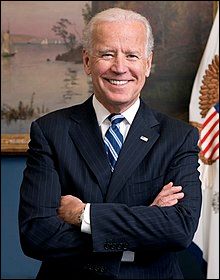
Former Delaware Sen. Joe Biden’s old seat is up for selection today.

Sept. 15, 2020 — The regular election state primaries conclude today as voters in Delaware and Rhode Island, two of America’s smallest states, vote to close out nomination season.

Louisiana holds its primary concurrent with the general election, so voters there will either elect officials outright with majority support or send the top two finishers into Dec. 5 runoff elections. We will also see a special jungle US Senate primary in Georgia concurrent with Election Day, and voters in the Atlanta area will go to the polls on Sept. 29 to choose a short-term successor to the late Rep. John Lewis (D-Atlanta). Otherwise, nominations throughout the 50 states are complete.

As Joe Biden runs for president, the Delaware US Senate seat he held for 36 years also appears on the ballot in this election. Biden resigned the position when he became vice president, just after being elected to his seventh term in the body. Then-Gov. Ruth Ann Minner (D) appointed Broadcasting Board of Governors member and Biden confidant Ted Kaufman (D) to replace the outgoing senator, and he served the first two years of the term but chose not to enter the 2010 special election. In that vote, voters selected a new senator to serve the final four years of that existing term.

The special election winner was then-New Castle County Executive Chris Coons (D), who was nominated in party convention and then defeated consultant Christine O’Donnell (R), 57-40 percent. This proved to be a wacky race where rumors abounded, and even a campaign commercial aired suggesting that O’Donnell believed herself to be a witch.

Sen. Coons was then re-elected to a full term in 2014, a 56-42 percent victory over Republican Kevin Wade. He now stands for a second six-year term this year and appears as a lock for re-election. Today, Sen. Coons faces a relatively minor Democratic primary challenge from business consultant Jess Scarane who had raised over $323,000 through the Aug. 26 pre-primary filing deadline. There is no indication that this election will be close either tonight or in the general election.

A pair of Republicans are on the ballot, attorney and Marine Corps veteran James Martino and Trump campaign activist Lauren Witzke. Whoever wins tonight will only be a small threat to Sen. Coons in the general election.

Gov. John Carney (D) runs for a second term, and he, too, should see little in the way of serious competition. He has one opponent today, Army veteran David Lamar Williams, Jr. (D), a minor candidate. Seven Republicans are in this gubernatorial primary race, including two state senators, Colin Bonini (R-Magnolia) and Bryant Richardson (R-Sussex County). Whoever wins the primary tonight begins as a heavy underdog to Gov. Carney in a very short general election cycle.

Continue reading

A Polling Comparison

By Jim Ellis

Neck-and-neck polling in a few key battleground states between President Donald Trump and former vice president Joe Biden shows interesting parallels to the 2016 race between Trump and Hillary Clinton.

Sept. 10, 2020 — With a plethora of presidential polls being released every week providing sometimes radically diverse results, it is often difficult to draw a clear picture of where the electorate is heading.

The conventional wisdom and preponderance of polling trends suggest that Joe Biden is leading the presidential race, but that President Trump is making a comeback, and the race is beginning to show some of the same characteristics found in 2016.

Three of the key states that baffled the political pollsters four years ago were Michigan, Pennsylvania, and Wisconsin. As we will remember, President Trump was expected to lose them all but scored close upset victories in each place.

The aggregate group of 2016 pollsters missed in each of the three states and the Real Clear Politics polling archives still publicly maintains all of those survey results. Therefore, we have the historical data to draw clear parallels between then and now.

In Wisconsin, 33 polls were taken during the election cycle and only one, from the Trafalgar Group at the end of the campaign season, placed Trump in front. A total of 62 polls were conducted in Pennsylvania with only three, again including a Trafalgar poll, projecting the future president into the lead. In Michigan, 42 polls were publicly released with Trump ahead in just two.

Though it is not generally statistically significant to average polling results because the polling methodologies, and certainly sample sizes, are very different, doing so does give us a guide as to the error factor that was present in 2016, and possibly a glimpse into what might exist this year.

In Wisconsin, the average Hillary Clinton lead advancing into the general election was 6.5 percentage points. With a 0.7 percent win for Trump, the overall error factor became a whopping 7.2 percent. The Pennsylvania numbers were closer but still a significant miss. Clinton’s average lead heading into Election Day was 2.1 percent and the president won there by the same 0.7 percent that he carried Wisconsin. Therefore, the Keystone State error factor was 2.8. Michigan was a similar story. Error factor: Clinton plus-3.6 percent. Trump victory margin: just 0.3. Total Michigan error factor: 3.9.

Continue reading

Senate Sleepers in Minnesota
and South Carolina

By Jim Ellis

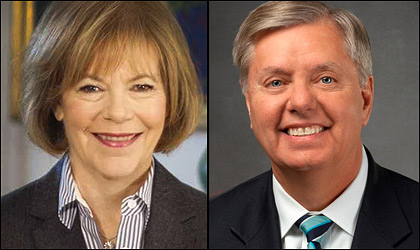
Are incumbents Sen. Tina Smith (D-MN), left, and Sen. Lindsey Graham (R-SC) in re-election trouble?

Sept. 8, 2020 — At the beginning of the 2020 election cycle, it appeared that Sens. Tina Smith (D-MN) and Lindsey Graham (R-SC) were set for re-election. That no longer appears to be the case.

Polling is now consistently showing close races in the two states, and Sen. Smith’s recent comments about the police have seemingly moved her re-election campaign closer to the toss-up category according to a just-released Harper Polling survey.

Looking at the HP data (Aug. 30-Sept. 1; 50 likely Minnesota voters via live interview), Sen. Smith’s ballot test edge has dropped to just 43-41 percent over former US Rep. Jason Lewis (R).

In May, Harper found Sen. Smith posting a 46-35 percent advantage over Lewis. After this release, Public Policy Polling forecast a 48-39 percent split toward the end of July. Lastly, Emerson College published what appears to be precursor data to the latest Harper findings. The Boston-based university poll (Aug. 8-10; 73 likely Minnesota voters) found a three-point split between the two contenders, 48-45 percent, again in Sen. Smith’s favor.

To the southeast of liberal Minnesota, in conservative South Carolina, veteran Sen. Lindsey Graham (R) has also fallen into a competitive contest with former state Democratic Party chairman Jaime Harrison, who had raised an incredible $29 million for his smaller state race through the end of June.

The most recent poll we have seen from the Palmetto State was released at the beginning of August. Quinnipiac University (July 30-Aug. 3; 91 registered South Carolina voters) detected a 44-44 percent tie between Sen. Graham and Harrison. From mid-July through the beginning of August, six surveys were conducted, including the Quinnipiac study, and Sen. Graham’s average lead was only 2.8 percentage points.

Continue reading

The Presidential Debates Loom

By Jim Ellis

Sept. 1, 2020 — The Presidential Debate series looms on the political horizon, and controversy is beginning to swirl even though the first forum is still a month away.

The first in a series of currently three presidential debates is set for Sept. 29.

House Speaker Nancy Pelosi said last week that Democratic nominee Joe Biden shouldn’t debate President Trump. “I wouldn’t legitimize a conversation with him, nor a debate in terms of the presidency of the United States,” she was quoted as saying at a news conference.

At the end of July, former Bill Clinton news secretary Joe Lockhart wrote for CNN.com that Biden shouldn’t debate the president. “Whatever you do, don’t debate Trump. Trump has now made more than 20,000 misleading or false statements according to the Washington Post,” Lockhart penned as public advice to Biden.

Some on the Republican side argue that these Democratic leaders are beginning to lay the groundwork for Biden to avoid the debates because of concerns their candidate would fare poorly opposite President Trump.

For his part, Biden says he will debate the president, and become his own “fact checker on the floor.” He will also begin holding campaign events after Labor Day. In an Aug. 28 interview with the Associated Press, Biden said he’ll “meet people where it matters – not at irresponsible rallies or staged for TV to boost egos, but real people’s communities, in real local businesses, in their lives.” Biden further said he’ll “hold events consistent with the state rules about crowd sizes and other regulations.”

The first debate is scheduled for Tuesday, Sept. 29, the second on Thursday, Oct. 15, and the final forum culminates a week later on Oct. 22. The vice presidential debate between incumbent Vice President Mike Pence and Sen. Kamala Harris (D-CA) is scheduled for Wednesday, Oct. 7.

The debates have proven important in the past and always draw large audiences. According to the Pew Research Center, even the first televised debate, between then-Sen. John F. Kennedy and then-Vice President Richard Nixon, drew over 66 million viewers usually on black and white televisions, at a time when the US population was just under 181 million people, or approximately 55 percent of today’s total populace.

Continue reading