Tag Archives: Georgia

Pence Suspends Campaign; Allred Leads in Texas Poll; Boebert Struggling in Colorado; Gimenez Jumping Into FL-28 Campaign; Georgia Governor Calls Special Session

By Jim Ellis — Tuesday, Oct. 31, 2023

President

Former Vice President Mike Pence / Photo by Gage Skidmore

Mike Pence: Suspends Campaign — At the Republican Jewish Coalition event in Las Vegas on Saturday, former Vice President Mike Pence, saying it is evident that “now is not my time” suspended his 2024 presidential campaign. Pence follows former US Rep. Will Hurd and commentator Larry Elder in dropping out of the presidential race. Upon his exit, Pence did not endorse another candidate as Hurd did, who now supports former UN Ambassador Nikki Haley; Elder is backing former President Donald Trump.

Senate

Texas: Rep. Allred Leads in Dem Primary Poll — YouGov, polling for the University of Texas, conducted a new statewide poll of the Lone Star electorate (Oct. 5-17; 1,200 registered Texas voters; 568 likely Republican primary voters; 409 likely Democratic primary voters; online; weighted sample). In testing the Senate Democratic primary, the pollsters found US Rep. Colin Allred (D-Dallas) leading state Sen. Roland Gutierrez (D-San Antonio), 2022 congressional candidate Sherri Taylor, former Nueces County District Attorney Mark Gonzalez, and state Rep. Carl Sherman (D-Dallas) with a 21-10-3-2-2 percent, respectively. Nine additional names were also included on the ballot test question.

Though Rep. Allred, the Democratic establishment-backed candidate, has a lead in polling and certainly fundraising, the large field and his underwhelming early support total suggests it will be difficult for him, or any other candidate, to win the primary outright on March 5. Therefore, advancing to a May 28 runoff election between the top two Democratic primary finishers at this time appears a likely result.

House

CO-3: Boebert Primary Opponent Gaining Steam — Attorney Jeff Hurd, one of four Republicans challenging Rep. Lauren Boebert (R-Silt) for re-election in Colorado’s western slope 3rd District, has earned a major endorsement. Former two-term Gov. Bill Owens (R-1999-2007), the last Republican to win the office, announced his support for Hurd late last week.

Rep. Boebert will be hard-pressed to win re-election. Surviving in the closest campaign of 2022 (a 546-vote margin), her former opponent, ex-Aspen City Councilman Adam Frisch (D), is returning for a re-match and has already raised a whopping $8.5 million toward his 2024 campaign. A strong Republican primary challenge from Hurd will now be interesting to watch. The Colorado primary is scheduled for June 25, 2024.

FL-28: Rep. Gimenez Leads in New Poll — Retired Navy Cmdr. Phil Ehr (D), who twice ran unsuccessfully for Florida’s northernmost district (FL-1; losing general election to Rep. Matt Gaetz in 2020; losing Democratic primary in 2018) is now attempting to win the state’s southernmost district, FL-28. A new Change Research poll, conducted for Ehr’s fledgling campaign (Oct. 13-17; 500 likely 2024 FL-28 general election voters; online) finds Rep. Carlos Gimenez (R-Miami) leading Ehr, 45-32 percent.

There has been speculation that Rep. Gimenez, a former Miami-Dade County mayor who was ineligible to seek re-election to a third term in 2020, may eschew re-election to the House in order to oppose the individual who succeeded him, Miami-Dade County Mayor Daniella Levine Cava (D).

Rep. Gimenez first won his US House seat in 2020, defeating then-Rep. Debbie Mucarsel-Powell (D), who is now running for US Senate. He was re-elected in 2022 with a strong 64-36 percent victory margin. The 28th District, which stretches from Miami to Key West, is politically marginal. The FiveThirtyEight data organization rates the seat as R+4. Dave’s Redistricting App calculates a different partisan lean, however. Dave’s App finds the Democrats holding a 51.0 to 47.6 partisan advantage. The Daily Kos Elections site ranks the seat as the 12th most vulnerable seat in the Republican Conference.

Georgia: Governor Calls Special Session — In order to comply with last week’s federal district judicial ruling that declared the Georgia congressional and state legislative maps as illegal racial gerrymanders, Gov. Brian Kemp (R) has scheduled a special legislative session for Nov. 29 for purposes of drawing new congressional and legislative boundaries. Republicans may appeal the ruling, however, which could delay the process. Therefore, it remains unclear if any new map will take effect in time for the 2024 election.

RFK Jr.’s Equal Impact; Casey Maintains Lead in PA; Blake Masters Enters Open Arizona Race; Redistricting Map Struck Down in Georgia; Sarbanes to Retire; North Carolina News

By Jim Ellis — Monday, Oct. 30, 2023

President

Robert F. Kennedy Jr. / Photo by Gage Skidmore

RFK Jr.: Equal Impact Effect — Before Robert F. Kennedy Jr. announced his Independent candidacy, President Joe Biden and former President Donald Trump were generally at parity in national polling, with either contender clinging to a small lead or being deadlocked. We see two new national surveys adding Kennedy to their questionnaire, yet the leader still records the same type of close margins. Dr. Cornel West is included in some polls as another Independent candidate, but it is doubtful that he can qualify for enough state ballots to become a viable factor.

The HarrisX poll (Oct. 16-23; 3,029 US registered voters; online) sees Trump leading Biden and Kennedy, 40-38-18 percent. In what is now an unrealistic head-to-head pairing between Trump and Biden, Trump’s edge is four percentage points.

Suffolk University (Oct. 17-20; 1,000 US registered voters; live interview) sees a similar Biden-Trump-Kennedy 38-37-14 percent split. If the two major party candidates were only running against each other, the Suffolk data finds a 43-41 percent division in President Biden’s favor. Again, with such small margins that don’t greatly change, it appears that Kennedy may be pulling almost equally from both major party candidates.

Senate

Pennsylvania: Sen. Casey Maintains Lead — Franklin & Marshall College again surveyed the Keystone State electorate (Oct. 11-22; 873 registered Pennsylvania voters; live interview & online) as they do several times per year, and while this particular sampling period is long the US Senate ballot test results are consistent with other previously published surveys. According to the F&M data, Sen. Bob Casey Jr. (D) has a 46-39 percent advantage over Republican former hedge fund CEO David McCormick (R). Sen. Casey runs four points ahead of President Biden within the same sampling universe, while McCormick’s support percentage is three points below that of former President Trump.

House

AZ-8: Blake Masters Enters Open Race — As expected when this seat opened, 2022 Republican US Senate nominee Blake Masters announced that he will run for the 8th District seat in the 2024 election. Also in the race is Abe Hamadeh, the Republican attorney general nominee who lost the 2022 statewide race by less than 300 votes. Retiring US Rep. Debbie Lesko (R-Peoria), has already endorsed state House Speaker Ben Toma (R-Paradise), but Toma has yet to announce his congressional candidacy.

Masters’ chances of coming through a crowded primary with plurality support are good. The eventual Republican will be a heavy favorite in the general election. The FiveThirtyEight data organization rates AZ-8 as R+22. The Daily Kos Elections site ranks the seat as the 77th most vulnerable district in the Republican Conference.

Georgia: Federal Judge Strikes Down Congressional Map — In a developing story, a federal judge has struck down the Georgia congressional map as a racial gerrymander. The main district in question is Rep. Rich McCormick’s (R-Suwanee) 6th CD. It remains to be seen what steps the state takes. The judge is giving the lawmakers until Dec. 8 to redraw the map.

MD-3: Rep. John Sarbanes (D) to Retire — Nine-term Maryland US Rep. John Sarbanes (D-Baltimore) announced late last week that he will retire from the House after this current Congress ends. In a statement, Sarbanes said, “ … before coming to Congress, I also found great reward in working with nonprofits, volunteering and otherwise contributing to my community. That too is a powerful form of public service. For some time now, I have found myself drawn back to that kind of work — wanting to explore the many opportunities to serve that exist outside of elected office. With that in mind, I have decided not to seek re-election in 2024.”

Sarbanes’ departure will ignite a major Democratic primary for the open seat. The FiveThirtyEight data organization rates this seat as D+14. President Biden carried the district with a 62-36 percent margin. The Daily Kos Elections site ranks MD-3 as the 79th most vulnerable district in the Democratic Conference. In a presidential election year, this race will be decided in what promises to be a crowded Democratic primary.

NC-14: Rep. Jackson (D) to Run for Attorney General — As expected, Rep. Jeff Jackson (D-Charlotte), saying a Democrat cannot win the newly drawn 14th District, announced that he will not seek re-election and instead is now a candidate for the open attorney general’s position. In a video showing him as a boxer giving and taking punches, Jackson said he is targeting corrupt politicians, big corporations, and organized crime in his run for the top law enforcement job in the Tar Heel State.

As in the nine other Republican districts on the new congressional map, the new 14th that begins in Charlotte and moves west to encompass all or parts of five other counties, will likely elect the GOP nominee. All indications point to state House Speaker Tim Moore (R-Cleveland County) as Rep. Jackson’s eventual successor.

North Carolina: Redistricting Passes into Law; Ex-Rep. Walker Will Run — Both the North Carolina House and Senate passed the new congressional and state legislative maps, thus enacting them into law as Gov. Roy Cooper (D) has no veto authority over redistricting legislation. The map favors Republicans in 10 of the state’s 14 districts.

In Rep. Kathy Manning’s (D-Greensboro) new 6th District, which voted for Donald Trump by a 57-41 percent split according to the Daily Kos Elections statisticians, former US representative and 2022 US Senate candidate Mark Walker (R) announced that he will leave the governor’s race and instead run for this new district. For three terms, Walker represented a similar 6th District. He chose not to run in 2020 after a court-drawn map made NC-6 a heavily Democratic seat that Manning was able to claim.

Polling Projects Electoral College Win for Trump; California Senate Jockeying; New Jerseyans Want Menendez Out; New Candidate in MN-2; GOP Candidate Emerges in NC

By Jim Ellis — Monday, Oct. 23, 2023

President

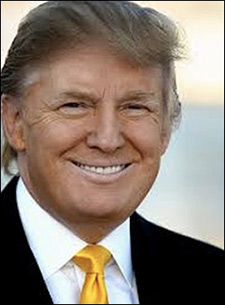
Former President Donald Trump

Trump’s Numbers: Polling Finds 291 Electoral Votes — According to a series of concurrently conducted independent polls, former President Donald Trump today would lead in enough states to provide him with 291 electoral votes, or 21 more than required to unseat President Joe Biden. Morning Consult, polling for Bloomberg News in various targeted states, projects Trump to leads in Arizona (+4), Georgia (+5), North Carolina (+4), Pennsylvania (+1), and Wisconsin (+2).

Last week, Emerson College also found Trump holding an advantage in Pennsylvania and Wisconsin. Simultaneously, the Marketing Resource Group saw Trump running seven points ahead in Michigan, but the more current Morning Consult/Bloomberg data shows the two candidates tied before the Wolverine State electorate. It is these aforementioned states that will make the difference nationally.

Robert F. Kennedy Jr., now running as an Independent candidate, was not tested in the MC/Bloomberg survey series.

Senate

California: Sen. Butler Out; LA Anchorwoman I — Appointed California Sen. Laphonza Butler (D) announced yesterday that she will not run for a full term next year. Despite having more than a year in office after replacing the late Sen. Dianne Feinstein (D), the early March 5 all-party jungle primary allowed her little time to begin competing against Reps. Adam Schiff (D-Burbank), Katie Porter (D-Irvine), Barbara Lee (D-Oakland) and former baseball great Steve Garvey (R), all of whom have a major head start in fundraising and campaign organization.

Los Angeles news anchor Christina Pascucci (D), on the other hand, became a late entry into the crowded US Senate contest, but said she is getting into the race “ … because I have to fight for what I believe is possible for California and for this country.” Pascucci describes herself as a “moderate Democrat.”

New Jersey: Constituents Favor Menendez Resignation — A newly released Fairleigh Dickinson University poll of the Garden State electorate (Aug. 6-14; 813 New Jersey adults; live interview & text) finds that 70 percent of the respondents, including 71 percent of Democrats, believe that indicted Sen. Bob Menendez (D) should resign his seat even without him having a chance to defend himself in court.

So far, Sen. Menendez has been adamant about not resigning over the federal charges that accuse he, his wife, and several associates of engaging in bribery. While the senator is not forced to leave office, polls such as this clearly suggest that he will be a severe underdog in a June Democratic primary race against US Rep. Andy Kim (D-Moorestown) and potentially several others.

House

MN-2: New Republican Candidate — The GOP leadership is making another attempt to unseat Minnesota US Rep. Angie Craig (D-Prior Lake), but this time it is likely they will have a new standard bearer. Former federal prosecutor Joe Teirab announced his congressional candidacy late last week. In the past two elections, Rep. Craig has defeated military veteran Tyler Kistner but with an average vote percentage of only 49.5 percent. Republicans hope a fresh face will be able to get the extra support to top the three term House incumbent.

The FiveThirtyEight data organization rates MN-2 as D+1, while the Daily Kos Elections site ranks the southeast Minnesota congressional district as the 14th most vulnerable seat in the Democratic Conference.

Governor

North Carolina: New Republican Candidate Emerges — Attorney Bill Graham (R), who says he will invest at least $5 million of his own money into his statewide race, announced his candidacy for the state’s open governor’s position. Many in the Republican establishment doubt that the early front runner, Lt. Gov. Mark Robinson, can win a protracted campaign, which is sure to feature a barrage of attack ads portraying him as an extremist.

The leading Democratic nominee is Attorney General Josh Stein, but he only won the 2020 re-election campaign with 50.1 percent of the vote. Therefore, the Republicans will be competitive in the governor’s race regardless of who they nominate. Gov. Roy Cooper (D) is ineligible to seek a third term.

The Kennedy Factor

By Jim Ellis — Thursday, Oct. 19, 2023

President

Robert F. Kennedy Jr.

RFK Jr.: Independent Impact — Since Robert F. Kennedy Jr. announced that his presidential candidacy would move to the Independent line and away from the Democratic primary, it has been an exercise to predict which states his candidacy might detract from either President Joe Biden or former President Donald Trump.

Though Kennedy is stating he will try to win the race as an Independent, the chances of him doing so are slim. Ross Perot, on the Reform Party ballot line in 1992, was the last minor party candidate who was significant in a modern-era presidential race. Perot received 18.9 percent of the national popular vote but won no states, meaning zero electoral votes. Bill Clinton won the 1992 election with 43.0 percent nationally and 370 electoral votes.

The last minor party candidate to secure electoral votes was at the time former Alabama Gov. George Wallace running on the American Independent Party line, back in 1968. He carried five states (Alabama, Arkansas, Georgia, Louisiana, and Mississippi) for a total of 46 electoral votes. Richard Nixon won the ‘68 election with 43.4 percent of the popular vote and 301 electoral votes.

Assuming Kennedy also fails to win a state, there are certain places where his candidacy could still affect the outcome. This means capturing enough votes to tip a state from one of the major party candidates to the other. Using the 1992 race as a model for 2024 because of the minor candidate factor, overlaid with current voting trends, it appears that six states could be in the “Kennedy tip” category.

Such includes four from Biden to Trump; one from Trump to Biden; and one Trump “gettable” state to Biden. Thus, the Kennedy influence could be enough to slightly tip the national general election to Trump or into the House of Representatives to break a tie.

The four states that could flip to Trump are Arizona, Georgia, Nevada, and New Hampshire. In 1992, former President George H.W. Bush carried Arizona, and to win this election Trump is virtually forced to also reverse his fortune from 2020 and carry the Grand Canyon State. In ’92, Bush won the state with a two-point margin over Clinton, while Perot attracted 23.8 percent. While the ’92 race occurred decades ago, the in-play states still exhibit the potential to provide a large number of votes to a minor party or Independent candidate, especially one with universal name identification.

Georgia is a state that must go to Trump if he is to have any chance of winning the general election. In 1992, Clinton carried the Peach State by less than one percentage point, while Perot garnered 13.3 percent of the vote.

Clinton carried the Silver State of Nevada with a three-point margin while Perot’s vote total was 26.2 percent. Should Kennedy also finish within the Perot vote total realm, it is reasonable to believe that more than a net three percentage point margin would come from President Biden’s total, which would likely be enough for Trump to win Nevada and add six electoral votes to his total.

New Hampshire, rated as one of the nation’s states with the greatest swing potential, also falls into the Kennedy tip category. Clinton defeated President Bush here by 1.3 percentage points in ’92, with a 22.6 percent vote factor for Perot. Again, if Kennedy were able obtain well over 20 percent in New Hampshire, a New England state with a strong history of supporting his family, that could tip the state’s four electoral votes to Trump. Only two points more from Kennedy’s aggregate would have to come from Biden’s total for Trump to win the state.

Alaska, however, with its Ranked Choice Voting system, could be a state that Kennedy’s presence could tip to Biden. The Ranked Choice Voting system has played to the Democrats’ favor here, and it may so again should the Kennedy factor be high enough to force the race leader below the 50 percent mark in order to jump-start the ranking procedure.

Finally, Wisconsin will be a major state in the ’24 election. In 1992, it also demonstrated a higher than average vote for Perot (21.5 percent). Clinton carried Wisconsin with a 4.3 v percentictory margin. These totals suggest that if Kennedy finished in the same realm as Perot in the Badger State, that would likely help President Biden.

The above scenario, assuming all other states voted as they did in the 2020 presidential race, would actually create an electoral college tie. Adding Arizona, Georgia, Nevada, and New Hampshire and giving up Alaska would give both candidates 269 electoral votes, meaning the election would be decided in the House of Representatives.

Kennedy’s performance in these and several other states could well change the trajectory of the entire presidential race and becomes just one more unique factor in this so far unpredictable campaign.

RFK Jr.’s Declaration to Run as an Independent Could be a Presidential Race Game-Changer

By Jim Ellis — Wednesday, Oct. 11, 2023

President

Robert F. Kennedy Jr.

Kennedy’s Independent Gambit: Potential Game-Changer — The 2024 presidential campaign may have dramatically changed this week. Though Robert F. Kennedy Jr.’s announcement to run as an Independent was expected, it is unclear just how he will affect next year’s general election.

At a rally event in Philadelphia on Monday, Kennedy officially declared his presidential candidacy as an Independent. He answered two major questions with his speech. First, he will run as an Independent candidate and not as the nominee of a minor party. Second, he is not running to be a spoiler in a race between President Joe Biden and former President Donald Trump but will campaign to win.

Saying his “smoldering movement” wants to “ … reclaim democracy, resurrect the promise of our republic, the promised land,” Kennedy ended his Democratic primary challenge to President Biden and now moves to implement a general election strategy.

He will first face an uphill battle to secure ballot placement in all 50 states and the District of Columbia. This is an expensive proposition, but time, rather than money, might be his bigger obstacle since the window to accomplish the large task is small.

Though Kennedy may be in the race to win, the chance of any non-major party nominee or candidate winning a majority of Electoral College votes is a long shot to say the least, even for a man named Kennedy.

It does appear, however, that he will attract a significant number of votes, which could throw a key state to either President Biden or former President Trump, thus altering the national campaign outcome.

In looking at a Kennedy candidacy, we analyze which states might be receptive to his campaign. Naturally, considering the Kennedy family history in New England, he could see some success in a couple of the northern domains. While the Kennedy home state of Massachusetts would still be a lock for President Biden, its neighbor to the north, New Hampshire, could be a different story.

In 2020, Biden scored a 52.7 – 45.3 percent victory margin over Trump (a spread of 59,277 votes) in the Granite State, with third party or Independent candidates attracting two percentage points (translating into a raw number of 15,625 votes). If Kennedy could approach the 10 percent range (approximately 80,000 votes based upon New Hampshire’s 2020 turnout figure), the outcome could change from Biden winning the state to Trump. Under this model, Biden would have to lose 14 percent of his aggregate vote to Kennedy while Trump could lose no more than five percent of his total.

If Kennedy’s presence in the race would throw New Hampshire to Trump, the state’s four electoral votes switching might make a difference. For example, a combination of Georgia, Arizona, Nevada, and New Hampshire switching to Trump would give the former president 272 electoral votes, or two more than the bare minimum required to secure the presidency.

Maine could be another state where Kennedy would have the ability to draw some votes. In addition to the state splitting its electoral votes to the point where the individual congressional districts carry their own tally, Kennedy scoring into double digits in Maine’s 1st District could transform the final vote.

Even though the aggregate 1st District vote would still go to Biden, the closer finish coupled with a solid Trump win in the 2nd CD, might be enough to cast the statewide total Trump’s way and award the Republican three electoral votes instead of the one he has received in the past two elections.

Alaska is a place where the Kennedy presence could turn a state President Biden’s way. In 2020, Trump carried the state with 52.8 percent of the vote as compared to Biden’s 42.8 percent. Under the state’s Ranked Choice Voting system, the tables could turn if the leading candidate drops below 50 percent.

In 2020, 4.4 percent of the Alaska electorate chose a minor party or Independent candidate. Kennedy’s candidacy could easily see the latter percentage increase rather substantially, and most of his vote coming from the Trump total would force multiple rounds of Ranked Choice voting. This, in the end, would almost assuredly favor President Biden.

Kennedy already has two key attributes that almost none of the minor party or Independent candidates have, which is universal name identification and access to enough money to run a credible outreach campaign. Having these two points in his favor makes him a different type of Independent candidate, and thus should have the ability to attract a higher number of votes when compared to past non-major party candidates.

How the Kennedy candidacy ultimately affects the 2024 presidential race is clearly undetermined at this time, but he will have the opportunity of making his mark on this election.

Redistricting Update – Part I

By Jim Ellis — Tuesday, Oct. 3, 2023

House

A look at how things might play out in key states in the redistricting tug of wars

Six States: Both Parties Affected — Court rulings in two congressional redistricting states will likely be handed down within the next few days, and another’s legislature will soon begin to redraw their current boundaries.

The Alabama special master is mandated to report to the three-judge panel that ordered the redraw during next month’s first week. The New Mexico state Supreme Court directed the assigned lower court in Roswell to report its decision during the first few days of October. The North Carolina legislature is going into special session during the first week of October to redraw their maps.

Today, we look at the situation in the first six states that may see another round of congressional redistricting, those from Alabama through New York. Tomorrow, we will look at the remaining five domains from North Carolina through Wisconsin.

• Alabama: The US Supreme Court’s decision to uphold the federal three-judge panel’s ruling that disqualified the legislature’s map means that the court-appointed special master will deliver a final map to the court on or around Oct. 3. The released three public options are similar.

All would pair Reps. Jerry Carl (R-Mobile) and Barry Moore (R-Enterprise) in one southern Alabama district that would stretch the width of the state from Mississippi to Florida. A new majority minority 2nd District would then be created and anchored in Montgomery County. The end result will be a net gain of one seat for the Democrats.

• Florida: The lower court ruling declaring the Florida congressional map unconstitutional means the state will likely be forced to redraw the map at some future point. The state and the plaintiffs agreed the redraw would only affect the north Florida sector and concentrate on whether the former 5th CD, that previously stretched from Tallahassee to Jacksonville, will be reconstructed in some manner. The state is appealing the ruling, so we can count on seeing significant time elapse before this issue is decided.

The members’ districts most affected would be Reps. Neal Dunn (R-Panama City), Kat Cammack (R-Gainesville), and Aaron Bean (R-Fernandina Beach). The Florida primary is not until Aug. 20, 2024, so enough time remains for the map to be redrawn before the next election. Other regional members could also be tangentially affected. The concluding outcome would likely be a net gain of one seat for the Democrats.

• Georgia: A lawsuit challenging the state’s 6th District (Rep. Richard McCormick; R-Suwanee), claims that the Atlanta metro area has been gerrymandered to deny African Americans another seat. This case will require very significant time to maneuver through the entire legal process. Therefore, it is probable that any final judicial decision will not come before the 2024 election.

• Louisiana: The Louisiana situation is similar to that of Alabama’s. SCOTUS’ Alabama decision could force a redraw here, too, but no action has yet been taken. The state elections, including the governor’s office, are scheduled for Oct. 14, with a runoff on Nov. 18 for the undecided races. Candidates securing majority support are elected outright in the first election. Therefore, no redistricting action will occur until well after the state elections are concluded, and likely after the first of next year.

Considering Louisiana’s unique election system that holds its first regular vote concurrent with the general election, plenty of time remains for a court to force a legislative redraw of the congressional lines, or eventually appoint a special master to make the changes. The most apparent vulnerable reconfiguration member is Rep. Julia Letlow (R-Start). Should a redraw occur before the 2024 election, the Democrats would likely gain one seat in this delegation.

• New Mexico: Republicans have filed suit here, claiming the map is a partisan gerrymander. The New Mexico state Supreme Court has directed the lower court in Roswell to render a decision this week — the first week of October. The ruling’s losing party will undoubtedly appeal to the state Supreme Court. If they decide a redraw is in order, expect it to happen before the 2024 election.

The New Mexico primary is scheduled for June 4, 2024, with a yet to be determined candidate filing deadline, though it will be sometime in February. A redraw would give the Republicans a better chance of regaining the state’s southern congressional seat.

• New York: Currently, the New York map is an interim court draw that the legislature, with input from an appointed commission, can replace. It is expected the Democratic legislature will make a move to draw a more favorable map. Last time, the legislature attempted to draw a 22D-4R map, but even the Democratic controlled courts ruled that such was a partisan gerrymander. Therefore, when they make boundary changes, the map drawers will likely be more cognizant of going too far since Republicans are sure to repeal.

Still, Democrats could make significant gains under a new map. Even under the current plan, a two-seat gain appears to be a minimum. It would not be surprising to see the Democrats convert three or four seats here in the coming 2024 election.

Georgians Losing Faith

By Jim Ellis — Tuesday, Sept. 19, 2023

President

Trump: Legal Challenges Stir Divisiveness — As we know, former President Donald Trump has been under a barrage of legal attacks in four jurisdictions, and a new poll suggests that at least one key state’s electorate isn’t responding well.

Former President Donald Trump / Photo by Gage Skidmore

Trump now faces 91 different charges and three of the trials are scheduled to begin in early March, not coincidentally, close to Super Tuesday, March 5. There is a strong chance that the Trump legal team will be able to delay many of the proceedings, but the possibility remains that voters will see one of the major candidates spending significant campaign time in a defendant’s chair.

A new Rasmussen Reports survey (conducted for “The Right Way” conservative blog; Sept. 8-11; 1,061 likely Georgia voters) suggests that Peach State respondents are losing trust in their electoral and legal systems as a result of the post-2024 election happenings and the Trump prosecutions.

When asked if the Georgia election system is “rigged,” 62 percent responded affirmatively. Additionally, a solid majority of 55 percent claim to be “worried that cheating will take place in the 2024 election.”

These are numbers not typically seen in other places, but the large amount of news coverage devoted to the Trump legal situation is likely motivating more people to give the situation and associated issues greater attention.

Georgia is the most important state on the 2024 Electoral College map. It is virtually impossible for a Republican to win the White House under the polarization we are seeing nationally without converting this populous Deep South domain. Only a handful of states are regarded as “swing,” with most analysts believing the electorates in as many as 45-48 states will vote as they did in 2020.

If these Rasmussen numbers are even in the outer realm of accuracy, the campaigns may have a difficult time convincing people to vote in the record proportion as we saw in the last two presidential elections.

An example of this occurred in the 2020 Georgia Senate general election runoffs where the strongest Republican counties did not return for the second election in the same proportion as did the Democrats from their strongest voting domains. It is believed that the Trump forces loudly claiming the election was fraudulent led to a slightly decreased GOP turnout, which proved enough to help elect Democratic Sens. Jon Ossoff and Raphael Warnock.

Though the Senate runoff experience would conclude that a lack of electoral trust would hurt the Republicans more than the Democrats, some of the remaining Rasmussen questions suggest we could see a backlash over the legal system going overboard, at least in many peoples’ opinion, against Trump.

According to the Rasmussen results, a strong respondent majority of 56 percent say they believe that Fulton County District Attorney Fani Willis is prosecuting Trump “because of politics.” A 53 percent majority thinks the legislature should take action to stop Willis’ prosecution, while 51 percent even believes Willis, herself, should be investigated.

There is no question that the Trump legal situation is wreaking havoc across the presidential campaign. We have seen the strange situation where the former president’s polling numbers have actually increased rather substantially since all of the indictments were brought forth.

This phenomenon is not only happening in the Republican primary. Over the past two weeks, Trump has posted some of his best general election numbers of the election cycle and has developed a slight lead over President Joe Biden according to a half-dozen recent political pollsters, some of which come from major liberal media outlets such as CBS News and CNN.

It is difficult to tell if this polling streak and negative reaction to the government bringing almost 100 charges against the former president is a short-term blip or whether it has long lasting legs.

If voters, after seeing the evidence and the court proceeding, which inevitably will be televised, believe the charges to be frivolous or politically driven, we could see a situation where Trump gains votes as a statement against the legal establishment. If the proceedings convince people that crimes have been committed, then expect President Biden to win re-election going away.

There is no question that the 2024 presidential campaign will produce America’s most unique all-time election.

Trump Way Up in Georgia

Donald Trump continues to defy American political logic as is evidenced in a new Atlanta Journal-Constitution primary poll. (Go to AJC story)

By Jim Ellis — Thursday, Aug. 31, 2023

President

Trump: Georgia Numbers Jump — Former President Donald Trump continues to defy American political logic as is evidenced in a new Atlanta Journal-Constitution primary poll of the Georgia Republican electorate.

Once again we see polling evidence of Trump gaining support after being indicted. This particular study first went into the field one day after the former president and his associates were officially accused of breaking Georgia election law.

The University of Georgia’s School of Public and International Affairs regularly conducts the research studies for the AJC. According to their just-released survey (Aug. 16-23; 807 likely and probable Republican primary voters; live interview), Trump captures 57 percent of the Republican primary respondents’ support.

Florida Gov. Ron DeSantis is a distant second at 15 percent and no other contender even reaches the five percent support threshold.

Since pollsters began testing the Georgia 2024 Republican presidential race, this current AJC poll reveals Trump’s strongest standing within the Peach State electorate. At the end of March, for example, WPA Intelligence detected a one-point DeSantis lead over Trump at 37-36 percent.

It is the crosstabs, however, that tell an even more interesting story. While Trump largely lost the 2020 presidential race because too many female suburban voters who supported him in 2016 turned toward Joe Biden four years later, this poll surprisingly projects his standing among female respondents who plan to vote in the Georgia Republican primary at 57.9 percent, an even stronger number than their male counterparts at 54.5 percent.

In fact, of the seven categories and 23 segments within the AJC respondent sample, Trump leads in all categories and fails to claim the top spot in just one segment. The seven categories are gender, race, age, education level, ideology, income, and partisan persuasion. The 23 segments are response cells within those categories.

A small number of Democrats (number undisclosed) responded that they intended to vote in the Republican presidential primary. Not surprisingly, this is the group in which Trump fails to lead.

Former UN Ambassador Nikki Haley is the favorite among the small number of Democrats who plan to cast their ballot in the GOP primary. In this category, Haley scores 26.1 percent support with New Jersey former Gov. Chris Christie posting 21.7 percent support. Conversely, Trump attracts only 4.3 percent among Democratic Republican primary voters.

He does rather surprisingly lead among those who identify as liberals at 30.0 percent and who say they will vote in the Republican primary. Trump holds a 12.5 point edge over Haley within this segment, and a 17.5 point advantage over Christie.

Trump’s strongest segment is found with those making between $25,000 – $49,999 annually. Here, the former president captures a whopping 76.0 percent support factor.

Though leading among the wealthiest in the sampling pool ($150,000+ annual income level), many of whom are Trump’s own peers, he records his weakest showing within a favorable cell. Within this group, the former president scores only a 30 percent support figure, though still better than any of his opponents.

The final question on the AJC poll relates to the indictment charges and just how seriously the respondents view the accusations. Here, again, we see the female respondent cell performing more in Trump’s favor than the men. A total of 46.5 percent of the female respondents believe the charges are very serious or somewhat serious. Among male respondents, that figure is a larger 52.3 percent.

Minorities break in the opposite manner, which is another surprise from this survey. Only 40 percent of minorities believe the charges are very or somewhat serious, while 48.5 percent believe they are not too serious, or not serious at all.

This poll confirms that Trump continues to enjoy strong support within the Republican primary base, which alone may be enough for him to win the presidential nomination. It is undeniably significant that these favorable partisan numbers are coming from Georgia, the state of his most recent indictment and the most important swing state overall in the general election.

Francis Suarez: Drops Presidential Bid — Miami Mayor Francis Suarez (R), who was unable to jump-start a long-shot presidential campaign, culminating with not qualifying for the first presidential debate, announced that he is officially ending his national bid. The move came with little in the way of surprise since, for the most part, he was not even registering in national polls.

Good News / Bad News for DeSantis; Pastor Withdraws in Arizona;
A Challenger in GA-13

By Jim Ellis — Friday, Aug. 25, 2023

President

Florida Gov. Ron DeSantis (R) Photo by Gage Skidmore

Iowa: Selzer & Company Releases Survey — The Hawkeye State’s proven most accurate pollster, Selzer & Company, released a pre-debate poll in partnership with NBC News and the Des Moines Register newspaper. This research study provides some needed good news for Florida Gov. Ron DeSantis as his 66 percent positive rating is the best of any presidential candidate, although only one percentage point better than former President Donald Trump.

Trump still leads the first choice ballot test, however, with 42-19-9-6-6 percent split over Gov. DeSantis, Sen. Tim Scott (R-SC), former Vice President Mike Pence, businessman Vivek Ramaswamy, and ex-UN Ambassador Nikki Haley, respectively. He tops Gov. DeSantis by only two points when first, second, and “considering” categories are added and assigned an aggregate point value. The Iowa Republican Caucus is scheduled for Jan. 15, 2024.

New Hampshire: DeSantis Drops to Fourth — The Granite State Echelon Insights data (8/15-17; 800 NH likely Republican primary voters; live interview & text) sees former President Donald Trump leading the pack of candidates with a rather low support factor of 34 percent. Former New Jersey Gov. Chris Christie was second with 14 percent, and businessman Vivek Ramaswamy follows in third position at 11 percent support. Florida Gov. Ron DeSantis posts a disappointing nine percent.

It is likely the New Hampshire primary will be scheduled for Jan. 23, eight days after the Iowa Caucus and 11 days before the South Carolina Democratic primary. The South Carolina Republicans will vote on Feb. 24, followed by the Michigan primary three days later. Super Tuesday is scheduled for March 5, 2024.

Senate

Nevada: Brown Leads in First Primary Poll — Public Opinion Strategies, polling for the Duty First Super PAC, an organization supporting candidate Sam Brown (R), released the result of their first Nevada Senate Republican primary survey (Public Opinion Strategies; Aug. 15-17; 500 likely Nevada Republican primary voters; live interview). The results find Brown, an Afghan War veteran, leading former state assemblyman and frequent candidate Jim Marchant, 33-15 percent, with five other announced candidates failing to reach even the three percent support plateau.

Brown, the 2022 US Senate candidate who raised over $4 million for his unsuccessful primary effort against former Attorney General Adam Laxalt and now has National Senate Republican Committee chairman Steve Daines’ endorsement, also leads in all segmentation divisions. Most importantly, of the respondents who are familiar with both Brown and Marchant, the former leads the latter by a strong 59-21 percent cut. The Nevada primary is scheduled for June 11, 2024. The eventual Republican nominee will challenge first-term Sen. Jacky Rosen (D) in what promises to be a hotly contested general election campaign.

House

AZ-3: Laura Pastor (D) Withdraws — Phoenix City Councilwoman Laura Pastor (D), whose late father, Ed Pastor (D), represented Phoenix in the US House for 12 terms, announced that she is withdrawing from the open seat race to replace present incumbent Ruben Gallego (D-Phoenix). Ms. Pastor says her withdrawal is due to a non-life threatening health issue, but one serious enough to force her from the campaign trail.

With Congressman Gallego running for Senate, the Democratic primary will determine the 3rd District’s next Representative. At this point, four Democrats have announced for the seat including Phoenix City Councilwoman Yassamin Ansari and former state Senate Minority Leader Raquel Teran. The FiveThirtyEight data organization rates AZ-3, which is wholly contained within Maricopa County, as D+44. The Arizona primary is late, scheduled for August 6, 2024, so much can happen to change the race between now and the April 8, 2024, candidate filing deadline.

GA-13: Rep. David Scott Draws Dem Primary Challenger — Veteran Georgia US Rep. David Scott (D-Atlanta) surprised many by recently announcing he would run for a 12th term. Now, he has drawn a Democratic primary challenger. East Point Utility Board chairman Mark Herring did not attack Rep. Scott in his announcement address, only saying he is running to make a “positive difference.” Others are expected to join, thus creating a multi-candidate Democratic primary.

GA-13 is another district where winning the Democratic nomination is tantamount to election. The FiveThirtyEight data organization rates the seat as D+52. Rep. Scott faced three Democrats in the 2022 congressional primary, winning with 66 percent of the vote. In 2020, however, the outcome was much tighter as he avoided a runoff with just 52.9 percent, again opposite three opponents.

General to Oppose Marjorie Taylor Greene; Montana Candidate Filing; Another Opponent for Wisconsin Rep. Steil; Republican Candidate for Houston Mayoral Race

By Jim Ellis — Wednesday, Aug. 16, 2023

House

Georgia Rep. Marjorie Taylor Greene (R-Rome) / Photo by Gage Skidmore

GA-14: Retired General to Oppose Rep. Greene — Retired Army Brigadier Gen. Shawn Harris (D) announced that he will enter the Democratic primary to hopefully challenge two-term Georgia Rep. Marjorie Taylor Greene (R-Rome).

Defeating Rep. Greene in the general election is the longest of shots. The FiveThirtyEight data organization rates GA-14 as R+45. Dave’s Redistricting App calculates the partisan lean at 69.4R – 28.8D. The question as to whether Greene is even vulnerable to a Republican primary challenge remains doubtful. In the 2022 race, the congresswoman was re-nominated with 69.5 percent of the vote with five opponents dividing the remaining 30.5 percent.

MT-2: Republican Files Exploratory Committee in Anticipation — Montana Superintendent of Public Instruction Elsie Arntzen (R) filed a congressional exploratory committee Monday in anticipation that Rep. Matt Rosendale (R-Glendive) will run for the Senate. Arntzen, who is ineligible to seek a third term in her current statewide position, says she will only enter the US House contest if Rosendale vacates the seat for another statewide race.

Should he depart for the Senate, the 2nd District Republican primary figures to host a very crowded and competitive open primary. Carrying a R+30 rating from the FiveThirtyEight data organization and a 59.8R – 37.9D partisan lean factor that the Dave’s Redistricting App statisticians calculate, a succession battle here would be decided in the Republican primary. The 2nd District covers central and eastern Montana and encompasses the cities of Billings, the state’s largest municipality, Great Falls, and the state capital of Helena.

WI-1: Second Democrat Announces Against Rep. Steil — Lorenzo Santos (D), a Racine County Emergency official, joined the Democratic primary with the goal of challenging three-term Rep. Bryan Steil (R-Janesville) next year. Already running is former local official Anthony Hammes (D).

This race is beginning to attract attention because of the possibility that the Wisconsin congressional map will be redrawn. If that happens, there is a strong probability the 1st District becomes more Democratic and enhances the possibility that Rep. Steil may opt for a Senate bid. We can expect further action coming from southern Wisconsin as the potential of a district reconfiguration begins to grow.

Cities

Houston: Republican Emerges — Hoping to split the Democratic vote between US Rep. Sheila Jackson Lee (D-Houston) and veteran state Sen. John Whitmire (D-Houston), former at-large City Councilman Jack Christie (R) announced that he will now compete in the open mayoral race scheduled for Nov. 7. The structure is a jungle election contest where all 14 declared candidates would appear on the same ballot. If no contender receives 50 percent of the vote in the first election, a runoff will be scheduled between the two top finishers.

Though the field is large, polling suggests that Sen. Whitmire and Rep. Jackson Lee are well ahead of the remaining candidates who comprise the pool. Therefore, Christie’s strategy of coalescing the minority Republican vote and coming from the outside to capture a runoff position could potentially become viable. Incumbent Mayor Sylvester Turner (D) is ineligible to run for a third term.