
Tag Archives: GA-13

Graham Wins South Carolina Runoff; GA-13 Seat Filled

By Jim Ellis — Wednesday, August 26, 2026

South Carolina

Appointed Sen. Darline Graham won last night’s South Carolina special Republican US Senate runoff, defeating Rep. Ralph Norman (R-Rock Hill) with 52.5 percent of the vote.

Several notable dynamics emerged from the result. First, turnout – projected at roughly 370,000 votes – exceeded the Aug. 11 special primary by about 35,000 voters. It is unusual for a runoff to draw more participation than the associated primary, thus underscoring the atypical circumstances surrounding the 2026 South Carolina Senate race.

Second, the vote split sharply along geographic lines. The state’s northern neck backed Rep. Norman, while the remainder of South Carolina voted uniformly for Sen. Graham. She carried the major population centers of the Charleston metropolitan area where she averaged approximately 62 percent of the vote, and the Columbia metro region with an average percentage of 58.

The pivotal area, however, was Myrtle Beach and the northeastern 7th Congressional District. This is where President Trump held a rally for Sen. Graham on Saturday and the district that Rep. Russell Fry (R-Murrell’s Inlet) represents. Fry finished third in the Senate primary but endorsed Graham in the runoff. In Horry County, the region’s population anchor, Sen. Graham received 73 percent of the vote and posted similar margins in the surrounding counties.

Third, however, is Rep. Norman’s strength, which was concentrated in the northwestern part of the state. He carried his home 5th Congressional District, anchored in Rock Hill, and the counties along the North Carolina border. He also proved victorious in the Greenville-Spartanburg anchored 4th CD. More strikingly, Rep. Norman carried the Graham family’s home county of Pickens with 58 percent and much of the 3rd District that Lindsey Graham represented during his US House tenure.

Sen. Darline Graham now advances to the general election, where she will be favored against Democratic nominee Annie Andrews, a pediatrician who won her party’s nomination outright in the regular primary on June 2.

GA-13

The runoff election to fill the late Congressman David Scott’s (D) seat for the remainder of this legislative session was also held last night in Georgia.

With turnout likely to finish below 19,000 voters, former Gwinnett County School Board chairman Everton Blair defeated the late Congressman’s daughter, Marcye Scott, by a 54-46 percent margin. Scott had placed first in the initial special election in late July with 46 percent against four Democratic opponents but was forced into a secondary election because she did not obtain majority support.

Blair takes office immediately but will serve only until the new Congress is sworn in on Jan. 3, 2027. The regular cycle Democratic nominee is state Rep. Jasmine Clark (D-Lilburn), who won the May primary outright with 56 percent against five opponents, including Blair. She is expected to win the November general election easily in a district with a 68.9D–29.5R partisan lean, according to Dave’s Redistricting App.

Blair carried only one of the district’s counties, but his 70 percent showing in his home county of Gwinnett was enough to secure the districtwide victory. Georgia’s 13th District includes portions of four Atlanta metropolitan counties east of the city.

Oklahoma

Last night’s Republican gubernatorial runoff proved to be a nail‑biter, and while a recount may still be ordered, initial results indicate that former state Budget Director and ex‑state Sen. Mike Mazzei edged Attorney General Gentner Drummond with 50.3 percent of the vote.

The lone public poll of the race – from Oklahoma‑based CHS & Associates – accurately projected a dead‑heat finish. Mazzei, who earned President Trump’s endorsement, dominated eastern Oklahoma, while AG Drummond won the state’s largest population center, Oklahoma City, with just under 52 percent. Drummond also performed well in the rural western counties.

The two essentially broke even in Tulsa County, the state’s second‑largest population hub, where the Attorney General held a lead of only 268 votes.

Mazzei, who also received the endorsement of term‑limited Gov. Kevin Stitt (R), now becomes a prohibitive favorite against Democratic nominee Cyndi Munson (D-Lawton), the state House Minority Leader who won her party’s June primary.

In the Democratic US Senate runoff, nurse and Democratic Socialist N’Kiyla Thomas easily defeated retired attorney and minister Jim Priest. She now faces Rep. Kevin Hern (R-Tulsa), where she enters the general election as a clear underdog. The winner will succeed appointed Sena. Alan Armstrong (R), who replaced Markwayne Mullin after President Trump appointed him Homeland Security Secretary.

Tomorrow’s Election Trio

By Jim Ellis — Monday, August 24, 2026

Tomorrow’s voting slate features only three elections: the special Republican runoff in South Carolina to determine who will replace the late Sen. Lindsey Graham on the general election ballot, the open GOP gubernatorial runoff in Oklahoma, and the special election to fill the late Rep. David Scott’s (D‑GA) seat in the Atlanta metro area.
South Carolina

The special Republican runoff to determine who will replace the late Sen. Lindsey Graham on the general election ballot is difficult to handicap. Appointed Sen. Darline Graham, who initially agreed to serve only as a caretaker, ultimately chose to run for the full six‑year term at President Trump’s urging. Though she finished first in the Aug. 11 special primary, her 33 percent showing was underwhelming.

To put her vote percentage into perspective, Darline Graham received only 57 percent of the number of votes Lindsey Graham recorded in the 2026 Republican primary just weeks before he passed away. That comparison accounts for the 28 percent turnout drop between the June 9 regular primary and the Aug. 11 special. While Sen. Graham remains the favorite heading into tomorrow’s runoff, the race is clearly fluid.

Rep. Ralph Norman (R‑Rock Hill), who risked his House seat to run for Governor and finished third in that primary, received 80,790 votes. Entering the Aug. 11 special Senate primary, he improved slightly to 82,541 votes but secured the second runoff slot.

Looking ahead to tomorrow’s runoff, it is reasonable to assume Norman can again reach or slightly exceed the 80,000‑vote mark. Whether that is enough to overtake Sen. Graham is doubtful, but turnout is likely to fall again. The compressed two‑week runoff window and only three days of early voting could suppress participation to an abnormally low level. From Rep. Norman’s perspective, the lower the turnout, the better his chances of pulling an upset.

Sen. Graham’s debate misstep – admitting she is not well‑versed on national security issues – may also give some voters pause. Norman has used the clip, though only subtly, so far avoiding a full‑scale media barrage. Graham’s advantages include her 109,000‑vote primary total and President Trump’s endorsement, along with the backing of third‑place finisher Rep. Russell Fry (R‑Murrell’s Inlet/Myrtle Beach). Whether Fry’s supporters migrate to Sen. Graham in meaningful numbers remains an open question.

Rep. Norman’s potential vote pool includes Republican base voters who were not always aligned with Lindsey Graham, and those who backed businessman Mark Lynch in both Senate primaries. Lynch’s supporters – 134,360 in the regular primary and 19,862 in the special – clearly voted against a Graham twice and could again break toward Norman.

This runoff is particularly intriguing because no polling has been released to provide any result clues. Sen. Graham must still be considered the favorite, but a close finish appears likely, and a Norman upset is possible. The winner will be favored to defeat Democrat Annie Andrews in November.

GA-13

Rep. David Scott’s (D‑Atlanta) death in April triggered tomorrow’s special runoff to fill the remainder of his term. In the July 28 special Democratic primary, his daughter, Marcye Scott, led the field with 47.6 percent in a crowded race. Because no candidate reached the 50 percent threshold, she now faces former Gwinnett School Board chairman Everton Blair, who finished second with 36.1 percent, in the runoff election.

Tomorrow’s election will determine only who completes the late Congressman’s current term. The regular general election winner will be state Rep. Jasmine Clark (D‑Lilburn), who secured the Democratic nomination through the standard nomination process. She will begin a full two‑year term on Jan. 3 when the 120th Congress convenes.

Regardless of tomorrow’s outcome, the winner’s tenure will be brief.

Oklahoma

The Oklahoma gubernatorial runoff is expected to be close, reflecting the tight finish in the open regular primary where Attorney General Gentner Drummond and former state Budget Secretary and three‑term state Sen. Mike Mazzei were separated by just 1,141 votes (Drummond 26.3 percent; Mazzei 26.0 percent). The pair finished well ahead of seven other Republican contenders.

The only published runoff survey (CHS & Associates; Aug. 2-4; 600 likely Oklahoma GOP runoff voters) shows the race deadlocked at 44 percent apiece. In the primary, AG Drummond ran strongly in the Tulsa area, while Mazzei was dominant in eastern Oklahoma.

The runoff also carries significance for President Trump. Three of his endorsed candidates lost their nomination contests last Tuesday, and his backing of Mazzei, joined by term‑limited Gov. Kevin Stitt (R), will again draw scrutiny, particularly if his preferred candidate falls short.

Tomorrow’s winner will enter the general election as the favorite against Democratic nominee Cyndi Munson, the state House Minority Leader.

Georgia Rep. Scott Passes Away;
Virginia Redistricting Overturned

By Jim Ellis — Thursday, April 23, 2026

GA-13

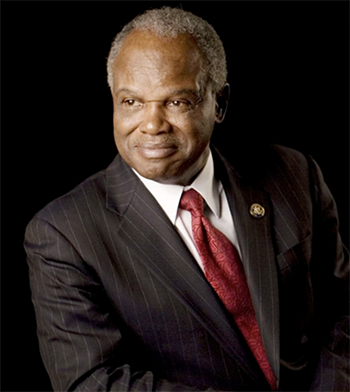
Georgia Congressman David Scott (D-Atlanta)

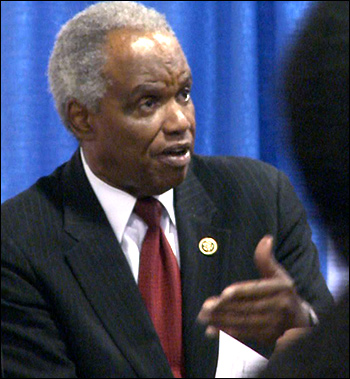
Veteran Georgia Congressman David Scott (D-Atlanta) passed away yesterday, making him the fifth House member to die during this Congress. Rep. Scott was first elected to the House from his Atlanta metro district in 2002. During his 24 years of service, he rose to chair the House Agriculture Committee.

The Congressman had faced health challenges for several years, and some observers speculated he might not seek re‑election in 2024. He ultimately did file for another term but passed away before Georgia’s May 19 primary. Because the deadline to remove candidates from the ballot has already passed, his name will remain in place.

Before his election to Congress, Scott served in both the Georgia House of Representatives and state Senate. In total, he held elective office for 52 consecutive years.

Despite Scott’s decision to run again, six Democrats qualified for the primary: state Sen. Emanuel Jones (D‑Decatur), state Rep. Jasmine Clark (D‑Lilburn), former Gwinnett County School Board chairman Everton Blair, dentist Heavenly Kimes, and two lesser‑known candidates.

Rep. Scott’s death now requires Gov. Brian Kemp (R) to schedule a special election to fill the remainder of the current term.

Assuming Georgia election law permits it based on required notice and providing adequate campaign time, the Governor would likely align the special election with the June 16 runoff elections. If no candidate secures a majority, the top two finishers would advance to a special runoff, which must occur within 28 days under state law. This process will determine who serves the final months of Scott’s term.

Rep. Scott’s passing comes one day after Florida Congresswoman Sheila Cherfilus‑McCormick (D‑Miramar) resigned following a federal indictment and House ethics violations. As a result, the number of open seats heading into the next election has risen to 63.

Of these 63 open seats, 37 are held by Republicans, 21 by Democrats, and five are newly created through redistricting in California, Texas, and Utah.

Among the departing members, 27 are running for other offices (Senate, Governor, or Attorney General), 27 are retiring from elective politics, five seats are open due to redistricting, three members have resigned, two have died — Reps. Scott and Doug LaMalfa (R‑CA) — and incumbent Rep. Dan Crenshaw (R‑TX) lost in the March primary. Two retiring members, Reps. Lloyd Doggett (D‑TX) and Burgess Owens (R‑UT), were paired in redrawn districts, so their departures do not create open seats.

The House now has five vacancies: two due to death (Reps. Scott and LaMalfa) and three to recent resignations (former Reps. Eric Swalwell (D‑CA), Tony Gonzales (R‑TX), and Ms. Cherfilus‑McCormick).

Virginia

A day after the people voted 51-49 percent to approve the new Virginia redistricting map, the same judge who initially invalidated the special referendum process, because he ruled that the legislature broke its own internal rules to shorten the process of posting the special statewide vote, issued a new opinion stating that how this particular referendum procedure was administered is unconstitutional.

The judge’s initial ruling is on appeal before the state Supreme Court which has still not issued a decision even though the justices allowed the vote to proceed. Attorney General Jay Jones (D) says he will also appeal the circuit court’s ruling pertaining to the constitutionality of the referendum’s administration.

It is difficult to see a majority Democratic state Supreme Court overturning a vote of the people that favored the Democrats. The fact that the high court allowed the referendum vote to take place is likely an indication that the election result will stand.

Good News / Bad News for DeSantis; Pastor Withdraws in Arizona;
A Challenger in GA-13

By Jim Ellis — Friday, Aug. 25, 2023

President

Florida Gov. Ron DeSantis (R) Photo by Gage Skidmore

Iowa: Selzer & Company Releases Survey — The Hawkeye State’s proven most accurate pollster, Selzer & Company, released a pre-debate poll in partnership with NBC News and the Des Moines Register newspaper. This research study provides some needed good news for Florida Gov. Ron DeSantis as his 66 percent positive rating is the best of any presidential candidate, although only one percentage point better than former President Donald Trump.

Trump still leads the first choice ballot test, however, with 42-19-9-6-6 percent split over Gov. DeSantis, Sen. Tim Scott (R-SC), former Vice President Mike Pence, businessman Vivek Ramaswamy, and ex-UN Ambassador Nikki Haley, respectively. He tops Gov. DeSantis by only two points when first, second, and “considering” categories are added and assigned an aggregate point value. The Iowa Republican Caucus is scheduled for Jan. 15, 2024.

New Hampshire: DeSantis Drops to Fourth — The Granite State Echelon Insights data (8/15-17; 800 NH likely Republican primary voters; live interview & text) sees former President Donald Trump leading the pack of candidates with a rather low support factor of 34 percent. Former New Jersey Gov. Chris Christie was second with 14 percent, and businessman Vivek Ramaswamy follows in third position at 11 percent support. Florida Gov. Ron DeSantis posts a disappointing nine percent.

It is likely the New Hampshire primary will be scheduled for Jan. 23, eight days after the Iowa Caucus and 11 days before the South Carolina Democratic primary. The South Carolina Republicans will vote on Feb. 24, followed by the Michigan primary three days later. Super Tuesday is scheduled for March 5, 2024.

Senate

Nevada: Brown Leads in First Primary Poll — Public Opinion Strategies, polling for the Duty First Super PAC, an organization supporting candidate Sam Brown (R), released the result of their first Nevada Senate Republican primary survey (Public Opinion Strategies; Aug. 15-17; 500 likely Nevada Republican primary voters; live interview). The results find Brown, an Afghan War veteran, leading former state assemblyman and frequent candidate Jim Marchant, 33-15 percent, with five other announced candidates failing to reach even the three percent support plateau.

Brown, the 2022 US Senate candidate who raised over $4 million for his unsuccessful primary effort against former Attorney General Adam Laxalt and now has National Senate Republican Committee chairman Steve Daines’ endorsement, also leads in all segmentation divisions. Most importantly, of the respondents who are familiar with both Brown and Marchant, the former leads the latter by a strong 59-21 percent cut. The Nevada primary is scheduled for June 11, 2024. The eventual Republican nominee will challenge first-term Sen. Jacky Rosen (D) in what promises to be a hotly contested general election campaign.

House

AZ-3: Laura Pastor (D) Withdraws — Phoenix City Councilwoman Laura Pastor (D), whose late father, Ed Pastor (D), represented Phoenix in the US House for 12 terms, announced that she is withdrawing from the open seat race to replace present incumbent Ruben Gallego (D-Phoenix). Ms. Pastor says her withdrawal is due to a non-life threatening health issue, but one serious enough to force her from the campaign trail.

With Congressman Gallego running for Senate, the Democratic primary will determine the 3rd District’s next Representative. At this point, four Democrats have announced for the seat including Phoenix City Councilwoman Yassamin Ansari and former state Senate Minority Leader Raquel Teran. The FiveThirtyEight data organization rates AZ-3, which is wholly contained within Maricopa County, as D+44. The Arizona primary is late, scheduled for August 6, 2024, so much can happen to change the race between now and the April 8, 2024, candidate filing deadline.

GA-13: Rep. David Scott Draws Dem Primary Challenger — Veteran Georgia US Rep. David Scott (D-Atlanta) surprised many by recently announcing he would run for a 12th term. Now, he has drawn a Democratic primary challenger. East Point Utility Board chairman Mark Herring did not attack Rep. Scott in his announcement address, only saying he is running to make a “positive difference.” Others are expected to join, thus creating a multi-candidate Democratic primary.

GA-13 is another district where winning the Democratic nomination is tantamount to election. The FiveThirtyEight data organization rates the seat as D+52. Rep. Scott faced three Democrats in the 2022 congressional primary, winning with 66 percent of the vote. In 2020, however, the outcome was much tighter as he avoided a runoff with just 52.9 percent, again opposite three opponents.

GA-13: Rep. Scott in Runoff

By Jim Ellis

GA-13 Rep. David Scott (D)

June 11, 2020 — Voting problems in Atlanta delayed counting and reporting from Tuesday’s primary, but it is now clear that nine-term veteran Rep. David Scott (D-Atlanta) has been forced into an Aug. 11 runoff election with a candidate who spent less than $1,000 on her primary campaign.

With votes still being counted, Rep. Scott garnered only 46.8 percent of the vote to date, with the remaining 53.2 percent being divided among three Democratic challengers. Advancing into the runoff is former state representative Keisha Waites, who managed to attract 31.1 percent of the vote despite spending only $875.00 on her race.

In third place is former local county Democratic Party chairman Michael Owens (14.1% percent), who has previously challenged Rep. Scott in a party primary, while former East Point mayor Jannquell Peters finished fourth (8.0 percent). The latter two candidates have been eliminated.

Though tabulating continues, almost 88,000 votes have been recorded in this primary race, suggesting that turnout is robust. In the only recent Democratic primary from this congressional district, back in 2014, the total turnout was under 36,000 individuals. Combined, the latter two candidates, Owens and Peters, spent approximately $60,000. By contrast, Rep. Scott spent almost $900,000 so far on his 2020 political effort.

As mentioned above, the only other time Scott was challenged for re-nomination since his original 2002 congressional campaign came in 2014. The congressman defeated Owens in that year, 82-18 percent. In his nine general election victories, Scott has averaged 79.4 percent of the vote, including running unopposed three times.

The 13th District is a suburban Atlanta district that sits south and southwest of the city before moving westward and then north to encompass part of Cobb County. The CD contains all of Douglas county and parts of five others, including Cobb, Fulton, and Fayette. The Citizen Age Voting statistics record a 58.1% percent population figure for African Americans here as compared to 33.4 percent for non-Hispanic whites.

Continue reading