Tag Archives: Florida

Biden Poised to Have Potentially Defining Day in Today’s Primaries

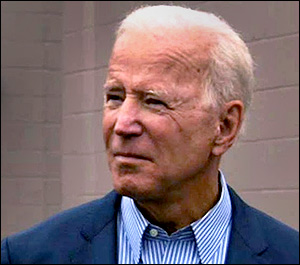
Former VP Joe Biden

By Jim Ellis

March 10, 2020 — During the early prognostication phase regarding the Democratic presidential nomination campaign, the two most important primary dates appeared to be March 3, Super Tuesday, and March 17. The latter date is important because more than 60 percent of the first ballot would be locked into place once St. Patrick’s Day voting ends.

That actually may not now be the case, however. Rather, the clinching primaries may be today.

The March 10 elections, featuring six states, haven’t attracted much attention, but the half-dozen results tonight could be the defining moment for coalescing around a new nominee.

Looking at today’s voting in Idaho, Michigan, Mississippi, Missouri, North Dakota, and Washington, Sen. Bernie Sanders (I-VT) looks to have his back up against the wall. It would be hard to see him continuing in viable fashion if he fails to win all of the day’s northern states, and particularly Michigan, which has 125 first-ballot bound delegates.

Late polling, however, is suggesting that former vice president Joe Biden may sweep the six states, and that might be what he needs to at least unofficially clinch the party nomination.

Three late Michigan surveys, from a place where Sen. Sanders held the lead over the Democratic field and slipped past Hillary Clinton in 2016, 50-48 percent, suggest the electorate is now turning toward Biden in a big way. In fact, the Target Insyght poll taken on Sunday, typically not a good polling day, through an automated voice response system (March 8; 600 likely Michigan Democratic primary voters) finds Biden outpacing Sen. Sanders by 41 percentage points, a breathtaking turnaround from pre-Super Tuesday research studies. The TI result finds the Biden split over Sanders at 65-24 percent.

Others don’t show this level of separation, but they are projecting Biden to be developing a substantial advantage. YouGov (March 6-8; sample size not disclosed) finds the Biden margin to be 54-42 percent. Monmouth University (March 5-8; 411 likely Michigan Democratic primary voters) sees a 15-point Biden advantage, 51-36 percent. Michigan-based pollster EPIC-MRA (March 4-6; 400 likely Michigan Democratic primary voters) finds a similar 51-27 percent. All suggest a big Wolverine State night for Biden, the exact opposite of what Sen. Sanders needs to rebound.

Continue reading

Impeachment Data: Many Polls
Show Georgia Numbers Improving

By Jim Ellis

Jan. 9, 2020 — The Mason-Dixon Polling & Strategy company surveyed the Georgia electorate to test President Donald Trump’s approval rating after being impeached in the House and, as in several other places, his Peach State standing appears slightly better today than it was in the previous year.

Georgia is a critical part of the Trump coalition and one of five base states that must support him if he is to have the necessary vote footing to again win an Electoral College majority. Arizona, Texas, Florida, and North Carolina are the other four entities that voted for the president in close margins back in 2016, are clearly politically competitive today, and must go his way again in 2020.

The Mason-Dixon poll (Dec. 19-23; 625 registered Georgia voters; live interviews) finds the president’s approval ratio within the Georgia respondent group to be 50:46 percent favorable to unfavorable despite being his impeachment. The last time M-D conducted a similar poll, in February of 2018, Trump’s approval index stood at 50:50 percent.

To put his Georgia numbers in perspective, the president’s job approval rating nationally is habitually upside-down. Such is the case today, as the latest daily job approval scores post the president at 40:55 percent (Morning Consult; Jan. 6-7; 2,038 US adults), 48:50 percent (Rasmussen Reports; Jan. 2-6; 1,500 likely US voters), and 44:54 percent (YouGov; Jan. 4-6; 731 registered US voters) positive to negative.

The encouraging Georgia statistical news for Trump is even more significant when considering that the state’s African-American population has outpaced the national black growth rate. It is well known that the African-American segment is the Democratic bedrock vote with near unanimous levels of support for the party’s candidates. The fact that Trump has improved in the face of impeachment and a growing black population means that his standing in Georgia is about as strong as could reasonably be expected considering the tall obstacles before him.

Continue reading

New House Census Projections

By Jim Ellis

Jan. 3, 2020 — The Census Bureau just released its new population growth estimates for the 12-month period between July 1, 2018 and July 1, 2019. Their data allows us to assess just which states will likely gain and lose congressional districts in 2020 reapportionment, both in terms of the real numbers just presented and for projecting the final count once the decade’s final-year patterns are calculated and the census is actually conducted.

The national population growth rate was analyzed to be 0.5 percent, down from the peak period of the decade, the July 1, 2014 through July 1, 2015 time segment, when the growth factor reached 0.73 percent. The population patterns of movement to the south and west continue, with the northeast actually seeing a population decrease during the aforementioned reported 12-month period that ended on July 1. The Midwest is not keeping up with the national rate of growth, either, but not losing overall population.

Ten states actually lost population during the reported period, led by West Virginia’s 0.7 percent drop. Alaska declined by 0.5 percent, with New York and Illinois each losing 0.4 percent. Hawaii dropped by 0.3 percent, Connecticut, Louisiana and Mississippi 0.2 percent, and Vermont (0.1 percent). New Jersey is the tenth population reduction state, but it lost only 3,835 people from a population of more than 8.9 million individuals for a 0.0004 percent decrease.

The fastest growing states at this point in the decade are Idaho (2.1 percent since July 1, 2010), Nevada, Arizona, and Utah (all at 1.7 percent increase during the same period), Texas and South Carolina (1.3 percent), Washington and Colorado (1.2 percent), Florida (1.1 percent), and North Carolina (1.0 percent).

Continue reading

Impeachment: First Political Clues

By Jim Ellis

President Donald Trump | whitehouse.gov

Dec. 16, 2019 — As we move toward the impeachment vote in the full House and the impending Senate trial to determine whether President Trump should be removed from office, a great deal of speculation exists about how voters will respond to this situation. A series of early December polls from the most critical swing states gives us a clue.

Firehouse Strategies/Optimus commissioned simultaneous polls within the Dec. 3-5 period in the top swing states of Pennsylvania, Michigan, and Wisconsin. As we remember, all of these places gave Trump a small victory margin in 2016. Phoenix-based pollster OH Predictive Insights conducted a poll of the Arizona electorate during the same period. Firehouse found sampling groups numbering between 551 and 610 respondents in the three states. OH used a slightly larger 628 person sample cell in the Grand Canyon State.

Both pollsters tested President Trump in each targeted state against former Vice President Joe Biden, Sens. Elizabeth Warren and Bernie Sanders, South Bend Mayor Pete Buttigieg, and ex-New York City mayor, Michael Bloomberg.

In all instances President Trump led his prospective opponent when individually paired. Since he had been trailing in similar ballot test responses from several previous polls in the Great Lakes States and was about even in Arizona, the change at the height of the impeachment proceedings suggests that he is seeing a net positive early return from the legal attack.

Of course, much could change before the process concludes, but this first data does provide us an interesting political snapshot as it relates to impeachment perceptions. As a rule, general election polling before the parties nominate their presidential candidates is usually irrelevant but, considering the present impeachment overlay, these numbers appear to be significant and particularly so because they are originating from critically important states.

For President Trump to win re-election, he must carry all five of the states in his 2016 coalition that typically vote Republican but have been trending closer to the Democrats since the last presidential election. Those are: Arizona, Georgia, and Texas. Florida and North Carolina are always swing states in virtually every election and will be again in 2020. To win, the president must first carry all of these aforementioned states. If so, he then would need to win just one of the Michigan, Pennsylvania, Wisconsin trio in order to yield a bare Electoral College majority.

Continue reading

Rep. Yoho to Retire; Texas Filings

By Jim Ellis

Dec. 12, 2019 — Keeping his pledge to serve only four terms in the House, Florida Rep. Ted Yoho (R-Gainesville) announced in a local radio interview earlier this week that he will not seek re-election next year. Also, the 2020 Texas candidate filing deadline came on Monday, and lists of the qualifying candidates are now becoming public.

REP. YOHO, FL-3

Florida Rep. Ted Yoho (R-Gainesville)

There had been some speculation brewing as to Yoho’s plans for 2020 with some suggesting he might eschew his original pledge. Making this now the 37th open House seat and second in Florida, potential candidates will have until May 1 to file for the Aug. 25 primary.

The eventual Republican nominee will clearly have the inside track to hold this seat for the GOP. Florida’s 3rd District is strongly, and consistently, Republican. President Trump scored 56.2 percent of the vote in 2016. This number is almost identical to the 56.6 percent that Mitt Romney posted against President Obama in 2012, and John McCain’s 54.6 percent that he garnered in the 2008 presidential election.

Rep. Yoho has averaged 61.0 percent of the vote here over four elections, but the district was significantly changed in the 2015 mid-decade court-ordered redistricting plan. In the current configuration, Yoho averaged almost exactly what the Republican presidential candidates scored: 57.2 percent in his two elections since the boundary alteration.

The 3rd District occupies five whole counties and parts of a sixth. The major population center is the city of Gainesville in Alachua County. The remaining portion of the CD is nestled squarely in the north/central section of the Florida peninsula.

Three Republicans had already announced their candidacies, but none seems particularly viable. The contender raising the most money through the Sept. 30 financial disclosure period is businesswoman Amy Pope Wells, but her receipts showed just under $40,000 raised for the campaign with a cash-on-hand figure of just under $8,500.

Continue reading

Florida Rep. Rooney to Retire

By Jim Ellis

Florida Rep. Francis Rooney (R-Naples)

Oct. 23, 2019 — Two-term Florida Rep. Francis Rooney (R-Naples) announced over the weekend that he would not seek election to a third term next year, thus FL-19 becomes the 27th open House seat for the current cycle.

Three of the open seats are vacant, meaning they will each go to special election to fill the balance of their respective terms. The trio of districts are: MD-7 (the late Elijah Cummings-D), NY-27 (Chris Collins-R), and WI-7 (Sean Duffy-R). The Wisconsin election calendar has been set for a Feb. 18 special primary and May 12 general. Maryland election law dictates that Gov. Larry Hogan (R) announce the 7th District special election calendar on or before Oct. 28. No calendar announcement has yet been made for the New York situation.

Rooney, despite serving in Congress for only a brief while, had been on the unofficial retirement watch list because he had raised only $6,600 cycle-to-date for his next campaign and is at odds with his party on several issues. The congressman is independently wealthy, so the low total was not solely an indication of his intention since he has the wherewithal to self-fund his campaigns. Rep. Rooney had been a Republican critic of President Trump, took the no corporate PAC contribution pledge, and indicated he may support the impeachment inquiry.

Florida’s 19th District is a safely Republican southwest Florida seat. President Trump carried the district, 60-37 percent, while Mitt Romney won here with a similar 60-39 percent margin. In his two elections, Rep. Rooney racked up victory percentages of 62 (2018) and 66 percent (2016).

In a similar configuration over four previous terms, then-Rep. Connie Mack IV (R) averaged 65 percent of the vote. And, after Mack left the House to run for the Senate, Republican Trey Radel, who a year later would be convicted for cocaine possession and forced to resign, scored a 62 percent victory in 2012. GOP businessman Curt Clawson followed with win margins of 67-29 percent in the 2014 special election, and then 65-33 percent in the regular election cycle before choosing not to seek re-election in 2016.

Therefore, it is probable that the next Republican primary winner will summarily be elected to the House in November, 2020. The 19th District contains two-thirds of Lee County along with approximately half of Collier County. Its main population centers are the Cape Coral, Ft. Myers, Naples, and Marco Island localities.

Democratic National Convention Shaping Up to be Historic

By Jim Ellis

Oct. 8, 2019 — At this point, Democratic presidential primary patterns are beginning to reveal themselves.

The February First Four states are becoming a hodgepodge of political strength with both Sens. Elizabeth Warren (D-MA) and/or Bernie Sanders (I-VT) potentially stealing Iowa and New Hampshire away from national front-runner Joe Biden. That means the former vice president may have his back up against the proverbial wall when the campaign streams into Nevada, the third voting state whose caucus participants will convene on Feb. 22. He may well need a victory there, before getting to South Carolina and his southern states political oasis.

As the new Fox News South Carolina Democratic primary poll shows (Sept. 29-Oct. 2; 803 likely South Carolina Democratic primary voters), Biden’s lead is very strong in the Palmetto State at 41-12-10 percent over Sens. Warren and Sanders, respectively. These numbers are commensurate with his standing in other recently polled southern domains.

But new data coming from delegate-rich states that are not frequently polled give us a further perspective about just how the nomination drama might unfold.

Four new state surveys were released at the end of last week with clear separation only detected in Arizona. Data coming from California and Ohio show dead heats among the three major candidates. Additionally, the latest Wisconsin poll gives Biden only a small lead.

The first three states in this group will vote in March, on Super Tuesday (March 3, California), March 10 (Ohio), and March 17 (Arizona). The fourth state’s electorate, Wisconsin, will cast their ballots on April 7.

Change Research (Oct. 27-28; 396 likely Arizona Democratic primary voters) finds that Arizona is polling as one of the ex-vice president’s weakest states and the only one that shows a relatively competitive four-way race. The Change results finds Sen. Warren claiming a significant lead with 35 percent support, ahead of Sen. Sanders’ 19 percent, Biden’s 15 percent, with South Bend Mayor Pete Buttigieg making a viable appearance with 13 percent preference.

Continue reading

Delegate Projections

Super Delegates at the Democratic National Convention: Just how big an impact could they have?

By Jim Ellis

Sept. 23, 2019 — Recent polling data has been released in 11 Democratic presidential primary states that allows us to make rudimentary delegate vote calculation projections as to where the top candidates stand in the nomination process.

The data-producing 11 states include all of the early voting entities: Iowa, New Hampshire, Nevada, and South Carolina, along with big states such as California, Texas, and Florida. Also included is Massachusetts, another Super Tuesday state that is of course Sen. Elizabeth Warren’s home, along with Arizona and the later voting states of Wisconsin and New Jersey.

The polling data allows us to look at the particular state and then assign the candidates specific delegate votes based upon their standing. Obviously, the projections are mere estimates because they are based upon polls and not actual votes, and we extrapolate the statewide totals for each congressional district, which is also not reality. Actual delegate votes are awarded on an at-large and district basis.

But, as basic as they are, these calculations still yield an idea as to where the candidates would land if the actual voting is truly within range of the available polling results.

To qualify for delegates either through state at-large or district delegates, a candidate must exceed a 15 percent popular vote threshold. In the 11 polls, only three candidates would qualify for delegate votes in any of the tested states: former Vice President Joe Biden, Sen. Warren, and Vermont Sen. Bernie Sanders.

Based upon their polling standing in each state and calculating the delegate formula thereupon reveals that each of the three obtains a substantial share. The 11 states’ aggregate delegate total of 1,360 represents 36.1 percent of the entire first ballot total. To be nominated, a candidate is required to earn 1,885 first ballot delegate votes.

Continue reading

The Early Delegate Projections

By Jim Ellis

June 25, 2019 — There have been several important state polls recently released that provide us data about where the Democratic presidential candidates stand in relation to popular preference. But that is only half the story.

In order to gauge where the candidates might stand in terms of delegate apportionment, we have taken the available published polls from 16 states and began extrapolating a reasonable delegate projection for each.

For purposes of this exercise, all of the polling data is considered accurate, even though in some instances such a conclusion is a stretch. Additionally, these projections were only based upon the at-large numbers but understand more than half of the delegates come from the state’s chosen districts (usually congressional district, though Texas uses their state Senate seats).

It is reasonable to believe, however, that the district apportionment will, in most cases, be similar to the statewide total. At this point, the at-large ratios are the only data set from which we can begin to draw statistical conclusions.

With that short background, the states and their most recent polling result are listed below along with our unofficial delegate projections listed in chronological order based upon voting schedule:

February 3

Iowa Caucus

(YouGov – May 31-June 12; 587 likely Iowa Democratic primary voters)
• First-Ballot Delegates: 41

Biden 30%
Sanders 22%
Warren 12%
Buttigieg 11%

Delegate Projection:

Biden 15
Sanders 11
Warren   8
Buttigieg   7

Continue reading

Florida: Biden Up

Former vice president, Joe Biden (Getty Images)


By Jim Ellis

June 20, 2019 — Quinnipiac University surveyed the Florida electorate (June 12-17; 1,279 registered Florida voters, 417 self-identified Democrats) and found former Vice President Joe Biden opening a substantial lead over Sens. Bernie Sanders (I-VT) and Elizabeth Warren (D-MA) there. He also posts a healthy advantage against President Trump in a hypothetical general election pairing in what is always a critical voting domain.

The Q-Poll numbers find Biden scoring a 41-14-12 percent advantage over Sens. Sanders and Warren, respectively, with South Bend Mayor Pete Buttigieg and Sen. Kamala Harris (D-CA) trailing in single-digits with eight and six percent, sequentially.

As Nate Silver, founder of the 538 statistical website, said in an interview this week that looking at general election polling this early is basically a futile exercise. It does, however, provide us a clue into candidates’ strengths and weaknesses. In the general election Q-Poll pairing, Biden records a 50-41 percent advantage over President Trump in Florida. This poll, of course, was taken before Trump’s Florida rally Tuesday night in which he kicked off his 2020 campaign.

Silver’s spoken sentiments are true because, among other reasons, so much time remains between now and the 2020 Nov. 3 election, and so many unknown events will occur that could alter the final outcome. Additionally, the campaign will drastically change when both parties have nominees and voters begin paying serious attention to the race.

Continue reading