Category Archives: Polling

Nebraska Redistricting Map Set; Surprises in Arizona Senate Polling

Nebraska’s new three-district congressional map

By Jim Ellis

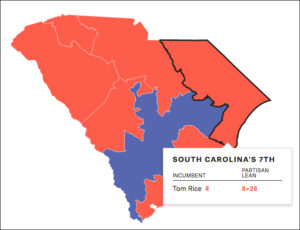
Oct. 4, 2021 — The Cornhusker State of Nebraska has joined Oregon and Colorado in completing its redistricting process as Gov. Pete Ricketts (R) late last week signed into law the new three-district congressional map.

The new map is similar to the previous plan. It slightly improves Rep. Don Bacon’s (R-Papillon/Omaha) 2nd District while keeping the Omaha metro area together as a complete unit. The 2nd will remain competitive, though Rep. Bacon will be in stronger position to seek a fourth term. He was re-elected last November with a 51-46 percent margin in defeating Democrat Kara Eastman for the second time and defending himself against a $4.5 million opposition campaign.

Rep. Adrian Smith’s (R-Gering) 3rd District again stretches the width of the state, from Colorado and Wyoming all the way to Iowa and the northwestern corner of Missouri. This time the 3rd even goes so far as to border Omaha’s Douglas County.

It is likely the new Nebraska map will continue to send three Republicans to the House, though Democrats will undoubtedly return to target Rep. Bacon in District 2.

Arizona Senate

Phoenix-based OH Predictive Insights tested the Arizona electorate as they regularly do (released Sept. 29 & Sept. 7-12; 882 registered Arizona voters, online opt-in panel) and finds freshman Sen. Mark Kelly (D) leading all potential Republican general election opponents, but with percentages well below majority support in all tested instances.

As you will remember, Sen. Kelly, after a difficult and expensive 2020 campaign in which he raised an incredible $101 million to defeat appointed Martha McSally (R), won the special election, 51-49 percent, to fill the remainder of the late Sen. John McCain’s (R) final term. He now returns to the campaign trail in order to win a full six-year term in 2022.

At this point, Attorney General Mark Brnovich, venture capitalist Blake Masters, solar energy company Jim Lamon, and retired Arizona National Guard Adjutant General Mick McGuire comprise the top tier of the Republican field. OHPI tested each man individually opposite Sen. Kelly.

Continue reading

Sen. Grassley to Seek Re-Election

By Jim Ellis

Iowa’s seven-term US Sen. Chuck Grassley (R)

Sept. 28, 2021 — Saying he “ … has a lot more to do for Iowa,” seven-term Sen. Chuck Grassley (R) on Friday announced that he will run for an eighth term next year. Recently, the senator said he would make his decision about launching a 2022 campaign on or before Nov. 1.

Sen. Grassley was one of three Republican incumbents who had not declared their re-election intentions. Sens. Ron Johnson (R-WI) and John Thune (R-SD) both say they will announce their decisions later in the fall. All 14 in-cycle Democrats are on an active re-election track.

Sen. Grassley is already the longest-serving Iowa US senator, originally elected on the same night when Ronald Reagan won the presidency in 1980. He has been an elected official since winning his first term in the state House of Representatives back in 1958. Should he win the coming election and complete his next term, he will have served 70 consecutive years as a public official, counting his time in the state legislature, US House and Senate.

It appears the senator is in strong political shape for the coming campaign. At this point, he faces only state Sen. Jim Carlin (R-Sioux City) in the Republican primary.

When he entered the race, it was speculated that Carlin was attempting to get a head start on an open Republican primary in anticipation that the 88-year-old senator would announce his retirement. He indicated that he planned to stay in the race regardless of Sen. Grassley’s intentions, but now that the incumbent’s campaign is official we will see if Carlin continues in his long shot statewide effort.

The leading Democrat is former Congresswoman Abby Finkenauer. She served two terms in the state House of Representatives, and then defeated incumbent US Rep. Rod Blum (R) in the 2018 election. She would subsequently lose her first re-election bid to current Congresswoman Ashley Hinson (R-Marion/Cedar Rapids). Now, like so many others who have recently lost elections, Finkenauer is attempting to run for a higher office.

Continue reading

Republican Youngkin Notches First Lead in Virginia Gubernatorial Race

By Jim Ellis

Republican Glenn Youngkin, Virginia candidate for governor

Sept. 24, 2021 — A new University of Mary Washington survey (conducted by Research America, Sept. 7-13; 1,000 total sample 528 likely Virginia gubernatorial election voters, live interview & online) finds Republican Glenn Youngkin (R) leading former Virginia Gov. Terry McAuliffe (D), 48-43 percent, but there are caveats.

While virtually every poll has projected the two candidates recording support percentages in the 40s, this is the first that found the ex-governor and former Democratic National Committee chairman trailing. Two other surveys were also released yesterday, and both of them find results consistent with other pollsters that place both candidates in the 40s, but with McAuliffe holding the advantage.

KAConsulting (Sept. 17-19; 700 likely Virginia voters, live interview), polling for the Presidential Coalition, found McAuliffe topping Youngkin, 46-42 percent. Public Policy Polling (Sept. 17-18; 875 Virginia voters, interactive voice response system) derived an almost identical 45-42 percent McAuliffe ballot test result during a simultaneous time realm.

The Mary Washington study may well be an outlier. While the 48-43 percent margin comes from those describing themselves as likely voters in the Nov. 2 election, when responses from all 1,000 sampled individuals are recorded, the ballot test flips to 43-38 percent in favor of McAuliffe. It is not unusual to see differences when screening for likely voters versus the universe as a whole, but detecting a ten-point swing affecting just one candidate – you will notice McAuliffe scores 43 percent within both groups – raises methodological questions.

The poll becomes even more suspect when seeing that the candidates in the other statewide races, lieutenant governor and attorney general, produce no such GOP swing. In the lieutenant governor’s contest, Republican Winsome Sears has a 47-41 percent lead over Democrat Hala Ayala among likely voters, but the two are dead even at 38 percent support when all respondents are added to the ballot test matrix.

In the AG’s campaign among likely voters, Republican Jason Miyares holds a 46-42 percent edge over incumbent Democrat Mark Herring, but the race flips to 40-37 percent in the attorney general’s favor when all respondents are questioned.

Continue reading

Michigan Gov. Whitmer
Falters in New Polls

By Jim Ellis

Michigan Gov. Gretchen Whitmer (D)

Sept. 23, 2021 — We have further evidence that the Michigan governor’s race is going to be a highly competitive political contest next year. A pair of new polls, following one in late August, find Gov. Gretchen Whitmer (D) either in a virtual dead heat with, or trailing, former Detroit Police Chief James Craig (R).

The Trafalgar Group and Strategic National, Inc. were both in the Michigan field during virtually the same time realm to test the impending governor’s race. Trafalgar (Sept. 13-15; 1,097 likely Michigan voters; live interview, interactive voice response system, online, and text) actually finds the governor slipping behind Craig by a 50-44% count. Strategic National (Sept. 18-19; 600 likely Michigan voters) arrived at a much tighter contest with the governor still in the lead. Their result projected a razor thin 46.6 – 46.0 percent margin.

Gov. Whitmer has become controversial even nationally through her draconian COVID shut down measures, and then being caught on several occasions as eschewing the dictates for herself and family. As the Strategic National poll shows, however, the governor’s favorable and unfavorable opinions are equivalent … and almost everyone feels strongly about their preference.

In terms of her personal favorability index, the responses divide 50:48 percent favorable to unfavorable. The strongly held position, however, spins toward the negative category. Of those who comprise Gov. Whitmer’s 50 percent positive rating, 35 percent, or 70 percent of those professing a positive opinion, feel strongly.

The negative segmentation is more intense. From the 48 percent who hold a negative view of Whitmer, 42 percent, or 87 percent of those holding an adversarial opinion, believe so strongly. Her job approval rating responses, though a different question, yields an almost identical pattern.

The polarization factor is, unsurprisingly, extreme when it comes to the respondents’ opinion about how she’s handled the coronavirus. By a margin of 52:47 percent, the sampling universe approves of her measures to combat the disease. And, in this instance, those feeling strongly on both sides break about evenly.

Continue reading

Nevada’s Gubernatorial Race:
Ex-Sen. Heller Announces

By Jim Ellis

Former Nevada Sen. Dean Heller (R)

Sept. 22, 2021 — The Silver State of Nevada has been home to some of the nation’s closest statewide elections during the past decade. In almost half of all Nevada statewide political contests since 2012, both party’s nominees have won their elections with only plurality support.

With that backdrop, ex-US Sen. Dean Heller (R), who lost his seat to current incumbent Jacky Rosen (D) in 2018, is making a political comeback attempt in next year’s governor’s race. Heller officially announced his plans Monday after the story broke last week that he would become a candidate.

Part of the announcement came as a surprise, and has more to do with winning the Republican primary than for what he hopes will be a challenge to incumbent Gov. Steve Sisolak (D). Heller, who throughout his career had aligned himself with the pro-choice caucus, pointedly spoke approvingly of the new Texas law governing abortion practices.

In the Republican primary, Heller faces Clark County Sheriff Joe Lombardo and North Las Vegas Mayor John Lee among others. At this point, Gov. Sisolak has no announced Democratic opposition.

According to a July OH Predictive Insights poll (July 6-11; 783 registered Nevada voters), which is the latest Nevada gubernatorial survey available, Gov. Sisolak recorded a 52:39 percent job approval ratio. As with most polls in today’s politics, the bulk of support comes from members of one’s own party, but in this case, 30 percent of the sampled Republicans also gave the governor a positive review.

Gov. Sisolak, a former Clark County Commissioner who previously served as a member of the Nevada Board of Regents, was elected the state’s chief executive three years ago with a 49-45 percent win over then-Attorney General Adam Laxalt (R), grandson of former US senator and Nevada governor, Paul Laxalt (R). Laxalt is also making a political comeback in 2022, running against incumbent Catherine Cortez Masto (D) for the US Senate.

Both the ’22 Nevada governor and US Senate have the potential of ending in close fashion. Since 2012, inclusive, 18 statewide races have been conducted. Democrats won 10 and Republicans’ eight, but six of the GOP victories came in the Republican wave year of 2014 when the Nevada Democratic turnout proved particularly low.

Continue reading

Ohio Data: Below the Surface

By Jim Ellis

Sept. 10, 2021 — The London-based Redfield & Wilton Strategies international survey research firm tested electorates in several American states at the end of August, and today we look at their Ohio results. With a major open Senate campaign and a Republican governor seeking re-election in 2022, the Buckeye State is once again a national political focal point for the coming political year.

Ohio Rep. Tim Ryan announces his candidacy for the 2020 Presidential Election on the TV talk show, “The View.”

The Redfield & Wilton poll (Aug. 20-24; 1,200 likely Ohio voters) finds the Republican Senate candidates performing adequately opposite US Rep. Tim Ryan (D-Warren/Youngstown), who, at this early stage, has become the Democrats’ consensus statewide Senate contender.

Former state treasurer and 2012 US Senate candidate Josh Mandel (R) holds a 51-47 percent ballot test lead over Rep. Ryan within the sample segment who are self-identified as likely 2022 general election voters. Author J.D. Vance (R) largely falls into a dead heat with Ryan, trailing 37-36 percent, as does former Ohio Republican Party chair Jane Timken who places within two points of the congressman, 38-36 percent.

In the governor’s race, incumbent Republican Mike DeWine, who former Rep. Jim Renacci is challenging in the GOP primary from the ideological right, looks to be in strong shape against potential Democratic opponents. If Dayton Mayor Nan Whaley were the Democratic gubernatorial nominee, Gov. DeWine would post a 46-27 percent advantage. Should Cincinnati Mayor John Cranley become the Democratic nominee, he would trail the governor by a slightly larger 47-25 percent spread.

Generally, the Ohio polling pattern leans Democratic in the early going and then closes in the Republican candidates’ favor, while consistently understating GOP strength.

In the 2020 presidential election, Ohio polls in July of the election year were returning Joe Biden leads of 4-8 percentage points before former President Trump would rebound to score a mean average 1.0 percent polling lead close to election day, and then win the state going away with an eight-point margin, 53-45 percent. In 2016, the pattern was similar. In the July-September period, Hillary Clinton held leads of between 4 and 7 percentage points only to see the average favor Trump by a 2.2 percent spread. He would win the state 51-43 percent.

The same pattern occurred for Sen. Rob Portman (R) in 2016 and was present to a degree against Sen. Sherrod Brown (D) in 2018. In June through September of that year, certain polls found former Gov. Ted Strickland (D) leading incumbent Portman with a 3-6 point edge. As the race closed, Sen. Portman established an average 18-point lead and won 58-37 percent.

Even in a Democratic victory, the polling trend favoring Democrats early and then closing for the GOP toward election day was again present. During June-September of 2018, Sen. Brown held leads between 13-17 points. Going into the election, his polling average had slipped to 11 points, and he only won with a 6.4 percent margin.

Keeping this pattern in mind and then looking at the underlying Biden job approval numbers in the R&W poll suggests that even today, the GOP candidates are poised for a stronger finish than the current results yield. Overall, the Redfield & Wilton figures point to a 40:46 percent favorable to unfavorable presidential approval ratio for Biden, which isn’t particularly bad particularly in a state that the subject did not win. The underlying numbers, however, point to a much greater negative.

Continue reading

A New Jersey Shock Poll

By Jim Ellis

New Jersey Gov. Phil Murphy (D)

Sept. 7, 2021 — The Fabrizio Lee polling firm, surveying for the Club for Growth organization (Aug. 4-29; 600 likely 2021 New Jersey election voters, live interview) finds New Jersey Gov. Phil Murphy (D) potentially falling into a precarious political position.

Since June 1, Gov. Murphy has led in all four publicly released polls, each from a different pollster, with margins ranging from a low of 11 to as high as 28 points over former state Assemblyman Jack Ciattarelli (R). The Fabrizio-Lee data casts a much different light upon the race, finding Gov. Murphy leading by a scant 43-41 percent margin as the contest has apparently become tighter with August ending.

Digging deeper into the polling analysis, it appears that Gov. Murphy is in slightly better position than the Fabrizio lead ballot test suggests, but nowhere close to his previous standing. The question then posed: is there significant movement toward Ciattarelli or is this Fabrizio Lee poll an outlier?

Among the 600 respondents who identify themselves as planning to vote in the Nov. 2 election, segmentation exists between those who have previously voted in an odd-numbered year election and those who have not. Among the “Gov-election” voters, Murphy’s ballot test position improves to 46-40 percent. For those who have not cast a ballot in a previous NJ governor’s election, Ciattarelli pulls ahead of the incumbent by a 41-35 percent margin, but these individuals are significantly less likely to participate.

The poll illuminates several other warning signs for the incumbent, however. While Ciattarelli has an 87:3 percent loyalty factor among Republicans, Gov. Murphy is running slightly less robustly among Democrats (75:11 percent). More concerning for the governor is him trailing among white voters (39-48 percent), and Independents (28-43 percent). Failing to improve within these two latter sectors could result in an upset election loss for the first term state chief executive.

Though the poll responses are weighted to compensate, the sampling universe’s racial composition is different than the state population numbers. The respondent sample is more heavily white than the state as a whole, with Hispanic and black respondents totaling only about half of their standing within the population at large. This would suggest that the Murphy ballot test numbers are slightly deflated.

Continue reading

NH Gov. Sununu Polling Positively

By Jim Ellis

New Hampshire Gov. Chris Sununu (R)

Sept. 3, 2021 — The St. Anselm College’s New Hampshire Institute of Politics poll was released this week (Aug. 24-26; 1,855 registered New Hampshire voters, online weighted responses), and it contains good news for three-term Granite State Gov. Chris Sununu (R). From this data, Sununu records his largest lead of the early 2022 election cycle, 49-41 percent, over first term incumbent Sen. Maggie Hassan (D).

Gov. Sununu has yet to enter the race and says he will make a final decision about his political future well into next year. Since New Hampshire is one of two states that limits its governors to two-year terms, Sununu is in the middle of his third term even though completing just his fifth year in office. He is eligible to run for a fourth term, and beyond.

Because New Hampshire has one of the latest primaries on the election calendar – Sept. 13 in 2022 – it wouldn’t be surprising for the governor to wait even until the end of the next legislative session to declare his political intentions for the midterm cycle. With his win percentage increasing to 65.1 percent in 2020 after victories of 52.8 and 49.0 percent in his first two elections and with a current 64:34 percent positive favorability ratio, the governor has the luxury of waiting along with the ability to clear the GOP field regardless of the office for which he ultimately declares.

With Gov. Sununu as the GOP’s Senate nominee, New Hampshire becomes the Republicans’ best national conversion opportunity, and he is obviously under heavy pressure from party leaders to run.

For her part, Sen. Hassan is prepared for a tough fight. Through the June 30 Federal Election Commission financial disclosure period, she reported raising $11.3 million during her out-of-cycle four years, with a whopping cash-on-hand figure of $6.56 million.

The Democrats appear fortunate that the election is so far away. The poll’s underlying numbers suggest they would fare badly in the New Hampshire general election if voting were in a close time proximity, but the Granite State electorate is wholly unpredictable. Since the turn of the century, no state has swung as wildly as New Hampshire, with the electorate going heavily for both parties in different election years.

Continue reading

An Adjustment in Attitudes

Pew Research Center
(Click on link or on image above to go to Pew Research Center.)

By Jim Ellis

Sept. 1, 2021 — Largely due to a major shift in perception among Republicans, some American institutions have suffered a major image decline. In July, the Pew Research Center conducted another survey of views and attitudes regarding the country’s key institutions and compared it with a similar study they conducted two years ago.

(The Pew Research report is available at this link: Republicans increasingly critical of several major U.S. institutions, including big corporations and banks)

As has been the case for the past few years, the people identifying with each of the two major political parties see things from an opposite perspective. For most institutions, the aggregate party respondents have become even more polarized in their views. In three particular instances the institutional favorability index changed rather significantly during the relatively short two-year interval between the Pew studies.

Expressing some optimism, the response to whether churches and religious organizations have a “positive or negative effect on the way things are going in the country,” actually received improved ratings.

Among both Republicans and Democrats, the religious-affiliated entities ascended. Now, 62 percent of the respondents believe these God-centric groups have a positive effect upon the country, up a net four points from the July 2019 survey. Republicans remained constant through the two surveys at a very high 76 percent approval rate. Democrats jumped from just 44 percent expressing a positive sentiment in 2019 to 52 percent this year.

For a pair of institutions, however, the normally disparate views surprisingly strike an equivalent balance. Concerning financial institutions and large corporations, the responses between the Republican and Democratic respondents were nearly identical.

Continue reading

A Nevada Stunner

First-term Nevada Sen. Catherine Cortez Masto (D).
Is there re-election trouble brewing?

By Jim Ellis

Aug. 30, 2021 — A publicly released Nevada US Senate survey released late last week revealed an eye-opening result. According to the VCreek/AMG poll conducted for the conservative Americas PAC (Aug. 9-14; 567 registered Nevada voters, live interview), former attorney general and recently announced US Senate candidate Adam Laxalt (R) holds a stunning 42-32 percent lead over first-term Sen. Catherine Cortez Masto (D).

Cortez Masto was elected in 2016, defeating then-US Rep. Joe Heck (R), 47-45 percent, in another of Nevada’s typically close recent elections. Prior to winning the Senate seat, Cortez Masto served as the state’s attorney general from 2007 to 2015, winning two statewide elections for that position with substantial percentage margins, 59-36 percent in 2006 and 53-36 percent in 2010.

Preparing for what she believes will be a close contest, the senator has already raised $11.6 million in her first term and held a whopping $6.58 million in her campaign account at the June 30th Federal Election Commission finance reporting deadline.

The biggest surprise among the segmented numbers was Sen. Cortez Masto’s poor standing within her own Democratic Party. Her base vote was only 60 percent among those respondents who describe themselves as “strong” Democrats. Her preference was just 50 percent within the cell calling themselves “regular” Democrats. Among Republicans, she was taking three percent from the “strong” Republicans and recorded 13 percent support among the regulars.

Laxalt’s partisan numbers were better. He was holding 78 percent of those calling themselves strong Republicans, but a lower 62 percent from the “regular red” voters. Among Democrats, he was performing slightly better than a typical GOP candidate. Within the strong Democratic cell, he scored 10 percent preference, but reached 20 percent from the regular Democrat segment.

The moderates, or those who V/Creek terms “purple,” may be the senator’s greatest concern. Within this important segment, Laxalt held a 40-29 percent advantage. The Cortez Masto partisan numbers among Democrats will eventually return to form meaning that the 2022 Senate race will likely transform into another typically close Nevada campaign: hence, the enhanced importance of where this “purple” group falls.

To gain the Senate majority in the next election, Republicans need additional targets especially with having so many more seats to defend (20R-14D in the 2022 cycle).

Democrats appear well positioned to convert Pennsylvania and hold the pair of 2020 special election winners who must run for a six-year term next year, Sens. Mark Kelly (D-AZ) and Raphael Warnock (D-GA). In addition to the New Hampshire race, particularly if Gov. Chris Sununu (R) challenges first-term Sen. Maggie Hassan (D), the Nevada contest may be the only other GOP conversion opportunity on their board.

The other two questions VCreek posed to the sample participants related to election fraud and the Senate filibuster. A total of 73 percent of the sampling universe rates election security as “very important.” Relating to the filibuster, which has attracted much attention in the previous months, 59 percent said they favor keeping the 60-vote cloture rule intact.

VCreek/AMG is graded a B/C survey research firm according to the FiveThirtyEight statistical organization’s 2021 pollster rankings. The group, headed by analyst Nate Silver, forecasts elections, and annually rates the polling community.

This year, the ranking survey totals 482 research entities from which VCreek/AMG ranks 378th. FiveThirtyEight categorizes V/Creek/AMG with a slight Democratic bias of 0.4. In the current 538 report, however, the ranking was based on a small number of VCreek surveys, meaning a larger sample would likely propel the firm to a higher rating.

Regardless of whether this VCreek/AMG poll is accurate or flawed, expect the Democrats to quickly counter with numbers showing Sen. Cortez Masto in much stronger re-election position. If Laxalt remains close, however, this race will quickly enter the competitive top tier.