Category Archives: House

Indiana Rep. Susan Brooks to Retire

By Jim Ellis

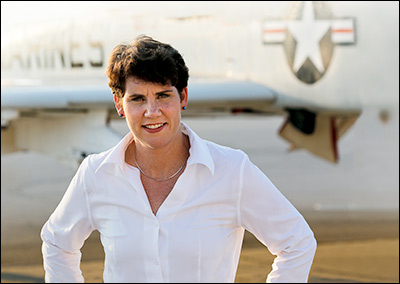
Rep. Susan Brooks represented Indiana’s 5th District, a reliably Republican district over the years.

June 18, 2019 — The 2019-20 House open seat count reached double-digits as Indiana Rep. Susan Brooks (R-Carmel) announced late last week that she would not seek a fifth term next year.

With Brooks retiring and Montana at-large Rep. Greg Gianforte (R-Bozeman) announcing that he will run for governor, the open seat count grows to 10 including the two North Carolina special congressional elections that will be filled on Sept. 10.

Most news outlets were reporting the Brooks announcement as a surprise, in large part because she chairs the National Republican Congressional Committee’s candidate recruitment operation. But, rumors of Brooks moving on from the House have circulated before, and she did attempt to become governor when incumbent Mike Pence left office after being selected as Donald Trump’s running mate. There was also speculation that she could leave the House next year in order to run for state attorney general.

Immediately after Pence left his Hoosier State gubernatorial re-election effort to campaign for vice president, an Indiana Republican Party committee was empowered to choose a new gubernatorial nominee. Rep. Brooks, along with fellow US Rep. Todd Rokita, declared for the special nomination, but the party committee members instead chose then-Lt. Gov. Eric Holcomb who would go onto win the general election and now stands for re-election in 2020.

Rep. Brooks says her retirement decision is primed because of a desire to begin devoting her life to interests outside of politics. She will, however, continue in her NRCC role to lead the party’s recruitment apparatus in serving the balance of this current term.

Continue reading

Is Michigan Rep. Justin Amash
Seeking a Political Exit Strategy Should He Run for President?

By Jim Ellis

Michigan Rep. Justin Amash (R-Cascade Township/Grand Rapids)

June 13, 2019 — The Michigan Information & Research Service (MIRS) released an independent poll just a couple days ago from the Practical Political Consultants organization (June 5-9; 335 likely MI-3 Republican primary voters) that finds western Michigan Rep. Justin Amash (R-Cascade Township/Grand Rapids) trailing his announced 3rd Congressional District Republican primary opponent, state Rep. James Lower (R-Greenville), by a lopsided 49-33 percent count.

After Rep. Amash became the only Republican to side with the Democrats’ informal impeachment caucus over whether to bring proceedings against President Trump, speculation became more rampant that the five-term Michigan congressman would seek the Libertarian nomination for president. The new poll and his action earlier in the week of resigning from the Freedom Caucus and its leadership fuels more speculation that he will jump into the presidential contest.

Many are arguing that Amash would have an effect upon the national election to the point of potentially costing President Trump victory, or at the very least, the state of Michigan, but such an outcome is far from determined.

The Libertarian presidential nomination has some value in that the party can qualify for the ballot in all 50 states and the District of Columbia. It is the only political entity aside from the Republican and Democratic parties that has such an ability. Jill Stein, the 2016 and 2012 Green Party presidential nominee, appeared on the ballot in 45 and 38 states, respectively.

However, just how much of a factor are the individuals who represent the minor parties on the presidential ballot? Former New Mexico governor Gary Johnson was the Libertarian nominee in both 2016 and 2012. He has already said he will not be a candidate in 2020. In 2012, his national vote total was 1.27 million. Four years later, his aggregate vote number soared to just under 4.5 million. But, was that due to Johnson himself, or is the Libertarian ballot position, regardless of the candidate’s name associated with it, simply the best place for disaffected voters to cast a ballot?

Continue reading

2020 Open House Seats Review

By Jim Ellis

June 12, 2019 — Since the last national redistricting completed in 2011 for the 2012 election cycle, we have seen 222 US House seats come open, for a mean average of 55.5 per cycle during the eight-year period. Prior to this decade, the average House open seat factor was typically closer to 35.

In 2012, reflective of the new reapportionment from the 2010 census, the House featured 62 open seats. This was followed by 47 more in 2014, another 49 in 2016, and finally 64 opens in the 2018 election cycle.

So far in this current 2020 election cycle, the exodus syndrome appears to be winding down as we see only nine districts now opening, assuming that Montana at-large Rep. Greg Gianforte follows through with his stated plans to announce his gubernatorial campaign later this week. One open district, PA-12, was already filled at the end of May as Republican Rick Keller replaced resigned Rep. Tom Marino (R-Williamsport).

Below is a listing of the nine seats and the preliminary replacement outlook:


Special Elections – Sept. 10, 2019

NC-3: Rep. Walter Jones (R) – passed away Feb. 10, 2019
The Republicans are in a run-off election that will be decided on July 9. Participants are state Rep. Greg Murphy (R-Greenville) and physician Joan Perry of Kinston. The winner faces Democratic nominee Allen Thomas, the former mayor of Greenville. The eventual GOP nominee will begin the special general election as a heavy favorite for a seat that has been in Republican hands since 1995.


NC-9: Vacancy, non-declaration of 2018 election winner due to alleged voter fraud
Both parties nominated outright in this special election. Democrats feature 2018 nominee Dan McCready, who ran unopposed in the special primary. Republicans nominated outright state Sen. Dan Bishop (R-Charlotte), who captured 48 percent of the vote in a crowded Republican primary. A minimum total of 30 percent was needed to win outright nomination and avoid a run-off. Two polls have been released, both showing the race in toss-up mode with each candidate leading in one of the surveys.


Regular-Cycle Open Seats

AL-1: Rep. Bradley Byrne (R-Mobile) running for Senate
With the Republican presidential nominee topping 60 percent of the vote here in the past three national elections, including President Trump attracting 63.5 percent, the Republicans will be in strong position to hold this seat. With candidate filing coming on Nov. 8 for the March 3 primary, the field of four announced candidates could swell to as many as 10 before the filing cycle concludes. No Democrat has yet come forward to declare.


Continue reading

A Counter Poll in NC-9

By Jim Ellis

North Carolina Republican state Sen. Dan Bishop (left) | Democrat Dan McCready (right)

June 5, 2019 — The Atlantic Media & Research organization went into the field in North Carolina’s 9th Congressional District and found a different special election leader than last week’s JMC Analytics poll. Atlantic’s conclusion sees Democrat Dan McCready topping state Sen. Dan Bishop 41-39 percent, which is the inverse of JMC’s result.

JMC projected Sen. Bishop leading 46-42 percent in their survey of 350 likely special election voters conducted on May 21-24. Atlantic polled 358 “definite or very likely” special election voters from May 20-23 and continuing through May 28-30. Though the two polls produced separate leaders, their combined data conclusions are similar in that the participants are within the polling margin of error. While the spread yields an eight-point net difference between the two polls, the margin of error contained in each is less than four percent.

But the Atlantic methodology is a bit different. The research firm polled on consecutive weekdays in two separate weeks leaving the Memorial Day weekend period unsampled. The gap leads to a longer than average polling stage, which could mean a less accurate conclusion.

Atlantic Media also reviews its previous poll completed five months ago in December of last year, just after the general election, and compares those results with the most current data set. The numbers are similar in that the partisan ballot tests and the president’s job approval rating varies by only a percentage point or two. And, attempting to discount the final 2018 result that was infected with voter fraud, the Atlantic December post-election poll finds candidate McCready topping Republican Mark Harris by a tight 46-43 percent margin.

Continue reading

The Impeachment Landscape

By Jim Ellis

June 4, 2019 — As we have seen, the impeachment drumbeat is starting to resonate more loudly since former special prosecutor Robert Mueller addressed the media. While it appears any impeachment move the House makes would be dead on arrival in the Senate, could the proponents even pass the measure through the body of origin?

Currently, the House party division stands at 235 Democrats and 198 Republicans after Rep-Elect Fred Keller (R-PA) was sworn into office just last evening. The two vacant seats, both in North Carolina, will be filled on Sept. 10. The impeachment measure, like all other bills, would require a majority, or 217 yes votes, if all members are present and voting assuming a vote is taken before the North Carolina seats are filled.
.
With Rep. Justin Amash (R-MI) possibly being the lone GOP exception, the Republican conference would likely be unified in opposition. That being said, the focus of attention would then come upon the 31 Democrats who represent districts that President Trump carried in 2016, 23 of whom are freshmen. Therefore, adding Amash to the “yes” category, the Democratic leadership could afford to release a maximum of only 19 conference members, meaning 92 percent of the conference would have to hold the impeachment party line.

Of these 23 freshmen, 16 are from traditionally Republican districts whose electorate flipped for the first time in more than a decade. Looking at the 31 as a whole, the group averaged a 52.6 percent win percentage factor in 2018. The 23 freshmen averaged just 51.5 percent, meaning only a few have an established political base.

These statistics suggest that the Democratic leadership might have a difficult time passing impeachment in the House with just their own party members. And, this margin projection doesn’t include some of the more centrist members from other close districts that Hillary Clinton carried with a small margin.

The following is a list of the 31 now Democratic House districts that Mr. Trump carried. They are listed in order of the president’s strength. Those in bold are freshmen members:
Continue reading

NC-9: The First Poll is Surprising

By Jim Ellis

North Carolina’s 9th Congressional District

May 30, 2019 — The JMC Analytics survey research firm released the first special general election poll for North Carolina’s 9th District, and some may consider the results surprising.

According to JMC (May 21-24; 350 NC-9 registered voters), Republican state Sen. Dan Bishop (R-Charlotte) has taken a 46-42 percent lead over Democrat Dan McCready, the solar energy businessman who was the 2018 party nominee. Considering the seven-month-long vote fraud controversy that kept the North Carolina Board of Elections from certifying Republican Mark Harris as the general election victor over McCready (the unofficial total gave the GOP nominee a 905-vote edge) many expected the Democrat to open the special election campaign with a discernible advantage.

There is no doubt that McCready has a resource advantage, however, which should play a major role as this contest moves toward a Sept. 10 conclusion. In the pre-primary financial disclosure period report that ended April 24, McCready reported already raising over $2.01 million, with a $1.57 million cash-on-hand figure. In contrast, Sen. Bishop stated $505,000 raised within the same time frame, more than any individual Republican candidate at the time, but the total included a $250,000 personal loan.

Continue reading

Weekly Political Synopsis,
Period Ending May 17, 2019

By Jim Ellis

PRESIDENT
• Gov. Steve Bullock: As has been expected for some time, Montana Gov. Steve Bullock (D) officially announced his presidential effort this week, becoming the 23rd Democratic candidate. Bullock made the argument that he will be an effective national candidate because he’s won two elections in a conservative state and has been able to earn legislative achievements, like Medicaid expansion, in negotiating with Republican leaders.

• Mayor Bill de Blasio: Following Gov. Bullock, New York City Mayor Bill de Blasio released an announcement video at the end of the week making him the 24th Democratic presidential candidate for the 2020 election cycle. His declaration centered around being the candidate for “working families,” and cited the $15 minimum wage, a free pre-K school program, a comprehensive healthcare program that especially covers mental health, and paid sick leave.

• Florida: Former Vice President Joe Biden continues to see strong polling numbers, with the latest data coming from Florida. The Tel Opinion Research organization is reporting its latest results (released May 8; 800 likely Florida Democratic primary voters) that show Biden pulling away from his Democratic opponents on an open-ended ballot test poll. An open-ended ballot test is one where the respondent is not given the candidates’ names. That approach tests for committed strength.
According to Tel Opinion, Biden leads Sen. Bernie Sanders (I-VT), 39-16 percent, with Sens. Elizabeth Warren (D-MA) and Kamala Harris (D-CA) each pulling only five percent support. South Bend (IN) Mayor Pete Buttigieg follows at three percent preference. All of the candidates scored well on the favorability index scale. Biden is viewed positively with an 81:13 percent ratio, where Sen. Sanders’ score is 68:23 percent.

SENATE
• Arizona: Phoenix-based pollster OH Predictive Insights released their latest data from their May 1-2 poll (600 likely Arizona voters) where they queried the respondent universe about the impending Senate race between appointed Sen. Martha McSally (R) and retired astronaut Mark Kelly (D). Though we are more than a year before Arizona’s 2020 late August primary, the chances are strong that the aforementioned will be their respective party standard bearers.
According to the OH poll results, the early race again earns toss-up status. The sample breaks 45-44 percent in Sen. McSally’s favor, which is virtually identical with the firm’s late February poll giving the incumbent a 46-44 percent edge.

Continue reading

McCready, Bishop Advance in NC

By Jim Ellis

Charlotte, NC, state Sen. Dan Bishop

May 15, 2019 — Voters from Charlotte to Fayetteville went to the polls yesterday to choose nominees for North Carolina’s vacant 9th Congressional District. The seat has been unoccupied all year since the state Board of Elections refused to certify the November 2018 results due to voter fraud allegations in one county.

The Democratic side provided no drama because 2018 nominee Dan McCready was unopposed in last night’s special primary. Therefore, he automatically advances into the Sept. 10 special general election.

The 2018 Republican nominee, former pastor Mark Harris who denied Rep. Bob Pittenger (R-Charlotte) re-nomination in the May Republican primary, placed first in November’s final count, but the Bladen County voter fraud allegation claims were serious enough to deny him being officially declared the winner. With such negative publicity generated toward Harris during the post-election counting phase, in addition to some health concerns that recently surfaced, he decided not to run in the special election.

This opened the door for a new face, and Charlotte state Sen. Dan Bishop clinched the party nomination last night with 48 percent of the vote from a Republican field of 10 candidates, four of whom were competitive. Turnout was a low 31,103 Republican voters, 27.5 percent of whom voted before Election Day. Because he exceeded the minimum 30 percent threshold, Bishop now advances into the special general as the Republican nominee and will face McCready on Sept. 10.

In second place, with 20 percent, was Union County Commissioner Stony Rushing, followed by former Mecklenburg County Commissioner Matthew Ridenhour (17 percent), and realtor Leigh Brown (nine percent) who the national Realtors PAC supported with an independent expenditure of more than $1 million.

Continue reading

Today’s Special Election is Step 1
In Filling Vacant NC-9 Seat

By Jim Ellis

North Carolina’s 9th Congressional District

May 14, 2019 — Voters go to the polls today in North Carolina’s second 2019 special congressional election primary, this time in the Charlotte-anchored 9th District.

The seat, which begins in southeastern Charlotte and then travels along the South Carolina border to encompass the counties of Union, Anson, Richmond, Scotland, and Robeson, before turning northward to annex parts of Bladen, and Cumberland Counties – the latter entity includes the south Fayetteville suburban population center – has been vacant since the beginning of the year.

Originally, it appeared that Republican Mark Harris, who had denied Rep. Bob Pittenger (R-Charlotte) re-nomination in the 2018 Republican primary, had defeated businessman Dan McCready (D) to keep the seat in the GOP column. But, voter fraud allegations in Bladen County, which have led to criminal charges being filed, caused the state Board of Elections to deny Harris a certificate of election. After a prolonged period, made even longer when the board members were terminated and new appointments made, the panel members ordered a new election.

Today marks the first in what could be a series of three elections to determine who will succeed the defeated Rep. Pittenger. McCready returns for the special election and is unopposed in today’s Democratic primary. Therefore, he will automatically advance to the general election. The Republicans feature a field of 10 candidates, but only three, and possibly four, are in serious contention.

If no Republican receives at least 30 percent of the vote tonight, a run-off between the top two finishers will be held on Sept. 10. If the first-place finisher exceeds 30 percent, the general election, between the Republican winner and McCready, will then move to the aforementioned September date. If no one reaches 30 percent, thus requiring the run-off, the special general will occur on Nov. 5.

Continue reading

NC-3: Republicans Generate a Run-off, While Democrats Have a Nominee

By Jim Ellis

North Carolina’s 3rd Congressional District

May 1, 2019 — Almost 69,000 eastern North Carolina voters cast ballots in the special Republican and Democratic primaries yesterday to choose a successor to the late Rep. Walter Jones (R-Farmville) who passed away in February.

Since Republicans featured a field of 17 candidates, it appeared obvious that no one would reach the 30 percent threshold necessary to nominate. That proved to be true, and second-place finisher, Joan Perry, confirmed last night that she will petition the NC Board of Elections for a run-off election. Perry, a Kinston area physician in Lenoir County, will face state Rep. Greg Murphy (R-Greenville), another physician and first-place finisher, in a secondary Republican nomination election to be scheduled for July 9.

The Democrats, on the other hand, chose their nominee last night. Former Greenville Mayor Allen Thomas easily captured the party nod garnering just over 50 percent of the vote, 20 percentage points more than he needed. He defeated retired Marine Corps Colonel Richard Bew (25.2 percent), New Bern Mayor Dana Outlaw (12.6 percent), and three minor candidates. none of whom reached double-digit support. Thomas now directly advances to the Sept. 10 special general election.

Rep. Murphy took advantage of his Greenville base, the largest population center in the 3rd District that encompasses most of coastal North Carolina, including the Outer Banks region. Dr. Murphy scored 22.5 percent of the vote, or 9,507 votes. Dr. Perry, with support from outside national and state pro-life organizations, drew 15.4 percent translating into 6,515 votes.

Continue reading