Tag Archives: Rep. Carolyn Maloney

Crist Wins Florida Gov. Primary; Nadler Easily Defeats Maloney in NY; Mullin Wins OK Senate GOP Runoff

By Jim Ellis — Aug. 24, 2022

Primary Results
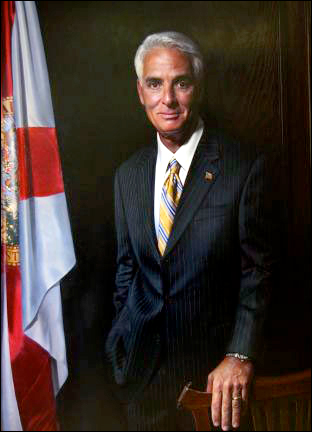
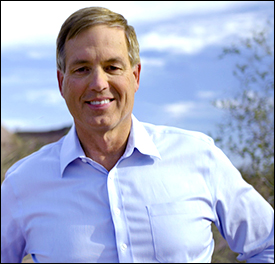
Florida Rep. Charlie Crist (D-St. Petersburg) easily wins Democrat nomination for governor to run against incumbent Gov. Ron DeSantis (R).

Florida: Crist Wins Gov Primary; Few Surprises — A busy night occurred around the country and particularly in the Sunshine State, as the political parties chose nominees in key statewide races and for Florida’s 28 newly drawn congressional districts. Thus, the last major primary date is now in the books.

The Florida statewide races were not in particular doubt. While Gov. Ron DeSantis and Sen. Marco Rubio were unopposed in their respective Republican primaries, congressman and former governor, Charlie Crist (D-St. Petersburg), easily defeated Agriculture Commissioner Nikki Fried, 60-35 percent, to claim the Democratic gubernatorial nomination. US Rep. Val Demings (D-Orlando), as expected, was an easy 84 percent winner in the Democratic US Senate primary.

The competitive House primary winners were:

  • Rep. Matt Gaetz (R; 70-24 percent victory margin)
  • Senate President Pro Tempore Aaron Bean (R; 68-26 percent; created open seat)
  • Cory Mills (R; 34-21 percent; open Stephanie Murphy seat)
  • Maxwell Alejandro Frost (D; 35-25 percent; open Val Demings seat)
  • Rep. Dan Webster (R; 51-44 percent), Anna Paulina Luna (R; 44-34 percent; open Charlie Crist seat)
  • Laurel Lee (R; 41-28 percent; new seat from reapportionment), Rep. Sheila Cherfilus-McCormick (D; 66-29 percent)
  • Jared Moskowitz (D; 61-21 percent; open Ted Deutch seat)
  • state Sen. Annette Taddeo (D; 68-26 percent; versus Rep. Maria Elvira Salazar)
  • ex-state Rep. Robert Asencio (D; 69-31 percent; versus Rep. Carlos Gimenez)

New York: Parties Hold Specials; Reps. Maloney & Jones Lose — The very active New York congressional primary begins with a special general election win for the Democrats. In a race many believed the Republican nominee, Dutchess County Executive Marc Molinaro would covert, Ulster County Executive Pat Ryan successfully held the 19th CD in the Democratic column with a close 52-48 percent win. Ryan will now serve the unexpired portion of former Rep. Antonio Delgado’s term. Delgado resigned the seat to accept his appointment as lieutenant governor.

Curiously, Ryan will seek his re-election in the 18th District as he ran for both seats simultaneously. There, he will face state Assemblyman Colin Schmitt (R-New Windsor) who was unopposed in the open seat Republican primary. Former congressional aide John Riley won the 19th Democratic primary and now advances into the regular general election against Molinaro.

Another incumbent pairing was also decided last night. Congressman Jerrold Nadler (D-Manhattan) easily defeated Rep. Carolyn Maloney (D-Manhattan), 55-24 percent, thus ending the congresswoman’s 30-year congressional career. Nadler had led in all polling, hence the final result is not surprising, though the size of his victory is greater than expected.

Rep. Tom Reed (R-Corning) resigned his seat to accept a position in the private sector earlier this year. The Republican caretaker candidate, Steuben County Republican Party chairman Joe Sempolinski, won the special election to serve the balance of the term. He scored a 53-47 percent win over Democrat Max Della Pia. The latter man, however, won the regular election Democratic primary and he moves into the general election.

The competitive House primary winners were:

  • Nick LaLota (R; 47-28 percent; open Lee Zeldin seat)
  • Robert Zimmerman (D; 36-26 percent; open Tom Suozzi seat; versus George Santos)
  • Lauren Gillen (D; 63-24 percent; open Kathleen Rice seat)
  • Dan Goldman (D; 26-24 percent; created open seat)
  • Rep. Nicole Malliotakis (R; 78-21 percent; in general versus ex-Rep. Max Rose)
  • Rep. Jamaal Bowman (D; 57-23 percent)
  • Rep. Sean Patrick Maloney (D; 67-33 percent; in general versus state Assemblyman Michael Lawler)
  • Brandon Williams (R; 58-42 percent; in general versus Francis Conole; open John Katko seat)
  • Nick Langworthy (R; 52-48 percent; regular election successor to Rep. Tom Reed)
  • Rep. Claudia Tenney (R; 54-40 percent)

Oklahoma: Rep. Markwayne Mullin Wins Senate GOP Runoff; OK-2 Surprise — As expected, US Rep. Markwayne Mullin (R-Westville) scored a landslide special election Republican runoff victory, 65-35 percent, over former state House Speaker T.W. Shannon. Mullin advances into the special general election where he will be favored to defeat former US Rep. Kendra Horn (D). The winner will replace resigning Sen. Jim Inhofe (R) in January and serve the remaining four years of the current term.

With Rep. Mullin’s 2nd Congressional District being open, the primary’s second-place finisher, former state Sen. Josh Brecheen, won the Republican runoff with a 52-48 percent win over favored state Rep. Avery Frix (R-Muskogee). In Oklahoma’s safest Republican seat, rated R+55, Brecheen is now a prohibitive favorite to defeat Democratic nominee Naomi Andrews in the general election.

Beasley Up in North Carolina; CO-8 Shows Toss-Up Race; Dem Race Tightens in Florida

By Jim Ellis — August 12, 2022

Senate

Former North Carolina state Supreme Court Chief Justice Cheri Beasley (D)

North Carolina: Democrat Beasley Up in New Poll — Blueprint Polling released a new North Carolina US Senate poll (Aug. 4-6; 656 registered North Carolina voters; live interview) that projects former state Supreme Court Chief Justice Cheri Beasley (D) to be holding a 46-42 percent edge over US Rep. Ted Budd (R-Advance). A Republican being down in a North Carolina poll is nothing new, however. In 2020, GOP Sen. Thom Tillis found himself outside the lead in 26 of 28 October public polls but won the race by two percentage points.

House

CO-8: Toss-Up District Shows Toss-Up Race — Colorado received a new congressional district in national reapportionment, and the Colorado Independent Redistricting Commission members drew the new seat, located just north of Denver, to be an even district from a partisan perspective. A new Global Strategy Group poll (July 26-Aug. 2; 500 likely CO-8 general election voters) suggests the district is performing as designed. The ballot test finds Republican state Sen. Barbara Kirkmeyer leading state Rep. Yadira Caraveo (D) by a tight 44-42 percent margin. This district is highly important to both parties in determining the next congressional majority.

NY-12: Potential Three-Way Race — Slingshot Strategies, polling for the Indian American Impact Fund (Aug. 2-5; 600 likely NY-12 Democratic primary voters) sees a tight ballot test forming between Democratic paired incumbents Jerrold Nadler and Carolyn Maloney, but also a third candidate coming into range. Businessman Suraj Patel returns for a third Democratic primary challenge to Rep. Maloney, and the poll, the sponsors of which favor Patel, find the race breaking 29-27-20 percent in favor of Rep. Nadler. Maloney holds a close second place, with Patel showing enough momentum to possibly make a significant closing run.

The New York congressional primary is Aug. 23. The Democratic primary in this new Lower Manhattan/Brooklyn congressional district easily wins the seat in the general election.

Governor

Florida: Dem Race Tightens — State Agriculture Commissioner Nikki Fried released a new Public Policy Polling survey (Aug. 8-9; 664 likely Florida Democratic primary voters; live interview & text) that suggests the primary race scheduled for Aug. 23 is becoming much closer.

The PPP data finds Rep. Charlie Crist’s (D-St. Petersburg) once substantial lead over Fried now falling to just 42-35 percent suggesting that the latter candidate may have enough closing momentum to cast doubt over the eventual outcome especially with 23 percent saying they are still undecided. The eventual Democratic nominee begins a shortened general election cycle in the underdog position opposite GOP Gov. Ron DeSantis.

Today’s Primaries; Final Results Close to Complete in Ariz.; Herrera Beutler Hanging By a Thread in Washington

By Jim Ellis — August 9, 2022

Primaries

Voting Today: Four States Holding Primaries; One Special Election — The final phase of primary season continues today with nomination elections occurring in Connecticut, Minnesota, Vermont and Wisconsin. The most competitive statewide races include choosing Senate candidates in Connecticut and governor’s contests in Minnesota and Wisconsin.

A total of 22 House races are on the cumulative political card tonight, including three open seats, one each in Minnesota, Vermont, and Wisconsin, and a special election to replace the late Rep. Jim Hagedorn (R) in southern Minnesota. With a victory tonight, either former state Rep. Brad Finstad (R) or ex-Hormel corporation CEO Jeffrey Ettinger (D) will take the seat immediately upon election certification and serve the balance of Hagedorn’s final term.

Primary Results

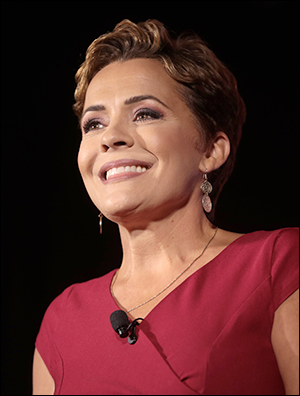
Former news anchor Kari Lake (R)

Arizona: Final Results Close to Complete — In states that feature large numbers of mail ballots and allow such votes to count even when arriving after election day, the better part of two weeks is needed to finalize the election totals. From Arizona’s Aug. 2 primary, the winners of all races are now statistically projected as the last remaining votes are being tabulated. The latest published figures show 98 percent of the Republican ballots and 92 percent of the Democratic votes recorded. Republican turnout looks to top 815,000, while Democrats are likely to exceed 625,000.

In the general election, Sen. Mark Kelly (D) will face venture capitalist Blake Masters (R), while Secretary of State Katie Hobbs (D) and former news anchor Kari Lake (R) square off in the open governor’s race.

The key House races feature Rep. David Schweikert (R-Fountain Hills) against businessman Jevin Hodge (D); retired Navy SEAL Eli Crane (R) challenging Rep. Tom O’Halleran (D-Sedona); Rep. Greg Stanton (D-Phoenix) in a competitive contest against business owner Kelly Cooper, who upset favored Tanya Wheeless in the 4th District Republican primary; and former state Sen. Kirsten Engel (D) and ex-Hispanic Chamber of Commerce executive Juan Ciscomani (R) doing battle in the Tucson-anchored open new 6th District.

Washington: Rep. Herrera Beutler Hanging By a Thread — Washington’s laborious vote counting procedure continues from the Aug. 2 all-mail jungle primary, and the biggest development is that Rep. Jaime Herrera Beutler (R-Battle Ground) has not yet secured a general election ballot slot, and may in fact lose to challenger Joe Kent (R).

With just under 96 percent of the 3rd District votes counted, Democrat Marie Perez, with 31.2 percent of the vote, has clinched the first ballot position. Rep. Herrera Beutler barely holds the second qualifying position with 22.6 percent (41,603 votes) nipping Kent’s 22.5 percent (41,346 votes), a margin of just 257 votes with as many as 7,000 votes remaining to be counted. Since 45.1 percent of the voters chose either Herrera Beutler or Kent, it is reasonable to believe approximately 3,000 of those votes will determine the second-place qualifier. Of the remaining votes for either Herrera Beutler or Kemp, the latter man would need 54 to overcome the congresswoman’s edge.

In the 4th District, Rep. Dan Newhouse (R-Sunnyside) who, like Rep. Herrera Beutler, voted to impeach former President Trump, has clinched a general election ballot position with 25.4 percent, but with as many as 25,000 votes to count. In second place, also clinching a general election slot, is Democratic businessman Doug White. Eliminated in third place is Trump-endorsed former town police chief and 2020 gubernatorial finalist Loren Culp (R).

Turning to the 8th District, 2020 Attorney General qualifier Matt Larkin (R) has clinched second position over King County Councilman Reagan Dunn and 2020 general election qualifier Jesse Jensen. Larkin now advances to the 2022 general election to challenge Rep. Kim Schrier (D-Sammamish). This is evolving into a top competitive national congressional campaign. Schrier only secured 47.9 percent in the jungle primary, and the cumulative partisan totals suggest that a very tight general election is coming. The cumulative Democratic vote so far totals 97,341 with 91.3 percent of the expected vote tabulated compared to the cumulative Republican total of 96,572.

House

MN-1: Finstad Leading in Final Special Election Poll — The closing poll in the special election to replace the late Rep. Jim Hagedorn (R) was released late last week. The Survey USA poll (July 26-30; 544 likely MN-1 special election voters; live interview) finds Republican former state Rep. Brad Finstad leading ex-Hormel corporation CEO Jeff Ettinger (D) by a 46-38 percent margin. Finstad also faces a regular election primary contest with former state Rep. Jeremy Munson whom the former defeated in the May 24 special primary election by just 427 votes.

MN-5: Rep. Omar Facing Serious Primary Challenge — Former Minneapolis City Councilman Don Samuels is waging a strong Democratic primary challenge against controversial Rep. Ilhan Omar (D-Minneapolis) in an election that will be decided today. The Minneapolis Star-Tribune announced its editorial board endorsement of Samuels and so did the city’s mayor, Jacob Frey (D). In the last week, a Super PAC entitled “Make A Difference” sponsored a $350,000 television buy to support Samuels. This will be a race to watch tonight.

NY-12: Rep. Nadler Leads in New Poll — Emerson College tested the upcoming Democratic-paired incumbent primary between Reps. Carolyn Maloney (D-Manhattan) and Jerrold Nadler (D-Manhattan). The survey (Aug. 1-2; 1,000 likely NY-12 Democratic primary voters; live interview, text & interactive voice response system) finds Rep. Nadler, largely with the overwhelming support of men, leading Rep. Maloney 40-31 percent, with the third candidate, businessman and former congressional candidate Suraj Patel attracting 11 percent support. The New York congressional primary is scheduled for Aug. 23.

Another Lead Change in Arizona; Competitive Race Brewing in Illinois Senate? Trending House News

By Jim Ellis — July 27, 2022

Senate

Arizona businessman Jim Lamon (R)

Arizona: Another Lead Change — The Battleground Connect organization tested the Arizona GOP Senate field (July 17-18; 800 likely Arizona Republican primary voters; live interview) and found businessman Jim Lamon bouncing back into the lead over venture capitalist Blake Masters and Attorney General Mark Brnovich. The spread is 33-28-16 percent, which is the second time Lamon has placed first in five publicly released July polls.

The lead is seesawing between Lamon and Masters with AG Brnovich generally registering a distant third. Since April, both Lamon and Masters have each topped the field in seven published surveys. The Arizona primary is Tuesday, and the volatility in the surveys suggest we will see a close finish. The GOP winner then challenges Sen. Mark Kelly (D) in November.

Illinois: A Competitive Race Brewing? — The Victory Research organization polled the Illinois Senate contest between incumbent Tammy Duckworth (D) and attorney and conservative activist Kathy Salvi, wife of former state representative and two-time statewide Republican nominee Al Salvi. The survey (July 17-19; 1,208 likely Illinois general election voters) arrived at a much closer result than one would have expected.

According to the VR data, Sen. Duckworth’s lead over Salvi is 43-34 percent. The result is surprising not so much in the margin between the two candidates, but that the senator is so far below the 50 percent mark. It is still likely that Sen. Duckworth wins re-election in the fall, but seeing such a poll after a June 28 primary that yielded a higher turnout for the Republican Senate primary than the Democratic side suggests the Salvi campaign might receive at least a slight boost.

The same polling sample showed Gov. J.B. Pritzker (D) with only a 49-39 percent spread against new GOP gubernatorial nominee Darren Bailey, a Louisville area state senator.

Wisconsin: County Exec Out, Endorses Lt. Gov. Barnes — Outagamie County Executive Tom Nelson (D), whose campaign for US Senate never caught fire, has formally withdrawn his candidacy. In his exit statement, Nelson endorsed Lt. Gov. Mandela Barnes, who is in a tight race with state Treasurer Sarah Godlewski and Milwaukee Bucks basketball club executive Alex Lasry for the Democratic nomination. The winner of the Aug. 9 Democratic primary will face Sen. Ron Johnson (R) in the general election.

House

MI-13: Big Self-Funder Has Lead –– State Rep. Shri Thanedar (D-Detroit) has spent more than $8 million of his own money to attempt to win the open Detroit-anchored 13th Congressional District race. It appears his expenditures are working. A Target Insyght survey (July 19-22; 500 likely MI-13 Democratic primary voters) finds Rep. Thanedar leading Michigan Civil Right Commission member Portia Roberson and state Sen. Adam Hollier (D-Detroit), among six other contenders, including John Conyers, III, son of the late veteran congressman. Thanedar’s polling margin is 22-17-16-7 percent respectively over Roberson, Sen. Hollier, and Conyers.

Thanedar’s personal spending edge is 8:1 over his next closest financial rival, Sen. Hollier, but that does not count a seven-figure expenditure from the American-Israel Public Affairs Committee intended to promote the latter man.

The Michigan primary is Tuesday. The 13th District is open because Rep. Brenda Lawrence (D-Southfield) is retiring and Rep. Rashida Tlaib (D-Detroit) chose to seek re-election in the new 12th District, thus departing from the new CD-13.

NY-10: A Free-For-All — A new Change Research poll for candidate Elizabeth Holtzman finds the Democratic primary for this open seat turning into a race that any one of six candidates could win. This is the first poll conducted and released since former New York City Mayor Bill de Blasio (D) exited the contest because of poor performance.

The CR poll (July 19-23; 437 likely NY-10 Democratic primary voters; online) finds former Trump impeachment counsel Daniel Goldman taking first position with 14 percent preference. Holtzman, who was last on a ballot in 1993, a losing re-election effort for NYC comptroller, places second at 12 percent support.

Tied with 10 percent are NYC Councilwoman Carlina Rivera, who led the last two published surveys, state Assemblywomen Yuh-Line Niou (D-Manhattan) and Jo Anne Simon (D-Brooklyn), and US Rep. Mondaire Jones (D-Westchester County). The new 10th, an open seat created when Reps. Carolyn Maloney and Jerrold Nadler were paired in a new 12th CD, encompasses Lower Manhattan and part of Brooklyn. The Democratic primary winner on Aug. 23 will claim the seat in the general election.

Greitens Making a MO Comback? No Candidate Reaches 10 Percent in NY

By Jim Ellis — May 31, 2022

Senate

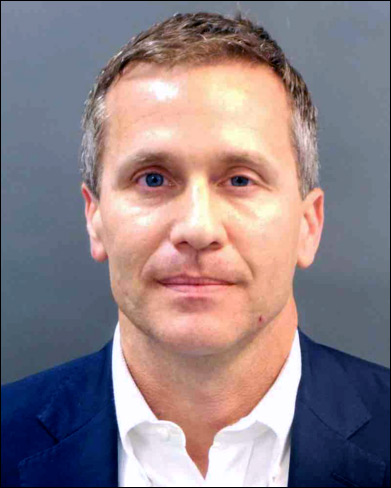
Ex-Missouri Gov. Eric Greitens (R)

Missouri: Greitens Back Up — The Trafalgar Group joined the firms who have tested the Missouri Republican primary and just released their survey results (May 16-18; 1,065 likely Missouri Republican primary voters; live interview; text; online). They find scandal-tainted resigned Gov. Eric Greitens returning to first place, this time with 26 percent. In this poll, US Rep. Vicky Hartzler (R-Harrisonville/Columbia) is a close second with 23 percent, and Attorney General Eric Schmitt with 19 percent. US Rep. Billy Long (R-Springfield) leads the also-ran tier with nine percent. The candidates have bounced around in various polls, but no one reaches the 30 percent mark. Expect someone to break from the pack before the Aug. 2 statewide primary election.

House

NY-10: No one Reaches 10 Percent — Emerson College just released a poll for this primary. Though the results are inconclusive because no one reaches even eight percent support, the survey (May 24-25; 500 likely Democratic NY-10 primary voters; combination response online and by text) reveals two important points.

First, Rep. Mondaire Jones (D-Westchester County) is already just as competitive as everyone else in the new Brooklyn/Lower Manhattan CD. In fact, he leads the group, but with only seven percent support followed by former NYC Mayor Bill de Blasio with six percent, and all others with five percent or less. A total of 77 percent of the respondents said they are undecided. Second, de Blasio’s poor showing at six percent with total name identification is far worse than his upside-down job approval rating would have suggested. This tells us that the former mayor begins with only a small constituency in this district, and will likely have a difficult time expanding his base.

NY-12: Maloney Tops Nadler — The aforementioned Emerson College Poll (May 24-25; 500 likely NY-10 Democratic primary voters; combination online and text) continues in the adjoining 12th CD that features a paired incumbents battle between New York City veteran Democratic Reps. Carolyn Maloney and Jerry Nadler. The survey finds Maloney, who like Nadler was first elected to the House in 1992, leading her opponent with a 31-21 percent support margin. Four other minor Democratic primary candidates score between only one and six percent preference. The FiveThirtyEight data organization rates the new NY-12, D+68, so the Democratic primary winner on Aug. 23 will win the general election in November.

Redistricting

New Hampshire: Process Heading to Court — The New Hampshire legislature adjourned Sine Die but passed another congressional redistricting map and again sent it to Gov. Chris Sununu (R), who, once more, says he will veto the bill. The governor’s promised action means the redistricting process will move to the state Supreme Court. The justices had previously said they will adopt a “least change” map, meaning both seats will lean toward the Democrats. Republicans were fighting to make the swing 1st District more Republican while conceding the 2nd District to incumbent Rep. Annie Kuster (D-Hopkinton). Gov. Sununu said he wanted both districts to be competitive. The move will likely cost the Republicans a seat, thus handing Rep. Chris Pappas (D-Manchester) a new district that he can again win.

Alabama’s Battle for Second; Conflicting Polls in Missouri;
de Blasio Returns in NY

By Jim Ellis
May 19, 2022

Senate

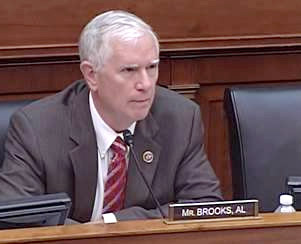
Alabama Rep. Mo Brooks (R-Huntsville)

Alabama: Battling for Second — Emerson College released a new survey for next Tuesday’s Alabama Senate primary, and the results again show that US Rep. Mo Brooks (R-Huntsville) has made a competitive comeback after former President Donald Trump rescinded his endorsement because he felt the congressman was running a poor campaign. For the third time, a recent poll shows Brooks rebounding to a virtual tie for the second runoff position.

For the three contenders, former Business Council of Alabama president and CEO Katie Britt, retired “Black Hawk Down” pilot Mike Durant, and Brooks, advancing to a secondary runoff election is a virtual certainty. In Alabama, candidates must achieve majority support to win a party nomination.

The Emerson College survey (May 15-16; 706 likely Alabama Republican primary voters; live interview; interactive voice response system and text) again finds Britt claiming first place with 32 percent, while Durant and Brooks closely follow with 26 and 25 percent, respectively. In other words, the latter two are in an effective tie for the second position. Assuming no one receives majority support Tuesday, the top two finishers will advance to a June 21 secondary runoff election. The Republican nominee then becomes a lock to succeed the retiring Sen. Richard Shelby (R) in November.

Missouri: Conflicting Polls — Former Gov. Eric Greitens (R), who was forced to resign from office due to a sex scandal and is now dealing with abuse accusations from his ex-wife, has catapulted back into the lead according to a new Survey USA poll. The study (May 11-15; 1,412 likely Missouri general election voters; 642 likely Missouri Republican primary voters; 500 likely Missouri Democratic primary voters; online) projects Greitens to a 26-17-11 percent lead over Attorney General Eric Schmitt and US Rep. Vicky Hartzler (R-Harrisonville/Columbia). The Democratic candidates, led by Iraq War veteran Lucas Kunce and philanthropist Trudy Busch Valentine, are all lagging around the 10 percent mark in primary support. All Republicans defeat the Democratic candidates in preliminary general election pairings.

This S-USA poll is a significant change from previous polling and is in direct conflict with the latest Remington Research Group survey taken within the same period (May 11-12; 945 likely Missouri Republican primary voters; interactive voice response system). These results find AG Schmitt with a 29 percent lead over Rep. Hartzler’s 23 percent, and Greitens trailing with 21 percent. The Missouri primary is Aug. 2.

House

NY-10: de Blasio, State Senator Announce — The revised New York congressional map has not yet received final judicial approval, but candidates are starting to make moves in anticipation of this being the active 2022 district plan. Because the map pairs NYC Democratic incumbents Carolyn Maloney and Jerry Nadler, another safe Democratic open seat was created adjacent to the hotly contested 12th CD. The new 10th District will be decided in the Democratic primary.

Yesterday, former New York City Mayor Bill de Blasio announced his congressional candidacy, but so did state Sen. Brad Holyman (D-NYC). Assuming the map is approved, this will be a hotly contested primary election that should attract national attention. Because the original congressional map and that of the state Senate were disqualified, the judge postponed the primary election for races in these categories until Aug. 23.

Redistricting

Kansas: High Court Overturns — In April, a Kansas district court disqualified the legislature’s congressional map as a partisan gerrymander. Gov. Laura Kelly (D) originally vetoed the map, but the legislature was able to override her action with two-thirds support in both houses. The Kansas state Supreme Court has overturned the lower court ruling, meaning the original map that puts the state’s 3rd District, in and around Kansas City, into competitive status is back for the 2022 cycle. Two-term Rep. Sharice Davids (D-Roeland Park) currently represents the district. This seat will again become a 2022 Republican conversion target.

States

Idaho: Ex-US Rep Defeats Incumbent AG — Former Congressman Raul Labrador, who served four terms in the House, will return to elective office. In the Idaho Republican primary, Labrador unseated the incumbent Attorney General Lawrence Wasden by a substantial 51-38 percent result. Prior to his service in Congress, Labrador was twice elected to the state House of Representatives. He ran unsuccessfully for governor in 2018, losing to current Gov. Brad Little, who also won his primary challenge on Tuesday. After leaving Congress, Labrador was elected as chairman of the Idaho Republican Party.

House Incumbent Primaries, Part II: Democrats

By Jim Ellis

Feb. 21, 2022 — Part II of our incumbents’ primary challenges report concentrates on the Democratic members who find themselves in serious nomination contests. (Note: Part I — the Republicans — was published Friday. Please scroll down to read.) Nine such situations are covered in this update, with one of them, the Texas race of veteran Rep. Henry Cuellar (D-Laredo) to be decided on March 1.


GA-7: Dem Pairing

Primary: May 24
Runoff: July 26

Rep. Carolyn Bourdeaux (D-Suwanee)
Rep. Lucy McBath (D-Marietta)
• Bourdeaux Cash-on-Hand (Dec. 31, 2021): $2,005,771
• McBath Cash-on-Hand (Dec. 31, 2021): $2,452,731
FiveThirtyEight Statistical Rating: D+16
Dave’s Redistricting App Historical Voting: 58.4% D

Republicans held the redistricting pen in Georgia and after losing two Atlanta metropolitan districts in consecutive elections, it was clear the GOP map drawers were going to take one back. That translated into loading Democrats from the previously Republican 6th District into the transitioning 7th CD.

Along with bringing more Democrats into the 7th, the 6th District incumbent, Rep. McBath, decided to join them. Instead of fighting for re-election in a new Republican 6th District (R+24), she moved south to challenge freshman Democrat Carolyn Bourdeaux in the party primary. As you can see from the cash-on-hand totals above, both incumbents are well-heeled financially, so a major campaign is underway.

Also in the Democratic field is state Rep. Donna McLeod (D-Lawrenceville), who points out that she is the only one of the three that actually lives in the 7th CD. Her campaign has been slow to begin, so it is doubtful that she will be much of a factor, and probably will not draw enough support to force the two congressional incumbents into a runoff. Therefore, it is likely that this pairing will be settled in the May 24 primary.

Among carryover constituents Rep. Bourdeaux has a big advantage in seeing a majority of her current 7th District constituency (57 percent) remaining in the new 7th. McBath, however, sees only 12.1 percent carryover from her 6th District. The larger Democratic influx came from Rep. Hank Johnson’s 4th CD, as 26 percent of his constituency was transferred to the new 7th.

On the other hand, the new 7th is overwhelmingly minority: 29.8 percent black, 21.3 percent Hispanic, and 15.8 percent Asian. Thus, the demographics could help Rep. McBath, who is African American. Her strength within the party’s leftward faction is also a benefit in a primary contest. With each incumbent showing similar strength levels, this will be an interesting race to watch on May 24.


GA-13: Rep. David Scott

Primary: May 24
Runoff: July 26
• Scott Cash-on-Hand (Dec. 31, 2021): $1,107,286
FiveThirtyEight Statistical Rating: D+52
Dave’s Redistricting App Historical Voting: 77.9% D

After only scoring 52.9 percent in the 2020 Democratic primary against three opponents, Rep. David Scott’s (D-Atlanta) 2022 race may be even more serious. Opposing him in this election are two candidates with an election track record, former state senator and 2017 Atlanta mayoral candidate Vincent Fort, and South Fulton City Councilman Mark Baker. The latter man bills himself as the “strongest progressive” in the race, but ex-Sen. Fort was well entrenched with the Bernie Sanders campaign.

Therefore, both opponents are attacking Rep. Scott from the left, which should help him split the opposition vote. Whether such a split will be enough to again allow him to capture majority support in the May 24 primary may be another question. Rep. Scott has long been attacked over not being further to the left on the ideological spectrum, which could again be a problem for him in a district that is overwhelmingly Democratic. Neither Baker nor Fort filed an FEC report at the end of the 2021, meaning they are behind on fundraising.

Rep. Scott must still be rated as the favorite to prevail, but this is another contest that will merit attention on May 24.


IL-6: Dem Pairing

Primary: June 28

Rep. Sean Casten (D-Downers Grove)
Rep. Marie Newman (D-La Grange)
• Casten Cash-on-Hand (Dec. 31, 2021): $1,580,171
• Newman Cash-on-Hand (Dec. 31, 2021): $573,120
FiveThirtyEight Statistical Rating: D+6
Dave’s Redistricting App Historical Voting: 51.4% D

The Illinois race is the second of the three Democratic congressional pairings, and it features sophomore Rep. Casten and freshman Rep. Newman. This particular pairing came about because of complaints that a second Hispanic seat should be drawn in Chicago.

Fearing a loss in court, the Democratic legislative leadership acquiesced and drew a new open 3rd District that is 44 percent Hispanic. As a result, Rep. Newman’s home was placed in Rep. Chuy Garcia’s (D-Chicago) 4th District, but she pivoted to run in the 6th against Rep. Casten. Her move made sense because 43 percent of her constituency was drawn into the new 6th District versus just 24 percent coming from Rep. Casten’s current 6th District.

While Casten has a financial advantage and the support of most of the Chicago Democratic establishment, Rep. Newman is a darling of the far left and will likely attract the more ideological voter that tends to dominate primary voting in both parties.

The aspect of this race that attracts little attention is that the pairing winner is not necessarily home free in the general election. With the Illinois gerrymander drawing 14 Democratic seats of 17 total districts, some of the Dem seats are weak. The 6th, with a D+6 rating from the FiveThirtyEight data entity, is one of those. Therefore, a divisive primary could make the eventual Republican nominee even more viable in the general election.

This draw was not favorable to either Democratic incumbent, and we will see a spirited fight between now and the June 28 primary.
Continue reading

Tuesday’s NYC Elections Results Expected to be Available Next Month

By Jim Ellis

Brooklyn Borough President Eric Adams

June 24, 2021 — Voters in New York City reached one of the election cycle’s benchmarks Tuesday, the actual primary election day; but we are still weeks away from seeing a formal declaration of who won the races.

NYC has been notoriously slow in counting ballots in a system that is encumbered with an extra post-election period to receive absentee ballots on top of a pre-election day early voting phase. Last year, for example, it literally took six weeks to determine that Rep. Carolyn Maloney (D-Manhattan) had been re-nominated in the 2020 Democratic primary.

This year, the city adopted the ranked-choice voting method, which even in the fastest counting jurisdictions has added days if not more than a week to determine a winner. Therefore, we will see another long, but this time better-planned, counting period.

In this 2021 election, the city clerk has published a schedule that will allow absentee ballots to be received through June 29, which also will be the release of the first round of ranked-choice results. Those figures will only be a partial count, however, because no absentee ballots will be added until after the reception deadline. More ranked-choice totals will be released on July 6, which the city official says will include “some” absentee ballots. Further, and likely final, releases will then come the week of July 12 that will include “more complete” absentee ballot counts.

All in all, the counting of the election ballots continues to be a lengthy and laborious task.

The ranked-choice system takes effect because no candidate received majority support. Now, the last-place finisher, candidate Isaac Wright, is eliminated. Officials will locate the ballots that ranked him first, and then add those voters’ second choices to the full count. If no one still reaches majority support, the next candidate with the lowest number of votes, in this case Joycelyn Taylor, will then have her 1st choice ballots located and those voters’ second choice added to the overall count. This process continues until a candidate exceeds 50 percent.

Turning to what has been reported for last night’s tabulations, as predicted, Brooklyn Borough President Eric Adams has the lead as he has so far captured 32 percent of the counted votes. Civil rights attorney and activist Maya Wiley, with support from Rep. Alexandria Ocasio-Cortez (D-Bronx) and the party’s far left faction, placed second with 22 percent, just ahead of former NYC Sanitation commissioner Kathryn Garcia who pulled 19 percent.

Former presidential candidate Andrew Yang, who led early in many polls, is effectively eliminated as he placed fourth with just under 12 percent of the total vote, or almost 20 full percentage points behind Adams. Since it is unlikely that the ranked-choice process would catapult him back into serious contention, Yang conceded his fate in media interviews.

In the early counting, Adams has healthy leads in four of the city’s five boroughs. He is running strongest in the Bronx, where he leads Wiley and Garcia, 45-17-10 percent. He has an eight-point lead over Wiley in his home borough of Brooklyn, tops Wiley 33-19 percent in Queens, and holds a 31-20 percent advantage over Garcia in Staten Island. The only borough where Adams trails is Manhattan, where Garcia places first with 32 percent and Adams only slots into third with 19 percent, three percentage points behind Wiley.

Adams’ lead is such that he is likely to win the Democratic primary once the weeks pass and the final count becomes known. The Adams nomination victory will foretell him winning the mayor’s office in November, as New York’s 7:1 Democrat to Republican ratio leaves little doubt as to the general election outcome.

Two other New York mayors did not fare as well as Adams in their respective Buffalo and Rochester primaries. These cities did not employ the ranked-choice system, so their results are much clearer today.

Four-term Buffalo Mayor Byron Brown appears to have lost his bid to win re-nomination for a fifth four-year term with still about 50 precincts outstanding. He will likely fall to self-proclaimed socialist India Walton. At-large Rochester City Councilman Malik Evans scored a landslide nomination victory over Mayor Lovely Warren by a virtual 2:1 margin.

In addition to the NYC mayor’s race, all 51 city council districts were also on the ballot, and each must now go through the ranked-choice counting process. To see the New York City official election results in this era of lightning quick technology, we must turn the clock all the way ahead to the week of July 12.

NYC and Ranked Choice on Ballot

NYC Democracy produced a voter palm card to help guide voters in a ranked-choice voting scenario.

By Jim Ellis

June 22, 2021 — New York City Democrats go to the polls today to cast their ballots in the party’s mayoral primary as 13 candidates compete to succeed term-limited Mayor Bill de Blasio (D). With voter registration figures giving Democrats an almost 7:1 advantage, there is little doubt that the eventual Democratic primary winner will win the mayoral general election on Nov. 2.

More, however, is on the ballot than just deciding which of the candidates will advance into the Autumn election. The Democrats are using a ranked choice voting system that has been tried in other places around the county, such as the state of Maine and 32 mostly local jurisdictions. With 13 candidates vying for the mayoral nomination, however, and at least four being within the margin of error in the most recent polling, this New York City race could be the system’s most significant test.

Ranked Choice Voting is an electoral procedure where voters rank the candidates in their order of preference. In this case, Democratic voters will record their first preference with the number 1, and then follow through individually with the remaining dozen.

The system works as follows: when the ballots are fully counted, assuming no one receives an outright majority, which is a virtual certainty with so many candidates in contention, the 13th-place finisher will be eliminated from further competition. Election officials will then locate all ballots where the last place finisher was chosen first. Those voters’ second choices are then recorded and added to the original count. This process continues until a top candidate reaches the 50 percent plateau.

Considering that New York City election officials took six weeks to determine a winner in Rep. Carolyn Maloney’s (D-Manhattan) 12th District congressional Democratic primary last year, for example, this complicated counting process could go on for some time before a winner is ultimately announced.

Pollsters attempted to gauge the voters’ ranked choice predilections in rather complicated questioning, and most estimated that the counting process would consume 10-12 rounds. Polling accuracy is unclear at this point because few research firms have attempted to measure the ranked choice system. Therefore, today’s race could have a wild card ending especially when voters go deep into their ratings.

Continue reading

MD-7: Succeeding Rep. Cummings

By Jim Ellis

Rep. Elijah Cummings (D-Baltimore)

Oct. 21, 2019 — The death of veteran Rep. Elijah Cummings (D-Baltimore) just days ago, on Oct. 17, creates an obvious vacancy in Maryland’s 7th Congressional District, which is anchored in the city of Baltimore. Gov. Larry Hogan (R) has a defined window to schedule the replacement special election for the late congressman, who was first elected in a 1996 special vote.

Cummings passed away in Baltimore, where he had been hospitalized at Johns Hopkins University’s medical facility. It is presumed that Gov. Hogan will wait until after the mourning period to schedule the special election, but he must act within 10 days of the occurred vacancy. The primary must be held within 65 days of the call date, with a special general election following within 65 days after the primary election date in order to comply with Maryland election law.

The calendar means the primary must be scheduled on or before Dec. 31 with the entire special cycle completed on or before March 5. Since the Maryland 2020 primary is scheduled for April 28, the 7th District special election must, therefore, be a stand-alone vote in order to meet the state’s mandated timetable.

Maryland employs a closed primary system, so Cummings’ congressional successor will be decided in the Democratic primary. The district has a Democratic Party registration figure of 68.3 percent, compared to Republicans’ 15.9 percent, and “Unaffiliated” 14.5 percent. Segments of under 3,300 people apiece belong to the Libertarian, Green, and other parties. Early voting will be in effect for the special election. Under state law, the early voting period begins the second Thursday prior to the election and ends the immediate Thursday before.

The district houses almost 60 percent of Baltimore city, in addition to encompassing over half of Howard County and just under a quarter of Baltimore County. The 7th shares Baltimore city with the 3rd (Rep. John Sarbanes) and 2nd CDs (Rep. Dutch Ruppersberger). The seat is majority African American/black, registering 53.6 percent of the demographic unit within the district confines as compared to the white population of 33.4 percent. Asians represent seven percent of the constituency, and Latinos just under four percent.

Continue reading