Category Archives: Governor

Cruz Polling Up for Renomination, Down for President; Ariz. Dem Primary Looking Competitive; VA-4 Special Election Scheduled;
Sen. Braun Announces Candidacy

By Jim Ellis — Wednesday, Dec. 14, 2022

President

Texas Sen. Ted Cruz (R)

Texas: Cruz Polling Up for Renomination, Down for President — According to a Texas-based Republican pollster, Sen. Ted Cruz is in strong shape among prospective GOP primary voters for renomination, but not for a presidential campaign. The CWS Research firm recently conducted a Texas poll (Nov. 8-29; 860 likely Texas 2024 Republican primary voters; interactive voice response system and online) and finds the senator posting a strong 81 percent renomination score, but only records three percent support for another presidential bid.

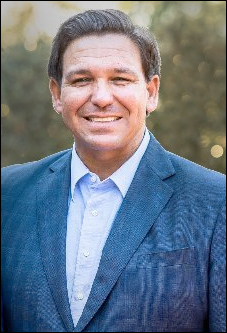
The CWS poll leader is former President Donald Trump at 37 percent preference with Florida Gov. Ron DeSantis following closely with 34 percent. Former Vice President Mike Pence and ex-UN Ambassador and South Carolina Gov. Nikki Haley also finish slightly ahead of Sen. Cruz in his home state. Pence draws five percent backing and Haley four percent, as compared to Sen. Cruz’s three percent.

Senate

Arizona: Dem Primary Could Be Competitive — Apparently Rep. Ruben Gallego (D-Phoenix) is not the only Arizona Democratic congressman considering a run for the Senate. According to a report from the Daily Kos Elections site, Rep. Greg Stanton (D-Phoenix) — who served six years as mayor of Phoenix and nine years on the Phoenix City Council before being elected to the US House in 2018 — has conducted a statewide US Senate poll. If he were to run in what would now be an open US Senate Democratic primary since new Independent incumbent Sen. Kyrsten Sinema will advance directly into the general election, a tough battle would develop in an August 2024 primary between the two Phoenix-based congressional Democrats.

Rep. Stanton was re-elected in November with a 56-44 percent margin against a credible Republican, businessman Kelly Cooper. This, after his district was changed from a D+15 to a D+1 rating according to the FiveThirtyEight data organization calculations, meaning he rather impressively exceeded expectations.

House

VA-4: Special Election Scheduled — Gov. Glenn Youngkin (R) has surprisingly scheduled the special congressional election to replace the late Rep. Donald McEachin (D-Richmond) for Feb. 21. With Democrats certain to hold this seat in the special election, it was thought Gov. Youngkin would delay a bit longer, possibly to early April, in order to give the Republicans a further one-seat edge in the House party division count.

With the Feb. 21 general election date that will fast approach, the political parties must quickly assemble and determine how their nominees will be chosen. At this point, their realistic options are to nominate in a special district convention or hold a “firehouse primary,” that is an election with very few polling places around the district.

The Democratic nomination will be the contest to watch, since the 4th District is rated as D+30. At this point, state Sen. Jennifer McClellan (D-Richmond) and Delegate Lamont Bagby (D-Richmond) have announced their intention to file as candidates. For the Republicans, two-time nominee Leon Benjamin and insurance agent and frequent candidate Ron Wallace have declared that they will run.

Governor

Indiana: Sen. Braun Announces — First-term Hoosier State Sen. Mike Braun (R) made his obvious intentions to run for governor official Monday with his formal announcement. He will be a strong favorite for the Republican nomination, which gives him the inside track in the general election.

There is a good possibility that his Democratic opponent will be former US senator and current Ambassador to the Holy See, Joe Donnelly. The Holy See is the government of the Roman Catholic Church, which is led by the Pope in his role as the bishop of Rome. Ironically, this would set a re-match between the two men of the 2018 Senate race, a campaign that Sen. Braun won with a 51-45 percent victory margin. The Braun announcement now sets into motion a competitive Senate campaign that will likely feature a crowded Republican primary.

Democrats Move Biden Schedule Forward; Warnock Leads in GA Runoff Polling; Duarte Wins Last Outstanding House Race, GOP Majority at 222 Seats; Manchin Not Ruling Out Gov Run

By Jim Ellis — Tuesday, Dec. 6, 2022

President

Primaries: Democrats Move Biden Schedule Forward — The DNC’s Rules & Bylaws Committee approved President Biden’s suggested alterations for the 2024 primary schedule. This means that South Carolina moves into the first primary position on Feb. 3, 2024. Following on Feb. 6 will be New Hampshire and Nevada. The newcomers to the early group are Georgia, slated for Feb. 13, and Michigan two weeks later on Feb. 27.

Republicans say they will maintain the traditional schedule kicking off with the Iowa Caucus and New Hampshire primary with Nevada and South Carolina following. The New Hampshire Democrats are objecting to being moved from the first primary position and state law allows them to ignore a political party’s rule. Though this is the first definitive step to nomination rules changes, more details must be finalized before any schedule takes effect.

Senate

Georgia: Sen. Warnock Leading in Last Runoff Polling — The Georgia Senate runoff election is today, and the latest two surveys give incumbent Sen. Raphael Warnock (D) a slight lead. Emerson College (polling for The Hill newspaper; Nov. 28-30; 880 likely Georgia runoff election voters; multiple sampling techniques) finds Sen. Warnock clinging to a 51-49 percent edge over former professional football player Herschel Walker (R). Survey USA (polling for television station WXIA in Atlanta; Nov. 26-30; 1,214 Georgia runoff election likely voters; online) sees a similar 50-47 percent spread in the senator’s favor.

Early voting looks even more favorable than the polling. Democratic early voting is up 5.7 percentage points when compared with the 2020 Georgia runoff election. Conversely, Republicans are down 7.3 percent based upon the previous statewide post-election runoff. Heading into today’s vote, Sen. Warnock is the clear favorite.

House

CA-13: John Duarte (R) Wins Last Outstanding Race — The final unresolved House race was called over the weekend, and California Republican John Duarte, an agriculture-related businessman, was projected a 584-vote winner over Democratic state Assemblyman Adam Gray (D-Merced). The win gives the Republicans a 222-213 House majority and provides GOP Leader Kevin McCarthy (R-CA) a much-needed vote for House Speaker, this one from a neighboring district, part of which touches his own CA-20 CD.

The race is officially over even though final numbers have not yet been recorded. Gray conceded the race to Duarte and, since California has no automatic recount law, the outcome is final.

Governor

West Virginia: Sen. Manchin Not Ruling Out Gov Run — Sen. Joe Manchin (D) said over the weekend that he has not made up his mind whether to seek re-election, run for governor, or retire. Sen. Manchin said he will make a decision about the 2024 election after the first of next year.

The interesting part of his statement is acknowledging that another run for governor is an option on his political table. Before winning a special 2010 US Senate election, Manchin served as governor from January 2005 to November of 2010, having won two elections to the state’s top elected post. Early polling suggests he would not fare well in a Senate race against Gov. Jim Justice (R), who is ineligible to seek a third term, and Rep. Alex Mooney (R-Charles Town). This makes West Virginia the top early 2024 election cycle Republican conversion opportunity.

Biden Suggests Primary Schedule; Maine’s King Prepping for Re-Election Campaign; A Budding GOP Primary Challenge in VA-9; Louisiana’s Gov Race Hinges on Kennedy

By Jim Ellis — Monday, Dec. 5, 2022

President

President Joe Biden

Primaries: President Biden Suggests Schedule — Considering that the White House will have a major say as to how the new Democratic presidential nomination rules are changed, President Biden shared his idea for a new primary schedule. He suggests South Carolina, the state that launched his own victory through the previous nomination process, be the first state to vote. He then says that New Hampshire and Nevada, voting on the same day, should be scheduled a week after the Palmetto State with Georgia and Michigan following on successive Tuesdays. This idea would increase the number of places voting before Super Tuesday from four to five.

Senate

Maine: Sen. Angus King (I) Preparing for Re-Election Campaign — Sen. Angus King (I), who has previously overcome both skin and prostate cancer, is reportedly planning to seek re-election in 2024 when he will be 80 years old. The senator, who previously served two terms as Maine’s governor, was first elected to his federal office in 2012. At the time, it appeared the 2018 campaign would be his last, but retiring at the end of the succeeding Congress does not now look to be the senator’s ultimate career path.

Sen. King runs as an Independent on the Maine ballot but caucuses with the Democrats, as does New England neighboring Sen. Bernie Sanders (I-VT). Should he indeed run in 2024, it will be the first time Sen. King will experience Maine’s Ranked Choice Voting system. Considering this situation, the veteran office holder may draw stronger opposition than in his past election campaigns.

House

VA-9: A Budding GOP Primary Challenge — Virginia Rep. Morgan Griffith (R-Salem), who was just re-elected to a seventh term with 73.5 percent of the vote, may be drawing a 2024 Republican primary challenge. Freshman state Delegate Marie March (R-Floyd) made a statement late last week saying that Rep. Griffith has “been in Congress too long,” and hinted that she might challenge him in the next GOP primary.

Rep. Griffith was first elected in 2010, defeating long-time incumbent Rick Boucher (D) and has had little in the way of competition ever since. He’s averaged 72.4 percent in his six re-election victories and has not yet faced a Republican primary challenge.

Governor

Louisiana: Yielding to Sen. Kennedy — Louisiana State Treasurer John Schroder (R) announced late last week that he will run for governor next year unless, he said, Sen. John Kennedy (R) enters the jungle primary field. If Kennedy does run, Schroder will opt to seek re-election. Sen. Kennedy, fresh from a 62 percent jungle ballot election victory in November that saw him winning a second US Senate term outright, is expected to enter the governor’s race and be considered the clear front runner. The senator says he will make a decision after the first of the year. Gov. John Bel Edwards (D) is ineligible to seek a third term.

Murkowski Re-Elected, Peltola Wins Full Term in Alaska; CA-13 is The Last Outstanding Race to be Called

By Jim Ellis — Tuesday, Nov. 29, 2022

Senate

Alaska Sen. Lisa Murkowski (R)

Alaska: Sen. Murkowski Re-Elected — Over the Thanksgiving break, we saw several more races called. The complete results came in Alaska where the final tabulations, including the Ranked Choice Voting (RCV) rounds, were released and contests decided.

As expected, Sen. Lisa Murkowski (R) was re-elected after nipping former State Administration Director Kelly Tshibaka (R), 43.4 – 42.6 percent in the aggregate vote, a margin of 1,914 votes. In the first RCV round, with fourth place finisher Buzz Kelley’s (R) votes being distributed, the race became even tighter, with Sen. Murkowski’s lead reduced to only 44.5 – 44.3 percent, a spread of just 339 votes. 

The final result was easily predictable, and one could argue Sen. Murkowski really won her re-election when people voted to change the state’s election system in 2020. Initiated with support from the senator’s political organization, the hybrid jungle primary/Ranked Choice Voting system allowed Sen. Murkowski to skip what was her most vulnerable election, a partisan Republican primary. With four people now automatically advancing into the general election, the partisan nomination phase within the traditional election cycle was in effect eliminated. In 2010, Sen. Murkowski lost the Republican primary, but was re-elected when she won a write-in Independent campaign in that year’s general election.

House

AK-AL: Rep. Peltola Wins Full Term — After winning the August special election through the Ranked Choice Voting system to replace the late Alaska Rep. Don Young (R), at-large Rep. Mary Peltola (D-Bethel) has now clinched a full term after the state’s preliminary final vote count was released the day before Thanksgiving. The end result was predictable, especially when Rep. Peltola easily placed first in the aggregate count, with a 49-26-23 percent margin over former Gov. Sarah Palin (R) and businessman Nick Begich III (R).

The first round of Ranked Choice Voting, which eliminated distant fourth-place finisher Chris Bye (Libertarian), almost put Peltola over the top. In this round, against both Palin and Begich, Rep. Peltola scored 49.2 percent of the adjusted vote. This result meant eliminating Begich, who was the third-place finisher. The third RCV round easily went to Rep. Peltola, who defeated Palin on a 55-45 percent tabulation. The Peltola victory increases the House Democratic Conference to 213 members as compared to the Republicans’ 221 with one California race remaining outstanding.

CA-13: The Last One Outstanding — We now have 434 US House races projected and the final partisan division count comes down to the end result from California’s new 13th Congressional District in the Fresno area. This post-election period could go on for some time.

The aggregate count, with a projected 96 percent of the votes recorded, although these estimates have not proven particularly reliable throughout the California counting process, gives Republican agri-businessman John Duarte a 593-vote lead over state Assemblyman Adam Gray (D-Merced). The county with the largest outstanding vote at a 90 percent estimated recorded figure, is Stanislaus, which slightly favors Gray.

Depending upon this last outcome, the Republican House majority will be either 221-214 or 222-213. Another Speaker vote for California Republican Kevin McCarthy could also be critical in relation to how that internal race unfolds on Jan. 3.

We can expect further days before a preliminary count is revealed, and it is likely we will see a long period of vote challenges from both sides prior to final certification of a winner. The California election certification deadline is Dec. 16.

Governor

Alaska: Gov. Dunleavy Re-Elected Outright — One race that did not need a Ranked Choice Voting round was the Alaska governor’s contest. Incumbent Gov. Mike Dunleavy (R) won a second term in the aggregate count, scoring 50.3 percent of the vote against three other candidates.

In a distant second place was Democratic former state representative Les Gara who posted 24.2 percent of the vote, while former Gov. Bill Walker, again running as an Independent, followed. The latter man recorded 20.7 percent of the aggregate popular vote. In the final general election qualifying position was Republican former Kenai Borough Peninsula Mayor Charlie Pierce who managed to secure only 4.5 percent of the vote.

Gov. Dunleavy, who faced an aborted recall effort early in his tenure, is the first re-elected Alaska chief executive since Democratic Gov. Tony Knowles won a second term in 1998.

2024 Presidential Polls Already Emerging; CNN Exit Polling Numbers; Senate Election Turnout Stats; Sen. Kennedy Planning to Run for Gov?

By Jim Ellis — Wednesday, Nov. 16, 2022

President

Former President Donald Trump; Florida Gov. Ron Desantis (R)

New Polling: Already Testing for 2024 — The House of Representatives isn’t even decided yet, and already we see a series of polls testing newly re-elected Florida Gov. Ron DeSantis (R) pitted against former President Donald Trump. The WPA Intelligence polling series finds the Florida governor opening up big Republican primary leads against Trump in several important nomination states: Iowa (+11), New Hampshire (+15), Texas (+11), Georgia (+20), and of course, Florida (+20). Count on presidential fever going non-stop for the next two years.

Voting

Exit Polling: CNN Releases Results — Though exit polling has not proven particularly accurate in past elections, looking at the results of the organization’s data still has value. A quick glance at the CNN data brings forth a couple of key observations. First, the Independent vote, which polling suggested through most of the election cycle was moving toward the Republicans, came back to the Democrats at election time. Self-described moderates were breaking Democratic, 56-41 percent. Those describing themselves as Independents voted Democratic in a 49-47 percent split. Within the cell segment, Independent women moved toward the Democrats in a 54-42 percent clip.

On the other end of the spectrum, Republicans actually were making their marks with minority voters, at least according to this data. Republicans were able to attract 39 percent of the Hispanic vote, 40 percent among Asians, and 13 percent with black voters. All of these numbers are an improvement from immediate past elections.

Additionally, while all men break toward the Republicans 56-42 percent, all women prefer the Democrats, 53-45 percent. Still, CNN measures that the national vote went Republican in a 51.3 – 46.7 percent swing even though Democrats held the Senate majority and it appears House control will come down to a minimum number of seats.

Senate

Senate States: Key Turnout Stats — Now that we are seeing closer to final turnout numbers in many places, we have derived some interesting participation statistics from the most competitive US Senate states.

In Georgia, the turnout may fall just short of the 4.0 million voters who cast ballots in 2018. The Nevada turnout, projected to just exceed the 1 million mark, will be an approximate four percent increase over 2018. In Wisconsin, once the final turnout report is released will likely show the same relative participation rate as recorded in 2018.

The Pennsylvania turnout looks to be up five percent from 2018. Florida, where Sen. Marco Rubio won an impressive 58-41 percent victory over US Rep. Val Demings (D-Orlando), who was clearly one of the strongest Democratic candidates in the nation, looks to be six percent under 2018’s total. In Iowa and Ohio, where Sen. Chuck Grassley (R) won an eighth term and Republican J.D. Vance held the open seat over US Rep. Tim Ryan (D-Warren/Youngstown), turnout appears to be down just under nine percent when compared to the 2018 participation rate in both states.

Governor

Louisiana: Sen. Kennedy Releases Poll — Armed with a fresh six years in the Senate with his 62 percent re-election vote against nine opponents, Sen. John Kennedy (R) is now admitting he is considering a run for governor next year when incumbent John Bel Edwards (D) will be ineligible to seek a third term. He then released a Torchlight Strategies poll (Nov. 9-12; 800 likely 2023 Louisiana jungle primary voters; live interview & text) that posted him to a 22-18-13-7-6 percent lead over state Transportation Secretary Shawn Wilson (D), attorney general and former Congressman Jeff Landry (R), Lt. Gov. Billy Nungesser (R), and fellow US Sen. Bill Cassidy (R), respectively.

Katie Hobbs Bests Kari Lake in Ariz. Gov Race; Three More House Races Called (2 in AZ; 1 in NY)

By Jim Ellis — Tuesday, Nov. 15, 2022

Governor

Arizona Secretary of State Katie Hobbs

Arizona — In the governor’s race, it has now become official that Democratic Secretary of State Katie Hobbs has defeated former television news anchor Kari Lake, the Trump-supported GOP candidate.

Despite trailing in polling as the race headed into election day, Hobbs was able to secure a tight 50.4 – 49.6 percent win in converting the Arizona governorship to the Democratic column. Nationally, the Democrats gained a net two gubernatorial chairs, winning in Arizona, Maryland, and Massachusetts, and losing in Nevada.

House

Balance of Power — According to the CNN Elections site, 215 seats have now been called for the Republicans as compared to 204 for the Democrats. Fox News has the Republicans at 217 — one seat away from the majority — with a tally of 205 for Democrats. Republicans are now very close to claiming the House majority.

Ten of the still outstanding districts lie in California, and it could be weeks rather than days as to when we will see conclusive results. California election officials have 33 days after the election to receive and count the ballots before certifying a winner. Considering that all mailed ballots, which is how the overwhelming number of people vote in the Golden State, are verified, the count requires an inordinate amount of time to complete.

If the Republican leads hold in the races where their candidate currently has the advantage, the party division will yield a 221R-214D majority. This split would, of course, give the GOP their majority but with a far smaller margin than they had anticipated. With some prognosticators and television commentators having previously believed that the GOP majority could reach well into the 240s, the smaller majority will be viewed as a setback for the party despite them achieving the ultimate goal of wresting control away from the Democrats.

Five of the Republicans’ leads are incumbent races. California Assemblyman Kevin Kiley (R-Granite Bay/Sacramento) is the lone non-incumbent GOP leader and favored to hold his edge in his R+8 rated 3rd District.

Arizona — A trio of House races came off the board last night beginning with Arizona Republican GOP Rep. David Schweikert (R-Fountain Hills) who was projected as a close victor over businessman Jevin Hodge (D) in a Maricopa County district that is much more Democratic than the congressman’s previous seat.

Turning to the Grand Canyon State’s southeast corner, former Hispanic Chamber of Commerce executive and ex-gubernatorial aide Juan Ciscomani (R) has been declared the winner of the open 6th District, thus flipping the seat from which Democratic Rep. Ann Kirkpatrick (D-Tucson) is retiring. Ciscomani defeated former Democratic state Sen. Kirsten Engel.

Along with Republican Eli Crane previously defeating Rep. Tom O’Halleran (D-Sedona) in the new northern Arizona 2nd District, the GOP gains a net two seats in the Grand Canyon State delegation and will hold a 6R-3D advantage in the federal delegation.

New York — Turning to the Syracuse, NY area, first-time candidate Brandon Williams (R), a tech company executive and former Navy veteran, defeated former US Intelligence analyst and previous congressional candidate Francis Conole (D) in the seat that Rep. John Katko (R-Syracuse) has represented for four terms. Katko decided not to seek re-election this year.

Senate Majority Now Decided;
House Majority Continues
To Remain in Limbo

Click on map or here to see CNN’s interactive 2022 elections results House map: CNN

By Jim Ellis — Monday, Nov. 14, 2022

Now, just about a week beyond the 2022 election, each major party still has a chance of controlling the US House, while the Democrats, with late victories in Arizona and Nevada, have secured at least a 50-50 ostensible Senate majority when counting the vice president’s tie-breaking vote.

Senate

Senate: Majority Decided — Just one of the 35 Senate elections still remains undecided: the Georgia race that will head to a post-election runoff on Dec.6. Once the tight Arizona, Nevada, and Wisconsin races were called for incumbents Mark Kelly (D-AZ), Catherine Cortez Masto (D-NV), and Ron Johnson (R-WI) the majority was decided in favor of the Democrats.

The Georgia race unofficially finds incumbent Raphael Warnock (D) holding 49.4 percent of the vote versus Republican Herschel Walker’s 48.5 percent. Libertarian Chris Victor taking 2.1 percent, or just over 48,000 votes, denied both major party candidates the opportunity of reaching the 50 percent plateau. Therefore, the two finalists advance to a new election.

A Warnock win would put the Senate balance of power at 51-49 with the Democrats in control and not needing the vice president to make a tie-breaking vote. A Walker win would leave the Senate without a true majority at 50-50, thus requiring Vice President Kamala Harris’ deciding call on straight party line votes.

The Alaska Senate race is also undecided, but the state’s new electoral system that sends four candidates to the general election won’t be final for another two weeks.

It is obvious that contest will winnow down to a battle between two Republicans, Sen. Lisa Murkowski and former Alaska Director of Administration Kelly Tshibaka. While Tshibaka leads the aggregate vote count, it has become clear that she and Sen. Murkowski will eventually advance into the Ranked Choice runoff.

Though Tshibaka is, and may remain, the vote leader, the RCV runoff system looks to favor Sen. Murkowski. Regardless of which woman is declared the victor when the lengthy process ends, the GOP will retain the Alaska Senate seat.

House

House: Majority Count Remains in Limbo — The House races are still very much undecided with 19 races uncalled. Considering that 10 of those races are in California and one in New York where it will likely take weeks to arrive at final totals, it could be quite some time until we know the ultimate outcome.

According to the CNN election site count, of the 19 uncalled races the Democrats lead in nine, Republicans eight, and two are pure toss-ups, both of which the GOP candidate has a slight count edge. Republicans, however, sitting at 212 called races in their favor versus 204 for the Democrats, need only six of the 19 to fall their way, while Democrats require 14 to claim a bare majority.

It appears the final margin may come down to just one or two seats. The GOP lead seems relatively secure in five of their eight advantage seats, which would give them 217, while the Democrats appear to have solid advantages in another seven of their nine, which puts them at 211.

Therefore, the Republican projection appears to lie in the 217-221 range, while the Democrats’ best-case scenario looks to be scoring a 218-217 slight majority. These predictions, however, are based upon rudimentary projections that could easily change once the actual votes are finally tabulated in all 19 outstanding campaigns.

Governor

Aggregate Governor: Incumbents Dominate — Surprisingly little change occurred in the 36 governors’ races in terms of party change. Democrats, as predicted, easily converted the Maryland and Massachusetts open seats.

The 36 governors’ races are also almost complete, with only Alaska and Arizona uncalled.

In returns that defied polling and thus favor the Democrats, Arizona Secretary of State Katie Hobbs (D) leads former news anchorwoman Kari Lake (R) in the governor’s race, and her advantage may be enough to clinch the office once the state works through its counting delays.

At this point, Hobbs holds a 50.5 – 49.5 percent lead with an estimated 93 percent of the vote counted. This translates into approximately 180,000 votes remaining to be tallied. To win, Lake would have to receive more than 56 percent of the outstanding vote to make up her 26,000-plus vote deficit, which is difficult.

In the only competitive election resulting in a partisan conversion, Republican Clark County Sheriff Joe Lombardo (R) unseated Nevada Gov. Steve Sisolak (D). In races that were largely decided in the states’ respective Democratic primaries, Wes Moore and Maura Healey successfully converted Republican governorships in Maryland and Massachusetts, respectively.

Oregon, the site of perhaps the most interesting governor’s race because it featured a three-way battle, saw former state House Speaker Tina Kotek (D) prevail over ex-House Minority Leader Christine Drazan (R) and former state Sen. Betsy Johnson (I). Polling correctly suggested that Johnson had dropped well off the pace but also largely projected incorrectly that Drazan was positioned for a close upset win. In the end, the election broke 47-44-9 percent in Kotek’s favor with an estimated 93 percent of the all-mail vote counted.

Alaska Republican incumbent Mike Dunleavy looks to be in position to potentially clinch re-election outright, thus exceeding the 50 percent mark within the aggregate vote and avoiding a Ranked Choice Voting instant runoff. With ballots being allowed two weeks to report from the wilderness, it will be just before Thanksgiving when all of the Last Frontier races finally conclude.