Tag Archives: New Mexico

The New Mexico Ploy

By Jim Ellis

Sept. 15, 2021 — During the last week reports were surfacing that suggested the New Mexico State Democratic leadership was considering ways to turn the current 2D-1R congressional map into a 3D-0R plan. This might be easier said than done, however.

New Mexico is one of the Democrats’ 15 “trifecta states,” meaning the party controls all three legs of the redistricting stool: the state Senate, state House, and governor’s mansion. Republicans have 23 trifectas. Therefore, if the Democrats are to minimize the redistricting damage, or even possibly come out slightly ahead, they must fully use their political leverage in the states they control.

Of the Democrats’ 15 trifectas, however, five of the states handle redistricting through a commission, and in another five the party already controls all the congressional seats. Therefore, if they are to make a national redistricting play they must take maximum advantage in Illinois, Nevada, New Mexico, New York, and Oregon. The lay of the land, however, makes it very difficult to expand their fortunes in Nevada and possibly Oregon, which is why trying to take an extra seat from New Mexico makes some sense from a national Democratic perspective.

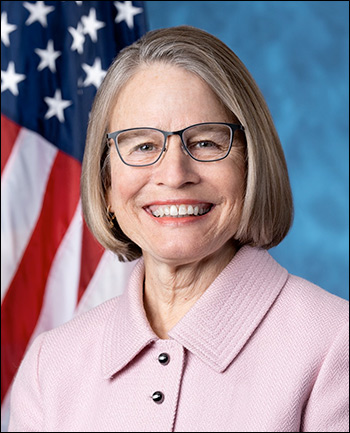
New Mexico has three congressional seats, all of which a freshman represents. The 1st (Rep. Melanie Stansbury; D-Albuquerque) and 3rd Districts (Rep. Teresa Leger Fernandez; D-Santa Fe) in the northern part of the state are safely Democratic.

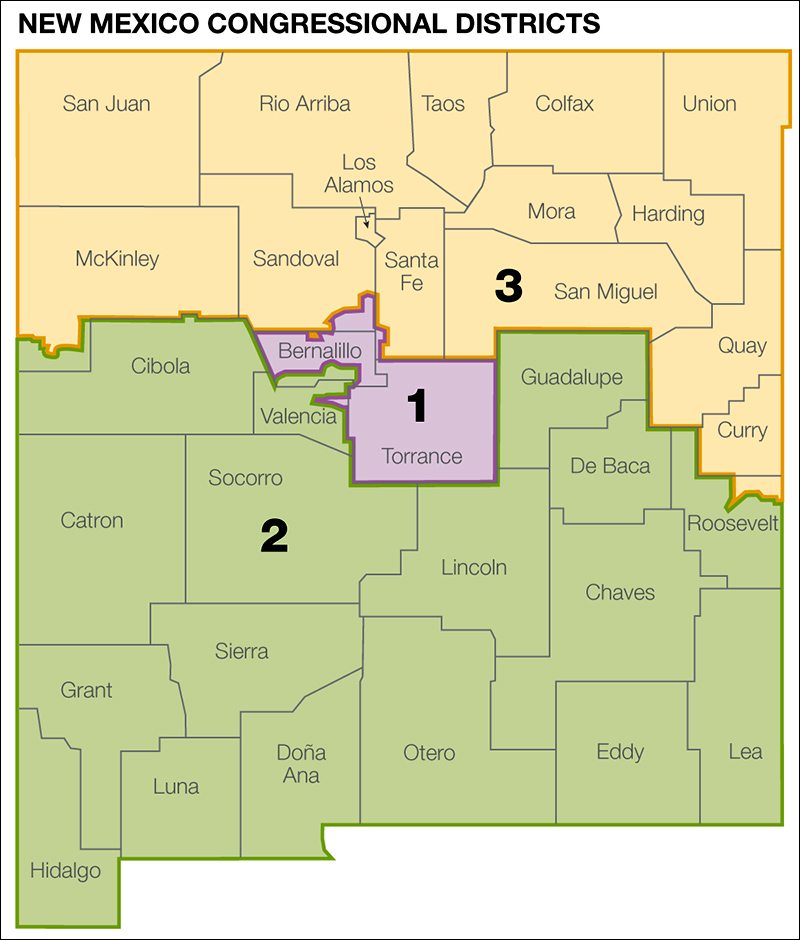
The southern 2nd District (Rep. Yvette Herrell; R-Alamogordo), which encompasses almost all of the territory south of Albuquerque, has performed as a Republican seat at the congressional level in 19 of the last 21 elections. Democrats picked up the district in their recent wave election years (2006; 2018) with open seat victories, but the voters favored the Republican challenger in both successive elections. This, despite NM-2 being a majority Hispanic district: 53.7 percent of the overall population according to the previous census data.

Additionally, the current seats are not widely out of population balance. The 1st District needs to gain just 11,264 people, while the 2nd must shed 8,181 individuals, and the 3rd must relinquish 3,082 residents. Therefore, a radical re-draw that results in a sweep of the three districts for one party when the population swings are so small would certainly draw a political gerrymandering lawsuit upon adoption of the new map. Whether such a lawsuit would succeed of course is a question that can only be answered when the final map is drawn and enacted.

Likely, the only way to draw a 3D-0R map in New Mexico would be to keep the northern 3rd District Democratic seat virtually intact, and then draw the Republican 2nd into Albuquerque. This would cause the city and Bernalillo County to be split resulting in the 1st and 2nd then appearing as southwestern and southeastern seats that divide Albuquerque, and subsequently stretch all the way to the Mexican border.

Even this draw might make it difficult to create three Democratic seats because the southeastern district would still have the potential of being Republican enough to make the party’s candidate, in this case Rep. Herrell, strong enough to have a chance of winning a general election.

New Mexico is a good example as how a largely internal state exercise can transform itself to help achieve a national partisan goal. It remains to be seen just how bold the New Mexico Democrats will be, as this small and sometimes obscure state steps into the national redistricting limelight.


Census by District

By Jim Ellis

Aug. 17, 2021 — We can now see exactly where each congressional district in the country stands in terms of population. The Census Bureau delivered the state redistricting data last week, and the Daily Kos Elections site data team segmented the numbers into individual congressional districts.

Below is a chart of the 38 states that have more than two districts, isolating the CDs that are the most over and under populated. The “High” column depicts the district that is the most over-populated in the state, while the “Low” is the one requiring the most new residents. The “+/-” column shows how many districts in the particular state are over and under populated.

The most robust district is that of Texas freshman Rep. Troy Nehls (R-Richmond). His southwest Houston seat houses just under one million people, at an exact count of 972,309. The least populated seat is West Virginia’s 3rd District (Rep. Carol Miller-R): 326,267 people under quota. With all of the Mountain State seats seriously down, it is clear as to why West Virginia lost a seat in reapportionment.

There are only two states, Colorado and Oregon, where all of the current districts are over-populated. Both entities gain one seat in reapportionment. On the other end of the spectrum, Michigan and Pennsylvania saw all districts falling below their new population quota, and in Illinois, 17 of their current 18 do as well. All three states are losing a district.

It is not surprising that California lost a seat for the first time in history. A total of 35 of their current 53 seats require more population versus 18 that must shed residents. New York barely lost a seat, by just 89 people statewide, which is surprising when seeing 23 of their current 27 districts requiring additional population.

The states are now converting their new data into their redistricting software systems. After that, most will hold hearings for public input prior to district construction beginning.

STATE DIST INCUMBENT HIGH LOW +/-
Alabama 5 Mo Brooks (R) 43,348 4, 3
7 Terri Swell (D) -53,143
Arizona 5 Andy Biggs (R) 86,414 3, 6
2 Ann Kirkpatrick (D) -50,133
Arkansas 3 Steve Womack (R) 86,266 2, 2
4 Bruce Westerman (R) -66,283
California 45 Katie Porter (D) 53,645 18, 35
-1 40 Lucille Roybal-Allard (D) -70,139
Colorado 4 Ken Buck (R) 148,823 7, 0
+1 3 Lauren Boebert (R) 36,543
Connecticut 4 Jim Himes (D) 25,627 2, 3
2 Joe Courtney (D) -21,288
Florida 9 Darren Soto (D) 186,381 21, 6
+1 13 Charlie Crist (D) -41,756
Georgia 7 Carolyn Bourdeaux (D) 94,304 8, 6
2 Sanford Bishop (D) -92,108
Illinois 7 Danny Davis (D) 10,986 1, 17
-1 17 Cheri Bustos (D) -79,907
Indiana 5 Victoria Spartz (R) 50,921 5, 4
8 Larry Bucshon (R) -38,579
Iowa 3 Cindy Axne (D) 61,382 1, 3
4 Randy Feenstra (R) -31,730
Kansas 3 Sharice Davids (D) 57,816 1, 3
1 Tracey Mann (R) -33,697
Kentucky 6 Andy Barr (R) 33,300 4, 2
5 Hal Rogers (R) -57,592
Louisiana 6 Garret Graves (R) 40,173 3, 3
4 Mike Johnson (R) -47,947
Maryland 4 Anthony Brown (D) 26,772 6, 2
7 Kweisi Mfume (D) -68,401
Massachusetts 7 Ayanna Pressley (D) 18,714 4, 5
1 Richard Neal (D) -50,635
Michigan 11 Haley Stevens (D) -17,368 0, 14
-1 5 Dan Kildee (D) -104,476
Minnesota 3 Dean Phillips (D) 24,586 5, 3
7 Michelle Fischbach (D) -39,978
Mississippi 4 Steven Palazzo (R) 37,196 3, 1
2 Bennie Thompson (D) -65,829
Missouri 3 Blaine Luetkemeyer (R) 35,121 6, 2
1 Cori Bush (D) -54,618
Nebraska 2 Don Bacon (R) 47,170 2, 1
3 Adrian Smith (R) -53,152
Nevada 3 Susie Lee (D) 79,374 2, 2
1 Dina Titus (D) -73,332
New Jerseyy 8 Albio Sires (D) 47,314 5, 7
2 Jeff Van Drew (R) -41,606
New Mexico 2 Yvette Harrell (R) 8,181 2, 1
1 Melanie Stansbury (D) -11,264
New York 12 Carolyn Maloney (D) 34,717 4, 23
-1 23 Tom Reed (R) -83,462
North Carolina 2 Deborah Ross (D) 165,703 12, 1
+1 1 G.K. Butterfield (D) -6,238
Ohio 3 Joyce Beatty (D) 23,119 2, 14
-1 6 Bill Johnson (R) -99,512
Oklahoma 1 Kevin Hern (R) 36,806 3, 2
2 Markwayne Mullin (R) -69,793
Oregon 1 Suzanne Bonamici (D) 157,843 5, 0
+1 4 Peter DeFazio (D) 117,399
Pennsylvania 10 Scott Perry (R) -5,379 0, 18
-1 15 Glenn Thompson (R) -90,540
South Carolina 1 Nancy Mace (R) 87,689 3, 4
6 Jim Clyburn (D) -84,741
Tennessee 4 Scott DesJarlais (R) 62,976 5, 4
9 Steve Cohen (D) -77,122
Texas 22 Troy Nehls (R) 205,322 28, 8
+2 13 Ronny Jackson (R) -59,517
Utah 4 Burgess Owens (R) 65,265 1, 3
3 John Curtis (R) -31,190
Virginia 10 Jennifer Wexton (D) 100,750 6, 5
9 Morgan Griffith (R) -87,917
Washington 7 Pramila Jayapal (D) 28,862 6, 4
6 Derek Kilmer (D) -33,730
West Virginia 2 Alex Mooney (R) -275,777 0, 3
-1 3 Carol Miller (R) -326,627
Wisconsin 2 Mark Pocan (D) 52,678 2, 6
4 Gwen Moore (D) -41,320

House Vulnerables – Part II

By Jim Ellis

July 13, 2021 — On Monday, we began a two-part series on what are arguably the most vulnerable dozen US House seats based upon the individual district’s political performance over the past two elections.

Below is the priority order update covering the second half of the top 12 most vulnerable CDs. As you will continue to see below, all of the seats except one are Republican held.

To refresh, the first six covered were:

• IA-2 (Rep. Mariannette Miller-Meeks, R-Ottumwa)
• IA-1 (Rep. Ashley Hinson, R-Marion/Cedar Rapids)
• IA-3 (Rep. Cindy Axne, D-Des Moines)
• FL-27 (Rep. Maria Elvira Salazar, R-Miami)
• CA-48 (Rep. Michelle Steel, R-Orange County)
• NY-22 (Rep. Cynthia Tenney, R-New Hartford)

Here’s our look at the next six:

UT-4: Rep. Burgess Owens (R-Salt Lake City) – Ave R vote: 48.8%
• Former NFL football star and businessman Burgess Owens defeated freshman Rep. Ben McAdams (D) by one percentage point in 2020, and we can expect another competitive race here again within this mostly suburban Salt Lake City congressional district located in the metropolitan area’s southern sector.

Republicans, who are in full control of the Utah redistricting process, will attempt to improve the district for Owens, which is possible since the 4th CD is the fastest growing district in the fastest growing state over the past decade. The best estimates suggest that the 4th District must shed approximately 50,000 people to other CDs. This should allow map drawers to subtract a substantial number of Democratic voters from the district, thus yielding Burgess a slightly more favorable political domain.

At this point, McAdams, who was the Salt Lake County mayor prior to his election to Congress, has not indicated whether he will return for a re-match.

MN-1: Rep. Jim Hagedorn (R-Rochester) – Ave R vote: 49.3%
• Two-term Rep. Hagedorn just announced that his cancer has returned, meaning an immediate treatment regimen. How this will affect his re-election campaign is yet to be determined. Hagedorn has won two close elections, as has his Democratic colleague in the adjacent district, Rep. Angie Craig (D-Eagan).

Minnesota is the only state in the nation that sees a split control legislature, meaning each party controls one house. Since the state did not lose a congressional district in apportionment as originally projected, it would not be surprising to see a legislative deal made where Democrats and Republicans are flipped between the two adjoining districts. The changes would result in Hagedorn gaining Republicans and Craig adding Democrats. Redistricting will perhaps be the most critical factor in determining the outcome of both districts come 2022 and beyond.

Continue reading

NM-1 Special Election Tuesday

New Mexico state Rep. Melanie Stansbury (D)

By Jim Ellis

June 2, 2021 — The latest in the series of special elections to fill US House vacancies was held yesterday, and the race has an obvious favorite.

On the ballot: state Rep. Melanie Stansbury (D-Albuquerque); state Sen. Mark Moores (R-Albuquerque); ex-Land Commissioner Aubrey Dunn, a former Republican who is running as an Independent; and Libertarian Party nominee Chris Manning.

The major parties nominated their candidates in special convention soon after incumbent Rep. Deb Haaland (D-Albuquerque) resigned to accept her appointment as Interior Secretary in President Biden’s cabinet.

Rep. Stansbury prevailed in a close multi-candidate Democratic convention, ultimately defeating state Sen. Antoinette Sedillo Lopez (D-Albuquerque) in a final round of delegate voting. Many believed winning the Democratic convention was tantamount to claiming the special election. Sen. Moores was an easy winner on the Republican side.

All indications pointed to a Stansbury victory, which is what played out last evening. The only recent publicly released poll before yesterday’s election, one that RRH Elections conducted (May 18-21; 555 likely NM-1 voters, interactive voice response system), found the Democratic nominee holding a 49-33 percent lead over Moores.

Secondly, the district has moved sharply to the left over the past decade, as the 2016 and 2020 presidential elections suggest. In the ’16 campaign, Hillary Clinton defeated Donald Trump here, 52-35 percent. This past November, the Biden margin over ex-President Trump soared to 60-37 percent. The last Republican to represent the 1st District was former Rep. Heather Wilson (R-Albuquerque) who left the House in 2008 to run unsuccessfully for US Senate.

Continue reading

A Special Election Look-In

By Jim Ellis

May 26, 2021 — The Albuquerque, New Mexico vacant US House seat will be filled on June 1, and a new RRH Elections survey finds the Democratic nominee holding a strong advantage. In Texas, There is no mystery as to which party will win the July 27 special runoff election in North Texas to replace the late Rep. Ron Wright (R-Arlington), but which Republican claims the vacant seat is certainly getting more interesting. We take a look at both races.

NM-1

The RRH Elections poll (May 18-21; 555 NM-1 special election voters and those intending to vote, interactive voice response system and online), finds state Rep. Melanie Stansbury (D-Albuquerque) leading state Sen. Mark Moores (R-Albuquerque), 49-33 percent.

The numbers make sense when overlaying the 1st District voting history. Former Rep. Deb Haaland (D-Albuquerque) naturally resigned the seat after being nominated and confirmed as US Interior Secretary in the Biden Administration weeks after winning re-election to a second term. Her victory percentage was 58, after claiming her first term in 2018 with a 59-36 percent margin.

At one time during the century, the 1st was politically competitive – former Rep. Heather Wilson (R-Albuquerque) held the seat for five terms, ending when she ran unsuccessfully for the US Senate in 2008, for example – but a weakened New Mexico Republican Party and a stronger Democratic composition from redistricting has taken the seat off the board.

President Biden carried the district over former President Trump, 60-37 percent, after Hillary Clinton won here in 2016 with a lower but still comparatively strong 52-35 percent spread. Testing President Biden’s current job approval rating, RRH finds him recording a 57:39 percent favorable to unfavorable ratio, which is similar to his 2020 vote performance. This consistency gives the RHH polling data further credibility.

In terms of finances, Stansbury had raised $1.2 million through the May 12 pre-primary reporting period, with $525,000 cash-on-hand as of that date. Sen. Moores, by contrast, had obtained $595,000 with $125,000 in the bank. His receipts total includes a $200,000 personal loan.

Continue reading

IA-2: Hart Concedes;
NM-1: Dems Nominate

Iowa Rep. Mariannette Miller-Meeks’ (R-Ottumwa)

By Jim Ellis

April 2, 2021 — Former Iowa state senator, Rita Hart (D), withdrew her challenge late Wednesday afternoon, before the House Administration Committee pertaining to Rep. Mariannette Miller-Meeks’ (R-Ottumwa) six-vote victory in the November election. Also, the New Mexico Democratic State Central Committee met virtually over the past two days in order to choose a congressional nominee to fill the state’s 1st District vacancy. The seat is in special election cycle because Deb Haaland resigned her federal legislative office in order to join the Biden cabinet as Interior Secretary. Details below:

Iowa

In a released statement, IA-2 challenger Hart said, “Despite our best efforts to have every vote counted, the reality is that the toxic campaign of political disinformation to attack this constitutional review of the closest congressional contest in 100 years has effectively silenced the voices of Iowans.”

In actuality, the miniscule victory margin is the first such result of this type since 1984, not in 100 years, when in a similar case the House of Representatives decided in early 1985 that then-Rep. Frank McCloskey (D-IN) was re-elected with a four-vote margin.

The IA-2 result was a point of controversy ever since the new Congress was sworn into office on Jan. 3. Instead of challenging the six-vote margin in the Iowa court system, Hart chose to bring her complaint directly to the House of Representatives. She claimed that Iowa election authorities has not counted 22 legal ballots that would have changed the final outcome. The officials retorted that they rejected the ballots for various reasons of noncompliance with state election laws.

After the body’s internal organization process was completed, the House Administration Committee voted on a 6-3 party line vote to hear Hart’s case. There had been much chatter in the news media and blogosphere during the past two weeks about the Democratic leadership wanting to award the seat to Hart, thus displacing Rep. Miller-Meeks who had been provisionally seated on Jan. 3 pending the outcome of the Hart challenge.

Continue reading

Special Elections Update: LA Votes

https://www.facebook.com/Karen.Carter.Peterson/videos/2521633831472770/Karen Carter Peterson promotional video.


By Jim Ellis

March 22, 2021 — Five special congressional elections are now on the political calendar, and we see current action in all.

Beginning with the two Louisiana seats, voters went to the polls Saturday in the first round of elections in the state’s 2nd and 5th Congressional Districts.

The 2nd, anchored in New Orleans and Baton Rouge, is a Democratic seat left vacant when former Rep. Cedric Richmond (D-New Orleans) was appointed to a White House position in the Biden Administration. The northeastern Louisiana Republican 5th CD became vacant when Rep-Elect Luke Letlow (R), three weeks after winning the seat in a post-general runoff election, passed away from a heart attack and COVID.

The 2nd District sees 15 Democrats, Republicans, minor party, and Independent candidates all on a jungle primary ballot. The political odds favor two Democratic New Orleans state senators, Troy Carter and Karen Carter Peterson, advancing to a general election runoff on April 24. The tone of this week’s candidates’ ads, with Sen. Peterson already being attacked, suggest that the special general between Carter and Peterson is already underway.

Prospects were promising that we would see a winner in Saturday’s 5th District race. Though 12 candidates are on the ballot, just one has strong campaign resources and public backing. Julia Letlow (R), wife of the deceased congressman-elect, looks well positioned to exceed the majority support threshold tomorrow night meaning she would claim the seat outright.

Armed with a 9:1 fundraising lead over her closest competitor at the end of February and holding endorsements from former President Trump, former Vice President Mike Pence, Sen. John Kennedy (R-LA), the Louisiana Republican Party, and the Louisiana Sheriffs of the 5th Congressional District committee, among others, Ms. Letlow appears poised to score a convincing win over a crowded field.

The first poll for the Texas special election was just released. In this 6th District race, vacated because of Rep. Ron Wright’s (R-Arlington) death from cancer and COVID, a whopping 23 candidates are vying to replace the late incumbent. The first election is May 1. If no one receives majority support, which is likely, a runoff will be scheduled after the primary voters officially determine the final results.

Continue reading

New Mexico Special Called

By Jim Ellis

March 19, 2021 — The latest House vacancy now has a special election calendar.

New Mexico Secretary of State Maggie Toulouse Oliver (D) announced yesterday that the candidates from the 1st Congressional District, open since former Rep. Deb Haaland (D-Albuquerque) resigned the seat upon her confirmation as US Interior Secretary, will go to a vote on June 1. This will be the only election for the seat since New Mexico election law allows the political parties to choose special election nominees internally.

Each party will vote through their state central committees. These are political party governing boards where party members elect those serving from each of the state’s 33 counties.

Both major party committees will have many candidates from which to choose. At this point, eight Democrats, including four sitting state legislators, and eight Republicans are announced candidates. Libertarian Aubrey Dunn, a former New Mexico Land Commissioner where he served as a Republican, is also running.

Others still have time to join the race, and we may see a few more since there is no primary and campaigning among a finite group of party insiders is not particularly expensive. Therefore, more than an average number of individuals would be inclined to run since they would perceive the political risk as minimal.

The eventual Democratic nominee will be a heavy favorite for the June 1 election. Though the Albuquerque-anchored seat was competitive even at the beginning of the current decade, it no longer appears so. The last Republican to hold the seat was Heather Wilson who vacated to run unsuccessfully for US Senate in 2008. The CD-1 electorate then chose Democrats in the person of Martin Heinrich, now US senator; Michelle Lujan Grisham, now governor; and Haaland, now Interior Secretary; since Wilson left the House.

The district started to turn heavily Democratic with the first Obama presidential campaign in 2008. Obama scored a 60-40 percent victory within the 1st District confines. Four years later, he won 55-40 percent. In 2016, Hillary Clinton carried the seat with a 52-35 percent margin, and Joe Biden did best of all, recording a 60-37 percent spread last November.

In the subsequent House races, Heinrich averaged 54 percent in his two congressional elections; Grisham, 61 percent in her three campaigns; and Haaland 59 percent in her pair of victorious congressional contests.

The 1st District house 95 percent of Bernalillo County, and the state’s top city of Albuquerque. CD-1 also contains all of Torrance County and small portions of Sandoval, Valencia, and Santa Fe Counties. The district is basically a majority Hispanic seat with over 49 percent of the citizen population being recorded as such. The non-Hispanic white percentage is just under 41.

Continue reading

CO-3: Rep. Boebert Challenge Looming

By Jim Ellis

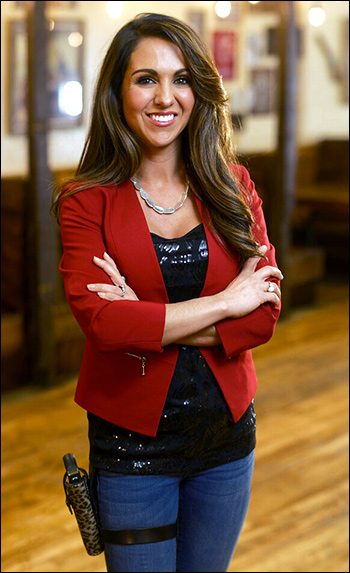
2nd Amendment activist, local restaurant owner and now US Rep. Loren Boebert represents Colorado’s 3rd CD.

Feb. 8, 2021 — Colorado freshman Rep. Lauren Boebert (R-Silt), who first upset then-Rep. Scott Tipton in the 2020 Republican primary and later overcame more than $6 million in combined spending from her general election opponent and outside organizations, can count on seeing another tough campaign in 2022.

Already, candidates are lining up, and the most prominent one in the early going announced late last week. State Senate President Pro Tempore Kerry Donovan (D-Gunnison) released a video announcing that she will forego re-election to the state legislature in order to challenge Rep. Boebert in the next congressional campaign. Rancher Gregg Smith and former state House candidate Colin Wilhelm had previously declared their intentions to compete for the Democratic nomination.

Lauren Boebert is a Florida native who moved with her family to the Denver area when she was 12 years old. She then re-located to the Western Slope region in 2003 and, with her husband, opened their restaurant, Shooters Grill, in 2013.

Congresswoman Boebert has attracted much national attention so far with her insistence of carrying a firearm on the House floor. Such is nothing new since she has always holstered a side arm in her restaurant establishment and made defending the 2nd Amendment the cornerstone of her congressional campaign effort.

Despite being heavily outspent, Boebert carried the general election against former state representative and 2018 congressional nominee Diane Mitsch Bush (D) by a 51-45 percent margin, meaning a spread of 26,512 votes. Former President Trump, who recorded only 42 percent of the statewide vote, also carried the 3rd District in a similar 52-46 percent margin.

Continue reading

Early House Outlook – Part I

By Jim Ellis

Jan. 20, 2021 — With the presidential Inauguration dominating political attention this week, it is a good time to set the upcoming electoral stage for the US House on a 50-state basis. Today, a first of a four-part series, will begin to look at the 13 western states. During the rest of the week, we will move eastward.


• Alaska – 1 Seat (1R)
Rep. Don Young (R-Ft. Yukon), the Dean of the House, won his 25th term in November with a 54-45 percent victory in a competitive race. With Alaska being an at-large state, reapportionment and redistricting won’t change the political situation. The big question surrounding the 87-year-old congressional veteran is when will he retire?


• Arizona – 9 Seats (5D4R)
The Arizona population growth rate makes them a cinch to gain a 10th District in reapportionment. It is also clear that the new seat will be placed in the Phoenix metropolitan area. Arizona has a redistricting commission comprised of two Democrats, two Republicans, and one Independent. The latter member becomes the chairman. The membership has not yet been chosen.

The state’s marginal nature suggests that we will see a very competitive state once all 10 seats are in place. Currently, there are two districts where the winning House member received 52 percent of the vote or less. This means GOP Rep. David Schweikert (2020 winning percentage: 52.2) and Democratic incumbent Tom O’Halleran (2020 winning percentage: 51.6) will be looking to add more Republicans and Democrats to their seats, respectively.

An open governor’s race (Republican Gov. Doug Ducey ineligible to seek a third term) and what should be a competitive re-election for Sen. Mark Kelly (D) could cause open seats in the House delegation should any of the sitting members attempt to run statewide.


• California – 53 Seats (42D11R)
For the first time in history, the Golden State appears positioned to lose a seat in their US House delegation. With migration exiting the state exceeding those incoming, it appears the California growth rate did not keep up with the specified threshold in order to keep all of their 53 seats. The Los Angeles area is likely to absorb the loss of the seat, but which member will be paired with another is an open question.

California voters adopted an initiative before the 2010 census that established a citizens’ commission to administer redistricting under strict parameters that emphasizes keeping cities and counties whole when possible and irrespective of where any particular incumbent may reside. Therefore, with the mapping power removed from the legislature, it is possible that inside Democratic politics might play a lesser role in the redistricting process.

Continue reading