Tag Archives: New Mexico

The Latest Numbers

By Jim Ellis

Oct. 23, 2020 — Polls are being updated daily in the competitive Senate races. Below are the most recent two surveys from each major contest. Some states provide disparate results, others more consistent. The data source is FiveThirtyEight Polls.


ALABAMA

Moore Information (OCT. 11-15; 504 likely Alabama voters, live interview)
• Tommy Tuberville (R) – 55%
• Sen. Doug Jones (D) – 40%

FM3 Research (Oct. 11-14; 801 likely Alabama voters; live interview)
• Sen. Doug Jones (D) – 48%
• Tommy Tuberville (R) – 47%


ALASKA

Public Policy Polling (Oct. 19-20; 800 Alaska voters, interactive response system)
• Sen. Dan Sullivan (R) – 44%
• Al Gross (D/I) – 41%

Siena College/NYT (Oct. 9-14; 423 likely Alaska voters, live interview)
• Sen. Dan Sullivan (R) – 45%
• Al Gross (D/I) – 37%


ARIZONA

Ipsos/Reuters (Oct. 14-21; 658 likely Arizona voters, online)
• Mark Kelly (D) – 51%
• Sen. Martha McSally (R) – 43%

Rasmussen Reports/Pulse Opinion (Oct. 18-19; 800 likely Arizona voters, automated)
• Mark Kelly (D) – 48%
• Sen. Martha McSally (R) – 44%


GEORGIA-A

Emerson College (Oct. 17-19; 506 likely Georgia voters; interactive voice response)
• Sen. David Perdue (R) – 46%
• Jon Ossoff (D) – 45%

Garin Hart Yang Research (Oct. 11-14; 600 likely Georgia voters; live interview)
• Jon Ossoff (D) – 48%
• Sen. David Perdue (R) – 43%


GEORGIA-B – Special Election

Siena College/NYT (Oct. 13-19; 759 likely Georgia voters, live interview)
Jungle Primary; top two advance to Jan 5 runoff
• Raphael Warnock (D) – 32%
• Sen. Kelly Loeffler (R) – 23%
• Rep. Doug Collins (R) – 17%
• Matt Lieberman (D) – 7%
• Ed Tarver (D) – 2%

Emerson College (Oct. 17-19; 506 likely Georgia voters, interactive voice response)
• Raphael Warnock (D) – 27%
• Rep. Doug Collins (R) – 27%
• Sen. Kelly Loeffler (R) – 20%
• Matt Lieberman (D) – 12%
• Ed Tarver (D) – 2%


Continue reading

The Sleeper Race?

By Jim Ellis

Republican candidate Mark Ronchetti (left) and Rep. Ben Ray Lujan (D-Nambe/Santa Fe)

Oct. 5, 2020 — It seems every election cycle features a surprise Senate contest. This year, that campaign may reside in New Mexico.

For months, it’s been a foregone conclusion that Rep. Ben Ray Lujan (D-Nambe/Santa Fe) would succeed retiring Sen. Tom Udall (D). Recent polling, however, suggests that Republican challenger Mark Ronchetti may have been discounted a bit too early.

The latest polling trends clearly show a narrowing margin. A new Public Opinion Strategies survey for the Ronchetti campaign (Sept. 26-28; 500 registered New Mexico voters; live interview) finds the upstart Republican climbing to within six percentage points of Rep. Lujan, 46-40 percent.

In June, Public Policy Polling (June 12-13; 740 New Mexico voters) projected Lujan holding a predictable 14-point lead, 48-34 percent. At the beginning of September, the Research & Polling firm tested the state (Aug. 26-Sept. 2; 1,123 likely New Mexico voters, live interview) and saw Lujan’s edge slipping a bit to 49-40 percent. In the middle of last month, POS tested the race two weeks before their aforementioned survey and found an almost identical result when compared to their current offering. The mid-September ballot test yielded a 45-39 percent split.

Mark Ronchetti is a former chief meteorologist for the Albuquerque CBS television affiliate in a media market that covers about two-thirds of the state, since it stretches northward to Santa Fe and beyond. Therefore, Ronchetti has significant name identification, though not in relation to politics.

Rep. Lujan won the state’s northern congressional district in 2008, succeeding Udall when he was first elected to the Senate. Prior to his congressional service, the six-term incumbent was a four-year member of the New Mexico Public Regulation Commission.

Continue reading

Moving to the General

By Jim Ellis

June 4, 2020 — The June 2nd primary featured 10 states, and now the candidates are set for November. Below is a recap of the races from Tuesday’s primary that project as competitive this fall, and an early prognosis for each.


IN-5:

• St. Sen Victoria Spartz (R) vs. Christina Hale (D)
Trump ’16: 53-41%    |   2018 Congressional: 57-43% R (Brooks)

Ukrainian born state Senator Victoria Spartz topped a field of 15 Republican candidates with 41% on Tuesday night, after a nasty primary that resulted in some of the other contenders running ads touting that they were born in America. Democrat Christina Hale, a former state Representative and 2016 Lt. Governor nominee, had an easier time in her primary, and won with 39% of the vote, which was slightly under pre-election estimates.

Ms. Spartz is the favorite to win in November in a traditionally Republican district, but one that is moving more toward the center. Democrats will see how this race begins to unfold, but this is a seat on their secondary target list. We can expect Spartz to be tested early, and if the numbers suggest an opening, the Democrats will go for an upset win.


IOWA-SENATE:

• Sen. Joni Ernst (R) vs. Theresa Greenfield (D)
Trump ’16: 51-42%    |    2016 US Senate: 60-36% R (Grassley)

Iowa is one of three Republican firewall states to keep the Senate majority, with Montana and Maine being the other two. Sen. Joni Ernst seeks her first re-election and is now paired with Des Moines real estate executive Theresa Greenfield. The Democratic establishment backed Greenfield, but she came under attack in the primary and defeated two opponents with 47% of the vote, a bit under pre-election projection.

All races in Iowa are competitive, so we can expect intense political competition here from the presidential race all the way through each of the state’s four House districts. Polling will show the Senate race as close until Election Day, but what should be another Trump victory here will help set the table for the remainder of the races. Sen. Ernst is rated as a slight favorite as the general election now officially begins.


IA-1:

• Rep. Abby Finkenauer (D) vs. St. Rep. Ashley Hinson (R)
Trump ’16: 49-45%     |     2018 Congressional: 50-45% D

Freshman Rep. Abby Finkenauer (D-Dubuque) defends her seat for the first time and faces a top opponent in Republican state Rep. Ashley Hinson (R-Cedar Rapids), a former television news anchor. The 1st District looked to be the safest Democratic seat in the state after 2011 redistricting, but the electorate hasn’t voted that way. This will be a top tier Republican challenge race, and one to watch. Rep. Finkenauer certainly begins with the incumbent’s advantage, but the IA-1 campaign is a top national GOP target. If the Republicans are to have any chance of re-taking the House majority, Ms. Hinson will have to win.


IA-2:

• Rita Hart (D) vs. St. Sen. Marianette Miller-Meeks (R)
Trump ’16: 49-45%     |     2018 Congressional: 54-42% D (Loebsack)

The 2nd District, located in Iowa’s southeastern sector, is the district that has played best for Democrats during the decade despite President Trump carrying it in 2016.

Democrats feature former state Senator and 2018 Lt. Governor nominee Rita Hart who was even unopposed in an open seat primary. Republicans counter with first-term state Senator Marianette Miller-Meeks (R-Ottumwa), who begins her fourth race for the congressional seat. Ms. Hart is the clear favorite here, and Dr. Miller-Meeks will have to prove her credibility nationally after three losses. If she does not begin the general election in competitive fashion, this race will quickly turn Ms. Hart’s way.
Continue reading

Rep. King (R) Falls in Iowa;
Mrvan, Fernandez Clinch Seats

By Jim Ellis

June 3, 2020 — Ten entities held primary elections yesterday, and among the voting results we saw a second US congressman being denied re-nomination, as well as two primary victors who have virtually secured their seats in the next Congress:


Former VP Joe Biden

• DISTRICT OF COLUMBIA: Former vice president Joe Biden easily won the DC primary last night in capturing 78 percent of the vote, which is a significant improvement over his last two performances in Oregon and Hawaii. Biden is now within shouting distance of officially clinching the Democratic nomination and will do so next week when six more states vote in their primary elections.


• IDAHO: 2018 gubernatorial nominee Paulette Jordan with her 86 percent Democratic primary win yesterday will challenge Sen. Jim Risch who seeks a third term. Sen. Risch is a clear favorite to win in November.

Both US Reps. Russ Fulcher (R-Meridian) and Mike Simpson (R-Idaho Falls) were easy winners for re-nomination scoring 80 and 72 percent victories, respectively, and each has minimal opposition in the general election.


• INDIANA: Biden recorded a solid 76 percent in his Hoosier State Democratic primary. Gov. Eric Holcomb (R) will square-off with Democratic former health commissioner Woody Myers in November as both men were unopposed in yesterday’s primary. Gov. Holcomb appears safe for re-election in the fall.

North Township Trustee Frank Mrvan, with retiring Rep. Peter Visclosky’s (D-Merrillville/Gary) endorsement, defeated Hammond Mayor Tom McDermott state Rep. Mara Candelaria Reardon (D-Lake County) in the open 1st Congressional District, and now becomes the prohibitive favorite to succeed Visclosky in the next Congress.

In the Indianapolis area’s 5th CD, state Sen. Victoria Spartz (R-Noblesville) scored an impressive victory over three Republican opponents to capture the party’s open seat congressional nomination. Spartz will now battle former state representative and 2016 lieutenant governor nominee Christina Hale (D) in the general election. Likewise, Hale defeated three Democratic opponents to win her nomination. The Ukrainian born Spartz is favored to succeed retiring Rep. Susan Brooks (R-Carmel) but the Democrats are expected to make a run at the seat.

Continue reading

Ten Primaries Today

By Jim Ellis

June 2, 2020 — Super June is here. During the month, almost half of the country (24 entities) will hold nomination elections, 10 of which have moved their voting days to June from earlier dates. Here’s today’s lineup.


• DISTRICT OF COLUMBIA: Washington, DC voters will vote in a Democratic presidential primary that still features three individuals who are no longer contenders. Former vice president Joe Biden will defeat Sens. Bernie Sanders (I-VT) and Elizabeth Warren (D-MA), along with Rep. Tulsi Gabbard (D-HI), but the question to watch surrounds the strength of his vote percentage. It is arguable that his last two performances in Oregon and Hawaii fell below what a virtually unopposed presumptive nominee typically receives.

DC voters will also nominate candidates for Delegate to the US House of Representatives and for members of the DC City Council.


• IDAHO: The Idaho primary began with in-person voting on May 19, but Gov. Brad Little (R) extended the absentee ballot return deadline to today, June 2. Therefore, no votes will be counted until the mail votes are received today. The presidential primary was held earlier as a stand-alone vote, so this election in the state’s regular primary.

Sen. Jim Risch seeks a third term and is unopposed for re-nomination in the Republican primary. On the Democratic side, 2018 gubernatorial nominee Paulette Jordan, a former state representative, is favored. Reps. Russ Fulcher (R-Meridian) and Mike Simpson (R-Idaho Falls) face only minor opposition in their respective primaries. Sen. Risch and both congressmen are all prohibitive favorites in November.


• INDIANA: Gov. Eric Holcomb (R) leads the state ticket this year and is unopposed in the primary, as is Democratic former health commissioner, Woody Myers. Gov. Holcomb appears safe for re-election in the Fall.

With no Senate race in the Hoosier State this year, the US House delegation features two open seats that will attract most of the attention on primary night.

Veteran Rep. Peter Visclosky (D-Merrillville/Gary), first elected in 1984, is retiring after serving what will be 18 terms in the House. The Democrats will keep this seat (Clinton ‘16: 54-41 percent) so today’s election will almost assuredly choose the new representative. Of the 14 candidates, only two currently hold elective office, Mayor Tom McDermott of Hammond and state Rep. Mara Candelaria Reardon (D-Lake County), and both figure to be major contenders.

Continue reading

New Mexico’s 2nd: Too Cute By Half?

By Jim Ellis

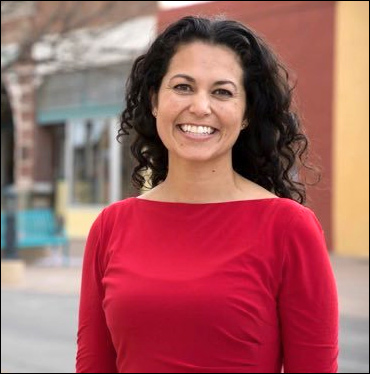
Freshman Rep. Xochitl Torres Small (D-Las Cruces) faces the full-on press of a GOP battle to challenge her.

May 29, 2020fh — The Democrats, or at least those who run the Patriot Majority organization, have made a high-risk move in trying to influence the outcome of the 2nd District Republican primary next week, so we shall soon see if their gamble pays dividends.

The GOP battle to challenge freshman Rep. Xochitl Torres Small (D-Las Cruces) is largely between the 2018 nominee who lost what was a Republican seat, former state Rep. Yvette Herrell, and Claire Chase, who chairs the New Mexico Oil & Gas Association. Clearly the Democratic leadership believes Herrell is the weaker candidate, which is why their agents are actively engaged in ironically trying to define her as the true Trump Republican candidate.

President Trump has not endorsed in this race, but him doing so has been magic for candidates receiving such Republican primary support. The Patriot Majority media buy, which approaches $200,000 and appears to concentrate on targeted radio and digital advertising in order to best communicate with conservative audiences, emphasizes that Herrell is the candidate most in lockstep with the president. The ad script also attempts to put Chase on the defensive for making past negative comments about then-presidential candidate Donald Trump.

NM-2 has the potential of becoming one of the top challenge races in the country and is likely a must-win if the Republicans are going to make any serious run at re-taking the House majority. And, recalling that Trump won this district by slightly more than 10 percentage points means the progressive left involvement in the GOP primary to implement a strategy of identifying a particular candidate as the stronger Trump supporter does carry its risks for the general election.

The Patriot Majority super PAC organization was formed during the 2010 election cycle. During the succeeding elections cycles, the entity is reported as spending well over $6 million, the overwhelming percentage of which being used to attack Republican candidates.

Continue reading

Is Biden’s Victory Secure?

By Jim Ellis

Former VP Joe Biden

March 30, 2020 — Articles have appeared in publications on successive days that somewhat surprisingly contemplate whether former vice president Joe Biden will actually reach majority delegate support for a first ballot win at the Democratic National Convention still scheduled to begin in mid-July.

Should the former VP somehow fail to obtain 1,991 votes on the first roll call a contested convention would begin, and some are introducing the idea that a deadlock could lead toward New York Gov. Andrew Cuomo emerging as an alternative to Biden.

Gov. Cuomo is receiving favorable media coverage for his handling of the COVID-19 virus situation in his state, which is one of the hardest hit areas in the country. Originally thought of as a possible presidential candidate at the very beginning of the process, Cuomo was first of the potential contenders to definitively pull his name from consideration.

Arriving at a contested convention at this stage of the process when calculating the delegate numbers is not a reasonable conclusion, however. While true that approximately half the states and territories still have not voted in their respective presidential primary, only 42 percent of the delegate universe (1,688) remains unclaimed. With Biden 777 votes away from the victory number according to the Green Papers election stats firm, it would take quite a negative swing for him to lose at this point.

Using simple arithmetic calculations, Biden needs only to secure 46 percent of the remaining bound first ballot delegates to win the party nomination. While he still must participate in the various primaries and attain that total, the chances of him winning are far greater than not. Post-Super Tuesday, his cumulative percentage among the nine states voting is 53.9 meaning that the future results would have to completely reverse for him to somehow lose the nomination.

Continue reading

Mid-Year Senate Primaries

By Jim Ellis

Jan. 24, 2020 — The second in our three-part series about the in-cycle Senate races covers the 13 contests with June and early August primary dates:

JUNE 2

Iowa: Sen. Joni Ernst (R) stands for a second term and will likely face Des Moines real estate executive Theresa Greenfield (D) in the general election. Greenfield, who aborted a congressional run in 2018 when her campaign effort didn’t collect the requisite number of legal petition signatures, enjoys at least unofficial backing from the Democratic establishment and party leadership. The leaders’ first choice to run, freshman Rep. Cindy Axne (D-Des Moines), decided to seek her first re-election instead of jumping into a statewide battle.
Sen. Ernst is favored for re-election but some of her approval ratings have been low. Much will depend upon the national political trend, particularly at the presidential level. Iowa is typically a swing state that has been moving right in most recent elections, though the Democrats did gain two congressional seats in the last election.

Montana: Sen. Steve Daines (R) stands for a second term, and with the Democrats unable to convince outgoing governor and former presidential candidate Steve Bullock to run for the Senate, most of the political attention has shifted to the open governor’s race and at-large US House contest. With Rep. Greg Gianforte (R-Bozeman) again running for governor, both the governor’s office and the state’s lone House seat are open for the coming election.
In fact, when looking at the entire statewide ticket, mostly due to term limits and statewide officials running for other offices, five of the seven statewide races are open contests in 2020. Therefore, the lack of attention and concentration on the Senate race certainly helps Sen. Daines. At this point, with the March 9 candidate filing deadline less than a month away, the type of candidate who could give the senator a serious run has not yet emerged.

New Jersey: Sen. Cory Booker (D) backed away from the presidential contest in order to concentrate on his re-election campaign. While state law was changed to allow candidates to run for offices simultaneously, Sen. Booker decided the time to exit the presidential race was upon him before embarrassing losses in Democratic primary states encouraged stronger primary competition for his re-election back home. Now concentrating on New Jersey full-time, Sen. Booker looks safe for re-election.

Continue reading

The Open Seat Review

By Jim Ellis

Aug. 9, 2019 — With so many seats coming open during the past 10 days, it’s time to review exactly which districts will be incumbent-less for the coming election and how many are truly competitive.

With Rep. John Ratcliffe (R-Heath/Rockwall) withdrawing from his nomination as Director of National Intelligence, it returned Texas’ 4th District to the incumbents’ list, but that move was quickly negated when fellow Texas Rep. Kenny Marchant (R-Coppell/DFW Area) announced his retirement.

Taking those moves into consideration and including the two North Carolina special congressional elections that will be filled on Sept. 10, a total of 16 seats are open headed into the next election. Of the 16, Republicans hold, or last held in the case of the disputed NC-9 result from 2018, all but three of the open seats. Looking at the coming 16 campaigns, all can expect contested primaries in at least one party and seven look to be highly competitive during the general election.

Though the retirement action has been swift of late, the aggregate number of coming vacancies is still very low, especially when remembering that the number of cycle open seats throughout this decade has fallen between 47 and 64, inclusive.

The list below depicts the open House districts and their current status:


AL-1: Rep. Bradley Byrne (R-Mobile)
• Trump ’16: 63-34 | • Romney ’12: 62-37

This southern Alabama seat will be settled in the GOP nomination contest. A run-off after the March 3 primary is likely and will likely feature a two-person combination from the group comprised of former state Sen. Bill Hightower, state Rep. Chris Pringle (R-Mobile), Mobile County Commissioner Jerry Carl, and businessman Wes Lambert. The eventual GOP nominee wins the seat in the November 2020 election.
Safe Republican


AL-2: Rep. Martha Roby (R-Montgomery)
• Trump ’16: 65-33 | • Romney ’12: 63-36

Rep. Roby was one of the surprise retirement announcements, but her leaving the seat open for the next election doesn’t cause the Republicans any harm. Expect a crowded Republican primary and a two-person run-off to ensue. The eventual Republican nominee wins the seat. So far, state Rep. Will Dismukes (R-Prattville) and former state Rep. Barry Moore are the most prominent candidates.
Safe Republican


Continue reading

2020 Open House Seats Review

By Jim Ellis

June 12, 2019 — Since the last national redistricting completed in 2011 for the 2012 election cycle, we have seen 222 US House seats come open, for a mean average of 55.5 per cycle during the eight-year period. Prior to this decade, the average House open seat factor was typically closer to 35.

In 2012, reflective of the new reapportionment from the 2010 census, the House featured 62 open seats. This was followed by 47 more in 2014, another 49 in 2016, and finally 64 opens in the 2018 election cycle.

So far in this current 2020 election cycle, the exodus syndrome appears to be winding down as we see only nine districts now opening, assuming that Montana at-large Rep. Greg Gianforte follows through with his stated plans to announce his gubernatorial campaign later this week. One open district, PA-12, was already filled at the end of May as Republican Rick Keller replaced resigned Rep. Tom Marino (R-Williamsport).

Below is a listing of the nine seats and the preliminary replacement outlook:


Special Elections – Sept. 10, 2019

NC-3: Rep. Walter Jones (R) – passed away Feb. 10, 2019
The Republicans are in a run-off election that will be decided on July 9. Participants are state Rep. Greg Murphy (R-Greenville) and physician Joan Perry of Kinston. The winner faces Democratic nominee Allen Thomas, the former mayor of Greenville. The eventual GOP nominee will begin the special general election as a heavy favorite for a seat that has been in Republican hands since 1995.


NC-9: Vacancy, non-declaration of 2018 election winner due to alleged voter fraud
Both parties nominated outright in this special election. Democrats feature 2018 nominee Dan McCready, who ran unopposed in the special primary. Republicans nominated outright state Sen. Dan Bishop (R-Charlotte), who captured 48 percent of the vote in a crowded Republican primary. A minimum total of 30 percent was needed to win outright nomination and avoid a run-off. Two polls have been released, both showing the race in toss-up mode with each candidate leading in one of the surveys.


Regular-Cycle Open Seats

AL-1: Rep. Bradley Byrne (R-Mobile) running for Senate
With the Republican presidential nominee topping 60 percent of the vote here in the past three national elections, including President Trump attracting 63.5 percent, the Republicans will be in strong position to hold this seat. With candidate filing coming on Nov. 8 for the March 3 primary, the field of four announced candidates could swell to as many as 10 before the filing cycle concludes. No Democrat has yet come forward to declare.


Continue reading