Tag Archives: Maine

Pennsylvania’s McCormick Announces for Senate; Retired Police Chief Craig to Announce Candidacy; Anti-Impeachment Rep. May Resign; IL-17 Battle; No Re-Election Run for Rep. Baird; Primary Clash Evolving in Maine; Chaffetz Declines to Run

By Jim Ellis — Monday, Sept. 25, 2023

Senate

Pennsylvania: Republicans Get Their Man — David McCormick, the former CEO of the Bridgewater Associates hedge fund who lost to Dr. Mehmet Oz by just 950 votes in the 2022 Pennsylvania US Senate race, announced late last week that he is returning next year to challenge Sen. Bob Casey Jr. (D). Though he faces an uphill battle, McCormick’s presence gives the Republicans a credible candidate with whom to challenge the three-term incumbent.

Though Pennsylvania decidedly leans Democratic, it is one of the top targeted states in the presidential election. While that will mean more focus on former President Donald Trump throughout the general election campaign, it also means that McCormick will be the beneficiary of more party resources being spent on organization and voter turnout operations. At this point, Sen. Casey must be rated a clear favorite for re-election, but this contest is now a race to watch.

Retired Detroit Police Chief James Craig (R)

Michigan: Another Candidate to Announce — According to the Politico publication, retired Detroit Police Chief James Craig (R) will announce his US Senate candidacy at the beginning of October. Craig had filed to run for governor in 2022 but failed to return the proper number of valid petition signatures, thus disqualifying him.

Assuming this report is true, Craig will enter an Aug. 6 Republican primary against the favorite for the nomination, former Congressman Mike Rogers, and Michigan Board of Education member Nikki Snyder who was the first candidate to announce. The winner will then likely challenge Rep. Elissa Slotkin (D-Lansing) who is favored to win the Democratic nomination.

House

CO-4: Rep. Buck Faces Potential GOP Challenge, May Resign — Rep. Ken Buck (R-Windsor), who has been critical of the House Republican leadership for moving to an impeachment hearing against President Joe Biden, may resign his seat. Apparently, he is talking to both MSNBC and CNN about developing a contractual relationship.

Additionally, as a direct result of his latest Republican-on-Republican attacks, Rep. Buck may have drawn a potential GOP primary challenger. State Rep. Richard Holtorf (R-Akron) filed a congressional exploratory committee to assess his chances against Rep. Buck in the expansive eastern Colorado district. The 4th District is safely Republican (R+26 according to the FiveThirtyEight data organization) and encompasses most of the Colorado territory north and east of the Denver metropolitan area.

IL-17: Former Local Judge to Run for Congress — Former Circuit Judge Joseph McGraw (R), who resigned from the bench in July igniting speculation that he would run for Congress, has filed an organizational committee with the Federal Election Commission. He would join a field that includes businessman Ray Estrada and farmer Scot Crowl. The eventual Republican nominee will then challenge freshman Rep. Eric Sorensen (D-Moline) in a heavily gerrymandered district that begins in the city of Rockford, meanders west to capture the Illinois side of the Quad Cities, then back east to the cities of Galesburg, Peoria, and Bloomington.

The FiveThirtyEight data organization rates the seat as D+4. Dave’s Redistricting App calculates the partisan lean at 51.1D – 44.0R. The Daily Kos Elections site ranks IL-17 as the 26th most vulnerable seat in the Democratic conference. Republican Esther Joy King twice ran here, losing a competitive 2022 battle to Sorensen by a 52-48 percent count.

IN-4: Rep. Baird Reportedly Won’t Run for Re-Election — The local Indiana blog Howey Politics is reporting that US Rep. Jim Baird (R-Greencastle) is planning to retire in 2024 but may time his announcement to block other Republicans from challenging his son, state Rep. Beau Baird (R). The 4th District, located north and west of Indianapolis, is safely Republican. The FiveThirtyEight data organization rates the seat as R+33. The Daily Kos House overview ranks IN-4 as the 59th safest seat in the Republican conference.

Now that local media reports are already covering this story, the element of surprise has been lost. Therefore, potential candidates wanting to run will now be ready to file in case Rep. Baird does not.

ME-2: Republican Primary Developing — Maine’s 2nd Congressional District, which has delivered an electoral vote to Donald Trump both in 2016 and 2020, is rated as the second-most vulnerable seat in the Democratic conference. The FiveThirtyEight data organization rates the seat as R+10 yet, and largely thanks to Maine’s Ranked Choice Voting system, Rep. Jared Golden (D-Lewiston) has won three consecutive elections here.

With former Rep. Bruce Poliquin (R) out of the 2024 picture, Republican leaders were pleased to see state representative and former NASCAR driver Austin Theriault (R-Fort Kent) come forward last week to declare his congressional candidacy. Now, Theriault has company. Fellow state Rep. Michael Soboleski (R-Phillips) declared his candidacy, thus creating a Republican nomination battle in the June 18, 2024, state primary. Regardless of who wins the party nomination, ME-2 will be a major GOP target race next year.

Governor

Utah: Ex-Rep Chaffetz Not Likely to Run — Former congressman and Fox News contributor Jason Chaffetz (R) late last week ruled out challenging Gov. Spencer Cox in next year’s Republican primary and also said, while not closing the door on running for Sen. Mitt Romney’s (R) open seat, that the Senate race is “not something I’m actively pursuing.” The political move that he finds most attractive at present is entering the open 2028 gubernatorial campaign when Gov. Cox will be ineligible to seek re-election.

Former NASCAR Driver Declares in Maine; Ohio Redistricting Lines Stand; New Candidates in CO-8 & VA-2

By Jim Ellis — Monday, Sept. 11, 2023

House

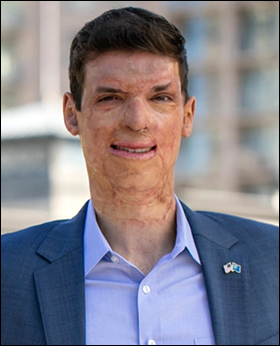
Austin Theriault (R), retired NASCAR driver

ME-2: Former NASCAR Driver Declares for Congress — Austin Theriault (R), a retired NASCAR driver who is now a state representative from one of the Canadian border districts in northern Maine, is reportedly planning to challenge Rep. Jared Golden (D-Lewiston) in the most Republican district that elects a Democrat to the House. Rep. Golden has twice defeated now-former Rep. Bruce Poliquin (R) with the help of the Ranked Choice Voting system, which eliminates the possibility of a plurality victory.

Without Poliquin making a return appearance, Republicans need a fresh candidate to potentially take advantage of what could be a more favorable GOP turnout model. Former President Donald Trump has twice carried the 2nd District, in 2020 by six percentage points, so running with him in 2024 is more attractive than in other election years.

Ohio Redistricting: Lines Will Stand for 2024 — The Ohio State Supreme Court late this week rejected plaintiffs’ arguments that a new congressional map should be drawn, meaning the current lines will remain intact for the 2024 election. Under the original redistricting act’s passage, the map was to be reconfigured after four years, meaning before the 2026 election. That remains to be the case. In the meantime, activists are attempting to qualify a ballot initiative that would transform the Ohio redistricting system into a citizens’ commission. The initiative organizers need 413,000 valid Ohio registered voter signatures to qualify their measure for a vote in the 2024 election.

CO-8: GOP State Rep Announces Candidacy — State Rep. Gabe Evans (R-Westminster), an Army veteran and ex-police officer, has entered the 8th District Republican congressional primary with the quest of challenging freshman Rep. Yadira Caraveo (D-Thornton) who represents one of the most politically marginal districts in the country. The 8th District was awarded to Colorado in the 2020 national apportionment formula due to extensive population growth.

The Colorado Independent Redistricting Commission crafted the seat, just north of Denver, as one that either party can win in any election year. The FiveThirtyEight data organization rates the seat R+3, while Dave’s Redistricting App calculates a partisan lean that slightly favors the Democrats, 48.3D – 47.0R. President Joe Biden carried the district, 50.8 – 46.3 percent.

Rep. Evans, should he win the primary, will be a strong candidate for the Republicans. State Sen. Barbara Kirkmeyer (R-Weld County), who held Rep. Caraveo to a 48.4 – 47.7 percent tight victory, is not seeking a re-match. Instead, she is running for re-election to her current position in the state Senate. Weld County Commissioner Scott James will be opposing Evans for the Republican nomination.

VA-2: Democrats Recruit Challenger Candidate — In further evidence that defeated Rep. Elaine Luria (D) will not seek a re-match with freshman Rep. Jen Kiggans (R-Virginia Beach), Democrats have found a new candidate in the person of Missy Cotter Smasal, a Navy veteran and former state Senate candidate. At this point, she is the only announced Democratic contender and has support from former Gov. Ralph Northam (D) and newly elected US Rep. Jennifer McClellan (D-Richmond).

The FiveThirtyEight data organization rates the Virginia Beach anchored 2nd District as R+6. Dave’s Redistricting App calculates the partisan lean at 50.1R – 48.3D.

WI-3: Former Local Board Chairman Enters Cong Race — Former La Crosse County Board chair Tara Johnson, who served 20 years on the local panel, announced that she is joining the Democratic primary in hope of challenging freshman Rep. Derrick Van Orden (R-Prairie du Chien/La Crosse) in next year’s general election.

The race is getting more attention from Democrats who believe southern Wisconsin will be redrawn with their presumption that the new state Supreme Court Democratic majority will find a way to toss the current map. Johnson joins business owner and 2022 congressional candidate Rebecca Cooke in the Democratic primary. The seat appears relatively safe for Rep. Van Orden in its current configuration, but a redraw could drastically change the situation.

Maine Sen. King, 80, to Seek Third Term; Illinois House News; Potential GOP Candidate in Washington

By Jim Ellis — Thursday, July 6, 2023

Senate

Sen. Angus King, Maine (I)

Maine: Independent Incumbent Will Seek Re-Election — Two-term Maine Sen. Angus King, who is elected as an Independent but caucuses with the Democrats, announced that he will seek a third term next year. It was expected that Sen. King, who will be 80 years old at the next election and a cancer survivor, would run again. Before his original election to the Senate in 2012, King served two terms as Maine’s governor. The senator is a prohibitive favorite to win re-election next year.

House

IL-12: Primary Challenge Brewing — Former state senator and 2022 Illinois gubernatorial Republican nominee Darren Bailey is hosting a major gathering where he is expected to announce that he will launch a Republican primary challenge to five-term Rep. Mike Bost (R-Murphysboro/Carbondale), the current chairman of the House Veterans Affairs Committee.

The challenge is a surprising one in that Rep. Bost is just as conservative as Bailey, so there will be little to draw contrast with him at least in terms of public policy. Because Illinois is so heavily gerrymandered, the 12th CD is one of three solidly Republican seats in the state. Therefore, the only threat to Rep. Bost comes in the GOP primary. Expect the congressman to win renomination and re-election next year. The Illinois primary is early, scheduled for March 19, 2024.

IL-17: Potential Candidacy Brewing — Former state Rep. Dan Brady (R), who represented a central Illinois seat in the state legislature for 20 years before running unsuccessfully for Secretary of State last November, is reportedly close to launching a congressional campaign against freshman Democratic US Rep. Eric Sorensen (D-Moline).

On the gerrymandered Illinois congressional map, the 17th appears to be the most competitive seat in the state. In November, Republican Esther Joy King held Sorensen to a 52-48 percent victory in a district that the FiveThirtyEight data organization rates as D+4. The seat is shaped almost like a C, beginning in Rockford, and then swinging west to the Quad Cities area, before moving southeast and east through Galesburg and Peoria before ending in Bloomington. Rep. Sorensen will be favored for re-election, but this district could become highly competitive.

Governor

Washington: Ex-GOP Rep Looking at Governor’s Race — Former congressman and ex-King County Sheriff Dave Reichert (R), who served in the House from 2005 to the beginning of 2019, is reportedly exploring a bid for the open governor’s office. Reichert has looked at statewide office before but has not run. His chances of qualifying for the general election in the jungle primary would be good since he would likely corral the votes of what should be a united Republican Party behind him. In the general election, however, probably opposite Attorney General Bob Ferguson (D), he would be a distinct underdog.

Costello Challenges Maine’s Sen King; PA Senate Poll; Romney’s Rough Road in Utah; Louisiana Gov. Race Update

By Jim Ellis — Monday, April 17, 2023

Senate

Maine: Sen. King Draws Democratic Opponent — David Costello (D), a former aide to Maryland Governor Martin O’Malley (D) before moving to Maine, announced his candidacy for the US Senate late last week. (See video above.) He hopes to oppose Independent Sen. Angus King, who is expected to seek a third term. Democrats have filed candidates in both of Sen. King’s victorious races, but neither have been competitive. Still, the three-way race including the Republican nominee, was able to keep Sen. King’s winning percentages down to 54 and 51 percent in 2012 and 2018, respectively.

Should Costello be able to mount a significant campaign, the chances increase for Sen. King to drop below 50 percent, and that means Maine’s Ranked Choice Voting system would take effect. In that wild-card system, the end result would not be as easy to predict.

Pennsylvania: First 2024 Poll — On the heels of Sen. Bob Casey Jr. (D) announcing that he will seek a fourth term, Pennsylvania’s Franklin & Marshall College went into the field with a statewide survey (March 27-4/7; 643 registered Pennsylvania voters; live interview). According to these results, Sen. Casey would lead 2022 Senate candidate David McCormick (R), 42-35 percent. His lead significantly expands to 47-31 percent if his opponent were 2022 gubernatorial nominee and state Sen. Doug Mastriano (R).

Somewhat surprisingly, the poll finds Sen. Casey’s job approval rating at a rather poor 29:48 percent favorable to unfavorable. This compares to Democratic Gov. Josh Shapiro’s positive 43:36 percent job approval ratio.

Utah: Sen. Romney Files 2024 Campaign Committee — Utah Sen. Mitt Romney (R) has filed a 2024 campaign committee with the Federal Election Commission. While this action is not a formal declaration of candidacy, filing a campaign committee is certainly the first step toward him seeking a second term.

It is likely that Sen. Romney will be forced to petition his way onto the ballot since the chances of him coming through the conservative Utah Republican Party nominating convention are slim. Such would lead to a June 2024 Republican primary challenge. The most prominent potential opponent being discussed is former congressman and Fox News contributor Jason Chaffetz. State House Speaker Brad Wilson (R-Kaysville) has formed a US Senate exploratory committee. Attorney General Sean Reyes (R) is also a potential Senate candidate.

States

Louisiana: Gov Candidate to Switch Races — The surprise announcement from Secretary of State Kyle Ardoin (R) that he is not going to seek re-election has now changed the governor’s race. State House Speaker Clay Schexnayder (R-Gonzales), who was clearly laying the groundwork to enter the open governor’s race, has now adjusted his political course and announced his run for the open Secretary of State’s position.

The top Republicans already in the governor’s race are Attorney General Jeff Landry, state Treasurer John Schroder, and former Chamber of Commerce CEO Stephen Waguespack. Democrats look to be coalescing around former state Transportation Secretary Shawn Wilson. Gov. John Bel Edwards (D) is ineligible to seek a third term. The Louisiana primary is Oct. 14, 2023. If no candidate receives majority support, a two-person runoff will occur on Nov. 18.

Census Reapportionment:
The Hidden Votes

By Jim Ellis — Thursday, March 9, 2023

President

Census Reapportionment: The Hidden Votes — Already, the 2024 presidential race has actually gotten closer. The 2020 national election was decided by a 74 electoral vote margin, a 306-232 margin for Democrat Joe Biden. Without any state changing its 2020 outcome, however, his victory spread has now decreased to 68 EVs.

Census reapportionment is the reason, and it makes a net six-vote difference in the Republicans’ favor based upon Donald Trump’s aggregate EV number from the last election. This is because reapportioning the number of US House seats throughout the country affects and changes the electoral vote count (EVC). As you know, the EVC is comprised of each state’s federal representatives, meaning two senators and the number of House members each entity possesses.

Therefore, under the new totals, Biden’s winning count over his Republican opponent would be 303-235. Understanding that the presidential winner needs 270 electoral votes, the Republican deficit is now 35 as opposed to 38. This is important because it changes the number of states that Republicans must convert in order to win the next race.

President Biden loses electoral votes in California, Illinois, Michigan, New York, and Pennsylvania, but gained two back in Colorado and Oregon. The first five lost a congressional seat apiece in reapportionment, while the latter two gained a district apiece. Conversely, the next Republican nominee would gain electoral votes in Texas (2), Florida, Montana, and North Carolina, but lose one apiece in Ohio and West Virginia. Thus, the Republicans gained an aggregate three electoral votes while the Democrats lost three, for the net swing of six.

For the next Republican nominee, he or she must again re-establish the party’s southern core. Former President Trump needed to carry the southern tier states of Arizona, Texas, Georgia, North Carolina, and Florida to position himself throughout the rest of the country. He failed to do so, losing Arizona and Georgia, but the next nominee must return these two entities to the GOP column if the party is to have any chance of again winning the White House.

If the next Republican nominee fails to take these two states, for a total of 27 electoral votes (Georgia 16; Arizona 11), there is no realistic chance of cobbling together a 270-vote victory coalition. The GOP nominee will need at least one more state to convert in addition to Arizona and Georgia, with Wisconsin’s 10 votes being the simplest numerical path to an outright state coalition victory.

Continue reading

2022 Midterm Turnout Trends

Click on the graph above or here to see story and full-size image on BALLOTPEDIA

By Jim Ellis — Wednesday, Jan. 18, 2023

Elections

A Look at the Midterm Numbers — Particularly in low turnout elections, the voter participation figure tends to be definitive as to which party commands the final result. Now that election statistics are final for the 2022 election, we can better analyze the voting patterns and compare them to past trends.

2018 proved to be the highest turnout midterm election in history. In that year, more than 114 million people cast their ballots. The 2022 midterm is now second highest even though voter turnout dropped seven percent from four years previous. In November, just under 106 million total votes were recorded. 

According to the Ballotpedia data organization in their state-by-state turnout recap, 50.33 percent of the eligible voting population participated in 2018 and a commensurate 46.76 percentage is recorded for 2022. By contrast, Ballotpedia finds that 66.8 percent of the eligible voting population participated in the 2020 presidential election. Based upon their calculations, 2020 saw the highest eligible voter turnout in the 21st century.

The Ballotpedia data tells us that the 2022 election’s top five turnout states were Oregon (61.51 percent of the state’s eligible voter figure), Maine (61.46 percent), Minnesota (61.01 percent), Wisconsin (60.1 percent), and Michigan (59.31 percent). 

Conversely, the lowest five turnout states were Tennessee (31.34 percent of the state’s eligible voter figure), Mississippi (32.89 percent), West Virginia (35.66 percent), Alabama (37.74 percent), and Oklahoma (40.11 percent). 

Three of the top turnout states saw a much higher ratio of registered voters casting their ballots when compared to the eligible figures. Maine’s registered voter turnout soared to 75.3 percent, Wisconsin recorded 75.1 percent, and Minnesota reached 69.4 percent. Michigan was one of just 11 states where 2022 turnout exceeded that of 2018.

Except for Tennessee and Alabama, the lowest turnout states also produced substantial increases in registered voter turnout when compared to their eligible voter number. Oklahoma rose to a 50.23 percent participation rate from the registered voter population; Mississippi 44.3 percent; and West Virginia 40.8 percent. Even among registered voters, the Tennessee and Alabama totals failed to reach the 40 percent plateau.

Continue reading

Biden Suggests Primary Schedule; Maine’s King Prepping for Re-Election Campaign; A Budding GOP Primary Challenge in VA-9; Louisiana’s Gov Race Hinges on Kennedy

By Jim Ellis — Monday, Dec. 5, 2022

President

President Joe Biden

Primaries: President Biden Suggests Schedule — Considering that the White House will have a major say as to how the new Democratic presidential nomination rules are changed, President Biden shared his idea for a new primary schedule. He suggests South Carolina, the state that launched his own victory through the previous nomination process, be the first state to vote. He then says that New Hampshire and Nevada, voting on the same day, should be scheduled a week after the Palmetto State with Georgia and Michigan following on successive Tuesdays. This idea would increase the number of places voting before Super Tuesday from four to five.

Senate

Maine: Sen. Angus King (I) Preparing for Re-Election Campaign — Sen. Angus King (I), who has previously overcome both skin and prostate cancer, is reportedly planning to seek re-election in 2024 when he will be 80 years old. The senator, who previously served two terms as Maine’s governor, was first elected to his federal office in 2012. At the time, it appeared the 2018 campaign would be his last, but retiring at the end of the succeeding Congress does not now look to be the senator’s ultimate career path.

Sen. King runs as an Independent on the Maine ballot but caucuses with the Democrats, as does New England neighboring Sen. Bernie Sanders (I-VT). Should he indeed run in 2024, it will be the first time Sen. King will experience Maine’s Ranked Choice Voting system. Considering this situation, the veteran office holder may draw stronger opposition than in his past election campaigns.

House

VA-9: A Budding GOP Primary Challenge — Virginia Rep. Morgan Griffith (R-Salem), who was just re-elected to a seventh term with 73.5 percent of the vote, may be drawing a 2024 Republican primary challenge. Freshman state Delegate Marie March (R-Floyd) made a statement late last week saying that Rep. Griffith has “been in Congress too long,” and hinted that she might challenge him in the next GOP primary.

Rep. Griffith was first elected in 2010, defeating long-time incumbent Rick Boucher (D) and has had little in the way of competition ever since. He’s averaged 72.4 percent in his six re-election victories and has not yet faced a Republican primary challenge.

Governor

Louisiana: Yielding to Sen. Kennedy — Louisiana State Treasurer John Schroder (R) announced late last week that he will run for governor next year unless, he said, Sen. John Kennedy (R) enters the jungle primary field. If Kennedy does run, Schroder will opt to seek re-election. Sen. Kennedy, fresh from a 62 percent jungle ballot election victory in November that saw him winning a second US Senate term outright, is expected to enter the governor’s race and be considered the clear front runner. The senator says he will make a decision after the first of the year. Gov. John Bel Edwards (D) is ineligible to seek a third term.

Ohio Senate, Maine Gubernatorial Races Tight

By Jim Ellis — June 3, 2022

Senate

Ohio: First Post Primary Poll Tight — The Ohio primary was May 3, and now we see the first public general election poll testing US Rep. Tim Ryan (D-Warren/Youngstown) and Republican best-selling author J.D. Vance. Suffolk University surveyed the Ohio electorate (May 22-24; 500 likely Ohio general election voters; live interview) and finds Vance jumping out to a slight three-point lead, 42-39 percent. The poll’s tight results is not unusual for an Ohio race, which typically are rated as toss-ups until the final two weeks.

In other questions, 42.6 percent of the respondents answered that either the economy or inflation was their most important issue, with abortion registering third at 11.6 percent. Even though he was leading the race, Vance’s favorability index was surprisingly upside down at 35:38 percent positive to negative. Rep. Ryan held a 40:23 percent positive ratio. President Biden fell to 39:56 percent. A total of 49 percent said they want to change the direction in which President Biden is leading the nation, while 24 percent said they want to support the President’s leadership.

Governor

Maine: Gov. Mills Holds Tepid Edge — Maine Gov. Janet Mills (D), who has seen her approval ratings drop from strong heights of late, still tops former Gov. Paul LePage (R) in a combined new statewide survey from Fabrizio Lee & Associates (R) and Impact Research (D) for AARP (May 10-13; 1,050 likely Maine voters with a representative sample of 500 likely voters; live interview & text), but the respondents have a sour outlook regarding the future. While Gov. Mills holds a 51-46 percent edge on the ballot test against ex-Gov. LePage, her lead drops to just one point, 44-43 percent, among those who say they are definitely committed to one of the candidates.

By a whopping margin of 18:82 percent, however, the respondents believe the country is on the wrong track. The state of Maine is also viewed negatively in a 43:56 percent ratio. President Biden’s job approval is upside-down at 45:54 percent. Gov. Mills’ job approval ratio barely remains in positive territory at 49:47 percent favorable to unfavorable.

House

MI-3: Rep. Meijer Trails in New Survey — Michigan freshman Rep. Peter Meijer (R-Grand Rapids) fared poorly in redistricting, taking his Grand Rapids-anchored district from a R+9 rating according to the FiveThirtyEight data organization to a D+3 with 50 percent new territory. A new Public Policy Polling survey (May 25-26; 676 registered MI-3 voters; interactive voice response system) shows Rep. Meijer falling behind Democrat Hillary Scholten, his 2020 general election opponent, by a 39-37 percent clip. The change in district lines and the new partisan complexion certainly makes this result believable. The 2022 MI-3 race will be rated a toss-up with no clear favorite.

SC-1: GOP Primary Tightening — A new Trafalgar Group survey (May 26-29; 556 likely SC-1 Republican primary voters; multiple data collection sources) sees the Republican primary challenge of former state representative and 2018 congressional nominee Katie Arrington coming within potential upset range of freshman Rep. Nancy Mace (R-Charleston). The Trafalgar organization sees the race closing to 46-41 percent, which is much different than a Basswood Research poll taken around the same period (May 21-22; 400 likely SC-1 Republican primary voters). The latter poll found the congresswoman taking a commanding 44-24 percent lead. The South Carolina primary is scheduled for June 14.

The Redistricting Scorecard

By Jim Ellis

In the trifecta of political parties controlling the House, Senate and Executive branches in a state, how many will really benefit from that power in the redistricting process?

Feb. 11, 2022 — There has been quite a bit of redistricting news surfacing during the past few weeks, with many analysts now reversing their earlier predictions about which party is the clear beneficiary from the re-draw process.

Most said early that the Republicans would benefit the most from redistricting and that map drawing alone would be enough to allow the party to reclaim the House majority. We, on the other hand, were showing that the cut would more than likely be about equal even though the GOP has a major advantage in trifecta states, that is, those where one party controls all three legs of the legislative stool, meaning the state Senate, state House, and the governor’s office.

Though the Republicans control 25 states outright from a redistricting perspective compared to the Democrats’ 15, the number of states where each can draw maps to expand their party’s congressional delegation really comes down to seven where Republicans control and a commensurate four for the Democrats.

What balances the process this year is that Republicans appear to have have only one state where they can gain multiple seats — North Carolina — while Democrats can run the table, and have, in two big states, New York and Illinois.

Where both parties suffer in their trifecta states is the number of places where they already control the maximum number of seats, or redistricting power has been transferred to a commission. Either one party already has all the seats in a state like the Democrats do in Massachusetts and the Republicans have in Arkansas, for example, or the state has only one at-large member.

In one place, West Virginia, even though the Republicans have a legislative trifecta, they will drop a seat post election. Currently, the West Virginia delegation consists of three Republicans, but the state loses a seat in national reapportionment. Therefore, the GOP majority had no choice but to collapse one of their own districts.

Articles are now appearing that suggest it is the Democrats who could end the redistricting process with a net seat advantage rather than the Republicans. This, as it has been from the beginning, is true.

In looking at the states once all 50 have adopted new congressional lines, it projects today that the Republicans would add approximately 13 seats, while the Democrats, with multiple seat additions in Illinois and New York, would gain 11 new members. Seven states remain undecided because their level of political competition is predicted to be intense.

Continue reading

Election Day Upsets and Surprises

By Jim Ellis

Nov. 4, 2021 — Now that Tuesday’s election numbers are becoming more available and final, we can explore the contests that proved to be upsets and ones providing us with some surprises. In most instances, the Republicans performed better in these races than expected.

The first obvious upset, though a mild one as we approached election day because most people understood that Republican Glenn Youngkin had a legitimate chance to score a victory over former Gov. Terry McAuliffe, is the Virginia statewide race. The biggest surprise was New Jersey Republican Jack Ciattarelli within one percentage point of defeating Democratic Gov. Phil Murphy.

With that background, let’s begin with our upsets:

• Georgia: Former Atlanta Mayor Kasim Reed (D), attempting to regain his former position in the open seat 2021 race, has apparently failed to qualify for the runoff. Atlanta City Council President Felicia Moore (D) placed first, with City Councilman Andre Dickens (D) running 612 votes ahead of Reed for second position with all of the precincts reporting.

Mail votes and ancillary ballots could still push Reed into a runoff with Moore, but it appears that Dickens has the inside track to nose the former mayor out of this race.

• Maine:• New Jersey: State Senate President Steve Sweeney (D) has apparently lost his southern New Jersey seat to truck driver Edward Durr (R) who spent only about $5,000 on his campaign. Durr leads 52-48 percent, which should be enough for him to eventually claim victory.

• New York: Big Republican local election wins occurred in Suffolk and Nassau County on Long Island. GOP candidates won the Suffolk and Nassau County District Attorney’s offices, and defeated the Nassau County Executive. They also reclaimed the majority on the Suffolk County legislature for the first time since 2005.

• Texas: Continuing a GOP rebound among Hispanic voters in Texas, Republican John Lujan converted a 71 percent Hispanic district in southeast Bexar County (San Antonio). Lujan was a 51-49 percent winner in Texas House District 118.

• Virginia: Glenn Youngkin (R) defeated Terry McAuliffe (D), 51-48 percent. Winsome Sears (R) topped state Del. Hala Ayala (D), 51-49 percent. State Del. Jason Miyares (R) ousted Attorney General Mark Herring (D), 51-49 percent. Republicans have clinched or lead in 52 House of Delegates races, enough for them to re-claim the majority. Not only did Youngkin score an upset win, but he had obvious coattails.

There were several interesting surprises on election night, too:

• Florida: Miami area Democrats went to the polls to choose a special election nominee to replace the late Rep. Alcee Hastings (D-Delray Beach) and the result yielded a photo finish. Recounts will be ordered and a long post-election process is expected before someone advances to the January 11th special general election.

At first take with supposedly all votes counted, businesswoman Sheila Cherfilus-McCormick looks to have secured the party nomination by just 31 votes. A later count then put Broward County Commissioner Dale Holness on top by an even smaller 12-vote margin. Expect this one to be in the courts long before a Democratic nominee is finally settled upon.

Continue reading