
Tag Archives: CNN

Biden Up Twice

By Jim Ellis

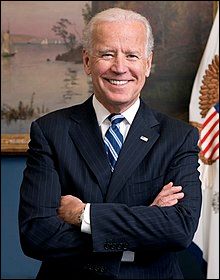
Former vice president and ex-Delaware senator Joe Biden

Dec. 18, 2018 — A pair of Democratic presidential primary polls were just released — one with a national respondent universe, and the other for the first-in-the-nation Iowa Caucus. In both, former vice president and ex-Delaware senator Joe Biden is staked to a lead. The most disappointing performer appears to be Massachusetts Sen. Elizabeth Warren, who settles into middle-of-the-pack status in both surveys.

CNN conducted the national poll (conducted by the SSRS firm; Dec. 6-9; 463 Democrats and independent-leaning Democrats). For two reasons, this survey is of little statistical relevance. First, the national sample of only 463 individuals is very low, thus leading to a huge error factor. Second, as we know, the presidential nomination process is decided by winning delegate support in every state and territory, thus monitoring a candidate’s national standing, while being of media interest, actually provides little in the way of tangible political value.

The Des Moines Register/CNN Mediacom Iowa poll (conducted by Selzer & Company; Dec. 10-13; 455 likely Iowa Democratic Caucus attenders) is the more relevant of the two studies since it previews the Iowa Caucus, which is responsible for apportioning the state’s nominating delegates and tentatively scheduled for Feb. 3, 2020.

In the national poll, Biden places first with 30 percent preference followed by Vermont Sen. Bernie Sanders (I/D-VT) who posts 14 percent. These are the only two potential candidates in double figures.

Continue reading

Too Little, Too Late?

By Jim Ellis

Nov. 1, 2016 — Hillary Clinton appeared to be a lock to win the presidency less than a week ago, but yet another email scandal has potentially altered the outcome. This time, the situation involves disgraced former Rep. Anthony Weiner’s (D-NY-9) computer from which his wife, Clinton Campaign co-chair Huma Abedin, sent and received messages that are prompting further FBI scrutiny.

Does the discovery of more damaging material against the Clinton operation give Donald Trump a serious chance to win on Nov. 8?

Probably not, but a new ABC News/Washington Post three-day tracking survey (Oct. 25-28; 1,160 likely US voters) finds a severe tightening of the presidential contest, and even before the latest email flap became public knowledge. The poll result finds Clinton leading Trump now by only one percentage point, 46-45 percent, with Libertarian nominee Gary Johnson receiving four percent and Green Party candidate Jill Stein attracting two percent support.

While the ABC/Post analysis memorandum cautions the reader that this track represents only a snippet in time and even raises questions about the viability of its own sampling universe, the consistent movement toward Trump is still significant. It was only eight days ago that the ABC/Post track found the former Secretary of State opening up a commanding 50-38 percent advantage over the Republican businessman. Since that time, her daily tracking lead has dwindled to 49-40 percent (Oct. 24 release), 48-42 percent (October 25), 48-44 percent (October 26), 47-45 percent (October 27), and finally 46-45 percent in the data made public during the weekend.

Continue reading

The Trump Bounce

By Jim Ellis

July 27, 2016 — Though last week’s Republican convention had its political hiccups, Donald Trump appears to have received the bump that he and his campaign hierarchy had desired.

A series of new polls were released Monday, all conducted between the July 21-24 period, just after the Republican conclave ended.

CBS News (July 22-24; 1,118 US registered voters) finds Trump leading Hillary Clinton, 44-43 percent in a head-to-head ballot test, and 40-39-12 percent when Libertarian nominee Gary Johnson is included.

CNN (July 22-24; 882 US registered voters) produced a bit better split for Trump. They see the now official Republican nominee holding a three-point head-to-head edge, 48-45 percent, and a larger 44-39-9-3 percent margin when Johnson and Green Party candidate Jill Stein are added to the polling questionnaire.

Continue reading

Are Both Sides Rigged?

By Jim Ellis

April 14, 2016
— Earlier in the week, Republican presidential candidate Donald Trump charged that some GOP officials were “rigging” the nomination process against him. Now that Sen. Ted Cruz (R-TX) is beginning to reap the benefits of his campaign laying the groundwork in key places during the past several months, particularly in unbound delegation states such as Colorado and North Dakota, Trump is finding himself on the short end of the delegate selection process.

Because Colorado did not have a primary or caucus but went only to a state convention, Trump is saying such a move is out of bounds. The North Dakota Republicans did the exact same thing a week earlier, but he didn’t levy the same charges toward the Peace Garden State GOP leaders.

Simultaneously, Democratic front-runner Hillary Clinton’s campaign spokesman claimed that Sen. Bernie Sanders (I/D-VT) is trying to “rig” the Democratic system by attempting to convince Super Delegates who have already announced for Clinton to change their minds.

Continue reading

The Real Super Tuesday

March 11, 2016 — March 1 earned the billing of “Super Tuesday” because 13 states held a primary or caucus that day, but the real deciding date at least for Republicans is next week’s Tuesday, March 15.

The true action in the coming days is on the Republican side despite Sen. Bernie Sanders’ upset Michigan victory earlier this week. Should Donald Trump win both the key Winner-Take-All states of Florida (99 delegates) and Ohio (66), he would isolate himself as the only candidate able to win a first ballot victory.

If Trump converts Florida and Ohio, and places first in the proportional states of North Carolina (72 delegates) and Illinois (69), as polling currently suggests, while taking a significant share of the Missouri congressional district Winner-Take-All format (52), he will likely fall into the range of committing approximately 712 delegate votes by next Wednesday morning. This means he would need 53.4 percent of the 983 available delegates from the 22 post-March 15 remaining voting entities in order to secure a first ballot victory.

Continue reading

Iowa Democrat Candidates:
The Polls Can’t Predict

Jan. 27, 2016 — Now less than a week before the Iowa Caucuses, five new polls of the Democratic presidential contest, all conducted within the same time period, arrive at very different conclusions. Three of the surveys find Sen. Bernie Sanders (I-D/VT) leading former Secretary of State Hillary Clinton, while two arrive at the opposite result.

All five polls — from CNN, the Emerson College Polling Society, CBS/YouGov, Fox News, and the American Research Group (ARG) — studied the Iowa Democratic electorate from Jan. 15-24. The sampling universes ranged from 258 likely Democratic Caucus attenders to 490 projected participants.

The Emerson College Polling Society, which is a group of students from Emerson College in Massachusetts who have established such a record of accuracy that the American Association of Public Opinion Research has granted them membership, employs the smallest sample size at 258 self-identified Democratic voters, while CBS/YouGov’s 490-person polling universe was the largest.

Continue reading

Re-setting the Republicans

Jan. 5, 2015 — We’re now within one month of the first votes being cast in the 2016 presidential campaign, and though there is disagreement about just how important the “February Four” states will be in determining the ultimate Republican winner, the early entities, at a minimum, are of clear significance. Today, we cover the Republicans; tomorrow, we reset the Democrats.

The voting calendar begins with the Iowa Caucuses on Feb. 1, followed by the New Hampshire primary on Feb. 9. Eleven days later, South Carolina Republicans vote in their party run primary. On Tuesday, Feb. 23, both parties will conduct the Nevada Caucuses.

The four states, for the hotly contested Republicans, are assigned an aggregate of just 133 delegates. The February results will serve as a prelude to Super Tuesday voting, which will occur this year on March 1. Fourteen entities will host either primaries or caucuses on that day.

The latest 10 published polls from Iowa, taken from Nov. 16 through Dec. 21, either find businessman Donald Trump or Sen. Ted Cruz (R-TX) holding the lead. Five surveys, from Monmouth University, the Des Moines Register, Loras College, Fox News, and CBS/YouGov post Cruz to an advantage. Four give Trump a slight edge: Quinnipiac University (twice), CNN, and Public Policy Polling. One pollster, Gravis Marketing, has the two tied at 31 percent in the latest released poll (Dec. 18-21/15). Cruz’s average lead is 8.6 percent. Trump’s average advantage is a much smaller 4.7 percent.

Continue reading

Calculation Politics

Dec. 11, 2015 — A just-released New Hampshire poll gives us meaningful insight into delegate projections and the small size of each candidate’s support basis by the time February concludes. Though the first four voting entities — Iowa caucus (Feb. 1), New Hampshire primary (Feb. 9), South Carolina primary (Feb. 20), and Nevada caucus (Feb. 23) — will be portrayed as trendsetters, in terms of delegate calculation these states will likely have reduced influence upon the 2016 election cycle’s direction.

Early this month, CNN and WMUR television sponsored a University of New Hampshire poll of Granite State voters (Nov. 30-Dec. 7; 954 registered New Hampshire voters; 402 likely New Hampshire Republican primary voters, 370 likely New Hampshire Democratic primary voters), the results of which were released yesterday. On a cautionary note, UNH has not proven itself as a particularly strong pollster, often producing wild results inconsistent with other similar surveys. The liberal Daily Kos Elections organization, for example, rates them as one of the least reliable pollsters on the political scene irrespective of partisanship.

For purposes of our delegate calculation exercise, however, the survey’s accuracy is not particularly relevant. The Republican delegate calculation formula is of prime importance, the actual determining factor about who will win the party’s presidential nomination. Therefore, in order to process New Hampshire’s delegate apportionment we will consider this poll the benchmark.

Continue reading

The Debate Game

May 27, 2015 — With yet another Republican ready to announce his presidential campaign tomorrow, last week’s declaration from two media sources saying they are going to limit the number of televised debate participants to 10 will soon ignite a firestorm of protest. It is probable that the question surrounding who is and is not invited to participate will probably create more intense political fireworks than the formal debates themselves.

It’s clear that Fox News and CNN want to have manageable television programs, hence the arbitrary limits placed upon who can attend. The fact that they want to base their exclusion on inexact national polls, using a mathematical formula that no pollster would deem legitimate (averaging diverse surveys), in order to produce an imaginary top 10 will certainly lead to extensive discussion and dissent, and possibly even legal challenges.

Former New York Gov. George Pataki is set to become the next official presidential candidate, and he would likely be one of the people excluded from the televised debates, assuming his effort does not catch fire between now and summer. Pataki is a three-term governor of New York, one of only three Republicans to hold this position since the early 1920s. The other two are Nelson Rockefeller, who would later become vice president, and Thomas E. Dewey, winner of the 1948 Republican presidential nomination but loser to President Harry Truman (D) in what was one of the more memorable campaigns of the 20th Century.
Continue reading >

Hillary’s Big, Unreliable Leads

April 24, 2015 — CNN, along with their polling partner, ORC International, conducted a nationwide poll of the presidential contest and, as happens from time to time in modern-day national political polling, the result does not likely reflect the state of the actual electorate.

The poll (April 16-19; 1,018 American adults; 435 self-identified Republicans and Independents who lean Republican; 458 self-identified Democrats and Independents who lean Democratic) projects Hillary Clinton to be holding huge leads over the major Republican candidates in hypothetical general election pairings.

In the GOP primary, a very tight race is forecast with former Florida Gov. Jeb Bush leading Wisconsin Gov. Scott Walker by five points, and senators Rand Paul (R-KY) and Marco Rubio (R-FL) together by six. Another 13 candidates were tested, but all of these attracted only single-digit preference. But, what is consistent in all national polls, as was found here, even when Bush leads the pack, he is still generally below 20 percent (in this case, 17 percent). This, for a candidate having virtually universal name identification with the vast majority of respondents expressing an opinion of him.
Continue reading >