Category Archives: Polling

Polling Projects Electoral College Win for Trump; California Senate Jockeying; New Jerseyans Want Menendez Out; New Candidate in MN-2; GOP Candidate Emerges in NC

By Jim Ellis — Monday, Oct. 23, 2023

President

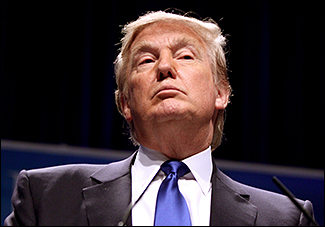
Former President Donald Trump

Trump’s Numbers: Polling Finds 291 Electoral Votes — According to a series of concurrently conducted independent polls, former President Donald Trump today would lead in enough states to provide him with 291 electoral votes, or 21 more than required to unseat President Joe Biden. Morning Consult, polling for Bloomberg News in various targeted states, projects Trump to leads in Arizona (+4), Georgia (+5), North Carolina (+4), Pennsylvania (+1), and Wisconsin (+2).

Last week, Emerson College also found Trump holding an advantage in Pennsylvania and Wisconsin. Simultaneously, the Marketing Resource Group saw Trump running seven points ahead in Michigan, but the more current Morning Consult/Bloomberg data shows the two candidates tied before the Wolverine State electorate. It is these aforementioned states that will make the difference nationally.

Robert F. Kennedy Jr., now running as an Independent candidate, was not tested in the MC/Bloomberg survey series.

Senate

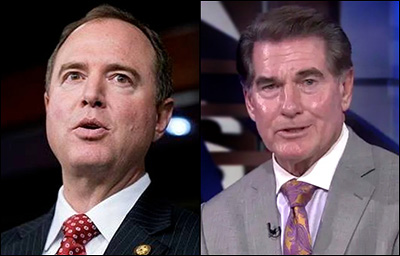
California: Sen. Butler Out; LA Anchorwoman I — Appointed California Sen. Laphonza Butler (D) announced yesterday that she will not run for a full term next year. Despite having more than a year in office after replacing the late Sen. Dianne Feinstein (D), the early March 5 all-party jungle primary allowed her little time to begin competing against Reps. Adam Schiff (D-Burbank), Katie Porter (D-Irvine), Barbara Lee (D-Oakland) and former baseball great Steve Garvey (R), all of whom have a major head start in fundraising and campaign organization.

Los Angeles news anchor Christina Pascucci (D), on the other hand, became a late entry into the crowded US Senate contest, but said she is getting into the race “ … because I have to fight for what I believe is possible for California and for this country.” Pascucci describes herself as a “moderate Democrat.”

New Jersey: Constituents Favor Menendez Resignation — A newly released Fairleigh Dickinson University poll of the Garden State electorate (Aug. 6-14; 813 New Jersey adults; live interview & text) finds that 70 percent of the respondents, including 71 percent of Democrats, believe that indicted Sen. Bob Menendez (D) should resign his seat even without him having a chance to defend himself in court.

So far, Sen. Menendez has been adamant about not resigning over the federal charges that accuse he, his wife, and several associates of engaging in bribery. While the senator is not forced to leave office, polls such as this clearly suggest that he will be a severe underdog in a June Democratic primary race against US Rep. Andy Kim (D-Moorestown) and potentially several others.

House

MN-2: New Republican Candidate — The GOP leadership is making another attempt to unseat Minnesota US Rep. Angie Craig (D-Prior Lake), but this time it is likely they will have a new standard bearer. Former federal prosecutor Joe Teirab announced his congressional candidacy late last week. In the past two elections, Rep. Craig has defeated military veteran Tyler Kistner but with an average vote percentage of only 49.5 percent. Republicans hope a fresh face will be able to get the extra support to top the three term House incumbent.

The FiveThirtyEight data organization rates MN-2 as D+1, while the Daily Kos Elections site ranks the southeast Minnesota congressional district as the 14th most vulnerable seat in the Democratic Conference.

Governor

North Carolina: New Republican Candidate Emerges — Attorney Bill Graham (R), who says he will invest at least $5 million of his own money into his statewide race, announced his candidacy for the state’s open governor’s position. Many in the Republican establishment doubt that the early front runner, Lt. Gov. Mark Robinson, can win a protracted campaign, which is sure to feature a barrage of attack ads portraying him as an extremist.

The leading Democratic nominee is Attorney General Josh Stein, but he only won the 2020 re-election campaign with 50.1 percent of the vote. Therefore, the Republicans will be competitive in the governor’s race regardless of who they nominate. Gov. Roy Cooper (D) is ineligible to seek a third term.

Harris vs. Newsom for President?; Good/Bad News for Sen. Tester; Rep. Lesko to Retire; New Redistricting Maps in North Carolina; VA-10 News

By Jim Ellis — Friday, Oct. 20, 2023

President

Vice President Kamala Harris / Photo by Gage Skidmore

Democratic Poll: Harris vs. Newsom — Rumors have been rampant that the Democrats may somehow soon replace President Joe Biden as the party nominee. The Premise survey research company (Oct. 11-16; 1,417 registered US voters; 847 US Democratic registered voters; online) just tested the highly unlikely supposition.

The pollsters paired Vice President Kamala Harris against California Gov. Gavin Newsom. Many believe that Newsom would be Biden’s hypothetical replacement, but this first poll doesn’t concur. Premise reports a Harris lead over Newsom of 23-15 percent with a huge undecided factor. Expect President Biden to again become the Democratic nominee.

Marist College: First Three-Way Presidential Poll — Marist College, polling for National Public Radio (Oct. 11; 1,218 registered US voters), is the first survey research entity to release a Biden-Trump-Kennedy poll since Robert F. Kennedy Jr. announced he would run in the general election as an Independent.

While the Biden-Trump ballot test found President Biden leading 49-46 percent, which is slightly better for the incumbent than most other current national polls, the addition of Kennedy sees the electorate break away from former President Donald Trump to the greater degree. The three-way result is 44-37-16 percent in favor of Biden. The big difference comes in the Independent sector. In a two-way, Independents break toward Trump, 49-43 percent. When Kennedy is added, the Trump-Biden-Kennedy split evolves to 34-33-29 percent, respectively.

Senate

Montana: Good News & Bad News for Sen. Tester — Emerson College surveyed the Montana electorate (Oct. 1-4; 447 registered Montana voters; multiple sampling techniques) as part of a series of polls conducted in several states. Here, we see Sen. Jon Tester (D) leading aerospace company CEO Tim Sheehy (R) by a close 39-35 percent split. The good news for Sen. Tester in this poll is his maintaining a lead in a state the Republicans must win if they are to claim the Senate majority. The bad news is he fails to even reach the 40 percent plateau.

Rep. Matt Rosendale (R-Glendive), who most believe will enter the race, was not tested because he is not yet an announced candidate. Former Secretary of State Brad Johnson (R) just declared his own candidacy, so he, too, was not included.

House

AZ-8: Rep. Lesko (R) to Retire, Two New Candidate Possibilities — Three-plus term Arizona US Rep. Debbie Lesko (R-Peoria) announced that she will not seek re-election to her state’s 8th Congressional District next year.

The congresswoman indicated that time away from her family, including her 94-year-old mother, while expressing frustration saying, “it is hard to get anything done [in Congress],” led to the decision to bring her political career to a close.

Lesko first won election to the Arizona House of Representatives in 2008, before capturing a state Senate seat in 2014. After US Rep. Trent Franks (R) resigned from Congress, Lesko won the 2018 special election to become his successor. She was re-elected to a full term in the 2018 regular election and easily won two additional terms.

AZ-8 is reliably Republican. The FiveThirtyEight data organization rates the seat as R+22. Dave’s Redistricting App calculates a 57.3R – 40.8D partisan lean. The Daily Kos Elections site ranks the 8th as the 77th most vulnerable district in the current 221-member GOP Conference. Former President Trump scored a 56.1 – 42.5 percent victory over President Biden here in 2020.

Lesko’s (R-Peoria) retirement announcement has potentially attracted two well known names from the 2022 election cycle. Attorney General nominee Abe Hamadeh, who lost the statewide race by just 280 votes of over 2.5 million votes cast, and US Senate nominee Blake Masters are among the Republicans being mentioned as potentially having interest in the newly open congressional seat.

North Carolina: New Redistricting Maps Released — Tar Heel State legislative leaders released two proposed congressional maps for legislators to consider. Both would improve Republican prospects and likely break the current 7D-7R map into a plan that would largely benefit the GOP.

Each map would endanger three Democratic incumbents: Reps. Kathy Manning (D-Greensboro), Wiley Nickel (D-Cary), and Jeff Jackson (D-Charlotte). The first map would likely return a 10R-4D split, while the second plan could conceivably bring the Republicans a 11R-3D division.

The legislators will now have the opportunity to debate the map proposals, consolidate the draws into one map, and amend the bills. Once the legislature passes a final plan, expect the Democrats to sue. The state Supreme Court will likely have to make a final ruling, but this is a much different judicial panel from the one that continued to reject the legislature’s intent during the past decade.

In 2022, Republicans captured a majority on the North Carolina Supreme Court, reversing the Democrats’ 4-3 edge. The new court features five Republicans and two Democrats. Getting to the US Supreme Court is a much more difficult exercise because SCOTUS has generally made the state Supreme Courts the redistricting final arbiter.

VA-10: Del. Filler-Corn Switches to House Race — Former state House Speaker Eileen Filler-Corn (D-Springfield), who was ousted as minority leader after the Democrats lost the state House majority in the 2021 election, has altered her future political path. Originally saying she was not running for re-election to the state House of Delegates in order to prepare a run for governor in 2025, Filler-Corn announced that she now won’t run statewide but will instead enter the 2024 open 10th Congressional District race.

Incumbent Rep. Jennifer Wexton (D-Leesburg) is retiring due to health considerations. The 10th District will remain in Democratic hands, but next year’s nomination process promises to feature a competitive party primary.

Louisiana AG Landry Wins Outright, With Down-Ballot Results; Significant Democrat Primary Challenge in MN-3; New UT-3 Poll

By Jim Ellis — Tuesday, Oct. 17, 2023

Governor

Republican Attorney General and former Congressman Jeff Landry

Louisiana: AG Landry (R) Wins Outright — Republican attorney general and former Congressman Jeff Landry, whom former President Donald Trump supported as did the Louisiana Republican Party, scored a surprise outright victory on Saturday in the open Louisiana governor’s race, capturing an unofficial 51.6 percent of the vote. Former Department of Transportation Secretary Shawn Wilson, the consensus Democratic candidate, received 25.9 percent of the vote in what must be considered a substantial under-performance and a potential warning sign to Democrats. Former gubernatorial chief of staff Stephen Waguespack, who spent heavily on the race, only finished in the five percent range virtually tied with state Treasurer John Schroder (R).

Turnout registered 35.8 percent of Louisiana’s 2.97 million voters, below the 45.9 percent who participated in the 2019 gubernatorial primary and closer to the 39.2 percent turnout recorded in the commensurate 2015 election. Landry will now succeed outgoing Gov. John Bel Edwards (D) who was ineligible to seek a third term.

States

Louisiana: Down Ballot Results — Saturday’s Louisiana regular primary election produced results for several statewide races and ballot propositions. Lt. Gov. Bill Nungesser (R) won a second term with a 66 percent vote total, easily awarding him an outright victory. The open secretary of state, attorney general, and state treasurer positions all will advance to a Nov. 18 runoff election. Each of these offices qualified a Republican and a Democrat.

In the secretary of state race, Assistant Secretary of State Nancy Landry (R) will face Democratic attorney Gwen Collins-Greenup. The attorney general campaign advances to a contest between State Solicitor General Liz Baker Murrill (R) and attorney Lindsey Cheek (D). In the treasurer’s campaign, the finalists are former US Rep. John Fleming (R) and financial planner Dustin Granger (D).

A total of 73 percent of the voters supported a ballot proposition that bans outside organizations helping the state to fund and administer elections. This measure was placed on the ballot as a response to Facebook founder Mark Zuckerberg spending millions in the last election for election administration. A huge 79 percent majority supported a ballot prop that “provides that freedom of worship is a fundamental right worthy of the highest protection.” By a closer 56-44 percent margin, voters approved a final measure that restricts ad valorem tax exemptions for certain nonprofit organizations. (Ad valorem translated directly from Latin, means “according to the value of something.” In practical use, the term is used in taxation to designate taxes levied against property, real or personal assets, at a certain rate based on the property’s value.)

House

MN-3: Rep. Phillips Draws Significant Dem Primary Challenge — Responding to Minnesota Rep. Dean Phillips (D-Plymouth) repeatedly calling for individuals to step forward and challenge President Joe Biden for the Democratic presidential nomination, Democratic National Committee member Ron Harris announced his own intra-party challenge to the congressman. While Rep. Phillips is still not completely ruling out entering the presidential contest, he will now have to concentrate on a Minnesota party convention fight and potentially an August 2024 primary challenge.

Rep. Phillips was first elected in 2018, defeating then-Congressman Erik Paulsen (R). He has averaged 56.9 percent of the vote in his three elections. The FiveThirtyEight data organization rates MN-3 as D+14. The Daily Kos Elections site ranks the district as the 63rd most vulnerable district in the 212-member Democratic Conference.

UT-2: New Poll Released for Nov. 21 Special Election — Lighthouse Research conducted a poll of the state’s 2nd District special election for the Utah Debate Commission that would decide which candidates would qualify for the Oct. 26 local PBS forum. The UDC (Sept. 26-Oct. 6; 528 registered UT-2 voters) required that candidates receive at least 5.74 percent support in the poll. Libertarian Brad Green only posted 5.68 percent, meaning he failed to qualify under the commission rules by the slimmest of margins.

Republican Celeste Maloy, resigned Rep. Chris Stewart’s (R) former legal counsel, placed first in the survey with 42.8 percent of the vote. State Sen. Kathleen Riebe (D-Cottonwood Heights), was second with 34.3 percent. Maloy’s showing should be considered an under-performance for the Republican nominee in a district that the FiveThirtyEight data organization rates as R+23, and the Daily Kos Elections statisticians rank as the 81st most vulnerable district within the 221-member Republican Conference. The special election is scheduled for Nov. 21.

Polls: Trump Up in Pennsylvania, Wisconsin & Michigan

By Jim Ellis — Monday, Oct. 16, 2023

President

Former President Donald Trump moves ahead of President Joe Biden in three key state polls.

Key States: Trump Emerges in New Polling — Three of the more important states that will largely determine the 2024 presidential outcome reported new polling data late last week. The results are significant. Three polls from two different pollsters projected former President Donald Trump as surprisingly leading in the critical battleground states of Michigan, Pennsylvania, and Wisconsin.

Emerson College surveyed voters in Pennsylvania and Wisconsin, all between the Oct. 1-4 period. MRG Research, polling for the Detroit News (Oct. 2-8; 600 likely Michigan voters), tested the Michigan electorate.

For the first time since he carried each of these states in the 2016 presidential election, these polls show that former President Donald Trump holds a general election edge over President Joe Biden in all three states. EC projects Trump holding leads of 45-36 percent in Pennsylvania and 42-40 percent in Wisconsin. In Michigan, MRG finds Trump posting a 42-35 percent advantage over President Biden.

Reviewing the national Electoral College map, in order to flip the 2020 election results Trump must convert states holding at least 35 electoral votes. The smallest number of in-play states equaling that particular electoral vote number is two: Georgia (16 electoral votes) and Pennsylvania (19).

If Pennsylvania does not come through for Trump, then a combination of Georgia (16), Arizona (11), and Wisconsin (10) voting Republican would also deliver the former president a victory. These examples, of course, presume that all other states vote the same as they did in 2020.

While it is mathematically conceivable for Trump to win the national election without carrying one of the aforementioned Great Lakes states, from a practical context, when considering recent historical voting patterns, it is virtually impossible. Realistically, if Trump is to turnaround the 2020 election outcome, he must carry at least one of these three domains.

That is why this polling release is worth noting.

Recently, we have been seeing issue polling that clearly favored Republicans on most issues, especially key ones such as economy, border security, immigration, and crime. The party’s positive numbers regarding the handling of those issues, however, were not translating into increased votes for Republican presidential candidates on ballot tests within those same surveys. Now, we see the candidate numbers beginning to turn.

The Emerson College Pennsylvania poll (Oct. 1-4; 430 registered Pennsylvania voters; multiple sampling techniques) projects Trump topping Biden by a large nine-point margin, 45-36 percent, well beyond the polling margin of error. Their Wisconsin survey (Oct. 1-4; 532 registered Wisconsin voters; multiple sampling techniques) also posts Trump to a lead, but a much smaller one, 42-40 percent.

Across Lake Michigan, MRG Research tested the Wolverine State electorate (Oct. 2-8; 600 likely Michigan voters) and their ballot test between Biden and Trump showed the the former president leading by a seven-point margin — 42-35 percent.

What is notable is that the Emerson Pennsylvania poll also tested the state’s budding Senate race between three-term incumbent Sen. Bob Casey Jr. (D) and Republican businessman David McCormick. Here, the same polling sample turns back toward the Democrats.

In answering the Senate ballot test question, the respondents recorded a 41-33 percent split for Sen. Casey, a margin again well beyond the polling margin of error. This result is also stronger for Casey than the first publicly released poll of the Pennsylvania Senate contest, that from Quinnipiac University (Sept. 28-Oct. 2; 1,725 registered Pennsylvania voters). In the Q-Poll, Sen. Casey’s lead was 50-44 percent.

The fact that the polling sample would return to the Democratic column for the Senate race gives greater credence to the presidential number and suggests that this survey is no outlier.

In Emerson’s Wisconsin poll, the interviewers asked an interesting question. They queried both the Trump and Biden supporters whether there was anything their candidate could do that would change their vote. The results were almost identical.

A total of 50 percent of the Trump voters and 51 percent of the Biden voters said their support was solid, and nothing that either man might do between now and election day would change their vote. Conversely, 24 percent of Trump voters and 23 percent of Biden supporters suggested they could change their minds based upon their chosen candidate’s actions.

These responses tell us that both men have equally fervent support, but also gives each plenty of prospects with whom to potentially convince. We can expect Wisconsin to remain in toss-up mode all the way through the final vote.

These surveys mark the first time in this election cycle that Trump has posted such leads in these three critical battleground states. With still more than one year remaining until votes are cast much will happen to change how people will perceive the candidates, thus influencing their vote. For now, the present topsy-turvy political atmosphere seems to be favoring former President Trump.

What Kari Lake’s Senate Bid Means;
Ex-Michigan Police Chief Out to Early Lead; CA-27 Democrat Drops Bid; NJ-7 Candidate Withdraws; Houston Mayoral Runoff Likely

By Jim Ellis — Thursday, Oct. 12, 2023

Senate

Kari Lake (R) / Photo by Gage Skidmore

Arizona: Kari Lake Announces — As has been anticipated, 2022 Arizona Republican gubernatorial nominee and former news anchor Kari Lake announced her US Senate candidacy yesterday. She enters what will likely be a three-way race with Sen. Kyrsten Sinema (I) and Rep. Ruben Gallego (D-Phoenix), the latter of whom appears to be the consensus Democratic candidate. With Lake officially in the Senate race, 2022 Senate nominee Blake Masters will likely withdraw. He announced a 2024 campaign several weeks ago but said he would depart if Lake entered the race.

Kari Lake has created much post-election controversy in Arizona with election fraud accusations, but she is still likely strong enough to win the Republican Senate nomination. Also in the race is Pinal County Sheriff Mark Lamb. Sen. Sinema has not formally announced her re-election campaign, but she is raising money and taking action to prepare for what will be the most interesting Senate general election in the country. All three candidates will have a path to victory, so the contest officially should be rated a toss-up. This Senate race will attract a great deal of national attention as the election cycle moves forward.

Michigan: Ex-Police Chief Craig Jumps Out to Early Lead — Public Policy Polling went into the Wolverine State to test Republican primary voters and just released their results. The survey (Oct. 9-10; 430 likely Michigan Republican primary voters; multiple sampling techniques) finds retired Detroit Police Chief James Craig beginning with a 30-19 percent Republican primary lead over former Congressman Mike Rogers in the open US Senate race. This contest will develop over time with a late Aug. 6 primary scheduled.

The winner will likely face US Rep. Elissa Slotkin (D-Lansing) who is a clear favorite to win the Democratic nomination. Four-term incumbent Sen. Debbie Stabenow (D) is retiring at the conclusion of this Congress.

House

CA-27: Democrat Drops Bid — Franky Carillo, who was once convicted of murder but freed after spending decades in prison when DNA evidence proved his innocence and has since become a Los Angeles County probation officer, has ended his congressional bid. This paves the way for former Virgin Galactic CEO George Whitesides (D) to advance into the general election to face three-term Rep. Mike Garcia (R-Santa Clarita).

CA-27 is one of the most politically marginal seats in the Republican Conference, ranked as the fourth most vulnerable on the Daily Kos Elections site scale. The FiveThirtyEight data organization rates the seat as D+8, but Rep. Garcia has proven a consistent winner in the north Los Angeles County district. The 2024 election, however, is the first time he will face an opponent other than former state Assemblywoman Christy Smith (D), whom he defeated three consecutive times.

NJ-7: Mayor Withdraws — Roselle Park Mayor Joe Signorello (D), who originally announced a challenge to Sen. Bob Menendez (D) but dropped out to instead enter the congressional race against Rep. Tom Kean Jr. (R-Westfield), has now withdrawn again. Signorello announced during the week that he would end his congressional effort.

The Signorello move leaves former State Department Counterterrorism official Joe Blazakis and progressive activist Sue Altman as the remaining Democrats vying for the party nomination. Others could still enter the race.

Rep. Kean will be a slight favorite for re-election in a politically marginal district. The FiveThirtyEight data organization rates the seat R+3. Dave’s Redistricting App calculates a 51.5R – 46.5D partisan lean. The Daily Kos Elections site ranks NJ-7 as the 16th most vulnerable seat in the Republican Conference.

Cities

Houston: Mayoral Runoff Likely — A new poll from the Hobby School of Public Affairs at the University of Houston (Sept. 30-Oct. 6; 800 likely Houston mayoral voters; text message), finds state Sen. John Whitmire (D-Houston) and US Rep. Sheila Jackson Lee (D-Houston) almost assuredly advancing to a December runoff election from the Nov. 7 initial municipal vote. According to the University of Houston ballot test, Sen. Whitmire, the longest serving legislator in Texas history (first elected in 1972), leads Rep. Jackson Lee 34-31 percent among the seven tested Houston mayoral candidates. A candidate must obtain majority support to be elected outright.

Looking ahead to the succeeding runoff, Sen. Whitmire outpaces Rep. Jackson Lee by a substantial 50-36 percent margin. The best news for Sen. Whitmire is that 40 percent of the undecided voters said they would consider voting for him, while 53 percent said they would never vote for Rep. Jackson Lee. Incumbent Mayor Sylvester Turner (D) is ineligible to seek a third term.

RFK Jr.’s Declaration to Run as an Independent Could be a Presidential Race Game-Changer

By Jim Ellis — Wednesday, Oct. 11, 2023

President

Robert F. Kennedy Jr.

Kennedy’s Independent Gambit: Potential Game-Changer — The 2024 presidential campaign may have dramatically changed this week. Though Robert F. Kennedy Jr.’s announcement to run as an Independent was expected, it is unclear just how he will affect next year’s general election.

At a rally event in Philadelphia on Monday, Kennedy officially declared his presidential candidacy as an Independent. He answered two major questions with his speech. First, he will run as an Independent candidate and not as the nominee of a minor party. Second, he is not running to be a spoiler in a race between President Joe Biden and former President Donald Trump but will campaign to win.

Saying his “smoldering movement” wants to “ … reclaim democracy, resurrect the promise of our republic, the promised land,” Kennedy ended his Democratic primary challenge to President Biden and now moves to implement a general election strategy.

He will first face an uphill battle to secure ballot placement in all 50 states and the District of Columbia. This is an expensive proposition, but time, rather than money, might be his bigger obstacle since the window to accomplish the large task is small.

Though Kennedy may be in the race to win, the chance of any non-major party nominee or candidate winning a majority of Electoral College votes is a long shot to say the least, even for a man named Kennedy.

It does appear, however, that he will attract a significant number of votes, which could throw a key state to either President Biden or former President Trump, thus altering the national campaign outcome.

In looking at a Kennedy candidacy, we analyze which states might be receptive to his campaign. Naturally, considering the Kennedy family history in New England, he could see some success in a couple of the northern domains. While the Kennedy home state of Massachusetts would still be a lock for President Biden, its neighbor to the north, New Hampshire, could be a different story.

In 2020, Biden scored a 52.7 – 45.3 percent victory margin over Trump (a spread of 59,277 votes) in the Granite State, with third party or Independent candidates attracting two percentage points (translating into a raw number of 15,625 votes). If Kennedy could approach the 10 percent range (approximately 80,000 votes based upon New Hampshire’s 2020 turnout figure), the outcome could change from Biden winning the state to Trump. Under this model, Biden would have to lose 14 percent of his aggregate vote to Kennedy while Trump could lose no more than five percent of his total.

If Kennedy’s presence in the race would throw New Hampshire to Trump, the state’s four electoral votes switching might make a difference. For example, a combination of Georgia, Arizona, Nevada, and New Hampshire switching to Trump would give the former president 272 electoral votes, or two more than the bare minimum required to secure the presidency.

Maine could be another state where Kennedy would have the ability to draw some votes. In addition to the state splitting its electoral votes to the point where the individual congressional districts carry their own tally, Kennedy scoring into double digits in Maine’s 1st District could transform the final vote.

Even though the aggregate 1st District vote would still go to Biden, the closer finish coupled with a solid Trump win in the 2nd CD, might be enough to cast the statewide total Trump’s way and award the Republican three electoral votes instead of the one he has received in the past two elections.

Alaska is a place where the Kennedy presence could turn a state President Biden’s way. In 2020, Trump carried the state with 52.8 percent of the vote as compared to Biden’s 42.8 percent. Under the state’s Ranked Choice Voting system, the tables could turn if the leading candidate drops below 50 percent.

In 2020, 4.4 percent of the Alaska electorate chose a minor party or Independent candidate. Kennedy’s candidacy could easily see the latter percentage increase rather substantially, and most of his vote coming from the Trump total would force multiple rounds of Ranked Choice voting. This, in the end, would almost assuredly favor President Biden.

Kennedy already has two key attributes that almost none of the minor party or Independent candidates have, which is universal name identification and access to enough money to run a credible outreach campaign. Having these two points in his favor makes him a different type of Independent candidate, and thus should have the ability to attract a higher number of votes when compared to past non-major party candidates.

How the Kennedy candidacy ultimately affects the 2024 presidential race is clearly undetermined at this time, but he will have the opportunity of making his mark on this election.

Key State Shock Poll:
Stunning Presidential Results

By Jim Ellis — Tuesday, Oct. 10, 2023

President

President Joe Biden / Photo by Gage Skidmore

Wisconsin Poll: Key State Indicates Trouble for Biden — Marquette Law School surveyed the Wisconsin electorate as they do every quarter (Sept. 18-25; 781 registered Wisconsin voters; live interview) and arrived at some stunning results. Since the Badger State will be one of four places that decides the next presidential election, the importance factor of data coming from this domain merits greater attention.

Wisconsin is known for close political races. In the past two presidential elections, the winner, Donald Trump in 2016 and Joe Biden in 2020, scored a victory margin with less than one percentage point. In the 2022 governor’s race, incumbent Tony Evers (D) was re-elected with a 51-48 percent margin and Sen. Ron Johnson (R) won a third term with only a 50.4 – 49.4 percent spread.

What makes this poll particularly interesting is that the sampling universe, while now preferring Trump over Biden by a slim 51-48 percent margin when leaners to both candidates are included, claims to have voted for President Biden in a seven percentage point margin when asked whom they supported in 2020. In actuality, Biden’s final Wisconsin victory spread was just 49.4 – 48.8 percent.

The presidential support discrepancy, therefore, suggests that these polling results actually skew left, so it is reasonable to assume that Trump is faring even better than the three-point spread that this poll calculates.

As mentioned above, Wisconsin is part of a quartet of states that will likely determine who ultimately wins the 2024 presidential campaign. In order to deny President Biden a second term, Trump must convert some combination of Arizona, Georgia, Pennsylvania, and Wisconsin.

Trump is now ahead in the Marquette Wisconsin survey, and approximately tied in Pennsylvania (Quinnipiac University posts Trump to a 47-45 percent lead; Susquehanna Polling & Research sees President Biden leading in exactly the same percentage, suggesting the race is already a dead heat).

The latest Georgia poll, from Rasmussen Reports (Sept. 8-11; 1,061 likely Georgia general election voters; interactive voice response system) posts Trump to a surprising 47-38 percent advantage. There is no recent polling from Arizona.

Therefore, as the key state polling data suggests, if the election were held this past September, Trump would have had enough swing votes to wrest the White House away from President Biden. Yet, much will happen to potentially alter these results between now and November 2024.

This poll also confirms a rather unique pattern seen nationally. That is, either the Republican Party or former President Trump is viewed more favorably to handle certain issues by generally a wide margin, but those perceptions do not commensurately transform into votes for the party candidates or Trump.

For example, in the Marquette Wisconsin poll, Trump is viewed as “better at handling,” the economy (52 percent say Trump; 28 percent Biden), immigration/border (52:28 percent), inflation (50:27 percent), job creation (49:30 percent), and foreign relations (43:38 percent). Conversely, Biden is favored on climate change (44:24 percent), better viewed on abortion (43:34 percent) and has a slight edge on Social Security/Medicare issues (39:37 percent).

Yet these generally favorable Republican ratios translate into only a three-point advantage among responses to the ballot test question. This discrepancy problem is not confined to Trump. It appears to affect most Republican candidates, meaning the GOP again has a messaging disconnect with the general election voter base.

In order to best take advantage of their current stronger issue standing, the Republican consultants must revamp their messaging operation to concentrate on the future and explain in a resonating fashion how their ideas will solve the nation’s problems.

The window will soon close on Republicans’ ability to formulate that message for the current election cycle. We can count on seeing an aggressive effort from the Biden campaign, the Democratic National Committee apparatus, and their outside allies to improve the issue area perception for their side and relate to what likely voters want in terms of national policy goals and objectives.

While the latest polling suggests that former President Trump would be in position to unseat President Biden if the election were held during this period, there is no guarantee we will see similar numbers once the campaign messages are cemented and actual votes are cast and recorded.

Trump Nips Biden in New Poll; Close Pennsylvania Senate Race; McCarthy Retirement Talk Rumblings; Hoyer Faces More Opposition

By Jim Ellis — Friday, Oct. 6, 2023

President

Former President Donald Trump / Photo by Gage Skidmore

Pennsylvania: Trumps Nips Biden in New Q-Poll — Quinnipiac University tested the Keystone State electorate (Sept. 28-Oct. 2; 1,725 Pennsylvania adults; 1,470 registered Pennsylvania voters; 759 self-identified Democratic registered voters; 711 self-identified Republican registered voters; live interview) and sees former President Donald Trump moving into a slight lead over President Joe Biden in this critical swing state. The ballot test yields Trump a 47-45 percent edge.

Both candidates have upside-down favorability scores. President Biden registers 39:57 percent favorable to unfavorable. Trump’s index is a similar 40:56 percent. The president’s job approval ratio is 41:55 percent positive to negative. Pennsylvania has 19 electoral votes and is one of the four states (Arizona, Georgia, and Wisconsin are the others) that will likely decide the presidential campaign’s final outcome.

Senate

Pennsylvania: Q-Poll Shows Close Race — The aforementioned Pennsylvania Quinnipiac Poll (see presidential post above) also tested the state’s budding Senate race between three-term incumbent Sen. Bob Casey Jr. (D) and Republican businessman and 2022 Senate candidate David McCormick (R).

Here, we see a closer than expected early result with Sen. Casey holding only a 50-44 percent lead over McCormick. The surprising data point in this survey is McCormick already carrying the Independent voter segment by a percentage point, 45-44 percent.

Sen. Casey holds a 48-31 percent job approval score. With 57 percent of the people saying they need to know more about McCormick, he records a 25:17 percent favorability index. By contrast, Gov. Josh Shapiro (D) holds a strong 53-27 percent job approval rating, but Sen. John Fetterman (D) finds his ratio in upside-down territory at 41:48 percent favorable to unfavorable.

House

CA-20: McCarthy Could Retire — Former House Speaker Kevin McCarthy (R-CA) conceded that he will not again run for his former House speaker position and said he will not resign, but left unanswered whether he will seek another term in Congress. The California candidate filing deadline is Dec. 8 for the March 5, 2024, all-party jungle primary, so the congressman does not have much time to decide. Should he opt for retirement, it is likely that several of the state legislators whose districts overlap his Central Valley CD will enter what would be an open race.

State Sen. Shannon Grove (R-Bakersfield), a former Minority Leader, represents 89 percent of the 20th Congressional District, thus putting her in strong position to be McCarthy’s successor. The state assemblyman with the most overlap is Vince Fong (R-Bakersfield), who represents 58 percent of the McCarthy territory.

CA-20 is the safest Republican district in California with a FiveThirtyEight data organization rating of R+31. The Daily Kos Election site ranks CA-20 as the 146th-safest seat of the 222-member Republican Conference.

MD-5: Dem County Chairman to Oppose Rep. Hoyer — Charles County Democratic Party chair Lenny Proctor earlier this week became the fifth member of Rep. Steny Hoyer’s (D-Mechanicsville) party to announce a primary challenge against the former majority leader, a 44-year congressional veteran who appears primed to seek election to yet another term.

The crowded field, also including Prince Georges County Environmental Director Angela Crooms, public affairs specialist Sean McKelvey, two-time congressional candidate McKayla Wilkes, and Democratic activist Joey Thompson, will split the anti-Hoyer vote, thus allowing him to again win easily.

Hoyer will have little trouble winning the Democratic primary, and then the general election in a district that the FiveThirtyEight data organization rates at D+28. The Daily Kos Election site ranks MD-5 as the 109th-safest seat of the 213-member Democratic Conference.

Haley Gaining in Poll Test; McCarthy Out as House Speaker; Ex-North Las Vegas Mayor Announces for House Race; Majewski Returns

By Jim Ellis — Thursday, Oct. 5, 2023

President

Insider Advantage Poll: Haley Gaining — The Insider Advantage polling organization (Sept. 29-30; 850 likely US voters) finds former UN Ambassador and ex-South Carolina Gov. Nikki Haley getting a bounce from the second Republican primary debate. According to the IA ballot test, former President Donald Trump continues to dominate the field with 50 percent support. Florida Gov. Ron DeSantis is second with 15 percent, just ahead of Haley’s 14 percent score.

Haley gained three percentage points since the firm’s late August poll, while Gov. DeSantis’ support fell by the same margin. No other candidate reached double digits. The candidate falling furthest from August, businessman Vivek Ramaswamy, dropped from seven to three percent support.

House

Former Speaker of the House, Kevin McCarthy / Photo by Gage Skidmore

Speaker Vote: Eight Rs Against McCarthy; Three Not Voting — The House Speaker saga continues with Kevin McCarthy (R-CA) being removed from the post on a 216-210 vote. McCarthy likely has at least two more votes from those Republicans not voting yesterday. Texas US Reps. John Carter (R-Round Rock) and Lance Gooden (R-Terrell) were loyal McCarthy supporters in the original 15 votes. The other non-voting Republican was Rep. Anna Paulina Luna (R-FL), who typically votes with the Freedom Caucus.

With the two vacancies – the RI-1 and UT-2 special elections are scheduled for Nov. 7 and Nov. 21, respectively – the House stands at 433 members. Therefore, the winning speaker candidate must obtain 217 votes instead of the typical 218. Assuming at least two more votes from yesterday’s non-voters, McCarthy would need to convince five of the nine Republicans who either voted against him or did not vote (Luna).

The eight Republicans against are: Reps. Eli Crane (R-AZ-2), Andy Biggs (R-AZ-5), Ken Buck (R-CO-4), Matt Gaetz (R-FL-1), Matt Rosendale (R-MT-2), Nancy Mace (R-SC-1), Tim Burchett (R-TN-2), and Bob Good (R-VA-5). Six of these members consistently opposed McCarthy in January. Reps. Buck and Mace are the newcomers to this group.

Reps. Paul Gosar (R-AZ-9), Lauren Boebert (R-CO-3), Dan Bishop (R-NC-8), Byron Donalds (R-FL-19), Victoria Spartz (R-IN-5), Andy Ogles (R-TN-5), and Chip Roy (R-TX-21), who had either opposed McCarthy in January or voted “present,” all supported him in this vote. Filling that now vacant seat is a fluid and ever-evolving situation.

NV-4: Ex-Mayor Announces — John Lee (R), the former North Las Vegas mayor and ex-state legislator, announced that he will enter the competitive 4th District congressional race next year. Assuming Lee wins the Republican primary, he will face four-term US Rep. Steven Horsford (D-Las Vegas). Lee entered the 2022 gubernatorial race but did not fare well in the Republican primary. He placed fourth, only attracting eight percent of the vote.

In the congressional race, with his North Las Vegas base included within this district, he will be a formidable general election candidate in a district that the FiveThirtyEight data organization rates as D+5. The Daily Kos Elections site ranking the district as the 34th most vulnerable seat in the 213-member Democratic Conference.

OH-9: Majewski Returns — J.R. Majewski, the 2022 Republican nominee who lost to veteran Rep. Marcy Kaptur (D-Toledo) on a substantial 57-43 percent vote largely due to his January 6 history, was originally in the 2024 race, then out, and has now injected himself back into the race. Majewski was able to win a contested primary in 2022 with just a base conservative vote of 36 percent, since the remaining votes were split among three others.

His main opponent in the 2024 primary election, former state Rep. Craig Riedel, was one of the multi-candidates in the last GOP nomination contest. It appears Riedel has more unified support this time around and will likely be favored over the returning Majewski.

With the FiveThirtyEight data organization rating OH-9 as R+6, and the Daily Kos Elections site ranking the district as the fifth most vulnerable seat in the Democratic Conference, expect this race to draw a great deal of national political attention from beginning to end.

RFK Jr. to Announce Independent Run; Sen. Feinstein Replacement Options; Menendez’s Re-Election Chances

By Jim Ellis — Monday, Oct. 2, 2023

President

Robert F. Kennedy Jr.

RFK Jr.: To Announce Independent Run — Media reports are indicating that Robert F. Kennedy Jr. will end his Democratic nomination challenge to President Joe Biden and instead launch a general election campaign. It is unclear whether he will run as an Independent or seek the nomination of an existing minor party.

Kennedy came to the realization that the Democratic Party establishment was going to block him from delegate acquisition, which gave him no hope of mounting even a competitive bid against President Biden. Kennedy’s name on the ballot could prove more detrimental to President Biden, though he will also take votes from former President Donald Trump.

The other question that Kennedy must answer is whether his candidacy will simply attempt to affect the general election outcome, or does he strive for a national victory. If the latter, he may have a difficult time in qualifying for the ballot in all 50 states. In any event, Kennedy’s appearance on the general election ballot can certainly change the course of the presidential campaign.

Senate

California: Sen. Feinstein Replacement Options — Sen. Dianne Feinstein’s (D-CA) death on Friday means California Gov. Gavin Newsom (D) will apparently soon appoint an interim replacement to serve the balance of the current senatorial term. Earlier in the year, Gov. Newsom indicated that he would appoint a black woman to the seat if the position opened. This seemed to indicate that Rep. Barbara Lee (D-Oakland) would have the inside track. The two are close and both hail from the San Francisco Bay Area.

Now, however, Gov. Newsom — quite correctly — is saying he will not appoint one of the open seat Senate candidates who are currently vying for one of the two general election qualifying positions that will be determined in the March 5 Super Tuesday all-party jungle primary. Since Rep. Lee is a candidate, it appears she is no longer under consideration for the appointment. Gov. Newsom said he does not want to give one of the candidates, who are all working hard, an unfair advantage in the open primary by appointing one of them to the seat.

Many names are under consideration, but it is unlikely individuals such as Rep. Maxine Waters (D-Los Angeles) and Los Angeles Mayor Karen Bass (D) would give up their current positions to serve in the Senate for just a year. Therefore, Newsom could turn to a senior individual who has served either in elective office or a key appointed position. One such individual who might be considered is retired US Sen. Barbara Boxer (D). Should Newsom go in that direction, and if she would agree to serve again, he would likely receive no objection since he can justify the appointment arguing the statewide voters elected her four times and she could “hit the ground running,” due to her Senate experience. Sen. Boxer served from 1997-2015, after winning election to five terms in the House.

New Jersey: First Post Indictment Poll — Public Policy Polling quickly jumped into the field to test the New Jersey electorate right after Sen. Bob Menendez was indicated. The PPP survey, for the VoteVets Action Fund (Sept. 26-27; 565 New Jersey voters; multiple sampling techniques), explored several potential general election scenarios, none of which looked favorable for the incumbent.

Against a generic Republican opponent, the senator would trail 42-20 percent. If Rep. Andy Kim (D-Moorestown), who has already announced his candidacy, were paired with the generic Republican, he would lead 44-32 percent. In a hypothetical match between Kim and former Gov. Chris Christie (R), though the latter man has already said he will not run for the Senate, the former would lead 46-20 percent. Christie, however, would nip Sen. Menendez 27-24 percent. PPP did not test any Democratic primary pairings, which is the more definitive battle.