Tag Archives: Sen. David Perdue

Georgia Polling Dichotomy

By Jim Ellis

Oct. 16, 2020 — An October polling plethora has been released in Georgia, which is becoming one of the most important 2020 election cycle states both in terms of the presidential and US Senate outcomes. As the only state featuring two US Senate races, Georgia has attracted more than its share of polling universe attention.

Quinnipiac University released new data yesterday that either is detecting a new trend or is an outlier. Their results give Democratic presidential nominee Joe Biden, and US Senate candidates Jon Ossoff and Raphael Warnock big leads in their respective races, something no other survey research firm is reporting.

The Quinnipiac poll (Oct. 8-12; 1,040 likely Georgia voters, live interview) finds Biden posting a 51-44 percent lead over President Trump, Ossoff claiming a similar 51-45 percent advantage over Sen. David Perdue (R), and Rev. Warnock outpacing both Rep. Doug Collins (R-Gainesville) and appointed Sen. Kelly Loeffler (R) by 19 and 21 percentage points (41-22-20 percent).

Six other pollsters, also surveying in October, largely see things much differently.

Polling within the same period as Quinnipiac are Survey USA, Data for Progress, and Morning Consult.

Survey USA chose exactly the same sampling period as Quinnipiac, Oct. 8-12. With a sample size of 877 likely Georgia voters also in live interviews, they see a dissimilar political landscape. While they find Biden leading in the presidential race, his margin is only two points, 48-46 percent.

The two pollsters’ Senate numbers are starkly different. S-USA finds Sen. Perdue leading Ossoff, 46-43 percent, a net nine-point variance when directly compared with Quinnipiac. The jungle primary special election race is even more disparate. While Quinnipiac projects one of the biggest leads for Warnock during the entire election cycle, S-USA finds only a four-point difference between he and Sen. Loeffler, 30-26 percent, a far cry from the Q-Poll’s 41-20 percent.

The two pollsters even see a different ballot test order. While the Q-Poll finds a Warnock-Collins-Loeffler split, Survey USA projects a virtual three-way battle among Warnock, Loeffler, and Collins. The latter poll posts Rep. Collins’ statewide support at 20 percent.

Continue reading

The Senate Barometer

Sen. Cory Gardner Senate campaign attack ads hitting former Colorado Gov. John Hickenlooper hard (see COLORADO writeup below)


By Jim Ellis

June 18, 2020 — Next to discussion of the presidential race, the political contests attracting the most political attention and debate are the 2020 US Senate campaigns.

As we know, Republicans have a 53-47 Senate majority, meaning the Democrats will have to convert a net three GOP seats if Joe Biden wins the presidency, or four if President Trump is re-elected. Many believe that the winning presidential candidate will also sweep in a Senate majority for his party.

Below is an update of the key races:


• ALABAMA: In many ways, this could be the most important race on the board. Republicans must convert this seat back to their column in order to provide a greater cushion toward protecting their chamber majority. Sen. Doug Jones (D), who scored a fluke special election win in 2017, stands for a full six-year term in November.

Republicans are in a runoff election that will be decided on July 14, postponed from the original March 31 date. In the March 3 primary, retired Auburn University head football coach Tommy Tuberville placed first over former attorney general and ex-Alabama senator Jeff Sessions within a field of seven total candidates, 33-32 percent.

Runoff polling, however, gives Tuberville a large lead as the contenders enter the last month of the secondary election campaign. The May 26-27 OnMessage survey gave Tuberville a 49-43 percent edge, down considerably, however, from the 55-32% margin the former coach posted in a Cygnal research group poll conducted over the May 7-10 period.

Tuberville, with President Trump’s endorsement and running an ad saying Sessions’ appointment as AG is the president’s top regret since taking office, clearly has the advantage. In the general election, this race is a must-win for the GOP. If converted, the Republican majority expands to 54, which will be critical for their chances to hold.


• ARIZONA: Things continue to break retired astronaut Mark Kelly’s (D) way in the early going opposite appointed Sen. Martha McSally (R). Being one of the top national fundraisers with $31 million raised and millions more coming into the state in the form in independent expenditures, Kelly is the favorite to convert the seat in November. He has led in the last 11 publicly released polls, the latest coming from the Civiqs organization, polling for the Daily Kos Elections website (June 13-15), which posts Kelly to a 51-42 percent advantage.


• COLORADO: Sen. Cory Gardner (R) seeks a second term, and with the state’s electorate moving decidedly to the left since the incumbent’s original election in 2014, the Colorado race sets up well for Democratic conversion.

There is some weakness developing, however, surrounding Sen. Gardner’s likely Democratic opponent, former governor and presidential candidate John Hickenlooper. Recently, the Colorado Ethics Commission ruled that Hickenlooper, while governor, twice violated the state’s gift ban, which has caused him negative statewide publicity.

Now, the National Republican Senatorial Committee has launched an ad campaign underscoring the commission finding just as the former governor approaches his June 30 primary election against former state house speaker Andrew Romanoff. Sen. Gardner also is on the air in a new ad highlighting Hickenlooper’s statements during the presidential campaign when he was quoted extensively as saying he didn’t want to be a US senator. Taking this into consideration, more people are looking toward the Democratic primary, in which Romanoff is gaining some momentum. This general election is a must-win for the Democrats.
Continue reading

In Georgia, It’s Perdue vs. Ossoff

By Jim Ellis

2020 Georgia Democrat Senate candidate Jon Ossoff

June 15, 2020 — By the end of last week, enough returns were tabulated from Tuesday’s Georgia Democratic primary election to project that documentary film maker and former congressional candidate Jon Ossoff has secured the Democratic US Senate nomination with just over 51 percent of the statewide vote. He defeats former Columbus mayor, Teresa Tomlinson, and ex-lieutenant governor nominee, Sara Riggs Amico, to win the party nomination outright.

On election night and since, Ossoff teetered around and over the 50 percent mark, but finally cemented the necessary margin as the counted vote totals had exceeded 99 percent. Had he finished with just 49 percent, it was still possible that a runoff could have been avoided. Second-place finisher Tomlinson could have immediately conceded the runoff since it was obvious that Ossoff would have been a prohibitive favorite moving forward into an Aug. 11 secondary election.

You will remember Jon Ossoff as a candidate who ran in the 6th District 2017 special election when then-Rep. Tom Price (R-Roswell) was appointed Secretary of Health and Human Services and resigned from the House. The succeeding special drew national attention and resulted in Ossoff raising $36 million for the lone congressional race. Despite the huge resource advantage, Ossoff lost to then-former Secretary of State Karen Handel (R), who would in turn lose the next regular election to Democrat Lucy McBath.

For the 2020 Senate race, Ossoff’s fundraising is still good, but not nearly as impressive as when he became a national congressional candidate. For the current campaign, Ossoff attracted slightly over $4 million, significantly more than Tomlinson’s $2.5 million but well behind incumbent Republican David Perdue’s $13.2 million raised. All of the financial figures were current through the pre-primary May 20 filing deadline.

In 2014, David Perdue defeated Democrat Michelle Nunn, daughter of former veteran senator, Sam Nunn (D). While projected as a close race, and one that could even be forced to a post-election runoff (Georgia is one of the few states that requires their general election candidates to obtain majority support) Perdue won the seat by eight percentage points, 53-45 percent.

Continue reading

GA-13: Rep. Scott in Runoff

By Jim Ellis

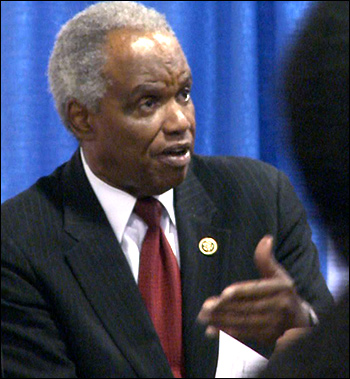
GA-13 Rep. David Scott (D)

June 11, 2020 — Voting problems in Atlanta delayed counting and reporting from Tuesday’s primary, but it is now clear that nine-term veteran Rep. David Scott (D-Atlanta) has been forced into an Aug. 11 runoff election with a candidate who spent less than $1,000 on her primary campaign.

With votes still being counted, Rep. Scott garnered only 46.8 percent of the vote to date, with the remaining 53.2 percent being divided among three Democratic challengers. Advancing into the runoff is former state representative Keisha Waites, who managed to attract 31.1 percent of the vote despite spending only $875.00 on her race.

In third place is former local county Democratic Party chairman Michael Owens (14.1% percent), who has previously challenged Rep. Scott in a party primary, while former East Point mayor Jannquell Peters finished fourth (8.0 percent). The latter two candidates have been eliminated.

Though tabulating continues, almost 88,000 votes have been recorded in this primary race, suggesting that turnout is robust. In the only recent Democratic primary from this congressional district, back in 2014, the total turnout was under 36,000 individuals. Combined, the latter two candidates, Owens and Peters, spent approximately $60,000. By contrast, Rep. Scott spent almost $900,000 so far on his 2020 political effort.

As mentioned above, the only other time Scott was challenged for re-nomination since his original 2002 congressional campaign came in 2014. The congressman defeated Owens in that year, 82-18 percent. In his nine general election victories, Scott has averaged 79.4 percent of the vote, including running unopposed three times.

The 13th District is a suburban Atlanta district that sits south and southwest of the city before moving westward and then north to encompass part of Cobb County. The CD contains all of Douglas county and parts of five others, including Cobb, Fulton, and Fayette. The Citizen Age Voting statistics record a 58.1% percent population figure for African Americans here as compared to 33.4 percent for non-Hispanic whites.

Continue reading

Questionable New Georgia Data

By Jim Ellis

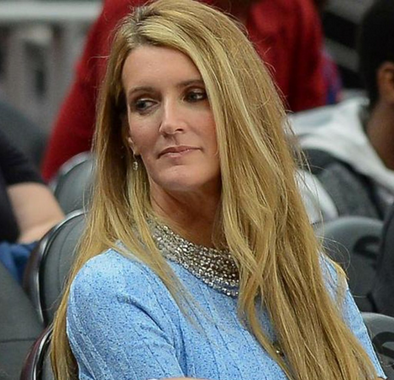
Georgia Sen. Kelly Loeffler (R)

May 18, 2020 — The Public Opinion Strategies polling company, which conducts research for appointed Sen. Kelly Loeffler (R), though that was not mentioned in their latest Georgia survey release, unveiled their new statewide study that finds the appointed incumbent moving up while other Republicans aren’t faring as well.

The statewide POS poll finds President Trump trailing former vice president Joe Biden by a single percentage point (47-46 percent), while Sen. David Perdue (R) is only edging Democrat Jon Ossoff by a 43-41 percent spread with an unknown Libertarian candidate attracting a rather high-seven percent support factor. The questionnaire then became focused upon the COVID-19 crisis and how the situation is being handled from Washington and Atlanta.

Previously Loeffler had dropped to fourth position in other Georgia polls, and she trailed Rep. Doug Collins (R-Gainesville) by a 2:1 margin while Collins led all the jungle primary candidates. The POS study (May 4-7; 500 likely Georgia voters) positions Loeffler in second, just one point behind Collins. Almost as mysteriously, while all other recent polling finds the northeast Georgia congressman capturing between 29 and 36 percent of the overall respondent preference, the Loeffler campaign poll sees him dropping 10 points and shows her leading him by a single digit (19-18 percent).

While the racial demographics of the POS 500-person sample of likely Georgia voters are a reasonable characterization of the state – though Hispanics are represented in only half of their actual percentage and Asians are under-counted, too – the partisan breakdown is flawed. (The lower Hispanic and Asian could be one reason Loeffler passed two Democrats to barely claw into second position.)

According to the poll’s small-sample data, 42 percent of the respondents are self-identified Republicans while 41 percent are Democrats. Another 16 percent say they are Independent. Additionally, while the female population base in the state is 51.4 percent statewide, women comprise more than 53 percent of respondents in this poll. Again, a relatively small number, but one that would benefit Sen. Loeffler most likely above any of the other candidates.

Let’s think about the partisan division. Georgia is one of 19 states where voters don’t register by political party, therefore it is impossible to tell exactly how many people identify as Republican, Democrat, or Independent. The electorate has certainly voted, however, in much better Republican numbers than this survey indicates.

Continue reading

Georgia’s Dual Senate Races

By Jim Ellis

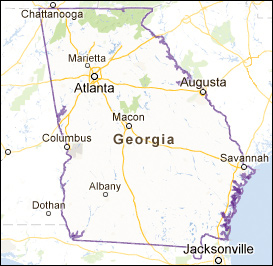
May 5, 2020 — Georgia is the only state this year that features two US Senate races, and a new poll suggests that both are interesting.

The Peach State’s politics have garnered more national attention since 2018 as election results suggest that Georgia is moving closer to the ideological center. Still conservative, the 2018 governor’s election that saw Republican Brian Kemp slipping past former state House Minority Leader Stacey Abrams (who has since become a national figure and one of the contenders to be Joe Biden’s vice-presidential running mate) by just over one percentage point. Additionally, the Democrats gained a congressional seat in the Atlanta metro area and came within 419 votes of converting a second.

Georgia Gov. Brian Kemp appointed businesswoman Kelly Loeffler (R) to the U.S. Senate to succeed retiring Sen. Johnny Isakson, who is leaving office at the end of the year due to health issues.

A substantial increase in the state’s minority population, almost all of which is occurring in the Atlanta metropolitan region, during the past decade (Asian, plus-31 percent; African American, plus-17 percent; Hispanic, plus-14 percent) is the chief reason for the uptick in Democratic candidate support.

With this background, the Cygnal research organization released the results of their most recent Georgia statewide poll (April 25-27; 591 Georgia voters, all but six of whom say they are definitely or probably voting) and their data finds two competitive US Senate races unfolding.

The results reveal one incumbent in serious trouble and the other headed for a potentially competitive re-election battle. In fact, appointed Sen. Kelly Loeffler (R) trails not only US Rep. Doug Collins (R-Gainesville), who leads the jungle primary field by over 17 points, but actually places fourth in the field behind two Democratic candidates yet close enough to them to become entangled in a statistical tie. Sen. David Perdue (R) maintains just a six-point lead over the only Democrat tested against him, former congressional candidate Jon Ossoff.

Continue reading

Succeeding Georgia’s Sen. Isakson

By Jim Ellis

Georgia Sen. Johnny Isakson (R)

Aug. 30, 2019 — Georgia Sen. Johnny Isakson (R), first elected to the Senate in 2004 after spending six years in the US House and 18 years in the Georgia legislature, announced Wednesday that he will resign his seat at year’s end due to serious health problems.

The news stories have reported the details surrounding Isakson’s departure and his health status, but the succession situation will be the concentration of this update. The development means that both of Georgia’s Senate positions will be on the ballot in 2020. The two will run only semi-concurrently, however.

The first step is for Gov. Brian Kemp (R) to appoint a replacement for Sen. Isakson. The governor will install an interim senator to serve from Jan. 1 until the appointed individual or another is elected. It is believed that the governor will name his choice quickly so that the person will have a transition time to work with Isakson and his staff before assuming the office.

While Sen. David Perdue stands for a second term in the regular cycle, meaning a May 19, 2020 primary followed by a July 21 run-off if no candidate secures majority support in the initial vote, the special election will follow a different format and slightly altered schedule.

The regular general election is, of course, Nov. 3, 2020, but Georgia is also one of the few states that holds a post-election run-off in case no one receives majority support. That run-off will be held Jan. 5, 2021, but it is unlikely that the Perdue race would advance through to such a process regardless of who wins the November vote.

The Isakson seat, however, will not follow the same calendar or system. Since this is a special election called to fill the balance of the current term, which will last until the beginning of 2023, a jungle primary is to be held concurrently with the November election, and the top two individuals, regardless of political party affiliation, will advance to the Jan. 5 run-off if no one receives a majority vote in the first election. For this seat, the odds of seeing a run-off election intensify because a crowded field is expected, thus making it more difficult for any one individual to secure majority support.

One person who will not be competing is former Democratic gubernatorial nominee Stacey Abrams, the former state House Minority Leader. Abrams indicated that she will not be a Senate candidate in either seat next year, preferring to remain focused in her role of working with voter registration and turnout organizations.

Continue reading

2020 Senate Review – Part I

By Jim Ellis

March 25, 2018 — Only nearing the end of March in the off-year, already a great deal of early 2020 Senate action has occurred. Thus, it is a good time to begin reviewing all 34 statewide federal races that will adorn next year’s ballot in a three-part series. Today, we look at the first dozen in alphabetical order:

  • Alabama – Sen. Doug Jones (D) – From the Republican perspective, this could be the most important race in the country. The GOP must convert this seat in order to provide a better cushion to protect their Senate majority.
    The 2017 special election became a debacle for the Republicans that allowed Sen. Jones to unexpectedly slip past politically wounded former state Supreme Court Chief Justice Roy Moore. Already, Rep. Bradley Byrne (R-Mobile) and state Auditor Jim Zeigler (R) have announced their 2020 Senate candidacies. Judge Moore claims to be seriously considering running again, which could again create the same adverse situation that previously plagued the Republicans. Toss-up

  • Alaska – Sen. Dan Sullivan (R) – At this point, there seems little in the way of opposition developing either in the Republican primary or general election against Sen. Sullivan. Safe Republican

  • Arizona – Appointed Sen. Martha McSally (R) – Another critically important Senate race that has already featured substantial action. Sen. McSally’s appointment came after her defeat in the 2018 Senate race and she faces a difficult campaign ahead to win the 2020 special election. Whoever wins next year serves the remaining two years of the late Sen. John McCain’s (R) final term. The seat next comes in-cycle for a full six-year term in 2022.
    Mark Kelly, a retired astronaut and husband of former Rep. Gabrielle Giffords (D-Tucson), has already announced his candidacy and will be a major candidate. In early April, Rep. Ruben Gallego (D-Phoenix), whose ex-wife, Kate Gallego, was just elected Mayor of Phoenix in a special election, is expected to enter the Democratic primary. Since Arizona holds a late August primary, a tough Democratic nomination fight would benefit McSally just as her difficult 2018 Republican primary played to Democratic Sen. Kyrsten Sinema’s advantage. Toss-up

  • Continue reading